Care and Maintenance
Commercial Window Cleaning Phoenix: Costs and Schedules
Commercial Window Cleaning Phoenix explained: services, squeegee vs pure-water methods, pricing factors, heat-safe scheduling and how to request a quote.


Let's be real—cloudy, streaky shower doors can make an otherwise spotless bathroom look dingy. The key to getting them sparkling again is a one-two punch: dissolve those stubborn mineral deposits with a mild acid like distilled white vinegar, then scrub away the grimy buildup with a non-abrasive tool. This dual approach is the secret to tackling both hard water stains and soap scum for a crystal-clear finish.
If you feel like you're stuck in an endless cycle of scrubbing away soap scum and hard water stains only to watch them reappear, you've come to the right place. We're going to move beyond temporary fixes and get into a real, practical strategy for achieving—and keeping—that pristine shine. This isn't just about another cleaning session; it's about building a simple routine that stops buildup before it ever gets a chance to take hold.
We’ll dig into everything from simple daily habits to powerful deep-cleaning techniques, using both everyday household items and the most effective commercial products. The goal here is to clean smarter, not harder.
This guide is designed to help you master the entire process, from diagnosis to prevention. Here’s a quick look at what we'll get into:
The secret to spotless shower doors isn't one heroic cleaning session—it's consistent, minimal effort. A quick 30-second wipe-down after each shower can eliminate over 90% of the moisture that causes spots and film to form in the first place.
Once you master these techniques, you'll transform a frustrating chore into a manageable habit. And the best part? These same principles can help you achieve pro window cleaning techniques for a streak-free shine on every other glass surface in your home. Get ready to change your approach and make those frustrating cleaning days a thing of the past.
Before you can get those glass shower doors sparkling, you have to know what you’re up against. That frustratingly cloudy film isn’t just one thing. It’s usually a tag team of two culprits: soap scum and hard water stains. Each requires a completely different battle plan to defeat.
Soap scum is that thick, waxy, and often whitish-gray film that builds up over time. It’s a stubborn mixture created when the fatty acids in bar soap react with minerals in your water, then bond with body oils and dirt. This gunk sticks to glass like glue, creating a resilient layer that feels almost greasy.
Hard water stains, on the other hand, are the chalky, semi-transparent spots left behind when water evaporates. These are pure mineral deposits—mostly calcium and magnesium—that were dissolved in your water supply. Unlike the waxy film of soap scum, hard water spots feel rough and crusty to the touch.
Use this quick comparison to diagnose the buildup on your shower doors and select the best cleaning approach.
Knowing which you're facing is the first step toward a successful cleaning strategy. It saves you from scrubbing endlessly with the wrong product.
The chemical makeup of each type of grime dictates which cleaner will actually work. Acidic solutions, like vinegar or citric acid, are brilliant at dissolving the alkaline mineral deposits of hard water. But they won’t do much against heavy soap scum.
Conversely, soap scum often surrenders to cleaners that can break down oils and soap residue. Using a degreaser on hard water spots is a recipe for frustration.
Understanding the enemy is half the battle. Using an acidic cleaner on heavy soap scum or a degreasing soap on hard water spots will lead to a lot of scrubbing with very little reward.
This simple flowchart can help you decide whether your doors need a deep clean for heavy buildup or just routine maintenance to stay clear.

As you can see, the moment you notice cloudy glass, it’s time to shift from daily upkeep to a more intensive deep-cleaning process.
By correctly identifying the buildup, you can grab the right product from the start and save yourself a ton of time and elbow grease. While this guide is all about glass, the same principles apply elsewhere. You can find similar strategies for removing stubborn soap scum from shower tiles if the problem has spread beyond your doors. This targeted approach is the professional secret to a flawless, streak-free shine every time.
You don't need a cabinet overflowing with harsh chemicals to make your shower doors sparkle. In fact, some of the most powerful and effective cleaning agents are probably already in your pantry. These natural solutions are not only budget-friendly but also much gentler on your home's environment and the glass itself.
When you step away from aggressive commercial products, you avoid the risk of damaging sensitive coatings or metal hardware. I've found that the right combination of simple ingredients can cut through stubborn grime just as effectively—if not more so—than their chemical-laden counterparts. This approach puts you in full control.
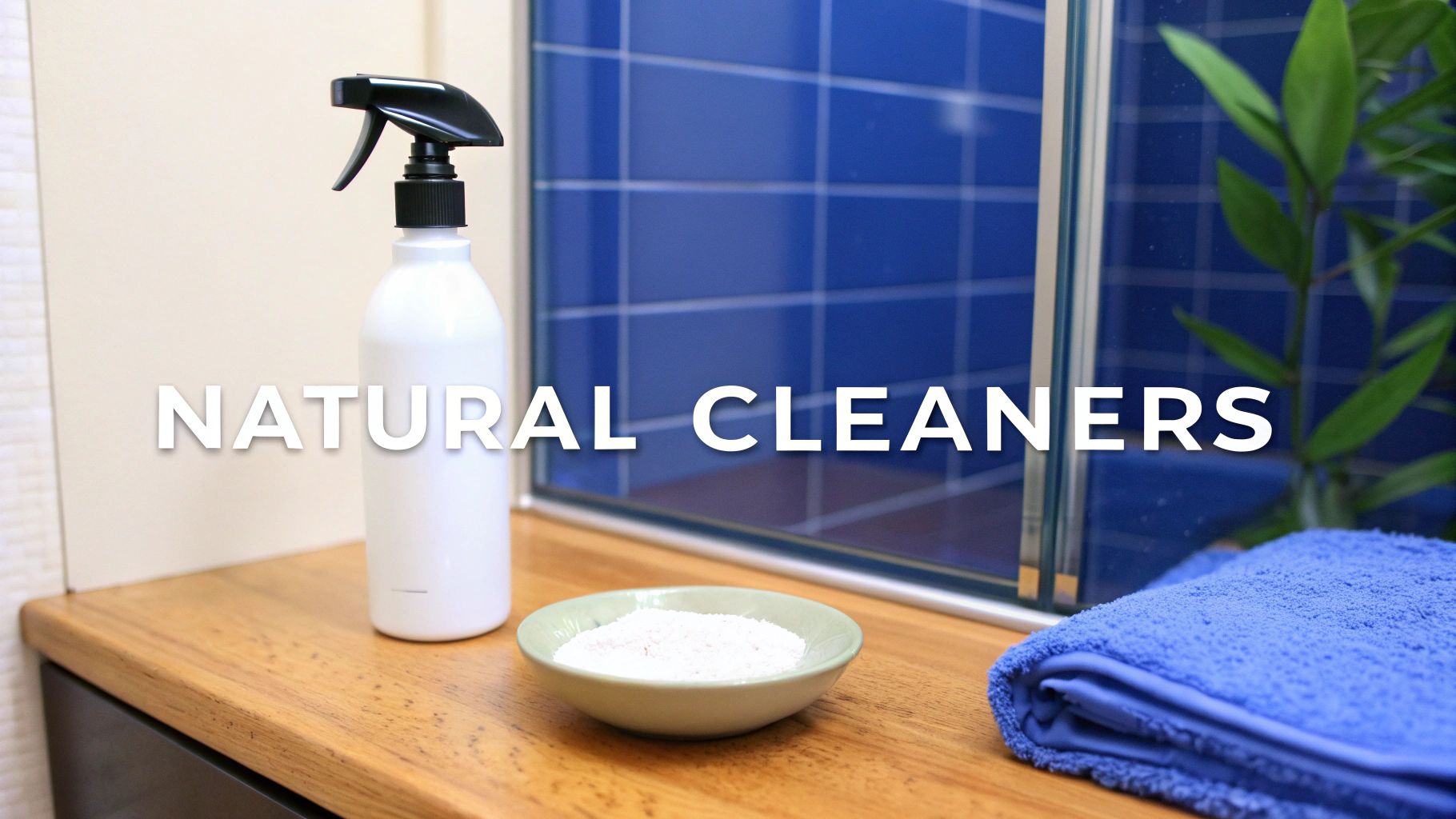
Distilled white vinegar is the undisputed champion of natural cleaning. It's especially brilliant at dissolving the alkaline mineral deposits that cause those stubborn hard water stains. Its acidic nature chemically breaks down the calcium and magnesium buildup, loosening its grip on the glass.
For a standard daily spray, a simple 50/50 mix of white vinegar and distilled water in a spray bottle does the trick. Using distilled water is a key detail—it prevents you from adding more mineral spots right back onto the glass you're trying to clean.
But here’s a pro tip for tougher jobs: gently heat the vinegar before mixing. Warming it up (don't boil it!) supercharges its cleaning power, helping it dissolve mineral deposits much faster. Spray the warm solution generously onto the glass and let it sit for at least 10-15 minutes. This "dwell time" is crucial; it lets the acid do the heavy lifting for you.
Sometimes a liquid spray just won’t cut it, especially for thick layers of soap scum or grime on textured and frosted glass. In these cases, you need something that can cling to the surface and provide some gentle scrubbing action. This is where a simple paste of baking soda and hydrogen peroxide comes in.
Here’s how to mix and use this powerful combo:
After its time is up, gently scrub the area in a circular motion with your sponge before rinsing everything thoroughly with warm water. The baking soda acts as a mild abrasive that scrubs away the loosened grime without scratching the glass. The principles behind these homemade mixtures are time-tested, and you can even find a great DIY window cleaning solution recipe that adapts these same ideas for other glass surfaces around your home.
Key Takeaway: The secret to making natural cleaners work is twofold: using the right ingredients for the specific type of grime and allowing enough "dwell time" for the chemical reactions to happen. Patience is just as important as the solution itself.
So, your trusty vinegar and baking soda mix isn’t cutting it anymore. We’ve all been there. When you’re up against years of caked-on grime, it’s time to call in the big guns from the commercial cleaning aisle. While natural solutions are fantastic for regular upkeep, some jobs just need a little more chemical muscle to break down stubborn hard water stains or that thick, waxy soap scum.
The trick is knowing what you’re actually buying. It’s not about grabbing the bottle with the flashiest label; it’s about playing matchmaker between the active ingredients and the specific type of gunk on your glass.
Walk down that cleaning aisle and you'll see a dozen different products all promising a miracle shine. The secret is that they generally fall into a few key categories based on their active ingredients. Figuring out which one you need will save you a ton of time, money, and scrubbing effort.
Here’s a quick rundown of the power players and what they do best:
Ever wonder how hotels get their showers so spotless day after day? The hospitality industry often relies on simple, powerful solutions. A common trick is mixing one tablespoon of ammonia with a liter of warm distilled water. This combo cuts through grime and soap scum with lightning speed, leaving a perfect shine. You can learn more about how hotels keep their shower doors clean on wellfor.com.
Working with stronger chemicals means you have to take safety seriously. These aren’t your everyday pantry cleaners, and using them the wrong way can harm you and your bathroom surfaces. The goal is a sparkling clean shower, not a trip to urgent care.
First thing's first: read the product label. Follow the manufacturer’s instructions to the letter. This isn’t a suggestion; it's a non-negotiable rule.
Proper ventilation is absolutely critical. Many commercial cleaners release potent fumes that can be irritating or even harmful if you’re breathing them in an enclosed space like a bathroom.
Don't even think about skipping the personal protective equipment (PPE). These simple items are your first line of defense, creating a barrier between the chemicals and your body.
Your heavy-duty cleaning kit should always include:
By picking the right product for the job and gearing up properly, you can confidently tackle even the most hopeless-looking shower doors. This powerful approach will reset your glass to its original, crystal-clear state, making it much easier to maintain with gentler solutions moving forward.
The real secret to shower doors that always look spotless isn't a single, heroic deep-cleaning session. It's all about consistent, minimal effort. If you can shift your mindset from reactive scrubbing to proactive prevention, you've won half the battle. This approach turns a dreaded chore into a simple habit that stops soap scum and hard water stains before they even get a chance to form.
The goal here is to create a simple, tiered system of care that only takes a few minutes each week. By investing a tiny bit of time on a regular basis, you'll save yourself hours of future frustration and hard labor. It’s all about working smarter, not harder, to keep that crystal-clear shine day after day.
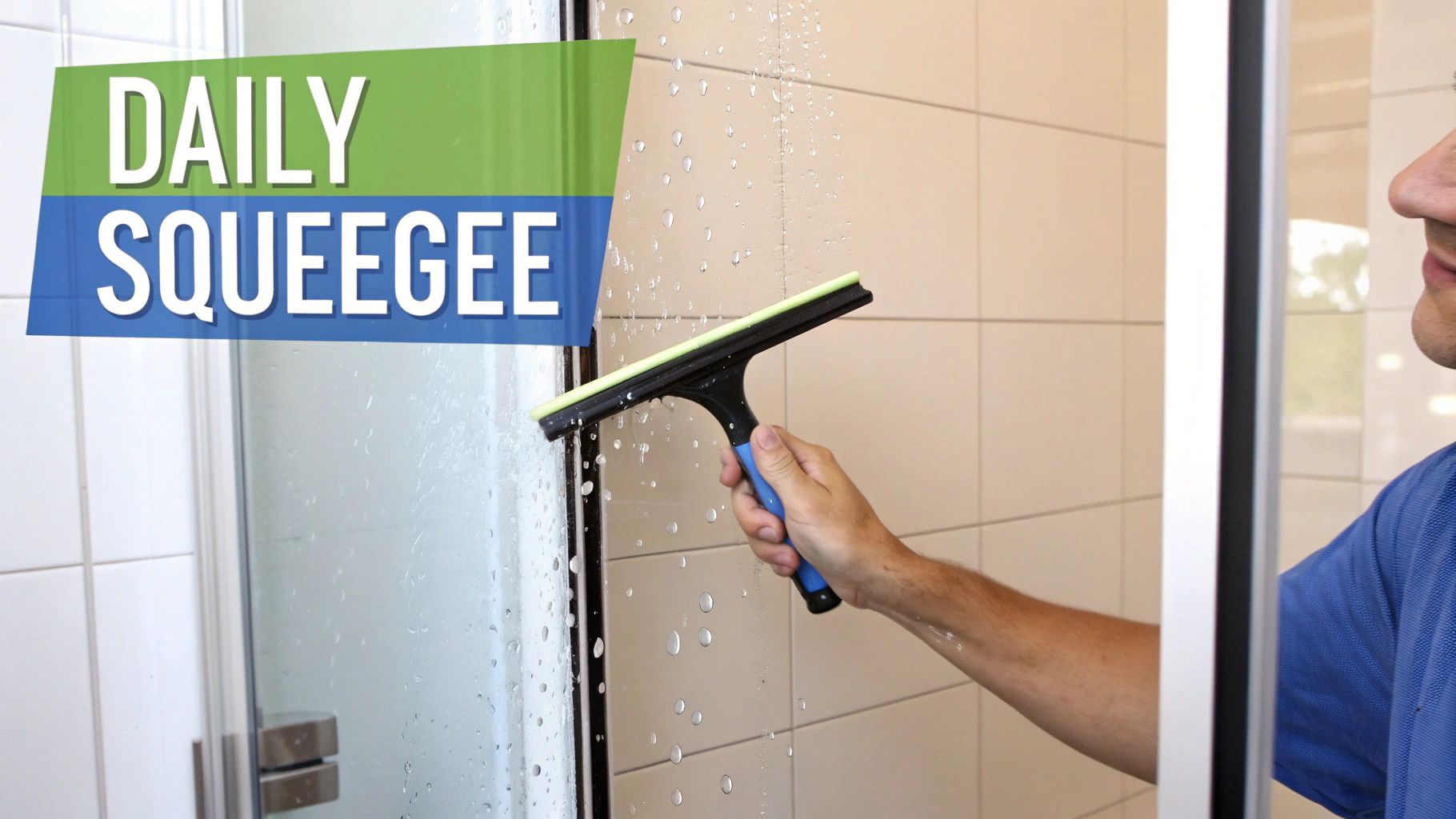
The single most effective habit you can adopt is a quick squeegee wipe-down right after every shower. This simple action is your first and best line of defense. When water droplets are left to air dry, they evaporate and leave behind all the dissolved minerals—like calcium and magnesium—that create those chalky hard water spots.
By whisking away the water, you remove the problem at its source. A quality shower squeegee can eliminate over 90% of the moisture in about 30 seconds. Just a few quick swipes from top to bottom is all it takes. Keep the squeegee on a hook inside the shower, and it will quickly become an effortless part of your routine.
A highly effective method to maintain clean glass shower doors is consistent daily use of a squeegee, which can remove over 90% of moisture that leads to hard water stains and soap scum buildup. As cleaning experts recommend, this proactive approach is the foundation for long-term clarity and minimizes the need for abrasive scrubbing.
Mastering the technique is pretty straightforward. Professionals will tell you the key is in the overlapping strokes. If you want to perfect your form, our guide on how to squeegee a window like a pro has some expert tips that work just as well for shower doors.
While a daily squeegee handles most of the water, it won't catch every last bit. A fine, invisible mist of residue can still cling to the glass. That's where a quick weekly spray-and-wipe comes in as the second layer of your maintenance plan. This step tackles any lingering soap residue or mineral traces before they can build up.
Here’s a simple routine that takes less than five minutes:
This quick weekly task ensures nothing gets a chance to accumulate, keeping the glass in pristine condition with almost no effort.
Once a month, it’s a good idea to do a slightly deeper maintenance check. This isn't a full-blown scrubbing session; think of it as a proactive treatment to reinforce your daily and weekly efforts. This monthly routine has two main goals: spot-treating any stubborn areas and reapplying a protective barrier.
First, give the glass a close inspection for any tough spots that might have snuck past you, especially near the bottom of the door or around the handle. If you find any, a simple paste of baking soda and water will gently scrub them away.
Next, and most importantly, apply a water-repellent treatment. Products like Rain-X or similar hydrophobic coatings create an invisible, slick surface on the glass. This makes water bead up and roll right off, taking minerals and soap residue with it. Reapplying this coating monthly makes your squeegee even more effective and your weekly cleans even faster, ensuring your glass stays brilliantly clear.
Sometimes, no matter how much vinegar you spray or how hard you scrub, that cloudy haze on your shower door just won't budge. If you’ve tried everything and the glass still looks foggy, you’re likely dealing with more than just stubborn soap scum.
You've probably reached the point of etching—microscopic damage to the glass surface itself caused by years of mineral buildup. Think of it like a fine scratch on a wooden table; you can't just wipe it away. At this stage, cleaning alone won't restore the glass. You need restoration.
Knowing when to put down the scouring pad is key. Continuing to scrub at etched glass with abrasive cleaners can actually make the problem worse, causing more scratches and dulling the surface even further.
Here are the tell-tale signs that it’s time to call in a pro:
Professional glass restorers don't just clean—they resurface your glass. When it comes to professional window cleaning, there are really only two methods used: a squeegee and a pure-water system. For shower door restoration, these techniques are adapted for heavy-duty work.
One of the go-to methods is mechanical polishing. Using professional-grade polishing compounds and specialized buffing pads, a technician can gently remove a microscopic layer of the damaged glass. This process strips away the etching and reveals the fresh, clear surface underneath. To see how this works, you can learn more about professional glass polishing and scratch removal.
Pros also often use pure-water systems for a flawless finish. This isn’t just filtered water; it’s deionized water, stripped of all minerals. When it dries, it leaves absolutely nothing behind—no spots, no streaks, just crystal-clear glass. This is a game-changer in areas known for extremely hard water, like Las Vegas, Phoenix, or Denver, where professional intervention can give you a completely fresh start.
Even when you think you have the process down, a tricky situation can pop up. Let's tackle some of the most common questions I hear about keeping shower glass looking its best.
Prevention is your best friend here. The single most powerful habit you can build is to grab a squeegee and wipe down the glass after every single shower. It takes less than 30 seconds, but it stops water droplets and soap residue from ever drying on the surface.
Think about switching from traditional bar soap to a liquid body wash, too. Bar soaps often contain talc or paraffin that creates that waxy, stubborn film, while liquid soaps are much less likely to cause buildup. For an extra layer of protection, treat your glass with a water-repellent product every few weeks. It creates an invisible shield that makes water bead up and roll right off, which seriously cuts down on spotting.
Absolutely. Using the wrong product can do more harm than good, and some damage is irreversible. Steer clear of these at all costs:
Always—and I mean always—test a new cleaner on a small, hidden spot first. This simple check can save you from a huge, costly headache.
Textured and frosted glass are a bit different because all those little grooves are perfect hiding spots for grime. A squeegee just won't cut it.
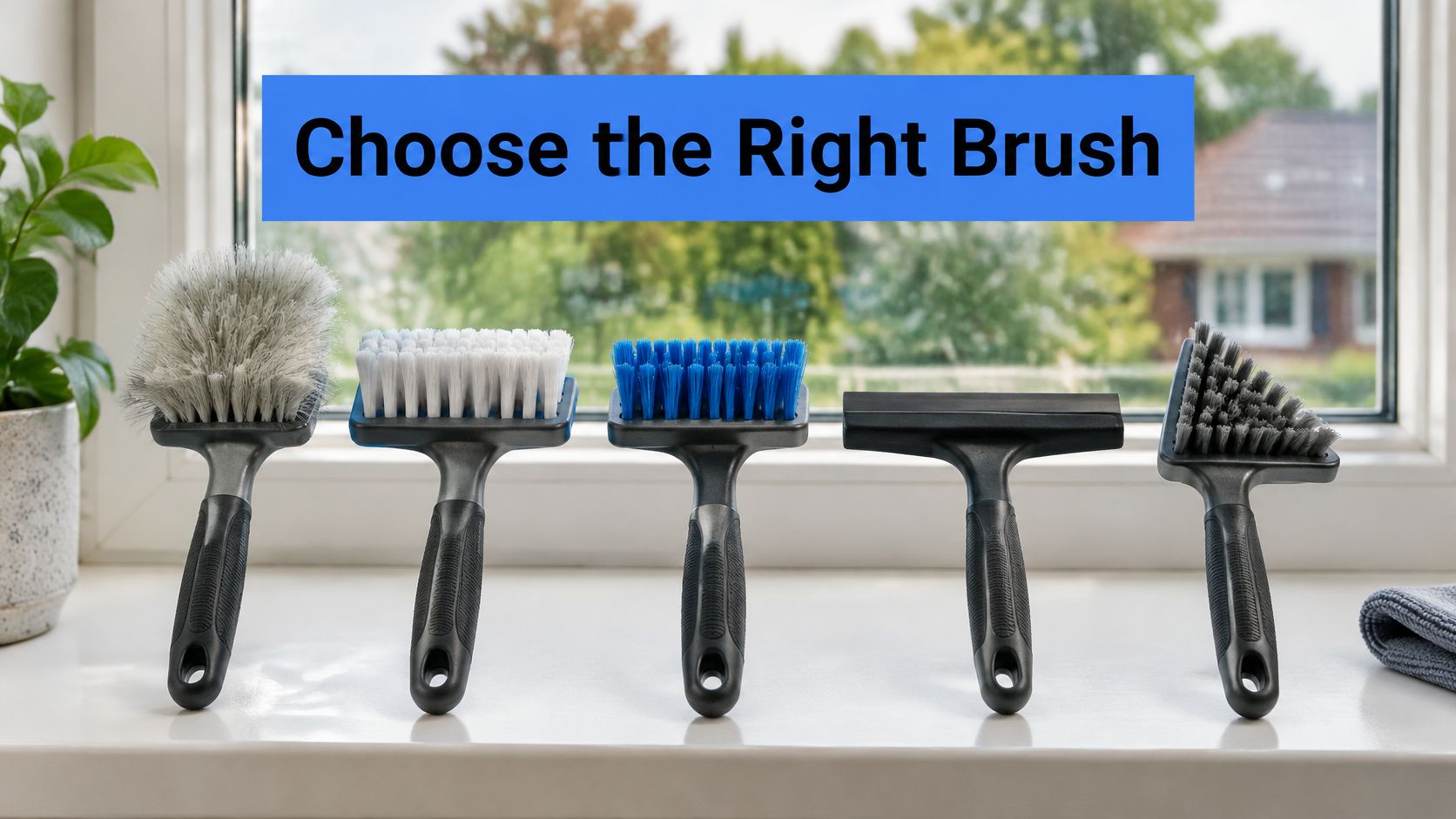
Your best bet is a soft-bristle brush. It can get into all the nooks and crannies to scrub the dirt out. I've found that paste-like cleaners (like a simple mix of baking soda and hydrogen peroxide) work much better than sprays. The paste clings to the surface instead of just running down. The most important part is to rinse the glass thoroughly when you're done. If you leave any cleaning residue behind, it’ll just become a magnet for more dirt.
Still fighting with glass that just won’t come clean? You might be dealing with etching, which requires a professional touch. The team at Professional Window Cleaning has the advanced tools and know-how to restore glass to a truly spotless finish. Schedule your service today!
Read our blog posts regularly and keep learning.