
Care and Maintenance
Residential Window Cleaning: The Homeowner's Guide
Master residential window cleaning with our guide. Learn professional methods, costs, frequency, and how to choose a service for AZ, CO, and NV homes.


You pulled into the driveway, glanced at the front of the house, and noticed it right away. The paint still looks good. The landscaping is tidy. But the glass looks dull, dusty, and tired.
That is usually the moment homeowners start searching for residential window cleaning services near me.
Clean windows change the whole feel of a property. They sharpen curb appeal from the street, brighten rooms from the inside, and make the house feel cared for. After more than 26 years in the trade, I can tell you this is one of the fastest ways to make a home look refreshed without taking on a major project.
You walk up to a home that is otherwise well kept. The beds are trimmed, the paint is solid, the entry looks inviting. Then the glass catches the light and shows every hard-water spot, dust line, and screen smear at once.
That single detail changes how the whole property reads.
Clean windows give a house sharper lines and better light. From the street, the trim looks cleaner and the architecture looks more defined. From inside, rooms feel brighter because you are not looking through a layer of film, pollen, or mineral residue. I have seen this in stucco homes in Scottsdale, mountain properties in Flagstaff, and brick homes along the Front Range. Different materials, different climates, same result. Clean glass makes the home look cared for.

Homeowners usually adapt to gradual buildup. Desert dust settles at the edges. Irrigation leaves spotting. Screens hold debris that dulls the pane even when the glass is not heavily soiled. Once that buildup is removed correctly, the change is obvious fast. The home looks brighter, and the glass stops drawing attention for the wrong reason.
Demand on the residential side has stayed strong for a reason. According to Window Genie’s window cleaning industry statistics, the global cleaning services market was valued at $55,715.0 million in 2020, the overall industry saw a 5.2% revenue decline that year, and residential window washing still grew in demand as homeowners put more money into their properties.
Window cleaning does not compete with other curb appeal projects. It helps them work. Fresh glass makes paint look cleaner, landscaping look more intentional, and entry details stand out instead of getting lost behind haze and reflection distortion.
If you are already planning exterior upgrades, this guide on how to improve curb appeal on a budget is worth reading. It matches what seasoned contractors see every day. Modest improvements show better when the windows are clear.
After 26-plus years in residential window cleaning, I can say the biggest difference is not effort. It is judgment.
A good result depends on choosing the right method for the glass, the frame, and the local conditions. Some homes need traditional squeegee work for tight detail and interior clarity. Others benefit from pure-water cleaning outside, especially where dust, heat, or hard water create repeat buildup. A pro knows when each approach fits, and that choice shows up in the final finish.
Homeowners notice the outcome. Clear panes. Clean edges. No drips on stucco, no bent screens, no dirty water left in the tracks, and no surprise spots reappearing when the sun hits the glass later in the day.
Saturday starts with good intentions. By midmorning, the bucket is out, the ladder is open, and the first few panes look decent in the shade. By late afternoon, the upper glass is still untouched, the screens are leaning against the wall, and the windows you finished first are already showing lines at the edges.
That pattern is common because window cleaning is a trade, not just a chore. Homeowners can absolutely handle a few low panes. Whole-home results are different. The work depends on tool control, safe access, and choosing the right method for the glass, the frame, and the conditions outside your house.
The center of the pane is the easy part. The edges, corners, screens, tracks, and sills decide whether the job looks finished.
I see the same DIY problems again and again. Too much soap. Dirty water. Paper towels that leave lint. A store-bought squeegee with soft rubber that skips across warm glass. On homes in dry, hot climates, solution can flash off before you finish your pass. At higher elevations, stronger sun exposes every drag line and missed corner fast.
That is also why pros do not clean every home the same way. On some exterior glass, a pure-water window washing system for outside windows gives a cleaner result with less residue risk. On interiors, divided panes, and close-detail work, hand squeegee cleaning still wins because water control is tighter.
Second-story windows, tall entry glass, and panes set above stone, shrubs, or pool decking require judgment before they require effort. A ladder is only safe when the footing, angle, reach, and working position all make sense. If you have to lean off-center to finish a pane, the setup is wrong.
Experienced cleaners earn their keep on access alone. We know when to pole a window from the ground, when to ladder it, and when a frame or surface should be avoided to prevent damage. That protects the glass, the screens, the landscaping, and the person doing the work.
| Factor | DIY Approach | Professional Service |
|---|---|---|
| Tools used | Store-bought squeegee, paper towels, basic soap, household ladder | Trade-grade squeegee systems, scrubbers, extension poles, pure-water systems, and access equipment chosen for the house |
| Finish quality | May look clean at first, but edge lines and spotting often show later | Clean glass, detailed edges, and fewer callbacks from missed residue |
| Higher windows | Limited by ladder confidence and reach | Cleaned with methods matched to height, access, and surface conditions |
| Time investment | Often takes most of a weekend once setup, screens, and cleanup are included | Handled in a planned service visit with an efficient workflow |
| Risk to screens and frames | Easy to bend screens, leave drips in tracks, or push debris into corners | Components are removed, cleaned, and reinstalled with a repeatable process |
| Safety | Ladder work creates the biggest risk | Trained access methods reduce risk and prevent bad ladder placement |
| What gets missed | Tracks, sills, screen frames, and upper edges | The full window assembly gets attention, not just the visible glass |
Homeowners usually count the cleaning time and forget the rest. Furniture gets moved. Screens come out. Buckets need fresh water. Ladders get repositioned over and over. Then everything has to be wiped down, put back, and checked again once the sun shifts.
That is why a DIY weekend often turns into a half-finished project.
The hardest windows are usually the last ones left standing. Those are also the panes that affect the look of the house most. Tall front entry glass, high foyer windows, and exposed west-facing panes catch light aggressively and show every flaw.
A seasoned crew is paid for results, but also for judgment. We keep dirty water off stucco and painted surfaces. We avoid bending screens. We do not grind grit into tracks or leave drips drying on frames. That matters even more if you are already improving the exterior, because clean windows make fresh trim and siding work read sharper. Homeowners planning that kind of upgrade often look at guides like Hiring a Local Painting Company Near Me for the same reason. Craft work shows better when the surrounding surfaces are clean.
DIY has its place for touch-ups and easy ground-level panes. Full exterior service, upper-story work, hard-water residue, and detail cleaning are where professional experience pays for itself.
A homeowner in Phoenix may need one approach on the west-facing exterior glass and another on the interior panes the same day. A home in Denver or Flagstaff adds a different twist. Higher UV exposure, windblown grit, snow residue, and faster drying times all change how glass should be cleaned if the goal is a clear finish without damage.
Professional window cleaning comes down to two core methods. Squeegee work and pure-water cleaning. After 26 years in the trade, I can say the skill is not knowing the names of the methods. It is knowing which one belongs on which window, in which weather, on which house.
The squeegee remains the precision tool. It gives direct control over how much water touches the glass, where that water goes, and how the edges are finished. That matters indoors, on detailed windows, and anywhere a spotless edge is part of the final look.
A proper setup usually includes a scrubber, a bucket solution that will clean without soaping up the frame, sharp rubber matched to the temperature, and towels that catch detail water instead of smearing it around. Technique decides the result. Poor angle leaves lines. Too much pressure leaves chatter. Bad detailing leaves the corners dirty even if the center looks clean.
Squeegee work is usually the right call for:
Homeowners who want a clearer comparison between hand cleaning and pole systems can read this explanation of pure water window washing.
Clean windows also affect how other exterior work reads from the curb. If trim, stucco, or siding is being updated, glass should not be the dull surface left behind. The same specialist mindset applies across trades, which is why this guide on Hiring a Local Painting Company Near Me is a useful companion.
Pure-water cleaning is built for exterior efficiency, reach, and consistency. The water is filtered to remove the minerals that cause spotting. It is then pumped through a water-fed pole to a brush that scrubs the glass and rinses it with purified water. If the cleaning is done correctly and the glass is suited to the method, the water dries clear without hand drying.
This is the method that changed exterior residential work in a real way. It lets crews clean high glass from the ground in many situations, reduce ladder dependence, and cover large elevations faster without sacrificing the finish on standard exterior panes.
This section is easier to understand when you see the equipment in action.
Pure water is often the better choice for:
It also performs well in dry climates where exterior glass picks up dust quickly. In Las Vegas and Phoenix, mineral residue and fast evaporation can punish bad technique, so the filtration quality and rinse method matter. In Denver and Flagstaff, wind, pollen, and seasonal debris often build up on upper glass and skylight-adjacent areas where pole access makes more sense than repeated ladder moves.
Good cleaners do not force one method across the whole property. They read the glass.
Interior windows usually call for squeegee work because water control matters more than reach. Exterior upper windows often favor pure water because safety, access, and rinse consistency matter more than hand detailing. Some homes need both methods on the same visit. In fact, many of the best residential jobs do.
The deciding factors are simple. Access. Frame style. Soil load. Sun exposure. Temperature. Whether the contamination is loose dirt, oily film, bug debris, or hard-water staining. Hard-water spots are a good example. Pure water helps prevent new spotting on routine exterior maintenance, but existing mineral deposits often need separate restoration work by hand.
The best method is the one that fits the glass, the climate, and the finish the homeowner expects. That is the difference between someone cleaning windows and someone practicing the trade well.
You book a window cleaning appointment because the glass looks dirty. What matters on service day is everything around that cleaning. The crew should arrive knowing how to protect floors, handle screens, choose the right method for each window, and catch problems before water ever touches the pane.
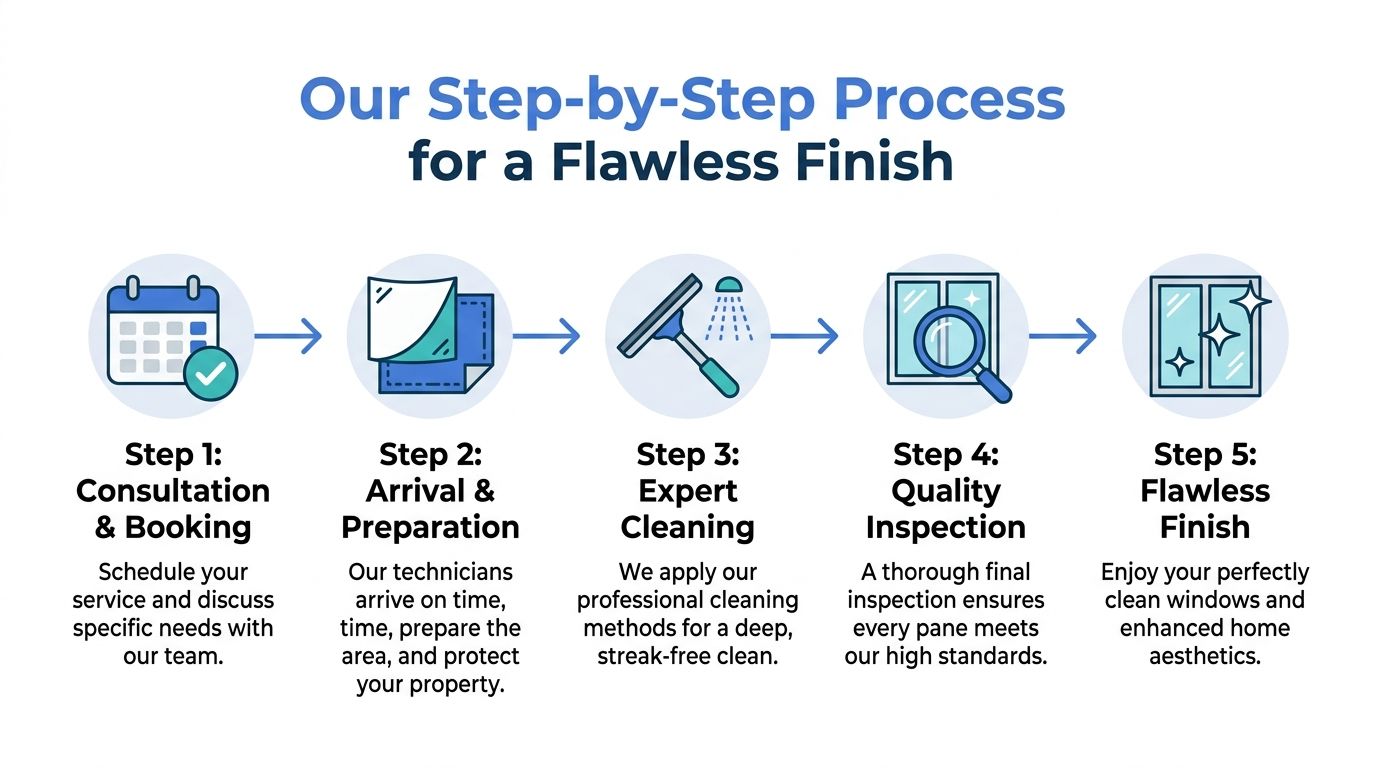
Every quality job begins with a short inspection of the home. We confirm the scope, check access, identify which screens need to come out, and flag anything that changes the plan, including hard water staining, paint specks, oxidized frames, bug debris, or tight landscaping.
That first pass saves frustration later.
It also tells the technician what can be cleaned and what needs to be explained. Mineral deposits, seal failure, and etched glass do not respond like ordinary dirt. A seasoned pro points that out before the work starts, not after the window dries.
Inside, good crews use towels, drop cloths, and controlled water so furniture, flooring, and walls stay dry. Outside, they pay attention to hose routing, gate latches, pets, planters, and delicate finishes around the windows.
These details separate trade work from rushed work. Clean glass is expected. Respect for the home is part of the service.
A flawless finish does not come from using one tool everywhere. It comes from matching the method to the glass.
Interior panes usually get traditional hand work with a washer, squeegee, and detailing cloth because edges, drips, and nearby finishes need tight control. Exterior upper panes may be cleaned with a pure-water pole if the glass, frames, and access make that the better choice. On many homes, especially in dry markets and high-altitude areas, the best result comes from combining both methods on the same visit.
A full residential service also covers the parts that affect the final appearance and how long it stays clean:
As noted earlier, professional crews usually finish faster than a homeowner working alone because the tools, access systems, and sequence are already dialed in. On larger homes, that matters. It keeps the job efficient and reduces unnecessary ladder movement.
Anyone can wash glass. The last inspection is where real professionalism shows.
Technicians should check panes from more than one angle, especially on sunlit glass where edge lines and small misses show up fast. Screens need to go back in square. Sills should be left tidy. If a pane still has a line, a corner mark, or a drip starting under the frame, it gets corrected before the crew packs up.
I have seen plenty of jobs that looked fine from ten feet away and sloppy from the living room chair. Final inspection prevents that.
A flawless finish usually comes from the last few minutes of checking and touch-up, not from rushing through the first pass.
From your side, the appointment should feel orderly and easy to follow:
That is the process behind polished results. It is not just speed. It is sequence, judgment, and attention to the details that homeowners notice the moment the light hits the glass.
You can see the difference in a week. A home on a dusty Las Vegas street picks up grit on the lower panes after wind and irrigation overspray. A home in Flagstaff or Denver may have cleaner-looking glass at first glance, but pollen, sap mist, insect residue, and weather swing fallout start collecting in corners, along frames, and on harder-to-reach elevations.
Those are not the same cleaning problems, and they should not be treated with the same method.
In dry desert neighborhoods such as Las Vegas, exterior glass takes a beating from airborne dust, wind-driven grit, and mineral deposits left by sprinklers. According to Window Hero, homeowners in these desert markets face 20% to 30% higher dust levels, and a proactive bi-annual cleaning schedule can extend window seal integrity by up to 30%.
That matters because the wrong approach can make the glass look worse by the afternoon. If a technician leaves even a little contaminated water behind in direct sun, spotting shows up fast. On many desert exteriors, pure-water cleaning is the better choice because it flushes away loose soil and dries spot-free without adding fresh residue. On lower panes with baked-on mineral spotting, though, pure water alone is not enough. Those windows often need traditional detailing and, at times, restoration work.
Higher-elevation properties deal with a different mix. Wind exposure, pine pollen, sap, storm residue, and steep access conditions change both the cleaning method and the setup plan.
I do not choose squeegee or pure-water by habit. I choose based on what is on the glass. Exterior panes under trees usually need more agitation before they are ready to rinse clean. Large upper-story windows on sloped lots often clean better and more safely with water-fed poles than with repeated ladder moves. Interior glass, French panes, and detailed cut-ups still favor hand work because edge control matters more there.
A good local company looks past the window count and asks better questions. Is there hard-water overspray on the west side? Do nearby trees load the north elevation with pollen and sap? Does afternoon sun expose every edge line and missed corner?
The answers shape the service plan:
The best results come from matching the method to the climate, then matching the technique to the window.
Scheduling should follow that same logic. Protected windows under deep overhangs may hold their finish longer. Glass exposed to open wind, irrigation, trees, or hard afternoon sun usually needs more regular care to prevent buildup from turning into scraping, stain removal, or seal stress later. If you want a clearer picture of how climate, access, and condition affect service decisions, this breakdown of window cleaning cost factors explains what changes a routine job into a more involved one.
“Residential window cleaning services near me” should mean more than a company close to your address. It should mean a crew that understands what your glass faces in your part of the region, and knows when to use a squeegee, when to use pure water, and when the job calls for both.
Window cleaning prices make more sense when you know what you are paying for. Most homeowners do not need a generic price sheet. They need to understand why one house is simple and another is not.
The first factor is the number of windows. That sounds obvious, but count alone is not enough. A home with straightforward sliders is different from a home full of French panes, transoms, or large fixed glass panels.
The second factor is access. Ground-floor glass is one thing. Windows above landscaping, on steep grades, over balconies, or on upper stories require a different plan.
Third is condition. Light dust cleans up quickly. Mineral spotting, bug residue, adhesive, paint specks, and neglected tracks require more labor and more care.
For a typical 2,000 sq ft home with around 40 windows, homeowners can expect costs to range from $200 to $400, averaging $4 to $10 per window. Hiring a professional service also yields up to 50% time savings over DIY and helps ensure compliance with OSHA safety protocols using equipment like full-body harnesses for homes with 2+ stories, according to AZ Window Services.
If you want a broader breakdown of what goes into service pricing, this page on cleaning services cost is a helpful companion.
Square footage helps, but windows do not care how big the living room is. Pricing often changes because of details such as:
Low pricing can sometimes mean corners get cut. The cleaner may skip screen care, rush the detailing, or use a ladder where a safer method should have been chosen. Homeowners usually notice that after the crew leaves, when drips, missed edges, or inconsistent results show up in direct sunlight.
A solid estimate should feel clear, not vague. It should reflect the actual windows, actual access conditions, and the level of detail required for your home.
It depends on the environment around your home. Dusty desert areas and homes exposed to irrigation overspray often need more frequent exterior care. Other homes do well on a bi-annual schedule. The right interval depends on dust, trees, sprinklers, and how quickly your glass shows buildup.
Yes. Good service usually includes attention to the surrounding parts that affect the finish, especially screens, sills, and tracks. If those areas are ignored, clean glass does not stay clean for long.
Neither is “better” in every case. Squeegees are excellent for interior glass and detailed close-range work. Pure-water systems are excellent for many exterior windows, especially where reach and spot-free rinsing matter. A skilled cleaner uses both methods based on the window.
A little preparation helps. Move fragile items away from interior windows, unlock gates if exterior access is needed, and make sure pets are secured. Everything else should be handled by the crew.
Yes. That is one of the smartest questions you can ask. If your home has upper-story windows or difficult access, you want a company that works with proper safety procedures and professional equipment.
If you want experienced help from a team that has been in the trade since 1999, Professional Window Cleaning provides residential, commercial, and high-rise window washing across Arizona, Colorado, and Nevada. Whether you need routine home window cleaning, help with difficult upper-story glass, or service suited to desert dust and high-altitude conditions, they bring the kind of method-driven workmanship that only comes from decades in the field.
Read our blog posts regularly and keep learning.