Care and Maintenance
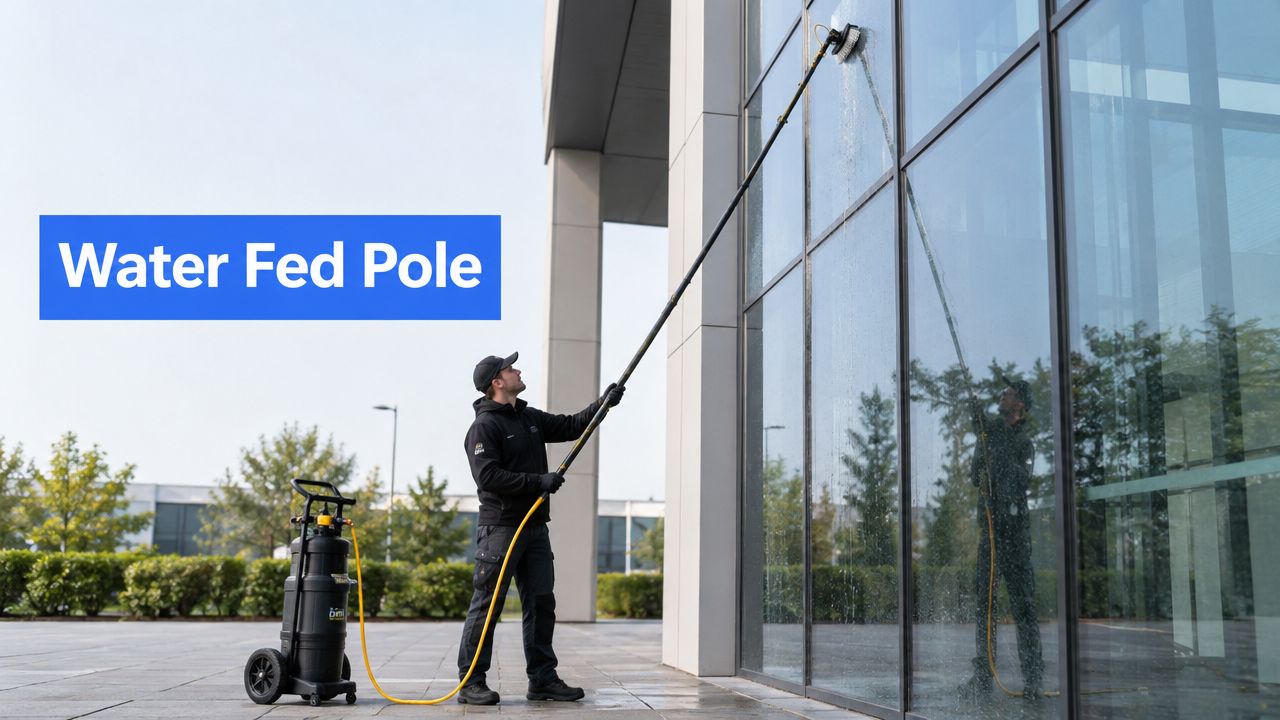
How Does Water Fed Pole Window Cleaning Work
Learn how does water fed pole window cleaning work, from purified water chemistry to telescopic poles, brush heads, safety benefits, and when to hire pros.


You notice it first from inside the room. The light feels dull. The view looks hazy. Then you step outside, catch the glass at an angle, and see the film, the dust, the hard water spotting, and the streaks left by a rushed DIY attempt. Clean windows change a property fast. They sharpen curb appeal, brighten interiors, and make a home or business feel cared for.
That result doesn't come from shortcuts. In professional work, there are only two real methods: the traditional squeegee and the pure-water system. Everything else is either a variation of those methods or an amateur workaround.
After more than 26 years in the trade, one thing is clear. Good window cleaning is simple to describe and hard to do well. It takes method, judgment, safe access, and the discipline to use the right system for the glass in front of you, whether that's in Phoenix, AZ, Denver, CO, Las Vegas, Scottsdale, Tempe, Chandler, Gilbert, or Flagstaff.
Window cleaning looks easy until the details start stacking up. Dust on frames falls onto wet glass. Heat dries solution too fast. Mineral-heavy water leaves spots. Screens hold debris that blows back onto freshly cleaned panes. The difference between “better” and “done right” is almost always professional technique.
This is one reason the trade remains strong. The U.S. window cleaning services industry is projected to reach $2.9 billion in revenue in 2024, with over 35,344 businesses employing nearly 90,000 people, according to window cleaning industry data gathered by Jobber. That kind of demand exists because homeowners, property managers, and commercial owners know clean glass affects how a place looks and feels.
A professional window cleaning business brings more than labor.
Clean windows don't make a property look “washed.” They make it look maintained.
A strong window cleaning business also has to run like a real service company. Scheduling, quoting, follow-up, and communication matter almost as much as technique. That's why service businesses often invest in a professional site experience through partners such as Up North Media's service business web design team, because customers judge trust long before the crew arrives.
A seasoned company knows where each method belongs, how to avoid damage, and when not to take risks. That judgment protects the customer's glass, trim, landscaping, screens, and property access points.
That's the heart of a professional window cleaning business. Not gimmicks. Not miracle sprays. Just skilled work, repeated at a high standard.
There are only two professional methods in this trade. Squeegee and pure-water cleaning. If you understand those two, you understand how expert window cleaning operates.
The squeegee is still the best tool for many windows. Interior glass is the obvious example, because you need controlled water use and a hand-finished result. It's also excellent on accessible exterior glass where detail matters, such as French panes, cut-ups, storefront doors, and windows with heavy buildup that need close attention.
This method uses a washer or scrubber to loosen soil, then a squeegee blade to remove the solution cleanly from the glass. The skill is in the pressure, angle, overlap, edge detailing, and knowing when to change rubber. A poor technician leaves lines, edge drips, and haze. A good one leaves the pane clear with no towel marks and no residue dragged across the frame.
A pure-water system uses a water-fed pole and deionized water. The science matters here. When water is purified to 0 parts per million of minerals, it can rinse the glass and dry spot-free. According to Detroit Sponge's guide to water-fed pole systems, this approach can double a cleaner's speed, allowing work rates of up to 1,000 square feet per hour compared to 500 with traditional methods, while also reducing ladder use for buildings up to 4 to 5 stories.
On the glass, the process looks simple. The brush agitates dirt. The purified water lifts and carries contamination away. Then the glass air-dries without spotting because there are no dissolved minerals left behind to dry on the surface.
For a deeper look at that process, this guide to pure-water window washing is useful if you want to understand why the system works so well on exterior glass.
Here's the practical trade-off.
Practical rule: If the glass needs close detailing by hand, reach for a squeegee. If the exterior glass can be cleaned safely and thoroughly from the ground, pure water is often the better choice.
What doesn't work is pretending one method does everything. Real professionals use both. The best result comes from choosing the method that fits the glass, the access, and the condition of the property.
Not all window cleaning is the same job. A house, a storefront, and a high-rise may all involve glass, but the work is completely different in pace, logistics, and expectations.
Homeowners usually care about three things first. They want more light, cleaner views, and a house that looks fresh from the curb. Residential cleaning also tends to be the most detail-sensitive work. Customers notice the lower corners, the screen condition, the tracks, and whether the glass looks clean from inside and outside.
In neighborhoods around Scottsdale, AZ and nearby communities, hard water, dust, and pollen can build up quickly. That means many homes need more than a quick rinse. They need the right method for each window, plus careful work around landscaping, stucco, sunscreens, and decorative grids.
Commercial clients usually think in terms of image and routine. A storefront needs clear entry glass. An office wants a polished exterior. A car dealership wants glass that complements the vehicles, not distracts from them. Medical offices and professional buildings want a clean, orderly presentation.
Commercial work also has to fit business hours, foot traffic, entry access, and customer flow. The crew has to move efficiently and leave no mess behind.
Here's a simple comparison:
| Service Type | Primary Focus | Common Clients |
|---|---|---|
| Residential | Clear views, curb appeal, interior brightness | Homeowners, condos, townhomes |
| Commercial | Professional appearance, routine maintenance | Storefronts, offices, dealerships, medical offices |
| High-Rise | Safe access, compliance, large-scale exterior glass care | Property managers, stadiums, high-rise condos, large commercial buildings |
High-rise cleaning isn't just “commercial, but taller.” It requires different planning, equipment, crew training, and jobsite judgment. Access can involve roof setups, rope systems, suspended seats, lift coordination, restricted entry points, and weather decisions that change by the hour.
A company that handles homes well isn't automatically qualified for high-rise work. Those are different operations.
Property managers know this. They're not just hiring for clean glass. They're hiring for reliable execution on a building that can't afford careless mistakes, poor communication, or unsafe practices.
A crew steps onto a site before sunrise. The glass may look straightforward from the curb, but the primary work starts with access, fall protection, pedestrian control, and one basic decision. Can this be cleaned safely from the ground with a pure-water system, or does the job call for hand work with traditional tools and controlled high-level access?
That choice matters because true professionals rely on two cleaning methods. Traditional squeegee work handles detail, interior glass, and edges that need direct hand control. Pure-water systems let us clean many exterior windows from the ground with water-fed poles, which cuts ladder use and reduces exposure for both the crew and the property.
High-rise and multi-story work add another layer of responsibility. Training, equipment inspection, roof access planning, anchor verification, and weather calls all have to happen before the first pane is cleaned. As Housecall Pro's guide to window cleaning business requirements explains, firms operating at that level have to meet state and jobsite rules, not just show up with tools and good intentions.

The safest job is the one planned correctly from the start.
If a pure-water pole can reach the exterior glass and produce the right finish, that is often the smarter setup. It keeps more work on the ground, limits ladder movement, and gives the crew better control over the area around entrances, walkways, and landscaping. If the glass has detailing needs, interior access requirements, or debris that calls for hand scraping and close inspection, traditional squeegee work is the right choice.
Everything after that follows the method.
After 26 years in this trade, I can say the most valuable safety tool is judgment. Good crews stop when wind picks up, when roof conditions are questionable, when anchor points do not check out, or when pedestrian traffic changes the risk below. Clean glass is never worth forcing a bad setup.
That same judgment affects cost. A lower quote can hide rushed planning, the wrong access method, or a crew trying to stretch basic equipment beyond what the site calls for. Customers comparing bids should understand what actually drives window cleaning costs, because safe access and proper equipment are part of the job, not add-ons.
Safe work does not happen by accident. It comes from choosing between squeegee and pure-water methods correctly, using the right equipment for that method, and having a crew experienced enough to know when the conditions say stop.
You call for a quote because the front windows look tired, the upstairs glass has spotting, and you want a straight answer before you book. Fair enough. After 26 years in this trade, I can tell you the right price comes down to two things professionals use on the glass. Traditional squeegee work and pure-water cleaning. The quote reflects which method fits the property, how much labor that method requires, and how often the glass can be kept in maintenance condition.
On homes, price usually changes with pane count, interior versus exterior scope, window style, and how accessible the glass is. A large picture window cleaned with a pure-water system from the ground is different from divided-light windows that need hand work with a squeegee. Hard water staining, paint specks, neglected frames, packed tracks, and screen cleaning all add time because they add steps, not because anyone is padding the invoice.
Commercial and multi-story work follows the same logic, but the scheduling side matters more. A small storefront on a regular route is predictable. A medical office, condo complex, or mixed-use property often needs tighter timing, more coordination, and a method choice based on access, finish standards, and how visible every mark will be during business hours.

A good quote is built from labor, method, and condition.
For a broader explanation of what actually affects cleaning services cost, compare how labor, condition, and recurring service change the final number.
Pricing models in service businesses also have to balance frequency, route density, and labor efficiency. The same planning logic shows up in other trades, including this look at car detailing price strategy in 2026.
Service frequency should match how fast the glass loses its clean appearance. Homes near dust, sprinklers, trees, pollen, or ocean air need attention sooner than protected properties. Storefronts usually need the shortest cycle because fingerprints, traffic film, and weather hit the same panes every day.
Recurring service usually costs less per visit than waiting until the windows are heavily soiled. That is simple trade math. Maintenance cleans are faster, and faster work keeps results more consistent.
For many homes, two to four cleanings a year keeps the glass in good shape. Storefronts may need weekly, biweekly, or monthly service. Offices and multifamily properties often land somewhere in between. The right schedule depends on appearance standards, budget, and whether squeegee work or pure-water cleaning will be doing most of the maintenance.
The goal is not just clean glass on service day. The goal is to keep the property from sliding into buildup that takes longer to remove and costs more to correct.
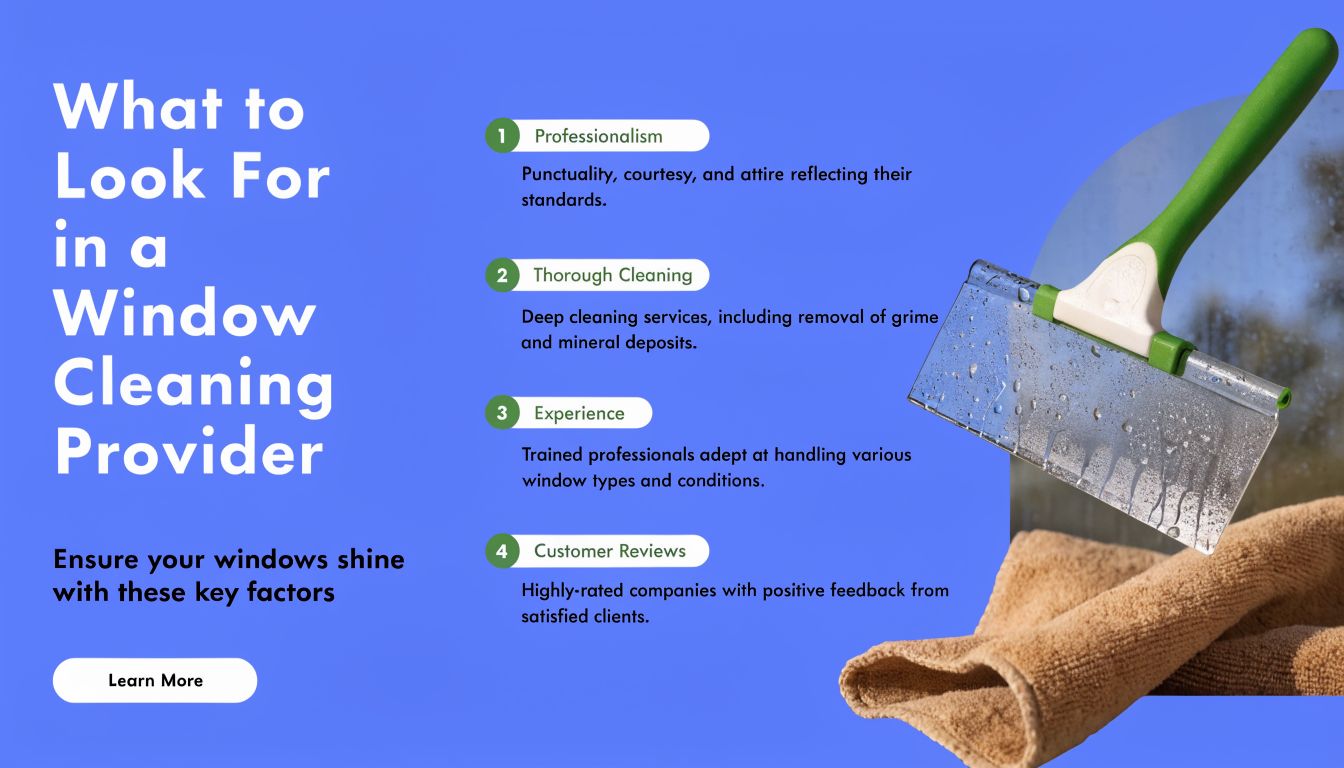
Hiring a window cleaning provider shouldn't feel like guesswork. A few signals tell you quickly whether you're dealing with a polished company or someone learning on your property.
Look for experience, clear communication, and proof that the company is set up to work professionally. In commercial and high-access jobs, insurance and proper compliance matter even more because the risk level is higher.
Here's a practical checklist:
The lowest quote can be the most expensive mistake if the work has to be redone, the crew shows up unprepared, or the company cuts corners on safety. That's true in many service trades, and good pricing strategy often reflects operational discipline. If you want a useful comparison from another field, this breakdown of car detailing price strategy in 2026 shows how serious service businesses think about scope, positioning, and profitability.
Ask one direct question before booking: “Which method will you use on my property, and why?” A real pro will answer clearly.
That question reveals a lot. If the provider can't explain the difference between squeegee work and pure-water cleaning, keep looking.
For exterior-only service, not always. Access to gates, pets, and water or electrical points may still need to be arranged ahead of time. For interior work, someone usually needs to be present unless other arrangements have been made.
Light rain doesn't automatically ruin a professional cleaning, especially on exterior glass cleaned with the proper method. The larger issue is usually safety, access, and whether wind or weather will interfere with quality. A good company will reschedule if conditions aren't right.
Many professional services also include or offer cleaning for screens, sills, and tracks. That matters because those areas affect how clean the whole window system looks after the glass is finished.
That depends on the property. Interiors and detail-heavy panes often call for a squeegee. Many exterior windows, especially on taller elevations, are excellent candidates for pure-water cleaning. The right provider will choose the method based on access, safety, and finish quality.
If your home, storefront, office, or high-rise needs expert care, Professional Window Cleaning brings more than 26 years of experience to residential, commercial, and high-rise window washing across Arizona, Colorado, and Nevada. Whether you need detailed squeegee work, advanced pure-water cleaning, or a recurring maintenance plan, their team delivers the kind of clear, polished result that makes a property look brand new.
Read our blog posts regularly and keep learning.