Care and Maintenance
Commercial Window Cleaning Phoenix: Costs and Schedules
Commercial Window Cleaning Phoenix explained: services, squeegee vs pure-water methods, pricing factors, heat-safe scheduling and how to request a quote.


Ever wondered how professionals get that perfectly clear, streak-free shine on windows? It's not magic—it's all about having the right window cleaning supply. For any pro worth their salt, there are ONLY 2 methods of window cleaning they use: the classic squeegee technique or a modern pure-water system. When you pair the right approach with the right gear, flawless results are practically guaranteed.
The real secret separating a professional window cleaning from a typical DIY job is the toolkit. Getting beyond a basic spray bottle and a roll of paper towels is the first step toward a truly professional finish.
At Professional Window Cleaning, we’ve spent over 26 years perfecting our craft, and it all comes back to two tried-and-true approaches. The specific window cleaning supply we choose depends entirely on the job, but the goal never changes: a spotless, gleaming surface that looks brand new.
The entire world of professional window cleaning really stands on two foundational techniques. Each one demands its own unique set of tools, all designed for maximum efficiency and an unbeatable finish. Think of it like a branching path, as this diagram shows.
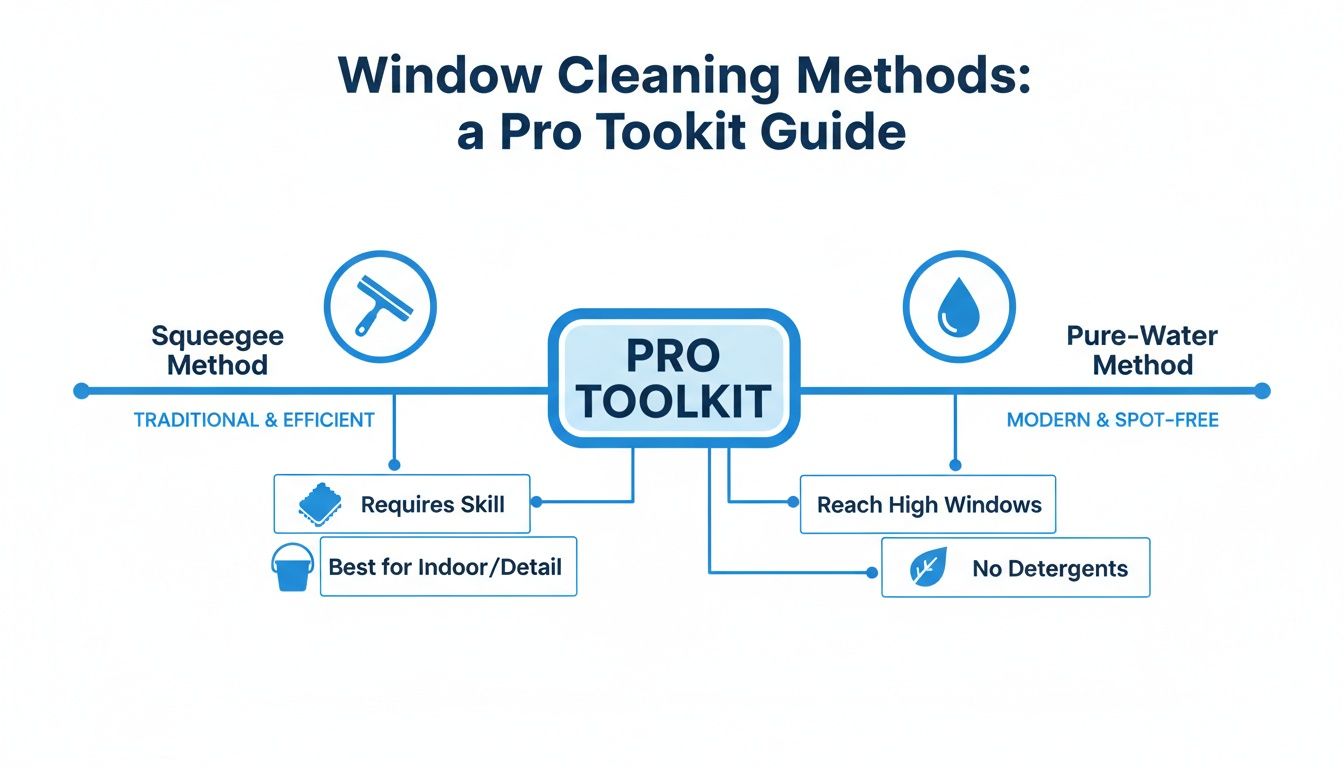
As you can see, every professional job starts with a choice: do you go with the hands-on precision of the squeegee method, or the high-tech efficiency of a pure-water system? Both paths lead to incredible results, but they require totally different equipment and skills.
The traditional squeegee method is a true art form. It’s the classic approach, known for being incredibly effective on almost any type of glass. This hands-on technique relies on a few key tools: a high-quality squeegee, a soft applicator to scrub the glass, a bucket, and a specialized cleaning solution that gives the blade the perfect amount of "slip" to glide smoothly. And you can't forget the details—a specialized glass towel is essential for drying the edges and buffing out any last imperfections.
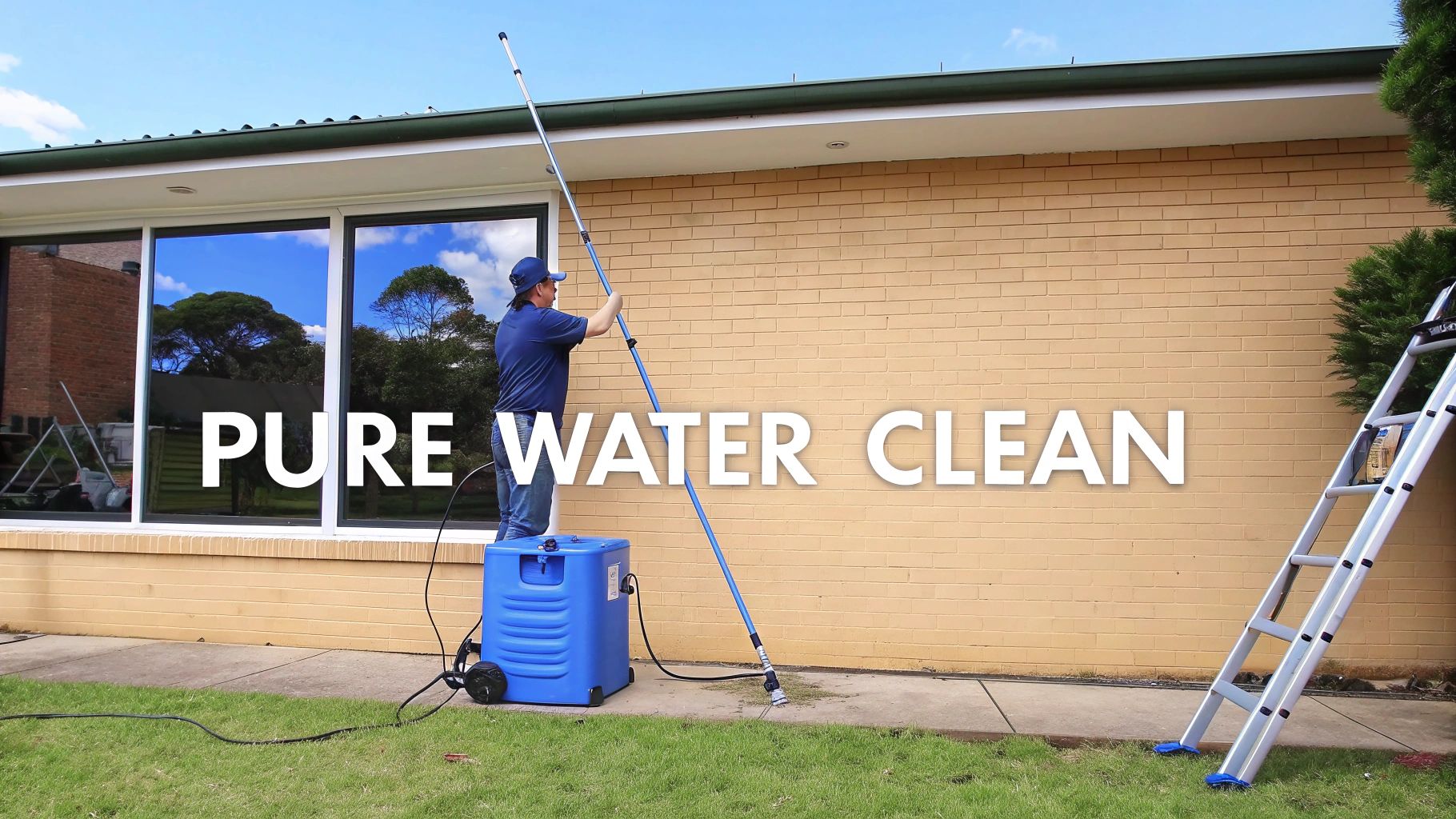
On the other side, you have the pure-water system. This is a more modern, chemical-free approach that uses a multi-stage filtration unit to strip tap water of all minerals and impurities. This purified water is then pumped through a long pole with a brush on the end, letting us scrub and rinse windows from the safety of the ground. Because the water is 100% pure, it dries without leaving a single spot or streak behind.
To give you a clearer picture, here’s a quick breakdown of what you'd find in a pro's van for each method.
As you can see, while the goal is the same, the journey to a clean window is quite different depending on the tools you use.
The demand for these professional-grade tools is on the rise. In fact, the glass cleaner market is expected to jump from $4.1 billion in 2025 to $7.4 billion by 2035. This growth reflects a major shift toward the kind of effective, often eco-friendly, formulas that professionals depend on.
At its core, professional window cleaning is about having the right tool for the right situation. Whether it's the tactile feedback of a squeegee in hand or the reach and safety of a water-fed pole, the supply dictates the outcome.
Understanding these fundamental differences is the first step in appreciating what goes into a professional service. For a deeper dive into the specific gear we use, check out our guide on professional window cleaning equipment.
The classic squeegee method is the heart and soul of professional window cleaning. Think of a high-quality squeegee as a master chef’s favorite knife—the quality of the tool and the skill of the user make all the difference. It's a hands-on craft that, once perfected, delivers an unmatched, streak-free shine on just about any glass surface. For over 26 years, this is the exact approach we've relied on at Professional Window Cleaning to make windows sparkle.
Mastering this method starts with understanding the tools in a professional's kit. It’s so much more than a piece of rubber on a handle. Each part is designed to work together, turning what can be a frustrating chore into a smooth, satisfying process.
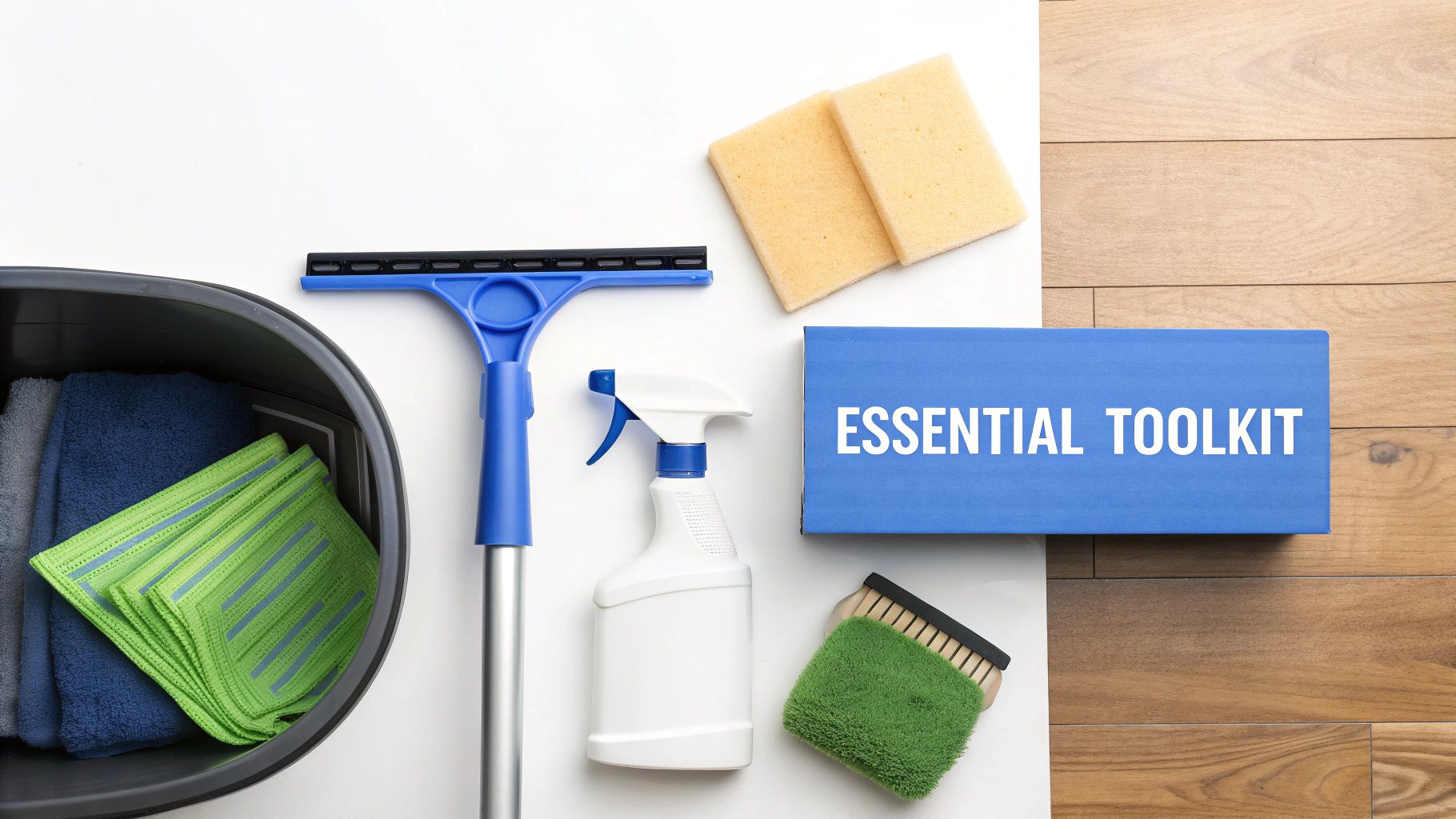
A true pro's toolkit is a carefully assembled collection of specialized gear. Each piece of this window cleaning supply set plays a vital role in getting those flawless results, whether we're working on a home in Scottsdale or a storefront in Denver.
Here are the must-haves:
This setup ensures every step, from the initial scrub to the final wipe-down, is done with precision. Our teams service properties in Las Vegas, Phoenix, and beyond, relying on these core tools daily.
One of the biggest mistakes DIYers make is grabbing the wrong cleaning solution. Household dish soaps create far too many suds, which can dry on the glass and leave a hazy film that's almost worse than the dirt you started with.
Professional window cleaning concentrates are formulated to create the perfect amount of "slip." This lubrication lets the squeegee blade glide effortlessly across the glass without skipping or chattering. It lifts dirt away from the surface so the blade can shear it off cleanly, leaving absolutely nothing behind.
A professional solution provides just enough lubrication for a smooth glide but rinses cleanly. It’s a delicate balance that separates a professional finish from a DIY attempt.
Having the right window cleaning supply is only half the battle; technique is what brings it all home. Pros use specific, practiced movements to make sure every inch of glass is covered without leaving tell-tale lines.
The most popular and effective technique is known as the "fanning" or "S-method." Here’s how it works:
This technique minimizes starts and stops, which is the number one cause of streaks. It definitely takes practice, but mastering it is the key to achieving those perfectly clear results that define a professional job, from the suburbs of Phoenix to the high-rises of Las Vegas.
Imagine cleaning the exterior windows of a multi-story building without ever climbing a ladder or using a single drop of soap, only to watch them dry to a perfect, spot-free finish. This isn’t some futuristic concept; it’s the reality of modern window cleaning, all thanks to the pure-water system. This technology has fundamentally changed how professionals tackle certain jobs, offering a safer, faster, and remarkably effective alternative to traditional methods.
At Professional Window Cleaning, we've fully embraced this method for its incredible results and safety benefits, especially on properties with hard-to-reach glass. The science behind it is both simple and brilliant.
So, what makes "pure" water so special? Normal tap water is full of minerals and dissolved solids—think calcium, magnesium, and other microscopic particles. When tap water evaporates on a window, it leaves these minerals behind, creating those all-too-familiar white spots and streaks.
A pure-water system is essentially a sophisticated, multi-stage filtration unit. As tap water passes through, it undergoes a process like deionization or reverse osmosis, stripping out 100% of these total dissolved solids (TDS).
The result is water that’s incredibly pure and in an unstable state. It actively seeks to bond with other substances, which turns it into a powerful, natural cleaning agent all on its own.
Think of pure water as a powerful magnet for dirt. When it's scrubbed onto a window, it aggressively pulls dirt, grime, and pollen off the glass and holds onto it. Then, when the window is rinsed with more pure water, all that dirt is washed away completely.
Since there are no minerals left to be deposited, the water simply evaporates into thin air, leaving absolutely nothing behind. The result is a flawless, streak-free surface that dries clear on its own.
The true power of this method comes from combining purified water with another crucial piece of window cleaning supply: the water-fed pole. This essential gear is what makes the system so efficient and safe.
This whole setup eliminates the need for ladders or lifts on many low to mid-rise buildings, drastically improving safety for technicians working on properties in cities like Denver and Scottsdale. The entire job can often be done from the safety of the ground. This not only boosts safety but also significantly speeds up the cleaning process, making it a game-changer for commercial and residential properties alike.
This focus on advanced systems reflects a broader industry trend. Innovations in window cleaning supplies are driving major growth, with the global building window cleaning systems market projected to surge from $2.27 billion in 2025 to $5.12 billion by 2031. This includes everything from advanced pure-water setups to automated robotic cleaners now being used on high-rises in cities like Las Vegas and Denver, which reduce risks and time for professionals. You can explore more about these market trends and their impact on the industry.
When you decide to tackle window cleaning, you'll inevitably face a choice at the hardware store: grab a cheap, all-in-one kit, or invest in higher-quality gear. Is it really worth spending more on professional-grade tools for a home project? The answer almost always comes down to performance, longevity, and how much you value your time and the final result.
The difference between consumer-grade and professional equipment is something you feel immediately. Imagine trying to use a flimsy, plastic squeegee from a big-box store. The blade is probably uneven, the handle feels awkward, and it will almost certainly leave frustrating streaks behind.
Now, picture a perfectly balanced brass or stainless-steel squeegee—the kind the experts at Professional Window Cleaning have relied on for over 26 years. It glides effortlessly across the glass, its high-quality rubber blade making clean, consistent contact. The professional tool simply delivers a better result in a fraction of the time. This contrast holds true for every single piece of your window cleaning supply kit.
The gap between DIY and pro-grade supplies isn't just about the price tag; it’s about thoughtful design and durability. Professional tools are built to withstand the rigors of daily use, while consumer products are often designed for occasional, light-duty tasks.
Here's a quick rundown of the major differences:
Ultimately, the choice hinges on your goals. If you only have a few easy-to-reach windows and are okay with "good enough," a basic kit might get the job done.
Investing in professional-grade supplies is an investment in quality, speed, and frustration-free results. The right tools empower you to work like a pro, turning a tedious chore into a satisfying task with a flawless finish.
When deciding which route to take, it helps to see a direct comparison of what you get for your money.
The table makes it clear: while DIY supplies are cheaper upfront, professional tools offer a far better return in quality, durability, and the satisfaction of a job well done.
For homeowners with larger properties, lots of windows, or just a desire for a truly pristine look, the return on investment for quality gear becomes obvious pretty quickly. You’ll spend less time fighting with your tools and more time enjoying those crystal-clear views.
However, it’s also important to weigh this against the cost and convenience of hiring a professional service. For complex jobs, high windows, or if you simply lack the time, bringing in a team that already has thousands of dollars invested in top-tier equipment is often the smartest choice. A service in Las Vegas, for example, arrives with everything needed for a perfect job, saving you both the upfront supply cost and the time spent doing the work. Understanding this balance helps you make the best decision for your home and your budget.
Cleaning a storefront window is one thing. Tackling the glass on a 20-story office building? That’s an entirely different league.
When you scale up to commercial and high-rise properties, the required window cleaning supply kit takes a massive leap in complexity, cost, and safety. The standard squeegee and bucket that work perfectly for a single-story home are completely out of their depth when you’re working hundreds of feet in the air.
This kind of work demands heavy-duty, industrial-grade equipment built for one purpose: keeping technicians safe and efficient while suspended stories above the ground. For property managers overseeing buildings in downtown Denver or the glittering condos of Las Vegas, understanding this gear is crucial. It explains why these jobs are strictly for seasoned pros.
Companies like Professional Window Cleaning, with over 26 years of hands-on experience, invest heavily in the right training, insurance, and specialized equipment to handle these demanding projects.
When gravity becomes your biggest workplace hazard, the standard supply list gets a lot longer. Safety is non-negotiable, and every single piece of equipment must meet—or, preferably, exceed—strict industry standards.
Here’s a glimpse at the core supplies needed to work safely at height:
And that's just the beginning. Every job site requires a unique setup, and all of it has to be inspected before every single use. You can dive deeper into the specific tools in our high-rise window washing equipment guide.
The needs of the commercial sector are a huge driver in the cleaning industry. Market analysis projects that commercial clients will capture 34.2% of the cleaning market in 2025. Why? Strict hygiene mandates and the sheer volume of foot traffic in places like professional stadiums, medical offices, and car dealerships. This trend underscores just how critical professional appearance is for modern businesses.
For commercial properties, it’s not just about clean windows. It’s about brand image, tenant satisfaction, and protecting a multi-million dollar asset. Using the wrong equipment or an untrained team isn't just a mistake—it's a massive liability risk.
The sheer scale of these buildings means that both squeegees and pure-water systems get used, just in a high-reach capacity. A technician might use a squeegee while suspended in a bosun’s chair, while another team uses a water-fed pole from a lower rooftop or balcony.
For anyone managing specialized cleaning operations, knowing how to organize these kits is key. A good guide for professionals on creating effective kits can offer valuable insights into maintaining efficiency and safety. This specialized window cleaning supply arsenal is what ensures that no matter how tall or complex a building is, a pristine result can be delivered safely every time.
So, you've gotten a peek into the world of professional-grade window cleaning tools. Now comes the big question: should you gear up and tackle the job yourself, or is it better to call in an expert who already has the whole setup? This isn't just about saving a few bucks; it's a practical decision that hinges on your time, the complexity of the job, and most importantly, your safety.
A single-story ranch with a dozen easy-to-reach windows? That's a perfect Saturday morning DIY project. But a two-story home with tricky second-floor windows or delicate, older glass? That's a whole different ballgame. This is where you need to take a step back and honestly evaluate what you're up against.
Before you get tempted to fill that online shopping cart, let's get real about your project. The best choice usually becomes pretty obvious once you consider a few practical points.
Ask yourself these critical questions:
Answering these honestly will point you toward the most sensible and efficient solution for your property.
While there's a certain satisfaction in having your own high-quality window cleaning supply kit, some jobs just scream for a professional. For anything involving real complexity or risk, the value an expert brings to the table is undeniable.
Hiring a seasoned professional is an investment in guaranteed results, absolute safety, and total peace of mind. You're not just paying for clean windows; you're paying for expertise, efficiency, and the elimination of risk.
At Professional Window Cleaning, we bring over 26 years of hands-on experience to every single job, making homes and businesses shine across Arizona, Colorado, and Nevada. Our crews in cities like Phoenix and Denver show up with thousands of dollars in specialized equipment—everything from perfectly broken-in squeegees to sophisticated pure-water systems.
This means we’re ready for any challenge, whether it’s a historic home with fragile panes or a modern commercial building with expansive glass. When you hire a pro, you skip the upfront cost of supplies, the frustrating learning curve, and the potential for a streaky, disappointing finish. You just get to sit back and enjoy the flawless, crystal-clear view.
Even with a solid guide, a few questions always pop up when you're gearing up to clean windows. After 26 years in the business, we've pretty much heard them all. Here are the answers to the most common ones we get, designed to clear up any confusion.
For that perfect, streak-free shine using a traditional squeegee, you don't need anything fancy. The best solution is a simple mix of clean water with just a few drops of a professional window cleaning soap. In a pinch, a high-quality dish soap can also do the trick.
The real secret is using just enough soap to give the squeegee blade proper lubrication—what pros call 'slip'—without creating a mountain of suds. Too many bubbles can leave behind a stubborn film. Steer clear of ammonia-based household cleaners; they're notorious for leaving streaks and can even damage window tints.
If you’re after the absolute pinnacle of perfection, a pure-water system is the answer. It uses nothing but deionized water, which dries completely spotless on its own without a single chemical.
Think of your squeegee blade as the most critical piece of the puzzle. A sharp, flawless rubber edge is non-negotiable for a perfect finish. For a pro cleaning windows all day in a city like Phoenix, that blade might get swapped out daily, or even a few times a day.
For a homeowner who only pulls out the squeegee occasionally, the blade will last much longer.
The rule of thumb is simple: inspect the rubber edge before every single use. If you spot any nicks, cuts, or feel that the edge has become rounded or stiff, it’s time for a new one. A damaged blade is the #1 cause of those frustrating streaks and lines.
Honestly, for most standard one or two-story homes, a pure-water system is probably overkill. The initial investment for the whole setup—filtration unit, hoses, and a water-fed pole—is pretty significant.
These systems really start to pay for themselves when used by professionals who are cleaning multiple properties a day or tackling buildings with tricky, hard-to-reach windows, like those on the third story or higher. This is a common scenario for our teams in Scottsdale and Denver.
For the average homeowner, taking the time to master the traditional squeegee method with good-quality tools will deliver fantastic, deeply satisfying results for a tiny fraction of the cost. The squeegee and applicator method is still the gold standard for most homes.
Ready to skip the supplies and just get the job done by experts? For a flawless, streak-free shine every single time, trust the seasoned team at Professional Window Cleaning. With over 26 years of experience, we have the right tools and know-how for any job, big or small. Get your free estimate today!
Read our blog posts regularly and keep learning.