Care and Maintenance
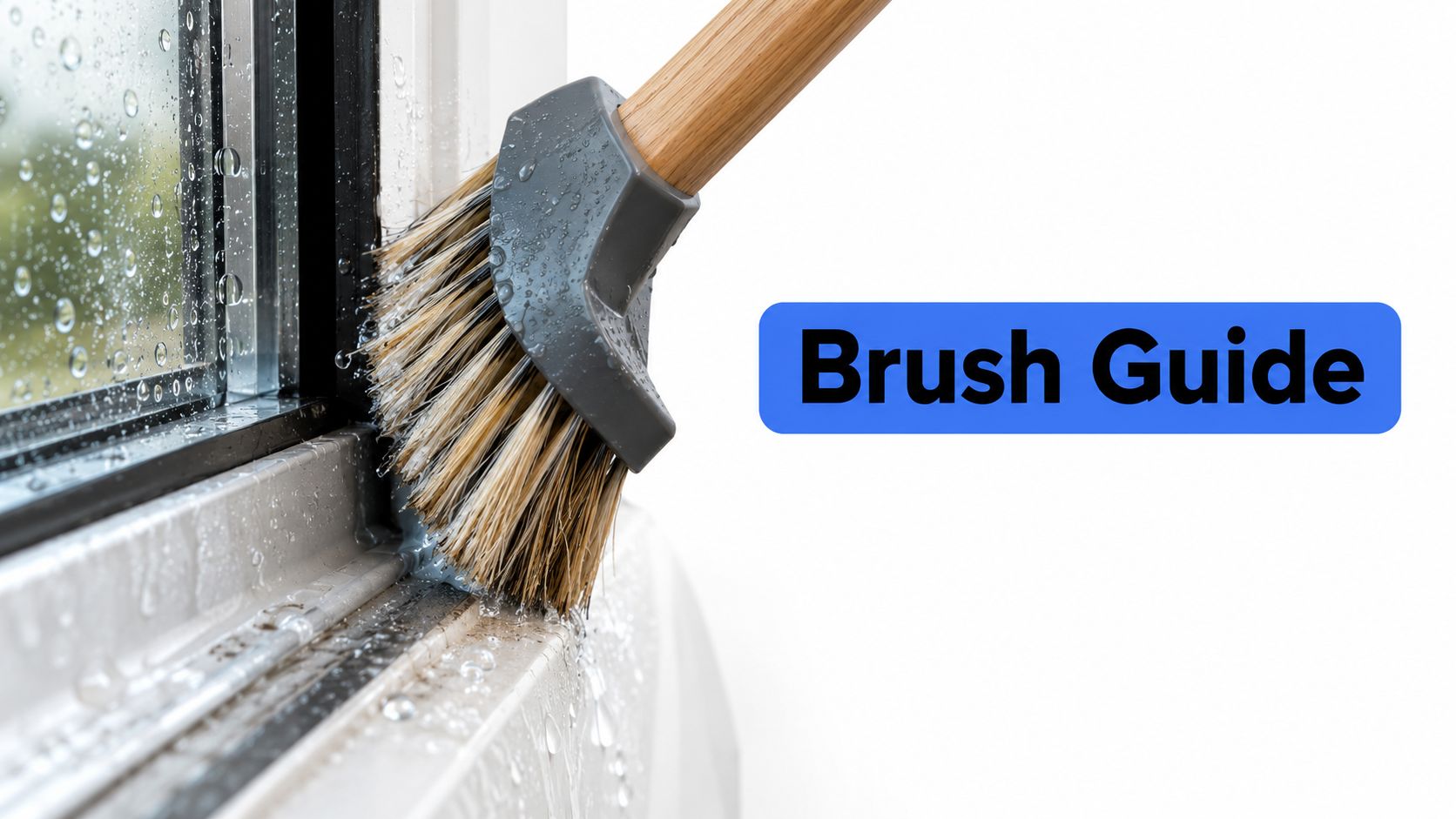
Medium Bristle Brush Guide for Window Cleaning
Discover why a medium bristle brush is the ultimate tool for window cleaning. Learn about materials, pure-water systems, and expert selection tips.


If you're staring at a bathroom, laundry room, basement, or kitchen window that barely opens, leaks air, or turns into a dust shelf every few days, you're in the same spot as a lot of homeowners in the Southwest and Mountain West. The problem usually isn't just age. It's that the window style no longer fits how the room works.
Awning replacement windows solve a very specific problem well. They let you bring in air without giving up as much weather protection, and they fit places where a larger operable window would be awkward. In Arizona, Nevada, and Colorado, that matters. Heat, wind, UV exposure, dust, and sudden weather shifts all punish weak hardware, poor seals, and hard-to-clean designs.
A good awning window can be a smart upgrade. A bad one, or a good one installed poorly, becomes a maintenance chore you notice every season.
A common reason for exploring awning replacement windows is that one room in the house keeps annoying them. The upstairs bathroom stays stuffy. The laundry room needs airflow but sits under an eave. The basement needs ventilation, but the current unit is too awkward or too drafty to use.
Awning windows are built for those conditions. Their top-hinged, outward-opening design creates a small shield over the opening, which is why this style has stayed relevant in modern homes. Industry guidance consistently describes awning windows as useful for ventilation while helping keep rain and snow out, especially in compact spaces such as bathrooms, basements, laundry rooms, and mud rooms, as outlined in this overview of how awning windows are used in modern homes.
That sounds simple, but the buying decision isn't. Material matters. Hardware matters. Installation quality matters even more in dry, dusty climates where seals and moving parts take a beating. The wrong frame can age badly in hard sun. The wrong placement can make cleaning miserable. The wrong installer can leave you with a window that technically closes, but never really seals the way it should.
Practical rule: Buy an awning window for the room first, not for the brochure first.
Homeowners usually do best when they look at the decision through four filters:
An awning window is an operable window with a sash that hinges at the top and swings outward from the bottom. Most are opened with a crank or folding handle. When open, the sash forms a small canopy over the opening.
That canopy shape is the reason this style exists. It isn't just a design detail. It changes how the window handles weather and airflow.

Manufacturers describe awning replacement windows as being engineered around a top-hinged sash that swings outward from the bottom, creating a projecting canopy over the opening. That geometry helps shed rain away from the interior while the window is open, and one major brand places common unit sizes in the 16 to 60 inch width range and 17 to 48 inch height range in its awning window guidance at Renewal by Andersen awning window specifications.
In plain terms, they're usually better suited to compact or moderate openings than to big feature-window spans. That's why you see them in bathrooms, basements, laundry rooms, and above sinks more often than in living rooms.
The operating hardware also matters more than buyers think. Awning units typically use a crank mechanism and locking hardware that compresses the sash against weatherstripping when closed. Manufacturers also highlight features like insulated glazing, argon gas fill, efficient spacers, and corrosion-resistant hardware in their awning window design details. Those parts affect how tightly the unit seals and how well it keeps working in rough climates.
Awning windows earn their keep in places where another operable style would be inconvenient.
A well-placed awning window feels purposeful. A badly placed one feels like something you have to work around every time you open it.
Screens are one detail homeowners often miss until after installation. Because the sash opens outward, screen setup and access differ from inward or vertical styles. If you're comparing options and trying to understand outward-opening screen setups, this guide to insect screens for casement windows is a useful reference because many of the same practical screen issues apply.
Most failing windows don't announce themselves with one dramatic problem. They get harder to use, harder to clean, and less comfortable to live with. By the time people shop for replacement, they've usually adapted to the issues for too long.
Start with what you can see from inside and outside.
These problems often show up first on elevations that get the harshest afternoon sun or wind exposure.
A healthy awning window should open, close, and lock without a fight. If it doesn't, the problem is already affecting performance.
Look for these signs:
If you're unsure whether the issue is the sash, the insulated glass, or the perimeter seal, it helps to understand what a window seal is and how seal failure shows up.
Some warning signs are less visible but more expensive over time.
Outside noise seems louder. Certain rooms never feel stable. Dust builds up near the opening faster than it should. In colder parts of Colorado, you may notice the area around the window feels sharply different from the rest of the wall. In hot, dry parts of Arizona or Nevada, a failing unit often shows up as a room that heats up quickly and never seems to settle.
If a window is annoying every week, it's already telling you something. Good windows disappear into the background. Bad ones demand attention.
Condensation trapped between panes is another major clue that the insulated glass unit has failed. Once that happens, cleaning won't solve the haze because the problem is inside the glazing assembly.
Material selection changes far more than appearance. It affects how the window handles heat, UV exposure, wind, cleaning, and long-term maintenance. In the Southwest and Mountain West, those trade-offs show up quickly.
Vinyl is usually the practical entry point. It's common because it keeps upfront cost lower and doesn't need painting. In many homes, that's enough. But not all vinyl products are equal, and lower-grade units can feel less rigid in demanding exposures.
Fiberglass tends to make more sense when the window gets hard sun, frequent use, or a tougher climate load. It generally feels more solid, and premium awning units in this category often come with stronger hardware and better fit tolerance. The trade-off is price.
Wood still has a place, especially when interior finish matters. It can look excellent, but it asks for more owner attention. In dry climates with strong UV and wide temperature swings, neglected wood doesn't age gracefully.
Aluminum works in certain design contexts, especially where a slimmer frame look matters, but homeowners should think carefully about thermal performance and finish durability in exposed conditions.
| Material | Cost | Durability | Maintenance | Best For |
|---|---|---|---|---|
| Vinyl | Lower end of the common installed range | Good when quality is solid, less confidence in budget-grade products under harsh exposure | Low routine upkeep | Budget-focused replacements, secondary rooms, straightforward retrofit jobs |
| Fiberglass | Upper end of the common installed range | Strong choice for demanding climates and heavier use | Low to moderate | Harsh sun, high-use windows, owners focused on long-term durability |
| Wood | Mid-range to upper range depending on build | Can perform well but depends heavily on upkeep | Highest maintenance burden | Homes where interior appearance matters most |
| Aluminum | Mid-range in many cases | Durable frame material, but climate fit depends on product design | Low to moderate | Modern aesthetics, slimmer frame preference |
The broad installed pricing bands associated with these categories are covered in the cost section below.
Material is only half the decision. Style and configuration matter too.
Homeowners comparing styles often end up weighing awning windows against casements because both are crank-operated and seal tightly when closed. If you want a side-by-side design comparison before deciding, this overview of casement style windows helps clarify where each style works best.
Air leakage complaints also don't always start at the window itself. If a room still feels drafty after replacement, it can be worth checking adjacent weak points such as outlet boxes on exterior walls. This short guide on how to stop costly air leaks from outlets is a practical companion when you're trying to tighten up the whole room, not just the glass.
A Phoenix homeowner replacing one small bathroom awning window may get a manageable quote. A Denver homeowner replacing several older units with sun-exposed trim damage often sees a very different number. Awning window pricing looks simple on paper, but the actual cost depends on how the unit performs after years of heat, dust, monsoon rain, or freeze-thaw movement.
A typical professional awning-window replacement runs about $300 to $1,500 per window, with many projects falling around $477 to $1,107, according to this breakdown of professional awning window replacement costs.
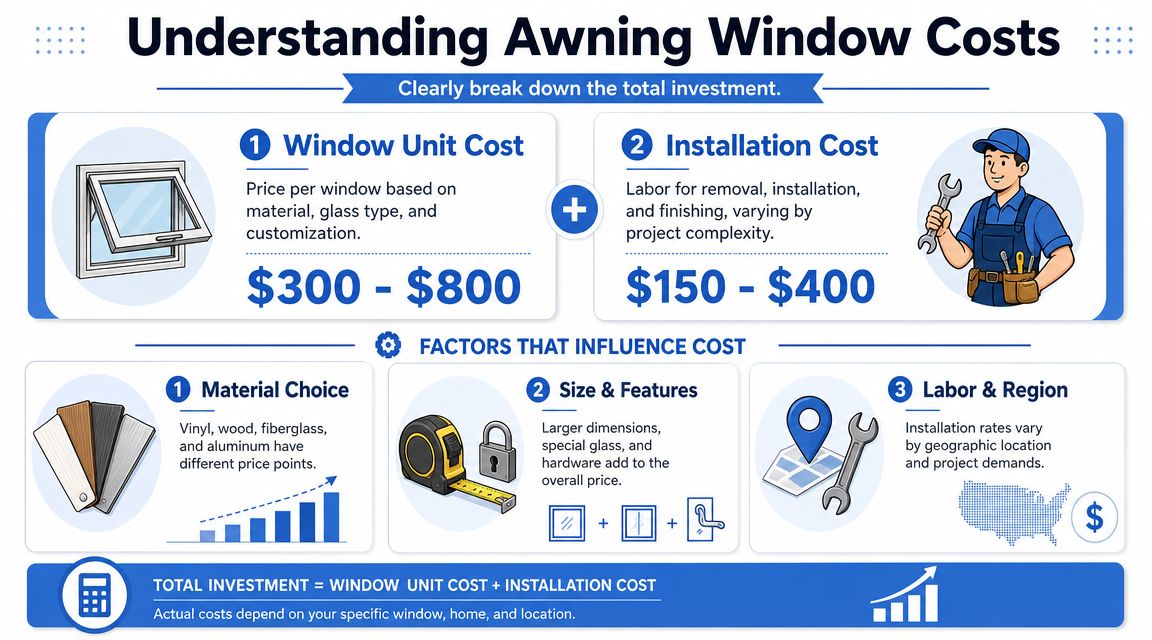
The window itself usually drives the bill more than labor. Basic vinyl units tend to sit at the lower end of the range. Wood, aluminum, and fiberglass move the price up, especially once you add better glass, upgraded hardware, or custom sizing. Labor can stay fairly modest on a clean retrofit, then jump fast if the old frame is out of square, the sill is soft, or exterior finishes need to be rebuilt.
In Arizona and Nevada, I tell homeowners to look past the opening quote and ask how the window will age under constant UV exposure and airborne dust. A lower-cost unit that starts binding at the operator, loses its weatherstrip compression, or shows frame movement after a few summers can cost more over time than a better-built unit installed once.
Colorado adds another layer. Daily temperature swings and winter contraction put more stress on seals, corners, and hardware adjustment. That does not mean every project needs the most expensive window on the board. It does mean the cheapest option often stops looking cheap after service calls, air leakage complaints, or early replacement.
A fair quote usually reflects site conditions, not just window size. The main cost drivers are practical:
One line item deserves extra attention. Glass upgrades often feel optional until cooling bills and room comfort enter the conversation. In the Southwest, solar heat gain control is part of ownership cost, not just a product upgrade.
A low quote can still be the right quote if the opening is clean, the product is decent, and the installer is clear about what is included. A high quote can also be justified if the job involves stucco repair, difficult access, or premium hardware that will last longer in dust and heat.
Ask for a line-by-line breakdown. Confirm the frame material, glass package, hardware series, finish work, permit responsibility if required, and what happens if the crew finds damaged sheathing or framing after removal. Those details separate a realistic proposal from one that looks good until change orders start.
For another regional comparison point, this look at 2026 Sacramento awning pricing is useful. Use it to compare how scope and product choices affect estimates, not as a universal benchmark for homes in Arizona, Nevada, or Colorado.
DIY sounds appealing because labor is only one part of the bill. If you can remove the old unit and set the new one yourself, it seems like a direct way to cut cost.
On simple interior projects, that logic can work. Awning replacement windows usually aren't simple interior projects.
The main risk isn't getting the window into the hole. The risk is getting a fully operable, weather-resistant, long-lasting result after the first season of wind, heat, and rain.
Common DIY failure points include:
Awning windows are unforgiving about geometry. If the frame isn't set correctly, the hardware tells on you almost immediately.
Professional installation is mostly a risk-control decision. You're paying for measurement discipline, opening prep, weatherproofing, and final adjustment.
That matters even more in markets where homes deal with freeze-thaw cycles, strong sun, or windblown debris. A window that is technically installed but poorly sealed can become a bigger long-term expense than the labor you tried to save.
If you're hiring out the work, focus on the basics:
Finding the right crew is local work. The installer who understands dry heat and stucco details in Scottsdale may face a different set of challenges than the one replacing units through winter swings in Denver.
A year after installation, awning windows start separating into two groups: units that still open cleanly and seal tightly, and units that already feel gritty, show mineral spotting, or need extra force at the crank. In Arizona, Nevada, and much of Colorado, climate has a lot to do with that outcome. Fine dust, hard water, strong sun, and wide temperature swings create more wear than the showroom sample suggests, which is one reason Marvin's awning window overview highlights operating hardware, ventilation, and design details that affect long-term use.
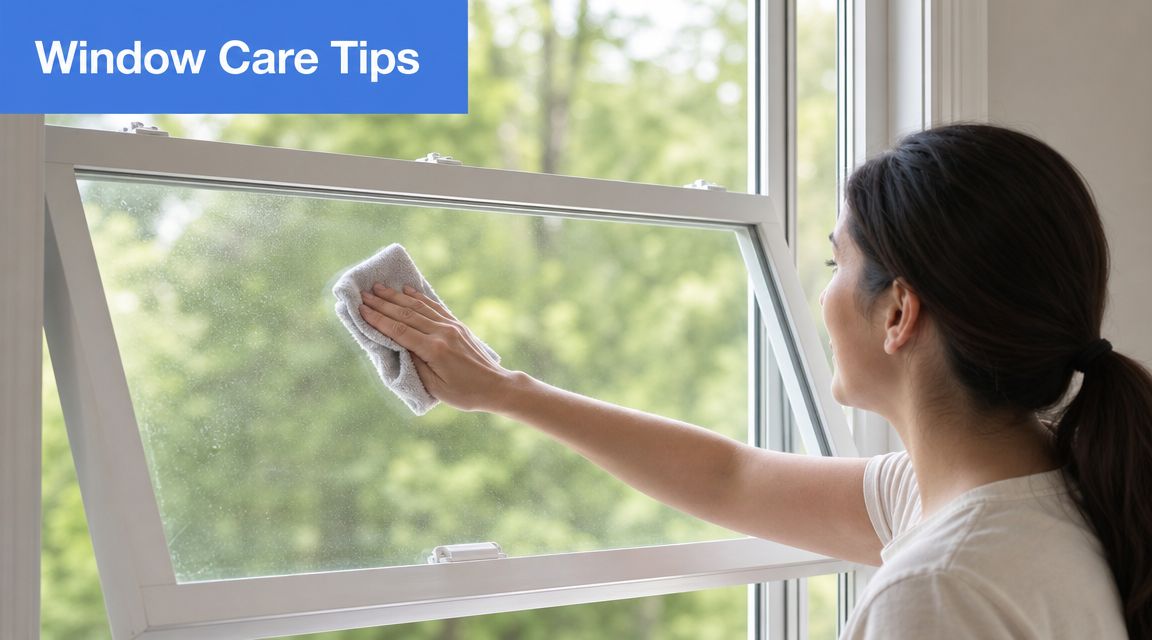
Awning windows reward regular light care. They are more expensive to ignore than to maintain.
Use a simple routine a few times a year, and more often if your home faces open desert, a busy road, or frequent wind:
High-mounted awning units usually need more attention. The outer top edge, hinge side, and screen frame collect debris first, and those spots are easy to miss from inside the house.
The wrong cleaning method adds cost later. Abrasive pads can scratch glass and finishes. Heavy spray around dirty hardware can wash grit deeper into hinges or operators. On homes with hard water, a quick rinse-and-dry approach often leaves behind the mineral film that becomes a significant labor problem later.
For between-service care, use soft cloths, a non-abrasive cleaner, and enough drying passes to keep minerals from setting on the glass. Open the sash fully when safe to do so, and clean the contact points where dust builds up around the frame. If the window starts binding, do not force the crank. Check for debris first, then have the hardware adjusted if needed.
For homeowners who want periodic exterior and screen cleaning handled by a service company, Professional Window Cleaning is one local option. Homeowners in Phoenix and Las Vegas often deal with the dust, hard-water spotting, and access issues that make awning windows more work to maintain than fixed units.
If you want to see the kind of basic process homeowners can use between full cleanings, this short video is a good starting point.
Keep hardware free of grit, remove mineral film before it hardens, and address seal wear early. That is what keeps an awning window operating well and keeps ownership costs from creeping up in harsh climates.
If your awning windows are hard to clean, exposed to heavy dust, or showing buildup around hinges, screens, and frames, Professional Window Cleaning can help with routine and deep cleaning so the windows you paid for stay clear, functional, and easier to inspect over time.
Read our blog posts regularly and keep learning.