Care and Maintenance
How to Clean Building Windows Safely in 2026
Learn how to clean building windows with professional squeegee and pure-water methods. Step-by-step guide covering safety, tools, and maintenance.


If you’ve ever seen a window that swings open like a door instead of sliding, you’ve seen a casement window. Think of it this way: they’re hinged on one side and crank open outward, offering a completely different feel and function from the more common sliding or single-hung styles.
This unique outward-swinging design is what truly defines casement style windows, setting them apart from anything else on the market.
Imagine opening a window and getting a completely clear, unobstructed view, almost like a picture frame for the outdoors. That’s the magic of a casement window. Unlike double-hung windows that have a rail cutting across your line of sight, a casement is a single, uninterrupted pane of glass.
The whole thing is operated by a simple crank mechanism. A few turns of the handle is all it takes to swing the window open, inviting in a fresh breeze. It’s a surprisingly simple design that delivers some pretty impressive benefits.
To really get what makes these windows special, it helps to know how they work. It all comes down to a few core components working together.
This locking system is a huge plus. It not only makes the window exceptionally secure but also creates one of the most airtight seals you can get. That means no drafts, which is a massive win for homeowners in places with weather extremes like Phoenix, AZ, or Denver, CO, helping keep your energy bills in check.
For a quick overview, here’s a breakdown of what makes a casement window stand out.
| Feature | Description |
|---|---|
| Operation | Swings outward from the side via a hand crank. |
| View | Provides a completely clear, unobstructed view without a central sash. |
| Ventilation | Excellent airflow, as the open sash can catch and direct breezes into the home. |
| Energy Efficiency | Creates an exceptionally tight, airtight seal when closed and locked. |
| Security | Features a hook-shaped, multi-point locking mechanism that is difficult to pry open. |
As you can see, the combination of a wide-open view, fantastic ventilation, and top-tier security and efficiency makes casement windows a compelling choice for any home.
Beyond the basic crank-and-swing design, casement windows offer a surprising amount of variety. Each style brings its own unique look and feel to a home, and understanding these differences is the first step in finding the perfect match for your property’s architecture.
It's no secret these windows are having a moment. Their popularity has soared with homeowners and builders alike, thanks to their blend of classic style and modern performance. This isn't just a trend; it's a shift driven by real-world benefits.
When you start looking at casement windows, you'll generally come across three main types. Each one serves a slightly different purpose and creates a distinct aesthetic.
Single-Frame Casements: This is the quintessential casement window. It features a single sash that opens outward from one side with a crank. Its clean, uncluttered look makes it a versatile choice that works with almost any home style, from traditional to contemporary.
French Casements: Think of these as French doors for your windows. Two sashes are hinged on opposite sides of the frame and swing out from the middle. With no center post to obstruct the view, they create a stunning, wide-open panorama when fully opened.
Push-Out Casements: For a touch of vintage charm, push-out casements are a fantastic alternative to the standard crank. You simply turn a handle on the sash and push the window outward. A friction stay holds it in place, giving you a more hands-on, traditional feel.
The material you choose for your window frames is a huge decision. It doesn’t just affect how your windows look; it also determines their durability, maintenance needs, and how well they stand up to the elements over time.
This diagram breaks down the key parts of a typical casement window.
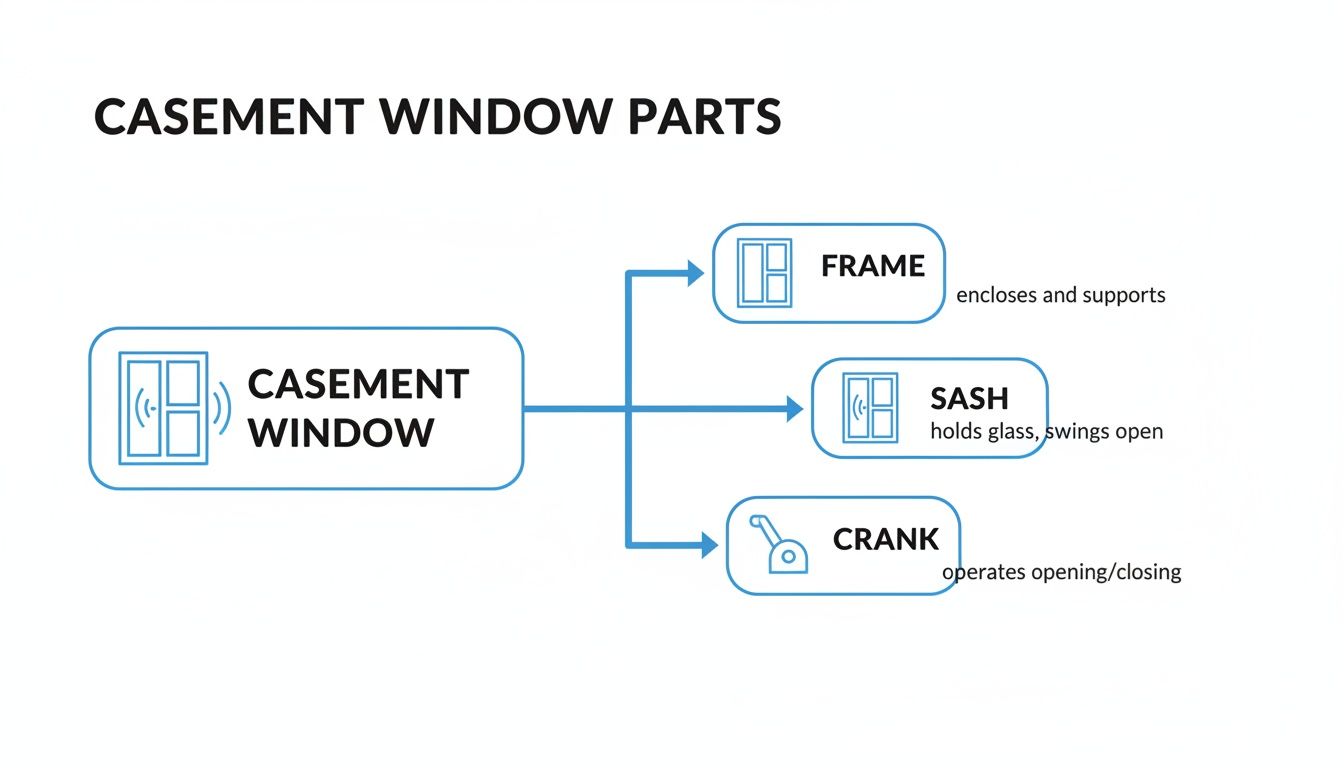
Getting familiar with these core components—the stationary frame, the swinging sash, and the crank mechanism—makes it easier to see how different frame materials will impact the window’s overall performance and longevity.
When selecting materials, it’s crucial to think about your local climate and how much maintenance you’re willing to do. For example, homeowners in Scottsdale, AZ, will want to prioritize heat resistance, while someone in Denver, CO might focus more on insulation against the cold.
Here are some of the most common materials you’ll find:
While we're focused on casements here, it’s always a good idea to get a broader perspective on choosing the best windows for new construction to make sure every choice you make fits into your home's bigger picture.
Casement windows are a popular choice for a reason, but are they the right choice for your home? Like any home upgrade, there are real pros and cons to weigh. Their unique swinging design brings some incredible benefits to the table, but it also has a few quirks that might not fit every situation.
Let's start with the biggest win: unmatched ventilation. Unlike a double-hung window that only opens part-way, a casement window swings out completely. The open sash acts like a funnel, catching breezes and directing fresh air right into your home. It's a game-changer for cooling things down on a warm afternoon.
Then there’s the superior energy efficiency. When you crank a casement window shut, the sash presses firmly against the frame, creating a tight seal on all four sides. The multi-point locks pull it in even tighter, forming an airtight barrier that’s far better at stopping drafts than sliding windows. Over time, that can add up to real savings on your energy bills.
Beyond airflow and efficiency, casement style windows offer a beautiful, unobstructed view. Since there’s no center rail splitting the glass, they essentially become a picture frame for your backyard or scenery. This clean, minimalist aesthetic is a huge draw for rooms where you want to flood the space with natural light.
Security is another one of their strong suits. The hook-shaped locks are embedded directly into the frame, making them incredibly difficult for anyone to pry open from the outside. This simple but effective design makes them one of the most secure window options you can install.
The combination of an airtight seal and top-notch security makes casement windows a fantastic investment. This is especially true for homeowners in diverse climates like Phoenix, AZ, and Denver, CO, who value both energy savings and peace of mind.
Of course, no window is perfect. The main thing to watch out for with casement windows is the crank mechanism. While it’s what makes them so easy to open and close, the mechanical parts can wear down over the years, especially if they see a lot of use. They’ll need a little maintenance to keep operating smoothly, and repairs can be a bit more involved than with simpler window styles.
Their outward swing can also create a clearance issue. You can't put them where they’ll block a deck, patio, or a busy walkway. This limits where you can place them, making them a no-go for certain spots. Window treatments can also be a little tricky—draperies might get caught, and inside-mounted blinds need to be set high enough to clear the crank and the window as it opens.
To give you a clearer picture, it helps to see how they stack up against another popular window style.
When you're deciding on new windows, the choice often comes down to casements or double-hungs. Both are excellent options, but they serve different needs. This table breaks down the key differences to help you see which one might be a better fit for your home.
| Feature | Casement Windows | Double-Hung Windows |
|---|---|---|
| Ventilation | Excellent, catches side breezes. | Good, allows top and bottom airflow. |
| Energy Efficiency | High, due to an airtight compression seal. | Moderate, potential for air leaks at meeting rails. |
| View | Unobstructed, clear sightline. | Obstructed by a central meeting rail. |
| Maintenance | Crank mechanism requires periodic checks. | Sashes can be easy to clean but may need rebalancing. |
| Placement | Requires clear outward space to open. | No outward space needed, versatile placement. |
Ultimately, casements excel in providing wide-open views and superior ventilation, while double-hungs offer more classic styling and placement flexibility. Knowing these trade-offs is the key to making a choice you’ll be happy with for years to come.
Those gorgeous, unobstructed views are probably a big reason you love your casement style windows. But keeping that glass pristine? That's another story. While wiping down the inside is simple enough, reaching the exterior of an outward-swinging window—especially on upper floors—can be a real challenge.
This is where the pros make it look easy.
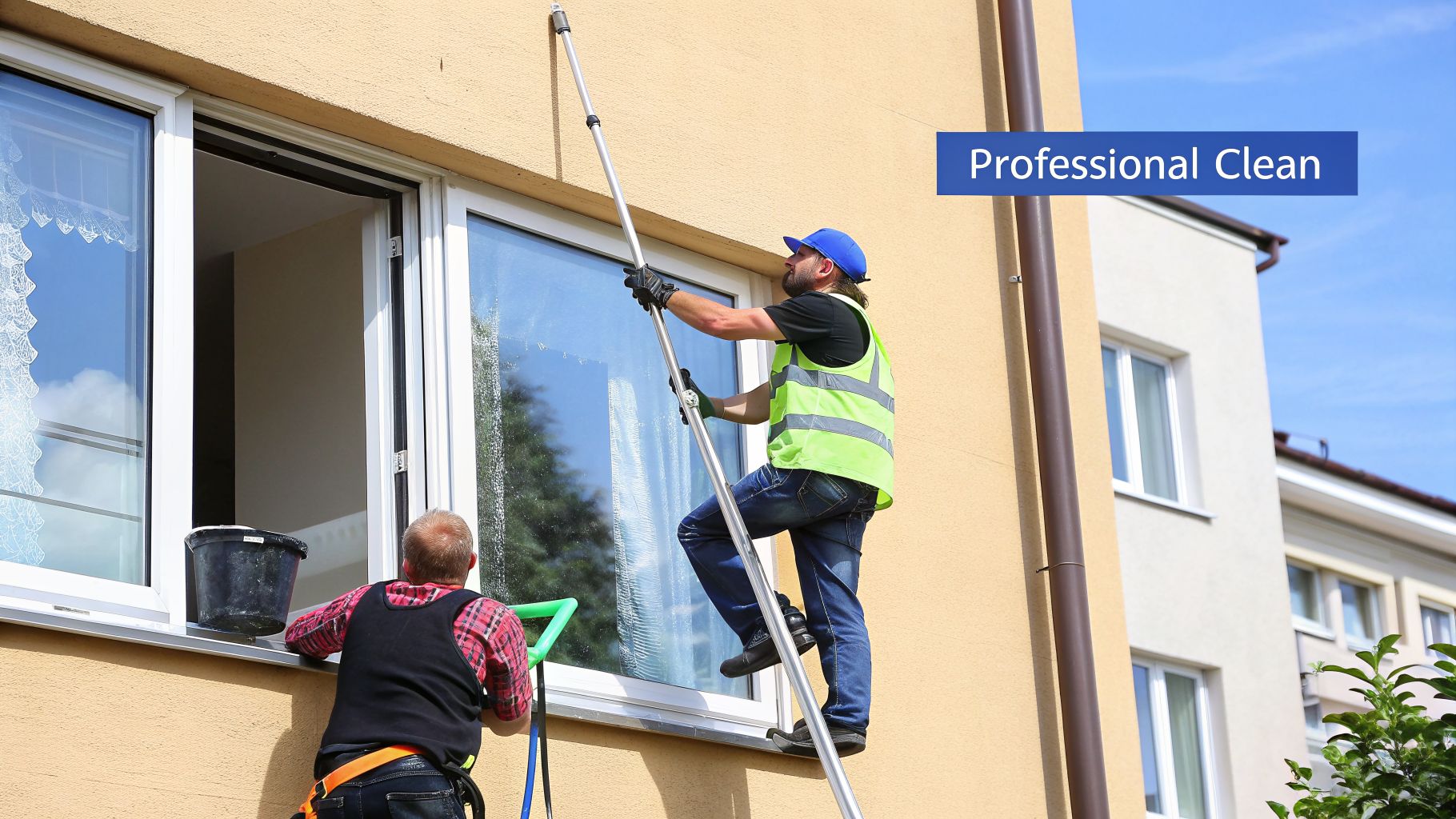
Trying to clean a high casement window from a ladder is just asking for trouble. The way the window swings out creates an awkward, unstable angle that's anything but safe. With over 26 years of experience, Professional Window Cleaning has seen it all and has our process down to a science. We stick to two primary, industry-approved methods to get a flawless, safe result every single time.
When it comes to tricky windows like casement style windows, you can't just wing it. To get that perfect, professional finish, there are really ONLY 2 methods professional window cleaners use: the squeegee or the pure-water system.
Our goal is simple: make every home and business look brand new after we clean their windows. We achieve this by using the right technique for each specific situation, whether it's a ground-floor casement in Phoenix, AZ, or a third-story window in Las Vegas, NV.
Here are the two methods we trust:
The Traditional Squeegee Method: There's a reason this classic technique has stood the test of time. For casement windows we can easily and safely access, a skilled technician with a high-quality squeegee is the best way to get a perfectly clear, streak-free shine. It’s a hands-on approach that's perfect for ground-floor windows.
The Pure-Water System: What about those hard-to-reach casements on the second or third floor? Safety becomes our number one priority. Our modern pure-water system lets our technicians clean those windows right from the ground using water-fed poles. This system uses deionized water that dries completely spot-free, leaving nothing behind but sparkling clean glass. No ladders, no lifts, no risk.
Of course, knowing the right approach for different window materials is also part of the job. If you have vinyl frames and want to know more about proper care, you can check out our guide on how to clean vinyl windows. Pairing the right method with the right material care is the secret to making your casement windows look their absolute best.
So you've decided on casement style windows. Great choice! But before you get too far into the project, it's crucial to understand how they'll be installed. Whether you're working on a new build or replacing old, tired windows, the process generally falls into two camps: full-frame replacement or an insert replacement.
A full-frame replacement is the more involved of the two. Think of it as a complete do-over. We’re talking about removing the entire window unit—sash, frame, trim, and all—right down to the bare studs of the rough opening. This is the way to go if your old window frames are rotted, damaged, or you're looking to change the size or shape of the opening.
On the other hand, an insert replacement, often called a retrofit, is a much less invasive approach. Here, the new casement window is custom-built to slide perfectly inside the existing window frame. It’s a faster and often more budget-friendly option, but there's a catch: it only works if your current frames are in solid shape, perfectly square, and structurally sound.
Choosing your replacement method is just the first step. To get the performance you’re paying for, a few other things need to be spot-on. First up is structural support. A casement window's entire sash hangs from hinges on one side. When you crank it open, all that weight is pulling on the frame, so the surrounding wall must be sturdy enough to handle it without sagging over time.
Another make-or-break detail is the seal. A true professional installation is obsessed with weatherproofing. Before the window even gets close to the wall, they’ll apply layers of flashing and high-quality sealants to create an impermeable barrier. This is what stops drafts in their tracks and prevents water from seeping in and causing a world of expensive damage.
A poorly installed window, no matter how high-quality, will fail to deliver the energy efficiency and performance you expect. It's the small details in the installation process that make all the difference in long-term satisfaction and durability for homeowners in cities like Phoenix, AZ and Denver, CO.
Good maintenance habits will keep your windows working beautifully, but no window lasts forever. Beyond regular cleaning, knowing the lifecycle of your windows and recognizing the signs that it's time for a full-blown upgrade is just part of smart homeownership. If you're on the fence, this guide can help you decide When to Replace Windows in Your Home.
Of course, a big piece of the puzzle is the cost. Getting a handle on what to budget for an upgrade is essential. For a detailed breakdown of what goes into the final price tag, you'll want to check out our article on casement window replacement costs. Knowing these numbers upfront helps you ask the right questions and ensures your project is a win from day one.
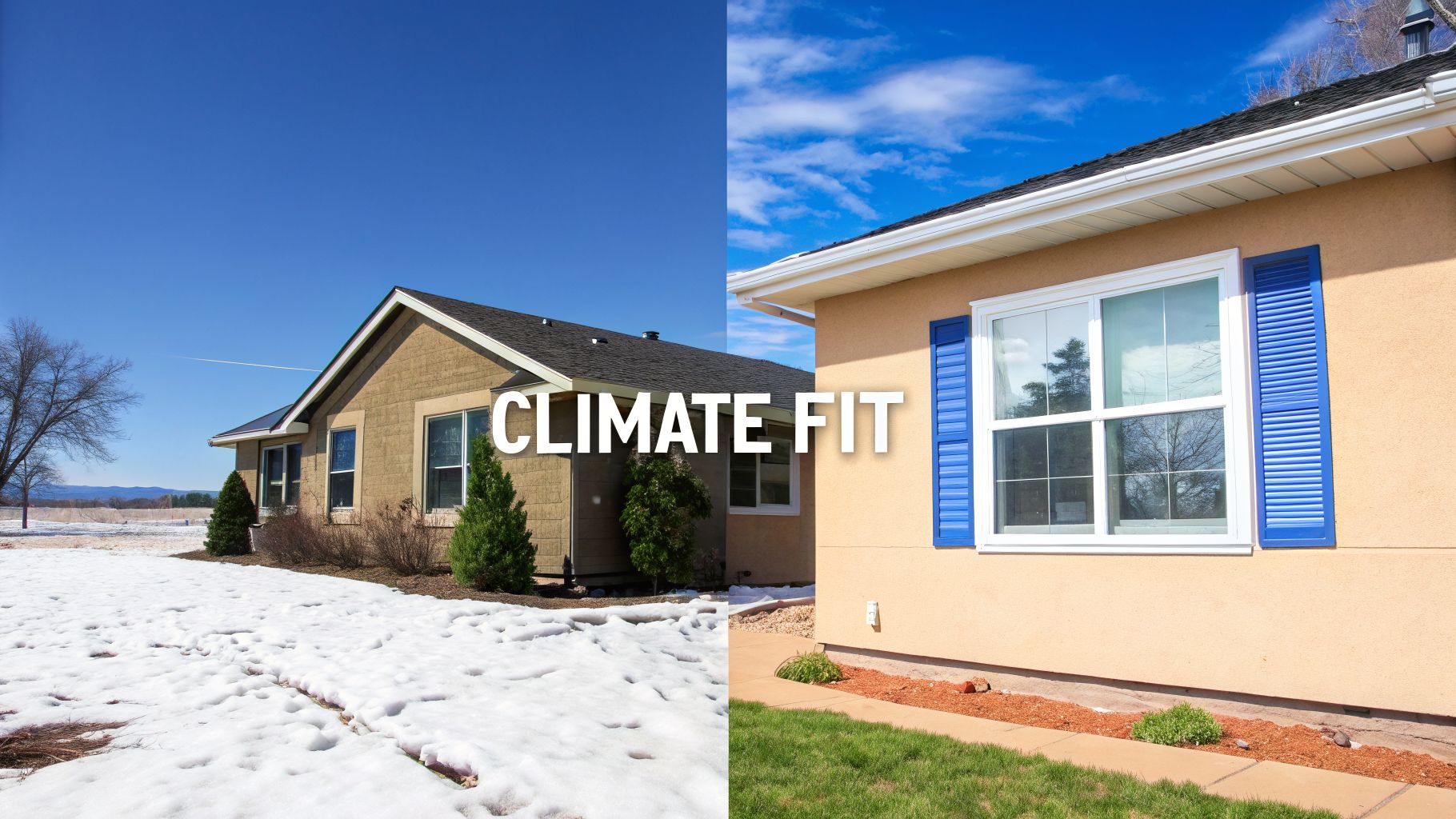
A window isn't just a piece of glass; its true performance is completely tied to your local climate. For homeowners in hot, sunny environments, picking the right casement style windows can make a world of difference for your comfort and energy bills.
Take a place like Las Vegas, NV, where the airtight seal of a casement window becomes a game-changer. It’s designed to lock your cooled air inside while keeping the oppressive heat and dust out—a must-have feature when you’re fighting off triple-digit temperatures. This incredible efficiency helps slash your utility bills by taking a huge load off your air conditioning system.
The style of the window is only half the battle; the material you choose is just as critical. In areas that see dramatic temperature swings, from scorching summers to freezing winters, certain materials just flat-out perform better.
A well-chosen window acts as a shield against the elements. The right material not only improves energy efficiency but also extends the life of your investment by standing up to harsh weather year after year. Our teams in Phoenix, AZ and Scottsdale, AZ understand this better than anyone.
Let’s break down your best options based on local conditions:
In cities with four distinct seasons, like Denver, CO, casement windows really show their strength. Their ability to seal shut so tightly makes them highly resistant to just about everything—strong winds, driving rain, and heavy winter snow.
This built-in durability ensures your windows remain a reliable, draft-free barrier against whatever the weather decides to throw at them. When you match the window's features to your climate's demands, you guarantee you’re getting the best performance and a superior return on your investment for years to come.
Even with all the details, you probably have a few practical questions about what it’s like to actually live with casement windows. We get it. Here are some of the most common questions homeowners ask, with clear answers to help you feel confident in your choice.
Think of your window's crank mechanism like any other moving part in your home—it needs a little TLC to perform its best. We recommend a quick annual check-up. Just a small amount of silicone-based lubricant on the gears will keep the crank turning smoothly and prevent it from getting stiff or stuck.
While you're at it, take a moment to clear any dust or debris out of the crank housing. This simple habit goes a long way in preventing mechanical issues and ensuring your windows operate flawlessly for years to come in places like Phoenix, AZ.
Yes, absolutely. In fact, casement windows are an excellent and highly recommended choice for bedrooms precisely because of their safety features. They are designed to meet or even exceed egress requirements for an emergency escape.
Because the entire window sash swings wide open, it creates a large, completely unobstructed opening perfect for a fire exit. This critical safety feature, paired with their amazing ventilation, makes them one of the most popular and sensible options for any bedroom.
One of the biggest myths we hear is that screens are a pain with casement style windows. The truth is, their interior placement is a huge plus—it keeps them clean and protected from the elements.
You sure can. One of the best, most practical benefits of casement style windows is that the screens are installed on the inside of the house. This smart design shields them from rain, pollen, and dirt, which means they stay much cleaner and last significantly longer.
These interior screens are also incredibly easy to pop out from inside your home. This makes cleaning both the screen and the window glass a much simpler, hassle-free job.
For a professional, streak-free shine that protects your investment, trust the experts at Professional Window Cleaning. With over 26 years of experience cleaning every type of window, including tricky casements, our teams in Phoenix, AZ, Denver, CO, Scottsdale, AZ, and Las Vegas, NV have the tools and expertise to make your glass sparkle. Learn more about our services at https://www.professionalwindowcleaning.com.
Read our blog posts regularly and keep learning.