Care and Maintenance
Window Cleaner for Tinted Windows: Safe Methods
Find the best window cleaner for tinted windows and learn safe cleaning methods that protect film, prevent streaks, and extend tint life.


You walk outside, look up at the porch light or the corner above a second-story window, and there it is. A fresh bird nest, neatly tucked into a spot that seems almost impossible for a bird to reach. It looks harmless at first. Then you notice droppings on the sill, twigs collecting in the gutter, or a vent that suddenly seems blocked.
That's how bird nest removal usually enters the picture. Not as a wildlife question first, but as a property maintenance problem. The nest may be small, but the effects rarely stay small. Nests around windows, rooflines, ledges, gutters, and vents often lead to repeat staining, drainage trouble, and difficult cleanup during regular exterior service.
After more than 26 years in exterior maintenance, these situations show up in familiar places. Homes and buildings in Phoenix and Las Vegas deal with the same pattern. Birds find a protected shelf, build quickly, and return if the surface still works for them. The nest itself is only part of the job. The main issue is knowing when removal is legal, when it's safe, and how to keep the same spot from becoming a nesting site again.
A new nest on a home usually shows up in one of the same few places. Porch lights. Window sills. Gutter corners. Roof eaves. Dryer vents. Ledges over entryways. Those spots share one thing. They give birds cover from weather and enough support to hold nesting material.
For a homeowner, the first reaction is often split between appreciation and frustration. It's hard not to admire how efficiently birds build. It's also hard to ignore what follows. Droppings collect on stucco, siding, frames, and walkways. Nest debris catches more debris. Water flow changes when gutters start holding twigs and mud instead of draining cleanly.
On exterior cleaning jobs, nests often explain a cluster of problems that look unrelated at first. A window keeps spotting up underneath an overhang. A sill stains faster than the rest of the house. A gutter section overflows even after a storm passes. When you trace it back, the nest is often the trigger.
Bird activity also changes how cleaning crews work. If there's a nest near a ladder set, a roof edge, or a window access point, the job stops being a simple cleaning visit. It turns into a decision about safety, sanitation, wildlife law, and whether the surface can even be serviced that day.
A nest on a building isn't just a nest. It's often a sign that one surface on the property is now functioning as wildlife habitat.
That matters because homeowners usually don't want a one-time cleanup. They want the problem solved in a way that protects the house and keeps birds from rebuilding in the same spot.
Some effects show up immediately. Others build up over time.
Bird nest removal works best when it's treated as part of exterior maintenance, not as an isolated chore. If the nest comes off but the ledge, gap, vent opening, or sheltered sill stays unchanged, birds often come back to the same location.
Before anyone grabs gloves, a scraper, or a ladder, ask the question that matters most. Can you legally remove the nest right now?
In the United States, that answer often depends on whether the nest is active. Under U.S. Migratory Bird Treaty Act guidance, it is against the law to remove or destroy a nest if eggs are present or if young birds depend on it for survival. Work should wait until birds have fledged and the nesting season is over, according to the Southwest Wisconsin Bird Education Initiative guidance on bird nests.
For homeowners and property managers, that changes the entire job. A dirty sill or blocked corner doesn't override wildlife protection. If the nest is active, the legal answer is usually to wait.
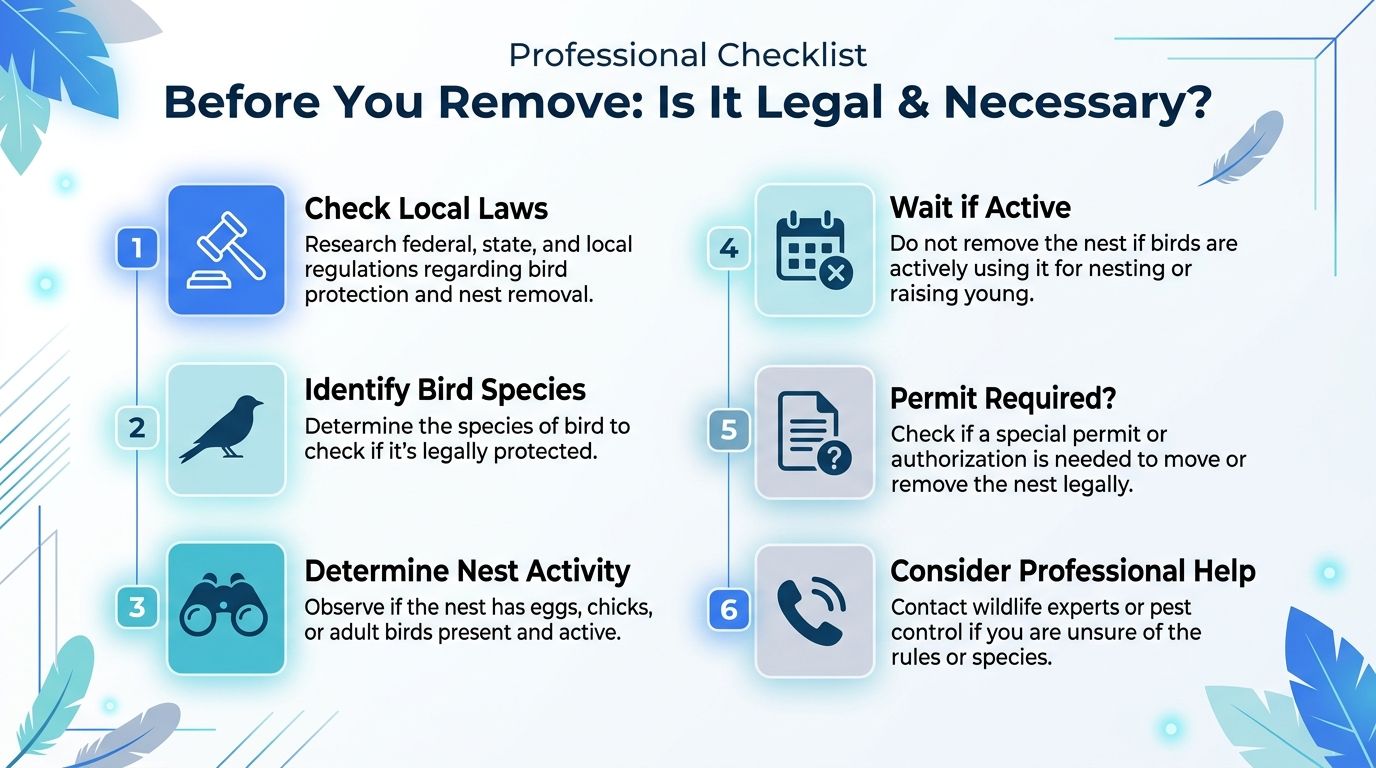
An active nest usually has clear signs, but people get tripped up by one common mistake. They assume that if they don't see the parent bird sitting there, the nest must be abandoned. That's not reliable. Adult birds often leave temporarily to forage.
Use simple observation instead of guesswork.
When in doubt, don't touch the nest.
That rule avoids two problems at once. It reduces the risk of disturbing protected birds, and it keeps homeowners from starting a cleanup they can't legally finish.
Some nests are inconvenient but not urgent. Others create real maintenance or safety concerns. A nest beside a decorative light may be messy, but a nest inside a vent or drainage path is a different level of problem. Even then, legal timing still comes first.
A useful outside reference for homeowners sorting through those basics is this homeowner's guide to invasive bird nests. It's a practical overview of what to look for before deciding on next steps.
This isn't just a technicality. The same bird-law guidance notes extra protections for some species, including eagle nests, and in Canada fines for illegal removal have reached thousands of dollars through enforcement actions noted in that same guidance. For owners in cities like Phoenix, where birds readily use eaves, patio covers, and vents, the safest approach is simple. Confirm activity first, then decide whether removal is even on the table.
A rushed decision is where most bird nest removal problems start.
If you've confirmed the nest is inactive, the work shifts from legal caution to safe handling and sanitation. That part matters more than most homeowners expect. Old nests often leave behind droppings, feathers, dried residue, and parasites that you don't want on your skin or in your lungs.
The basic workflow is straightforward, but it should be done in full. According to Avian Control's bird nest removal guidance, the right process for an inactive nest includes gloves, an N95 mask or equivalent, a scraping tool, sealed disposal, and thorough disinfection of the area afterward.
Start with the right gear before you go near the nest.
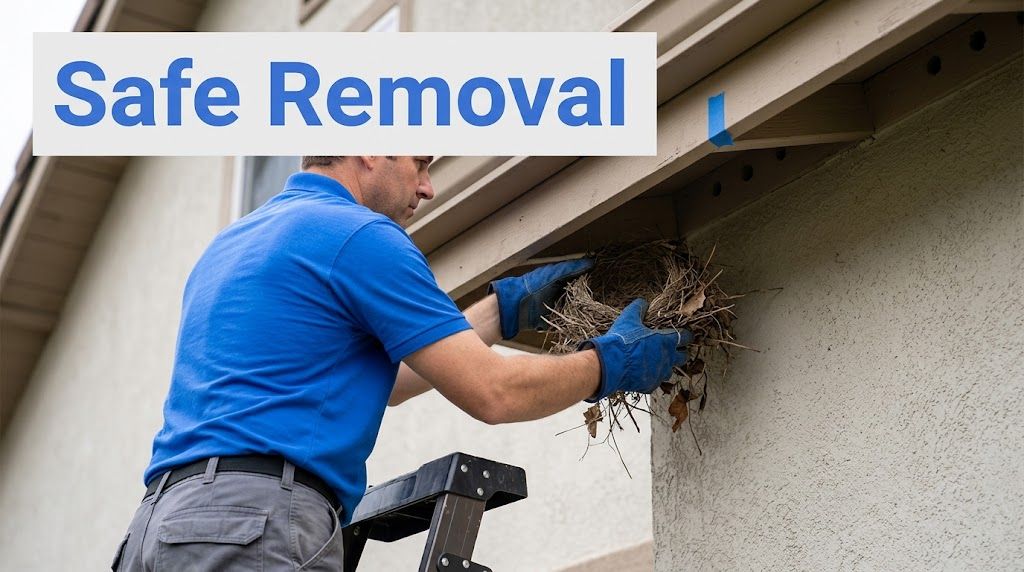
Many people remove the visible nest and stop there. That's incomplete. If residue stays on the surface, the area still smells and feels like a viable nesting spot.
Use this order:
Practical rule: If the surface still has droppings or nesting residue on it, the job isn't finished.
That last step is where many DIY cleanups fail. A nest may be gone, but the health and maintenance issue remains. On window ledges and trim, cleanup often extends beyond the nest footprint because droppings spread farther than expected. If that's part of the problem on your property, this guide on how to clean bird poop from exterior surfaces helps explain why stain removal and sanitation need separate attention.
DIY removal makes sense only when the nest is inactive and easy to reach safely. A first-floor sill or low porch beam is one thing. A second-story eave above landscaping, a steep roof corner, or a vent opening near power lines is something else.
If you need to lean off a ladder, reach around a gutter, or work where footing is poor, the nest is no longer the main hazard. The access is.
Not all bird nest removal jobs are equal. A nest on a low window ledge is mostly a cleanup issue. A nest in a vent, chimney, gutter run, or high eave can become a safety issue, a building-system issue, or both.
The challenge in these locations isn't just getting the nest out. It's removing it without damaging the surrounding system and without putting someone in a bad position on a ladder or roof edge.
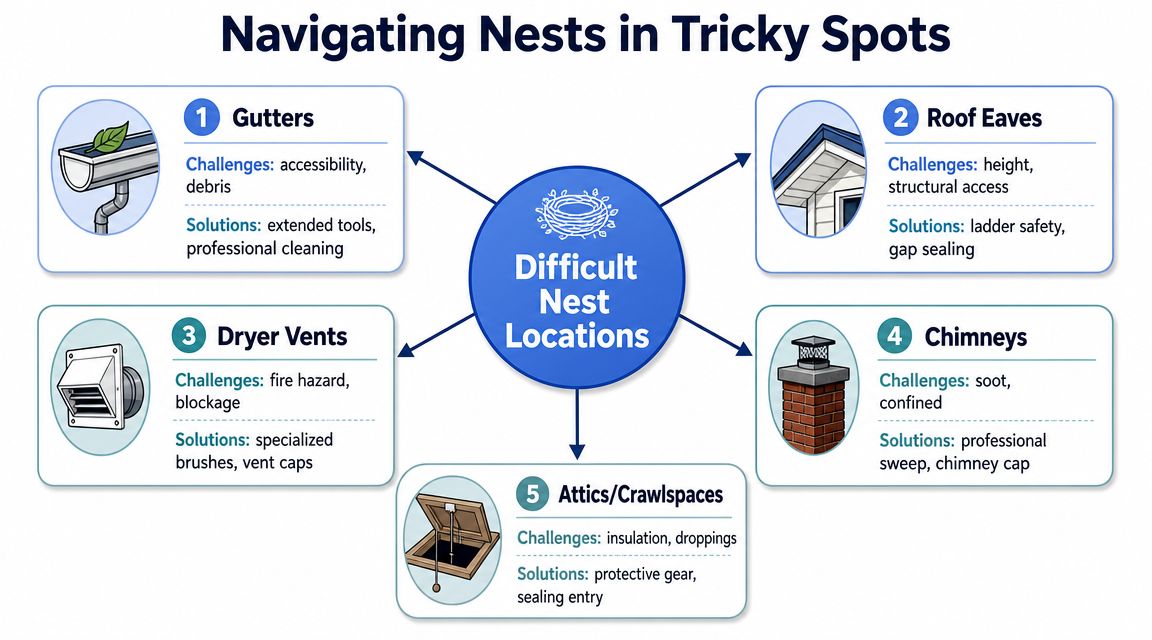
Here's how the common problem spots differ:
| Location | Main concern | What usually makes it harder |
|---|---|---|
| Gutters | Drainage blockage | Wet debris, height, awkward ladder position |
| Roof eaves | Access and footing | Reach distance and sloped surfaces |
| Dryer or bath vents | Airflow restriction | Tight spaces and the need to protect vent components |
| Chimneys | Debris and exclusion | Confined opening and follow-up screening |
| Upper ledges and sills | Repeat nesting | Limited access and need for deterrent after cleaning |
A gutter nest is a good example of how maintenance issues stack up. You're not just removing twigs. You may also be dealing with compacted sludge, standing water, and downspout restriction. That's why gutter-related bird problems often overlap with broader drainage service. If that's part of the issue, this practical overview of cleaning gutters with gutter guard systems gives useful context on how debris behaves around protected gutter lines.
People often underestimate eave and roofline nests because the nest itself looks small. The primary danger is body position. Reaching up and out from a ladder to scrape under a roof return or behind fascia trim is where falls happen.
That's especially true on multi-story homes and commercial buildings where the access point isn't directly under the nest. Teams working in places like Scottsdale, AZ see this often on taller facades, recessed entries, and architectural ledges that encourage repeat nesting.
If the only way to reach the nest is to work one-handed from a ladder, it isn't a simple cleanup anymore.
Some methods create more trouble than they solve.
Difficult-location bird nest removal usually turns into two jobs. First, remove the nest safely. Second, correct the feature that made that location attractive in the first place.
Some bird nest removal jobs should go straight to a professional. That's the right call when the nest is active, high off the ground, built into a vent or roof system, or tied to repeat infestation on a commercial property.
Cost is part of that decision, but it shouldn't be the only factor. According to the 2026 Angi bird removal cost guide, professional bird nest removal averages $600, with a typical range of $100 to $2,000 depending on bird type, location, and whether prevention is included. The same guide notes that vent removal may cost $200 to $500, while an inactive nest in a hard-to-reach roof area can run $300 to $2,000.
Those numbers make sense once you've seen these jobs in the field. Access changes everything. A low, inactive vent nest is a very different assignment from a roofline nest on a tall building that also needs screening, cleanup, and exclusion work.
The Angi guide also notes chimney removal with a screen often costs $175 to $800, while gutter-related removal plus guards can run about $1,350 to $1,700 per 200 square feet in the situations listed there. That tells you something important. Bird nest removal is often not billed as a quick cleanup. It's priced as a combination of removal, access work, and prevention.
A competent service visit usually involves more than taking the nest down.
That sequence matters for property managers in places like Denver, where multi-unit buildings and varied rooflines often put nests in difficult, visible, and liability-sensitive areas.
Paying for removal without paying attention to exclusion often means paying for removal again later.
Call a pro if any of these are true:
For readers comparing service types beyond basic cleanup, this overview of Vanish Pest Control bird removal is a useful example of how bird-control providers frame inspection, removal, and prevention together.
A week after a nest comes down, the window glass gets cleaned, the ledge looks fine, and everyone assumes the problem is over. Then the next gutter cleaning turns up fresh twigs in the same corner, or a crew spots new nesting material above a second-story window. That pattern is common because removal solves the immediate blockage or mess. Prevention changes the site so birds stop choosing it.

Birds return to building features that keep working for them. A flat sill still gives them a perch. An open vent still offers shelter. A dirty gutter packed with leaves still gives them nesting material and cover. On service calls, the lasting fix usually comes from changing those conditions, not from cleaning alone.
According to Bird B Gone's bird slope product guidance, post-removal prevention works best when the deterrent matches the surface. That lines up with what we see in exterior maintenance. If the ledge is the problem, treat the ledge. If the vent is the problem, secure the vent without restricting airflow.
Temporary scare products have limited value on their own. If the structure still offers shelter and footing, birds often adapt faster than owners expect.
Bird nest prevention is closely tied to ordinary building care. The same areas that collect nesting material also collect dust, leaves, roof grit, and standing debris. During window cleaning and gutter service, those trouble spots are easier to inspect because access is already in place and the surfaces are being cleared anyway.
That is one reason proactive maintenance costs less than repeated cleanup. Catching a small buildup of twigs in a gutter valley is simpler than dealing with overflow, staining, and a downspout blockage later. Spotting activity above a window during regular exterior cleaning also gives you a chance to address the site before birds settle in and legal restrictions tighten your options.
Clean, visible surfaces make early nesting activity easier to catch. Neglected edges, clogged gutters, and dusty ledges hide it until the repair bill is larger.
A short demonstration can help homeowners think through product placement and ledge behavior:
Work from a maintenance schedule, not from the last emergency.
For owners dealing with bird issues alongside other exterior pest concerns, reviewing broader service models like these Miami-Dade pest control options can help clarify where bird prevention fits into an overall property maintenance plan.
Bird nest removal works better when the building is harder to use the next time around.
If bird activity is creating stains, blocked gutters, messy ledges, or access issues around your home or commercial property, Professional Window Cleaning can help you stay ahead of the maintenance side of the problem. From routine window cleaning to exterior cleaning that makes early nesting activity easier to catch, our team helps homeowners and property managers keep buildings cleaner, safer, and easier to protect year-round.
Read our blog posts regularly and keep learning.