Care and Maintenance
Best Commercial Glass Cleaner: How to Choose
Compare the best commercial glass cleaner options, from ammonia formulas to pure-water systems. Find the right cleaning method for your building type.


A building is generally considered a high-rise when an occupied floor is more than 75 feet above the lowest level of fire department access. That's a safety standard, not just a measure of how tall the building looks from the street.
If you manage a property, that distinction matters more than property owners and stakeholders often expect. Two buildings can appear almost identical in height and still fall into different code categories because one has its highest occupied level above that threshold and the other does not. Once a building crosses that line, decisions about fire protection, maintenance planning, vendor qualifications, and operating costs all start to change.
That's why property managers often ask this question at exactly the right time. They're reviewing budgets, scheduling façade work, updating insurance documents, or trying to decide whether a window cleaning scope is routine or specialized. With over 26 years in the field, building service teams have seen how much confusion this label can create when people focus on roof height instead of occupant safety.
A lot of people hear “high-rise” and think it's just a real estate description. In practice, it's a code classification with consequences.
If you're standing at the curb looking up at your building, the question isn't, “Is this tall?” The better question is, “Does this building trigger a different level of safety and operational requirements?” That answer affects how you plan inspections, how you coordinate vendors, and how you think about risk.
The confusion usually starts with appearances. A building with a tall parapet, rooftop features, or a dramatic entry can look like a high-rise even when it doesn't meet the code definition. Another building may look modest from one side and still qualify because of where the occupied floors sit relative to fire department access.
That matters because the label can influence:
Practical rule: If a classification changes emergency response expectations, it also changes how you should manage the property day to day.
Property teams that already focus on protecting property with emergency plans usually understand this quickly. A building's classification isn't a paperwork detail. It shapes the systems and procedures everyone relies on when something goes wrong.
For service providers, high-rise status changes the working environment. A simple exterior cleaning job can become a project that requires roof access coordination, staging review, weather monitoring, and stricter documentation. For owners, the same label can affect what your insurers ask, what your contractors quote, and how much lead time you need before maintenance work begins.
That's why understanding what is considered a high rise building is practical, not academic.
The clearest starting point comes from the International Building Code. Under the 2015 IBC, a building is considered a high-rise when an occupied floor is more than 75 feet (22,860 mm) above the lowest level of fire department vehicle access, and that definition focuses on the highest occupied floor rather than the overall roof height, as explained in the ICC discussion of the high-rise building definition.

That sentence is dense, so break it into parts.
The code is asking three questions:
If the answer to the third question is yes, the building falls into the high-rise category under that code standard.
This is why roof height can be misleading. Decorative rooftop structures don't tell you what code officials need to know. The important factor is where people are located during normal use and how emergency crews can reach them.
The same source explains that this threshold aligns with emergency response capability. Many fire apparatus are designed to fight fire effectively up to about 75 feet, which is one reason the threshold became embedded in code guidance and industry training.
That gives the rule a very practical logic. Below that level, exterior firefighting access is more feasible. Above it, the building needs to rely much more heavily on its own internal safety systems and protected paths of egress.
When you understand the 75-foot line as an emergency access limit, the code definition stops feeling arbitrary.
Here are the situations that tend to cause the most mistakes:
If you need to explain this to an owner, board member, or operations staff member, say it this way:
A building becomes “high-rise” when people are located above the height where fire department access is expected to be effective, so the building must carry more of the life-safety burden itself.
That framing usually lands better than quoting code text alone.
The modern definition most property managers run into is the occupancy-based one. But older codes didn't always work that way.
In the 1968 New York City Building Code, a high-rise was defined as a building or structure at least 75 feet in height, measured from curb level to the highest point of the roof. The modern 2014 NYC code and the IBC shifted that approach and define a high-rise by an occupied floor more than 75 feet above fire department access, tying the standard to emergency operations instead of architecture, as outlined in Milrose's explanation of the code change.
A roof-based definition sounds simple. It also creates edge cases.
A tall roofline can include space no one occupies. Mechanical areas, decorative crowns, and other upper structures can make a building seem taller in code terms than it functions in real life. That's one reason modern definitions became more precise.
The newer approach asks a better operational question: where are occupants located relative to emergency access?
| Authority | Definition Basis | Key Threshold |
|---|---|---|
| 1968 New York City Building Code | Building height to roof | 75 feet in height |
| Modern NYC code and IBC baseline | Occupied floor above fire department access | More than 75 feet |
Most jurisdictions use the IBC model or some version of it, but local adoption and amendments still matter. That's why a property manager shouldn't stop at a general rule if the building is close to the line.
For example, a property in Phoenix, AZ and a property in Denver, CO may follow the same broad framework while still requiring local confirmation on details like access points, plan review interpretation, or enforcement practice.
Use the modern 75-foot occupied-floor standard as your baseline. Then verify the final determination with your local building department, especially if the site has grade changes, unusual roof use, or a layout that makes the access point less obvious.
Once a building falls into the high-rise category, owners don't just inherit a label. They inherit a different level of responsibility.

According to the overview of high-rise building requirements in the 2024 IBC, the 2024 IBC explicitly includes occupied roofs above the 75-foot threshold in its high-rise definition, and buildings exceeding that height trigger Type I construction requirements, which use noncombustible materials and high fire-resistance ratings.
That classification changes the building's risk profile. Owners and managers must deal with more robust fire and life-safety systems, more coordination across trades, and stricter attention to how building systems interact.
Common implications include:
These aren't abstract design features. They influence shutdown planning, contractor access windows, and recurring service obligations.
High-rise buildings are more system-dependent. When a contractor needs roof access, uses water on the exterior, or works near façade penetrations, the work has to fit around building operations that are already more complex than those in a low-rise property.
That's also why owners should review contractor qualifications carefully. If you're weighing risk transfer and vendor documentation, it helps to understand the difference between bonded and insured service providers before approving work on a high-rise property.
The taller and more system-driven the building becomes, the less room there is for casual maintenance planning.
A short video can help show how quickly these requirements become real-world management issues.
This is one area where owners can get caught off guard. A roof lounge, amenity deck, or other occupied roof area may affect classification under newer code language even if the building was originally discussed in simpler “story count” terms.
If your property has changed use over time, don't assume the old shorthand still applies. Ask whether current occupancy patterns have changed how the building should be evaluated.
For window cleaning, the high-rise line is a practical dividing point. It changes access methods, safety planning, and the kind of contractor you should hire.
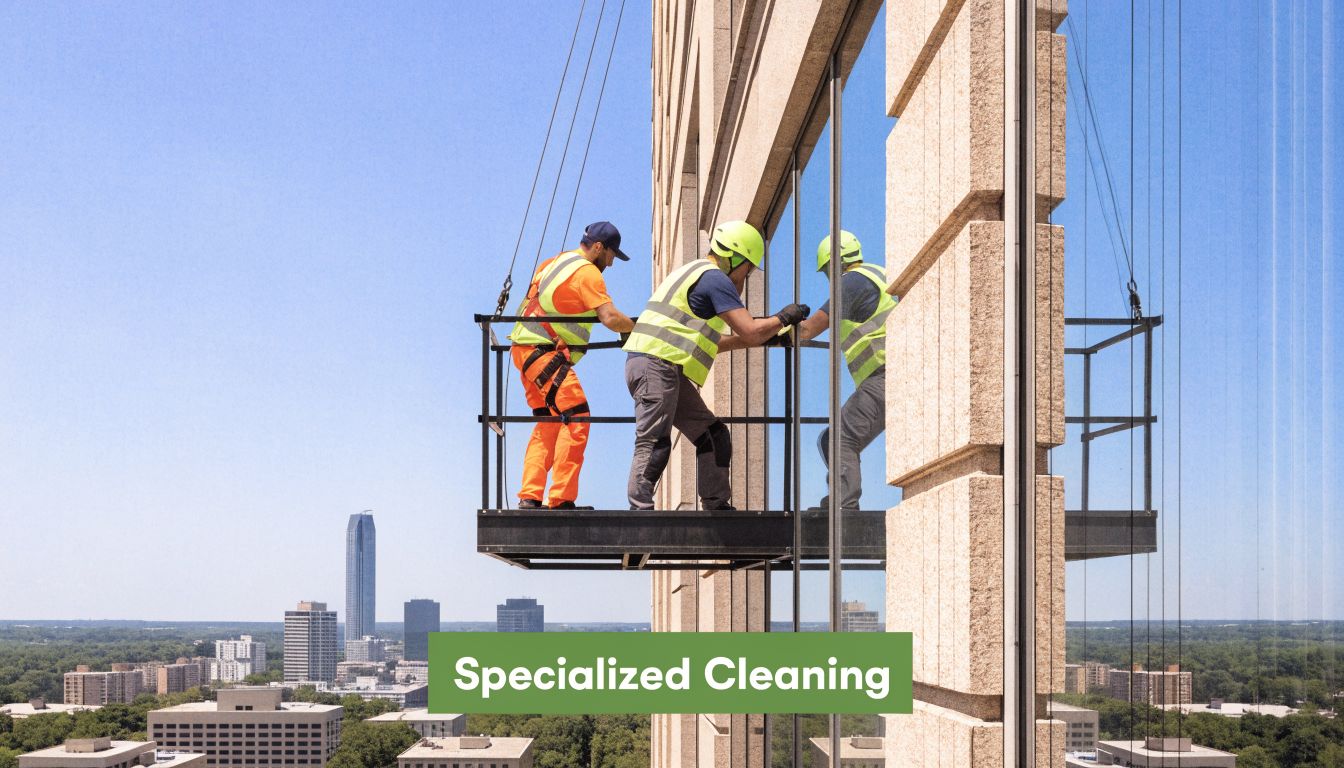
The basics stay simple. Professional window cleaners use only two cleaning methods: a squeegee or a pure-water system. What changes on a high-rise isn't the cleaning science. It's the access, fall protection, wind exposure, and building coordination around those methods.
On a low-rise building, crews can often clean from the ground with extension tools, work from ladders where appropriate, or use other conventional access equipment. On a high-rise, the job usually depends on dedicated façade access systems, roof planning, suspended equipment, or rope-based methods.
That means the property manager has to think about more than clean glass. You're also managing:
As noted in this discussion of high-rise design and construction factors, high-rise buildings use reinforced concrete or steel frameworks designed for wind and seismic forces, and those conditions create specific wind-loading issues that affect worker safety during exterior operations.
That matters because a technician working on a suspended platform or rope system isn't just dealing with height. They're dealing with air movement around corners, setbacks, and mechanical discharges, plus the way the façade and structure influence exposure.
A high-rise window cleaning plan is really an access-and-risk plan with cleaning built into it.
If a contractor says they clean high-rise properties, ask practical questions:
If you want a clearer sense of what this service category involves, this overview of high-rise window washing gives a useful starting point. In markets such as Las Vegas, NV and Scottsdale, AZ, those distinctions matter because many properties combine demanding exterior conditions with active occupancy and tight scheduling.
Professional Window Cleaning is one company that performs residential, commercial, and high-rise window cleaning, which makes it relevant when a manager needs a vendor familiar with both standard window washing and taller building access conditions.
If you're still unsure where your building falls, don't guess. Use a short verification process and document the result.
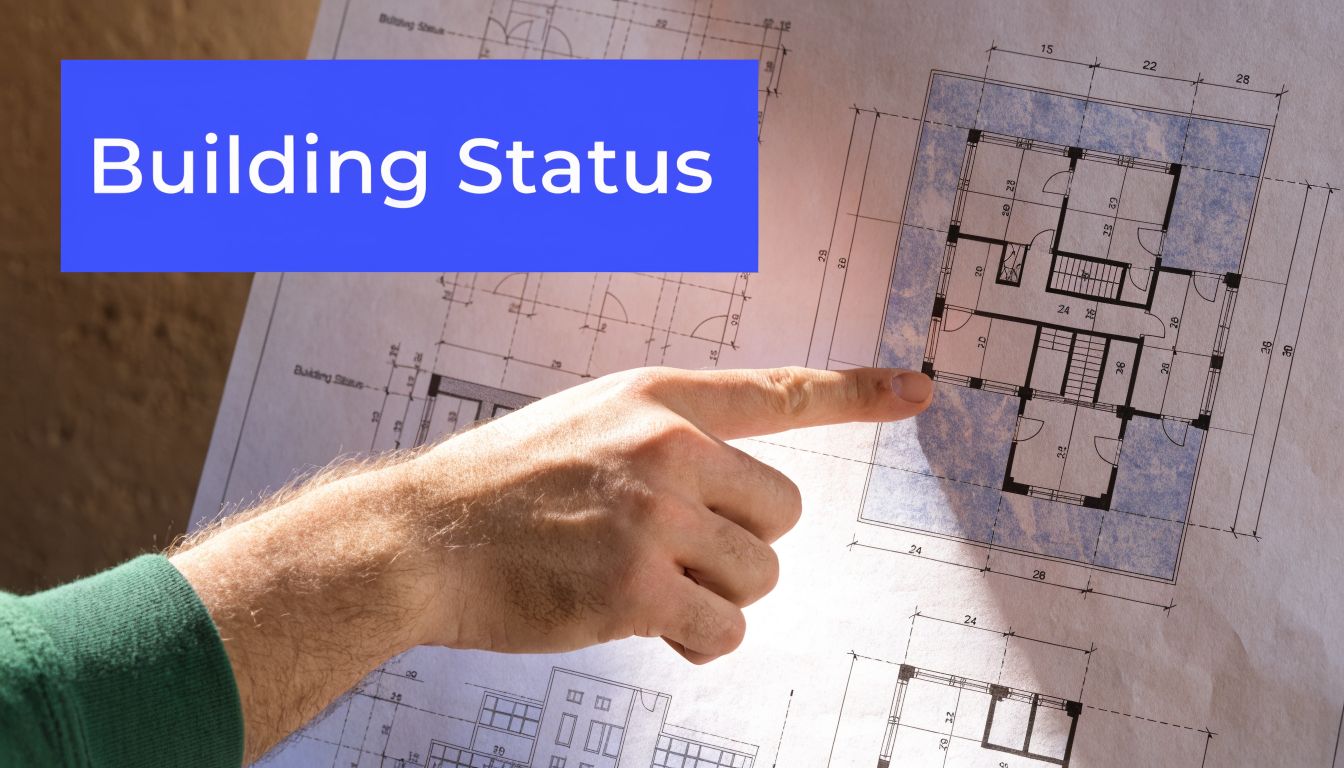
The cleanest first step is to pull the as-built drawings or architectural plans. You want the elevations for the occupied levels and a clear understanding of where fire department access is measured from on your site.
If the building sits on a slope or has multiple access sides, that detail matters. Visual estimates from the parking lot won't give you a reliable answer.
The point isn't just to say, “Yes, this is a high-rise,” or, “No, it isn't.” The point is to make better decisions after you know.
That includes reviewing fire and life-safety obligations, checking whether roof occupancy changes the analysis, and making sure window cleaning and façade maintenance scopes match the actual building conditions. A property manager who knows the building's status can schedule smarter, budget more accurately, and avoid hiring vendors for work they aren't equipped to perform.
If your building is close to the line, the cheapest mistake is a phone call to the local building department. The expensive mistake is assuming.
If you need help evaluating exterior maintenance on a taller property, Professional Window Cleaning handles residential, commercial, and high-rise window washing. If you already know your building qualifies as a high-rise, ask for a scope review that covers access method, safety planning, and whether the job will be done with a squeegee or a pure-water system so you can compare vendors on the details that matter.
Read our blog posts regularly and keep learning.