Care and Maintenance
Window Washing Cloths: The Professional Guide
Discover the best window washing cloths for streak-free glass. Compare microfiber, chamois, and cotton, plus expert care tips for homes and high-rises.


You're probably here because pressure washing ads feel easy to start and hard to get right. Anyone can boost a post, print a flyer, or turn on Google Ads. The problem is that most ads say the same thing, look the same, and give homeowners or property managers no strong reason to respond now.
The pressure washing space is active, and local competition is real. In the U.S., 32,193 businesses compete in the category, and the broader U.S. pressure washing services market stayed stable at $1.2 billion through 2025, according to Jobber's pressure washing industry statistics overview. That means your ad has to do more than announce your service. It has to match intent, show proof, and make the next step obvious.
That's why the best pressure washing ads usually aren't the cleverest. They're the clearest. They speak to a specific problem, show a visible result, and fit the place where the prospect sees them. If you want a stronger local foundation behind your campaigns, it also helps to review this local SEO guide for contractors.
Below are eight ad formats worth knowing, especially if you run an exterior cleaning company or a window cleaning business serving places like Las Vegas, Scottsdale, and Denver. Professional Window Cleaning has been cleaning windows since 1999, and that long view matters here because ad formats change, but customer behavior usually doesn't. People still want clear benefits, local trust, and a company that looks competent before they ever call.
A strong problem-solution ad starts with the irritation people already feel. For window cleaning and related exterior services, streaks are one of those small frustrations that bother homeowners every time sunlight hits the glass. If your pressure washing ads connect with that feeling immediately, the ad has a reason to exist.
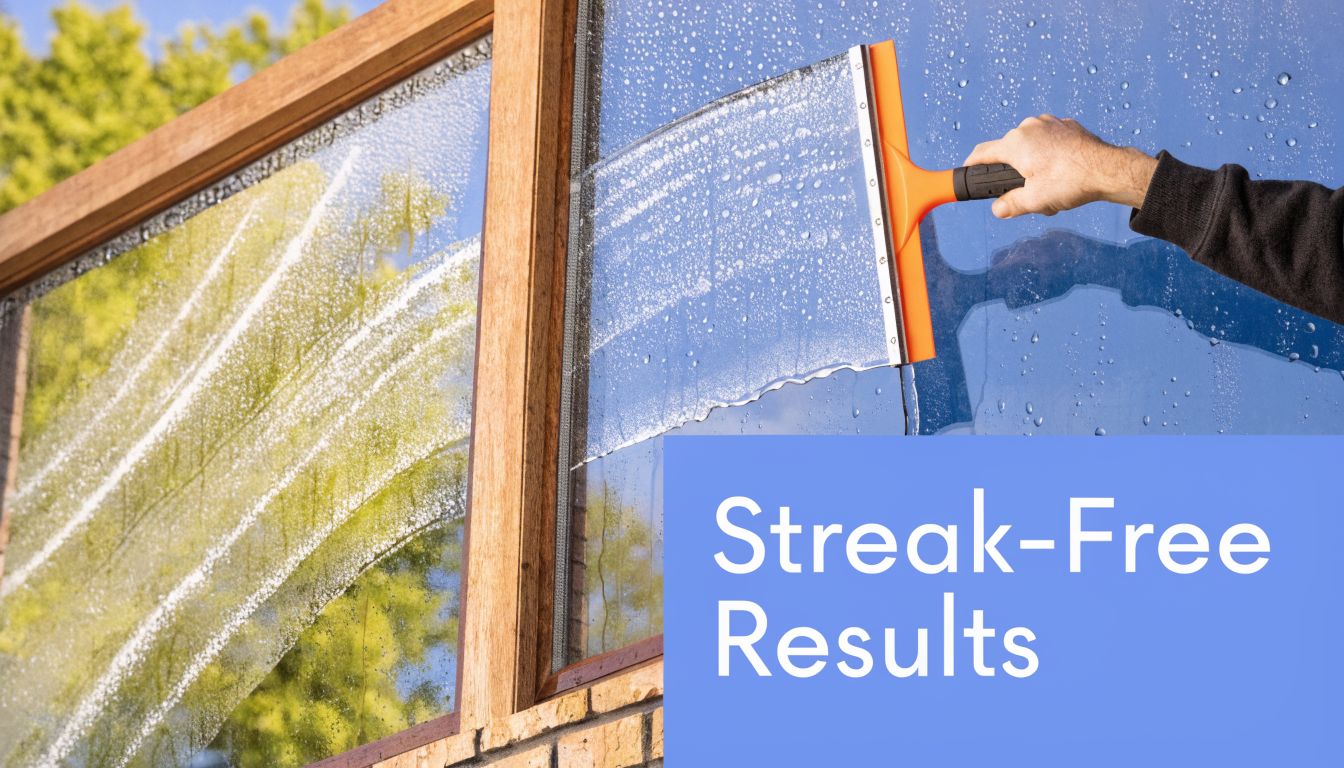
A headline like “Tired of Streaky Windows?” works because it sounds like something a real customer would say. The follow-up should answer the problem in plain language. “We deliver streak-free results for homes and businesses” is better than vague wording about excellence or premium quality.
Professional Window Cleaning has been in business since 1999, so an ad in this style can lean on real experience without sounding overblown. It also helps to mention the two methods professionals use for window cleaning: a squeegee or a pure-water system. That detail sounds practical because it is practical.
If your company also handles exterior cleaning, be careful with wording around glass. Many homeowners assume pressure washing and window cleaning are interchangeable, but they aren't. A helpful educational link inside the ad funnel can answer that concern. One good example is this article on whether you can pressure wash windows.
Practical rule: Name the pain first, then show the safer or more reliable fix.
A simple version might look like this:
This format works especially well in local search ads, service pages, and neighborhood social ads because it meets a customer right where the annoyance starts.
Saturday morning arrives. A homeowner notices mildew on the siding, dirt on the walkway, and a fence that still looks weathered after last season. The question is not only, “How do I clean this?” It is also, “Do I really want to spend half my day setting up hoses, moving patio furniture, and cleaning up afterward?”
That is why a time-saving ad works. It speaks to the job around the job. Pressure washing is rarely just spraying a surface. It often includes prep work, ladder use, moving obstacles, protecting plants, and checking that the pressure is safe for the material. A good ad names that hidden workload and offers relief from it.
The primary appeal is convenience.
Busy homeowners respond to that message, but so do office managers, retail operators, and property managers. They are not only buying a cleaner surface. They are buying back attention. For recurring exterior cleaning, that matters even more because the benefit continues after the first visit. The task stops landing on their calendar.
A weak version says, “We provide professional exterior cleaning.” A stronger version says, “Skip the weekend cleanup. We handle the driveway, siding, and patio in one scheduled visit.” The second line gives the reader something concrete to measure. Time, tasks, and effort.
Here is the practical idea many articles skip. A time-saving ad becomes more believable when it mentions the parts customers usually forget:
Those details work like proof. Anyone can promise convenience. Specifics show what convenience looks like in real life.
A practical example:
“Too busy to spend your day pressure washing? Book a crew that handles the siding, driveway, and cleanup while you keep your plans.”
For commercial jobs, the angle can be even sharper. A storefront owner may not care much about pump specs or detergent types. They care that the front entrance, sidewalk, and concrete apron can be cleaned on schedule without disrupting customers. That is the ad.

This style stays simple on purpose. It tells the buyer that hiring help is not a luxury. It is a practical way to protect time they would rather spend elsewhere.
A property owner scrolling ads late at night is often asking a quiet question before they ever click: Can I trust this company to show up and do the job right?
That is why experience ads work. They reduce uncertainty.
For Professional Window Cleaning, saying the company has served clients since 1999 does more than fill space. It signals staying power. A business that has lasted that long has likely handled different property types, changing equipment, busy seasons, and the kind of service issues that teach a crew how to work carefully.
A trust ad should sound steady, not promotional. Pressure washing and exterior cleaning are visible services. If the work is sloppy, people notice. If the crew damages landscaping, leaves lines on concrete, or misses buildup around edges, the customer notices that too. Experience matters because it lowers the odds of those mistakes.
Years in business work like a shortcut for the buyer. They do not prove quality by themselves, but they suggest repetition. Repetition usually means better systems, better judgment, and fewer surprises on site.
That is the part many articles skip. "25+ years of excellence" is only persuasive if the ad connects that claim to real outcomes a customer cares about.
For example, a stronger trust ad may imply that an experienced crew knows how to:
Those specifics give the claim weight. Without them, longevity can sound like a trophy on the wall.
A simple structure works well:
Buyers often choose the company that feels safest to hire.
Design matters here too. Use real crew photos, recognizable job types, and plain language. A trust ad should feel solid and calm, the way a clean uniform or a clearly marked service vehicle feels reassuring in person.
If you want to pair credibility with stronger creative later in the funnel, this guide on how to improve Meta ad ROAS shows why visual proof can strengthen an already trustworthy offer.
Some pressure washing ads win because the transformation is obvious before the viewer reads a word. Dirt, oxidation, buildup, and weather staining create a strong visual contrast, so before-and-after creative often does the selling for you.
That's one reason this format appears so often in exterior cleaning. The result is visible, immediate, and easy to understand. It also works across platforms, from Meta to Google display to printed leave-behinds.
For inspiration on why visual transformation ads perform so well, this article on how to improve Meta ad ROAS with before-and-after ads is useful reading.
Use the same angle. Keep lighting as consistent as possible. Don't clutter the image with too much text. If the photo needs a long explanation, it probably isn't strong enough.
A split-screen driveway, storefront entry, or glass facade works well because the eye can compare results instantly. For window cleaning, side-by-side glass reflections can be powerful when the framing is simple and the “after” shot isn't overedited.
Here's a practical example of what to show:
A short video can make the transformation even clearer. This kind of creative is especially useful on social platforms.
The copy should stay light. “See the difference” is enough when the visual already proves the point.
Not every ad should speak to everyone. A specialization ad works by narrowing the audience and sounding more competent because of that focus. In commercial markets, this is often more persuasive than broad “we do it all” messaging.
If you clean high-rise properties, large commercial buildings, condominiums, stadiums, car dealerships, or medical offices, your buyers care about planning, access, coordination, and safety. They're not looking for the same ad that works for a small residential driveway.

A generic ad says, “We clean windows and exteriors.”
A specialization ad says something closer to this: “High-rise window cleaning and exterior maintenance for commercial properties, completed with detailed scheduling and minimal tenant disruption.”
That difference matters. Property managers and facilities teams want to feel that you understand their world. They need a vendor who can communicate clearly, work around occupancy, and follow building requirements.
This is also where examples help. A high-rise condo association in Las Vegas has different concerns than a retail strip in Scottsdale or an office building in Denver. Mentioning the property type in your ad copy often does more than adding extra adjectives.
Specialized ads justify premium positioning because they reduce uncertainty for the buyer.
For a company like Professional Window Cleaning, this format fits especially well because the business serves residential, commercial, and high-rise clients. A well-built specialization ad can send a clear signal: this isn't just general exterior cleaning. This is skilled service for demanding buildings.
A homeowner notices it on the first warm weekend of spring. The patio has a layer of grime, the siding looks dull, and the walkway still shows residue from the colder months. The problem did not appear overnight. Spring makes it easier to see.
That is why seasonal ads work. They connect your service to a moment when the customer's attention is already there. Spring cleaning, post-storm cleanup, holiday prep, and move-out refreshes each give people a clear reason to act now instead of saving the job for later.
Urgency needs a believable cause. If every ad says “book now,” the phrase loses force. A better version explains why timing is tighter right now: crews fill faster in spring, weather creates a short window, or certain neighborhoods tend to schedule at the same time.
Seasonal urgency works like a produce stand sign that says “picked this week.” The message feels credible because it matches what the buyer already expects. In pressure washing ads, the same principle applies. Current conditions should drive the copy.
A practical version often includes three parts:
Educational content can strengthen this ad type because some homeowners are unsure whether the exterior needs service yet. A short guide on how often you should pressure wash your house helps answer that question before it turns into a booking call.
Local detail also makes the ad feel more real. Arizona homeowners may respond to dust and sun-exposed surfaces. Colorado customers may think about winter residue and spring thaw. Nevada properties may need cleanup after wind and heavy traffic seasons. Specific timing beats generic seasonal language because it sounds like advice from a local company, not a template copied from anywhere.
A homeowner clicks your ad, books the job, and waits all week for the crew. The cleaning looks better, but one strip of grime is still visible on the driveway. That small leftover spot can turn a happy customer into a hesitant reviewer if the ad promised great results but never explained what happens when the result feels incomplete.
A money-back guarantee ad works because it answers that concern before the call. It reduces the fear of paying for a service that might fall short. In a category like pressure washing, where buyers often compare similar offers side by side, that risk-reversal can be the detail that gets the estimate request.
The wording matters. Vague promises sound like decoration. Specific promises sound like policy.
“100% satisfaction guaranteed” gets stronger when the customer can see the next step. “If anything was missed, call us within 48 hours and we'll return to fix it” is clearer than broad language with no process behind it. The first version tells people what to do, what you will do, and when it applies.
That clarity also protects your team. A guarantee should match the way the business runs. If your crew can return for touch-ups, say so. If your guarantee covers workmanship but not permanent stains, spell that out in plain language. A good guarantee ad does the same job as a clean estimate sheet. It removes avoidable confusion.
A practical guarantee ad usually has three parts:
Those boundaries are often skipped in weaker ads. They should not be hidden. Pressure washing can remove dirt, algae, and surface buildup, but it cannot reverse every form of discoloration. Concrete rust stains, oxidized siding, and etched glass may improve only partially. Stating that upfront makes the guarantee feel more honest, not less persuasive.
A stronger example sounds like this:
“100% Satisfaction Guaranteed. If we miss an area during your house wash or driveway cleaning, let us know within 48 hours and we'll return to make it right.”
That kind of ad works especially well with first-time customers. Reviews and before-after photos show past performance. A guarantee answers the personal question in the buyer's mind. “What happens if my job is the one that goes wrong?”
Use this ad type only if the service team can support it consistently. Confidence in the ad should match the experience at the property.
Social proof ads lean on a simple reality. Prospects trust other customers. If you've done good work consistently, your ads should let other people say it for you.
This format can include review snippets, star ratings, client logos if appropriate, or short testimonial videos. The key is authenticity. Generic praise doesn't help much. Specific praise does.
A homeowner cares about whether you were punctual, careful, and easy to work with. A property manager may care more about communication, scheduling, and consistency across visits. Good social proof reflects those different priorities.
There's also an underused angle here for companies that offer more than one exterior service. Cross-promoting window cleaning with pressure washing is often overlooked, even though bundled offers can improve conversions. In one verified summary, bundled exterior cleaning ads were reported to yield a 28% higher booking rate than single-service ads, and Google Trends data showed a 35% query overlap in Arizona and Nevada markets since Q1 2025, as discussed in Zeely's article on pressure washing ads. For a company already serving cities like Scottsdale and Las Vegas, that's a practical reason to test review-based ads that mention full curb appeal, not just one service.
A strong example might read like this:
“They cleaned our windows, brightened the entry glass, and made the whole exterior look ready for showings.”
That kind of testimonial helps more than a vague “great job” because it paints a picture of the result.
If you use social proof in pressure washing ads, keep it short, visible, and tied to a recognizable customer scenario. People don't want polished marketing language. They want reassurance from someone who already hired you.
| Ad Type | Implementation Complexity | Resource Requirements | Expected Outcomes | Ideal Use Cases | Key Advantages |
|---|---|---|---|---|---|
| Problem-Solution: "Tired of Streaky Windows?" | Low, simple headline and copy | Low, basic copy and imagery | Moderate–High engagement and conversions for homeowners | Residential local campaigns and first-time customers | Relatable messaging, clear CTA, easy to customize |
| Time-Saving: "Get Your Time Back" | Low–Moderate, needs lifestyle framing and targeting | Moderate, lifestyle imagery, scheduling offers | High for busy/affluent segments; higher value conversions | Busy professionals, property managers, commercial clients | Emphasizes convenience and time ROI |
| Trust & Experience: "25+ Years of Excellence" | Moderate, requires credibility elements and polished design | Moderate–High, testimonials, credentials, case studies | Very High with risk-averse and commercial buyers | B2B, high-value projects, long-term contracts | Builds credibility, reduces price competition |
| Before-After Visual: "See the Difference" | Low–Moderate, photo/video production and layout | Moderate, quality before/after assets and editing | Very High engagement on visual platforms; instant proof | Social media, mobile ads, visual-first audiences | Immediate visual transformation, highly shareable |
| Specialization: "High-Rise Specialists" | Moderate–High, technical messaging and safety proof | High, certifications, case studies, specialized visuals | Very High for niche commercial contracts; premium pricing | High-rise buildings, facility managers, B2B accounts | Differentiates service, commands higher rates |
| Seasonal/Urgency: "Spring Cleaning - Limited Availability" | Low, time-limited creative and CTA | Low–Moderate, seasonal creatives, scheduling tools | Very High short-term bookings during peak windows | Seasonal promotions, booking surges, email campaigns | Drives immediate action, creates FOMO |
| Money-Back Guarantee: "100% Satisfaction Guaranteed" | Moderate, legal terms and clear policy communication | Moderate, guarantee copy, customer service readiness | High conversions; reduces trial friction and objections | Competitive markets, first-time customers | Removes purchase risk, increases trust |
| Social Proof: "Trusted by Thousands" | Moderate, collect and curate real reviews | Moderate, review management, testimonial assets | Very High trust and conversion across segments | Broad audience campaigns, listing pages, new customers | Peer validation, highly persuasive and credible |
A good pressure washing ad works a lot like the right tool on a job site. You would not use the same nozzle setting on delicate painted trim and a stained concrete driveway. Ad messaging works the same way. The message has to match the surface, the problem, and the person making the decision.
That is the main lesson from the examples above.
A homeowner who is annoyed by dirty windows usually responds to a clear problem and a fast fix. A busy parent may care more about getting Saturday back than reading about equipment. A property manager comparing vendors often looks for proof of reliability, insurance, safety practices, and repeatable service. The closer your ad lines up with that real buying motive, the less work the customer has to do to say yes.
This is also why strong ads rarely try to say everything at once. If an ad promises speed, trust, savings, premium quality, and specialized service in one small block of text, the result often feels blurry. One ad should carry one main job. Get attention with the problem. Support it with proof. End with a next step that feels easy and specific.
The practical question is not “Which ad style is best?” The better question is “Which ad style fits this customer, on this channel, at this point in the sale?”
For example, a before-and-after ad can stop the scroll on social media because the transformation is immediate. A guarantee ad can work better on a service page or search ad where the buyer is already comparing risk. A specialization ad for high-rise work can justify a higher price because it signals training, equipment, and safety competence, not just cleaning ability. Those differences matter because pressure washing and window cleaning are local, trust-heavy services. People are not buying a slogan. They are buying confidence that the crew will show up, do the work correctly, and leave the property looking better than expected.
Keep the review process simple. Look at each ad and ask four plain questions: Who is this for? What exact problem does it lead with? What proof does it offer? What action should the reader take next? If any answer is fuzzy, the ad probably is too.
Then judge performance by booked work, not just clicks. A campaign can bring traffic and still miss the mark if the message attracts the wrong jobs, wrong expectations, or price shoppers who were never a fit. If you want a simple way to check that math, this guide to calculate your ad revenue effectiveness is a useful starting point.
If you want help from a company that's been cleaning windows since 1999, Professional Window Cleaning serves residential, commercial, and high-rise clients across Arizona, Colorado, and Nevada. Whether you need expert window washing, recurring service, or help presenting your property at its best, their team brings the kind of practical experience that strong ads should promise and real service should deliver.
Read our blog posts regularly and keep learning.