Care and Maintenance
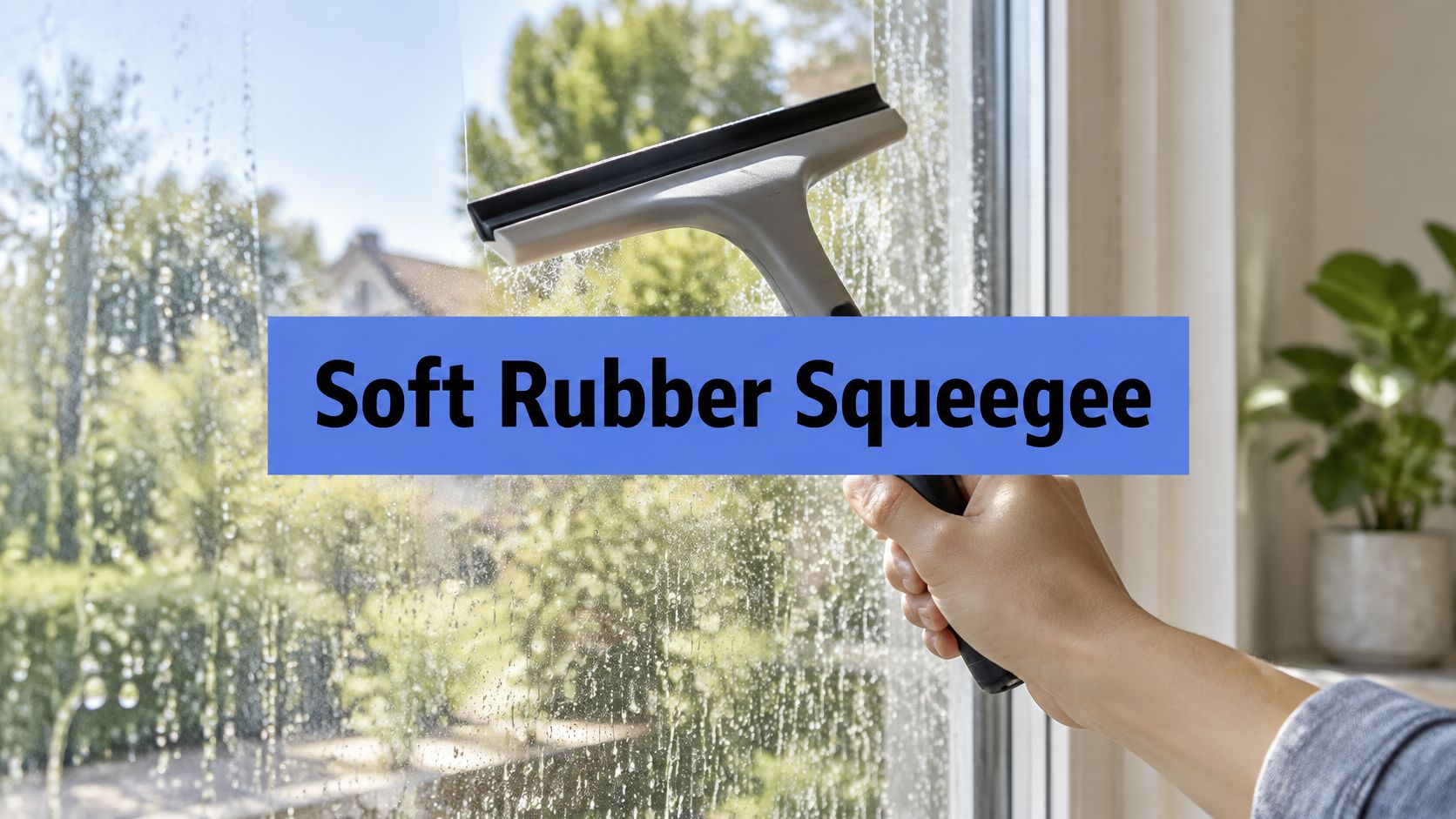
Soft Rubber Squeegee: What It Is and When to Use It
Learn what a soft rubber squeegee is, how it compares to other blades, and when pros choose it for streak-free window cleaning in homes and high-rises.


That splat of bird poop on your window or car isn't just an ugly mess—it's a ticking time bomb for your property. The culprit is uric acid, which gives bird droppings a corrosive pH of 3.5 to 4.5. This potent acid can start etching glass, stripping car paint, and staining decks in as little as 48 hours.
If you want to prevent permanent damage, quick and correct cleaning is your only defense.
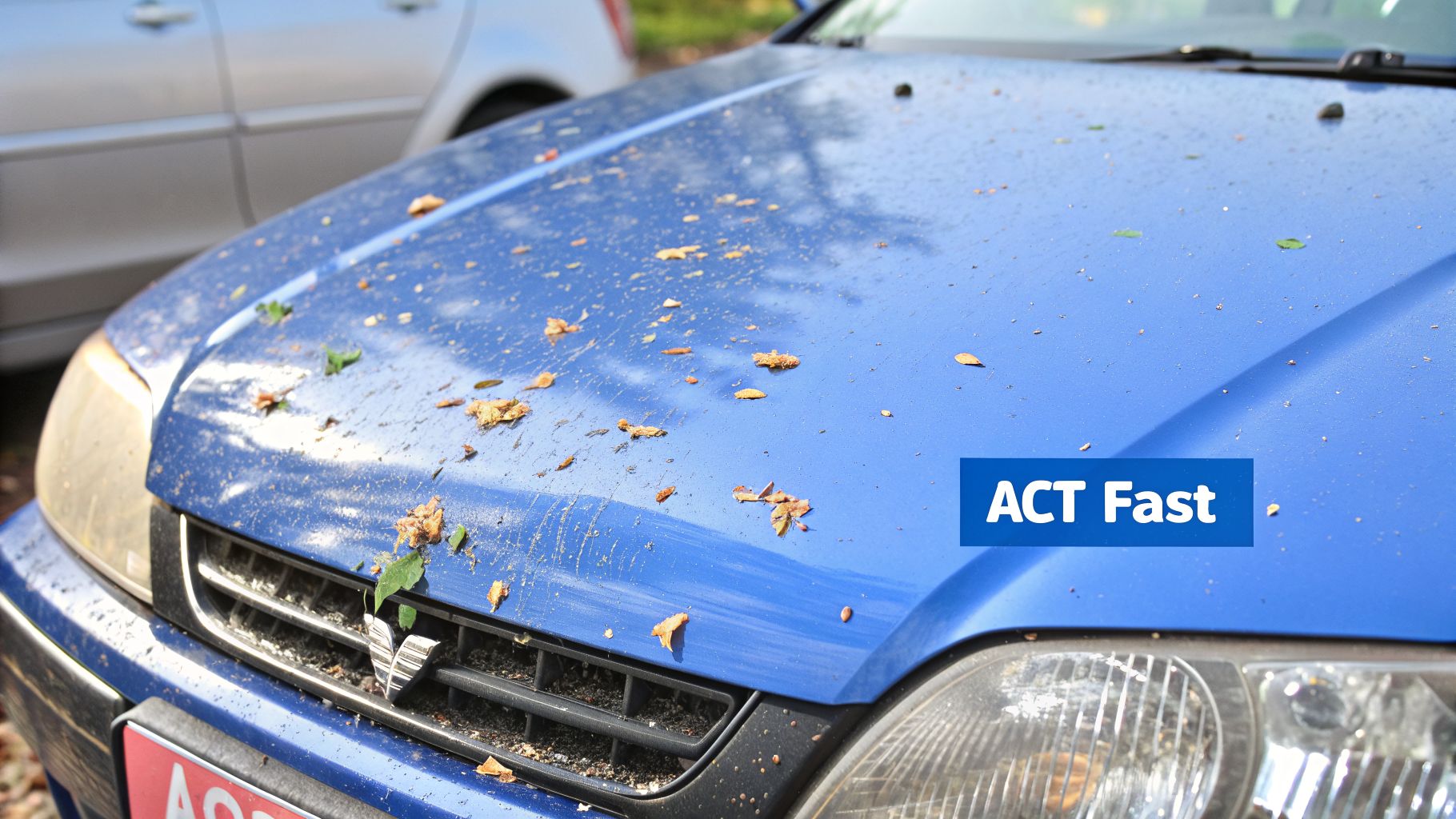
It’s tempting to put off cleaning a bird dropping, but that delay can be a very expensive mistake. The damage isn’t just cosmetic; it's a chemical assault that begins the moment it lands. This is especially true in sunny climates like what we see in Phoenix, Las Vegas, and Denver, where the intense heat bakes the acid in and speeds up the corrosive reaction.
What makes bird waste so destructive is uric acid, a substance not found in mammal droppings. It’s a crystalline compound that doesn't dissolve easily in water. When left to dry, it hardens and bonds to the surface, creating a concentrated acid spot that eats right through protective coatings.
Think of it like this: Uric acid acts much like vinegar or a harsh chemical cleaner, but it’s delivered in a sticky, concentrated form. Ignoring it is like leaving a dollop of acid to bake onto your property's most vulnerable surfaces.
Bird droppings are notoriously difficult to remove once they’ve dried, making them a common headache in the window cleaning industry. Left untreated, they can etch into glass in just 24-48 hours. This often requires a professional to avoid scratching the surface during removal.
In fact, up to 70% of our callouts in urban areas like Las Vegas are for bird dropping removal, a problem that gets much worse during migration seasons when local bird populations can swell by 200-300%.
Bird droppings can cause permanent damage much faster than most people realize. The timeline varies depending on the material, the temperature, and the sun exposure.
The table below gives you a general idea of how quickly you need to act to prevent lasting marks on common surfaces.
As you can see, time is of the essence, especially for delicate surfaces like your car's paint. Waiting even a day or two can be the difference between a simple wipe-down and a costly repair.
Trust us, the damage isn't just theoretical. After 26 years in the business, we've seen firsthand how a small spot can turn into a huge bill.
Understanding these risks is the first step. Taking preventative measures, like exploring the paint protection film benefits for your vehicle, is another great way to guard against environmental damage. But when it comes down to it, acting fast is your best and most effective line of defense.
When you spot that tell-tale splat on a clean window or your car's hood, having the right tools ready can turn a frustrating chore into a quick fix. Acting fast is key to preventing the corrosive damage we talked about, and being prepared is half the battle. This isn't about buying a ton of expensive gear; it’s about having a smart, simple kit on hand.
The goal is always to soften, lift, and wipe the mess away without damaging the surface underneath. I’ve seen too many people grab the nearest paper towel or an old, gritty rag. That’s one of the worst things you can do—it just grinds the acidic debris into your paint or glass, leaving behind fine scratches that are a nightmare to fix.
Putting together your own bird dropping removal kit is simple. You probably have most of these items lying around the house, but keeping them together in one spot makes all the difference.
The cleaning solution you use can make or break the whole process. For a very fresh mess, a simple mix of warm water with a few drops of a pH-neutral dish soap can work. But for droppings that have been baking in the sun? You’ll need a bit more muscle.
The most effective solutions are enzyme-based cleaners. These products are formulated to chemically break down the uric acid and tough proteins in bird droppings. They do the hard work for you, making removal much safer for the underlying surface.
This enzymatic action is what really sets these cleaners apart. Soap and water just lubricates the mess, but an enzyme cleaner dissolves it from the inside out. For homeowners and businesses in places like Phoenix, where the dry air and sun can make droppings rock-hard in no time, an enzyme cleaner is a must-have.
With this kit, you have a safe, effective, and affordable arsenal ready to go. You’re all set to tackle messes on your car, patio furniture, or ground-floor windows. While these tools are perfect for spot-cleaning, remember that large-scale jobs or high-up windows might need a professional touch. You can learn more about why you should never pressure wash windows in our detailed guide.
The secret to getting rid of bird droppings isn't just a bit of elbow grease. It’s all about using the right approach for the right surface. A technique that leaves your windows sparkling could be a disaster for your car's paint job.
If there’s one rule to remember, it’s this: soften before you wipe. Never, ever try to scrub a dried, crusty bird dropping. That gritty, hardened uric acid acts just like sandpaper when you drag it across a delicate surface, and that’s how scratches happen.
Your first move depends entirely on whether the mess is fresh or has been baking in the sun for a while. This quick guide breaks it down.
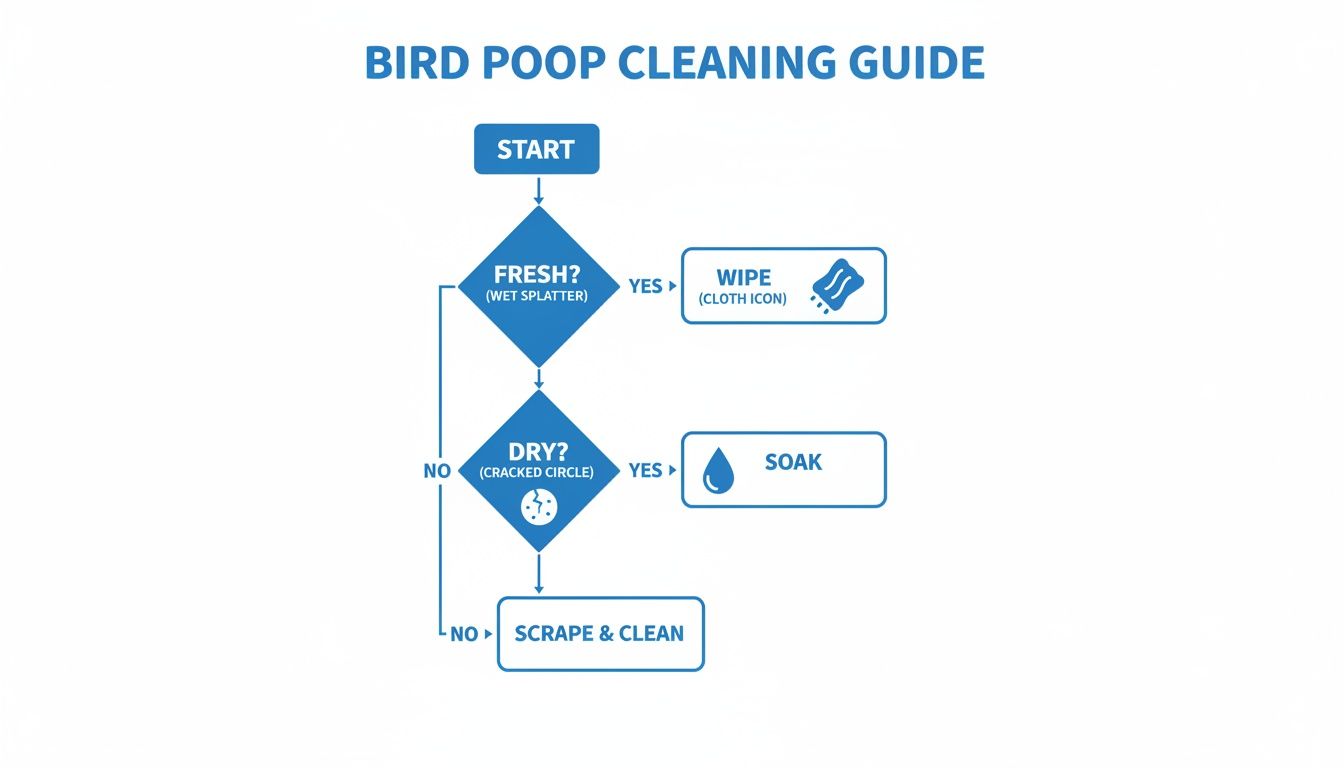
As you can see, knowing whether to wipe or soak is the key to preventing damage.
For windows, the goal is to dissolve the mess completely without leaving behind streaks or, worse, permanent scratches. Start by laying a microfiber cloth soaked in warm, soapy water directly on top of the spot.
Give it five to ten minutes to work its magic. This rehydrates the dropping, loosening its grip on the glass. Once it's soft, it should lift away with a gentle wipe. If you see any stubborn residue, just reapply the damp cloth for a few more minutes. Avoid abrasive sponges or scrapers at all costs—they will etch your glass.
After the spot is gone, it's a good idea to give the whole pane a proper clean to avoid smudges. If you're dealing with a lot of buildup, our guide on cleaning window sills has some extra tips for a thorough job. For a flawless, streak-free finish, professionals rely on squeegees for ground-level windows or pure-water systems for higher glass.
Your car's paint is surprisingly fragile. That glossy clear coat is vulnerable to the acidic nature of bird poop and even more so to scratches from trying to remove it improperly. Your best friends here are a quality quick detailer spray or wipes made specifically for bird dropping removal.
Spray the product liberally over the spot and let it sit for a minute or two. This will start breaking down the acids. Then, using a clean, plush microfiber towel, gently lift the mess up and away from the paint. Don't rub it in. Fold your towel to a fresh, clean side for a final light buff.
A dried-on dropping on your car requires patience. Instead of scrubbing, lay a microfiber towel soaked in detailer spray over the spot for several minutes, just like you would on glass. Let the cleaner do the heavy lifting so you don't have to risk scratching the paint.
Outdoor fabrics on awnings and patio umbrellas are porous, meaning the droppings can soak in and leave a nasty stain. Your first step is to gently flake off any solid, raised bits with something like a plastic putty knife or even the edge of an old credit card.
Next, whip up a simple solution of a pH-neutral soap and cool water. Apply it with a soft-bristled brush and work it in with gentle, circular motions. This helps the cleaner get deep into the fabric fibers to lift the stain out. When you're done, rinse the area thoroughly with a hose. Any soap left behind can actually attract more dirt.
Concrete, stone, and pavers are tough, but they aren't completely immune to staining. The good news is that you can be a bit more aggressive with these durable surfaces. This is a problem we see all the time on patios and pool decks in sunny areas like Scottsdale and Phoenix.
Start by wetting the area, then apply a mix of water and a mild detergent. Let it sit for a bit to really penetrate the stain. Now you can use a stiff-bristled brush (but never a wire brush, which can damage the surface) to scrub the spot clean. For really set-in stains, a pressure washer on a low setting can work wonders, but always test it on a small, hidden area first.
Knowing the right technique is essential for any tough cleaning job. Just like knowing how to clean soot from walls without making things worse is critical after a fire, using the right method for bird droppings is the key to a clean surface without causing a bigger headache.
Thinking about waiting to clean up that bird mess? That one little decision can be a surprisingly expensive one. Ignoring these acidic droppings isn’t just an eyesore; it's a financial gamble where the costs can spiral out of control.
The damage goes far beyond what you might expect. On a vehicle, for example, a single, sun-baked bird dropping can permanently etch the clear coat. The fix isn't a simple wipe-down—it often requires sanding, repainting, and blending the finish across an entire panel, a job that easily runs into hundreds of dollars.
For property owners, the stakes get even higher. The uric acid in bird droppings is corrosive enough to etch glass, leaving permanent cloudy spots that ruin the look of a home or commercial building. In a competitive real estate market like Las Vegas or Denver, where immaculate views are everything, this kind of permanent damage is a huge liability.
The economic impact is staggering. Globally, costs tied to bird dropping damage and cleanup soar past $1.2 billion every year. In high-density areas like Nevada's commercial districts, droppings can mar up to 60% of untreated windows in just one week, with replacement costs running $200-$500 per pane. For homeowners in places like Phoenix, bird poop accounts for a surprising 45% of all window cleaning requests, and failed DIY attempts often lead to scratches that cost $300 or more to professionally repair. You can learn more about how urban wildlife impacts buildings from ongoing studies on the subject.
The bottom line is simple: the cost to clean bird poop is always less than the cost to repair the damage it causes. Procrastination is your most expensive option.
The longer a dropping sits, the more it bonds with the surface. What starts as a simple wipe-off job can quickly escalate into a professional repair.
Just consider these potential expenses:
These hard numbers show that preventative maintenance isn't an expense—it's a smart, cost-effective strategy. Investing in a timely, professional cleaning from a team with over 26 years of experience like Professional Window Cleaning is the best way to protect your property. We use two proven methods—traditional squeegee techniques and modern pure-water systems—to deliver a perfect, damage-free result, saving you from much bigger bills down the road.
Tackling a few bird droppings on your ground-floor windows can feel like a quick and easy DIY win. But what happens when the problem is bigger than a few spots? Sometimes, the smartest move a property owner can make is knowing when to step back and call in the experts.
Certain jobs just aren't cut out for a spray bottle and a roll of paper towels. They demand professional-grade tools, proven techniques, and, frankly, a good head for heights.
A small splatter is one thing, but an entire building facade covered in droppings is a different beast entirely. This is a common headache for commercial properties, especially those in bustling urban centers like Denver and Las Vegas that naturally attract large flocks of birds. Trying to manage that level of contamination on your own isn't just impractical—it won't deliver the spotless, professional look your business deserves.
This is where a company with over 26 years of experience like ours makes all the difference. At Professional Window Cleaning, we know that one size doesn't fit all, which is why our teams rely on two powerful, time-tested methods.
These professional methods are worlds away from teetering on a wobbly ladder or spraying a garden hose at your windows, which usually just spreads the mess around. For properties in sun-drenched cities like Phoenix, where droppings get baked onto the glass, our specialized approach is the only way to safely remove them without leaving scratches.
Calling a professional isn't giving up; it's making a strategic decision to protect your investment. It’s about choosing safety, efficiency, and a level of clean that DIY methods simply can’t touch.
The most important factor, however, is always safety. If cleaning the affected windows involves a ladder, scaffolding, or working at any kind of height, the job belongs to insured professionals. The risks associated with high-rise residential and commercial buildings are obvious, and they're just not worth taking.
But it’s not just about height. You also have to consider the glass itself. Think about historic buildings with delicate, irreplaceable panes or modern properties with specialty tinted or coated windows. Using the wrong cleaning solution or even a slightly-too-abrasive cloth can cause permanent, expensive damage.
A professional team has the expertise to assess the surface on sight and choose the right method to restore your windows without risk. When you hire an expert, you’re not just getting clean windows—you’re getting the peace of mind that comes from knowing your property is in capable hands.
Over our 26+ years in this business, we've heard just about every question there is when it comes to bird dropping cleanup. Let's walk through some of the most common ones our team gets asked, so you can tackle these messes with confidence.
It's a common thought—why not just let the next rainstorm do the work for you? Unfortunately, this is a big mistake. A downpour might wash away the worst of the mess, but it won’t touch the corrosive uric acid that’s already started to eat into the surface.
That acidic residue sticks around, continuing its quiet work of etching and staining your property. This is especially true for delicate surfaces like your car's paint or your window glass. Prompt, proper cleaning is always the best move.
We get this one a lot, and our advice is always a firm "no." While vinegar is acidic and might seem like a good idea to dissolve the mess, its acidity is exactly the problem. It's an indiscriminate cleaner that can cause irreversible damage.
Using vinegar can easily harm natural stone like marble, strip the clear coat right off your car, or discolor your home's siding. It's much safer to stick with a simple pH-neutral soap or, even better, a dedicated enzyme cleaner that's designed to break down the proteins in the droppings without harming the surface underneath.
For property owners in places like Phoenix and Scottsdale, where the intense sun and dry air bake contaminants into surfaces, avoiding harsh DIY solutions is crucial. The risk of making the problem worse is just too high.
The short answer? As soon as you possibly can. We always recommend cleaning bird poop within a 24 to 48-hour window. The longer those droppings are left to sit, the greater the chance of permanent damage.
This is especially critical in sunny climates. The heat acts like an oven, baking the acid directly into the glass and creating a permanent etch. A few minutes of quick cleanup today can save you from a costly flaw that you'll be staring at for years.
Ignoring bird messes goes far beyond just looks—it carries some serious financial and health risks. Think about it: residential data shows that 65% of homeowners deal with bird-related issues every single week.
The health side is even more concerning. Professional cleanups can prevent up to 90% of health risks from nasty bacteria like E. coli that are commonly found in bird droppings. For commercial buildings, it's a matter of safety and compliance. High-rise owners who invest in regular cleaning report 75% fewer slip-and-fall incidents on walkways and ledges. You can dig deeper into this by looking at public health studies on zoonotic diseases.
Our decades on the job have proven that timely, professional removal is an investment in your property's longevity. It can extend the life of your windows by 5-10 years and save property owners thousands in what would have been preventable repair costs.
When the job is too big, too high up, or you just want a perfect, guaranteed result without the hassle, it's time to call in the experts. Professional Window Cleaning has been delivering pristine, streak-free windows for homes and businesses for over 26 years.
Read our blog posts regularly and keep learning.