Care and Maintenance
Window Cleaning Maricopa AZ: Local Homeowner's Guide
Window cleaning Maricopa AZ services keep your home bright and curb appeal high. Compare local pros, pricing, and scheduling options today.


A draft that keeps returning, condensation trapped between panes, or a window that looks cloudy no matter how carefully you clean it can point to a problem deeper than dirty glass. The glass sealant for windows helps keep moisture out, protect the insulated space between panes, and allow the window assembly to handle movement caused by weather and building conditions.
That makes sealant a maintenance concern, not just a tube of caulk for filling an ugly line. Professional Window Cleaning has been cleaning windows for over 26 years, and that experience shows why clean glass, visible edges, and routine inspection belong in the same care plan.
A homeowner may notice the symptom first. The room feels drafty near one window, a pane develops fog between the glass layers, or an energy bill seems unusually high. The visible problem often appears small, but the perimeter seal helps protect the whole insulated glass unit, including the air or gas space that contributes to insulation.
Many people treat window sealant as a simple gap filler. Field data presents a broader picture. Certain insulating glass configurations can experience failure rates of around 2% after 10 years and 4% after 20 years, while water exposure and window orientation can raise the risk and affect thermal performance before occupants notice drafts or fogging. Cardinal's insulating glass technical material explains why seal failure belongs in a long-term durability discussion.
Practical rule: Fogging between panes usually deserves more attention than ordinary condensation on the room-side or exterior glass.
A failed seal doesn't always mean you can restore the unit by adding a new bead around the outside. The original seal may have lost adhesion, allowed moisture into the cavity, or become part of a wider drainage, frame, spacer, or installation problem. For a homeowner-friendly explanation of why a cloudy insulated window can involve more than appearance, read Understanding broken thermal window seals.
It also helps to distinguish the perimeter seal from the sealant used around the frame and wall. The window seal explanation from Professional Window Cleaning can help you identify which seal you're looking at before you buy a repair product. That distinction prevents a common mistake, applying exterior caulk to a failed insulated glass cavity and expecting the original insulating performance to return.
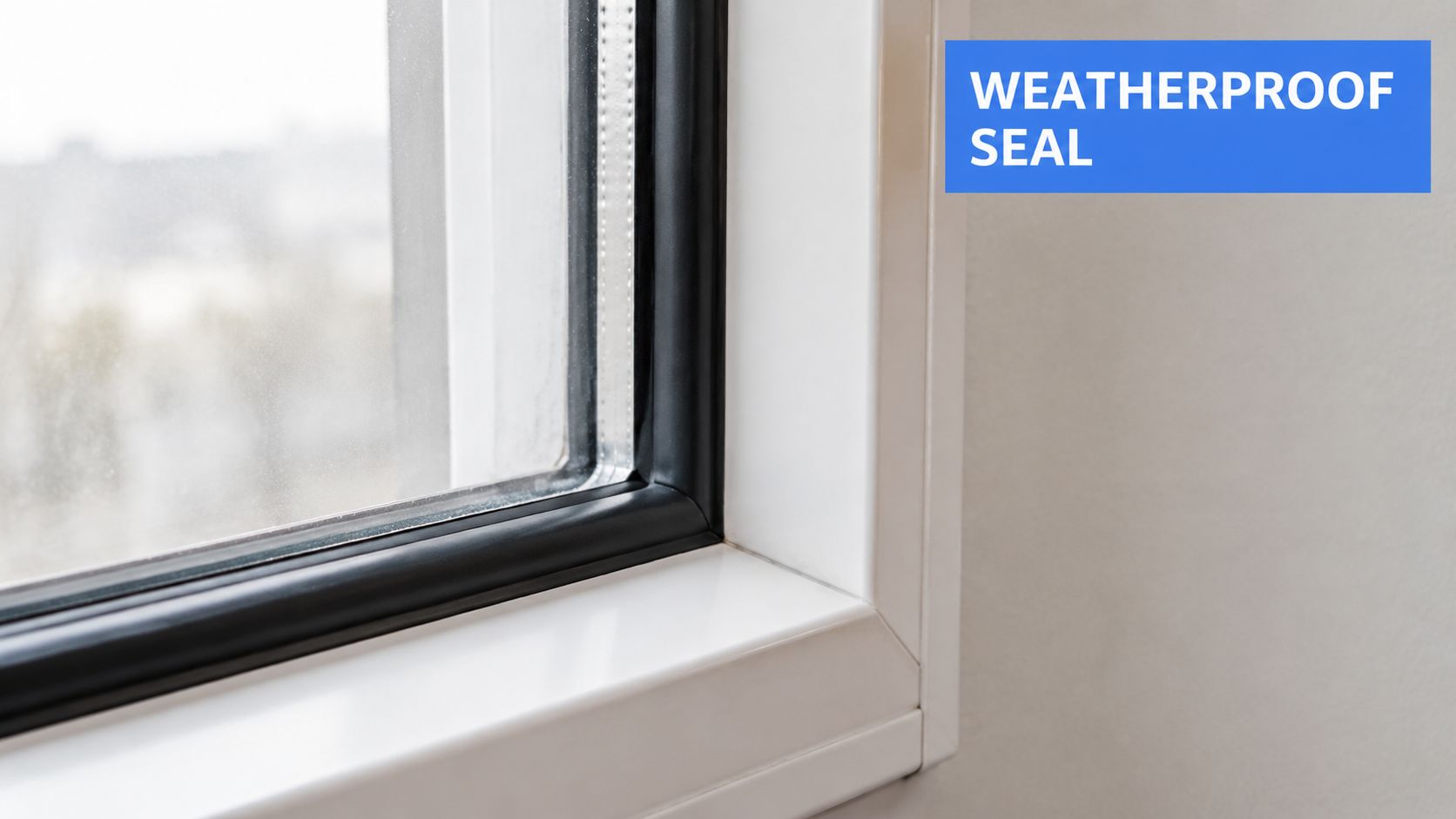
Think of a window sealant as a flexible gasket, similar to the rubber seal around a refrigerator door. It must close a pathway tightly, but it also has to tolerate small changes in position. Glass, frames, spacers, and building materials expand and contract at different rates, so a rigid filler can crack or pull away when the assembly moves.
A functional seal performs three jobs:
The history of insulated glazing shows what happens when the edge seal can't perform. The first commercially available double glazing in North America appeared in 1938, but it was withdrawn the following year because frequent sealant failures caused condensation. Fenestration Review's historical account shows that reliable perimeter sealing has been central to insulated-window performance from the beginning.
Modern insulated glass units commonly use a primary seal to help keep moisture out and retain the insulating space, plus a secondary seal that adds structural support and bonds different materials. The exact assembly depends on the manufacturer and application. A homeowner shouldn't assume that a visible exterior bead is the only barrier protecting the cavity.
Standards matter for structural applications. ASTM's discussion of structural glazing sealants identifies ASTM C1184 as the core specification for structural silicone sealants, with adhesion qualification commonly checked through methods such as ASTM C794 and ASTM C1135. These tests matter because a bead must remain bonded to glass and adjacent substrates while handling stress, temperature cycling, and moisture.
The right product depends on the joint, the frame material, exposure, movement, and whether the finished bead must be painted. “Glass sealant” isn't one universal formula. Silicone, polyurethane, and silane-modified polymer hybrids each make different trade-offs.
A glazing-grade silicone technical sheet lists a tack-free time of 20 to 30 minutes, flow or sag below 0.2 inches, or 5.1 mm, elongation around 600%, and a 100% modulus of 50 psi, or 0.34 MPa. A polyurethane glass adhesive sealant lists a tack-free time of 25 to 40 minutes, a cure rate greater than 1/8 inch, or 3.5 mm, per 24 hours, tensile strength of 1,450 psi, or 10 MPa, and elongation greater than 700%. These figures come from the Valtec glass sealant technical data.

| Feature | Silicone | Polyurethane | Hybrid, Silane-Modified Polymer |
|---|---|---|---|
| Flexibility | Very flexible, with the cited glazing product offering around 600% elongation | High movement capacity, with the cited adhesive offering more than 700% elongation | Generally designed to balance flexibility and adhesion |
| Strength | Flexible rather than primarily structural | High tensile strength, with the cited product at 1,450 psi | Balanced bonding and movement performance |
| UV exposure | Typically a strong choice for exposed joints | Requires careful product selection because UV stability varies | Often selected where flexibility, exposure resistance, and paintability must coexist |
| Paintability | Commonly not paintable | Often paintable after suitable cure, following the product sheet | Commonly marketed as paintable, but verify the specific formulation |
| Vertical application | Low sag is valuable before cure | Cure behavior and bead support require attention | Follow the product's cure and application instructions |
| Typical use | Exposed glazing and joints needing flexibility and weather resistance | Bonding and joints where adhesion and paintability matter | General renovation situations requiring a compromise between properties |
Silicone is often the practical choice for exposed glazing because it remains flexible and handles sunlight well, but many silicone products won't accept paint. Polyurethane can provide strong adhesion and a paintable surface, yet the installer must account for cure behavior and the product's resistance to ultraviolet exposure.
Hybrids can be useful where a property owner wants a combination of movement tolerance, adhesion, and paintability. Still, the label isn't enough. Check the technical data sheet for substrate compatibility, primer requirements, cure time, sag resistance, and exposure limitations before application.
Selection principle: Higher flexibility doesn't automatically make a sealant suitable. The product must also bond to the actual glass and frame, cure in the joint, and tolerate the conditions around that window.
A sealant can perform well on glass and still fail on the frame. Wood, vinyl, aluminum, and fiberglass each present different surfaces, movement patterns, and preparation requirements. The installer must evaluate the complete joint instead of choosing a product from the word “window” on the label.
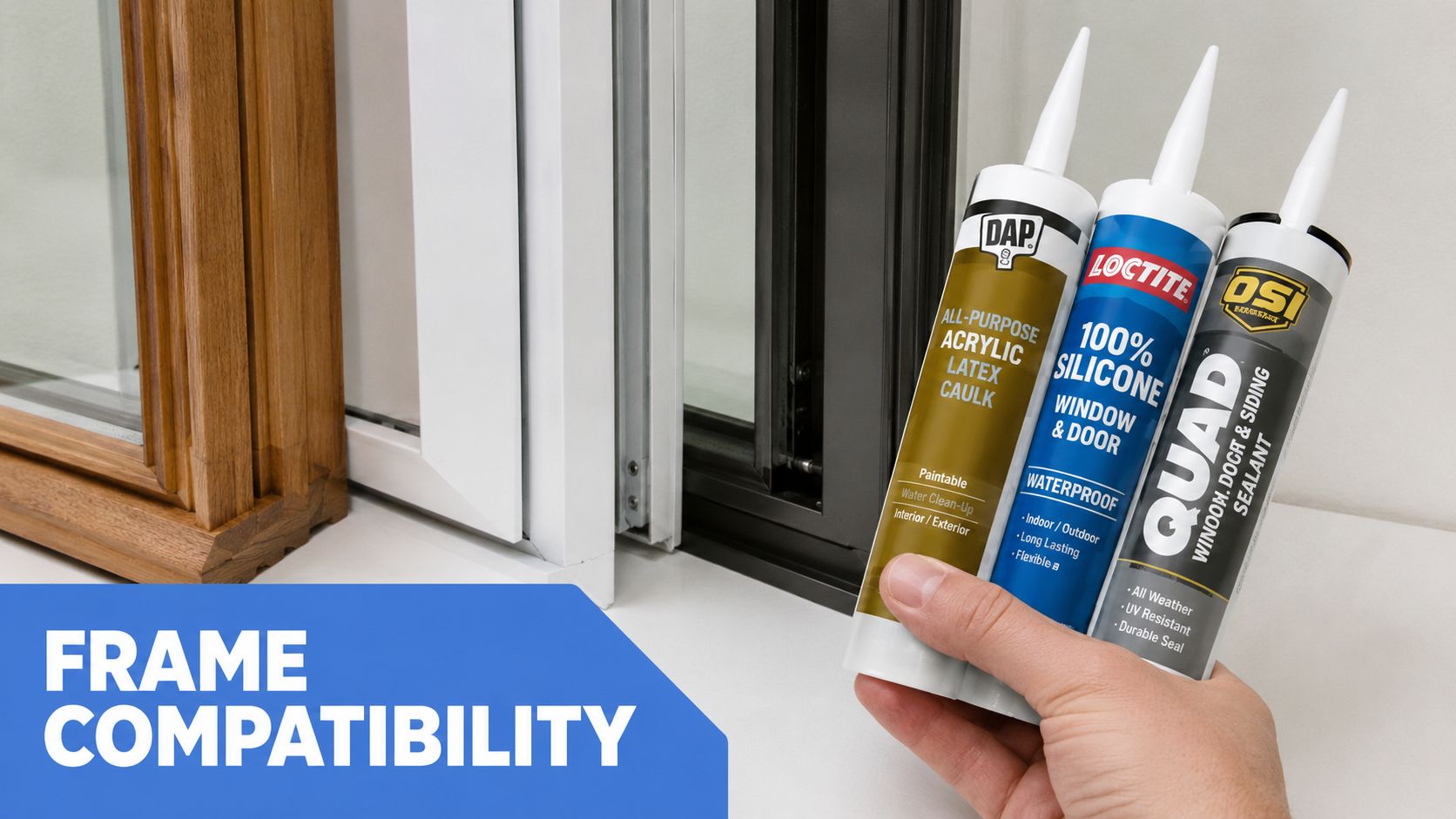
Wood responds to changes in moisture and temperature. A compatible, flexible sealant helps accommodate that movement, while proper priming and a clean, sound surface support adhesion. If the wood is soft, peeling, or damp, applying new sealant over it only hides the condition temporarily.
Vinyl frames can be smooth and difficult for some products to grip. Use a sealant specifically approved for PVC or vinyl, and follow the manufacturer's instructions about cleaning and primer. Solvent choice matters too, since an aggressive cleaner can affect some plastics.
Aluminum frames may have painted, anodized, or bare surfaces, and those finishes don't all behave the same way. Remove oxidation and loose coating, then confirm whether the chosen product bonds directly or needs a primer. Metal and glass can move differently, so a joint that needs flexibility shouldn't be filled with a brittle material.
Fiberglass frames are stable, but their finish still determines adhesion. A compatible glazing or hybrid product may work well, but the technical sheet should govern the decision. Test an inconspicuous area when the finish or coating is unfamiliar.
Clean, dry, and sound surfaces matter more than a thick bead. Remove failing material, avoid sealing over drainage paths, and don't block weep openings designed to release water. A professional can also identify whether the joint is a perimeter weather seal, a glazing seal, or part of the insulated unit itself.
A small, accessible exterior joint can be a reasonable DIY project if the old material is loose, the substrate is sound, and the product instructions clearly match the glass and frame. The work still requires careful removal, surface cleaning, masking, controlled application, and enough curing time before the joint faces weather.
The difficult part isn't squeezing the tube. It's diagnosing the joint correctly. A homeowner may remove a visible bead and discover failed paint, wet wood, a damaged frame, movement at the glass, or a fogged insulated unit that needs replacement rather than perimeter resealing.
Professional window cleaning provides a useful comparison. Industry guidance identifies only two professional window-cleaning methods, the traditional squeegee and the pure-water system. The squeegee suits interior glass, divided panes, mirrors, and detail work, while purified water and water-fed poles suit many exterior windows where access and rinse quality matter. This explanation of professional window-washing systems shows why trained workers select a method for the surface and conditions rather than using one tool everywhere.
The same principle applies to sealant. If you're unsure whether the problem is a weather seal or a failed insulated unit, review window seal repair guidance before applying anything. For frame-finishing considerations, insights from Soca Services Painting can also help you think through coating and preparation issues.
Professional Window Cleaning provides residential, commercial, and high-rise window cleaning in locations including Las Vegas and Phoenix. Cleaning doesn't replace sealant repair, but it gives technicians a clear view of edges, corners, frame joints, and early defects.
Inspect window seals during routine cleaning, especially after heavy weather or whenever a pane develops a new visual change. Look closely at corners and horizontal joints, where cracking, peeling, shrinking, separation, or trapped moisture can first become apparent.
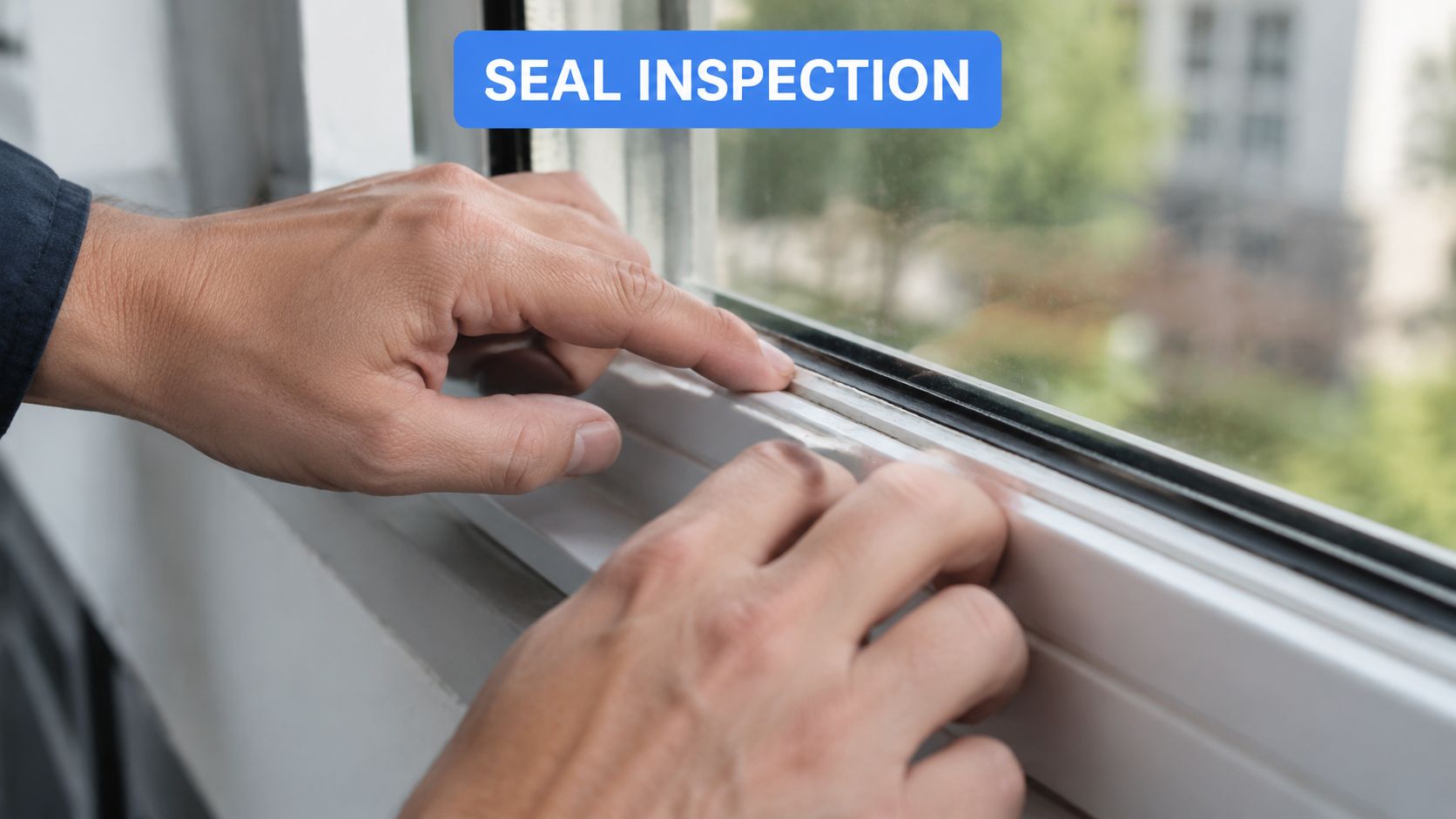
Use this practical checklist:
A long-term field study that began in 1980 tracked more than 2,400 insulating glass units across 140 buildings in 14 U.S. cities. It found total failure rates of 4.9% at 10 years, 7.9% at 15 years, and 9.2% at 25 years. The study also found that 80% of buildings had no insulating glass failures after 25 years, while water reaching the edge sealant accelerated failures in the remaining buildings. The field-study material supports inspecting water exposure before a minor defect becomes a unit-wide problem.
For a broader example of why systematic inspection matters, compare window checks with a certified roof inspection. Both services rely on finding small signs early, documenting conditions, and distinguishing a surface repair from a deeper assembly failure.
A short visual guide can help you recognize common inspection points:
Professional cleaning appointments in Denver and Scottsdale can provide a practical opportunity for a trained technician to notice sealant trouble while the glass and frames are accessible.
Usually, no. Loose, cracked, contaminated, or poorly bonded material should be removed, and the surface must be clean and dry. New sealant can't reliably correct a failed bond underneath it.
Not usually. Fogging inside an insulated glass unit indicates that moisture has entered the cavity or that the unit has lost airtightness. Adding a bead around the exterior may improve a weather joint, but it won't automatically restore the sealed cavity or its insulating performance.
No. Silicone can be highly flexible and well suited to exposed glazing, but the frame, coating, joint design, paint requirements, and manufacturer instructions still matter. Polyurethane and hybrid products can be appropriate in different applications.
No. Appearance helps identify obvious defects, but adhesion, moisture exposure, drainage, and the condition of the insulated unit also matter. A neat bead can still hide a bond failure or an underlying frame problem.
Professional Window Cleaning offers residential, commercial, and high-rise window cleaning, using the squeegee or pure-water system according to the glass, access, and detail required. Visit Professional Window Cleaning to schedule service and have your windows cleaned while visible sealant and frame concerns receive the attention they deserve.
Read our blog posts regularly and keep learning.