Care and Maintenance
Window Cleaning Scraper: Types, Safe Use, and Buying Guide
Learn what a window cleaning scraper is, the different types available, safe usage techniques, and how to pick the right one for home or pro jobs.


A property manager usually notices the problem in stages. First, hard-water spots spread across the ground-floor glass. Then tenants start reporting streaks on upper floors, while visitors see a building that looks less cared for than it is. The lowest bid may solve part of the problem, but it won't necessarily match the façade, access constraints, schedule, or safety requirements.
Professional crews use only two window-cleaning methods: the squeegee or a pure-water system. The right choice depends on access, glass condition, building height, and the finish required. Safety documentation and portfolio coverage matter just as much.
Professional Window Cleaning has been cleaning windows for over 26 years, since 1999, and serves commercial properties in Las Vegas, Phoenix, Scottsdale, and Denver, among other markets. If you're also comparing general service vendors, this guide to how to find reliable contractors offers useful procurement context. Here are the strongest options for different commercial-building needs.
A mixed-use property can need three different access plans before lunch. Ground-floor storefront glass may need hand detailing, second-story panes may be faster with a water-fed pole, and interior partitions still have to be finished around tenant traffic. Professional Window Cleaning stands out because its service scope matches that kind of real commercial workload across Arizona, Colorado, and Nevada, including Scottsdale, Phoenix, Flagstaff, Denver, and Las Vegas.
Crews handle interior and exterior windows, screens, sills, frames, hard-water removal, pressure washing, chandeliers, and light fixtures. That broader scope matters on commercial buildings because the final impression rarely comes from the glass alone. Dirty frames, spotted entry glass, neglected ledges, and dusty lobby fixtures can make a cleaned façade look unfinished.
Recurring maintenance is available, which suits managers who need scheduled service instead of calling only when complaints build up. Estimates are customized rather than posted as flat online pricing, because window count, size, height, condition, glass type, and service frequency change the labor and access plan. Certain units, including some Pella and double-pane windows, may also be priced differently.
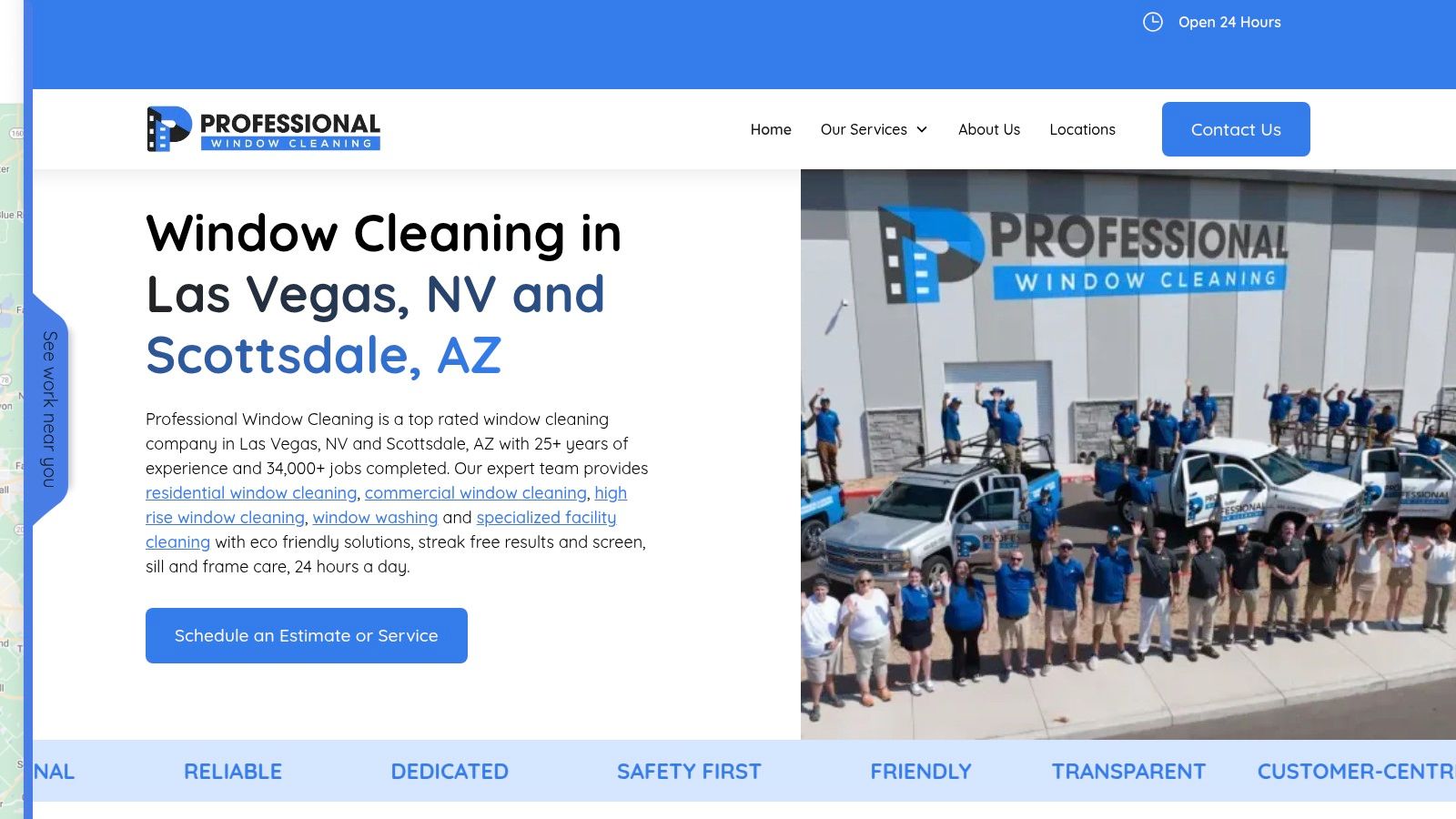
Professional Window Cleaning ranks well for buyers who are comparing vendors by access method, safety planning, and regional coverage rather than by generic brand familiarity. It can fit a single building, but it also makes sense for managers who need one provider that can quote several properties in the same regional footprint. Regional phone numbers and online scheduling help at the intake stage, especially when bids have to be gathered quickly across multiple sites.
The practical advantage shows up on buildings with uneven access. On a mixed-height office park, squeegee work can cover lobby glass, tenant entries, and interior partitions, while a pure-water system handles reachable upper exterior panes without putting a worker directly in front of every window. That can reduce setup time, but only if the vendor confirms which façades are suited to each method and where lifts, roof access, or other controls are still required.
Safety paperwork is part of the buying decision. Any provider can say it handles commercial and high-rise work. The better question is whether the quote package clearly states access method, site constraints, included surfaces, weather delays, and how crews will document skipped areas or defects after the visit.
Practical rule: A recurring contract only works when it specifies what is included, how issues are recorded, and what happens if access, weather, or tenant activity interrupts the schedule.
Pros
Cons
If you also handle promotion for a local service brand, these commercial cleaning campaign tips are relevant alongside vendor evaluation.
Website: Professional Window Cleaning
Fish Window Cleaning fits owners who value broad franchise coverage and a repeatable process for storefronts, offices, and multi-site retail routes. The company operates through more than 270 locally owned franchises, according to its published company information, and provides a location finder and quote-request tools through its website.
That network can simplify the first stage of procurement. A retail operator with several locations may be able to identify local branches, request comparable scopes, and build recurring visits around store operations. The model is also useful for low-rise and mid-rise properties where access is straightforward and the work is primarily route-based.
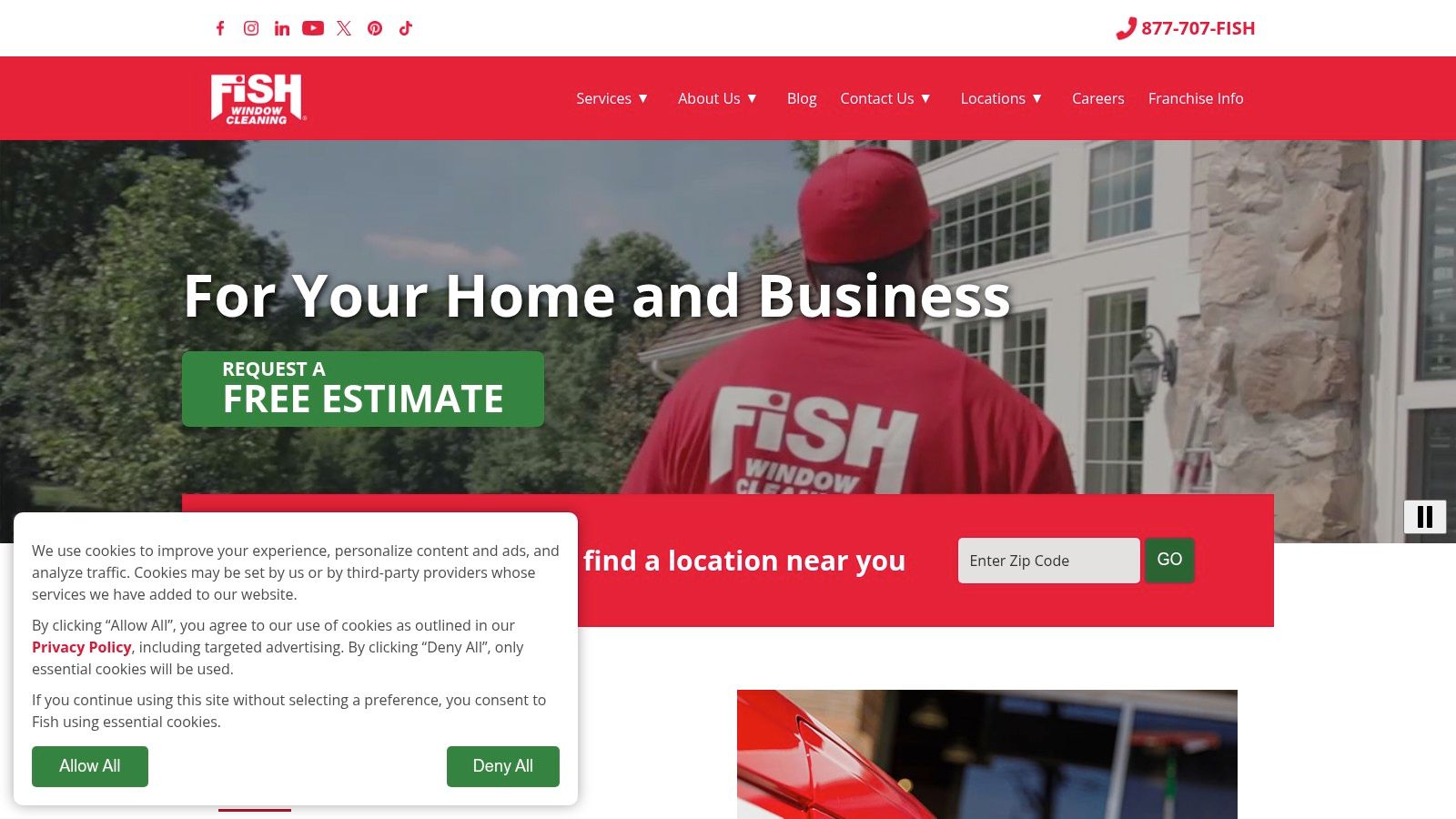
Fish is a practical option for portfolios that need local service in Arizona, Colorado, Nevada, and other states. Its commercial programs can cover storefronts through larger sites, but the local branch remains the critical decision point. Equipment, crew experience, response time, and high-rise capability may differ between operators.
Ask for the actual scope from the branch that will perform the work. Don't assume a national brand name answers questions about rope access, suspended platforms, lifts, water-fed poles, or rescue planning.
Website: Fish Window Cleaning
A multi-site operator usually notices the scheduling problem first. Window cleaning, pressure washing, and lighting each bring different crews, work orders, and access needs. Shine is worth a look when reducing those handoffs matters as much as the glass itself.
Its commercial model centers on bundled exterior service. That can work well for retail centers, office properties, and other sites where entrances, sidewalks, signage, and storefront glass all need attention on a recurring cycle. Shine also has operating units across Colorado, Arizona, and Nevada, including the Denver area, Phoenix-area suburbs, and Southern Nevada, so it can be relevant for managers trying to keep vendor coverage consistent across more than one market.
That convenience has limits. Bundling helps with admin, but it does not automatically answer the hard questions that affect bid quality. The assigned local operator still needs the right access method for the building, the right insurance for the scope, and clear safety paperwork for any elevated work. If a property includes difficult glass, restoration issues, or a facade that requires technical access, check whether the local team handles that work or subcontracts it.
For procurement, I would treat Shine as a coordination play first and a specialist second. Review the window scope line by line. Interior and exterior glass, frames, sills, screens, mineral buildup, service frequency, and access equipment should all be named clearly. For taller or awkward elevations, ask what method the crew will use, what safety documentation comes with the job, and whether that standard applies across every site in your portfolio.
Website: Shine
A bid can look fine until the building forces the access question. Ground-floor panes, a few upper bands of glass, tenant traffic at the entrance, and limited room for lifts all change who can handle the job well. Squeegee Squad is worth a look for that kind of mixed portfolio because its website presents both commercial and high-rise window cleaning, and the brand has coverage in multiple markets, including Phoenix and Tucson.
The practical appeal is scope range at the branch level. One operator may cover routine storefront glass, office exteriors, campus work, and taller façades, with related exterior services such as gutters, roofs, and solar cleaning. That can reduce vendor count, which helps when one property manager is coordinating several sites. It only pays off if the local franchise runs commercial work regularly and does not treat it as overflow between residential jobs.
That distinction matters.
A location finder helps you identify coverage, but it does not tell you how a branch handles suspended access, rope descent, water-fed pole work, or site protection on active properties. Crew depth, supervision, equipment access, and scheduling discipline can change from market to market. I would ask for recent examples that match your building type, not just a general commercial reference.
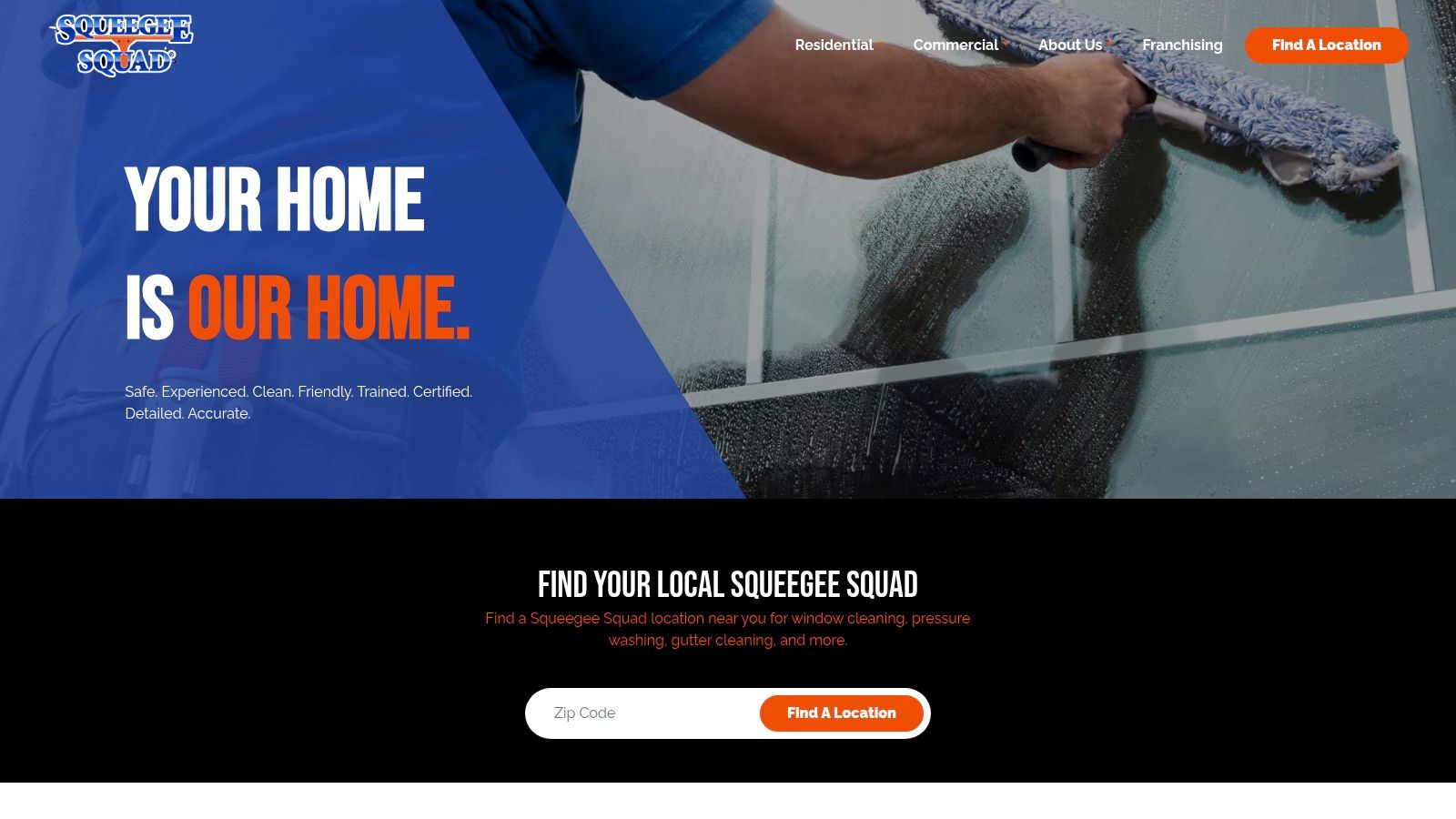
Use a simple selection check before award. Confirm the branch can separate ground-level squeegee cleaning from water-fed pole work at height, state who supervises the crew, and explain how pedestrians, tenants, vehicles, landscaping, and finished surfaces will be protected.
A regional manager has ten sites, one procurement process, and very little patience for separate window, janitorial, and compliance vendors. That is the case where ABM usually fits. Its specialty services include window and blind cleaning, and the bigger advantage is how that work can sit inside one facility contract across offices, healthcare properties, stadiums, institutions, and similar large operations.
The buying decision is less about getting the cheapest glass cleaning line item. It is about whether one provider can keep documentation, approvals, invoicing, and account management consistent across a multi-site portfolio. For teams managing several properties or several states, that can reduce administrative drag.
There is a trade-off.
Bundling window cleaning into a wider facilities agreement works best when the scope is written with real building conditions in mind. If the glass program gets folded into a generic janitorial cadence, the schedule can drift away from weather exposure, traffic patterns, tenant visibility, and the actual condition of each elevation. Small storefronts and one-time cleans usually will not get the same value from this model.
I would review the service-level agreement before anything is awarded. It should spell out window frequency, included and excluded surfaces, access expectations, quality control, response procedures, and who handles escalation. If blinds, interior glass, and exterior work are assigned to different crews, that split should be stated clearly so missed scope does not turn into a billing dispute later.
Use this as the selection check for ABM: confirm the access method for each building type, confirm the safety paperwork flows through the same contract structure, and confirm the account team can support every site in your portfolio without turning window cleaning into an afterthought.
A Denver tower with mixed glass types, tight sidewalk conditions, and limited roof access exposes weak bids fast. Reflection Windows & Doors stands out here because its High-Rise Division spells out how crews reach the work, not just that they handle high-rise cleaning. The company lists rope access, water-fed poles, aerial lifts, and suspended platforms, which gives property teams a practical starting point for comparing scope against actual building conditions.
That matters before award, not after mobilization.
If a proposal only says “exterior windows,” the key variables are still open. Access method changes labor, setup space, roof coordination, pedestrian protection, weather limits, and how long each elevation stays in play. Reflection also handles repair, replacement, restoration, and post-construction glass work, which can help on buildings where the issue is not just soil on the surface but damaged or newly installed glass that needs a different scope.
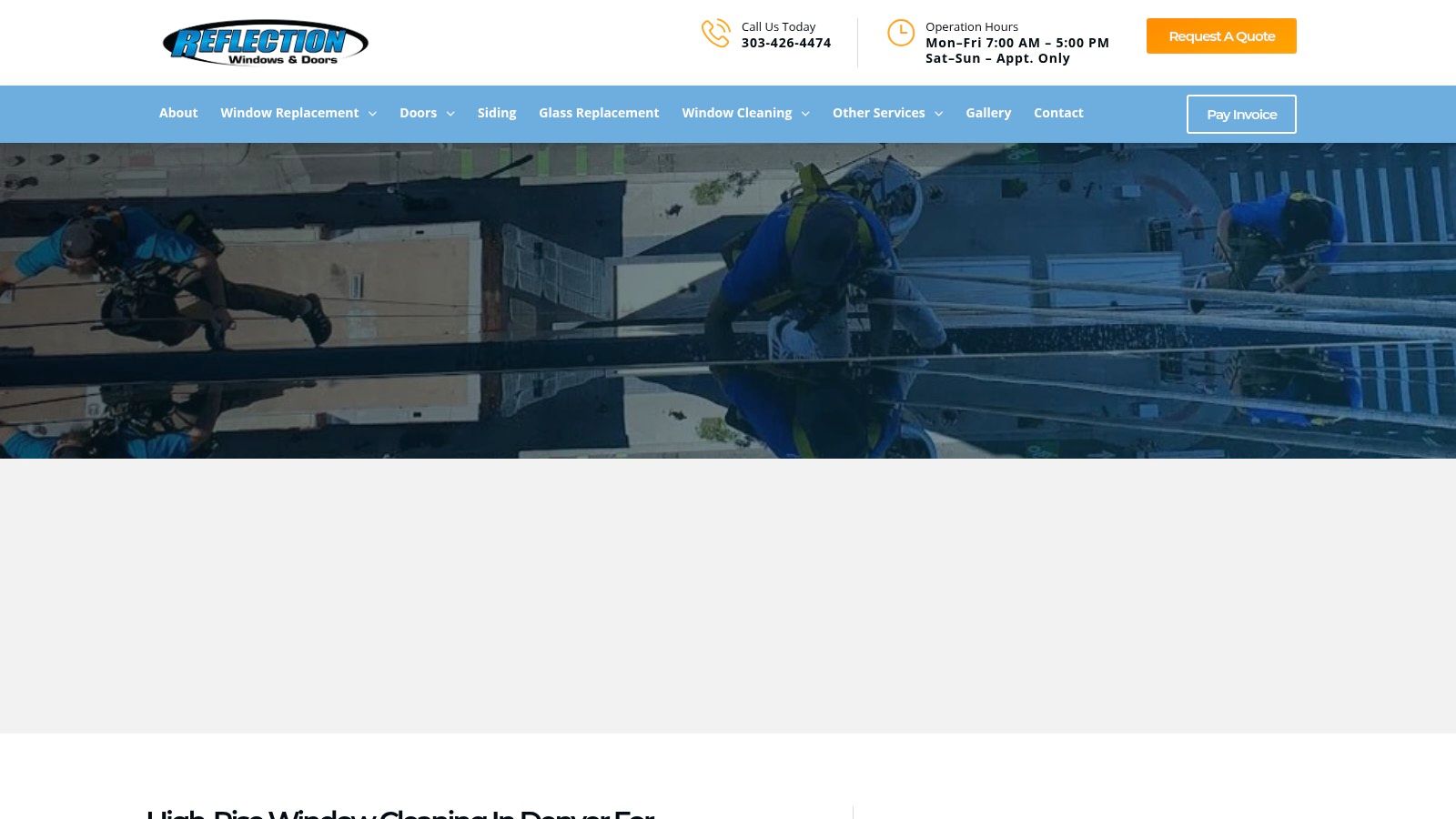
The main buying question is simple. Does the access plan match the façade, the roof, and the paperwork needed to run the job safely? OSHA-related high-rise window-cleaning guidance is a useful reference for the documentation owners should ask to review, including anchorage information, training records, equipment inspections, fall protection, and rescue planning. Generic “high-rise” language is not enough if the building needs a specific descent system or lift setup.
For multi-site portfolios, there is a clear trade-off. Reflection looks strongest where Colorado access conditions and façade complexity drive the decision. That is a good fit for Denver towers, difficult elevations, post-construction cleans, and glass-restoration projects. It is a narrower fit for portfolios spread across several states, where account coverage and dispatch geography may matter as much as technical access depth.
Use this vendor check before signing: confirm the method for each elevation, confirm the safety documents are current and site-specific, and confirm the company's service footprint matches the buildings you need covered.
A resort corridor job can look simple on the bid sheet and turn messy fast once you account for loading access, guest traffic, and narrow work windows. That is where a local contractor can help. Window Masters Las Vegas is geared to Southern Nevada properties that need commercial and high-rise service, and that local focus matters when schedules have to work around active hospitality and office operations.
The question is not whether a provider says it does high-rise work. It is whether the crew can explain, in plain terms, how each elevation will be reached and what that choice changes on site. For Las Vegas buildings, that usually means sorting out rope access, suspended stage, lift access, or a mix of methods before the job is approved.
Local familiarity also has a practical upside for recurring work. Crews who already operate in the market may handle mobilization, tenant coordination, and timing with fewer surprises. The trade-off is scope. A Nevada-centered vendor can be a strong fit for one city or one metro, but it will not cover a broader Southwest portfolio on its own.
A useful screening approach is simple. Ask what access method is planned for each façade. Ask what safety documents support that plan. Ask whether the company can show comparable work on resorts, offices, condominiums, or hospitality properties. The Las Vegas commercial window-cleaning perspective is also a helpful reminder that local scheduling knowledge matters when buildings operate continuously.
| Provider | Implementation complexity | Resource requirements | Expected outcomes | Ideal use cases | Key advantages |
|---|---|---|---|---|---|
| Professional Window Cleaning | Moderate, trained crews with high‑access capabilities | Advanced equipment, safety gear, eco‑friendly supplies; custom estimates | Streak‑free, consistent results with high customer satisfaction | Homes to high‑rise and recurring commercial maintenance in AZ/NV/CO | Established local experience, full‑service offering, strong reviews |
| Fish Window Cleaning | Low–Moderate, franchise model with local execution | Varies by franchise; supports route scheduling and online quotes | Reliable route‑based storefront and low/mid‑rise service (quality varies) | Multi‑site retail routes and recurring commercial schedules | Wide U.S. coverage, scalable franchise network, easy quoting |
| Shine | Moderate, integrates multiple exterior trades | Bundled crews and equipment for windows, pressure washing, lighting | Consolidated exterior maintenance from one vendor | Property managers seeking bundled exterior services in CO/AZ/NV | Single‑vendor convenience, local operating units |
| Squeegee Squad | Moderate, franchise with many high‑access branches | Varies by market; many franchises list rope/lifts and safety practices | Suitable for mixed portfolios where high‑access is available | Campuses and mixed residential/commercial portfolios | Good high‑rise coverage in many markets; versatile service mix |
| ABM (Facility Services) | High, enterprise procurement and contract integration | Large workforce, standardized processes, compliance documentation | Standardized SLAs and integrated facility management outcomes | Large commercial portfolios, multi‑state owners, institutional sites | Enterprise scale, strong compliance, simplifies vendor management |
| Reflection Windows & Doors (High‑Rise CO) | High, specialized rope/stage/wfp access and complex logistics | Rope access teams, lifts, water‑fed poles, glass repair/restoration crews | Expert high‑rise façade cleaning and restoration, post‑construction readiness | Downtown Denver/Front Range towers and complex façades | High‑rise specialist with repair integration and local knowledge |
| Window Masters Las Vegas | Moderate–High, high‑rise with event and hospitality coordination | High‑rise crews familiar with resort logistics and scheduling | Timely high‑rise service tailored to resort and event needs | Southern Nevada hospitality, Strip towers, multi‑story commercial | Local Las Vegas expertise, rapid mobilization for events |
Start with the building, not the brand. A ground-floor retail strip, a medical office, a dealership, and a high-rise tower can all need commercial window cleaning, but they don't present the same access, scheduling, or documentation demands. Shortlist three providers that match the property type and the geography, then ask each one to price the same written scope.
The estimate should state window count, approximate height, glass type, included frames and sills, hard-water treatment, interior access, exterior access, and desired frequency. Mention double-pane units and any specialty systems before the site visit. These details affect labor, equipment, scheduling, and price, so leaving them out makes bids look comparable when they aren't.
Ask every crew which of the two professional methods it will use, the squeegee or the pure-water system. Traditional squeegee cleaning uses solution and mechanical removal, while pure-water cleaning filters dissolved minerals and delivers purified water through a water-fed pole, where a brush loosens soil before the glass is rinsed. The selected method should fit the access conditions and desired finish, not merely the vendor's preferred equipment. This overview of professional squeegee and pure-water methods explains the practical distinction.
Ask for evidence, not assurances: The provider should show how it will reach the glass, protect the public, document defects, and respond when weather or access changes the schedule.
For high-rise work, request the site-specific access plan, anchor certification, inspection records, worker qualifications, rescue procedures, weather limits, and falling-object controls. For every property, request references from buildings similar to yours. A vendor experienced with storefronts may not be prepared for a tower, and a national facilities provider may not be the most efficient choice for a single small site.
Compare schedules against tenant hours, loading restrictions, lobby traffic, medical operations, retail opening times, and event calendars. Write service levels into the contract before work begins. Include the service frequency, quality standard, missed-visit process, damage reporting, inspection photographs, communication contact, and escalation path.
Professional Window Cleaning is particularly relevant when you need commercial and high-rise service across Arizona, Nevada, and Colorado. Its coverage includes Phoenix, Scottsdale, Flagstaff, Las Vegas, and Denver, which can help managers coordinate recurring work across more than one market.
The best commercial window cleaning choice isn't automatically the cheapest bid. It's the provider whose access plan, safety records, method selection, reporting, and geographic coverage fit the building you operate.
Professional Window Cleaning provides interior and exterior commercial window cleaning, high-rise access, frame and sill cleaning, hard-water removal, and recurring maintenance for offices, storefronts, medical facilities, dealerships, and other commercial properties. Visit Professional Window Cleaning to request a site-specific estimate and discuss the right squeegee or pure-water approach for your building.
Read our blog posts regularly and keep learning.