Care and Maintenance
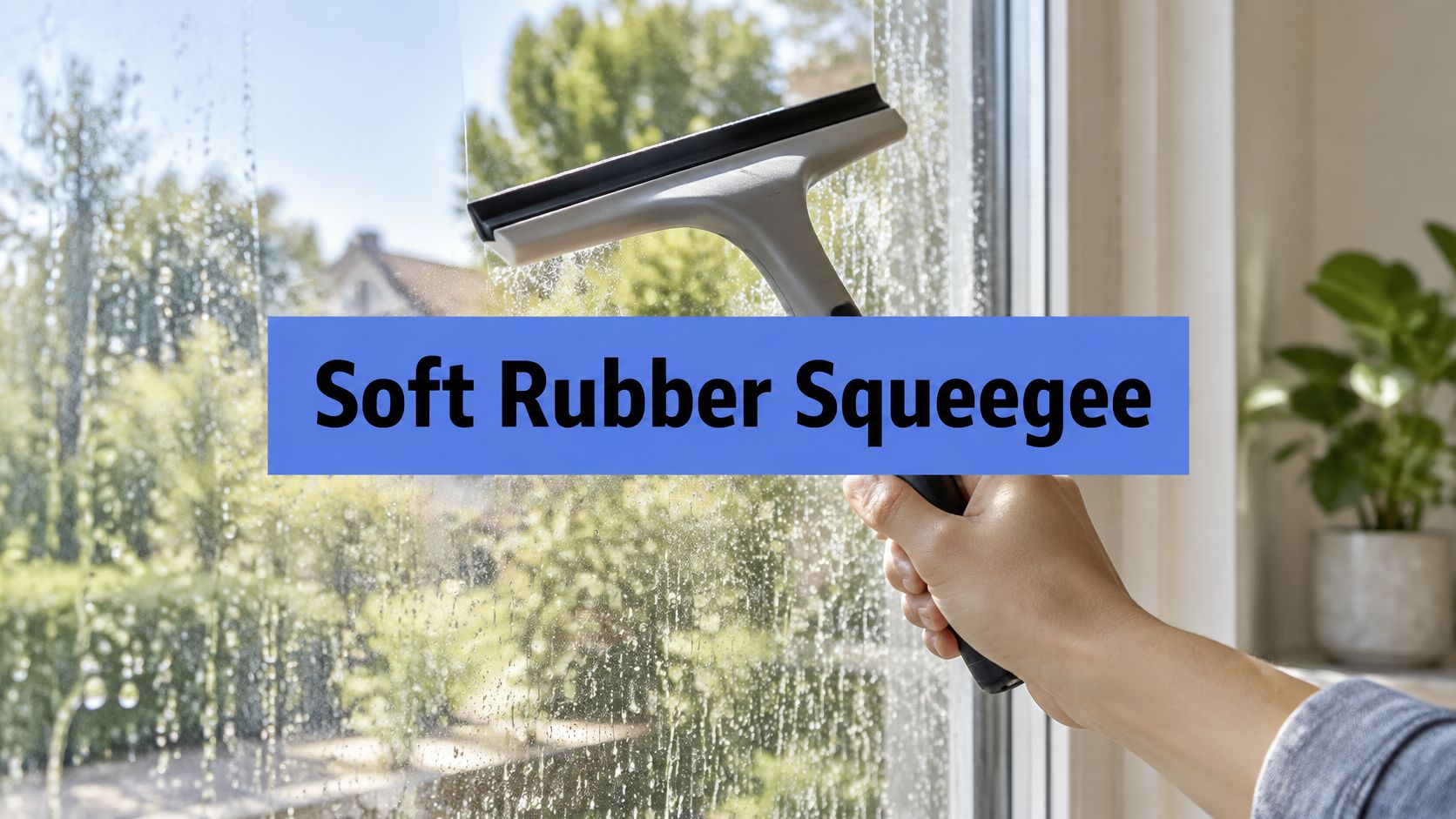
Soft Rubber Squeegee: What It Is and When to Use It
Learn what a soft rubber squeegee is, how it compares to other blades, and when pros choose it for streak-free window cleaning in homes and high-rises.


If you're in Houston, you've probably looked out the window after a humid morning and noticed the same thing a lot of property owners see here. A light film on the glass, pollen stuck around the edges, and water spots that seem to come back faster than they should. In this city, windows don't stay clean for long unless they're cleaned the right way.
That’s why cleaning window houston isn't just about appearance. It’s maintenance. Houston’s climate puts more on glass than many people realize, and after more than 26 years in the trade, the pattern is easy to spot. The homes and buildings that stay looking sharp are the ones cleaned on a schedule that fits Houston, not a generic national checklist.
Step outside on a Houston morning, then look at the glass by noon. The haze is already building. Humidity grabs airborne grime, oak and pine pollen cling to damp surfaces, and sprinkler mist leaves mineral spots that cook onto the pane once the sun hits it.
That combination is why clean windows matter more here than in many other cities. In Houston, dirty glass is rarely just loose dust sitting on the surface. It is usually a mix of moisture, organic residue, pollution, bug marks, and hard water minerals. Left alone, that buildup gets harder to remove and more likely to leave permanent staining.

On a home, neglected windows cut natural light and make otherwise well-kept rooms feel dull. I have seen homeowners repaint, update landscaping, and replace fixtures while the glass still makes the property look tired from the street.
For a business, the effect is more immediate. Entry glass, sidelights, and front-facing windows shape a customer’s first impression before anyone speaks to them. Smudges, water spots, and grime suggest deferred maintenance, especially in retail, restaurants, medical offices, and professional buildings where appearance and trust are tied together.
There is also the maintenance side. Houston rain is not always a free rinse. After a dry spell, rain can pull down dust and airborne residue, then leave spotting as it evaporates. During storm season, wind-driven debris and runoff around frames add another layer that standard casual cleaning often misses.
Practical rule: In Houston, if you wait until the windows obviously look bad, the cleanup usually takes more labor and gives you fewer options.
National advice often says once or twice a year. That schedule fits some climates. It does not fit many Houston properties.
A workable Houston schedule depends on exposure. Homes near heavy trees deal with more sap, pollen, and insect residue. Properties with irrigation systems deal with hard water spotting. Storefronts near traffic collect road film faster. Buildings exposed to summer storms and hurricane season often need follow-up cleaning because glass picks up fine grit and runoff stains around the edges.
Good window cleaning here starts with a local read of the property:
After more than 26 years cleaning windows in Houston, I can say this plainly. Spotless windows are not a luxury item here. They are part of protecting the glass, keeping the property presentable, and staying ahead of buildup that gets expensive once it sets.
A River Oaks homeowner, a storefront manager in The Heights, and a downtown property manager may all ask for window cleaning in the same week. They do not need the same service. In Houston, the building type, the exposure, and the access method decide the work long before a tool ever touches the glass.
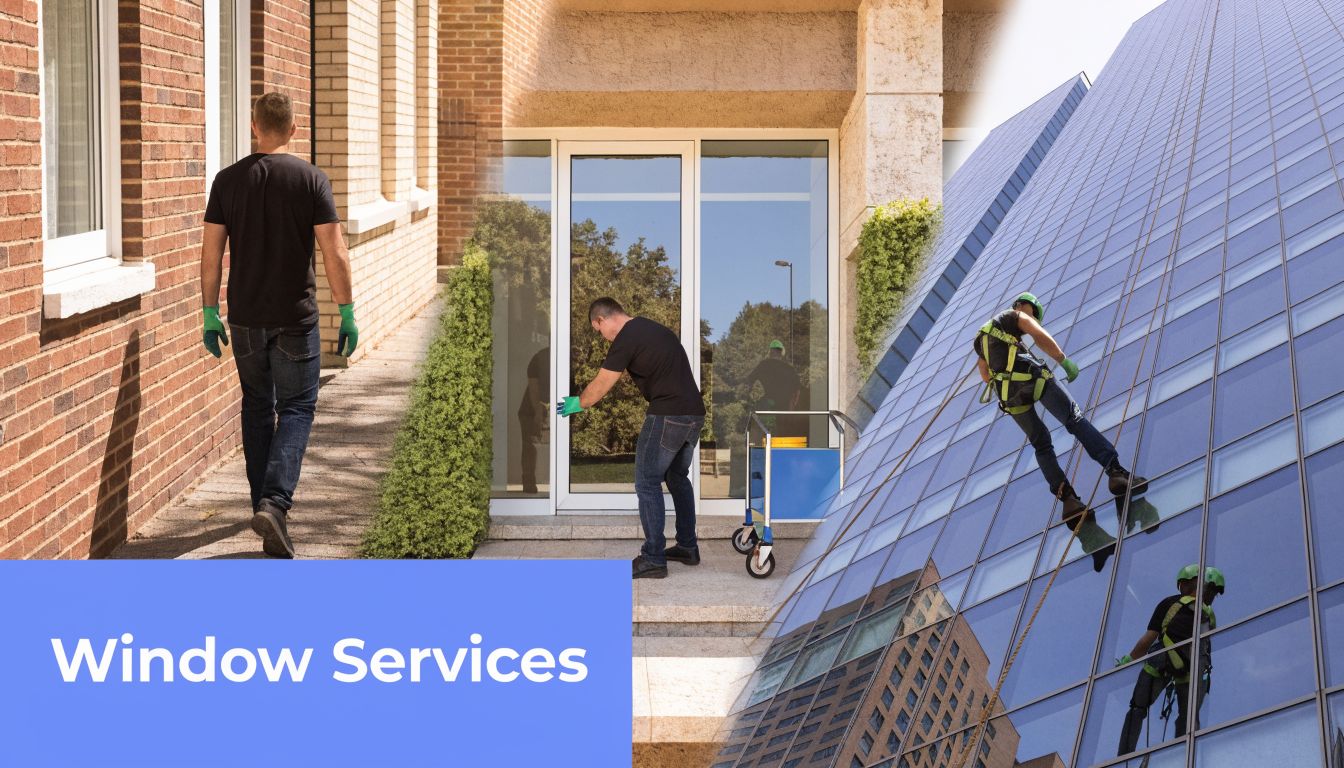
Residential jobs demand close detail. Homeowners see the corner you missed, the drip on the sill, and the bug mark that shows up at 4 p.m. sun. On many Houston homes, the scope also includes screens, tracks, French panes, transoms, and second-story glass over flower beds, pools, or steep roof lines.
Houston’s climate changes how residential work is done. Humidity lets pollen and dust cling longer. Hard water from sprinklers leaves mineral spotting around lower panes. Summer insects leave residue that dries fast on hot glass, and storm runoff often collects along the edges and lower frames. A cleaner with experience can tell the difference between dirt that washes off and buildup that needs hand work to keep the glass from staining over time.
I have seen plenty of homes where the windows looked "good enough" from the driveway but had baked-on spotting and dirty screen frames up close. That is common here. Good residential service addresses the whole window assembly, not just the center of the pane.
Commercial properties run on appearance and routine. Entry glass, lobby glass, and front-facing windows take abuse every day from fingerprints, traffic film, irrigation overspray, and street grime. In Houston, add moisture in the air, pollen in spring, and storm residue in late summer, and the glass can go from clean to tired-looking fast.
Recurring service usually works better than occasional heavy cleaning because it keeps buildup from turning into restoration work. The right schedule depends on the property. A restaurant with heavy door traffic needs a different cadence than a medical office, office park, or retail strip center.
What strong commercial service usually includes:
In areas like the Galleria, the Energy Corridor, and along high-traffic retail corridors, road film builds faster than many owners expect. That is one reason generic national cleaning schedules fall short in Houston.
High-rise cleaning is specialized exterior access work. It requires trained crews, proper anchor use, rescue planning, and a clear understanding of the building façade. A company that handles houses and low-rise storefronts well is not automatically equipped for a tower downtown.
According to Enviro-Master’s overview of Houston rope access window cleaning, Industrial Rope Access with SPRAT certification is the professional standard for Houston high-rise work. The same source states that twin-rope systems compliant with OSHA can access 100% of facades at heights exceeding 600 feet, while reducing setup time by 70% and costs by 50% compared with traditional methods.
For owners and managers, that matters because high-rise glass maintenance is tied to safety, access, and repeatability. After a storm season, crews may need to clean not just the visible glass but the runoff lines, edge debris, and residue that collect around frames and ledges. On many Houston towers, the challenge is not merely height. It is how the climate loads the glass between service visits.
A low-rise office building may be well suited to water-fed poles or ladder access. A downtown tower, hotel, or mixed-use property may require rope access and a crew that works that system regularly. The right choice depends on height, setbacks, pedestrian traffic, glass condition, and how the property is exposed to Houston weather through the year.
The same is true in other skyline markets, including Denver, CO, where façade access and weather patterns also shape the work.
A capable company should be able to explain the service plan in plain language. Why this method, why this schedule, and what problems it is meant to prevent on your specific property. If they cannot answer those questions clearly, they are guessing.
There are only two professional methods for cleaning windows. A squeegee, or a pure-water system. Everything else is a variation, an add-on, or a consumer shortcut that usually doesn’t hold up on real jobs.
After decades in the field, that part stays simple. What changes is knowing which method belongs on which glass.
The squeegee is still the standard for interior work and many exterior windows. In skilled hands, it produces a crisp finish and allows close inspection of the glass, edges, and frames. It’s especially useful when a cleaner needs to remove handprints, bug debris, paint specks, or stubborn grime from accessible windows.
What the squeegee does well:
What it doesn’t do well is scale efficiently on every building. Once you’re dealing with multiple stories, awkward setbacks, or large runs of exterior commercial glass, pure water often becomes the smarter tool.
The modern pure-water system is built around filtration. A professional Reverse Osmosis Deionizing (RO/DI) system uses 4 stages of filtration to bring water down to 0 to 5 ppm TDS, compared with Houston tap water that can run 100 to 400 ppm, according to this RO/DI explanation for Houston window cleaning. The same source states that this mineral-free water, used with water-fed poles, eliminates 99% of spotting and streaking when it dries.
That’s the science behind why pure water works so well outside. Normal tap water leaves minerals behind after evaporation. Pure water doesn’t.
If you want a deeper look at how this works in practice, this guide on pure water window cleaning is a helpful reference.
Field insight: In Houston, hard-water spotting is one of the biggest reasons DIY exterior cleaning disappoints people.
This isn’t a debate about old versus new. It’s about fit.
A squeegee is often the best option for:
A pure-water system is often the better choice for:
A few things consistently underperform in Houston conditions.
The best cleaners know both systems well. They don’t force one method onto every job. They choose the one that leaves the glass clean, dries properly, and makes sense for the building.
You get one quote for a Houston home and it seems reasonable. Then a second company comes in much higher. In this market, that gap usually comes down to access, glass condition, and whether the quote accounts for Houston-specific problems like hard-water spotting, humidity film, and pollen packed into screens and tracks.
Price follows labor and difficulty. A ground-floor exterior rinse on lightly soiled glass is a different job from full interior and exterior service on windows that sit above flower beds, pool decks, or steep roof lines. If the glass has mineral buildup from sprinklers or storm runoff, routine cleaning may not be enough to restore it.
A solid estimate usually comes down to a few practical details:
Nationally, professional window cleaning averages $150 to $302 per visit, with $8 to $16 per window for interior and exterior cleaning, and $15 to $40 per window for specialized work like high-rise cleaning, according to Window Genie’s window cleaning industry statistics.
| Service Type | Average Price Range |
|---|---|
| Standard residential visit | Often falls within the national per-visit range for comparable homes |
| Interior and exterior residential window | $8 to $16 per window |
| High-rise or specialty window cleaning | $15 to $40 per window |
| Heavy mineral stain removal | Usually priced separately after inspection |
That last item deserves attention.
In Houston, hard-water stain removal is often a separate line item because it takes different tools, more time, and a careful approach. If a company prices severe sprinkler staining the same way it prices routine maintenance cleaning, either the problem was missed during quoting or the result will be disappointing.
The cheapest quote can leave out work you assumed was included. Screens, tracks, sill wiping, interior panes, ladder access, and stain treatment are common points of confusion.
It helps to compare cleaning service quotes with the same checklist for every company. Ask what is included, what is priced separately, which method they plan to use, and whether the crew has seen the property photos or inspected the glass in person.
You can also review this guide on window cleaning service cost factors for a broader way to evaluate pricing.
Ask for a clear scope of work. In Houston, that matters more than a low headline number.
A precise quote should tell you whether the company is pricing routine cleaning or restoration work. That distinction matters on homes exposed to sprinklers, live oak pollen, heavy summer moisture, and wind-driven rain during storm season.
You clean the glass, it looks sharp for a week, then Houston reminds you who is in charge. Spring throws pollen at it. Summer adds humidity, splashback, and storm residue. By the time fall arrives, the windows often need more than a quick rinse.

Houston’s climate changes what lands on the glass and how hard it is to remove. Humid air helps pollen and dust stick. Hard water from irrigation leaves mineral spots that bake in faster during hot months. Tropical weather pushes grime into frames, tracks, and screens, then the next stretch of sun makes every mark stand out.
Spring is usually the first big reset of the year. Live oak pollen, pine pollen, and general yellow dust settle on the glass, then morning moisture turns that layer into a film that hangs on longer than many homeowners expect.
Good spring window care usually includes:
If your screens are carrying the same buildup, Rescreen Rescue's screen cleaning advice is useful because cleaner screens help fresh glass stay cleaner longer.
Summer is where Houston separates itself from drier markets. The issue is not just dirt. It is moisture holding grime against the glass, sprinkler overspray drying into spots, and fast storms splashing mud and organic debris onto lower panes.
Rain by itself usually is not the problem. Dirty runoff is.
Glass near irrigation lines needs close attention in summer because light spotting can turn into mineral staining. Once that stain sets, routine cleaning will not remove it. It takes restoration work and a careful hand, especially on heat-exposed windows.
Fall is often the best time to correct what summer left behind. Storm season can leave residue on exterior panes, and properties with trees usually have fine debris caught around screens, sills, and upper ledges.
This is also a good time to inspect recurring trouble spots. West-facing windows, glass near flower beds, and panes below roof runoff usually tell you where the property is getting hit hardest.
For homes preparing for holiday guests or commercial spaces heading into busier year-end traffic, fall cleaning tends to pull double duty. It improves appearance and gives you a clearer look at seals, frames, and any staining that should be addressed before it worsens.
Houston winters are mild, but lower sun angles make imperfections easier to see. Smears that stayed hidden in summer glare show up fast on bright winter mornings.
Winter is also a practical time for interior glass, especially on homes that stayed closed up through cooler weather. Fingerprints, pet nose marks, cooking film, and HVAC dust become more noticeable when outside light is cleaner and lower.
Season matters, but exposure matters just as much. A shaded house in the Heights with little sprinkler contact will behave differently than a stucco home in Katy with hard water hitting the same panes every morning. A storefront near heavy traffic deals with film and splashback that a tucked-away office building may not.
That is why the best maintenance plan follows the property, not a generic calendar. In Houston, climate sets the pattern, but the glass reveals the true situation.
Choosing a company is less about who has the flashiest ad and more about who can explain the work clearly. In Houston, that means understanding climate, access, safety, and the right cleaning method for the property.
A good company should sound like a contractor, not a guesser.
Ask direct questions before you book:
If a contractor avoids details and gives vague answers, keep looking.
This is one of the fastest ways to tell whether a company knows the trade. A strong answer should connect the method to your building, your glass, and your access points.
For example:
Forward-thinking companies also pay attention to water use. According to Better View Houston’s note on eco-friendly cleaning methods, pure water-fed pole systems can use up to 90% less water than some traditional techniques, which makes them a responsible option for large properties in water-conscious markets.
Online reviews matter, but read them with some judgment. Look for comments about punctuality, finish quality, communication, and whether the company corrected issues when needed.
A polished online presence can also tell you something. If you want to understand what a well-managed local profile should look like, this guide to effective Google Business Profile optimization gives useful context. It won’t choose a cleaner for you, but it helps you see whether a company takes its local reputation seriously.
The best companies don’t just promise clean glass. They explain process, safety, and scope without dodging the details.
Years in business don’t automatically make a company great, but experience does show up in the small decisions. Experienced crews know how to work around delicate landscaping, how to spot failed seals versus surface grime, and when a stain needs restoration instead of a routine wash.
That matters in Houston, and it matters in other service markets such as Scottsdale, AZ, where climate changes the cleaning strategy even though the professional standards stay the same.
A good hiring checklist is simple:
A well-run service day feels organized from the start. The crew arrives, confirms the scope, walks the property, and identifies anything that needs special handling. That includes hard-water spotting, delicate landscaping, tricky access, or interior areas where floors and furnishings need protection.
Inside, good crews work carefully and unobtrusively. They use drop cloths where needed, keep tools controlled, and avoid turning a window cleaning appointment into a disruption. Outside, they pay attention to hose routing, garden beds, and overspray around the property.
The actual cleaning method depends on the job. Accessible windows may be cleaned by hand with a squeegee for close detail work. Upper exterior glass or larger runs of commercial windows may be cleaned with a pure-water pole system that rinses clean and dries spot-free.
A professional service day usually includes:
You should never have to wonder what the crew is doing, what was included, or whether the job is finished.
On a typical home, the difference is obvious by the end. More light comes in, the glass disappears again, and the house feels sharper without anything else changing.
In Houston, clean windows take more than occasional effort. Humidity, pollen, hard water, and storm residue all change how often glass needs attention and which method will work. The right approach is local, practical, and based on the building in front of you.
That’s why cleaning window houston should be handled with the same care you’d expect from any skilled exterior maintenance trade. The best results come from matching the service type, cleaning method, and maintenance schedule to Houston conditions, not from guessing or using one-size-fits-all advice.
If you want a clearer view and a crew that understands Houston glass, contact Professional Window Cleaning. With more than 26 years of experience in residential, commercial, and high-rise window cleaning, they deliver dependable service and streak-free results for homes and businesses alike.
Read our blog posts regularly and keep learning.