Care and Maintenance
How to Clean Building Windows Safely in 2026
Learn how to clean building windows with professional squeegee and pure-water methods. Step-by-step guide covering safety, tools, and maintenance.


Most homeowners pay $300 to $2,200 for furnace humidifier installation, with an installed average of about $950. That number is useful, but it doesn't tell you the whole story, because the furnace humidifier cost depends on the technology you choose, how hard the install is, and what you'll spend to run and maintain it over time.
The smart way to shop for a furnace humidifier cost estimate is to start with the market's real floor and ceiling, not a single sticker price. Nationally, most homeowners land somewhere between $300 and $2,200 installed, and the average sits at roughly $950 according to the cost benchmark in the data set. That spread is normal, not a sign that contractors are guessing.
The reason the range is wide is simple. A bypass unit tied into existing furnace airflow is a very different job from a steam system that needs more equipment and more labor. Regional labor also matters, since high-cost metro areas can run 10% to 30% above cheaper regions, which means a $950 project can climb to about $1,100 to $1,200 in an expensive urban market.
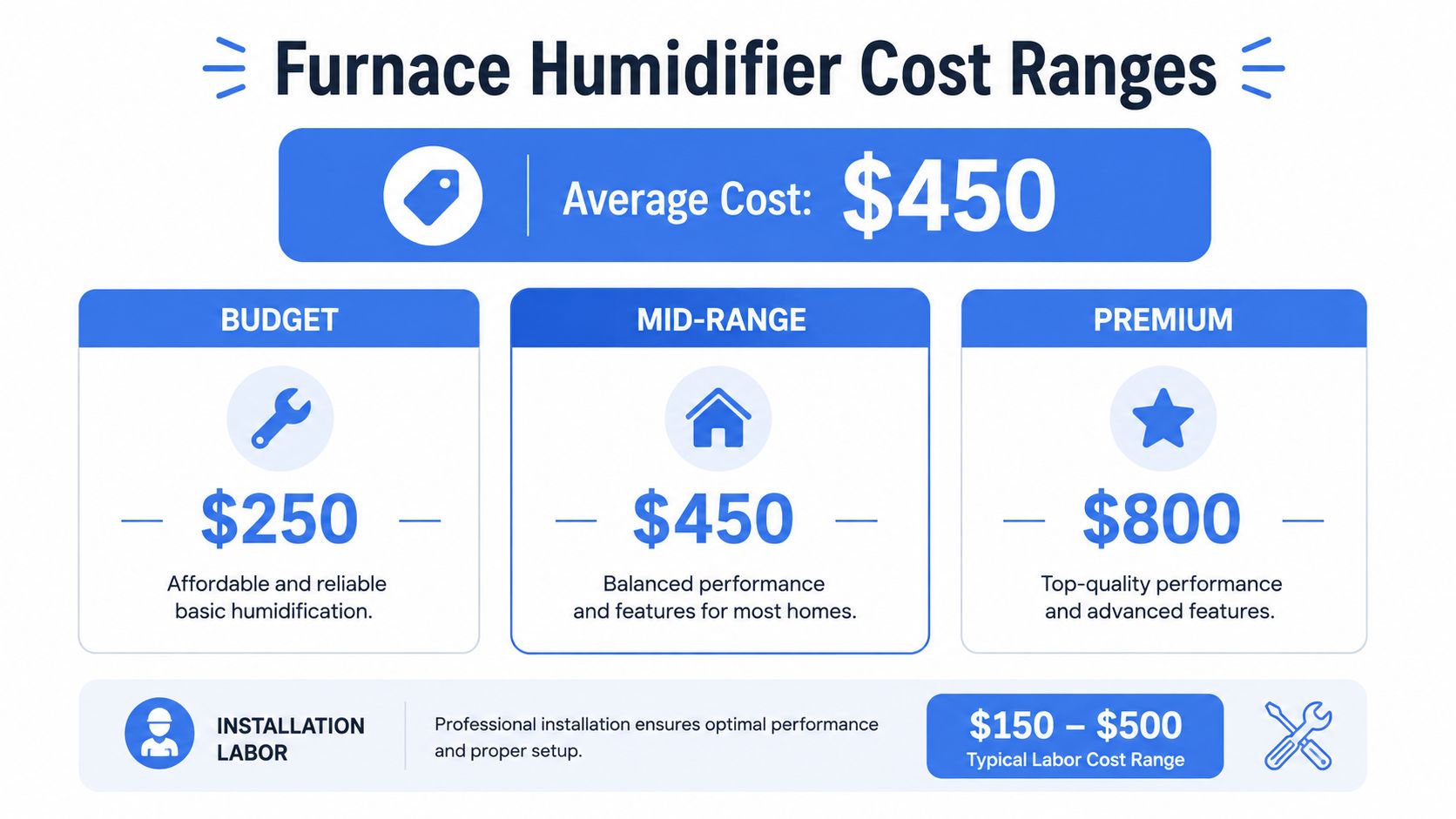
An average only helps if you know where your home fits. If you have simple ductwork, accessible equipment, and a standard evaporative unit, you're usually closer to the lower half of the market. If you need a premium steam model or your furnace setup needs modifications, the price moves fast.
Practical rule: Don't shop by average alone. Ask whether the quote is for a simple add-on, a compatibility fix, or a full steam installation, because those are different jobs.
For a broad market reference, 2026 furnace humidifier pricing shows how installers frame the same project in another current cost guide. The exact number matters less than the structure, because the same home can land in very different price bands depending on the model and the labor.
Dry regions, especially large parts of the Southwest, often treat whole-house humidity control as a comfort upgrade tied directly to HVAC performance. That's why the same equipment can feel like a modest add-on in one market and a more serious project in another. If you want a useful estimate, ask contractors to separate equipment, labor, and any duct or electrical changes in writing.
The biggest cost mistake homeowners make is treating all furnace humidifiers as if they do the same job in the same way. They don't. The technology you choose sets the price, the installation complexity, and how much you'll spend later.
Bypass evaporative humidifiers are typically the cheapest installed option, usually $300 to $1,100 according to the national benchmark, and the broader technical range is about $200 to $800 installed in the comparison data. They rely on furnace airflow, so they're mechanically simpler and often easier to live with.
Fan-powered evaporative units sit in the middle. Expect roughly $450 to $1,600 installed in the benchmark data, with a technical installed range around $390 to $950. They add an internal fan, which gives them more flexibility and better output than a basic bypass model.
Steam humidifiers are the premium category, usually $900 to $2,200 installed in the benchmark data and commonly $1,200 to $2,500 in the technical comparison. They generate humidity independently, which is why they cost more.
Here's the cleanest way to compare the three:
| Humidifier Type | Installed Cost Range | How It Works | Best For |
|---|---|---|---|
| Bypass evaporative | $300 to $1,100 | Uses furnace airflow to evaporate water | Budget-conscious homes with simple HVAC layouts |
| Fan-powered evaporative | $450 to $1,600 | Uses a built-in fan to push air across the pad | Homes that need more output and flexible installation |
| Steam humidifier | $900 to $2,200 | Heats water and injects steam directly | Large, dry homes and owners who want precise control |
Steam units cost more because they add an electric boiler and independent humidity production. That means more equipment, more labor, and more control complexity. Bypass and drum-style systems are cheaper because they lean on existing furnace movement and evaporative pads instead of building humidity from scratch.
A useful rule of thumb is this. Buy the simplest system that can keep up with your house. If a basic evaporative unit fits the home, don't pay steam money just because the quote sounds more impressive.
For installation planning and permit concerns around HVAC work, a contractor guide like HVAC permit requirements guide is worth reading before you sign anything. A good quote should tell you whether the job is a straightforward replacement, a new tie-in, or a more involved installation with added work.
Labor is where furnace humidifier cost gets messy. The unit price gets the attention, but the install scope often decides whether the job feels affordable or expensive. A simple bypass install can be relatively direct, while a steam system can demand more time, more coordination, and more trade skills.
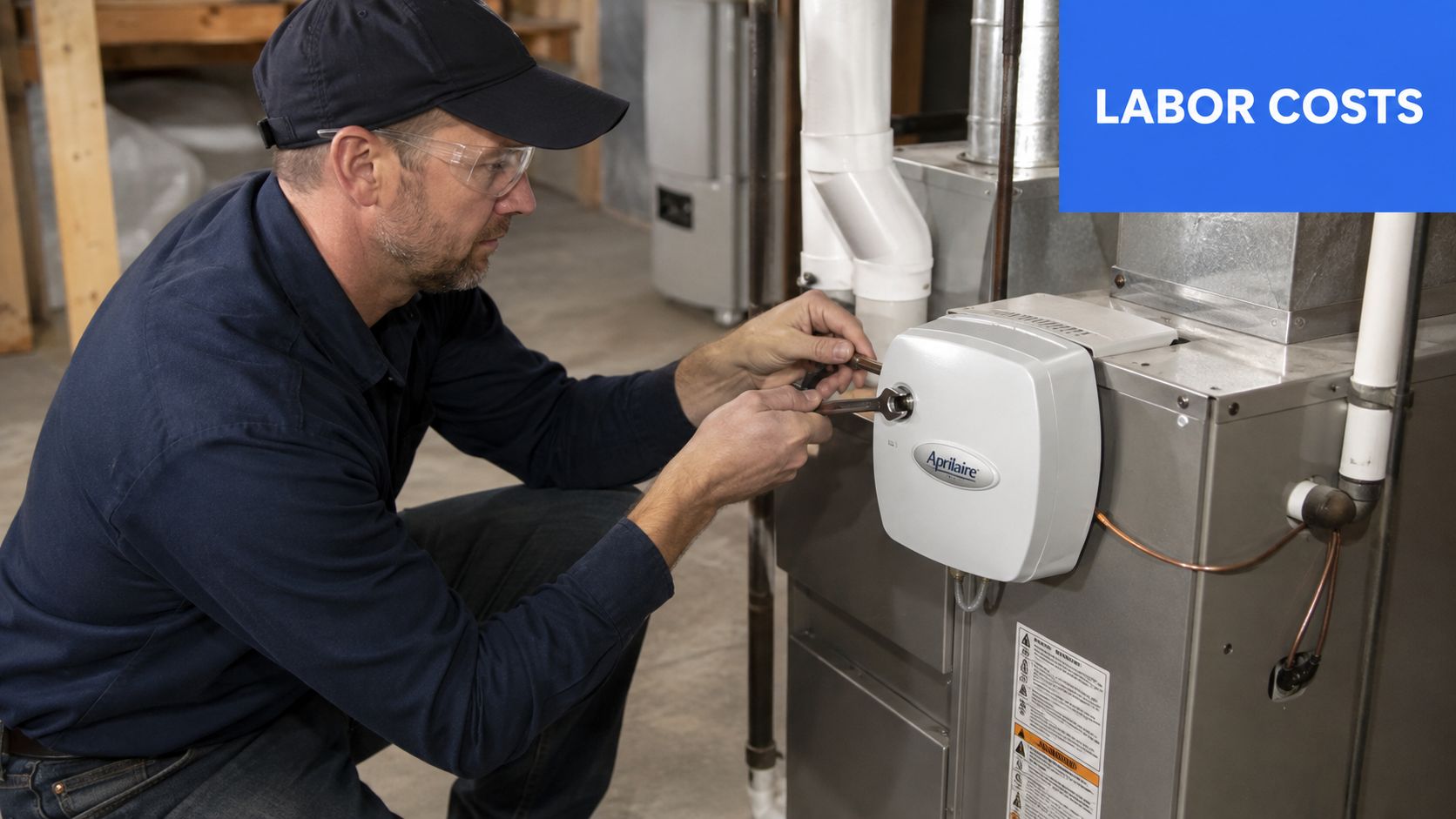
The cost breakdown data shows why labor can't be treated as an afterthought. Bypass units are listed at $70 to $200 for the unit plus $150 to $350 for installation, fan-powered units at $150 to $350 plus $250 to $550, and whole-house systems at $300 to $900 plus $500 to $1,200. That's the clearest proof that the install itself is a major cost driver, not just the equipment.
A quote looks cheap until the contractor adds ductwork changes, water-line work, or electrical upgrades.
Those extras matter because different humidifier types interact with the HVAC system in different ways. Some need a bypass duct. Some need tighter space planning. Some need a dedicated electrical circuit and a clean water connection. If your furnace closet is cramped or your existing setup is unconventional, labor climbs fast.
Ask three direct questions. First, does the price include all duct connections and water line work? Second, does it require electrical changes? Third, is the quote valid only if the existing furnace and duct layout are compatible?
That last question matters more than you might think. If the system needs compatibility fixes, you are no longer comparing apples to apples. You're comparing a basic install against a partial remodel of the HVAC side.
Regional labor rates also push quotes around. In high-cost metro areas, the same project can land well above the national average, which is why local bidding matters more than online averages. The best quote is the one that states exactly what's included and what would trigger an extra charge.
The cheapest humidifier on the invoice can turn into the most expensive one over time. That's the part most shoppers miss. Upfront price gets all the attention, but energy use, maintenance, and service calls can change the furnace humidifier cost in a big way.
Steam-powered whole-house humidifiers can cost $150 to $500 per year in energy, while drum systems run about $1 to $3 annually and flow-through units about $9 to $28 annually, based on the operating-cost data. That gap is huge. Steam units heat water directly, so they're far more electricity-intensive than evaporative models, which use existing warm-air movement.
That doesn't automatically make steam a bad choice. It does mean you should only buy it for a reason. If your house is large, very dry, or needs better humidity control than a basic evaporative unit can deliver, the premium may be justified.
HomeGuide's cost guidance also notes that annual professional maintenance can add about $75 to $200 per year. That's before you think about replacement pads, cleaning, water usage, and service calls. Those recurring costs are exactly why a lower sticker price can be a false bargain.
The key decision is total ownership, not the first invoice. A cheaper drum or bypass system may cost less upfront, but if it underperforms, needs more attention, or forces repeat service, the savings shrink. Steam can cost more on day one and still make sense in homes that demand it.
If you're trying to manage humidity and avoid other moisture problems in the home, a practical guide like how to prevent window condensation is relevant because over-humidifying creates a different set of headaches. Balanced humidity is the goal, not maximum humidity.
Bottom line: Pick the system that matches your house, then budget for what it takes to keep it working. Cheap hardware with expensive upkeep is still expensive.
The fastest way to save money is to avoid overbuying. Most homeowners don't need the most advanced unit on the market, they need the right one for their ductwork, climate, and comfort goals. That's where disciplined shopping beats impulse buying.
Start with compatibility. If your existing furnace can support a simpler evaporative unit, don't pay for steam unless the house needs it. Steam is a premium solution, not a default upgrade.
Then get multiple quotes and ask for a line-by-line scope. A vague estimate usually hides assumptions. A clear estimate tells you what the contractor is charging for labor, what's included in materials, and whether any extra work could change the final price.
Use timing to your advantage, too. Off-season scheduling often gives contractors more flexibility, and bundling the humidifier with other HVAC work can reduce duplicated labor. You're paying for access to the furnace and duct system either way, so combining jobs often makes practical sense.
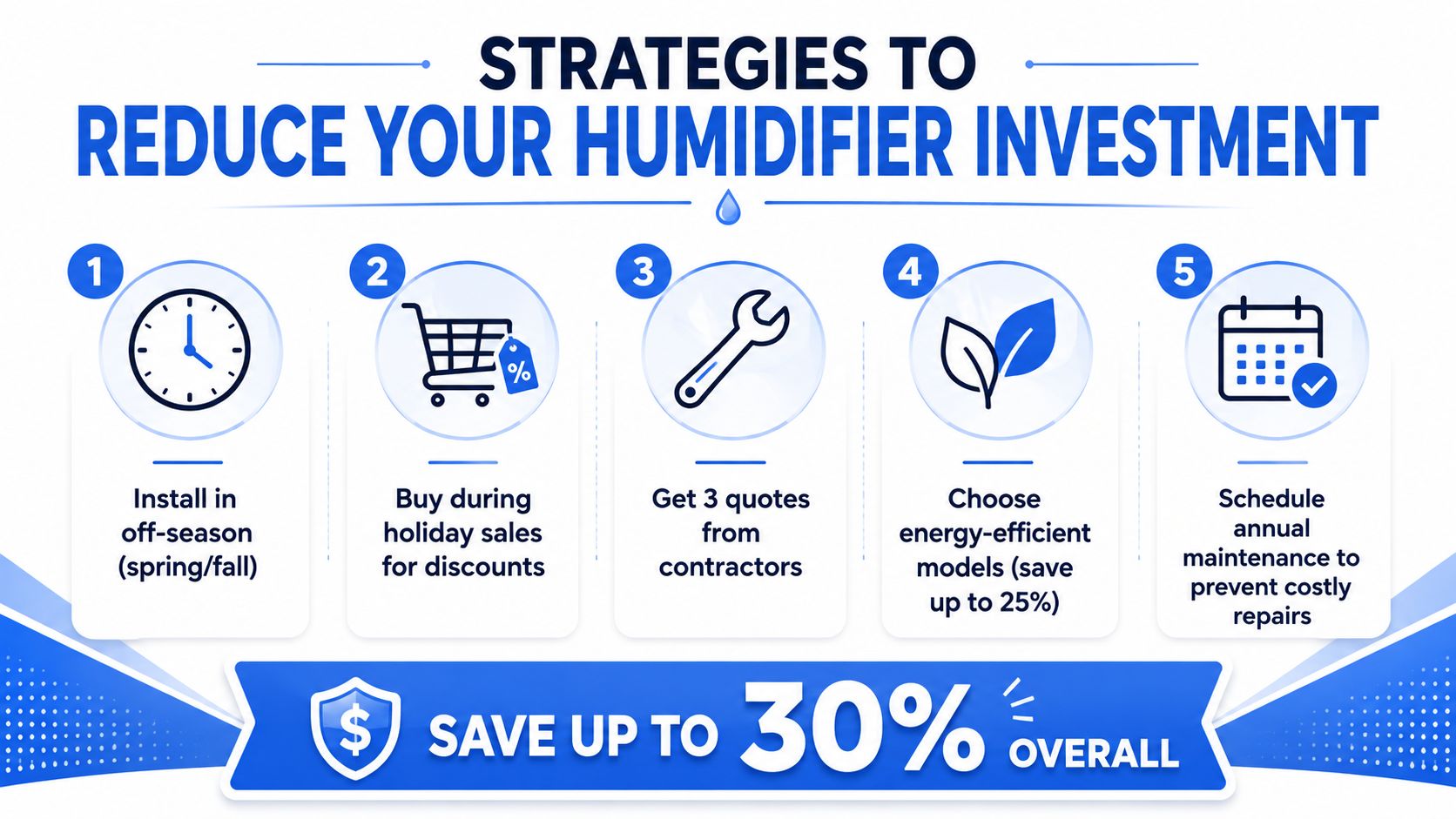
The only upgrade worth paying extra for is the one that fixes a real problem. If your home is dry but otherwise ordinary, a midrange evaporative unit is usually the smartest spend. Save the premium budget for homes that need premium performance.
DIY is tempting because a humidifier looks small next to the furnace. That's exactly why people get it wrong. Once you're cutting into ductwork, tying into water, or dealing with electrical connections, the project stops being a casual weekend task.
Basic replacement of an existing like-for-like unit may be manageable for a skilled homeowner, but new installs are a different story. Bypass systems are the most realistic DIY option because they're the simplest mechanically. Steam systems are not a good DIY gamble unless you already know HVAC, wiring, and plumbing work well enough to handle mistakes.
The risk isn't just a bad install. Water leaks can damage flooring and framing. Electrical errors can create safety issues. Poor sizing or control setup can leave you with dry air, excess humidity, or a unit that never performs the way it should.
If you're already dealing with furnace warnings or equipment issues, resources like gas appliance red tag help are useful because a humidifier shouldn't be installed casually on a system that already needs attention. Fix the base HVAC problem first, then add accessories.
The smarter choice for most homeowners is professional installation. You're paying for compatibility checks, clean tie-ins, and a system that starts working correctly on day one. That matters more than saving a little labor if the alternative is a leak, a wiring issue, or a warranty dispute.
If you're comparing contractors, verify whether they're bonded and insured before you hire anyone. A simple overview like bonded vs insured helps you ask the right question instead of taking a vague yes for an answer.
Here's the decision rule I'd use. If the job involves new duct work, electrical changes, or steam equipment, hire a pro. If you're replacing a straightforward existing bypass setup and you're comfortable with HVAC work, DIY can make sense. For everyone else, professional installation is the cheaper choice over time because it avoids damage, rework, and failed performance.
Professional Window Cleaning helps homeowners and property managers keep their spaces looking sharp, and that same eye for detail matters when you're evaluating home upgrades that affect comfort and maintenance. If you want a team that values clean results and reliable service, visit Professional Window Cleaning and see how they support Arizona, Colorado, and Nevada customers with residential, commercial, and high-rise cleaning.
Read our blog posts regularly and keep learning.