
Care and Maintenance
Sliding Window Cleaning That Actually Works
Learn sliding window cleaning the right way with pro tips on tracks, sills, and glass, plus the tools, solutions, and safety habits that prevent streaks


You notice it after the glass has already lost its clarity. A sprinkler reaches a west-facing window each morning, the sun dries every droplet, and a pale haze slowly takes over. Washing the pane removes dust, but the white marks remain. That's the frustrating part of hard water stain prevention: the lasting fix usually starts beside the window, not on it.
Mineral-rich water needs only a path to the glass and enough time to evaporate. Control that path, dry the pane promptly, and match the cleaning method to the deposit before a removable spot becomes surface damage.
Tap and well water can carry dissolved calcium and magnesium. The U.S. Geological Survey defines water hardness by these dissolved minerals, and commonly used classifications place water at 121–180 mg/L as hard and above 180 mg/L as very hard. Those thresholds matter because the minerals remain after a droplet dries, leaving the familiar chalky film on glass. (U.S. Geological Survey hardness reference)
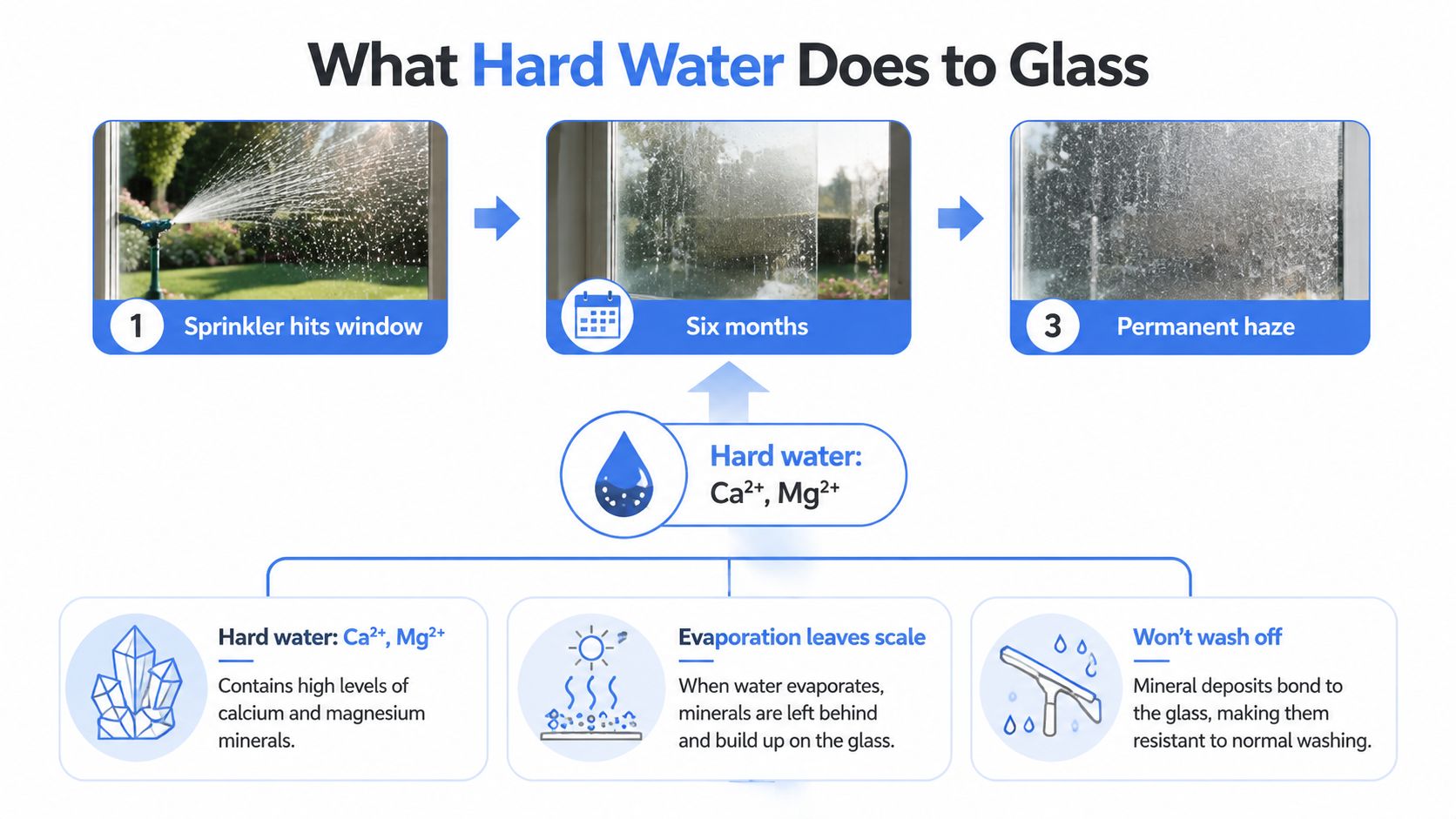
A fresh spot is usually a surface deposit. A microfiber cloth may remove it with light pressure, especially when the glass hasn't been repeatedly wetted and baked in direct sun. Moderate buildup feels rougher and often needs chemistry suited to mineral scale, such as diluted vinegar or citric acid, followed by a thorough rinse.
True etching is different. The glass surface has been chemically altered, so ordinary washing won't restore its original clarity. Technical cleaning references warn that aged deposits and abrasive methods can turn routine maintenance into restoration work, while chemistry matched to the deposit can improve removal efficiency. (Technical reference on silica scale and mineral chemistry)
Run a clean fingertip lightly across a dry area, then compare it with an unaffected section.
Sun and heat accelerate drying, but the bigger mistake is repeated exposure. A sprinkler that reaches the same pane every day keeps adding minerals to the exact area you're trying to clean. The World Health Organization connects hardness above about 200 mg/L with scale deposition in water distribution systems, a useful reminder that repeated mineral precipitation can become stubborn on glass as well. (World Health Organization hardness guidance)
The moment water touches the glass is your best prevention window. Don't wait for the pane to air-dry in the sun, because evaporation leaves the minerals behind and makes the next cleaning harder.
Start with a clean, properly conditioned squeegee. Pull from the top of the pane to the bottom in overlapping passes, keeping the blade flat and moving steadily. A worn blade or a tilted edge leaves water trails, so replace it when it begins chattering or skipping.
Water collects along the lower frame and sill, then creeps back onto the glass. Use a dry microfiber cloth to wipe the bottom edge and corners immediately after the squeegee pass. Fold a second microfiber into a compact pad and make a final detail wipe in straight lines.
This isn't the moment for paper towels or newspaper. Paper can shed lint, newspaper can transfer ink, and both encourage the false sense that the pane is dry when moisture is still sitting in the frame. Don't leave the window to dry in direct sunlight, either. You're trying to remove the water, not supervise its evaporation.
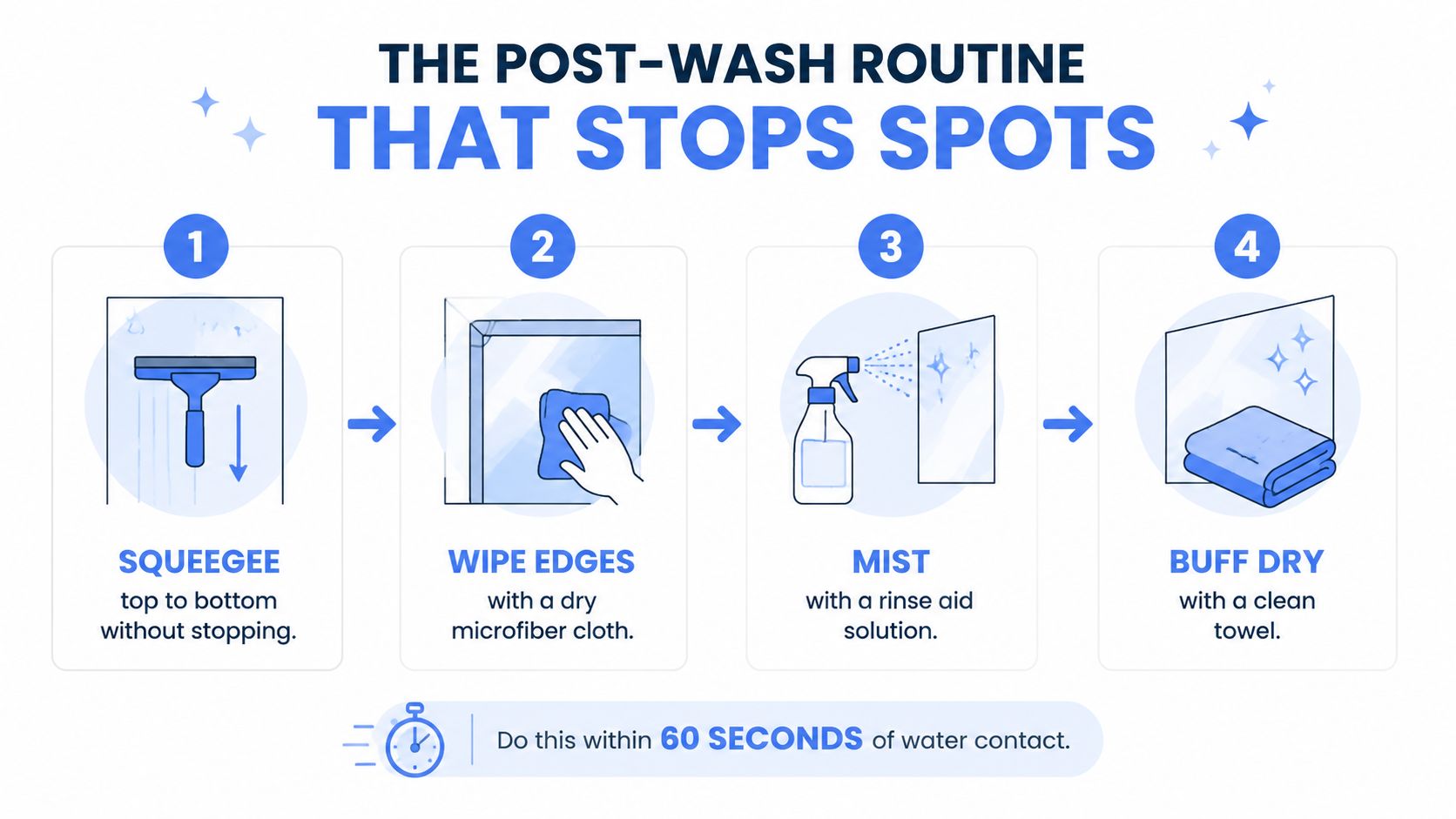
For an average residential window, allow roughly two to four minutes for this routine, including the squeegee pass, edge drying, and detail wipe. That estimate is a practical working range, not a performance promise. The sequence matters after a hose-down, sprinkler overspray, or rain event, not only during a planned cleaning.
Practical rule: Remove water before it becomes a mineral deposit. Consistency beats an aggressive restoration session later.
For cleaner selection and spot treatment, use this guide to the best cleaner for hard water spots on glass. The cleaner can help, but it can't compensate for water repeatedly landing on the pane.
A short demonstration of the drying sequence can also help you check your technique.
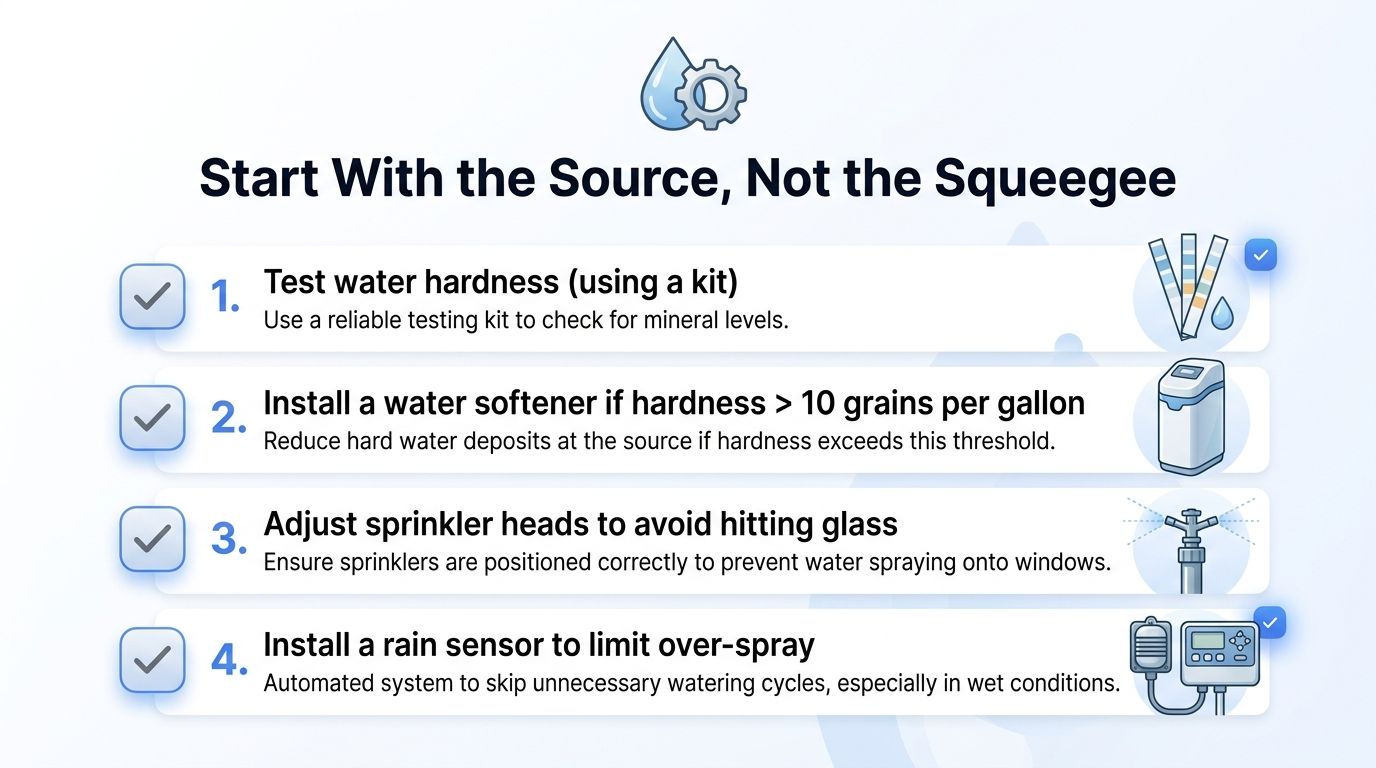
The most durable improvement often comes from changing the property's water path. Glass products can reduce adhesion, but they don't stop a rotor head from throwing mineral-laden water across a window every morning.
Inspect the four sources that repeatedly create trouble:
The independent prevention guidance collected for this topic consistently prioritizes source control, including watching irrigation zones in operation and correcting sprinkler misalignment. (Practical hard-water stain prevention guidance) In a Southwest yard, a weekend spent adjusting heads and drainage can do more for long-term results than repeated surface polishing.
If deposits appear on several outdoor surfaces, test the water rather than guessing. Hardness is commonly reported in milligrams per liter or parts per million, and the classification above gives you a useful starting point for interpreting the result. A hose-bib filter or treatment system may help in specific situations, but it won't solve overspray aimed directly at the glass.
For broader household treatment questions, this advice on water filtration is a useful starting resource. Keep the roles separate: filtration and softening address water quality, while irrigation and drainage corrections address where the water goes.
A pure-water system can also improve the final rinse because the water reaching the pane has had dissolved contaminants removed. Learn how that process works in this overview of pure-water window washing.
Long-term hard water stain prevention works best when the solution matches the cause. A coating won't correct an irrigation fault, and a softener won't repair glass that's already etched. Pure-water cleaning, ion-exchange softening, and hydrophobic or ceramic-based coatings each solve a different part of the problem.
Pure-water window cleaning systems use filtration and deionization to produce water that can be used for a final rinse without leaving the same mineral residue as ordinary tap water. They're especially useful for exterior maintenance, commercial storefronts, and glass in high positions where traditional detailing is difficult. The trade-off is operational: resin and filters need monitoring and replacement, and the system still can't prevent contaminated irrigation water from striking the pane between visits.
Whole-house ion-exchange softeners address the source water. The Vermont Department of Health notes that hard water can leave whitish-gray scale on glass, while ion exchange removes hardness minerals that contribute to scale formation. (Vermont Department of Health hardness guidance) A softener can make sense when multiple fixtures and exterior hose connections show the same mineral pattern. It adds installation and upkeep, and some systems increase sodium in discharge, so drainage and household water needs deserve attention.
Hydrophobic or ceramic-based coatings lower the surface's energy so water and residue release more readily. They're useful on clean, sound glass that receives frequent rain or irrigation exposure. The major catch is preparation. If mineral scale remains under the coating, the treatment can lock in the appearance and fail to perform as expected.
| Solution | Installed Cost Range | Expected Lifespan | Best For | Key Trade-Off |
|---|---|---|---|---|
| Pure-water cleaning system | Varies by equipment and installation | Depends on maintenance and resin care | Exterior, commercial, and difficult-to-reach glass | Requires filter and resin upkeep |
| Ion-exchange water softener | Varies by plumbing and system selection | Depends on maintenance and water conditions | Homes with widespread hard-water problems | Adds sodium to discharge and needs servicing |
| Hydrophobic or ceramic glass coating | Varies by glass condition and treatment scope | Depends on exposure and maintenance | Clean glass exposed to recurring wetting | Requires thorough mineral removal first |
For a rental or a home with limited plumbing changes, scheduled pure-water cleaning may be the least disruptive route. A suburban property already equipped for water treatment may benefit more from addressing the supply. Storefronts and large glazed façades often combine source correction with professional cleaning because access and appearance carry more weight.
There's no honest universal winner. Check the water, identify the source, inspect the glass, and spend first on the failure point you can verify.
A useful calendar follows exposure, not habit. Sprinkler-heavy periods and monsoon weather deserve closer observation because each wetting event gives minerals another chance to dry on the pane. The schedule should also reflect whether your water is soft, moderately hard, or in the hard range.
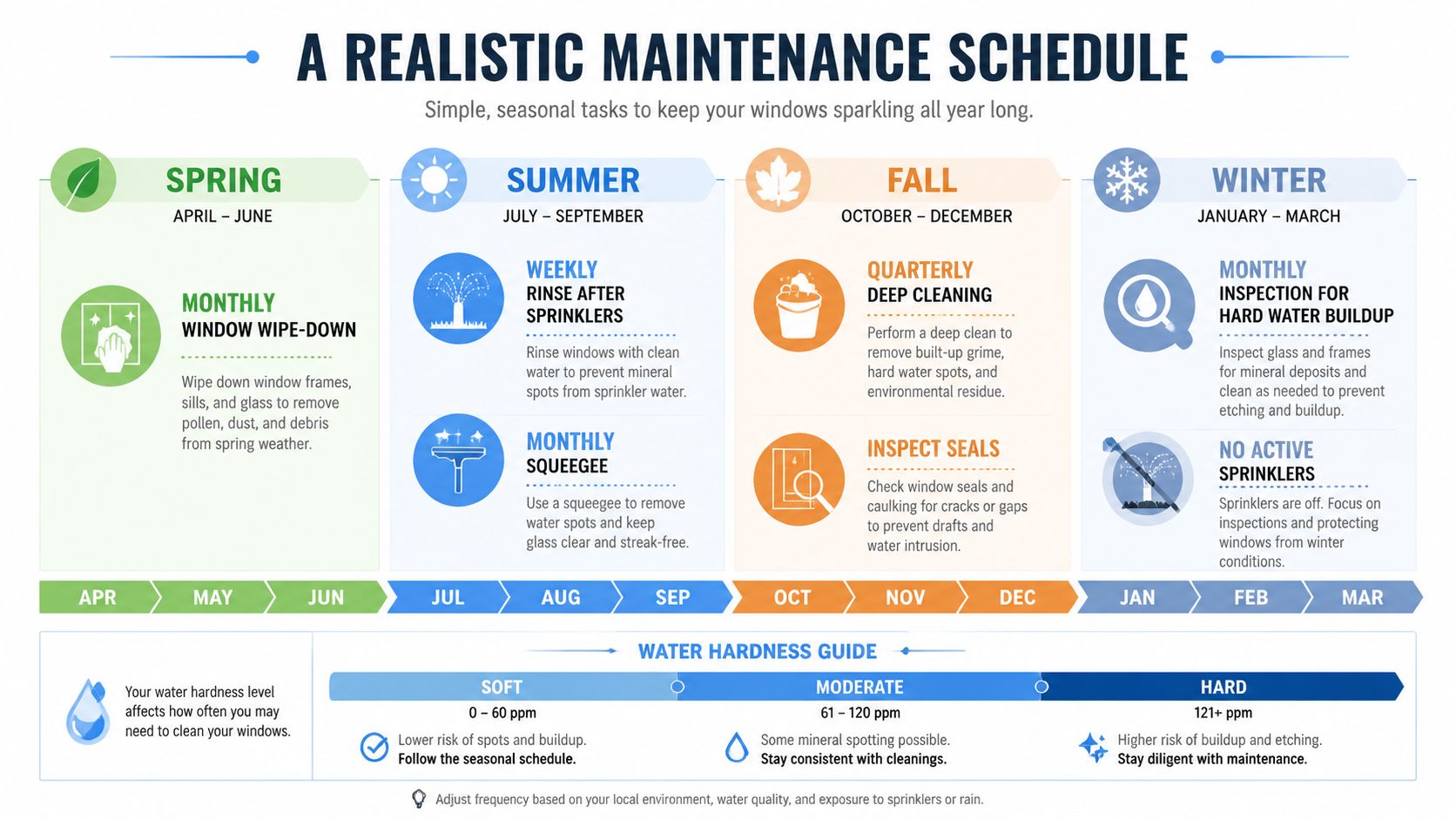
A professional visit earns its place when windows sit above safe reach, when skylights are involved, or when construction residue has bonded to new glass. Ask for the work order to specify the cleaning method, a deionized-water rinse where appropriate, and a blade pass along the sill tracks rather than a quick surface wipe.
If you can't reach the window safely with both feet on the ground, schedule the professional and skip the ladder.
Seasonal planning also helps property managers coordinate irrigation checks with cleaning instead of treating each stain as an isolated surprise. In homes and commercial properties across Flagstaff, Las Vegas, Denver, Scottsdale, Tempe, Chandler, and Gilbert, the practical details vary, but the principle remains the same: reduce contact, remove water promptly, and inspect before deposits mature.
Southwest homes develop recurring hard-water patterns. In Phoenix and Las Vegas suburbs, irrigation overspray often reaches sun-facing windows, where heat dries the droplets before anyone notices them. Re-aim rotor heads, shorten the spray path, and move planting beds toward drip irrigation where practical. Controlling the water source prevents more buildup than repeated glass cleaning.
Monsoon runoff creates a separate problem. Roofs and parapets can send dust, mineral residue, and masonry particles across upper panes. Check the drainage path during or just after a storm. Properly directed downspouts, larger gutters, and splash guards can keep runoff off the façade, while dry-weather inspections may miss the route entirely.
Well water in rural Nevada and parts of Colorado may leave heavier mineral residue than a homeowner expects from municipal water. Test the hose bib or exterior wash point, then consider point-of-use softening if the source is confirmed as hard. Treating the water reaching vulnerable glass is often more practical than softening every gallon in the house.
Colorado homeowners dealing with mineral-heavy water can review this household treatment guidance on a hard water fix for Northern Colorado. Use that information with an on-site inspection. Water chemistry does not account for every mark, especially when gutter splash or irrigation drift is the actual source.
Construction dust requires quicker control than ordinary spotting. Cement residue and abrasive particles can bond to new-build glass when later watering turns loose dust into paste. Keep irrigation away from active construction, shield finished panes, and arrange a careful final clean before assuming the glass is etched.
Use the hardness classifications from the earlier section as a screening guide. Water in the 121–180 mg/L hard range, or above 180 mg/L very hard, calls for tighter source control and faster drying. Water near the scale-forming range described by the World Health Organization supports a more deliberate treatment and maintenance plan. (Hardness and scale reference)
A homeowner can handle ground-level glass when spots are fresh and stable footing is available. Use one of the two professional window-cleaning methods, a squeegee or a pure-water system, and avoid abrasive pads or razor work on unfamiliar glass. Drying promptly matters more than chasing a perfect shine after mineral-heavy water has already dried.
Bring in a professional for a skylight above a two-story entry, coated architectural glass, or panes showing oxidation or suspected etching. New construction, tinted glass, specialty glass, and existing treatments also need a product check before acid, polish, or strong cleaner touches the surface. Shower screens deserve the same caution. Learn the relevant shower screen types explained before deciding whether maintenance or replacement is appropriate.
| Factor | DIY Routine | Professional Service |
|---|---|---|
| Access | Ground-level glass with stable footing | Multi-story panes, skylights, and difficult elevations |
| Water method | Squeegee with controlled drying | Squeegee or pure-water system selected for the site |
| Mineral condition | Fresh spots and light residue | Scale, suspected etching, or post-construction deposits |
| Safety | No ladder required | Trained access planning and equipment |
| Treatment concerns | Follow glass and coating instructions | Confirm compatibility before cleaning or restoration |
A useful service conversation starts with the water source, not just the pane. Ask about insurance, scratch-free practices, and whether the crew uses pure water or treats water on site. Confirm that the scope includes sills, tracks, screens, and a close inspection for etching. Cost depends on access, pane size, condition, and service type, so a per-window figure without a site description can mislead.
How often should I hire a professional? Base the schedule on exposure and access. Quarterly service can suit hard-to-reach glass or properties with persistent overspray. Ground-level windows may need only periodic professional cleaning when your routine controls water promptly.
Will a coating warranty survive a wash? Only when the cleaner and method follow the coating manufacturer's requirements. Get the product name and maintenance instructions before service.
Can set hard-water stains be removed? Surface deposits often respond to treatment, while etching may require restoration or replacement. A professional should inspect the glass rather than promise a result from a photograph.
What should I do between visits? Keep sprinklers off the glass, dry panes after wetting, and report new roughness early. A white haze covering the pane is harder to address than a few fresh spots.
Professional Window Cleaning has been cleaning windows for over 26 years and provides residential, commercial, and high-rise window cleaning. The company serves properties including Las Vegas, Phoenix, Denver, and Scottsdale, using the method that fits the glass and access conditions.
For an assessment of sprinkler spotting, mineral scale, and hard-to-reach panes, contact Professional Window Cleaning to discuss residential, commercial, or high-rise service. Ask the technician to inspect the water source as well as the glass, then set a maintenance plan that prevents new deposits instead of repeatedly treating old ones.
Read our blog posts regularly and keep learning.