
Care and Maintenance
Residential Window Cleaning: The Homeowner's Guide
Master residential window cleaning with our guide. Learn professional methods, costs, frequency, and how to choose a service for AZ, CO, and NV homes.


A window can look clean from across the room and still be covered with dust, mineral residue, fingerprints, and grit along the tracks. In Phoenix, Las Vegas, or Denver, a windstorm, sprinkler overspray, or construction project can leave glass hazy before you notice the buildup. Then the question becomes practical: should you climb a ladder with a spray bottle, or hire a professional?
Home window cleaning services are more than wiping glass. A proper visit involves choosing the right method, checking the condition of the pane, protecting the home, and cleaning the frames, sills, screens, and tracks that collect residue. The best results come from matching the process to the glass, the building, and the Southwest conditions around it.
Most homeowners call after noticing the same combination of problems: dull exterior glass, hard-water spots near sprinklers, dusty screens, and tracks that have turned gray. A window may still let in light, but the view feels muted. Direct sun can make every streak and deposit more obvious.
The first advantage of hiring a professional is time. A trained crew already has the applicators, squeegees, towels, ladders, brushes, and water-treatment equipment needed for the job. You don't have to make repeated trips to the hardware store, move through the house with wet tools, or stop halfway because the second-story windows are difficult to reach.
Safety matters even more. Window technicians work around ladders, wet surfaces, fragile screens, and upper-level glass. The wider building-cleaning and maintenance field employed 4,429,070 people in May 2023, with a mean annual wage of $38,320, according to the U.S. Bureau of Labor Statistics. Those figures cover a broad labor category rather than window cleaning alone, but they show that professional cleaning is an established trade built around trained labor and operating systems.
A homeowner using household spray and paper towels often focuses only on the center of the glass. A technician also looks at the edges, frames, screens, sills, and tracks. Grit left in a track can transfer back onto the frame, while contaminated runoff can leave new residue on a pane that was just cleaned.
Southwestern sunlight creates another challenge. Water left on glass can dry quickly, and ordinary tap water may leave minerals behind. Industry guidance from the International Window Cleaning Association explains that calcium, magnesium, silicates, and other dissolved minerals remain when rinse water evaporates. Some silicate deposits can bond with the glass and require restoration rather than ordinary washing.
Practical rule: Don't judge a window-cleaning quote by the glass alone. Ask whether the scope includes the parts of the window that collect and return dirt.
Professional service also makes recurring maintenance easier. Exposure, shade, nearby traffic, construction, pets, and irrigation all affect how quickly windows soil. A recurring plan can be more sensible than waiting until the glass needs corrective work. Homeowners comparing service approaches can also review this practical guide to a window cleaning service Auckland for another perspective on what a residential appointment should include.
Professional window cleaning uses two primary methods, not a confusing collection of unrelated systems: the squeegee method and the pure-water method. A responsible technician may use both during one appointment because different panes and access conditions call for different tools.
The squeegee method begins with a cleaning solution applied using an applicator or T-bar. The solution loosens and suspends dirt, then a professional rubber squeegee pulls the liquid across the pane and off the glass. The technician details the edges with a lint-free cloth or scrim.
This method is especially useful for interior glass, reachable panes, and windows with residue that needs direct agitation. Straight pulls work well on smaller panes, while overlapping S-shaped passes help manage wider commercial glass. The history of the squeegee places its use in civil life by 1918, with the modern single-blade squeegee patented by Ettore Steccone in 1936.
Pure-water cleaning treats the rinse water before it reaches the glass. Filtration removes dissolved minerals and other impurities, then a water-fed brush loosens soil from the pane, frame, and sill. The technician rinses the surface with purified water, which can dry naturally with far less mineral residue.
The important distinction is that pure-water cleaning is not just spraying tap water onto a window. The system depends on water quality, brush agitation, controlled rinsing, and suitable access. Technicians should test total dissolved solids at the equipment outlet, because a municipal-water label doesn't reveal whether the final rinse is suitable for spot-free drying. The pure-water window washing guide provides further detail on how the system works.
| Factor | Squeegee Method | Pure-Water Method |
|---|---|---|
| Primary action | Solution is loosened and manually removed | Purified water and a brush loosen and rinse soil |
| Best use | Interior glass and reachable panes | Exterior glass and elevated access |
| Drying process | Technician removes the solution with the blade | Purified rinse water dries naturally |
| Detail work | Strong control around edges and stubborn residue | Efficient coverage of glass, frames, and sills |
| Main quality check | Blade control, edge detailing, and no remaining solution | Water quality, complete rinsing, and mineral-free drying |
Neither method is automatically better for every window. A technician may choose a squeegee for the inside and pure water for the exterior, then use direct detailing where the glass has sprinkler stains or construction residue.
A good appointment starts before the first pane is washed. The lead technician walks around the property, checks access, looks for cracked glass, reviews screens, and identifies oxidation, hard-water residue, paint, or construction material. The scope and price should be confirmed before work begins.
Exterior work often comes first, particularly when the glass is cooler or shaded. The crew chooses either a squeegee setup or a pure-water system based on the pane, access, and expected finish. Screens are removed carefully, identified by location, and cleaned or brushed according to their condition.

Tracks and sills need their own attention. Grit collects in these areas, and wetting the glass without removing that grit can create dirty runoff. The technician may vacuum loose debris, wipe the track, and clean the sill before completing the pane.
Inside the home, the crew protects floors and furnishings with drop cloths. Window treatments are moved or removed only when included in the agreed scope. Interior glass, frames, ledges, and tracks receive detailed attention, especially where fingerprints, pet contact, condensation residue, or dust have accumulated.
The final review should happen before the truck leaves. The technician checks for streaks under changing angles of light, confirms the condition of screens, wipes ledges, and walks the homeowner through the completed work. A written overview of residential window cleaning can help customers understand why glass, frames, sills, and screens belong in the same service conversation.
The appointment process is straightforward when the scope is clear:
A video can also make the difference between the two cleaning approaches easier to see.
Residential window-cleaning pricing isn't based on one universal flat fee. A technician usually evaluates the property before giving a firm quote because the number and type of panes tell only part of the story.
The first factor is pane count. A home with many small panes can require more individual detailing than a home with fewer large panes. The second is access. Ground-level glass, second-story windows, skylights, narrow side yards, and panes blocked by landscaping all change the time and equipment required.
Glass condition also matters. Ordinary dust is different from sprinkler scale, paint overspray, oxidation, or post-construction residue. Some deposits can be removed during routine cleaning, while bonded mineral material may need a separate restoration assessment. A one-time cleanup can therefore cost more than a maintenance visit because the technician may need additional preparation.
A clear proposal separates the work instead of hiding everything inside a single vague total. Look for distinct descriptions of:
Recurring service can change the per-visit cost because the technician maintains the glass before heavy buildup returns. The exact adjustment depends on the property, scope, and schedule, so ask for the one-time price and recurring price side by side. For another general discussion of factors that influence a quote, see this guide to estimate window cleaning rates 2026.
Be cautious with a low phone quote that doesn't account for access or glass condition. A number given without seeing the home may change when the crew arrives. The opposite problem is a proposal that sounds thorough but never says whether screens, tracks, sills, interior glass, and hard-water deposits are included.
A trustworthy quote answers a simple question: what exactly will be cleaned, by which method, and under what conditions?
A single-family home, an office park, and a high-rise building may all have glass, but they aren't the same cleaning assignment. The access plan, crew qualifications, equipment, insurance requirements, and pricing model change as the building becomes larger and more complex.
Residential work commonly involves squeegees, applicators, cloths, screens, and carefully positioned ladders. A technician may combine squeegee cleaning inside with pure-water cleaning outside, especially when exterior panes are high up or difficult to reach from the ground.
Commercial storefronts and low-rise offices often benefit from water-fed systems because the technician can cover exterior glass while limiting direct ladder contact. Recurring contracts are common for commercial properties because entryways, display windows, lobbies, and office glazing need a predictable appearance.

High-rise work requires specialized access rather than just adding a taller ladder. Historical accounts describe early New York window cleaners working from narrow ledges, while the growth of curtain-wall construction later encouraged mobile platforms, bosun's chairs, and formal fall-protection systems. Modern work must account for OSHA requirements, relevant ANSI and IWCA standards, and building-access rules.
For rope-descent work, industry guidance citing OSHA regulation 29 CFR 1910.27 states that each anchor must support 5,000 pounds per attached employee. High-rise providers also need appropriate insurance, workers' compensation coverage, trained personnel, controlled access, and documented safety procedures.
Residential pricing is often organized around panes and scope. Commercial work may use a recurring contract, while high-rise projects are commonly bid according to building area, access requirements, crew time, or a combination of those factors. A property manager should never compare a high-rise bid directly with a home-cleaning quote, because the risk controls and equipment are different.
The time to evaluate a window-cleaning company is before anyone places a ladder against the house. A low price doesn't tell you whether the crew is insured, trained for height work, or prepared to identify glass that shouldn't be scraped or treated aggressively.
Ask for a written quote after an on-site review whenever possible. The proposal should explain the areas included, the chosen method, the treatment of screens and tracks, and any conditions that could change the price. You should also be able to ask who will perform the work and whether the same crew can return for recurring service.
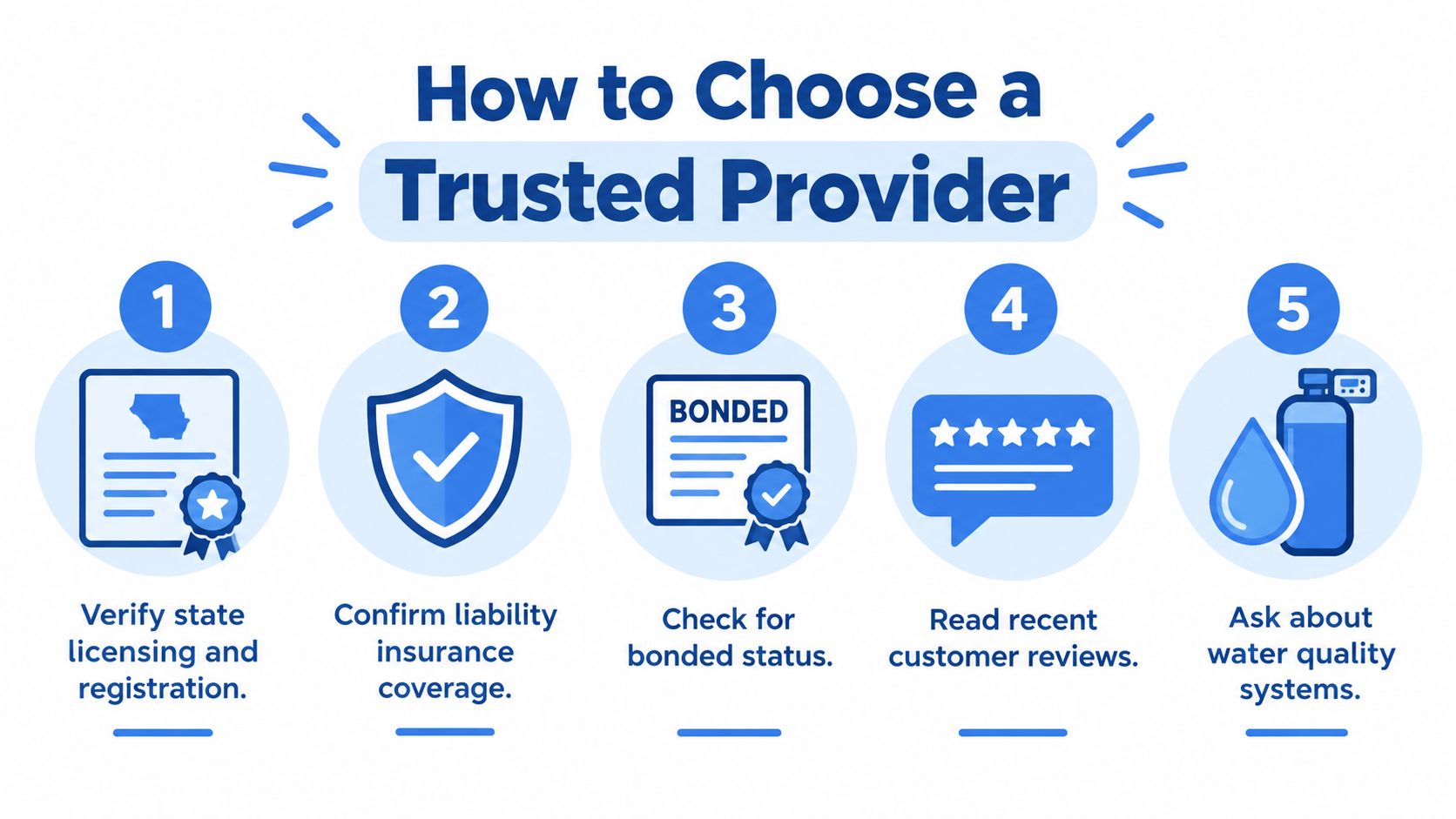
Be wary of door-to-door pressure, same-day-only discounts, cash-only demands, or a company that won't identify its insurer. Those tactics make it harder to verify who is entering your home and what protection exists if equipment damages a surface.
Look for practical signals instead. A marked company vehicle, proper safety gear, organized tools, and a technician who examines the glass before touching it all suggest a controlled operation. The strongest signal is a written scope that states what is included and what isn't.
If a provider can't explain why it selected squeegee cleaning or pure water for a particular pane, keep asking questions. You don't need to become a window technician, but you should understand the basic reason behind the method.
A useful schedule follows exposure rather than a calendar chosen at random. A home beside active construction, a property beneath trees, and a house receiving sprinkler overspray will soil differently from a shaded home on a quiet street. Pets, children, nearby traffic, and the amount of daylight entering a room also affect how quickly glass appears dirty.
In the Southwest, dust and rapid evaporation deserve special attention. Irrigation overspray and building runoff can introduce mineral residue, while construction dust can settle on frames and panes. Pure-water service can reduce mineral residue in the final rinse, but the provider still needs to follow local water-use and wastewater rules.
Rules can change by municipality. For example, San Joaquin County adopted Stage I emergency conservation measures effective December 9, 2025, according to its drought conservation notice. That example is outside Arizona, Nevada, and Colorado, but it demonstrates why a provider should verify current local requirements rather than promise that every exterior cleaning method is always permitted.
| Property Type / Location | Exterior Cleaning | Interior Cleaning | Notes |
|---|---|---|---|
| Dust-exposed Southwest home | Schedule according to visible buildup and irrigation exposure | Schedule when fingerprints, haze, or indoor residue become noticeable | Phoenix, Las Vegas, Henderson, and nearby desert communities may need closer observation |
| Shaded or tree-surrounded home | Base service on pollen, leaves, and moisture | Coordinate with seasonal occupancy and visible soil | Shading can change how deposits collect on glass |
| Home near construction or traffic | Inspect glass more often during active work | Clean when dust reaches living areas | Construction residue may require separate treatment |
| Commercial storefront or lobby | Use a recurring plan based on presentation needs | Maintain high-touch interior glass regularly | Entryways and display areas show marks quickly |
| Office or managed property | Set a documented inspection cycle | Coordinate with tenants and building access | Record pane orientation, shading, and nearby dust sources |
Service availability associated with the company includes Flagstaff, Las Vegas, Denver, Scottsdale, Tempe, Chandler, and Gilbert, with broader coverage across Arizona, Nevada, and Colorado. Homeowners and property managers should still confirm the current service area, access requirements, and local conservation rules when requesting a quote.
Professional cleaning can remove ordinary dust, pollen, fingerprints, pet smudges, surface residue, and many removable hard-water deposits. It can also improve the appearance of frames, sills, tracks, and screens when those areas are included in the scope.
It can't reverse every kind of glass damage. A technician should distinguish between surface residue and etching. Mineral material sitting on the glass may respond to an appropriate cleaning or restoration process. Deposits that have chemically bonded with or etched the surface may remain after routine washing and require a separate assessment.

A cracked pane, scratched glass, severe pitting, or structural damage needs repair or replacement. A failed insulated-glass seal can create fogging between panes, and no exterior washing method can remove moisture trapped inside that sealed unit.
Recurring indoor condensation also needs a wider diagnosis. A Swedish residential study found winter window-pane condensation in 62.1% of homes, while visible mold or dampness occurred in 21.9%. The same study associated measured dampness indicators with adult allergic rhinitis and asthma, with reported odds ratios ranging from 1.34 to 1.87 in its analysis, as documented in the residential dampness study.
Those figures don't mean every wet sill indicates a health problem. They do show why repeated condensation shouldn't be treated as a simple appearance issue. Wiping the glass may improve visibility for a short time, but recurring moisture can involve indoor humidity, ventilation, leaks, glazing, or the building envelope. Ask an HVAC, ventilation, leak-detection, or mold professional to investigate when you notice persistent wet sills, musty odors, staining, or condensation between panes.
For a separate look at glass-cleaning products and technique, you can review this Binks Balustrades glass cleaner video. Product choice still doesn't replace an inspection of the pane and the source of the residue.
A first service can produce a significant visual improvement, but some deposits may need repeat treatment or restoration. The honest provider will tell you whether cleaning is appropriate, whether a specialized process is needed, or whether replacement is the more sensible answer.
Professional Window Cleaning has served residential, commercial, and high-rise customers since 1999, representing more than 26 years of operation as of 2026, according to its company history. If your home needs a clear scope for interior and exterior glass, screens, tracks, or hard-water concerns, visit Professional Window Cleaning to request service information for your location.
Read our blog posts regularly and keep learning.