
Care and Maintenance
High Rise Window Cleaning Cost: A 2026 Pricing Guide
Explore high rise window cleaning cost in 2026, from per-window and per-floor rates to Arizona, Colorado, and Nevada examples that help you budget


You're standing in the living room, looking through glass that used to make the whole space feel brighter. In the afternoon sun, every streak, dried droplet, and pale water spot seems to announce itself. You reach for a spray bottle, wipe harder, and discover that the window looks worse than it did before.
That result isn't unusual. Residential window cleaning looks simple from inside the house, but professional results depend on water quality, controlled technique, appropriate equipment, and safe access. Those factors matter even more in the dry, dusty environments around Arizona, Colorado, and Nevada.
A homeowner in Phoenix may be dealing with airborne dust and intense sun. A home in Denver may collect pollen, grit, and residue around frames and tracks. In Las Vegas, mineral-heavy water can leave spots that ordinary glass cleaner won't touch. The glass may look dirty, but the underlying problem is often what remains after the water evaporates.

Professional cleaning starts by separating loose grit from bonded residue. A technician also has to recognize damaged seals, delicate tint, fragile screens, painted surfaces, and access problems before applying water or pressure. A paper towel and household spray can remove a light fingerprint, but they won't substitute for a method designed to control contamination and water removal.
Window cleaning became a distinct profession as modern glass architecture expanded in the nineteenth century. The modern single-blade squeegee later gave professionals a faster, more consistent way to remove water from panes. Today, the U.S. window cleaning industry has an estimated $2.9 billion in revenue for 2024, with a projection of $3.2 billion by 2029 and more than 35,344 businesses offering window cleaning services, according to U.S. window cleaning industry statistics.
That scale reflects a recurring household need, not a seasonal novelty. Homeowners who want to understand the process can also benefit from adjacent guidance, including these professional car window cleaning tips, especially when distinguishing mineral deposits from ordinary road dust.
Practical rule: If a spot remains after the glass dries, wiping harder usually isn't the answer. The cleaner needs to identify what caused the residue and choose the right removal process.
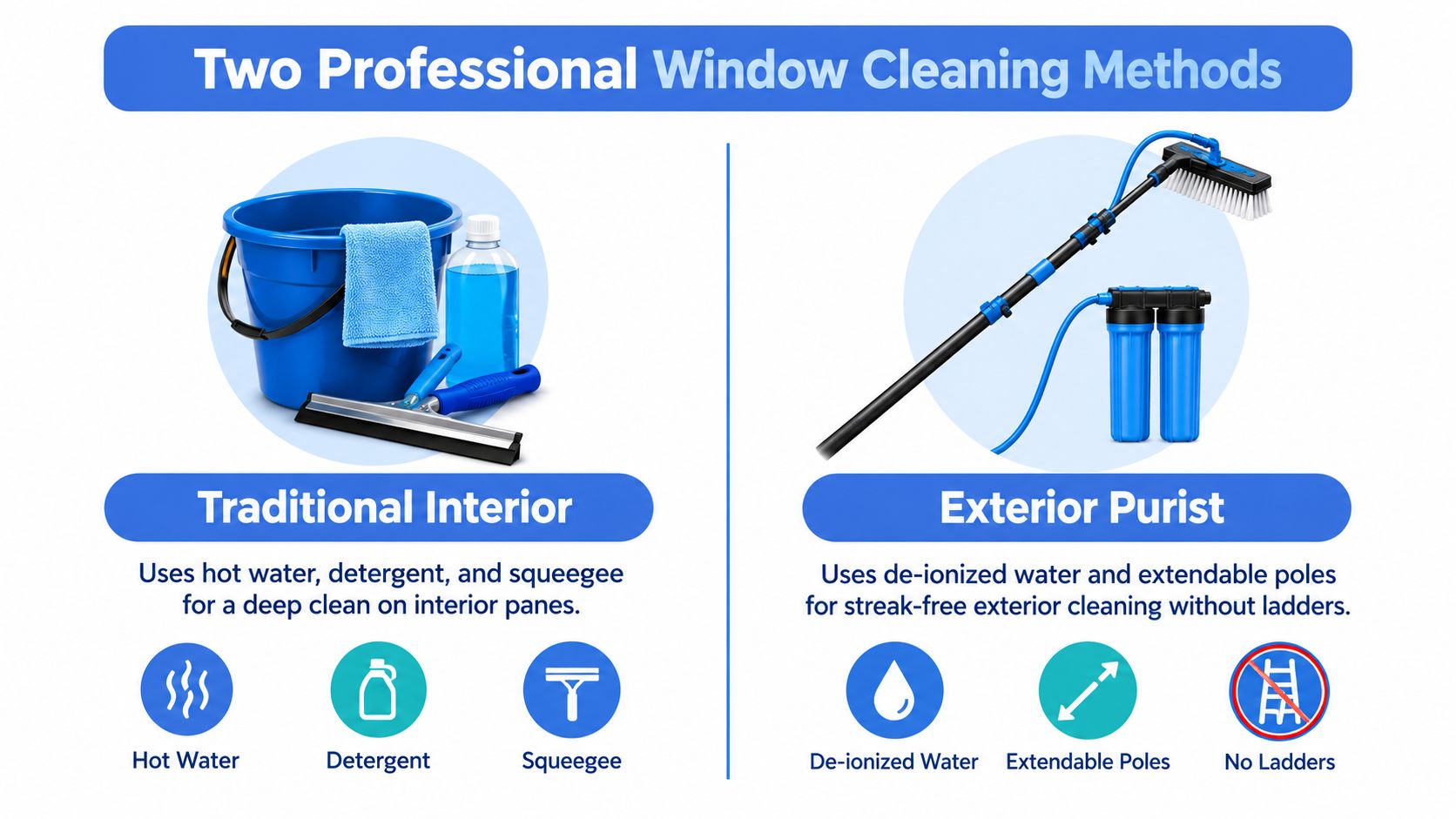
There are only two professional window cleaning methods: the traditional squeegee method and the pure-water system. Professionals may use different brands, pole lengths, brushes, or detergents, but those tools support one of these two approaches.
The technician first removes loose grit, wets the glass with a controlled cleaning solution, and pulls a rubber blade across the pane. The blade typically works at an angle of about 30 to 45 degrees, with overlapping passes that keep water moving toward an edge. Wiping the blade between strokes prevents dirty water from being redeposited on clean glass, while a dry starting edge helps avoid a visible line at the beginning of the first pass.
This method gives the cleaner close control over heavily soiled glass, interior panes, edges, frames, and mineral deposits that need more deliberate attention. Ettore Steccone patented the modern single-blade squeegee in 1936, a development that improved speed and streak control and still influences professional work today, as described in this history of the window washer.
A pure-water system uses reverse osmosis and de-ionization to remove minerals from water. The cleaner applies that mineral-free water with a brush on an extendable water-fed pole, then allows the pane to dry without the spotting caused by dissolved minerals.
This approach works particularly well for exterior glass that is high, wide, or difficult to reach. The cleaner can remain on the ground for much of the job, reducing ladder use and allowing purified water to rinse away ordinary dust and soil. Caked-on debris, paint, or unusually stubborn residue may still require hand removal.
For a closer look at equipment selection and workflow, review this explanation of a professional window washing system.
The fairest way to assess a quote is to understand the work behind it. A typical residential job for a 1,500-square-foot house costs about $260, with a common range of $150 to $370 per visit, according to window cleaning pricing and industry data. The same reference gives an hourly equivalent of roughly $40 to $75, or about $4 to $8 per window.
These figures provide a baseline, not a fixed price for every home. Window count, pane size, access, glass condition, screens, tracks, skylights, and interior work all change the labor involved. The chosen professional method matters too. Squeegee cleaning may suit accessible panes and detailed interior work, while pure-water cleaning can make high exterior glass safer and more efficient to reach.
A low quote may cover only easily reached exterior glass. A fuller service can include inspection, glass cleaning, screen handling, track vacuuming, sill detailing, and cleanup. Ask whether the price includes both sides of the glass, and whether hard-water restoration is charged separately.
Location and access also affect the job. A single-story home with clear access is different from a two-story property with delicate screens, narrow tracks, or glass above a conservatory. Compare the scope of work, access plan, method, and condition of the glass, not only the total.
A useful estimate states what the technician will clean, which conditions may need extra treatment, and how the crew will protect the home during the work.
If a quote seems unusually low, check whether it excludes screens, tracks, interior panes, or difficult glass. If it seems high, ask which access problems, glass conditions, or additional services explain the difference.
A professional visit begins before water touches the glass. The technician assesses pane condition, frame material, screens, tracks, access points, and visible seal problems. That inspection determines whether the squeegee method or pure-water system is more suitable for each exterior area.
Assessment comes first. The cleaner identifies fragile surfaces, damaged components, stubborn deposits, and areas where water must be controlled carefully.
Loose debris is removed. Dust, grit, insects, and track debris can scratch surfaces or contaminate the cleaning tool if they're dragged across wet glass.
The selected method is applied. A squeegee workflow uses wetting solution and controlled blade passes. A pure-water workflow uses mineral-free water and a brush on an extendable pole. The two methods solve the same basic problem through different forms of water control.
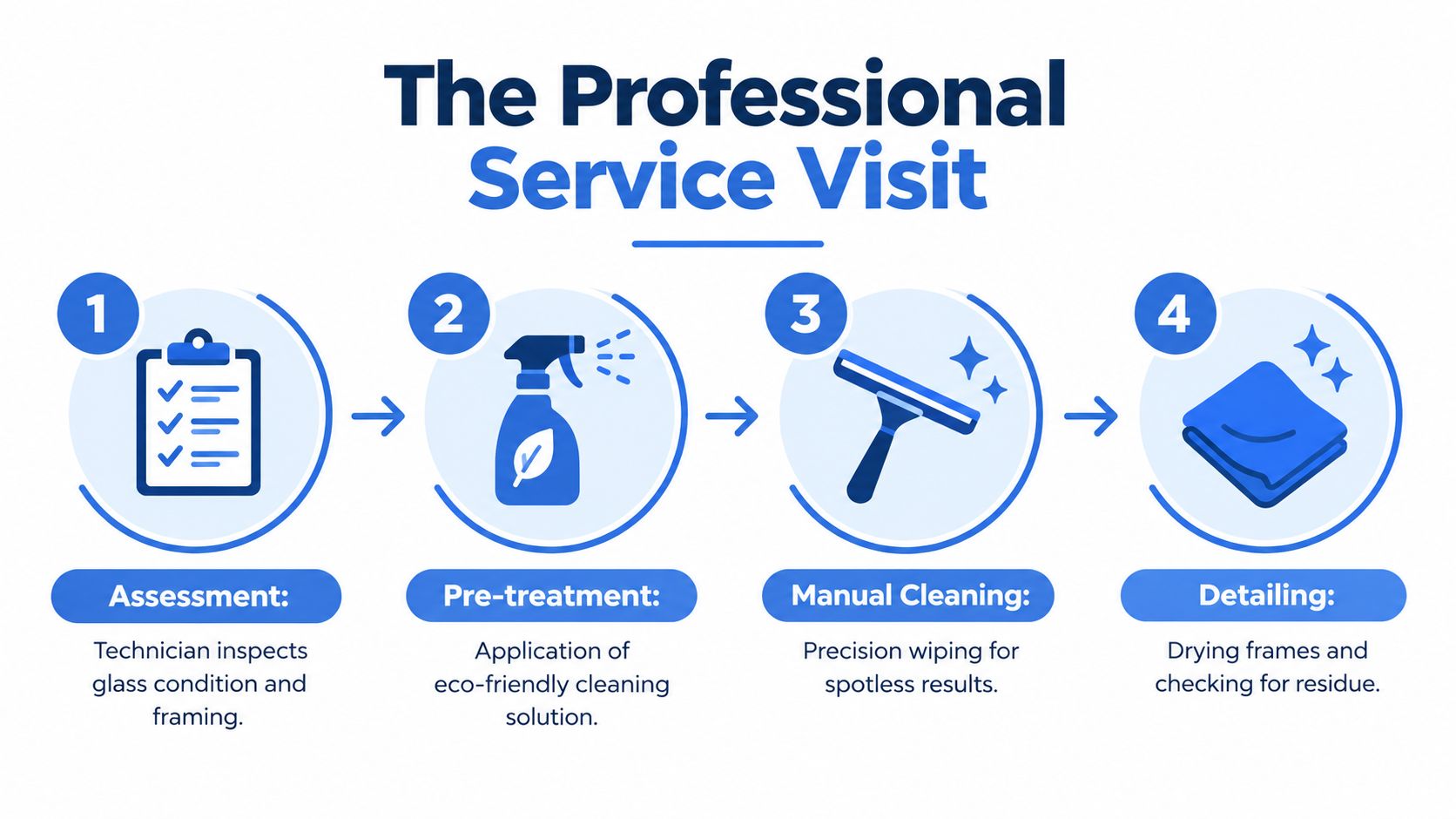
Screens are handled carefully, while sills and tracks are cleared of accumulated material. Interior work requires attention to floors, furnishings, trim, and water control. Exterior work requires safe positioning, especially around upper-level panes and awkward rooflines.
A final inspection checks edges, corners, frames, and remaining residue. A responsible crew also reviews visible seal or glass concerns rather than hiding them beneath a cleaning solution. Homeowners should confirm that the company carries appropriate insurance and ask how technicians handle access risks before work begins.
A generic twice-yearly recommendation is a useful starting point, but it isn't a universal rule. Many homes do well with cleaning every six months, while dusty, coastal, hard-water, or pollen-heavy environments may justify quarterly service. Construction exposure, busy roads, nearby trees, and open desert conditions can shorten the useful interval further.

Las Vegas illustrates why location changes the answer. Hard water there measures approximately 380 ppm, and visible spotting may develop within 7 to 14 days in high-heat exposure, while softer water can remain visually clear much longer, according to this Las Vegas hard-water stain guide.
Look for the point at which cleaning becomes corrective rather than routine. If a pane develops persistent spots, the view looks hazy in direct light, or tracks collect noticeable grit, the interval is probably too long for that home.
The aim isn't to clean as often as possible. It's to remove contamination before it becomes difficult to correct, while matching the schedule to the home's actual exposure.
Clean glass changes how a room feels, but appearance is only the most immediate benefit. Routine maintenance also gives a technician an opportunity to notice deteriorating seals, damaged frames, blocked tracks, and deposits that may become harder to remove over time.
Minerals left behind by evaporating water can become bonded to glass. If they remain untreated, the work shifts from routine cleaning toward restoration, and the risk of permanent surface damage becomes more serious. Professional cleaning doesn't repair failed seals or replace damaged glass, but it can reveal those conditions while they're still visible and easier to address.
Dust and residue around interior glass, sills, tracks, and screens can affect the cleanliness of the surrounding room. Recent window cleaning maintenance guidance connects regular maintenance with indoor air quality and energy efficiency, while also describing movement toward eco-friendly, water-efficient methods and recurring maintenance programs.
That doesn't mean clean windows alone solve indoor air concerns or reduce every household energy demand. It means window cleaning belongs within a broader maintenance routine, particularly in homes where dust, pollen, or track debris accumulates quickly.
Natural light, a clearer view, and a better-presented home are tangible daily benefits. Clean, maintained windows can also support the condition and presentation of a property when owners prepare to sell or manage a rental.
The strongest argument for professional service is prevention. Removing residue before it becomes stubborn, checking components during the visit, and choosing a water-conscious method can protect the usability and appearance of the window system without treating every issue as a cosmetic problem.
A window cleaner who has worked across different climates learns quickly that the same process doesn't behave identically everywhere. In Phoenix and Scottsdale, sun and dust can dry water rapidly and expose spotting. In Denver, temperature changes and seasonal debris affect timing and access. Las Vegas brings especially demanding mineral conditions.
That local understanding influences method selection. A technician may favor pure water for accessible exterior glass, then use controlled squeegee work where close detailing or stubborn contamination requires it. The decision should follow the pane and the conditions, not a rigid sales script.
The business behind Professional Window Cleaning has operated since 1999 and has been cleaning windows for over 26 years, serving residential, commercial, and high-rise properties across Arizona, Colorado, and Nevada. That experience matters because technicians repeatedly encounter different glass types, screens, frames, access constraints, and weather conditions.
Homeowners in Phoenix, Scottsdale, Tempe, Chandler, Gilbert, Las Vegas, and Denver should look for a provider that can explain those decisions clearly. A professional should be able to tell you why a pane needs squeegee work, why another suits pure water, and whether a mark is removable soil or a sign of glass damage.
Insurance is another practical consideration. Safe access, water control, and protection for the home all matter more than a polished promise. A reliable provider discusses the work scope, access plan, and responsibility for the property before the crew starts.
The right service begins with a property-specific assessment, not a generic promise of spotless glass. Tell the technician whether the main concern is interior film, exterior dust, hard-water spotting, difficult upper panes, neglected tracks, or a recurring maintenance schedule.
The decision usually comes down to a few practical questions:
A professional visit can make sense for houses, condos, apartments, and two-story homes where access, glass condition, or water quality makes DIY work frustrating. It also gives homeowners a clearer view of maintenance issues that are easy to miss through a dirty pane.
Don't wait until every window shows a permanent-looking spot or the tracks are packed with debris. Request an assessment, compare the stated scope of work, and choose a cleaner who can explain the method rather than just promise a result.
Professional Window Cleaning offers residential, commercial, and high-rise window washing across Arizona, Colorado, and Nevada, using the method suited to the glass, access, and water conditions. Visit Professional Window Cleaning to request service and arrange a practical evaluation of your home's windows.
Read our blog posts regularly and keep learning.