Care and Maintenance
Concentrate Window Cleaner: Professional Guide
Learn how to dilute and apply concentrate window cleaner like pros. Master ratios, safety, and streak-free results for residential and commercial glass.


Clean-looking glass depends less on how much spray you apply than on method, tools, timing, and surface conditions. Professional cleaners generally rely on only two approaches, the squeegee method and the pure-water system. Each solves a different problem, and neither is improved by just adding more consumer glass cleaner.
These home window cleaning tips move from manageable DIY care to the situations that deserve trained help, including high windows, hard-water deposits, exposed frames, and weather-related buildup. Professional Window Cleaning has been cleaning windows for over 26 years, serving Las Vegas, Phoenix, Denver, and Scottsdale.
The safest approach is simple. Clean reachable interior glass carefully, inspect more than the pane, and stop treating upper-story access as an ordinary household chore.
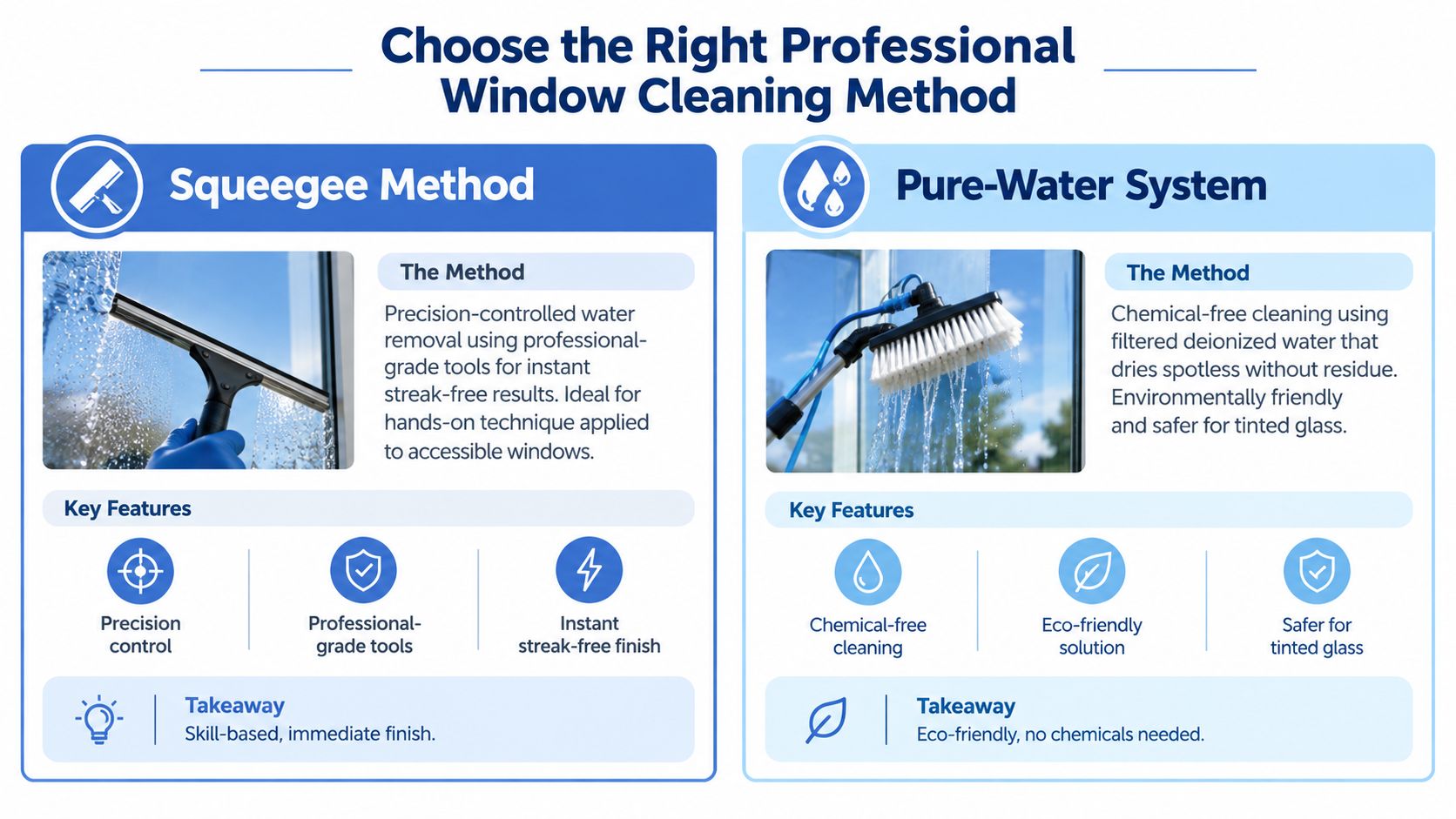
Professional window cleaning uses two core methods. The squeegee method applies a cleaning solution to loosen soil, then removes the liquid with controlled strokes. The pure-water system uses highly filtered water delivered through a water-fed pole and brush, allowing exterior glass, frames, and sills to be rinsed without detergent residue.
Neither method is automatically better for every window. A squeegee is precise and well suited to interior glass, detailed edges, and panes where the technician can work close to the surface. Pure water is especially useful for exterior windows that are difficult to reach because the pole can often keep the worker on the ground while cleaning the pane, frame, and sill together. Professional Window Cleaning describes these as its two professional approaches, rather than offering a long list of unrelated techniques.
Ask a provider which method it plans to use and why. The answer should reflect the window's height, access, frame condition, glass surface, and local water quality, not just the tools a crew happens to carry.
You can learn more about pure-water window washing, and the same principle applies to specialized exterior access work such as drone cleaning, where the cleaning challenge begins with reaching the surface safely.
A window schedule shouldn't be based on a universal calendar. The American Cleaning Institute's 2020 survey used a nationally representative sample of 1,000 U.S. adults surveyed from February 10 to 18, 2020. It documented household cleaning behavior, but it didn't prescribe a specific window-cleaning interval.
Separate survey reporting cited 2,000 U.S. appliance-owning respondents and found that 29% said they missed cleaning their windows, while one in six delayed cleaning for at least a month. Those figures describe self-reported behavior, not measured glass condition, but they show why visible buildup can remain unnoticed until it becomes difficult to remove.
Use inspection triggers instead of relying only on a date. Look for dust film, pollen, fingerprints, condensation, mineral spots, and reduced clarity. Inspect the tracks, screens, sills, frames, and seals during the same visit because a clean pane can still sit inside a neglected window assembly.
A home near active construction, dry soil, irrigation overspray, or heavy pollen may need more frequent attention than a sheltered property. A Denver homeowner might plan inspections around spring debris and autumn preparation, while a property in Las Vegas may need closer monitoring after dusty conditions. Commercial buildings in Phoenix also benefit from scheduling around client-facing periods, though the correct frequency depends on exposure and appearance requirements.
Practical rule: Schedule the next inspection when the last cleaning is still fresh in your memory, then adjust based on what the glass and frames actually show.
Regular service doesn't guarantee that damage won't occur, but it gives you a chance to address deposits, deteriorating seals, and trapped grit before they become harder problems. A provider can also coordinate recurring appointments through cleaning-business scheduling software, while the homeowner remains responsible for choosing a frequency that matches the property.
Upper-story glass isn't a normal extension of floor-level cleaning. It changes the job from a maintenance task into work at height, with hazards involving falls, unstable ladders, overreaching, and nearby electrical lines. An OSHA accident analysis identified 88 window-cleaning accidents over a 15-year period, and 62 resulted in fatalities, approximately 70.5%. The dataset covers reported occupational incidents, not the probability that an individual homeowner will be injured, but it makes the risk boundary clear. OSHA's accident search is why safety deserves priority over a spotless result.

Don't lean out of a window, stand on furniture, or place a ladder on a wet, uneven, or unstable surface. For interior panes, clean from the floor whenever possible. For exterior upper-level windows, a pure-water pole or trained crew may eliminate the need to climb at all.
Second-story residential windows, skylights, sloped-roof panes, and high-rise condominium glass all require a different plan. A professional should explain the equipment, access route, weather limits, and fall-protection measures before work begins. Request proof of insurance, especially for commercial properties, and don't accept vague answers about how the crew will reach difficult glass.
If a ladder is suitable for a limited task, follow the CDC ladder-safety guidance. It reports 836 U.S. fatalities from ladder falls between 2011 and 2016 and identifies incorrect placement, inadequate securing, and overreaching as recurring hazards. The 1:4 rule places the base approximately one foot outward for every four feet of vertical working height, with both rails on stable surfaces. Keep your torso between the rails, maintain three points of contact, carry tools in a belt or holster, and descend to reposition instead of leaning sideways.
A professional service can determine whether a pole, ladder, lift, or other access method fits the property. Weather matters too, particularly around wet surfaces, strong wind, heat, and electrical hazards.
More cleaner doesn't mean cleaner glass. Excess consumer product can leave a film that attracts dust, dries unevenly, and makes squeegee work harder. A strong process uses enough solution to loosen soil, then removes it before it dries.
The solution also needs to suit the conditions. Dust, grease, pollen, mineral residue, temperature, and glass coatings all affect how the liquid behaves. In a Phoenix commercial building, a technician may need to manage a heavy dust film before trying to achieve a clean finish. In Denver, mineral-rich water can complicate the final rinse. In Las Vegas, irrigation or tap-water deposits may require a different response from ordinary surface dirt.
A professional-grade solution can't rescue a dirty or damaged applicator. The worker must wash the pane thoroughly, keep the squeegee edge clean, overlap strokes consistently, and detail the perimeter with a dry cloth. On interior glass, protecting floors and furnishings matters just as much as removing the last mark.
Pure-water cleaning takes a different route. Vitro Architectural Glass recommends final-rinse water with total dissolved solids no higher than 20 parts per million, as described in its technical guidance on glass cleaning. The guidance also emphasizes low turbidity and controlled hardness because water must loosen soil and move across the glass without leaving mineral residue.
A streak is often a process problem, not a sign that the pane needs another layer of spray.
Ask the cleaner why it selected a squeegee solution or purified water for your windows. If a provider can't explain how water quality, temperature, and surface conditions affect the result, it may be relying on a generic consumer product rather than a method designed for the property.
Cleaning one side while ignoring the other creates an incomplete result. Exterior dust and irrigation residue may be gone, but fingerprints, cooking film, condensation marks, and indoor dust can still make the window look dull from inside. A combined appointment lets the crew assess both surfaces and manage access in one visit.
This approach is especially practical for homes in Phoenix and Scottsdale, where a homeowner may notice exterior dust first but spend most of the day viewing glass from indoors. It also suits Denver medical offices, where interior clarity and controlled work areas matter to patients and staff. Las Vegas commercial properties can coordinate interior and exterior work around occupancy so the crew isn't repeatedly interrupting operations.
Move fragile objects, curtains, and furniture away from the window where possible. Clear a path to rooms with limited access, and tell the technician about alarm sensors, delicate flooring, furnishings, or windows that shouldn't be opened.
A professional should explain how it will manage water and solution. Squeegee cleaning requires controlled collection and edge detailing, while pure-water work is normally directed toward exterior glass and frames. The method should protect interior finishes rather than treating drips as an unavoidable part of the job.
A combined service also exposes differences between the two surfaces. If the exterior needs pure water but the interior needs detailed squeegee work, using both methods in one appointment may be more sensible than forcing one technique across the entire property.
Hard-water spots aren't always ordinary dirt. When water evaporates, dissolved minerals, especially calcium and magnesium, remain on the glass. Repeated exposure from sprinklers, hoses, or rinse water can leave a pale haze, and continued deposits may etch the pane below the surface.
Start with a simple diagnostic. Wet a small affected area and observe what happens. A surface deposit may disappear under the water film and return as the glass dries. Etching remains visible because the damage is below the surface. That distinction determines whether careful cleaning may help or whether restoration is unlikely to return the original finish.

A homeowner in Las Vegas or Phoenix may see recurring marks where irrigation overspray reaches exterior glass. Cleaning the pane without correcting the sprinkler aim only resets the problem. Immediately removing rinse water with a squeegee also prevents mineral-rich water from drying on the surface.
Use the least aggressive treatment that fits the deposit. Test a small area first, protect frames and seals, and avoid escalating to increasingly acidic products just because a basic cleaner failed. Aggressive scrubbing can waste time or damage nearby materials without repairing etched glass.
For a deeper explanation of the distinction and treatment options, see this guide to cleaning hard-water stains on glass.
Professional treatment is most worthwhile when deposits cover difficult exterior panes, return quickly, or no longer respond to ordinary cleaning.
The pane is only one part of the window. Tracks hold grit, sills collect soil and insects, frames receive repeated sun and moisture exposure, and seals can deteriorate without obvious visual drama. A cleaning visit is a useful time to notice those conditions before they interfere with operation or allow moisture where it shouldn't go.
Ask the technician to inspect the frame and seal area rather than treating the appointment as glass-only work. Look for cracked or missing caulk, separated seals, blocked drainage paths, corrosion, damaged corners, and debris packed into tracks. Cleaning doesn't repair these problems, but it can make them visible while access is already available.
Phoenix homes face intense heat and UV exposure. Las Vegas commercial properties may need continued attention to the building envelope, while Scottsdale residences can accumulate desert dust around tracks and sills. Denver properties have another concern, because freeze-thaw conditions can stress seals and exterior joints.
Don't smear new caulk over a dirty, wet, or failing joint without understanding the underlying problem. A cleaner can document what it sees and recommend that a qualified repair professional handle damaged seals, failed glazing, or structural issues.
Clean glass improves visibility. Sound frames and seals help the window continue doing its job.
Include frames, tracks, screens, and sills in the conversation before accepting a quote. Some properties need a detailed cleaning of the surrounding components, while others need a separate repair. Keeping those tasks distinct prevents a homeowner from assuming that a polished pane means the entire window is healthy.
Air-quality events require a different window-cleaning plan than routine dust or pollen. During wildfire smoke, dust storms, or severe outdoor pollution, keep windows closed and postpone exterior work if wind, debris, or unsafe air makes access hazardous. The American Chemical Society's indoor-air-quality resource explains that smoke and combustion fumes can enter through open windows, cracks, and leaks. Cleaning products can also affect indoor air.
Before an event, secure loose screens and close windows. Avoid running fans that pull outdoor air inside. During the event, check local air conditions before opening a window or starting indoor cleaning. After conditions improve, ventilate briefly when outdoor air is cleaner, then clean screens, tracks, and sills. Fine particles settle in these areas and can return to the room when the window moves.
Screens deserve careful handling. Remove them if practical, vacuum both sides with a soft brush, and wash them only after checking that the frame and mesh can tolerate moisture. Vacuum tracks before wiping them, since wet dust can form a paste that blocks drainage and makes the sash harder to operate. A professional can clean these components while checking for trapped debris, damaged mesh, or drainage problems.
Climate still affects the timing, but the practical trigger is the residue left behind. Desert homes in Las Vegas, Phoenix, and Scottsdale may need service after dust storms or sprinkler overspray, especially when mineral film begins to form. Denver properties may need a post-winter cleanup after residue and debris collect around the glass and frames.
Professional Window Cleaning serves Las Vegas, Phoenix, Denver, and Scottsdale. Discuss recent air-quality events, deposits, screens, and access conditions when arranging service rather than selecting a calendar interval without inspection.
| Item | Implementation Complexity | Resource Requirements | Expected Outcomes | Ideal Use Cases | Key Advantages |
|---|---|---|---|---|---|
| Choose the Right Professional Method: Squeegee vs. Pure-Water System | Moderate, requires trained technique selection (skill for squeegee; protocol for pure-water) | Professional tools (squeegees, poles, deionized water systems) and trained technicians | Streak-free, professional finish; method-dependent (instant finish vs. chemical-free) | General residential & commercial windows; use pure-water for chemical-sensitive/tinted glass | Combines instant, skill-based finish (squeegee) with eco-friendly, residue-free option (pure-water) |
| Schedule Regular Professional Cleaning to Prevent Window Damage | Low–Moderate, recurring planning and coordination | Ongoing service budget and scheduling with provider | Reduced long-term damage, maintained aesthetics, longer window lifespan | Properties in dusty/mineral-prone climates; year-round maintenance plans | Preventative maintenance that reduces repair/replacement costs |
| Clean Hard-to-Reach Exterior Windows Professionally for Safety | High, requires specialized safety training and procedures | Ladders/scaffolding, fall protection, commercial access equipment, insurance | Safe, complete cleaning of elevated windows with minimized injury risk | Two-story homes, skylights, high-rises, steep-roof properties | Removes homeowner risk; insured, certified access to difficult areas |
| Use Professional-Grade Cleaning Solutions for Streak-Free Results | Low–Moderate, proper selection and application needed | Specialized formulations tuned to water chemistry and glass type | Fewer streaks/residue, better mineral removal, improved results on specialty glass | Hard-water regions and tinted or specialty glass installations | More effective on mineral deposits and tailored to regional water issues |
| Clean Interior and Exterior Windows Simultaneously for Efficiency | Moderate, requires coordination of interior access and workflow | Trained crew, water-management techniques, interior access arrangements | Uniform appearance both sides, reduced total time and often lower combined cost | Homes and commercial sites wanting full-service, single-visit cleaning | Time- and cost-efficient; consistent results inside and out |
| Address Mineral Deposits and Hard Water Stains Professionally | High, assessment and targeted treatment; may require restoration | Mineral-dissolving solutions, specialized techniques, additional treatment time | Restored clarity, reduced risk of permanent etching if treated early | Areas with high mineral content (e.g., Las Vegas, Phoenix) and older buildup | Prevents permanent glass damage and restores long-term clarity |
| Maintain Window Frames and Seals During Professional Cleaning | Moderate, inspection skills and follow-up coordination | Inspection tools, potential caulking/repair referrals, technician expertise | Early detection of seal/frame issues, improved energy efficiency, extended lifespan | Older windows, climates with freeze-thaw cycles or intense UV exposure | Catches problems early to avoid costly repairs and protects envelope performance |
| Schedule Professional Cleaning Based on Local Climate and Environment | Moderate, requires assessment and seasonal planning | Professional consultation, flexible scheduling tailored to region | Optimized frequency and method selection, better cost-effectiveness and results | Properties affected by dust storms, pollen seasons, salt air, or variable weather | Climate-specific plans that balance cost, frequency, and effectiveness |
The best home window cleaning tips don't begin with a favorite vinegar recipe. They begin with a decision about access, surface condition, water quality, and method. Reachable interior glass may be reasonable to clean yourself with a quality washer, a clean squeegee, a dry detailing cloth, and sensible water management. Upper-story exterior glass, skylights, sloped roofs, and panes near electrical lines belong in a different category.
Choose between the two professional methods according to the job. Squeegee cleaning offers controlled solution removal and detailed edge work, particularly on interior panes. Pure-water systems use filtered water and long poles to clean many exterior windows, frames, and sills while reducing the need for ladders. The right choice depends on reach, glass condition, frame material, and the cleanliness of the water used for the final rinse.
Timing matters just as much. Don't wait until every pane is cloudy or every track is packed with grit. Inspect when dust, pollen, fingerprints, condensation, hard-water spots, or reduced clarity appear. If windows face irrigation, dry soil, seasonal pollen, construction, or heavy traffic, your inspection cycle should reflect that exposure. A commercial property, medical office, high-rise condominium, and single-family home all have different access and occupancy requirements.
Mineral deposits deserve an early diagnosis. Wet the spot, see whether it disappears temporarily, and determine whether you're dealing with a surface deposit or etching. Correct sprinkler aim and remove rinse water before it dries. If the glass remains marked below the surface, more aggressive household scrubbing won't necessarily restore it.
Look beyond the pane during every cleaning. Frames, seals, tracks, screens, and sills can reveal moisture, caulk, drainage, or wear issues. A professional can identify conditions that require a separate repair before they become more disruptive.
Don't trade safety for convenience. OSHA's reported window-cleaning incidents and CDC ladder-fall data don't predict an individual homeowner's outcome, but they show why overreaching, unsecured ladders, and unstable surfaces aren't acceptable shortcuts. Clean interior glass from the floor where possible, use extension tools only within their rated reach, and leave difficult exterior work to trained crews with appropriate access and fall-protection equipment.
Professional Window Cleaning has operated for over 26 years, with residential, commercial, and high-rise services across Las Vegas, Phoenix, Denver, and Scottsdale. Contact the company for region-specific guidance, explain your property type and access challenges, and ask whether squeegee cleaning, pure-water cleaning, or a combination fits the glass.
Professional Window Cleaning provides residential, commercial, and high-rise window cleaning using squeegee and pure-water methods, with attention to glass, frames, access, and local conditions. Visit Professional Window Cleaning to discuss your windows, request service, and plan a safer cleaning routine for your property.
Read our blog posts regularly and keep learning.