Care and Maintenance
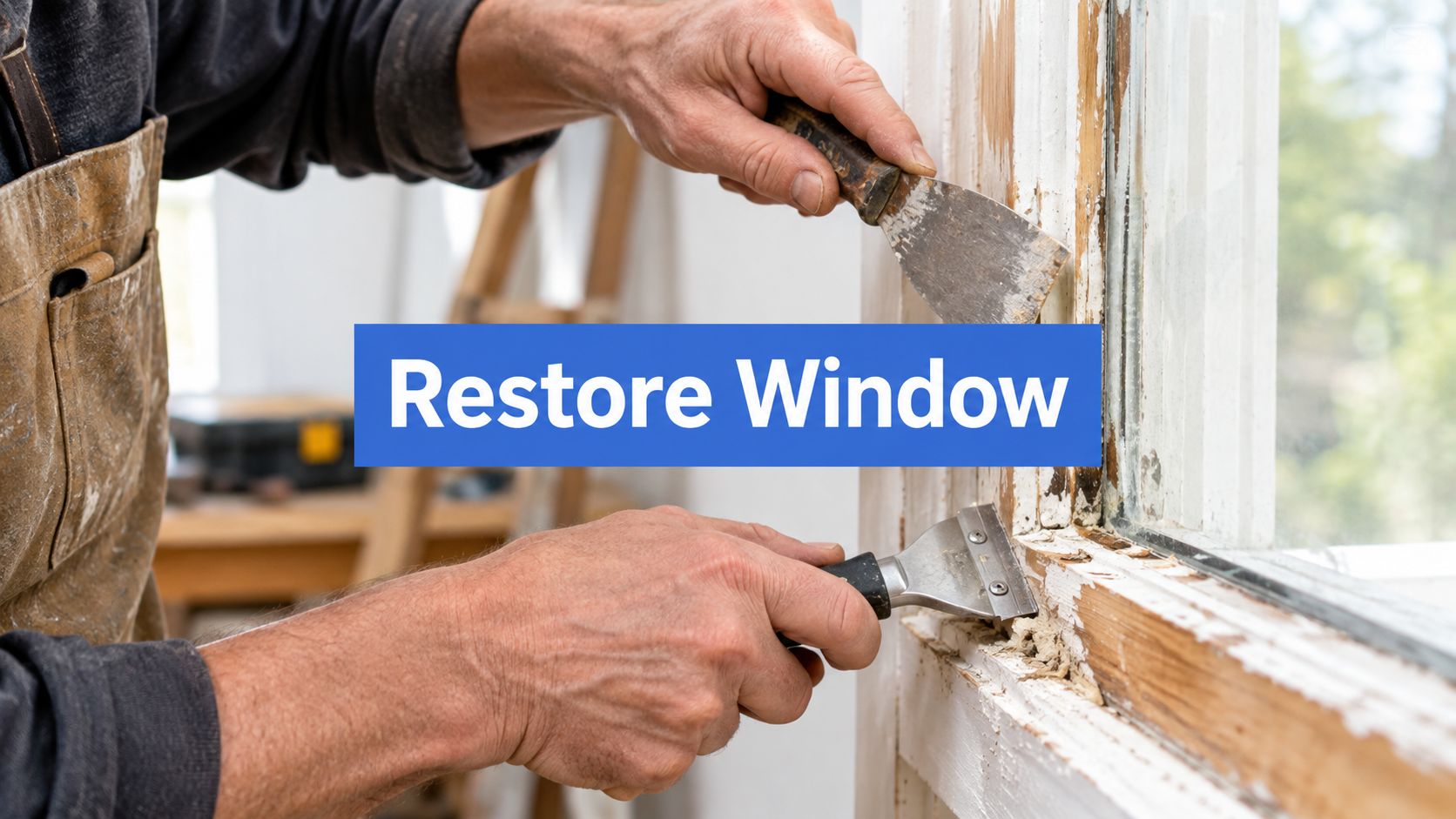
How to Restore Window Glass and Frames the Right Way
Learn how to restore window glass, frames, and seals with pro methods, real tools, and honest trade-offs. A practical guide


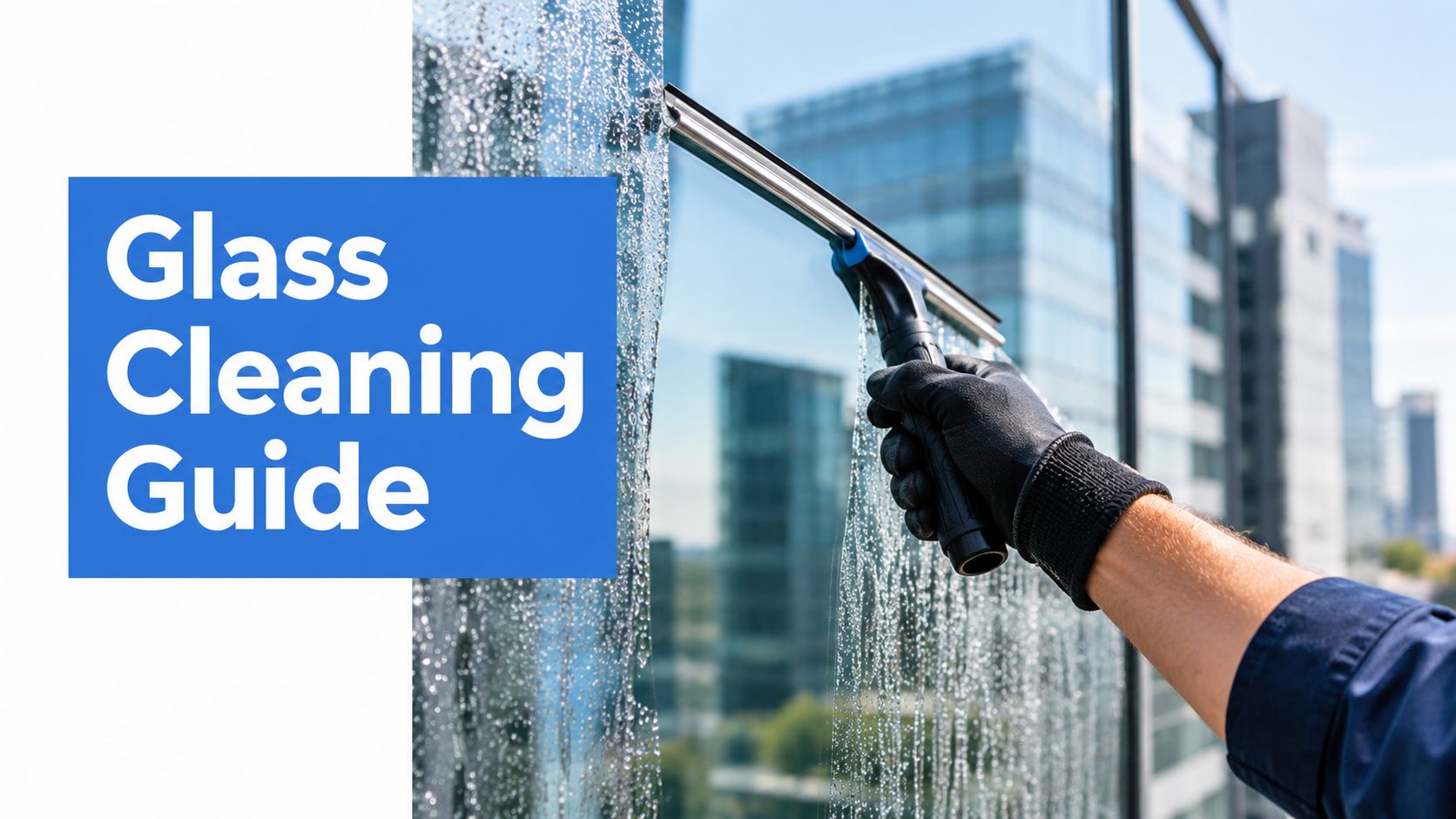
Tired of staring through grimy, streaked glass? The secret to that flawless, invisible-window look isn't some complicated trick—it all comes down to using the right methods. In the professional window cleaning world, there are only two methods that are used: the classic squeegee method and the modern pure-water system.
Let's face it, your outdoor windows take a constant beating. They're a magnet for layers of dust, stubborn rain spots, and all sorts of environmental grime that can make your whole house look dull. It's time to forget the old myths about vinegar and newspaper; this guide is about the professional techniques that actually deliver a lasting, streak-free shine.
We’re going to break down why the squeegee and the pure-water system are the only methods the pros really trust. This isn't just about getting windows clean; it’s about achieving that crystal-clear finish safely and without wasting your entire weekend.
Understanding the right approach is a game-changer, especially in challenging climates. Homeowners in dusty environments like Phoenix, or areas battling hard water spots, like Las Vegas, see the difference immediately. These methods are designed to cut through the kind of stubborn buildup that most DIY solutions just can't handle.
The demand for professional window cleaning is definitely on the rise. Did you know that around 60% of homeowners now get their windows cleaned at least once a year? This isn't just a luxury anymore; it's becoming essential maintenance for keeping a home looking its best, especially in busy areas where grime builds up fast.
Want to dive deeper into the business side of things? You can explore a ton of great resources on the window cleaning industry that cover everything from equipment standards to the latest techniques.
Ultimately, learning to clean outdoor windows like a pro means adopting their tools and their mindset. It’s about picking the method that makes the most sense for your home's unique needs—whether you're dealing with a two-story house in Denver, or a single-level ranch. This guide will give you the know-how to make that choice and get impeccable results every single time.
Using the wrong equipment is the single biggest reason homeowners get frustrated with streaky, messy results. If you want that professional, crystal-clear finish, you have to think like a pro. And that starts with the right toolkit.
The only two methods the pros rely on—the classic squeegee and the modern pure-water system—each have their own specific set of gear. This isn’t just about making the job easier; it’s about getting it done right. A cheap, flimsy squeegee from the hardware store and an old bath towel will practically guarantee an afternoon of chasing streaks.
Investing in proper equipment is an investment in a faster, safer, and far more effective cleaning process.
For the classic squeegee method, it's all about precision and control. This technique relies on flawless execution, which is flat-out impossible without quality tools built for the job. You don’t need a ton of gear, but what you get has to be good.
Here are the absolute non-negotiables:
The difference between a professional strip washer and a sponge is night and day. A good washer loosens all the dirt and preps the surface so the squeegee can do its job in one clean pass.
For homes with second-story windows or huge panes of glass, a pure-water system is a game-changer. This method actually eliminates the need for ladders and squeegees by using purified water that dries completely spot-free.
The science is simple: by removing 100% of the minerals and impurities, there's nothing left behind to create spots or streaks once the water evaporates. It’s an incredibly efficient way to clean high windows safely from the ground. For a deep dive, you can explore our complete guide to professional window cleaning equipment.
The core components include:
To get a clearer picture, let's break down how the toolkits for these two methods compare. While both aim for a perfect finish, the equipment needed is completely different.
Ultimately, the right tools depend on your home and what you're trying to accomplish. For most standard, ground-floor windows, the traditional squeegee method works beautifully. But for anything higher, the pure-water system offers a level of safety and efficiency that's hard to beat.
Anyone can drag a squeegee across a window, but learning to use it like a pro is a skill—one that delivers those incredible, streak-free results you're after. While it might look simple on the surface, professional window cleaners have perfected a specific technique to get that flawless, invisible glass look every single time. It really just comes down to the right tools, the right movements, and a little bit of practice.
First things first, you'll need the perfect cleaning solution. You can skip the fancy store-bought stuff; a bucket of cool water with a small squirt of dish soap is all it takes. The goal here is to create just enough slip for the squeegee blade to glide smoothly without leaving behind a mess of suds.
Once your solution is mixed, it's time to prep the window. Grab a professional strip washer (often just called a scrubber), dunk it into your soapy water, and give it a good wring. You want it saturated, but not sopping wet and dripping all over your siding.
Apply the solution to the entire glass surface, scrubbing from top to bottom. Don't be shy—get right into the corners and along the edges to loosen up all that stuck-on dirt, pollen, and grime. This initial scrub does the heavy lifting, setting the stage for the squeegee to whisk it all away.
With the glass properly wetted and scrubbed, you're ready for the main event. There are two core squeegee techniques that pros use, and which one you choose really depends on the size of the window pane.
The real trick to a streak-free finish is maintaining a consistent 30-degree angle between the squeegee blade and the glass. If it's too steep, the blade will chatter and skip. Too shallow, and it will just smear water around. For a deep dive, check out our guide on how to squeegee a window like a pro.
This infographic gives a great side-by-side look at the tools needed for the two most common professional methods.
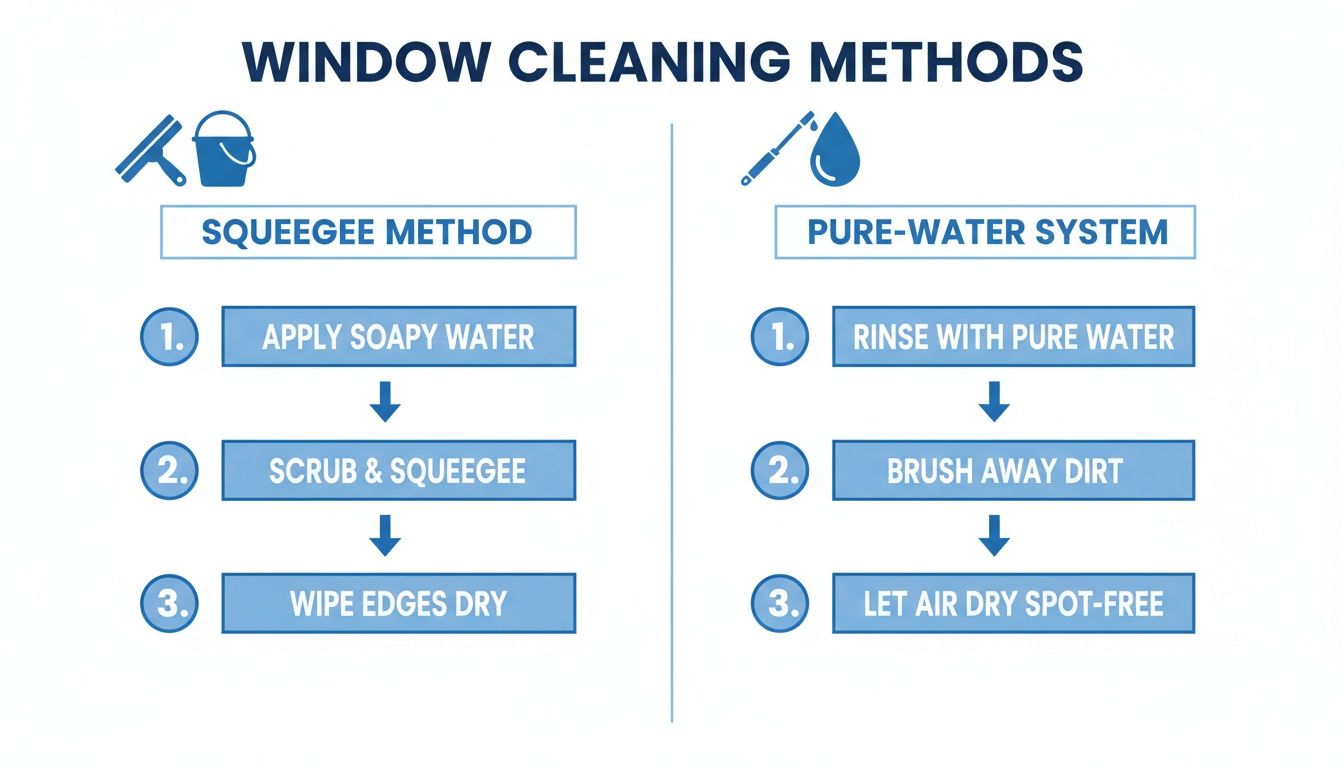
As you can see, the squeegee method relies on classic manual tools, while the pure-water system uses more specialized equipment like a water-fed pole and filter.
Finally, don't forget the last—and most critical—step: detailing. Grab a clean, dry microfiber cloth and wipe away any leftover water from the edges and corners of the glass and the window sill. This final touch ensures no drips will run down and ruin your perfectly cleaned window, leaving you with nothing but a crystal-clear view.
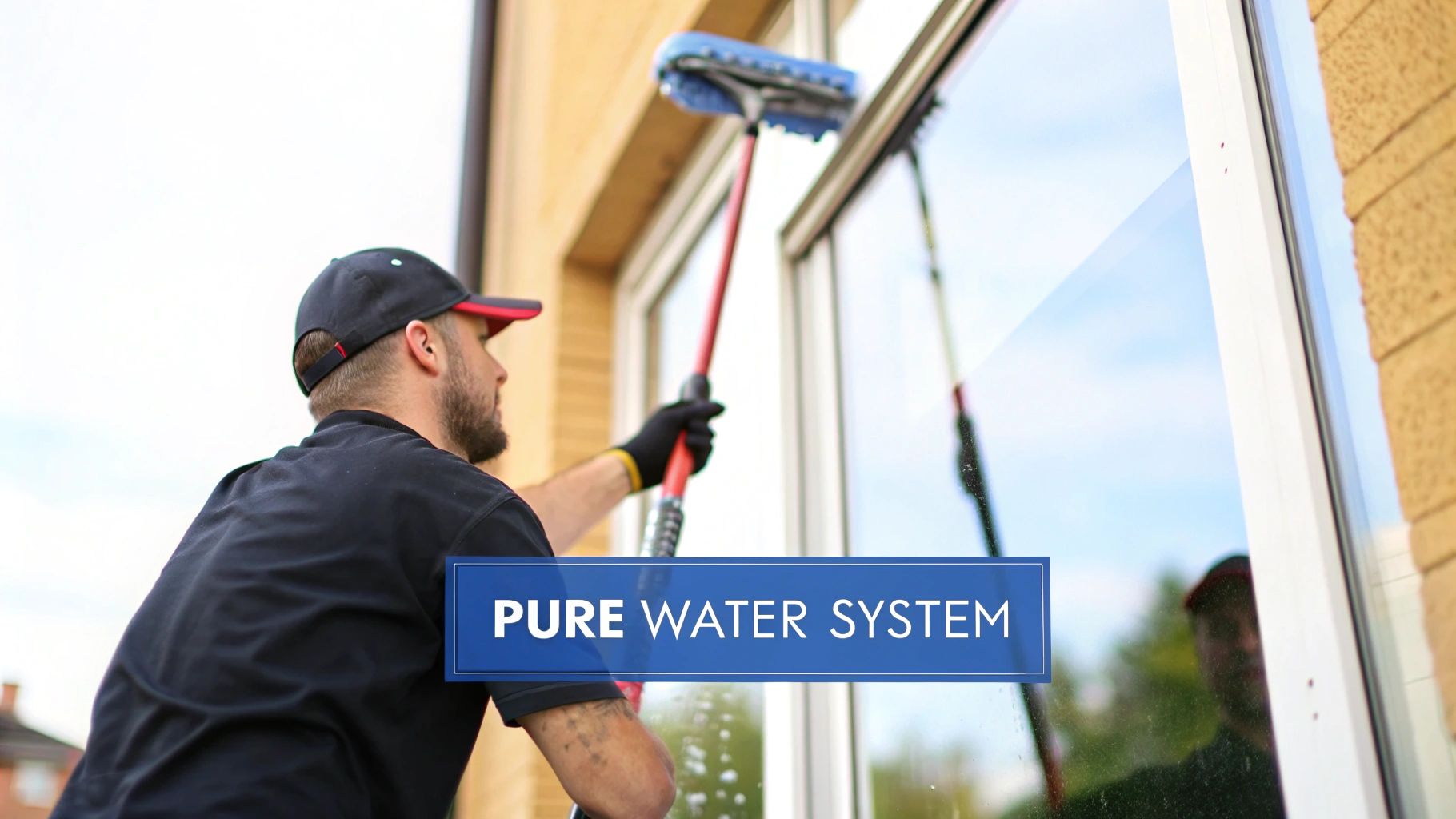
When you’re staring up at second-story windows or massive panes of glass just out of reach, the thought of teetering on a ladder is enough to make anyone nervous. This is exactly where modern window cleaning technology comes in, offering a far smarter—and safer—way to get the job done. A pure-water system is a true game-changer, giving you professional results while your feet stay planted safely on the ground.
This advanced method is one of only two techniques trusted by pros, and it completely does away with the need for a squeegee on exterior glass. It all comes down to a simple scientific truth: pure water dries spot-free. By filtering out all the minerals and dissolved solids that are normally in tap water, the water left on the glass simply evaporates without leaving a single speck of residue behind.
So, what exactly is "pure water"? It’s just regular tap water that’s been run through a multi-stage filtration system, usually using reverse osmosis (RO) or deionization (DI). This process strips out 100% of the Total Dissolved Solids (TDS)—those tiny mineral particles like calcium, magnesium, and salt that are the culprits behind hard water spots and streaks.
Because this water has been stripped of all impurities, it essentially becomes a cleaning agent on its own. It actively attracts and dissolves dirt, dust, and grime right off the glass. After the window is scrubbed and rinsed, the ultra-pure water sheets off cleanly and evaporates, leaving nothing but a perfectly clear finish. This is a huge advantage in places with notoriously hard water, like Phoenix, where mineral deposits can quickly etch and ruin glass.
Using one of these systems is surprisingly straightforward once you get the hang of it. The key piece of equipment is a lightweight, telescopic water-fed pole that has a soft-bristled brush on the end. Water travels from your home’s spigot, through the purification unit, and then all the way up the pole to the brush head.
The whole process boils down to two key actions:
You don't need to dry the window at all. That purified water will evaporate on its own, leaving a flawless, streak-free surface. It really does feel like magic the first time you see it work.
The biggest win here, of course, is safety. Taking ladders out of the equation dramatically reduces the risk of accidents, which is why this is the go-to method for any window that isn't easy to reach from the ground. If you're curious to learn more about the technology, our in-depth article on pure water window washing dives even deeper into the science and benefits. This approach to how to clean outdoor windows has truly transformed safety standards across the industry.
Even the best-laid window cleaning plans can hit a snag. It happens to everyone. You’ll be in a good rhythm, and then you run into something stubborn—grime that just won’t budge, chalky hard water stains, or even tiny flecks of old paint.
Knowing how to handle these moments is what separates a frustrating DIY job from a flawless, professional-looking finish. While your squeegee and pure-water system are perfect for everyday dirt, some problems need a bit more finesse. This is often where things can go wrong, leading to scratches or permanent marks if you're not careful.
Sometimes, a good scrub just doesn't cut it. For the really tough spots, you might need to bring in a couple of specialized tools. The key here is to use them with extreme caution.
Here's a pro tip that can save you a world of hurt: always test any abrasive tool or chemical on a small, hidden corner of the window first. This simple step ensures you won’t accidentally damage your specific type of glass.
Let's be honest, a sparkling clean window surrounded by a filthy frame and screen just looks unfinished. Taking a few extra minutes on these details makes a world of difference.
You can easily clean your window screens by gently scrubbing them with a soft brush and your cleaning solution, then giving them a good rinse with a hose. For the tracks, use a stiff brush to loosen all that caked-on dirt, vacuum it out, and then wipe the area clean with a damp cloth. Easy.
While you can handle many minor issues with a bit of care, some challenges are clear signals that it’s time to call in the experts. Trying to tackle a complex job without the right training or equipment isn't just ineffective—it can be downright dangerous.
Think about hiring a pro if you're dealing with:
For homeowners facing these kinds of tough jobs, especially in areas like Denver, our teams have the specialized equipment and years of experience to restore your windows safely and efficiently. When the job goes beyond a simple clean, trusting an expert is always the smartest move.
Even with the best game plan, you probably still have a few lingering questions. That's completely normal. Getting the small details right is what separates a decent DIY job from a truly professional, streak-free shine.
Let’s tackle some of the most common questions homeowners ask us. From timing your cleaning just right to knowing when a job is too big to handle, these insights will help you get it done with confidence.
For most homes, a good rule of thumb is to clean your outdoor windows twice a year. This schedule is usually enough to keep heavy buildup from dirt, pollen, and hard water spots at bay, protecting your glass from long-term damage.
Of course, your local environment plays a huge part. If you’re in a dusty or high-pollen area like Phoenix, AZ, you might find that cleaning them quarterly is the only way to maintain a clear view. On the flip side, commercial properties often need monthly service to keep up a pristine appearance for customers and clients.
Please don't. We strongly advise against ever using a pressure washer on your windows. While it might look like a quick and easy way to blast away grime, that intense, high-pressure stream can cause some seriously expensive damage.
It can easily shatter the glass, destroy window seals (which leads to that ugly, foggy condensation between the panes), tear your screens to shreds, and strip the paint right off your frames.
A much safer and more effective approach is a gentle rinse with a standard garden hose to get rid of the loose stuff. Even better is the controlled, low-pressure flow from a professional pure-water system. Both professional methods—the classic squeegee and the modern pure-water system—are designed to be tough on dirt but gentle on your windows.
This is one of the most important (and most overlooked) tips for getting a perfect finish: clean your windows on a calm, overcast day.
Direct sunlight and high heat are your worst enemies here. They cause the cleaning solution to evaporate almost instantly, long before you can squeegee it off. The result? You’re left with the very soap residue and streaks you were trying to eliminate.
Working in the shade or during cooler parts of the day, like the early morning or late afternoon, gives you the time you need to properly squeegee the glass dry for that flawless, invisible look.
Honestly, for a lot of situations, it absolutely is. Hiring a professional is often well worth the investment, especially if you have a multi-story home, tricky-to-reach windows, or you just want guaranteed results without the hassle and risk.
Professionals, like our teams in cities such as Las Vegas, NV, come equipped with the right tools, proper safety training, and proven techniques to get the job done safely and way more efficiently than most homeowners can.
Ultimately, calling in an expert saves you a ton of time, eliminates the real risk of getting hurt on a ladder, and delivers a higher quality clean that’s tough to replicate on your own. For a job done right with zero stress, a pro is the way to go.
When your windows need that flawless, crystal-clear finish, trust the experts who have been delivering it since 1999. For a free, no-obligation quote on your home or commercial property, contact Professional Window Cleaning at https://www.professionalwindowcleaning.com.
Read our blog posts regularly and keep learning.