Care and Maintenance
Sliding Window Cleaning That Actually Works
Learn sliding window cleaning the right way with pro tips on tracks, sills, and glass, plus the tools, solutions, and safety habits that prevent streaks


That chalky, hazy film creeping across your window frames isn’t just stubborn dirt—it’s oxidation, a chemical reaction that slowly degrades the surface. To fix it, you have to dissolve this oxidized layer with the right cleaner and technique before you can even think about applying a protectant.
Knowing exactly what you're up against is the first step to restoring clarity and protecting your investment.
If you've noticed a dull, chalky residue on your aluminum or vinyl window frames that just won't wash off with regular soap and water, you're almost certainly dealing with oxidation. This process is a chemical breakdown of the frame's surface, caused by prolonged exposure to oxygen, moisture, and UV radiation.
Over time, this reaction creates that tell-tale powdery film that can make even the cleanest windows look neglected.
In sunny, arid climates, this process happens much faster. For homeowners in places like Phoenix and Las Vegas, the intense sun acts as a catalyst, speeding up the degradation. It's an incredibly common issue that, if left untreated, can permanently dull the finish of your window frames.
Not all oxidation is the same. Use this table to quickly assess the severity of the problem on your windows and figure out the best way to handle it.
Once you know what you’re looking at, you can choose the right method instead of wasting time on a solution that won't work.
It’s easy to confuse oxidation with hard water stains, but they require totally different cleaning approaches. Hard water stains are mineral deposits left behind by evaporated water, usually showing up as white spots or streaks on the glass itself. Oxidation, on the other hand, is a breakdown of the frame material—aluminum or vinyl—and appears as a uniform, chalky haze on the frame.
A simple test can tell you what you're dealing with: rub a damp, dark cloth on the affected area. If a chalky white powder comes off, you've got oxidation. If it's just a stubborn spot on the glass that won't budge, it's likely a hard water stain.
This simple flowchart can help you quickly identify the problem so you can choose the right solution.
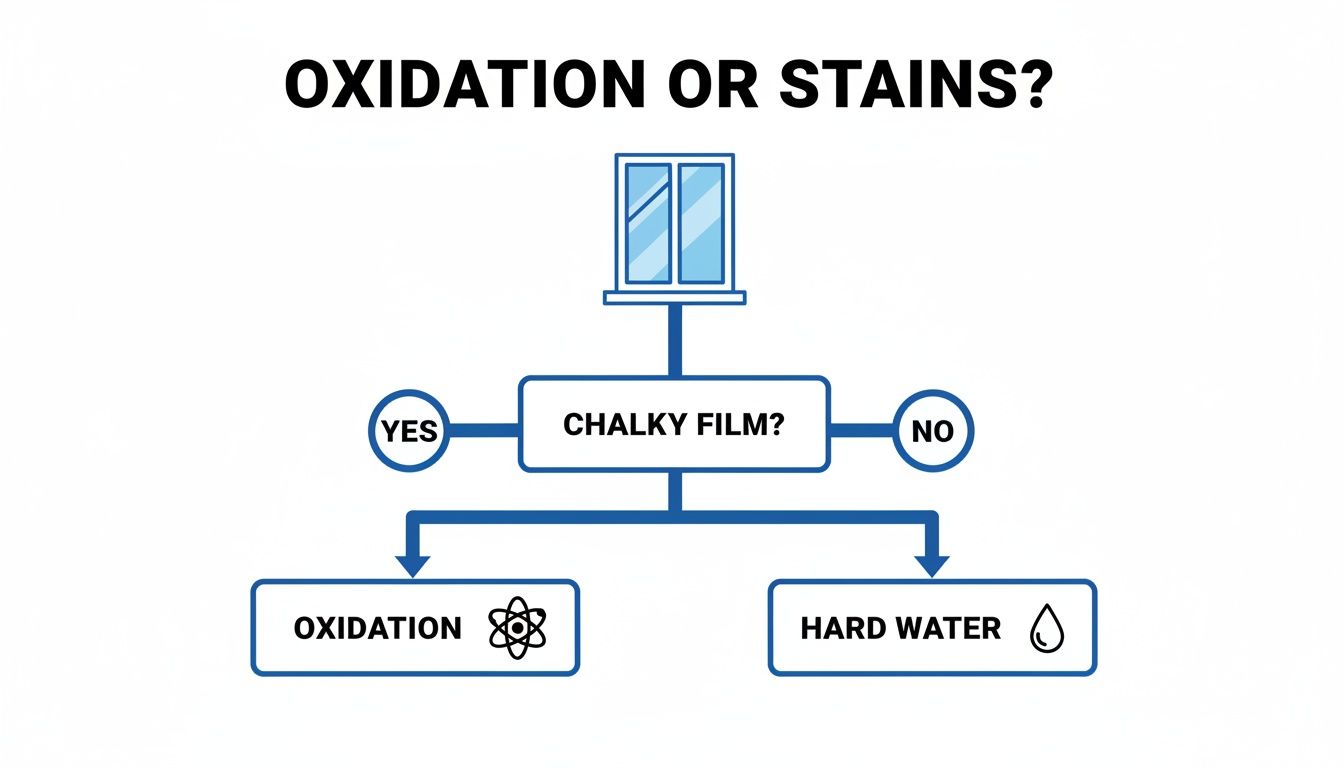
As the chart shows, that chalky film is the dead giveaway for oxidation, setting it apart from other common window issues.
This problem is more widespread than you might think. Oxidation on windows affects up to 70% of homes in sunny regions like Arizona and Nevada, where intense UV rays accelerate the degradation process 25% faster than in less arid climates. Professional Window Cleaning has been cleaning windows for over 26 years, and we see this issue daily in places like Scottsdale and Denver.
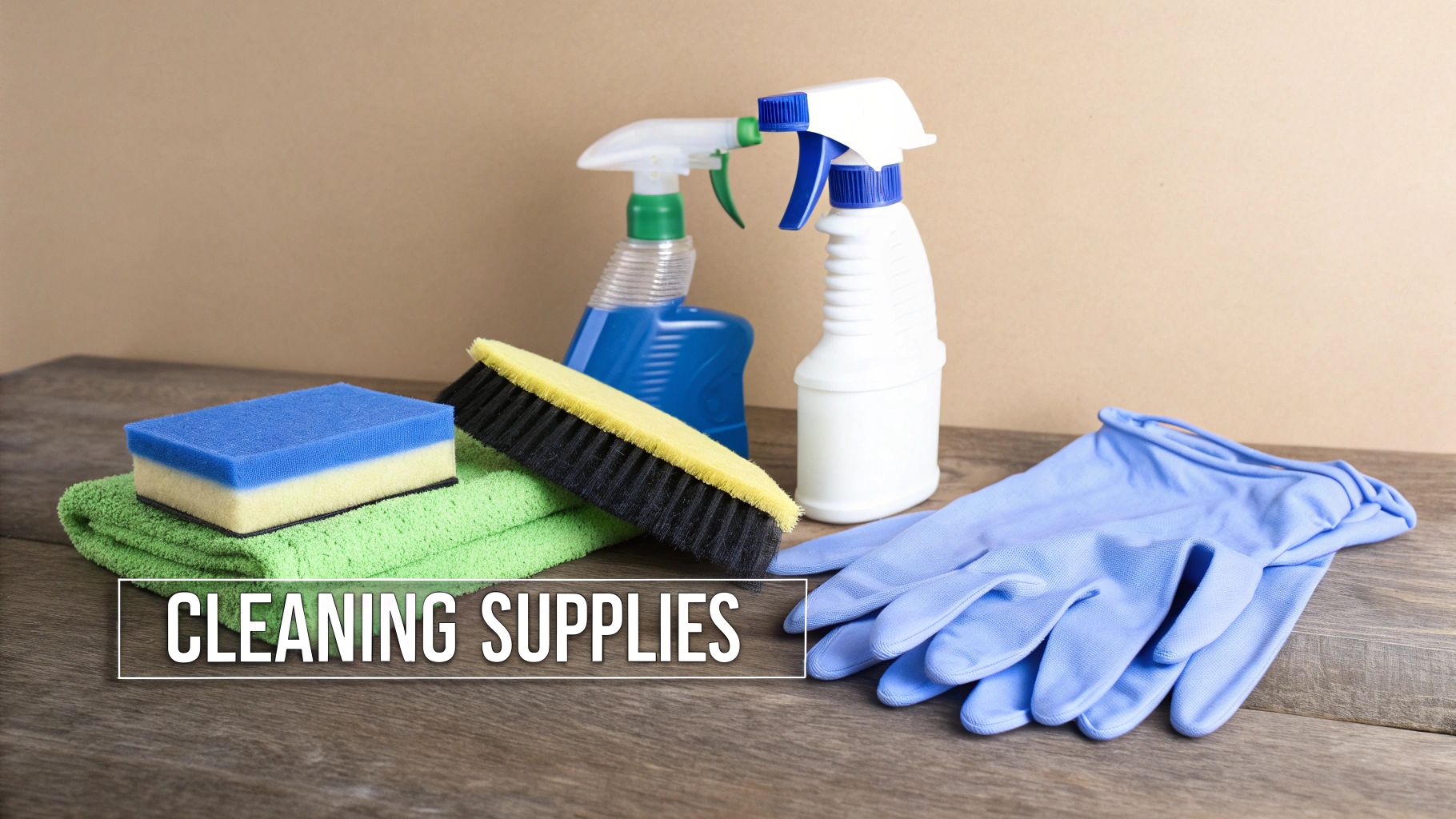
Before you even think about tackling that chalky residue on your window frames, the single most important thing you can do is gather the right tools. I've seen it happen too many times: someone rushes into the job with the wrong gear and ends up with scratched frames or, even worse, damaged glass.
Turning a simple DIY fix into a pricey repair is the last thing you want. Having everything ready from the start not only saves you a headache but makes the whole process go much smoother. The goal here is to dissolve the oxidation without harming the surface underneath, which means harsh, abrasive tools are a definite no-go.
Whether you're planning to use a simple household remedy or a heavy-duty commercial product, here’s a quick checklist of what you’ll need to get the job done right.
Remember, the goal is restoration, not damage. When it comes to cleaning the glass, there are ONLY 2 methods of window cleaning professionals use: the use of a squeegee, or the use of a pure-water system. Your focus with these supplies, however, is safely treating the frames.
Having these items on hand will help you work efficiently and keep your property protected. For homeowners in demanding climates like Las Vegas or Phoenix, where intense sun makes oxidation a constant battle, keeping a dedicated cleaning kit like this makes routine maintenance a whole lot easier.
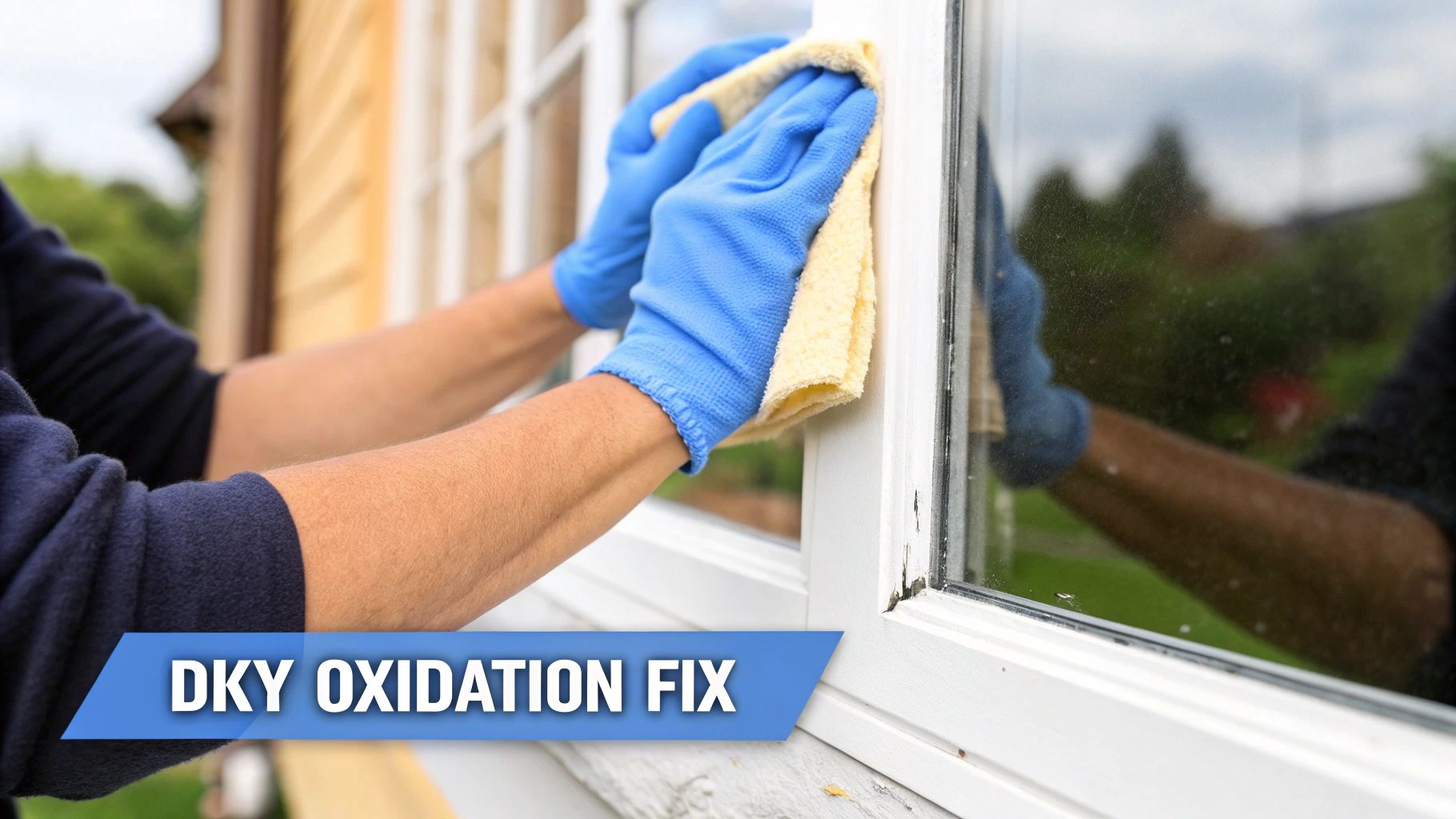
If you've caught the oxidation early while it’s still just a light, chalky film, you're in luck. A simple DIY approach can often bring your window frames back to life. These methods rely on common household ingredients, so you can get started right away.
The trick is to be gentle but persistent. Aggressive scrubbing will only damage the frame's finish, so take your time and let the cleaning solutions do the heavy lifting.
One of the best and safest places to start is with plain white vinegar. Its mild acetic acid is fantastic for breaking down the alkaline mineral deposits that create that hazy, oxidized layer. This technique works especially well for early-stage oxidation on both vinyl and aluminum frames.
Pro Tip from 26 Years of Experience: Always, always test any cleaning solution on a small, hidden spot first. Find an area on the bottom of the frame that nobody sees and make sure it doesn't cause any discoloration before you tackle the whole window.
This simple step can save you from a major headache. It's a non-negotiable rule for us on every single job, whether we're on a high-rise in Denver or a home in Scottsdale.
For your first attempt, a vinegar and water solution is the perfect starting point. It’s gentle, effective, and you probably already have a bottle in your pantry.
A key piece of advice: try to work out of direct sunlight. The sun's heat can make your cleaning solution evaporate too fast, leaving behind streaks and mineral deposits that just make your job harder.
If the vinegar solution didn't quite do the trick, a baking soda paste gives you a bit more cleaning power without being too aggressive. Baking soda is a mild abrasive that works as a gentle scouring agent—perfect for lifting more stubborn patches of light-to-moderate oxidation.
To make the paste, just mix baking soda with a little water until you get a thick, spreadable consistency, almost like toothpaste. Apply it directly to the oxidized areas with a cloth or your gloved fingers.
Let the paste sit for about 15-20 minutes, then use your soft-bristle brush to gently scrub the area. The fine grit of the baking soda helps lift the residue.
After scrubbing, rinse the frame thoroughly with clean water. You want to make sure no paste is left behind, as dried baking soda can leave its own white film.
While these methods are great, it's just as important to know what not to use. Some people wonder about stronger chemicals, but cleaners like ammonia should be used with caution on windows. Our detailed guide explains why. Sticking with gentler solutions first is always the safest bet.
When your vinegar and baking soda paste just isn’t cutting it, you’re likely dealing with a more serious case of oxidation. This is pretty common for properties that have baked in the sun for years or been exposed to harsh pollutants without much frame maintenance. At this point, it’s time to bring in the big guns: a commercial-grade oxidation remover.
These products are engineered with much stronger active ingredients designed to dissolve those stubborn, chalky layers that household remedies can't even touch. The trick is picking the right one, since a formula made for tough aluminum could be way too aggressive for vinyl or fiberglass frames.
The absolute key to getting this right is matching the cleaner to your window frame material. Always, and I mean always, read the product label carefully to make sure it’s compatible with your specific windows.
If you’re facing particularly stubborn buildup, you might need a specialized approach. While it’s designed for marine use, this guide to boat oxidation remover has some great insights into the types of powerful formulas out there, and many of the principles apply to window frames, too.
The professional window cleaning industry is massive—valued at $93.1 billion globally in 2024 and projected to hit $128.7 billion by 2030. Oxidation removal is a huge part of that, driving up to 25% of our service calls in sun-drenched states. Professional Window Cleaning has been cleaning windows for over 26 years, and we've seen firsthand how 65% of homeowners and a staggering 80% of commercial property managers in hot markets like Denver and Las Vegas battle this exact problem every single year.
Once you’ve got the right product, your application technique is everything. Don't rush it, or you could end up with patchy results or, even worse, damage to your siding or glass. Start by applying a small amount of the cleaner to a microfiber cloth—never directly onto the frame. This gives you more control and prevents drips.
Work in small, manageable sections, maybe two to three feet at a time. Apply the product and use a soft-bristle brush to gently work it into the frame with circular motions. This helps lift all that chalky residue. Pay close attention to the manufacturer's instructions on "dwell time," which is just how long the product needs to sit. Leaving it on too long can be just as damaging as not leaving it on long enough.
After the recommended time is up, rinse the section completely with clean water. This step is non-negotiable. You have to get every last trace of the chemical off to stop it from continuing to work and potentially damaging the frame. Finally, dry the area with a fresh microfiber cloth for a clean, professional finish. For homeowners in sun-scorched places like Scottsdale, these stronger products are often the only way to reverse years of sun damage.
While rolling up your sleeves for a DIY project can be satisfying, there are times when it’s smarter—and safer—to leave a job to the experts. Tackling severe oxidation, working on a ladder, or experimenting with harsh chemicals can quickly turn a simple cleaning task into a costly mistake or, worse, a serious accident.
It's one thing to handle a little bit of oxidation on a ground-floor window. It’s another thing entirely when the problem is widespread across your entire property. If every window frame is covered in that chalky, white film, you’re looking at days of intense scrubbing. A professional team, on the other hand, can often knock out the same job in just a few hours.
Let's be honest: balancing on a ladder while trying to put some muscle into scrubbing a window frame is a recipe for disaster. This is where the pros really shine. We come equipped with the right safety harnesses, commercial-grade ladders, and the training to navigate heights without putting ourselves, or your property, at risk.
At Professional Window Cleaning, we don't mess around. When it comes to cleaning glass, there are ONLY 2 methods of window cleaning professionals use: the classic squeegee for that perfect, hand-finished touch, or our advanced pure-water system. This system lets us use deionized water fed through long poles to safely clean windows several stories high, all from the safety of the ground. It's an ideal solution for tough oxidation on taller homes and buildings in cities like Phoenix.
When oxidation gets really bad, the damage can go far beyond what a simple cleaning can fix. That's when getting a professional eye on the problem is crucial to figure out the right next step.
Sometimes, that white film is more than just a surface issue. Deeply embedded oxidation or pitting in the frame material often requires more than elbow grease and a strong cleaner. If you've been scrubbing away with little to no improvement, it’s a clear sign you need a different approach. Trying to force it can cause permanent damage.
In cases where years of mineral buildup have etched the glass itself right alongside the frame oxidation, standard cleaning just won't cut it. That's a job for specialized techniques. Our team can provide professional glass polishing services to restore the clarity that you thought was lost for good.
Ultimately, knowing your limits is key. If the oxidation has caused significant damage, or your cleaning efforts aren't working, it might be time to weigh your options. Learning how to replace an RV window can even provide useful context for understanding the replacement process versus restoration. Calling in a seasoned team ensures the job is done right, protecting your investment and delivering a pristine look that DIY methods often can't match.
You've put in the work to scrub away that chalky, hazy film from your window frames. The last thing you want is for it to creep back in a few months.
Preventing window oxidation is all about staying ahead of the game with consistent, proactive maintenance. Think of it like waxing your car or sealing your deck—your window frames are exposed to the elements 24/7 and need a little TLC to stay in top condition.
The good news? It doesn't take a ton of effort. A couple of simple habits will dramatically extend the life of your frames and save you from having to repeat that deep-cleaning process anytime soon. It all comes down to creating a solid barrier between the frame material and the environmental troublemakers trying to break it down.
The single most effective way to stop oxidation in its tracks is simply to keep your frames clean. Grime, pollen, and pollutants are surprisingly corrosive. When you add moisture and UV rays to the mix, you’ve got the perfect recipe for oxidation. By washing that gunk away regularly, you stop the chemical reaction before it can even get started.
For homeowners in sunny, intense climates like Denver or Las Vegas, we recommend cleaning your window frames at least twice a year. Often, a simple wash with mild soap and water, followed by a thorough rinse and dry, is all it takes to remove the buildup that kicks off the oxidation process.
A professional window cleaning service doesn't just leave your glass spotless; a frame wipe-down is part of the package. This routine care is one of the easiest ways to keep your frames consistently protected.
Once your frames are sparkling clean and completely dry, applying a protective layer is your best defense against future oxidation. This barrier shields the surface from the two main culprits: moisture and UV radiation. You’ve got a couple of great options here, depending on your frame type and the finish you're going for.
Applying a sealant once or twice a year is a small investment of time that pays off big by keeping your windows looking pristine. It’s that final step that locks in all your hard work and keeps your home’s exterior looking sharp.
Professional Window Cleaning has been cleaning windows for over 26 years, and we've pretty much heard it all when it comes to tackling window oxidation. Here are a few of the most common questions we get, along with some straight answers to help you get the job done right.
Yes and no. You can absolutely get rid of the current layer of oxidation and make those frames look brand new again. But just like polishing silver, it’s not a one-and-done deal.
Think of it this way: the same environmental factors that caused the oxidation in the first place—sun, rain, pollutants—are still out there. Over time, it will try to come back. The best way to keep it at bay is to apply a quality sealant after you’ve cleaned the frames. That’s your best defense for slowing down its return.
Not if you do it the right way. The real key here is to stick with non-abrasive tools. We’re talking soft microfiber cloths and gentle brushes.
Where people get into trouble is by grabbing a harsh scouring pad, which can easily leave permanent scratches on the glass. Aggressive chemicals are another no-go, as they can compromise the seals on double-paned windows, leading to much bigger problems. If the buildup looks really heavy or you’re just not feeling confident, calling in a pro is always the safest bet.
This really depends on your climate. For folks in demanding, sunny areas like Phoenix or Scottsdale, we usually recommend a solid frame cleaning at least twice a year.
A consistent schedule like that clears away the dust and grime that kickstart the oxidation process before they have a chance to bond to the surface. It’s all about preventative maintenance.
If you're looking for a flawless, long-lasting result without the guesswork and risk, sometimes it's best to trust the experts. Professional Window Cleaning has the right tools and deep experience to restore your windows safely and effectively. Contact us today for a free estimate!
Read our blog posts regularly and keep learning.