
Care and Maintenance
How Long Does Window Cleaning Take
Wondering how long does window cleaning take? Get realistic time estimates for homes, offices, and high-rises, plus the factors that change every job.


You're standing in front of a window that looked clean a minute ago, then the afternoon sun hits it and every wipe mark, lint fiber, and missed corner shows up at once. That's the point where microfiber cloths for windows stop being a buzzword and start being a real tool, because the cloth either lifts the grime cleanly or leaves the glass looking worse than before.
Professional window cleaning has always come down to two methods, a squeegee or a pure-water system, and the cloth you use for detailing has to support that finish instead of fighting it. Since Professional Window Cleaning has been cleaning windows for over 26 years, the practical lesson is simple, good glass work is about controlled removal, clean edges, and the right towel for the job, not random wiping.
A homeowner can wipe a window until it looks clean from across the room, then the afternoon light shifts and every haze mark, lint fiber, and missed edge shows up again. That usually means the cloth moved the residue around instead of lifting it. Paper towels, old T-shirts, and cotton rags often leave lint or smear cleaner across the surface, so the glass never fully clears.

Microfiber behaves differently on glass because it is made from very fine synthetic filaments, usually polyester and polyamide, with fibers at 1 denier or less. One source notes that a square inch can hold about 200,000 tiny fibers. That density gives the cloth enough texture to pick up dust and grime instead of pushing it around, which is why the material works so well on windows. A UCSF fact sheet says that, for windows, only the cloth and water is necessary to clean and de-streak windows when the goal is particle removal rather than heavy chemical wiping (microfiber material and window-cleaning guidance, UCSF microfiber fact sheet).
Practical rule: if the glass looks clean until sunlight hits it, the problem is usually residue, not just “dirty windows.”
Microfiber does not solve every glass problem, though. On windows with heavy grease, baked-on film, or loose construction dust, the cloth can load up fast and start dragging contamination instead of removing it cleanly. That is where cloth selection matters, because a towel that works well for detailing can underperform on rougher jobs, while a different fabric or a more absorbent glass towel may finish the pass with fewer passes and less smearing. A simple consumer example of that streak-free mindset appears in the Nanak Car Wash streak-free shine guide, which follows the same basic principle of cleaning the surface without leaving fibers, drag marks, or extra product behind. That approach carries over to windows in homes, storefronts, and larger buildings.
A window can be spotless after a wash and still look wrong if the cloth is too thick for the job. In the field, the towel that feels luxurious in hand often leaves too much drag on glass, especially when the pane is already damp or the surface is holding fine residue. For routine window work, a split-fiber polyester/polyamide blend in the 250 to 350 GSM range usually gives the best balance of pickup and control, because it can lift debris without turning each pass into a wet smear.
GSM is the first spec to check. It describes cloth weight and density, and that changes how the towel behaves on glass. Lighter cloths below 250 GSM are often economy-grade and can feel thin on windows, while heavier cloths in the 400 to 600+ GSM range are better reserved for polishing or for glass that needs more residue removal than a normal detail pass. Professional guidance on cloth weight and durability also points to premium towels in the 325 GSM range, with lighter options around 200 GSM sitting in the economy category (cloth weight guidance, microfiber cloth guidance and durability notes).
The fiber blend matters just as much. A common professional build is 80% polyester and 20% polyamide, and that combination shows up in dedicated glass cloth products and listed towel specs for window cleaning (dedicated glass cloth product listing). Polyester gives the cloth its structure, while polyamide helps it handle water and stay in better contact with the glass.
| Microfiber Cloth Specifications by Use Case | |||
|---|---|---|---|
| GSM Range | Best For | Fiber Blend | Cloth Size |
| 200 to under 250 | Light-duty wiping, economy use, quick touch-ups | Polyester/polyamide blend, usually less specialized | Smaller or standard cloth sizes |
| 250 to 350 | Routine window cleaning, final detailing, residential and storefront glass | Split-fiber polyester/polyamide blend | About 15.5 to 16 inches per side for common glass cloths |
| 400 to 600+ | Heavier polishing, larger residue removal, nonstandard finishing tasks | Polyester/polyamide blend, usually plus more pile | Standard towel size, used more selectively |
Flat-weave cloths are usually the safer choice for glass because they create less drag and leave less texture behind than plush towels. That is why professional glass cloths often come in the 15.5 to 16 inches range with an 80/20 blend, and why some product specs put a similar towel at about 290 g/m² and roughly 44 g per cloth (dedicated glass cloth product listing). The construction varies a lot across microfiber products, including custom logo gym towels, and that is exactly why a towel that works well on a gym floor or in general wiping may still leave streaks on clean glass.
Residential glass, storefront glazing, and high-rise work don't respond to the same towel technique. The cloth is the same family of tool, but the way it gets used changes with the size of the pane, the visibility of the finish, and the access you have to the glass. The wrong method on the wrong property usually shows up in the same places, corners, lower rails, and edges where residue likes to hide.

Inside the home, microfiber shines when the goal is control. Use it to catch drips, detail around trim, and clean the edges after the main wash, especially on upper panes where a few missed streaks stand out every time sunlight moves across the room. The best habit is to keep one towel for damp contact and another for dry finishing, because a fresh dry section keeps you from redistributing loosened dirt.
Storefronts demand speed without looking rushed. Large panels show mistakes fast, so microfiber works best as a detail cloth after the main wash or squeegee pass, not as a replacement for a full glass-cleaning workflow. Many operators keep a dry finishing towel ready because the last wipe around the perimeter often decides whether the glass reads as polished or just “wiped.”
At height, cloth choice matters less than access and safety. The microfiber role is usually finishing, not full-surface scrubbing, because large, high panes are cleaner and more efficient when handled with the proper reach tools and controlled systems. A cloth that behaves beautifully on a kitchen window can be a poor substitute for the equipment and protocols needed on a high-rise façade.
Field note: the closer the glass is to eye level and direct sunlight, the less forgiving the final wipe becomes.
That's why the two-cloth habit shows up so often in professional work. One cloth lifts, the other finishes. If residue concentrates at edges and corners, slow down there instead of overworking the whole pane, because the extra passes usually create the very smear you're trying to remove.
The cleanest results come from a simple sequence, not from pressing harder. Start with a cloth that's only damp enough to pick up grime, then switch to a dry finishing towel before the loosened residue has a chance to settle back on the glass. That two-cloth system is why professionals can keep a pane looking sharp without flooding the frame or chasing drips across the sill.
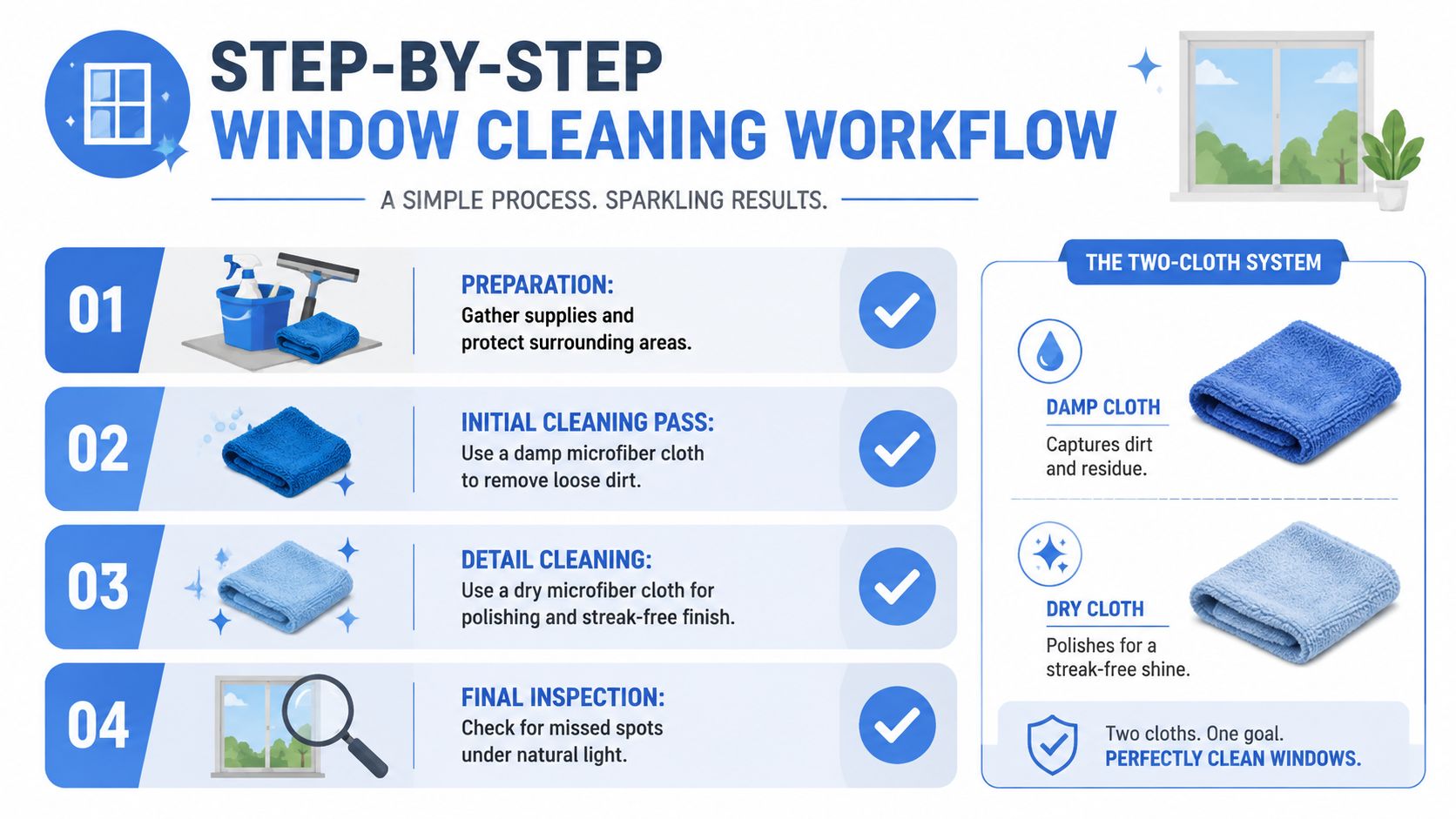
The internal reference everyone should read once is the best way to clean glass, because the same discipline applies whether you're handling a small bathroom pane or a larger exterior window. A microfiber cloth can be excellent, but only if it's used in a controlled pattern and changed before it gets overloaded.
Single-pane and double-pane windows need the same principle, but panes with dividers or muntins demand more attention at the edges. That's where a cloth can snag residue, drag lint into the corners, or leave a faint halo if you keep using the damp side too long. If the cloth starts to feel tacky instead of glide cleanly, switch to a fresh section immediately.
Don't chase every mark with more pressure. Change the towel surface first, then decide whether the glass actually needs another pass.
That approach is especially useful on windows where a bright room or reflective exterior makes even tiny smears obvious. The fewer times you overwork the same patch, the less likely you are to create streaking with your own finishing cloth.
A microfiber cloth can look clean and still work poorly if the fibers are clogged or heat-damaged. On glass, that shows up fast as drag, haze, or streaks that were not there when the towel was new. The split fibers are what do the fine pickup work, so keeping them open and clean matters more than how soft the cloth feels in your hand.
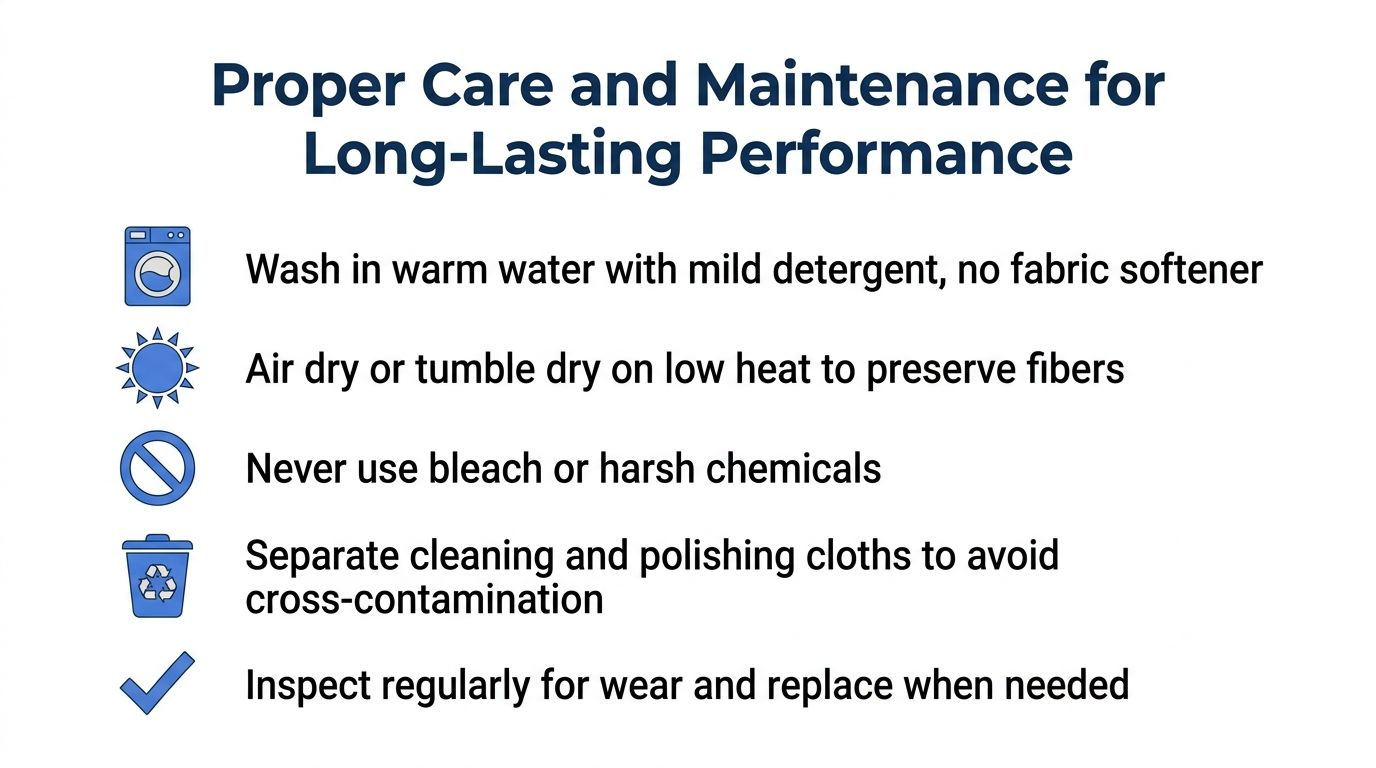
Wash microfiber in cold or warm water, not hot water, and keep it out of high heat in the dryer. Heat can flatten the fibers and leave the towel less effective on glass, especially when you need it to lift fine residue instead of pushing it around. Care guides for microfiber care guidance make the same point, gentle washing and low-heat drying preserve the cloth's structure better than aggressive cycles.
That matters because microfiber is valued for its absorbency and residue pickup. The UCSF microfiber fact sheet notes that the material holds a lot of water relative to its weight, but that advantage depends on the fibers staying intact and open. Once the weave gets cooked or packed with buildup, the cloth loses the performance that makes it useful on windows.
Use mild detergent, skip fabric softener, and keep microfiber separate from towels that shed lint or carry heavy grit. Fabric softener coats the fibers, and that coating works against the grabby action you want on glass. Dirt from other textiles creates the same problem, because it transfers back onto the pane during the final wipe.
A practical maintenance routine is laid out in microfiber cleaning towels, and the advice matches what holds up in the field. Keep the cloth residue-free, dry it properly, and store it where it will not pick up dust from the rest of the kit. A towel that comes out of storage loaded with lint can undo a clean wash in one pass.
A worn cloth changes how it feels before it fails completely. It starts to feel grabby or rough, then you notice weaker pickup, lint transfer, or streaking that did not happen when the towel was fresh. That is the point where the cloth has given all it can on glass and needs to be retired from finishing work.
Good care extends service life, but it does not restore a damaged weave. If a towel has lost absorbency or starts leaving marks after a proper wash, replacing it is the cleanest fix.
Microfiber is a strong default, but it isn't the final answer for every pane. On some jobs, a huck towel, surgical towel, fishscale cloth, or waffle-weave towel can finish cleaner, especially when the glass is already nearly dry and the last thing you want is even a hint of drag. Field discussions among window cleaners regularly point out that bone-dry matters more than brand loyalty on the final pass.
Some cloths behave better at the very end of the job. A slightly damp microfiber can smear instead of polish, especially on high-visibility glass or interior windows with hard sunlight where every wipe line shows. In those cases, a different weave can reduce lint and leave the surface looking clearer with less effort.
The wrong towel doesn't just underperform, it can make a good wash look unfinished.
That doesn't mean microfiber gets dropped from the kit. It means the smart operator uses microfiber for the cleaning work it does well, then switches fabrics when the glass is ready for the last bit of detailing. On windows that have already been squeegeed or cleaned by a pure-water system, the finishing cloth matters more than the marketing label on the package.
If you're building a practical toolkit, think in terms of finish quality, not brand habit. Microfiber is often the workhorse, but the final pass is where towel choice shows up most clearly.
Professional glass work gets easier when the cloth matches the surface and the cleaning method matches the job. If you want a window-cleaning team that understands the difference between a quick wipe and a true streak-free finish, visit Professional Window Cleaning and book a service that's built around the right tools, careful technique, and clean results.
Read our blog posts regularly and keep learning.