Care and Maintenance
Medium Bristle Brush Guide for Window Cleaning
Discover why a medium bristle brush is the ultimate tool for window cleaning. Learn about materials, pure-water systems, and expert selection tips.


Ever noticed how a professional window cleaner gets that perfect, streak-free shine every single time? For over 26 years, Professional Window Cleaning has known the secret isn’t some magic formula—it’s in the tools. Specifically, high-quality microfiber towels. While the main work is done with a squeegee or a pure-water system, microfiber is essential for the detailing that guarantees a flawless finish. Unlike old-school cotton rags that just smear dirt, microfiber is engineered to grab and trap dust, grime, and water.
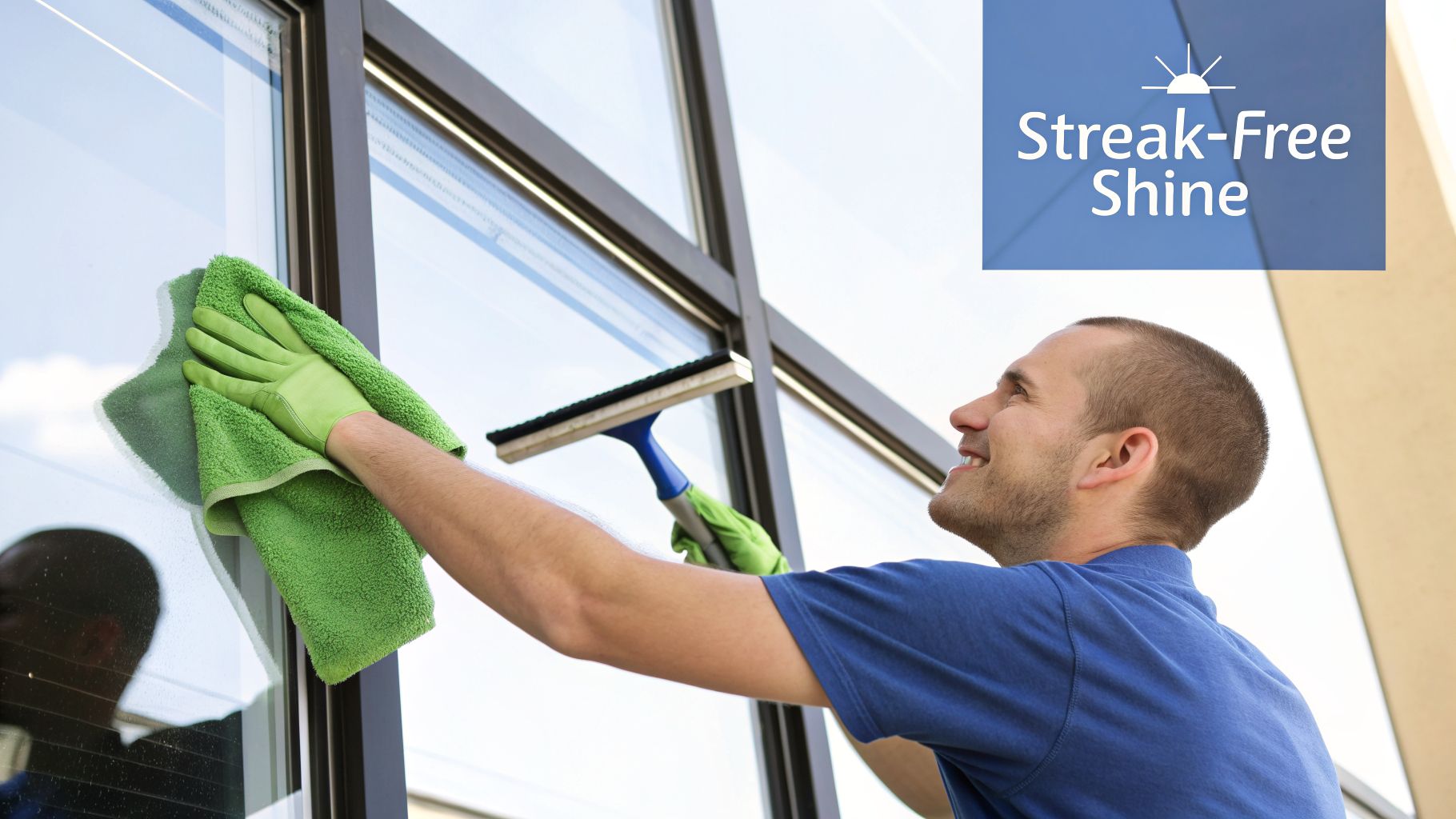
For a company like ours, Professional Window Cleaning, with over 26 years in the business, microfiber towels are non-negotiable. Now, let’s be clear: there are only two methods professionals use for cleaning the glass itself—a squeegee or a pure-water system. It's the microfiber towel that handles the critical finishing touches like detailing the edges and wiping down the sills. That's what delivers a truly professional result, whether we're on a residential job in Scottsdale or a massive commercial high-rise in Las Vegas.
The incredible performance of microfiber isn't just hype; it all comes down to the way it's made. These towels are woven from a blend of polyester and polyamide, which are then split into microscopic fibers. This smart design gives microfiber some serious advantages over traditional cleaning cloths.
Here’s a quick look at why it’s so effective:
This technology isn't brand new. It has its roots in developments from the mid-20th century, but by the 1970s, manufacturing advances made it possible to produce fibers smaller than 1 micron. This breakthrough allowed them to absorb up to 9 times their weight in water and clean 4 times the surface area of cotton. If you're curious, you can dive deeper into the detailed history of the fabric and its impact on the cleaning industry.
When you're comparing microfiber to traditional cotton towels for window cleaning, the difference is night and day. Here's a quick breakdown of why pros have made the switch.
| Feature | Microfiber Towels | Traditional Cotton Towels |
|---|---|---|
| Absorption | Can hold up to 9x its weight in water. | Absorbs liquid but becomes saturated quickly. |
| Lint & Streaks | Lint-free and designed for a streak-free finish. | Often leaves behind lint and can cause streaking. |
| Dirt Removal | Traps dust and grime within its fibers. | Tends to push dirt around rather than lift it. |
| Durability | Highly durable; can withstand hundreds of washes. | Breaks down faster and loses effectiveness over time. |
| Drying Time | Dries very quickly, preventing mildew. | Stays damp for a long time, leading to odors. |
Ultimately, microfiber’s superior design for trapping dirt and absorbing water without leaving anything behind makes it the clear winner for any serious window cleaner.
After decades in the field, we know that efficiency and quality come down to using the right tools for the job. For our crews at Professional Window Cleaning providing expert services in cities like Las Vegas, Phoenix, Denver, and Scottsdale, microfiber towels are essential for those finishing touches that truly define a professional service.
After we’ve squeegeed the glass, our technicians use a microfiber towel to wipe away any last drips from the sills and edges. This guarantees every inch of the client’s view is perfect. It's that final detail that separates an amateur job from a professional shine.
If you think all microfiber towels are the same, think again. Walking into a supply store and grabbing the cheapest option is one of the fastest ways to get frustrating, streaky results on a job. For professionals, choosing the right towel isn't just about cleaning—it's about efficiency and a flawless finish.
It all comes down to understanding what makes a great towel. The specs that really matter are the towel's GSM, its material blend, and the type of weave. Getting these right is what separates an amateur from a pro, whether you're cleaning homes in Denver or businesses in Phoenix.
Ever wonder what GSM means? It stands for grams per square meter, and it's simply a measure of the towel's density and weight. A higher GSM, typically in the 350-450 range, means you've got a plusher, more absorbent towel. These are your workhorses for soaking up excess water after a good squeegee pass, especially on big commercial storefronts like you’d find in Denver.
On the flip side, a lower GSM towel is thinner, which makes it perfect for light, final-touch polishing where you don't need a ton of absorption.
Next up is the blend—the ratio of polyester to polyamide. Polyester gives the towel its structure and scrubbing muscle, while polyamide is all about softness and absorbency. You'll find that an 80/20 blend (80% polyester, 20% polyamide) is the go-to for most pros. It strikes a great balance between tough durability and high performance. Some premium towels even push it to a 70/30 blend for an even softer, more absorbent feel.
The towel’s weave is what determines its texture and, ultimately, what job it’s best suited for. You wouldn't use a hammer to drive a screw, and you shouldn't use the wrong weave on glass. Our teams at Professional Window Cleaning know this better than anyone.
Waffle Weave: These towels have a distinct grid-like pattern of recessed squares. That design creates a massive amount of surface area, allowing it to trap and soak up water like a sponge. It’s the undisputed champion for drying glass without leaving behind annoying lint.
Plush Weave: Think of those incredibly soft, fluffy towels. That's a plush weave. Their gentle texture is perfect for the final buffing and polishing stages, helping you achieve that flawless, mirror-like shine on delicate surfaces.
Flat Weave: With their tight, smooth construction, flat weave towels are killers for cleaning glass and mirrors. They leave almost zero lint behind, making them ideal for a final wipe-down on a luxury home in a place like Scottsdale.
The best towels on the market often come from production hubs in South Korea, where they've perfected high-GSM, 70/30 polyester/polyamide blends that offer incredible softness and performance. For pros washing high-rises in Las Vegas or stadiums in Denver, these towels are a game-changer, delivering a lint-free finish every time. The history of this simple tool is actually pretty fascinating; you can read more about the unexpected journey of this humble towel to see how it became an industry staple.
Putting in the money for a quality set of towels upfront will pay you back tenfold in time saved and happier clients. While focused on another industry, this review of better boat washing and drying cloths offers some great insights, as the principles of absorbency and quality are universal. At the end of the day, knowing how to match the towel to the task is what makes all the difference.
Having the right microfiber cleaning towels is a good start, but technique is what really separates an amateur from a pro. This is where the two-towel method comes in—a cornerstone technique we use to guarantee a pristine, streak-free finish every single time. It’s a simple concept that delivers powerful results.
The method is exactly what it sounds like: you use one damp towel to clean away dirt and a second, completely dry towel to polish the surface to perfection. This one-two punch ensures no moisture or residue is left behind to cause streaks. While our teams at Professional Window Cleaning use a squeegee for the main glass, this two-towel method is essential for detailing edges and sills, leaving clients in Las Vegas and Phoenix with flawless results.
To really execute this method like a pro, you need to master the towel fold. Forget balling up your towel—that’s a rookie mistake. Instead, fold it in half, then fold it in half again. This simple move instantly gives you eight clean, usable surfaces from a single towel.
As one surface gets dirty, you just flip to a fresh one. This technique is critical because it prevents you from accidentally smearing dirt right back onto the glass you just cleaned. A single dirty spot on your towel can ruin an entire window pane, but this fold keeps your work clean and efficient.
The two-towel system is the final quality check on every job we do. The first damp towel clears away any remaining solution, and the second dry towel buffs the glass to a brilliant shine, catching any potential drips before they can even form.
This visualization breaks down the key factors to consider when selecting your towels, covering weight (GSM), blend composition, and weave structure.
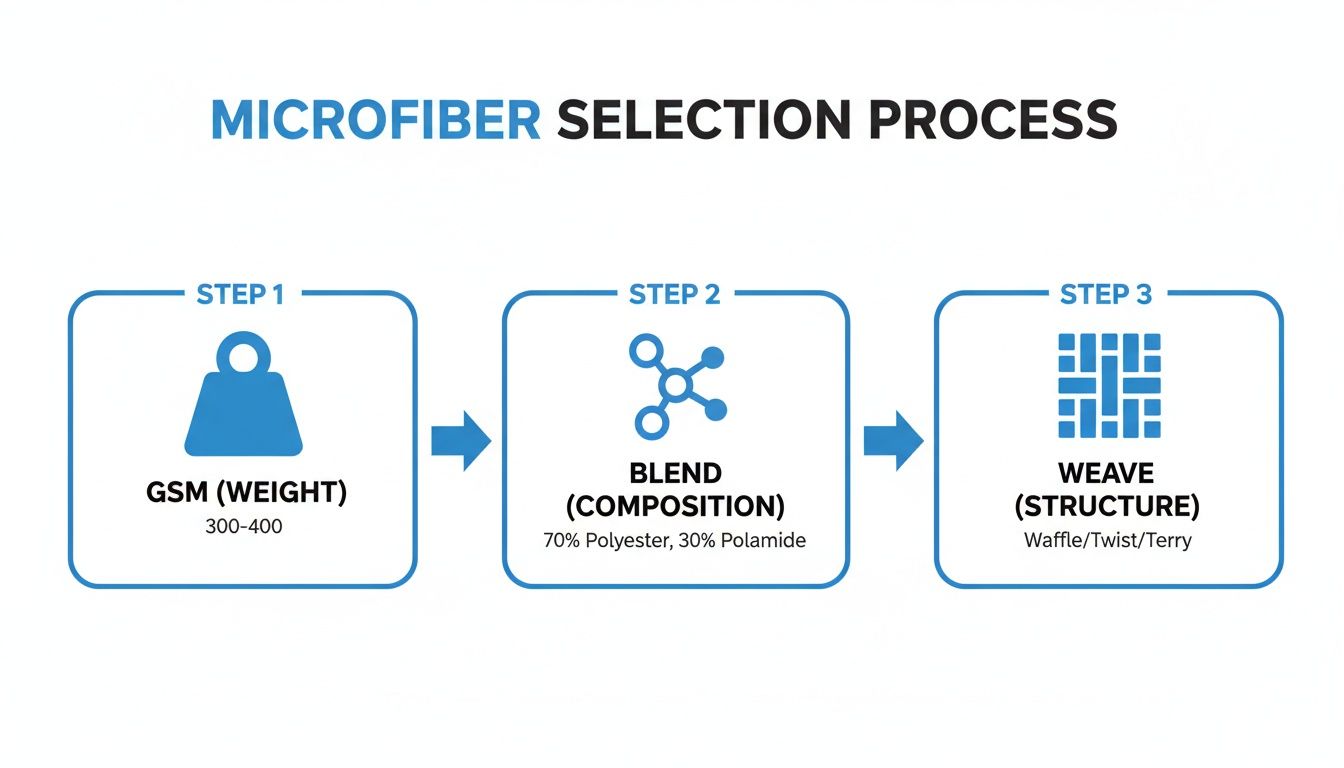
As you can see, the best towel for the job depends on a combination of its physical properties, not just one single attribute.
Now, let's put it all together. After the main glass surface has been cleaned with a squeegee or pure-water system, it’s time for the detail work that makes all the difference.
First, grab your damp towel. Take your first folded microfiber and lightly dampen one section with your cleaning solution or just water. Gently wipe down the edges of the window pane where the squeegee might have left a thin line of water. You'll also use this towel to clean the window frame and sill, catching any drips.
Immediately follow up with your second, completely dry microfiber towel. Using a fresh, folded surface, wipe away any remaining moisture from the glass edges and buff the area. This final polish is what eliminates every last streak and leaves the glass looking invisible. Whether in Scottsdale or Denver, this technique is a must.
One of the best things about microfiber is its unmatched efficiency. These towels can hold up to 9 times their weight in liquid and cover 4 times the surface area of old-school cotton towels. Studies also show microfiber captures 95% more allergens, ensuring a hygienic result. You can explore why microfiber is so important for detailing to learn more about these properties.
This simple, two-step detailing process elevates the quality of your work from good to truly exceptional. For a deeper dive into window cleaning fundamentals, check out our guide on the best way to clean glass for more professional tips.
Think of them as a critical tool, not just a rag. Protecting that investment is key to delivering consistent, professional results for clients in places like Phoenix and saving money in the long run.
The single most important rule is to wash microfiber only with other microfiber. Don't even think about tossing them in with cotton shop towels or old t-shirts. Mixing them is a recipe for disaster, as lint will clog the microscopic fibers and destroy their ability to grab dirt and absorb water.
When laundry day comes around, reach for a dedicated microfiber detergent or, at the very least, a mild, fragrance-free liquid detergent. Harsh chemicals, bleach, and scented soaps will either break down the delicate fibers or leave a residue that kills their performance.
Always stick to a warm water setting for the wash cycle. It might be tempting to use hot water to get them extra clean, but you’ll regret it. Hot water can cause the ultra-fine plastic fibers to melt slightly, permanently damaging the towel's texture and effectiveness.
Never use fabric softeners or dryer sheets. This is the cardinal sin of microfiber care. These products coat fabrics with a waxy film that clogs the very fibers you rely on to trap dirt. Once that happens, their performance can never be fully restored.
This isn't just a suggestion—it’s a non-negotiable rule our teams at Professional Window Cleaning follow religiously, whether they're prepping for jobs in Phoenix or Denver. It’s a simple step that makes a world of difference.
Once your towels are washed, how you dry them is just as crucial. The absolute best method is to air-dry them. Hanging your towels ensures the fibers stay open and fluffy without any risk of heat damage.
If you have to use a machine, you need to be strict.
Once your towels are completely dry, fold them and store them in a clean, dust-free container or on a designated shelf. This simple step prevents them from picking up contaminants before you even get to a job site. Follow this routine, and your microfiber towels will remain valuable assets that deliver a flawless finish for years.
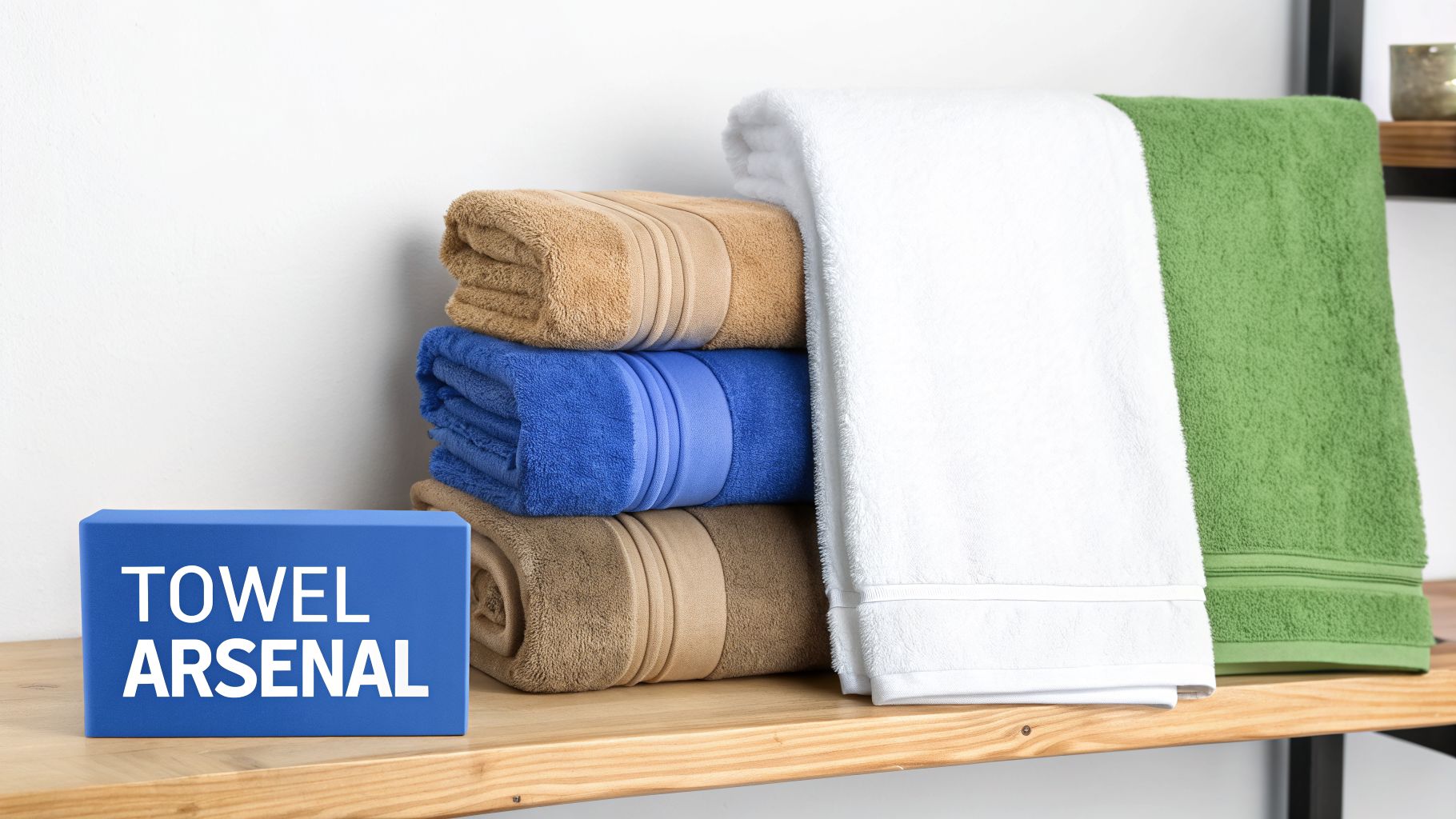
Any seasoned pro will tell you: your towels are just as important as your squeegee. A true professional’s van isn’t filled with a random pile of rags; it’s stocked with a dedicated toolkit of microfiber cleaning towels, each chosen for a specific job.
This isn’t about just having more towels. It’s about having the right towels. If you’re a solo cleaner handling residential jobs in a place like Scottsdale, your starting lineup will look different from a large crew's. You'll want a mix of plush polishing towels, workhorse waffle-weaves for drying, and some general-purpose cloths for frames and sills.
For a bigger team tackling commercial buildings in a city like Denver, you're not changing the types of towels, you're just scaling the operation. You need a much deeper inventory to cover more ground and guarantee every technician on site has a fresh, clean set for every job.
One of the simplest yet most powerful habits you can adopt is a color-coding system. It’s a game-changer for preventing cross-contamination and makes you look sharp and organized in front of clients. There’s nothing worse than accidentally wiping a perfectly clean pane with a towel you just used on a grimy sill.
A simple, effective system looks like this:
This isn't just about being tidy; it's about eliminating mistakes. It’s a core discipline that separates the amateurs from the pros.
For our teams at Professional Window Cleaning, a color-coded system isn't optional; it's a core part of our process. It ensures consistency and quality across every job, from a single-family home to a sprawling commercial complex.
Getting your arsenal started doesn't have to be complicated or break the bank. You want to begin with a versatile collection that covers the essentials, and you can always expand as your business grows. This applies whether you're working in Las Vegas or Phoenix.
As you build your kit, think about the full range of jobs you'll face. You'll need your everyday towels, but don't forget about tools for tougher situations. Having a specialized exterior microfiber towel on hand for those extra-grimy first-time cleans can be a real lifesaver.
Here’s a practical guide to building a starter inventory that will prepare you for almost any window cleaning job that comes your way.
Recommended Microfiber Towel Inventory for Professionals
| Towel Type | Primary Use | Recommended Quantity (Starter) |
|---|---|---|
| Plush Polishing Towel | Final buffing and streak removal on glass. | 5-10 towels |
| Waffle-Weave Towel | Drying glass after squeegee passes. | 10-15 towels |
| All-Purpose Terry Towel | Wiping frames, sills, and cleaning up drips. | 15-20 towels |
Starting with this foundation gives you a smart, cost-effective toolkit that’s ready for action. For a complete list of other must-have gear, check out our full guide to professional window cleaning supplies.
Even the most seasoned pros run into issues now and then. When it comes to using microfiber cleaning towels for that perfect finish, a few common frustrations can pop up. Let's tackle the questions we hear all the time so you can troubleshoot like an expert and get your detailing skills dialed in.
Streaking almost always boils down to one of three things: your towel is dirty, it's too wet, or there's leftover residue on the glass. It’s that simple.
Always fold your towel into clean sections and flip it often. The second you see that it's picked up grime, grab a fresh one. Don't even think about trying to get "one more window" out of it.
Another huge culprit is residue from the wash, especially fabric softener. That stuff is a microfiber killer; it clogs the fibers and will do nothing but smear gunk across the glass. Finally, make sure your cleaning towel is just damp, not sopping wet, and that your final polishing towel is completely dry. Getting this moisture balance right is non-negotiable for a streak-free shine.
At Professional Window Cleaning, whether our crews are on residential jobs in Scottsdale or large commercial sites in Phoenix, towel management is a core part of our training. A towel that’s too wet will leave streaks every single time, no matter how good you are with a squeegee.
Yes, absolutely—but never use the same towel you plan to use on the glass. Window frames, sills, and tracks are where the heaviest dirt, dust, and grime live. If you wipe a sill and then move to the glass, you’ve just transferred all that filth directly onto the pane. It’s a guaranteed recipe for a smeared mess and a frustrating do-over.
This is exactly why having a color-coded system isn't just a clever trick; it’s a professional standard.
This simple habit makes cross-contamination impossible and is a critical step for anyone serious about getting a truly professional finish.
A top-shelf microfiber towel can easily last for hundreds of wash cycles if you take care of it. You'll know it's time for a replacement when the towel tells you. It will start to feel stiff, lose that classic soft grip, or just won't soak up water like it used to. Professional Window Cleaning has seen firsthand how proper care extends towel life, a crucial practice for our teams in Las Vegas and Denver.
By sticking to the basic care rules—no fabric softener, no high heat, and always washing them in their own load—you'll get a much longer life out of your towels. It's what makes them such a cost-effective and essential tool for any window cleaner's kit.
For a truly flawless finish on your property's windows, trust the experts who have been perfecting their methods for over 26 years. Contact Professional Window Cleaning today for a free estimate and see the difference professional care can make! https://www.professionalwindowcleaning.com
Read our blog posts regularly and keep learning.