Care and Maintenance
Glass Restoration Services: Cost and Results
Glass restoration services explained: when to polish, when to replace, and what results, timelines, and costs to expect in 2026.


The popular advice to spray glass and polish it with paper towels skips the part that matters: removing dirty water before it dries. More rubbing won't fix a mineral deposit, and more detergent can leave you with more residue. Clean window cleaning starts with the right removal method, followed by clean tools, controlled drying, and a firm limit on what you can safely reach.
Professionals use two methods of window cleaning: a squeegee or a pure-water system. Choose by the pane's location and safe access, not by which bottle promises the brightest shine.
Squeegee versus pure-water cleaning
| Method | How it cleans | Best home use | Typical access | Main streak cause |
|---|---|---|---|---|
| Squeegee | Wet, scrub, then remove solution with a rubber blade | Interior panes and reachable exterior glass | Hands, step stool, or ladder | Solution drying or mineral rinse left on the glass |
| Pure-water pole | Brush agitation plus a purified-water rinse that air-dries | Exterior glass the pole can reach safely | Usually from the ground | Water that is not actually purified, or brush dirt redeposited |
The distinction is mechanical. Homebuilding's window-cleaning guide contrasts soapy water removed with a squeegee against purified-water-fed poles, which can clean some exterior windows without a ladder.
This comparison shows where each method fits.

A squeegee gives you close control over corners, edges, and indoor runoff. You wet the pane, loosen the soil with a washer sleeve, then carry the dirty solution off the glass with the rubber blade. It's a good fit for interior windows because you can protect the sill and remove the water rather than let it drain through the room.
Pure water changes the finishing step. A hose delivers purified water to a pole-mounted brush, which agitates the exterior glass before a thorough rinse. AXEON's explanation of pure-water systems describes why removing dissolved minerals lets the rinse dry with minimal mineral spotting, without routine towel detailing.
A garden hose connected to a brush isn't automatically a pure-water system. Nor does a long pole make every upper window accessible: trees, overhead wires, deep setbacks, and unstable footing can rule it out.
Practical rule: Use the blade where you need controlled water removal. Use pure water outside where the brush can reach safely and rinse thoroughly.
Newspaper, vinegar cocktails, and dry paper towels aren't additional professional methods. A cleaner may help loosen soil, but it doesn't replace agitation and proper removal. Rubbing a dirty pane until it looks dry can leave the same contamination spread more thinly.
When comparing written quotes, separate the cleaning method from what's included. AurenWell's guide to proposals for residential cleaning services is useful context for organizing scope, exclusions, and responsibilities. For windows, that means identifying interior versus exterior glass, screens, tracks, access, and stain treatment rather than comparing a vague promise to clean the windows.
The blade should remove a continuous sheet of solution, not skip across drying patches.
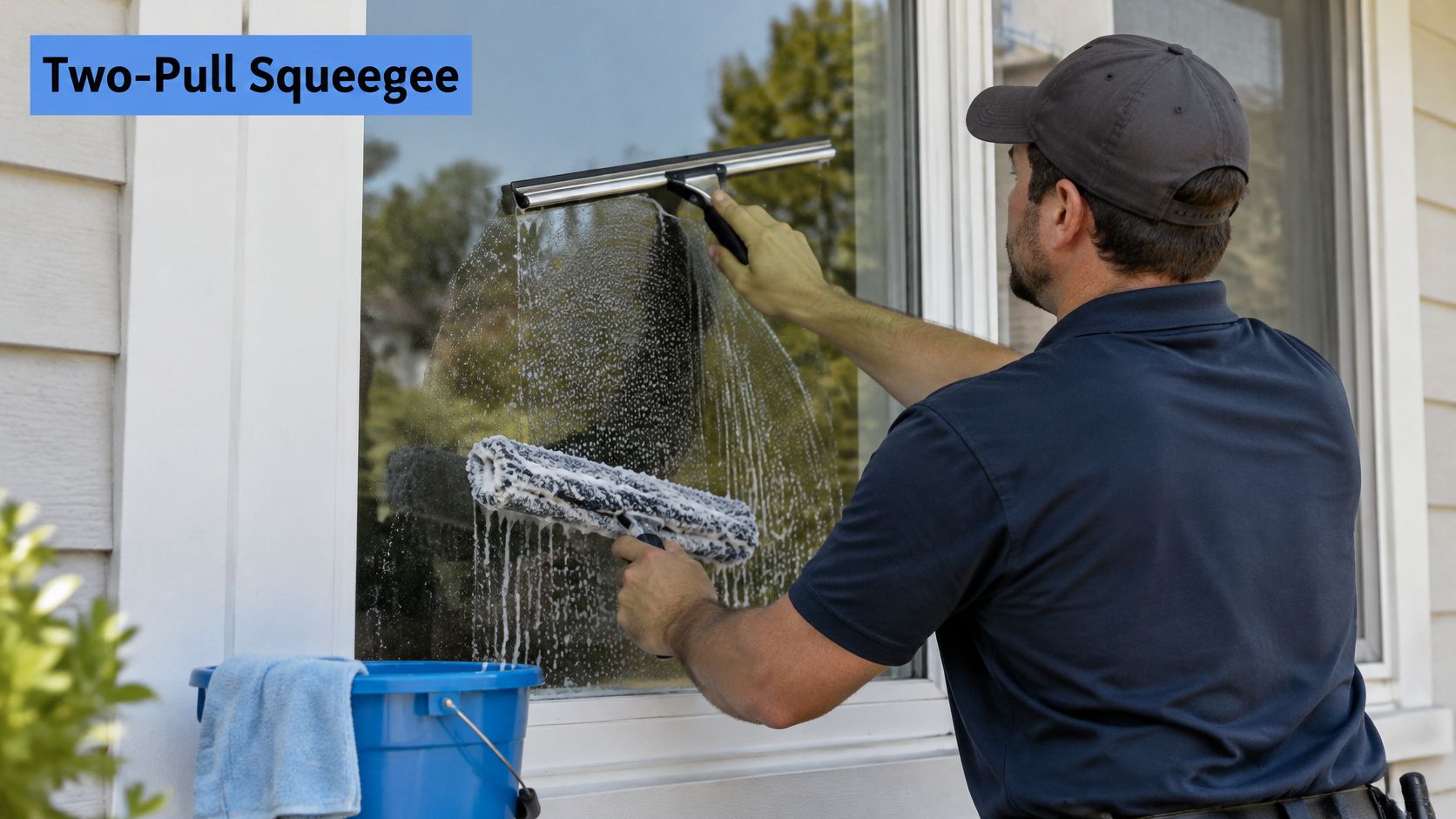
Use a washer sleeve, a squeegee with straight, undamaged rubber, a bucket, a mild glass-compatible cleaning solution, and separate microfiber cloths for detailing and dirty frame work. A towel used on a dusty sill shouldn't return to the pane. Keep clean cloths in a dry pouch or container rather than on the ground.
Choose the blade for the pane, not for maximum width. A broad squeegee becomes awkward between narrow muntins, while a short blade adds unnecessary passes on a wide slider. The rubber should flex evenly without requiring you to squeeze the handle hard.
Measure detergent according to the product's directions. A little slip helps the washer and blade move, but an excessively foamy mix takes more effort to remove and can collect around the seals. Don't keep adding soap to compensate for dirty bucket water.
Protect interior finishes before starting. Lay an absorbent cloth on the sill and keep the washer damp enough to clean without sending water into wood joints, electrical fittings, or flooring. Wash removable screens separately so dust doesn't transfer back onto the finished glass.
Hard water can undo otherwise good technique. Calcium, magnesium, silica, and other dissolved material remain after water evaporates. A pane may look clear while wet, then develop spots as the remaining droplets dry.
For a final rinse intended to air-dry, reserve purified water and verify the treatment system rather than judging clarity by eye. Global Formulation's glass-cleaner chemistry guide gives a treated-water conductivity target of less than 10–15 microsiemens per centimeter for near-zero dissolved solids. A conductivity meter checks the water; it doesn't tell you whether you've removed dirt from the frame or brush.
With squeegee cleaning, remove the solution completely and detail remaining edge water. Don't finish a properly bladed pane by spraying it with ordinary hose water. That leaves a fresh mineral load on the surface you just cleaned.
With a pure-water rinse, thoroughly remove loosened contamination. Dirty water can collect along the upper frame and run down afterward, so pay attention to the source of any late drips. More purified water won't compensate for a brush loaded with grit.
A clear wet pane isn't proof of a clean finish. Inspect it again after it dries.
Heat changes the size of the area you can manage. Say you're cleaning a west-facing slider in strong afternoon sun: the upper corner may dry while you're still washing the bottom. Move to a shaded elevation or divide the pane into smaller working areas.
If the solution flashes dry before the blade arrives, stop. Rewet the affected area, loosen the dried residue, and make a fresh pass. Pulling a blade across partly dry glass produces chatter and narrow drag marks rather than a clean finish.
Keep a clean detailing cloth available, but don't use it to polish away every streak. That habit can spread residue and hide the actual fault. First check whether the rubber has a nick, the solution dried, or the cloth picked up contamination.
Watch the movement and blade contact rather than trying to copy speed.
Most disappointing finishes start with a small set of mistakes:
A white ring that survives a correct wash and purified rinse needs assessment, not another dose of detergent. It may be a remaining deposit, damage beneath the deposit, or both. Soap removes soil; it doesn't reverse etched glass.
Avoid reaching straight for a razor, abrasive pad, or acid cleaner, particularly on unknown glazing. Identify the glass and coating before selecting a stain treatment. Where the surface is already damaged, a clearer explanation of the likely result matters more than a promise to remove every mark.
Hot-dry season window cleaning calendar
| Season | What builds up | What to do | What to avoid |
|---|---|---|---|
| Spring | Pollen, windblown dust, construction grit | Rinse loose grit, then squeegee or pure-water rinse | Scrubbing dry sand across the pane |
| Early summer | Fast-drying film and sprinkler splash | Shade, small sections, purified final rinse | Midday sun and hose-water rinse |
| After monsoon or heavy rain | Mud film and fresh mineral spots | Rinse grit, then clean once the glass is safe to work | Letting splash bake on for weeks |
| Fall | Leaves, track debris, settled dust | Clear sills, tracks, and weep holes, then wash glass | Ignoring frames while only wiping the center |
| Winter | Interior condensation and road film | Interior squeegee and a seal check | Razors or acids on coated or unknown glass |
A fixed spring-and-fall appointment isn't always enough for an exposed home in Arizona, Nevada, or Colorado. Use the calendar as a starting point, then respond to actual conditions. A nearby construction site, persistent sprinkler overspray, or a dusty storm can justify attention before the next planned wash.
Spring cleaning should start with the grit on frames and ledges, not with pressure against the pane. After a storm, inspect the glass once outdoor conditions are safe, and remove fresh splash before repeated drying makes it harder to address. Don't work during lightning, strong wind, or icy conditions just to stay on schedule.
In fall, clear accessible drainage openings without forcing a tool deep into the frame. During winter, distinguish surface condensation from fog trapped between panes. Moisture inside a sealed unit isn't something you can wash off from either side.
The all-seasons window-cleaning guide can help organize recurring maintenance, but your home's exposure should determine the actual work. Sheltered courtyard glass and roadside windows rarely collect the same soil at the same rate.
Dust and mineral film interfere with the view and the quality of daylight entering a room. Removing them can make the glass look clearer, but a wash isn't a substitute for exterior shading, suitable glazing, or sound seals.
A 2025 study of hot-arid homes indexed by PubMed found that window-to-wall ratio, window area, and window height strongly influenced daylight and energy performance. Its findings concern glazing configuration, not cooling savings produced by window cleaning. Don't translate a brighter-looking room into a promised reduction in the utility bill.
Coating caution: A seasonal change is a reason to adjust timing, not a reason to increase chemical strength.
Low-emissivity, tinted, smart, and photovoltaic glazing require product-specific care. Determine which surface is exposed and what the manufacturer permits before using pads, scrapers, or stain removers. Keep the approved mild method consistent rather than adding an aggressive chemical because summer deposits look stubborn.
DIY or hire by window situation
| Situation | DIY fit | Hire instead | Why |
|---|---|---|---|
| Ground-floor pane, intact glass | Yes, squeegee or pure water | Optional | Safe reach and ordinary soil |
| Exterior within pole reach from flat ground | Yes, pure-water pole | Optional | No ladder required when the site is clear |
| Second story or awkward ladder setup | No | Yes | Fall risk outweighs a clearer pane |
| Hard-water rings that survive a pure rinse | No | Yes | Mineral crust needs assessment, and etching may require restoration rather than washing |
| Unknown low-e, tinted, or coated glass | Only a mild wash if the maker allows it | Yes if the coating is unknown | Wrong pads and chemicals can mark the coating |
| Screens, tracks, and sills included | Partial | Yes for the full window | Glass-only wipes leave the frame looking dirty |
A clean ground-floor window doesn't prove the upstairs pane is a safe DIY job. Reach, footing, and the consequences of a slip change completely above a stairwell, retaining wall, or concrete patio. A ladder resting on a gutter or an improvised support against stucco isn't a reasonable workaround.
Use this visual as a stop check before carrying tools outside.

Before starting, check the whole task, including carrying equipment, opening the window, and taking a screen down. The pane itself may be easy to wash while the screen requires an unsafe reach.
If a check fails, arrange an assessment rather than finding a taller ladder. The guide to using a 16-foot ladder for window access provides additional context, but ladder length alone never establishes a safe setup.
Vaulted panes, construction residue on new glass, and suspected etching also deserve a handoff. These aren't merely larger versions of washing fingerprints off a kitchen window.
For high-rise or suspended-access work, treat the job as a fall-protection operation before a glass-cleaning task. Ask how the building owner and contractor will coordinate roof access, pedestrian protection, weather monitoring, and rescue arrangements.
For rope-descent work, ask for building-specific anchor identification and written anchorage information. The OSHA window-cleaning requirements summary explains that rope-descent systems require inspection at the start of each workshift and independent personal fall-arrest protection.
Licensing and insurance don't answer those site-specific questions. Confirm appropriate anchorage where suspended access is proposed, equipment inspection, worker communication, and an actionable rescue plan before booking. A contractor should also explain when a lift, suspended platform, ground-based pole, or interior access is more appropriate than rope descent.
A useful estimate starts with a clear description of the job. Record the pane count, number of stories, access restrictions, and any coating information. Note which spots remain after washing, and include photos of awkward corners or persistent marks.
Professional Window Cleaning has been in business since 1999 and serves Arizona, Colorado, and Nevada.
Separate routine washing from marks that may need assessment. Describe whether a stain appears to be on the accessible glass surface or trapped inside the glazing, and share any manufacturer information you have. Some cloudy patches may not come off through cleaning.
When comparing feedback, look for comments about the work scope, communication, and how concerns were resolved, rather than relying on star ratings alone. HomeProBadge's guide to compare house cleaning service reviews offers a way to assess service feedback. Window access and glass care still require separate consideration.
Professional Window Cleaning offers a satisfaction guarantee and will address customer concerns promptly. Keep your pane list with the appointment details so you can compare the result with the agreed scope of work.
Professional Window Cleaning provides residential window cleaning for homes and condos, along with a free estimate. Visit Professional Window Cleaning to request an estimate and identify which windows need routine washing, specialist assessment, or safer access.
Read our blog posts regularly and keep learning.