Care and Maintenance
Hand Held Brush Types for Window Cleaning Compared
Compare hand held brush bristle types, stiffness, shapes and handles for window cleaning, plus which brush suits homes, commercial sites and high-rises.


Your guests are coming over, the umbrellas are up, and the pool water looks perfect. Then you look down.
The deck has dark patches near the waterline, dirt packed into the texture, and that slick feel underfoot that tells you biofilm is building. That's the part many homeowners underestimate. Pool deck cleaning isn't just about curb appeal. It's about keeping the surface safer to walk on, protecting the material from avoidable wear, and making sure the area doesn't stay slippery during or after the job.
That matters in the hot, high-use climates we know best, including Phoenix and Las Vegas, where pool areas see constant sun, splash-out, foot traffic, and sunscreen residue. A deck can look mostly fine from a distance and still be carrying the exact growth and grime that make it risky.
By mid-summer, a pool deck can become the riskiest part of the backyard. The water may be clear and the furniture may be set, but a thin film of sunscreen, splash-out, dust, and early organic growth can change how the surface feels underfoot long before it looks dirty.
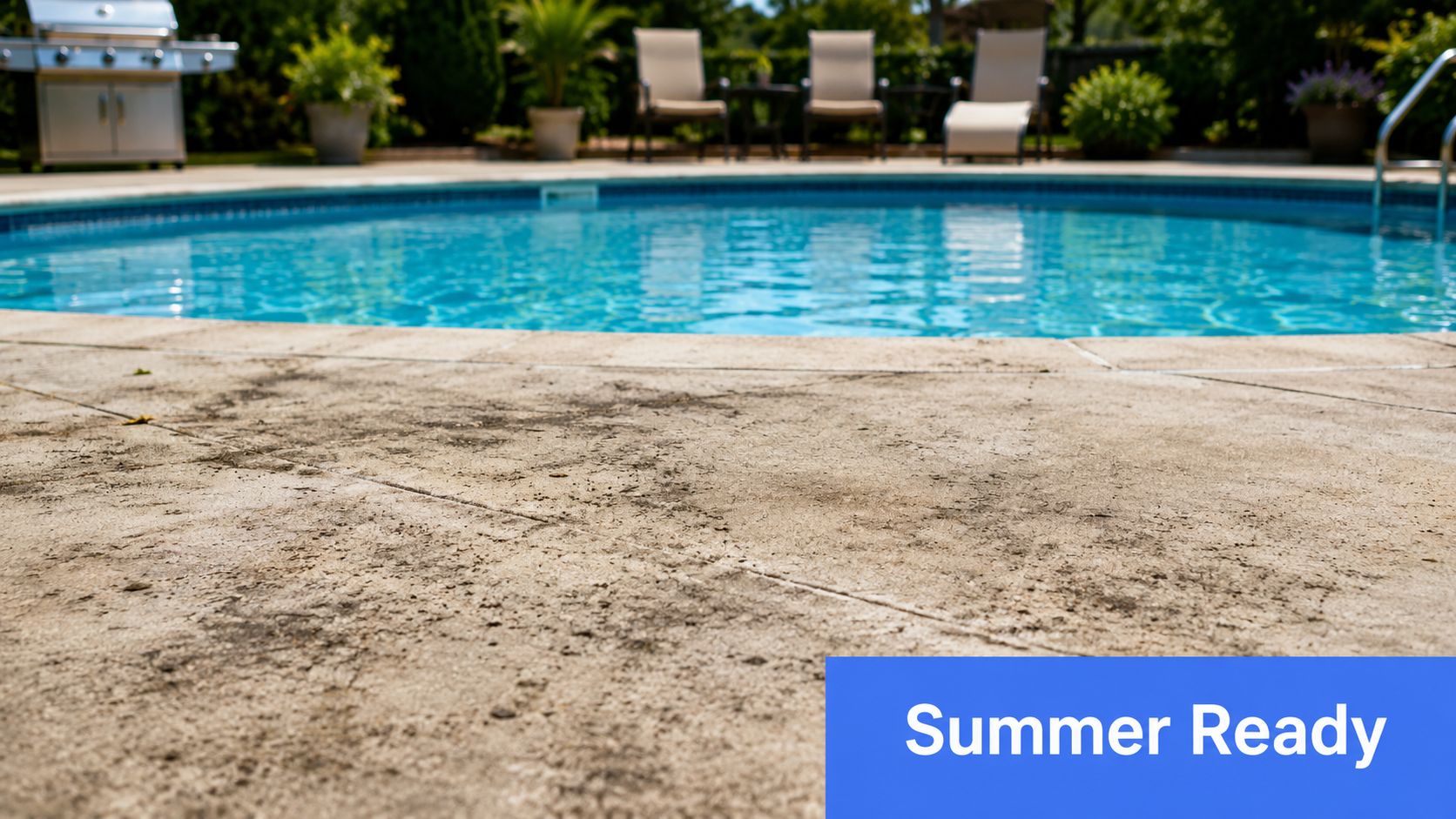
A well-maintained deck improves the look of the whole pool area, but the bigger reason to stay ahead of cleaning is traction. On concrete, pavers, spray deck coatings, and sealed finishes, buildup often shows up first as a change in footing. Bare feet start to drag. Steps feel slicker than they should. Joints stay darker after rinsing. In hot service areas like Phoenix and Las Vegas, intense sun dries the surface fast, but shaded edges, overspray zones, and low spots still hold the residue that causes slips.
Clean also means the surface is performing the way it should.
A deck with light staining can still be serviceable. A deck with biofilm, mildew, or soap residue is a safety problem. That distinction matters for homeowners, short-term rental operators, and anyone hosting guests around the pool. If someone slips after a cleaning because residue was left behind or runoff collected in a low area, the deck was not finished correctly.
The first pass should always be an inspection, not just a rinse. Look for green cast on concrete, dark lines in paver joints, chalky residue near the waterline, and slick patches at entries and steps. Those areas usually tell you whether the issue is dirt, mineral deposit, organic growth, or a mix of all three.
In the field, surface condition drives the plan. A textured coating may hide buildup until it gets wet. Smooth sealed concrete often looks better than it behaves. Older pavers can hold grime below the surface and stay slippery even after a quick wash if the joints are not cleaned out properly.
Practical rule: If the deck feels different under bare feet than it did after a proper cleaning, schedule maintenance before that change turns into a fall risk.
Cleaning a pool deck creates a short window where the area can be more hazardous than it was before the job started. Water, loosened grime, and detergent residue all reduce traction until they are fully rinsed away and the deck has dried. That is why a good cleaning process includes access control and a reopening check, not just stain removal.
Use a simple safety standard:
That last step is where experience shows. The job is done when the deck is clean, the runoff is cleared, and the walking surface is dry enough to use safely.
The prep work determines whether pool deck cleaning goes smoothly or turns into a mess. Skip it, and you can push debris into the pool, spot nearby plants, or waste time fighting dirty runoff that keeps recontaminating the deck.
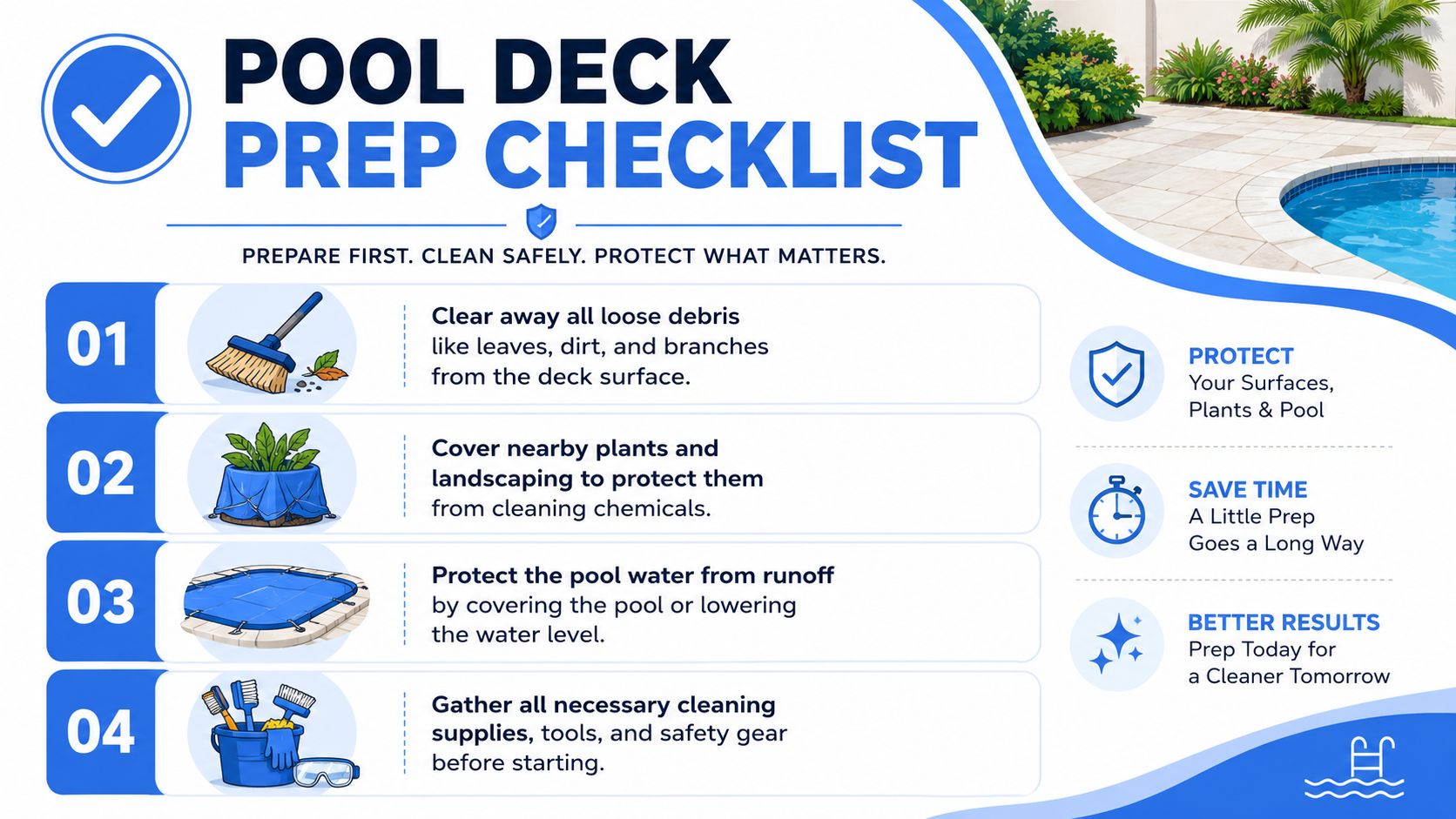
Start by removing furniture, rugs, planters, toys, umbrellas, and anything else sitting on the deck. A professional setup leaves the whole field open so you can see stains, drainage patterns, and trouble spots near coping, expansion joints, and steps.
Then dry-remove debris before introducing water.
Published contractor guidance recommends a material-specific sequence that starts by clearing debris, then pre-wetting and testing a small inconspicuous area before using a surface cleaner or soft-wash approach. That same guidance warns that overpressurizing can etch concrete or loosen pavers, as explained in this pool deck cleaning workflow guide.
The next job is containment. Water always goes somewhere, and around a pool, that “somewhere” matters.
If you're using any cleaning chemistry, even mild products, plan for overspray and runoff. Cover sensitive plants if needed, pre-wet surrounding landscaping, and think through where dirty rinse water will travel. Near the pool edge, use lower force and more control. The goal is to clean the deck, not push grime and chemicals into the water.
Here's a quick setup video that shows the kind of methodical prep many homeowners skip:
You don't need every tool on a contractor trailer, but you do need the right basic setup.
Don't start with pressure. Start with control. Most pool deck damage comes from rushing the setup, not from the final rinse.
A pool deck can look clean and still be risky under bare feet. That is why the right method is about more than appearance. It also has to protect traction, control runoff, and avoid leaving behind a slick film that turns a clean deck into a liability.
Different surfaces fail in different ways. Concrete gets etched and striped. Pavers lose joint sand and start shifting. Wood raises grain and creates splinters. Tile can turn dangerously slick if cleaner residue is left behind. In Phoenix and Las Vegas, I also see decks that dry fast on the surface while residue stays trapped in texture, which gives homeowners a false sense that the area is ready for traffic.
| Deck Material | Recommended Cleaner | Pressure Washer PSI | Best Nozzle |
|---|---|---|---|
| Concrete | Surface-appropriate cleaner for organic growth and grime | Lower pressure, kept appropriate to the substrate | Fan nozzle |
| Pavers | Gentle cleaner with careful rinse control | Lower pressure to avoid joint disruption | Fan nozzle |
| Wood | Mild wood-safe cleaner | Low pressure only | Wide fan nozzle |
| Composite | Manufacturer-safe deck cleaner | Low pressure if used at all | Wide fan nozzle |
| Tile | Tile-safe cleaner matched to finish | Conservative pressure with distance and control | Fan nozzle |
Match the method to the surface, then check the walking condition before reopening the area. A deck that looks bright but feels slick is not finished.
Concrete and spray-deck surfaces handle cleaning well if the operator stays controlled. Problems start when the wand gets too close, the pressure is too aggressive, or the rinse leaves dirty slurry drying back into the texture. That last part matters around pools because dried residue can cut traction, especially in shaded spots or where sunscreen and body oils collect.
For standard concrete, a surface cleaner usually gives the most even result across open areas. Save the wand for edges, drains, and tight corners. On coated, colored, or decorative finishes, test first and keep both pressure and dwell time conservative. Some surfaces can lose color or develop a patchy look long before they show obvious damage.
A safer concrete process usually looks like this:
Pavers need a lighter hand than many homeowners expect. Too much pressure can wash out joint material, weaken the setting bed, and leave low spots that hold water. Around a pool, standing water is not just a maintenance issue. It increases slip exposure and speeds up surface wear.
Natural stone adds another layer of caution because cleaner choice matters as much as pressure. Some stones can discolor, dull, or react badly to the wrong product. If your pool area includes tile or stone sections, this guide with expert advice on tile care lines up with what we use in the field. Start with the least aggressive option that will remove the soil.
A good rule on pavers and stone is simple. Clean to preserve the surface profile, not just the color. Once you smooth out texture, you can lose grip even if the deck looks better from across the yard.
Wood near a pool needs patience. High pressure can fur the surface, open the grain, and leave boards rough enough to catch bare skin. That is a cleaning mistake and a safety issue.
Use a wood-safe cleaner, brush agitation where needed, and a low-pressure rinse with a wide fan. Composite usually tolerates moisture well, but many products still hold residue if they are over-soaped or poorly rinsed. Follow the manufacturer guidance, then do your own final check for slipperiness after the deck dries and again after a light re-wet. Some composites feel fine dry and slick up fast once splash water hits them.
Mixed-material decks are where rushed DIY work usually goes sideways. A textured concrete field, smooth tile border, and decorative stone accent cannot all be cleaned the same way. The safest approach is to divide the deck into zones and clean for the most delicate adjacent surface.
Tile borders deserve extra attention because they often sit near constant splash zones. Any leftover cleaner, body oil, or loosened grime can create a slick edge right where people step in and out of the pool. Keep pressure controlled, rinse more than once if needed, and confirm the surface is not slippery before opening the area back up.
In desert markets like Phoenix and Las Vegas, hard water film and sun-baked residue tempt people to use more force than the surface can handle. That usually creates a cleaner-looking deck with worse footing. Controlled cleaning wins here. So does a final safety check.
A pool deck can look clean from the patio door and still be risky under bare feet. The stains that hang on the longest are often the same ones that create the worst slip hazards, especially around steps, ladders, and the path from the waterline to the back door. Treat stain removal as a safety job first and a cosmetic job second.
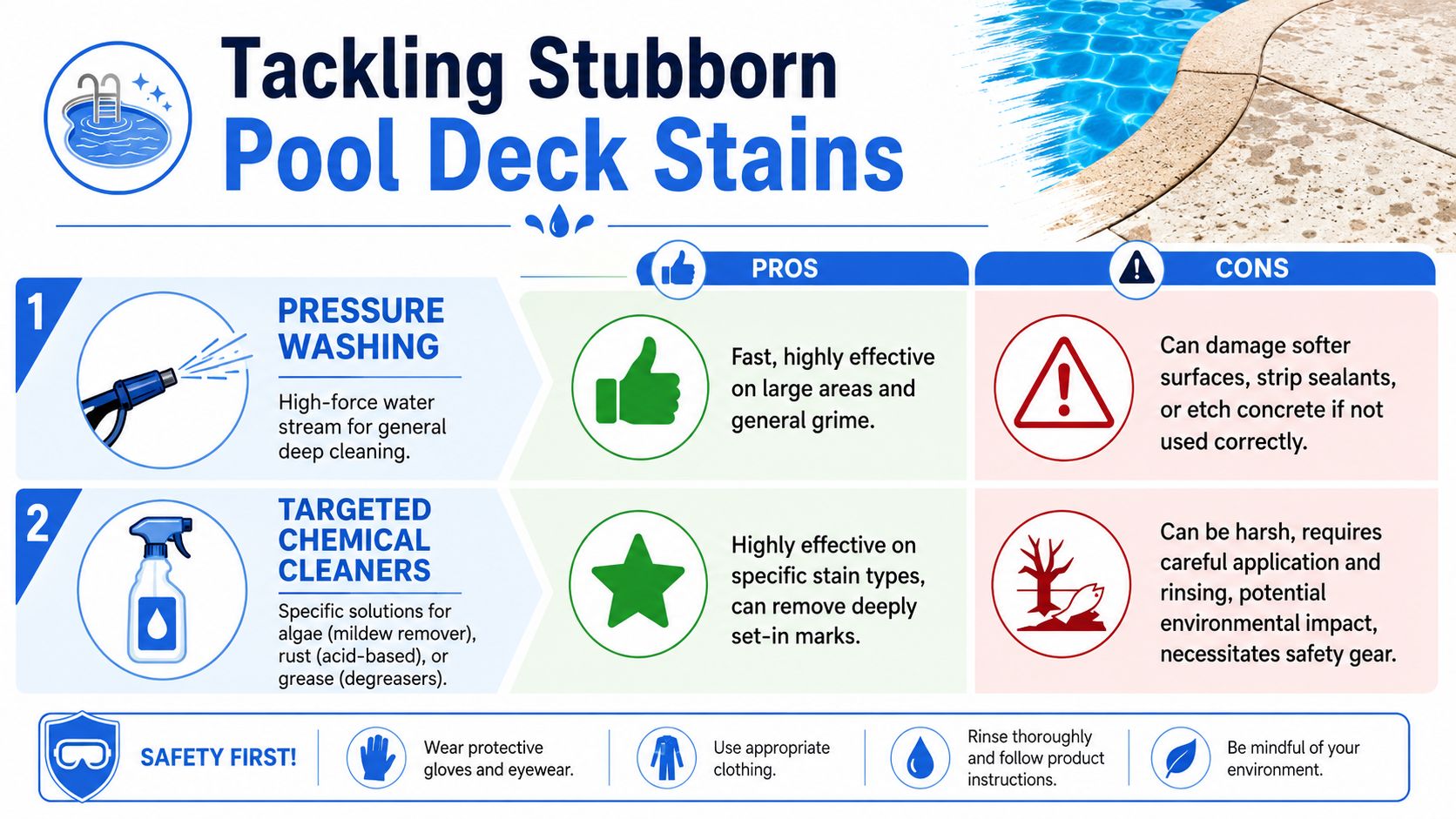
Organic buildup usually shows up in splash zones, shaded corners, and spots with poor drainage. On a pool deck, it rarely stays a visual issue for long. Once it gets wet, footing changes fast.
On concrete and spray-deck surfaces, the better approach is to kill the growth first, then remove it with controlled cleaning. As noted earlier, pros often pair soft-wash chemistry with moderate surface-cleaner pressure instead of trying to blast the stain out of the texture. In Phoenix and Las Vegas, that matters even more because sun-baked residue can look dry and harmless until splash water hits it and the deck turns slick again.
Rinse thoroughly. Then re-wet the cleaned area and check traction before regular foot traffic resumes. That second check catches a lot of DIY misses.
Rust usually comes from chair legs, planter bases, umbrella stands, or metal items left wet on the deck. Pressure washing will clean around the stain, but it rarely removes the stain itself.
Use a rust remover made for the exact surface and test it in a discreet spot first. Decorative concrete, pavers, and natural stone can react badly to the wrong acid or too much dwell time. I tell clients the same thing we follow on service calls. Spot treat, rinse well, and inspect the surface after it dries and after a light re-wet. Some removers solve the color problem but leave the area smoother than the surrounding deck, which is a liability near a pool.
These are some of the most common pool deck stains and some of the easiest to underestimate. Sunscreen, food grease, and body oils bind dust to the surface and leave a thin film that feels almost invisible until someone steps on it with wet feet.
A degreasing cleaner, proper dwell time, brush agitation, and a full rinse usually do more than pressure alone. On porous concrete, repeat treatment may be needed. Keep rinse water moving off the deck instead of letting dirty solution dry in place, especially near entry points and handholds where slips tend to happen.
Cleaning frequency also matters. Homeowners who already follow a house pressure washing schedule that fits the local climate usually have fewer baked-in residue problems on surrounding hardscapes, including pool decks.
For wood-adjacent deck areas or homeowners dealing with algae-prone boards and slippery organic buildup, this guide on the best way to clean decking is useful because it highlights the same practical point seen on pool decks: remove the organism, don't just brighten the surface.
If a stain keeps returning in the same spot, check the cause before treating it again. Planter runoff, furniture corrosion, splash-out patterns, and drainage issues usually matter as much as the cleaner you use.
A pool deck usually gets ignored right up to the day someone slips near the steps, tracks grime into the water, or points out that the surface feels slick even after a rinse. That is why a maintenance schedule needs to do more than keep the deck looking clean. It needs to keep footing predictable through the whole season.
In Phoenix and Las Vegas, long swim seasons change the workload. Heat dries some spills fast, but shaded corners, splash zones, and areas near drains can stay slick longer than homeowners expect. A good schedule accounts for both appearance and post-cleaning safety, because a bright deck that still feels slippery is still a problem.
Most pool decks do better with scheduled cleaning than with occasional heavy washing. Waiting until the surface looks dirty usually means oils, mineral film, and organic residue have already started bonding to the texture. At that point, removal takes more pressure, more chemical dwell time, and more care to avoid leaving a slippery residue behind.
For many homes, a deeper cleaning once or twice a year is a practical baseline. Homes with frequent pool use, lots of landscaping debris, or limited sun exposure may need attention more often. The right interval depends on how the deck dries, how often people use it barefoot, and whether runoff from planters or hard water keeps recontaminating the surface.
Tie pool deck care to the rest of your exterior maintenance calendar so surfaces stay cleaner with less aggressive treatment. A coordinated plan usually prevents the cycle where dirt from walls, patio covers, and walkways keeps washing back onto the deck. This guide on how often to pressure wash your house as part of a broader exterior maintenance schedule helps frame that bigger picture.
Before peak swim season, clean for traction as much as appearance. During the season, keep up with light rinsing and spot treatment. After heavy use periods, monsoon dust, or wind events common in the Southwest, inspect the deck again and confirm it dries with good grip underfoot. That last check matters. Post-cleaning safety is part of the job.
DIY pool deck cleaning makes sense for routine upkeep. It stops making sense when the project involves heavy biological growth, delicate surfaces, runoff concerns, or a high chance of damage from the wrong equipment.
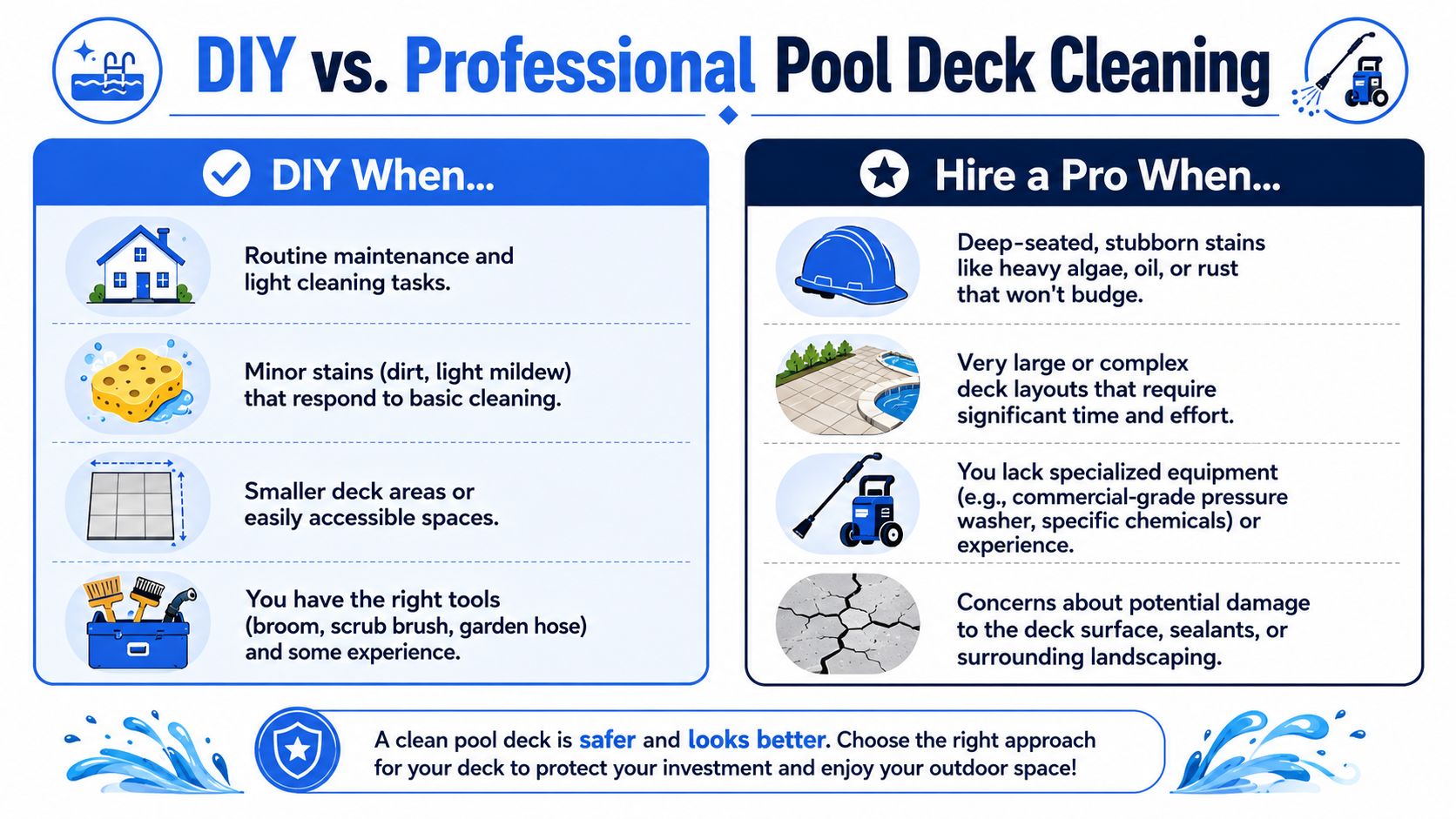
A homeowner can usually handle the work safely if the deck is in otherwise good condition and the problem is limited to light dirt, early mildew, or seasonal grime.
Good DIY jobs share a few traits:
Some jobs need more than effort. They need judgment, equipment, and liability awareness.
Call a professional if any of these apply:
The larger industry context supports that decision. In the United States, the Swimming Pool Cleaning Services industry is projected to reach $8.8 billion by the end of 2026, and there were 78,817 active businesses in 2025, according to IBISWorld's industry profile for swimming pool cleaning services. That scale reflects how many property owners rely on specialized maintenance instead of taking risks with high-use outdoor surfaces.
Homeowners often compare DIY against hiring based on labor alone. A better comparison is risk versus control.
A DIY wash can save money if the deck only needs light maintenance and you know the material. But if you etch decorative concrete, loosen paver joints, bleach a sensitive finish, or leave the deck slick with residue, the “savings” disappear quickly.
That's also why broader exterior cleaning experience matters. If you're evaluating who should handle the work, it helps to review what separates qualified crews from basic wash-and-go services. This overview of best pressure washing services gives a solid framework for what to look for.
For owners managing homes or commercial properties in Las Vegas, Phoenix, or Denver, local conditions matter too. Intense sun, heavy seasonal use, windblown dust, hard-use entertaining areas, and mixed deck materials all change how a surface should be cleaned.
The best pool deck cleaning job is the one that leaves the surface cleaner, safer, and undamaged. If you can't confidently get all three, bring in a pro.
If your pool deck, windows, and exterior surfaces all need the same level of care, Professional Window Cleaning can help. The company has been cleaning windows for over 26 years and serves property owners across Arizona, Colorado, and Nevada. If you want an experienced exterior maintenance team that understands appearance, surface safety, and long-term care, they're a smart place to start.
Read our blog posts regularly and keep learning.