Care and Maintenance
Hand Held Brush Types for Window Cleaning Compared
Compare hand held brush bristle types, stiffness, shapes and handles for window cleaning, plus which brush suits homes, commercial sites and high-rises.


You're standing in the driveway, looking at cedar siding that still has real character, but the finish looks a little tired and you're not sure whether it needs a quick wash, a full refinish, or just a careful inspection. That uncertainty is normal. Cedar rewards owners who stay ahead of small problems, and it punishes the ones who wait until discoloration, loose boards, or water staining become obvious.
Cedar siding maintenance is really asset protection. Industry guidance places cedar's service life at 20 to 40 years, with some well-installed, well-maintained siding lasting 60 years or more under ideal conditions, and the difference usually comes down to moisture control, finish upkeep, and repair timing, not just the wood species itself. In other words, cedar can age gracefully, but only if someone keeps an eye on it. For a useful parallel on exterior wood care, the cedar shake roof care guide offers a smart reminder that wooden exteriors last longest when maintenance is routine, not reactive.
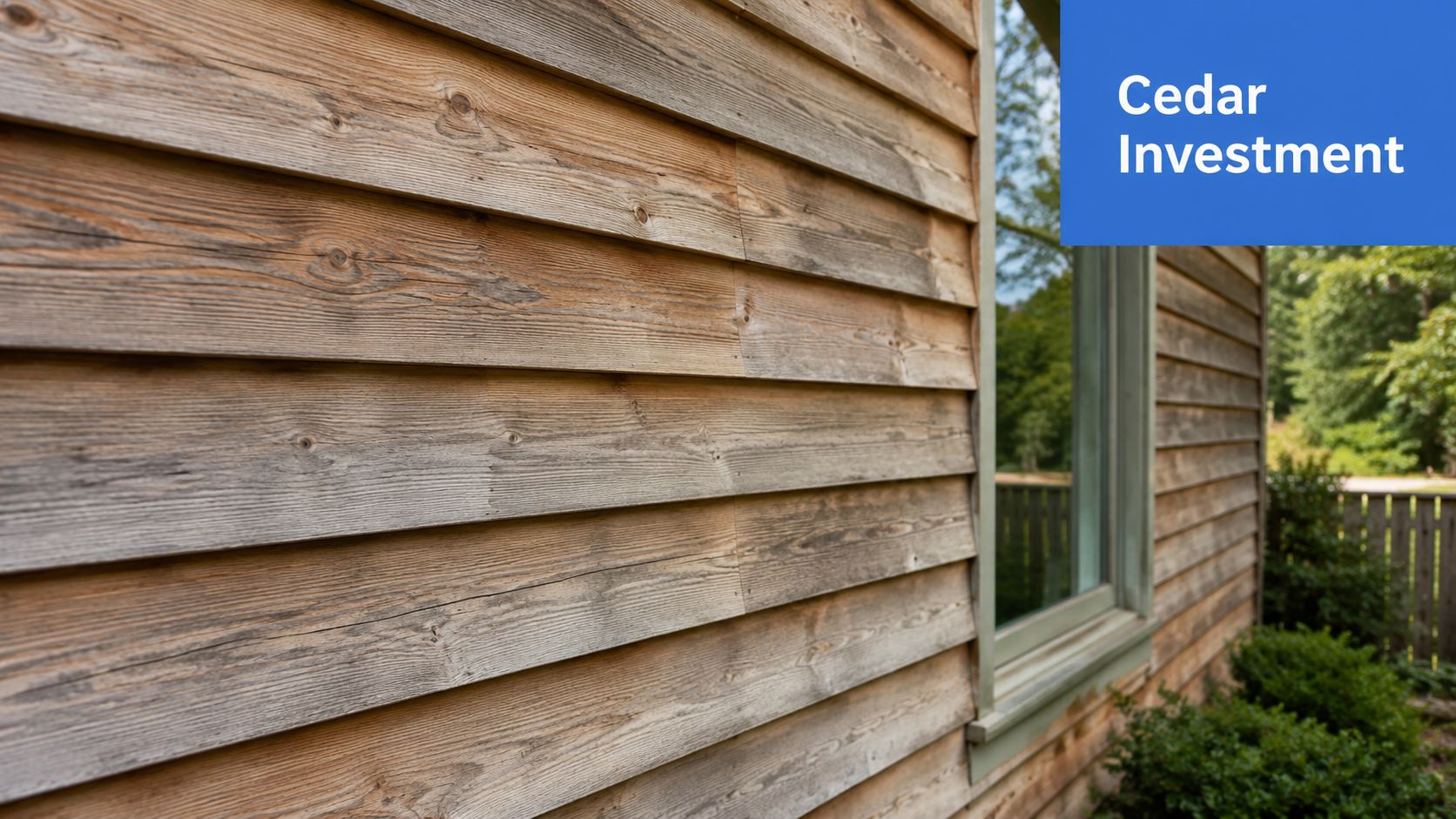
Cedar gets admired for the same reason people choose it in the first place, it has warmth, grain, and a natural look that vinyl and fiber cement can't fully copy. But that beauty doesn't stay intact on its own. If finish fails, water lingers, or UV exposure breaks down the surface, the siding starts losing the very qualities that made it attractive.
The payoff for staying consistent is real. Cedar's lifespan depends on routine care, and major-market guidance commonly recommends re-staining or sealing every 3 to 7 years depending on climate and sun exposure, with exposed south- and west-facing walls needing more attention because they take harsher UV and weathering. That schedule isn't about busywork, it's about stopping the finish from failing before the wood starts taking the hit. Once bare cedar starts weathering unevenly, you're not just preserving appearance anymore, you're trying to prevent deeper deterioration.
Practical rule: treat the finish like a protective layer, not decoration. The wood beneath is only as good as the coating that keeps moisture and sun from wearing it down.
A homeowner often notices cedar only after the surface looks dull, blotchy, or gray in a few areas. By that point, the siding may still be salvageable, but the work becomes more involved. A timely cleaning, a small caulk repair, or a fresh coat of stain is far easier than replacing boards, correcting water intrusion, or dealing with soft spots that have been ignored for seasons.
The smartest way to think about cedar siding maintenance is simple. You're buying time. Every inspection, wash, and finish renewal delays major repair, and that delay is where the value lives.
A cedar exterior should get a twice-yearly inspection, ideally in spring and fall, because that rhythm catches the kind of damage that hides between seasons. Reputable guidance also recommends taking photos of the same elevations twice a year and keeping a written log of dates and problem areas, which turns the siding into something you can track instead of just “check when it looks bad.” If you want a general sense of how inspection timing fits into a house-care routine, the article on how often you should pressure wash your house is a useful companion read.

Look first at the places where water can get behind the siding. Check gutters, flashing edges, window and door trim, and lower wall courses where splashback tends to show up first. Inspection guidance repeatedly emphasizes cracked caulk, loose boards, and failing finish in those locations because those are the spots that turn a cosmetic issue into hidden damage.
Water problems usually show up at the edges before they show up in the middle of the wall.
Shaded elevations can hold moisture longer, so they deserve a slower look. Watch for dark staining, mildew in protected corners, peeling or thinning stain, and boards that look unevenly weathered compared with the rest of the wall. None of those signs automatically mean the wood is failing, but they do tell you the finish is no longer doing enough.
Cedar maintenance isn't only about the boards. In moisture-prone conditions, guidance also recommends keeping vegetation back at least 2 feet from the siding and making sure runoff is directed away from the wall. Sprinklers that hit the siding, clogged gutters, and poor drainage all keep wood wet longer, and wood that stays damp is wood that ages badly. If you can photograph the same walls in spring and fall, then compare them side by side, you'll catch changes long before they become visible from the street.
Cleaning cedar is where a lot of owners get nervous, because the wrong move can raise the grain, force water into joints, or leave the wall blotchy. That caution is justified. The safest approach is usually a gentle wash, a soft brush, and enough patience to remove grime without stripping the surface.
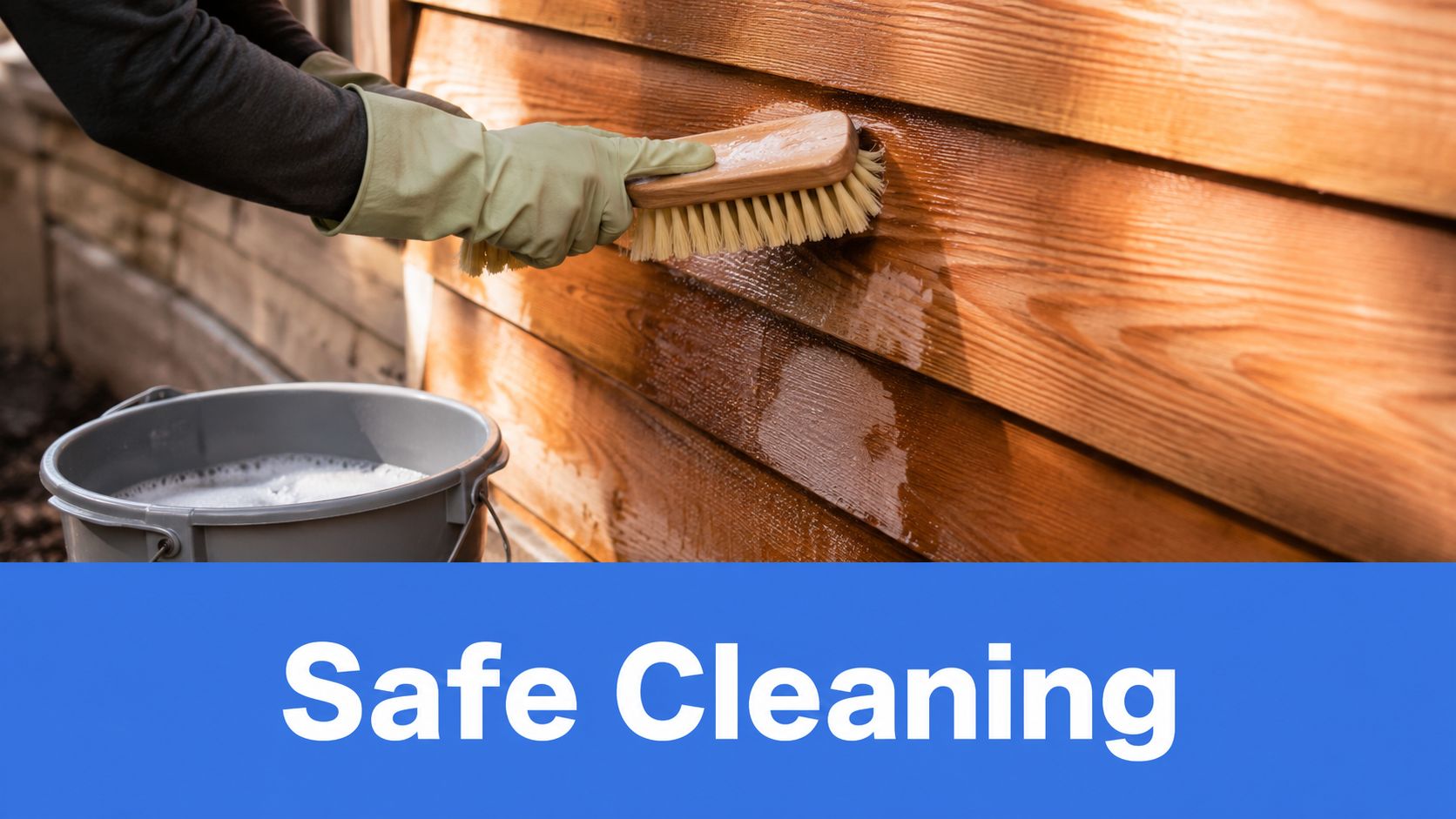
For routine cedar siding cleaning, a practical workflow is to remove debris, keep the bottom edge exposed, pre-rinse nearby plants, lightly rinse the wall, hand-scrub stained areas, then rinse thoroughly from top to bottom and let the siding dry fully before any touch-up work. That order matters because damp cedar doesn't accept stain evenly, and residue left behind can interfere with refinishing. The same guidance also recommends photographing the same elevations twice a year so it's easier to spot whether cleaning improved the wall or only made the damage more obvious.
Pressure washing is where caution matters most. Independent cedar-maintenance guidance suggests a 25-degree or 40-degree fan tip, 1200 to 1500 PSI, a distance of 18 to 24 inches, and a downward spray angle to reduce gouging and water intrusion risk. A cedar shingle manual cited in the available guidance goes even lower, saying to use a steady stream not exceeding 500 psi. That range tells you something important, the safe limit depends heavily on the siding's age, condition, and prior repairs, so older walls with lifted grain or failed caulk deserve much more restraint. For a broader explanation of low-impact washing methods, see what soft washing means in practice.
Mildew calls for a different response. The cited cedar-care method uses oxygen bleach mixed 1:3 with water and a 10 to 15 minute dwell time before light scrubbing. That's gentler than aggressive blasting, and it targets the discoloration without treating the wood fibers like concrete. If you're dealing with broad staining, nozzles and pressure matter less than patience, dilution, and a full dry-down before refinishing.
A clean wall isn't protected wall. On cedar, the finish is the shield, and once that shield gets thin, the siding starts absorbing weather instead of shedding it. That's why refinishing is less about color and more about preserving the wood beneath.
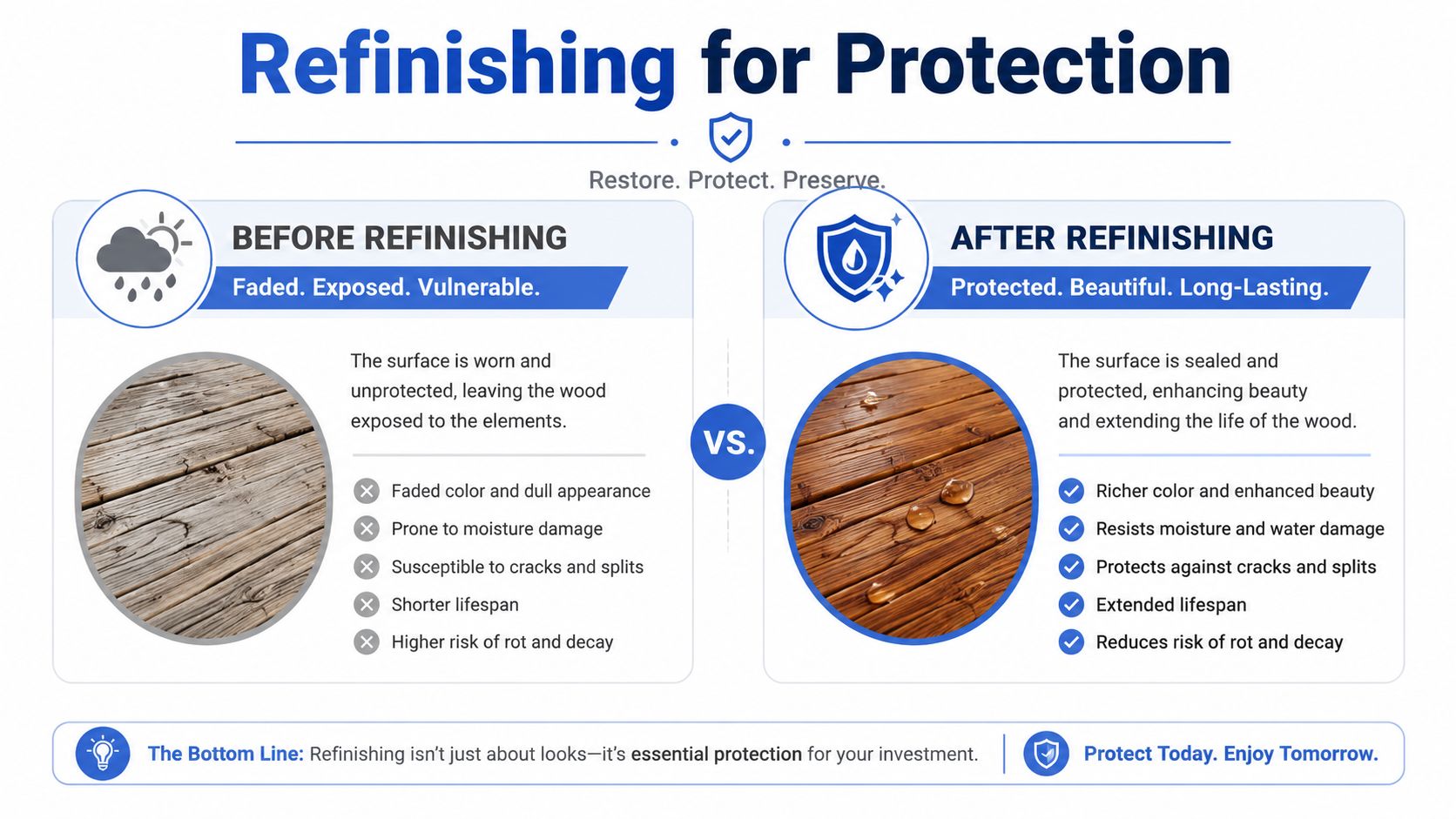
The siding has to be fully dry before any stain or sealer goes on. That sounds obvious, but it's where many DIY jobs go sideways. Trapped moisture doesn't just slow curing, it can leave the finish patchy and shorten the lifespan of the coating. Light sanding helps too, especially on weathered areas where the surface has started to roughen.
The finishing choice matters, but the prep matters more. A clean, dry, smooth surface gives the coating a chance to bond the way it should. Skip that step, and even a good product can fail early.
The available guidance places semi-transparent stains at renewal intervals of 3 to 5 years, while solid stains often stretch that to 5 to 7 years. Semi-transparent products preserve more of the wood grain and natural cedar look, while solid stains usually give more visual coverage and can be easier to use on older siding that already has uneven color or weathering. If you're trying to decide what fits a cedar project on a deck as well, the proper cedar deck care discussion gives a useful point of comparison for finish choices and upkeep expectations.
If you want the wood grain to stay visible, accept more frequent maintenance. If you want longer coverage, accept a more painted look.
The right finish depends on condition, climate, and how often you want to repeat the work. In high-exposure areas, a finish that holds up a bit longer is often worth the trade-off, especially when the siding already shows sun wear. The goal isn't just a prettier wall, it's a finish that matches the maintenance rhythm you'll realistically keep.
Most cedar guidance leans hard toward moisture and mildew. That advice matters in wet regions, but it doesn't fully fit homes in places like Phoenix, Scottsdale, Las Vegas, and Denver. In these markets, the enemy is often relentless sun, dry air, and rapid dry-out cycles that break down finish before moisture ever becomes the main story.
The available data notes that cedar finish life can range from 2 to 7 years depending on climate, finish type, and UV exposure, and that homeowners in low-humidity, high-sun regions need annual inspections plus regular cleaning and restaining. What that means in practice is that a desert or high-altitude home should watch for chalky surfaces, color fade on west- and south-facing walls, checking in the grain, and finish that looks brittle instead of worn evenly. In these areas, a wall can look “dry” without being healthy, because UV damage can outpace visible moisture problems.
Practical rule: in high-UV climates, inspect for sun damage first, then moisture damage. The order flips the usual cedar-care mindset.
For homeowners who want a deeper look at wood decay mechanics, expert advice on dry rot causes is worth reading alongside a cedar plan. The important distinction is that many southwestern homes don't fail from constant dampness, they fail from finish breakdown, then from water getting in later through weakened joints or neglected caulk. That's why a maintenance calendar in Arizona, Nevada, or Colorado should prioritize sun exposure by elevation and orientation, not just by season.
A useful local approach is simple. Check the most exposed walls more often, keep cleaning mild, and choose a finish that matches how much upkeep you're realistically willing to repeat. In hot, dry climates, the smartest siding plan is usually the one that protects against UV before the wood starts showing its age.
Some cedar issues are small enough to handle in an afternoon. Re-caulking gaps around trim, replacing a single cracked board, or spot-sanding and sealing a limited area are all reasonable DIY tasks if the surrounding wood is sound and the problem is clearly isolated. The key is to keep the repair local, because a small intervention can stop a larger one from spreading.
The boundary matters because cedar repairs can hide bigger problems. A homeowner can reseal a gap, but if the wall keeps taking water, that same gap will reopen. The cost of guessing wrong is usually higher than the cost of bringing in someone who can trace the source instead of just the symptom.
Professional Window Cleaning helps homeowners and property managers protect exterior surfaces that need steady attention, and cedar siding fits that category well. If you want help keeping your home's exterior looking clean and cared for, visit Professional Window Cleaning to see how their team can support your maintenance routine and keep the details from slipping through the cracks.
Read our blog posts regularly and keep learning.