Care and Maintenance
Best Way to Clean Commercial Windows: A Pro Guide
Discover the best way to clean commercial windows with pro squeegee and pure-water methods, safety tips, schedules, and when to hire experts.


High-rise window cleaning is so much more than a simple cleaning service. It’s a specialized field where technical skill, precise engineering, and even a bit of athletic endurance all come together. We’re talking about highly trained technicians using very specific methods and equipment to care for the exteriors of skyscrapers, making sure they look great and stay structurally sound. This isn't your average window washing—it’s a critical maintenance operation performed hundreds of feet in the air.
Think of a skyscraper less as a single building and more as a vertical community. The windows are its eyes, and they influence everything from how happy the tenants are to the building’s energy bills and overall property value. Professional high-rise window cleaning services are the specialized caretakers for this crucial part of the building, and their work goes way beyond just making things look pretty.
This job is a complex mix of skilled labor and incredibly detailed safety planning. It demands technicians who are not just masters of their craft but are also certified to work safely at extreme heights. They operate sophisticated gear designed to give them access to every single inch of a building’s facade, often in challenging city environments.
Let's take a quick look at the core components of this specialized field.
As you can see, there's a lot more going on than just soap and a squeegee. It's a comprehensive service that keeps a building healthy, safe, and valuable.
While sparkling, streak-free glass is the most obvious result, the benefits run much deeper. A professional cleaning service is a vital part of a building's overall health and maintenance plan. You can think of it as a routine check-up for your building's exterior.
A clean, well-maintained facade directly impacts a building's market value and curb appeal. It sends a powerful message to potential tenants and investors that the property is managed with care and professionalism.
No matter how our technicians get to the windows—whether by rope or a suspended platform—the actual cleaning boils down to two main professional methods. The one we choose depends on the building’s specific needs, how much grime has built up, and even environmental factors.
First, there's the traditional squeegee method. This is a time-honored craft that relies entirely on the technician's skill to apply a cleaning solution and wipe it away without a single flaw. When it’s done right, you get a perfect, hand-finished shine.
The second is the modern pure-water system, which uses highly filtered, deionized water that naturally attracts and lifts dirt from surfaces. Because all the minerals are removed, this water dries without leaving any spots, resulting in a crystal-clear finish. Both techniques are proven to deliver incredible results in the hands of a trained professional.
Getting to the windows of a skyscraper isn't like washing them at home; it’s an engineering and logistical feat performed hundreds of feet above the ground. A professional high-rise team chooses its access method based on the building’s specific design, height, and accessibility. Each approach is a complete system of specialized equipment and intensive training built around one core principle: maximum safety and efficiency.
The choice of equipment is never random. It’s a calculated decision based on a building’s unique architecture, weighing factors like speed, cost, and the complexity of the facade. For instance, a building with tons of setbacks and spires calls for a totally different strategy than one with a flat, continuous glass curtain wall.
This infographic breaks down the core pillars of a professional high-rise service, showing how the methods, safety, and value all tie together.
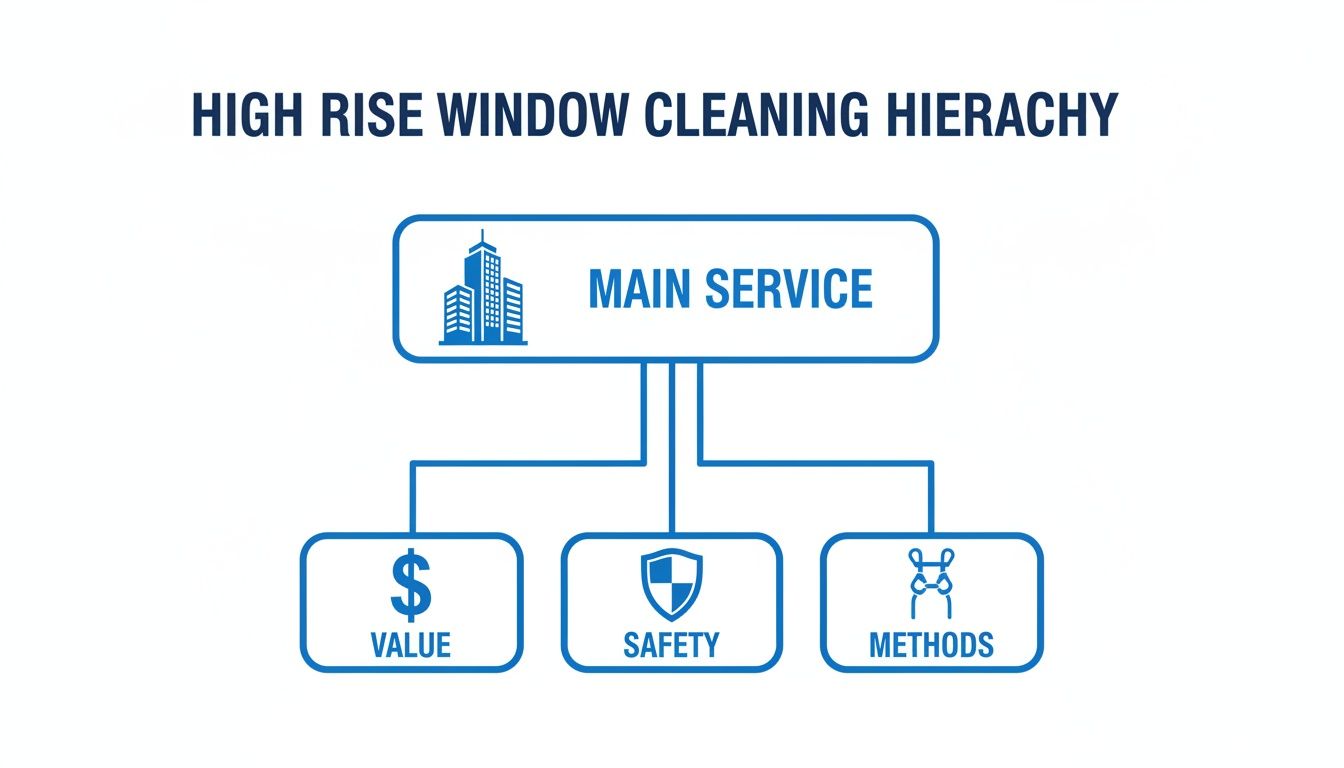
As you can see, the specific methods are just one piece of the puzzle, equally supported by strict safety protocols and the real value delivered to the building owner.
Often called "industrial mountaineering," rope access is the most flexible way to navigate a building's exterior. Technicians use a system of ropes, harnesses, and specialized hardware to lower themselves and move across the facade, giving them incredible access to tricky spots. The whole technique is borrowed directly from rock climbing and caving.
This method is the go-to for buildings with complex architectural features. Think of structures with curves, ledges, or inset windows where a rigid platform just can’t get close. It offers a point-to-point solution, letting a technician get exactly where they need to be with very little equipment setup on the ground.
When you picture high-rise window cleaners, you’re probably thinking of a swing stage. This is a powered platform suspended from the roof by cables and motors, allowing two or more technicians to work their way down a building's face. It's the undisputed workhorse of the industry for large, flat-surfaced buildings.
Swing stages are ideal for efficient, top-to-bottom cleaning on uninterrupted vertical surfaces. They provide a stable, spacious work area, allowing crews to carry more equipment and cover a huge amount of square footage in a single drop. This makes them perfect for the towering glass giants you see in cities like Phoenix or Denver.
Swing stages represent the perfect balance of speed and stability. They let crews work methodically and safely across vast expanses of glass, making them a cornerstone of modern skyscraper maintenance.
A Building Maintenance Unit, or BMU, is a permanent piece of equipment integrated directly into a skyscraper's design from day one. It's basically a crane or trolley system installed on the roof that deploys a cradle or platform. Most modern skyscrapers are built with these systems from the start.
These permanent installations are the safest and most efficient access method out there. Because they are custom-designed for the building, they provide complete coverage of the entire facade without any need for temporary rigging. You'll find BMUs on many of the world's most iconic towers, where they are an essential part of the building's long-term maintenance plan. For a deeper look into the variety of tools used, our guide on high-rise window washing equipment offers more detail.
Ultimately, the right access method ensures every single window can be reached safely and cleaned perfectly, no matter how tall or complex the building is.
Once a technician is safely in position, their goal is simple but demanding: leave behind a perfectly transparent, streak-free surface. In the world of high-rise window cleaning, there are really only two proven ways to get that flawless finish. The choice isn't random; it depends on the building's needs, how much grime has built up, and even the local weather.
The two pillars of professional window cleaning are the traditional squeegee method and the modern pure-water system. Each one requires its own set of tools and skills, but both are designed to deliver exceptional, long-lasting clarity. Understanding how they work really shows you the science and artistry behind a truly clean skyscraper.
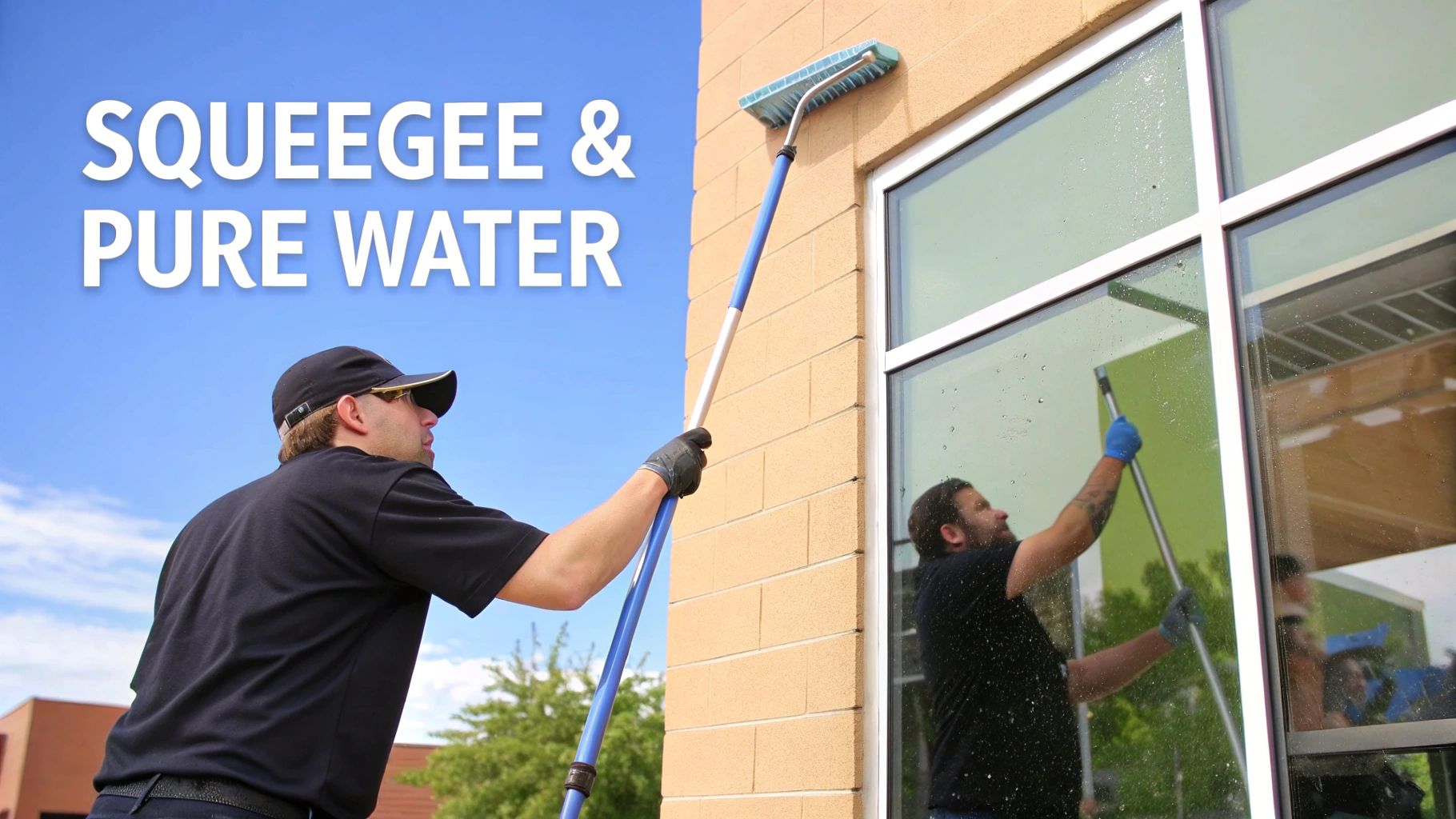
The squeegee method is the classic, time-tested technique that most people picture when they think about window washing. It’s a true craft, honed over years of practice, that relies entirely on the technician’s skill to achieve a hand-finished shine.
First, a specialized, eco-friendly cleaning solution is applied to the glass to break down and loosen dirt. Then, the technician uses a professional-grade squeegee to pull the solution and grime away in a single, fluid motion. The artistry is all in the technique—maintaining the perfect angle, pressure, and overlap to make sure no streaks, drips, or smudges are left behind. It’s a hands-on approach that delivers immediate, sparkling results.
The pure-water system is a huge leap forward in window cleaning technology. This method uses water that has been aggressively filtered through a multi-stage process, usually including reverse osmosis and deionization. This strips out 100% of all dissolved solids—minerals like calcium and salt that are naturally found in tap water.
Because this purified water is stripped of its mineral content, it becomes an incredibly powerful cleaning agent. It actively attracts and bonds with dirt, dust, and other contaminants on the glass.
Think of pure water like a powerful magnet for dirt. Its natural state is to contain minerals, so when it’s purified, it aggressively seeks to absorb them from any surface it touches, pulling grime away from the glass with remarkable efficiency.
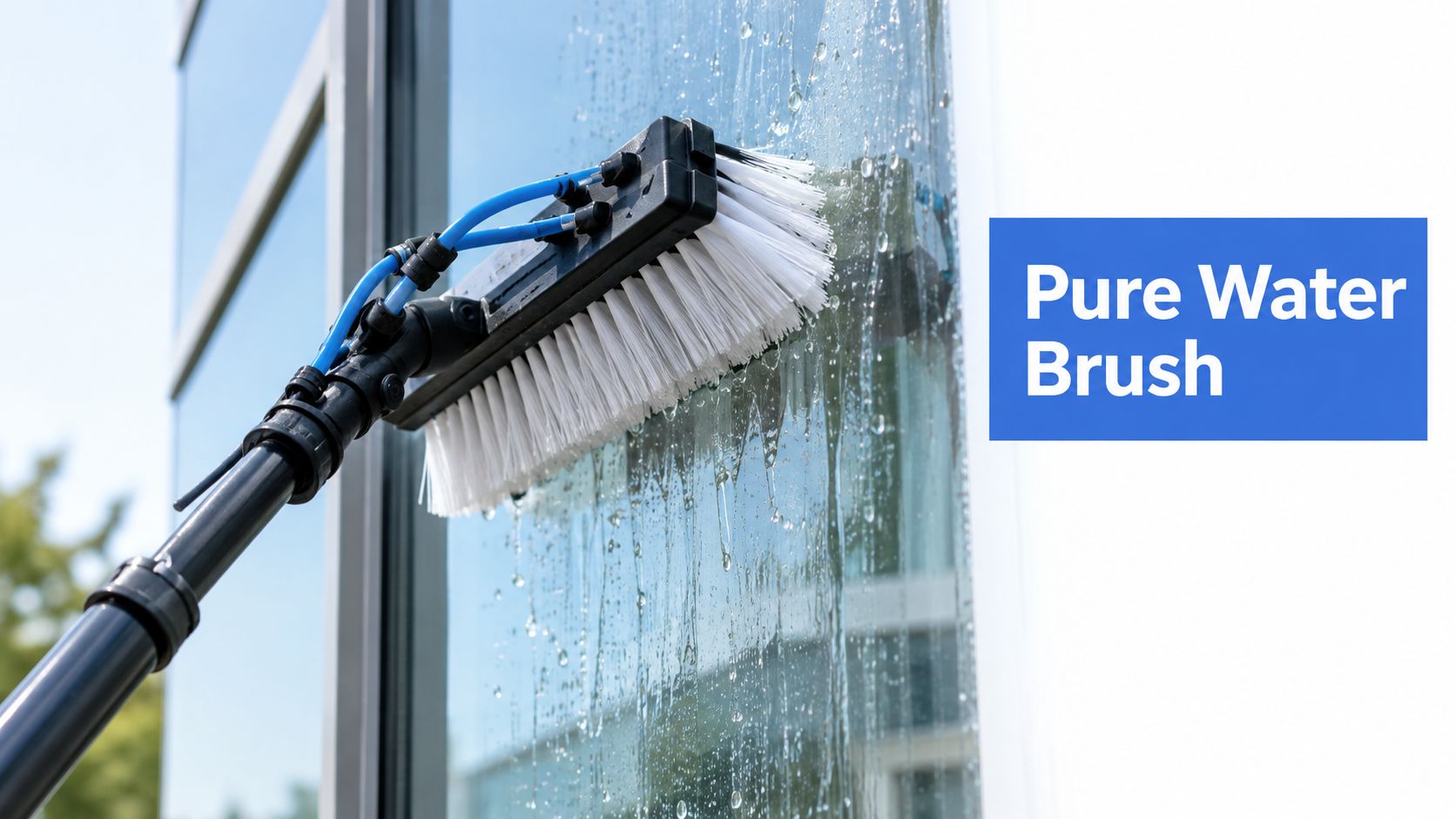
Technicians use a water-fed pole with a soft-bristled brush to gently scrub the window, dislodging dirt while a continuous stream of pure water rinses it all away. The best part? Because the water has zero impurities, it can be left to air-dry naturally without leaving a single spot or streak.
While both methods deliver a superior clean, they each have their sweet spot. The right choice often comes down to the building's architecture, safety factors, and specific environmental challenges. For instance, the hard water common in desert cities like Phoenix makes pure-water systems an especially smart choice for avoiding mineral spotting.
Ultimately, a truly professional window cleaning high rise company will be an expert in both techniques. This allows them to create a customized cleaning plan that’s perfectly suited to your building, guaranteeing a pristine, streak-free view from every window, every time.
When you're talking about window cleaning high rise buildings, safety isn't just a priority; it's the entire foundation of the profession. Working hundreds of feet in the air is no joke. That’s why the industry is wrapped in a strict framework of standards designed to protect everyone: the technicians on the ropes, the people inside the building, and the public walking below.
Hiring a team for this kind of work isn't like calling a standard cleaning service. It’s more like entrusting a surgical team with your property, where every single move follows a proven, life-saving protocol. This isn’t some unregulated field where anyone with a rope and a squeegee can just start a business. Reputable companies operate under the watchful eye of several key organizations that set the bar for safety and professionalism.
Three main players shape the safety landscape for high-rise window cleaning. Each one has a distinct role in training, certification, and setting the rules for how to operate safely. A truly professional crew won't just know these standards—they'll live and breathe them every day on the job.
Following these standards isn't optional. It translates into a non-negotiable set of protocols that a professional team executes on every single project, no matter how big or small. A huge amount of safety prep happens long before a squeegee ever touches glass. This meticulous planning is the true mark of a pro.
Here’s what that looks like in practice:
Hiring an uncertified or uninsured team for high-rise window cleaning is like hiring an unlicensed pilot to fly a plane. The potential consequences for workers, tenants, and your property are simply too catastrophic to risk. Verifying credentials isn't just good practice; it's essential due diligence.
As a building manager or owner, this responsibility ultimately falls on you. Asking for proof of certification from organizations like the IWCA or SPRAT is a critical step in the hiring process. You should also request a valid Certificate of Insurance (COI).
These documents are your proof that the team has undergone formal training and that you are protected from liability if an accident happens. To ensure full compliance and robust safety protocols, it's essential for high-rise window cleaning operations to adhere strictly to guidelines like the Australian Workplace Safety Standards. These global benchmarks highlight the universal importance of structured safety systems.
Any professional company will be proud to show you these documents. They're a testament to their commitment to doing the job right—and safely.
Choosing a company to work on your high-rise is a big deal. The stakes are incredibly high, involving worker safety, public liability, and the integrity of your property itself. Vetting potential partners is a critical process that goes far beyond just glancing at a few price quotes.
A professional, safety-conscious company will be transparent and ready to show you their documentation. On the other hand, a less-than-reputable outfit might give you vague answers or a bid that seems too good to be true. Knowing how to spot the difference is key to protecting your investment and getting the job done right.
Before you even get into a conversation about squeegees or pure-water systems, you have to verify their insurance and credentials. This is step one, and there’s no room for negotiation here. An accident involving an uninsured or improperly trained crew could be financially catastrophic for your building.
You must request a current Certificate of Insurance (COI). This piece of paper is your proof that the company has its ducks in a row.
A legitimate company will hand this over without you even having to push. If they hesitate or can't produce it, walk away. It's an immediate deal-breaker.
Once you've confirmed they're properly insured, it’s time to dig into their experience, safety protocols, and equipment. Their answers will tell you everything you need to know about their professionalism and whether they can handle a building like yours. To make a smart choice, it helps to understand effective facility-focused vendor management best practices.
Here are the essential questions you need to be asking:
A common red flag is an unusually low bid. While affordability is important, a price that is significantly lower than competitors' often means the company is cutting corners on insurance, training, or equipment maintenance—all of which introduce massive risk.
When you're vetting a company, it’s helpful to know what the good signs and bad signs look like side-by-side.
Keeping these points in mind will help you weed out unqualified vendors and focus on true professionals who prioritize safety and quality.
If you want more guidance, exploring a detailed breakdown of how to find the best high-rise window cleaning near you can give you even more valuable insights. Making a confident, secure hiring choice starts with arming yourself with the right knowledge and asking the tough questions upfront.
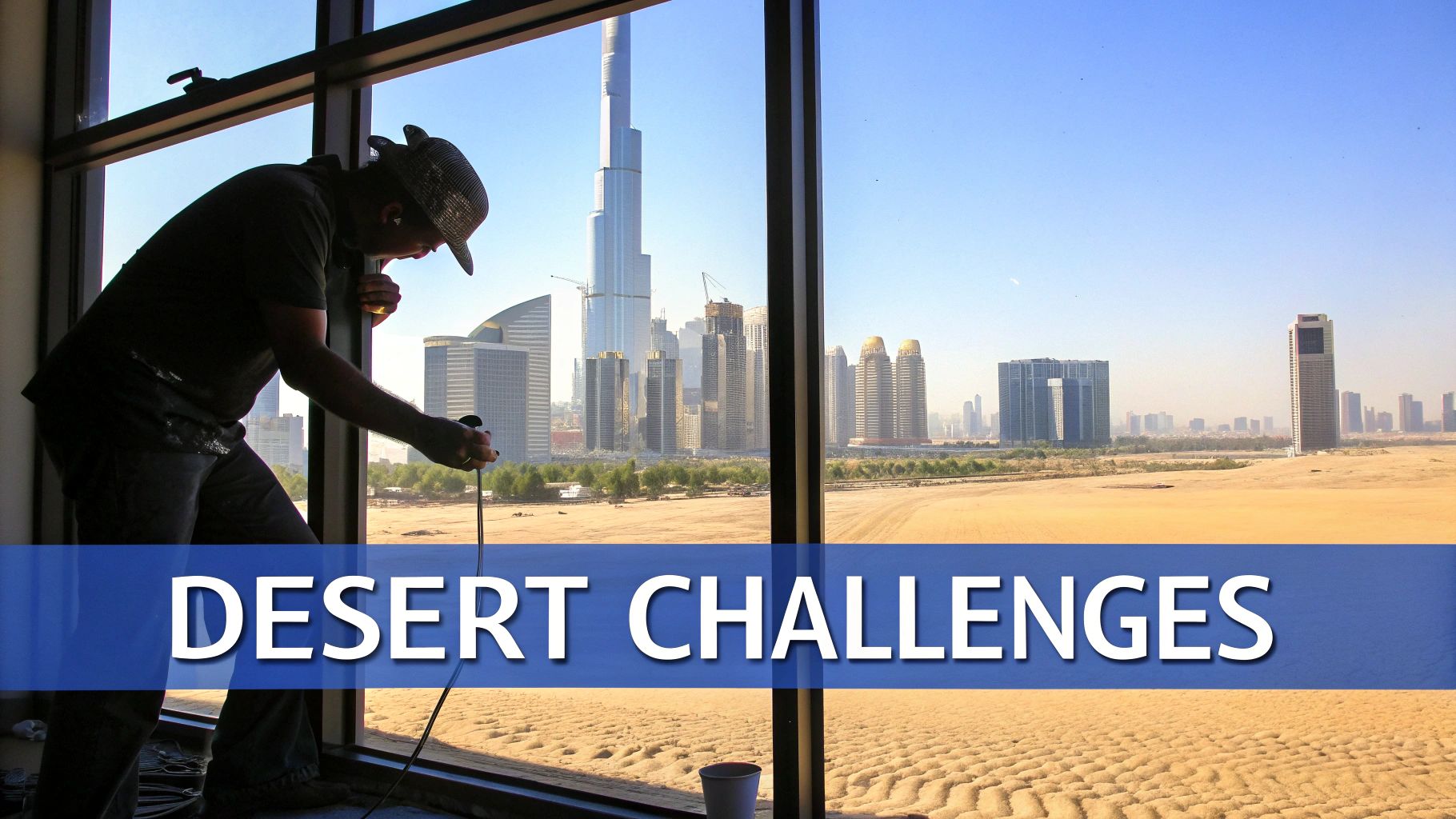
Tackling window cleaning high rise jobs in desert environments isn't for the faint of heart. Cities like Phoenix and Las Vegas present a unique battlefield where the sun, sand, and even the water itself seem to conspire against a clean finish.
The intense, year-round sun literally bakes dirt and grime onto the glass. Then come the dust storms, blanketing entire buildings in a fine, abrasive layer of sand. This isn’t just an eyesore; if you try to wipe it away without the right technique, you're essentially sandpapering the glass, causing microscopic scratches that dull the surface over time.
One of the biggest culprits behind stubborn, cloudy windows in desert regions is the water. The local supply is notorious for its high mineral content, creating what's known as "hard water."
Packed with calcium and magnesium, this water leaves behind chalky, white spots that are a nightmare to remove. In the blistering desert heat, water evaporates almost instantly, leaving those mineral deposits to cling to the glass. Over time, this buildup can permanently etch the surface, making professional intervention non-negotiable.
For buildings in arid locations, a pure-water system is often the only way to achieve a truly spot-free finish. This technology filters out every last mineral, ensuring nothing is left behind to dry on super-heated glass. It's the ultimate defense against damaging hard water stains.
Beyond what’s happening on the glass, the logistics of working in extreme heat are a massive challenge. The midday sun in Arizona and Nevada isn't just uncomfortable—it’s a serious safety risk for technicians and can ruin the cleaning process itself.
Professional crews have to be strategic, often starting at the crack of dawn to beat the worst of the heat. This careful scheduling is crucial for two reasons:
The unique conditions in places like Las Vegas demand specialized knowledge, which you can dive into in our detailed guide on Las Vegas window cleaning services.
Contrast this with a four-season climate like Denver, where crews battle ice, snow, and de-icing chemicals in the winter. It just goes to show how a true professional window cleaning high rise company has to tailor its entire strategy—from equipment to scheduling—to the unique environmental reality of each city.
Even after you've seen the crews in action, you probably have a few practical questions. It's completely normal. We get them all the time from building managers who want to make sure everything runs smoothly. Let's walk through some of the most common ones.
There’s no single answer here—it really comes down to your building's location, the local environment, and even who your tenants are. But as a solid rule of thumb, most skyscrapers benefit from a full exterior cleaning two to four times per year.
Think of it this way: a building downtown next to heavy traffic or in an area with a lot of spring pollen is going to need more attention, probably quarterly. On the other hand, a tower in a cleaner, less gritty environment might look fantastic with just two cleanings a year. Staying on top of it prevents corrosive pollutants from etching into the glass and causing permanent damage.
Protecting the public is our top priority, and it's something we never compromise on. Before a single squeegee touches the glass, our ground crew sets up a secure "drop zone" directly under the work area. We use a combination of cones, highly visible barrier tape, and clear signs to guide pedestrians safely around the zone.
In bustling areas with heavy foot traffic, you'll often see a dedicated spotter on the ground for the entire job. Their only task is to watch the perimeter and make sure no one wanders into the secured zone. It’s an essential layer of safety that gives everyone peace of mind.
Professionals use only two methods for a flawless finish: the use of a squeegee, or the use of a pure-water system. The one we choose depends on the building's height, design, and how much grime has built up.
The timeline for a high-rise project can vary quite a bit. It all depends on the building’s size, how complex the architecture is (think balconies, setbacks, and decorative features), and which access method we're using. A large, relatively flat building being cleaned with a swing stage might take a week. A more intricate structure that demands detailed rope access work could take several weeks.
A true professional will never give you a vague guess. After a thorough site inspection, they should provide a detailed project timeline that accounts for your building's unique features, the size of the crew, and even potential weather delays.
Absolutely. Notifying tenants is a simple but critical step for a smooth, hassle-free cleaning. We strongly recommend sending out a notice at least 48-72 hours before the cleaning begins.
This heads-up gives people a chance to close their blinds for privacy and lets them know not to be alarmed by a technician appearing outside their window. It's a small courtesy that goes a long way in managing expectations and keeping tenants happy with the service.
When you need a partner that pairs state-of-the-art techniques with an absolute commitment to safety, look no further than Professional Window Cleaning. We have the experience and skill to keep your high-rise property sparkling, safe, and valuable. Contact us today for a comprehensive consultation and quote.
Read our blog posts regularly and keep learning.