Care and Maintenance
How to Restore Window Glass and Frames the Right Way
Learn how to restore window glass, frames, and seals with pro methods, real tools, and honest trade-offs. A practical guide


Window cleaning on high-rise buildings is a different beast entirely. It’s a specialized trade that mixes advanced ways of getting to the glass, serious skill, and a deep respect for safety protocols, all to keep the outside of a skyscraper looking its best. For property managers, it's a non-negotiable part of preserving the building's value, keeping tenants happy, and protecting the glass itself from long-term damage.
Think of it less as a cleaning service and more as a precise discipline where safety engineering and meticulous skill come together. That glistening facade is the first thing people see, and it reflects more than just the sky—it reflects the building's standard of care. Professional window cleaning isn't just an expense; it's a critical investment in protecting your asset.
Clean windows do more than just improve the view from the inside. They're actually vital to the building's long-term health. Over time, things like dirt, city pollutants, and hard water minerals can literally etch into the glass, causing permanent, costly damage. Regular professional cleaning stops this buildup in its tracks, extending the life of your windows and safeguarding a major financial investment. This kind of proactive maintenance is especially crucial in cities like Phoenix, where the intense sun can bake dust and minerals right onto the surface.
You can see the industry's importance just by looking at the numbers. The global window cleaning market was valued at a massive USD 141.00 billion in 2024 and is expected to climb to an impressive USD 257.27 billion by 2032. A huge driver of this growth is simply the number of high-rise buildings going up, especially in North America, which held a dominant 37.75% market share in 2024.
When you boil it all down, there are only two professional methods used for cleaning the glass on a high-rise building. Getting a handle on these is key to understanding the craft:
Beyond just figuring out how to get to the windows, the fundamental techniques for getting the glass perfectly clean are what separate the pros from the amateurs. You can learn more about achieving a streak-free window cleaning finish to see the details that make all the difference.
Whether it’s a tower in bustling Las Vegas or one enduring the four-season climate of Denver, these foundational skills are what ensure every single pane of glass is left spotless.
Getting to the windows of a skyscraper isn't like washing your windows at home; it’s a carefully choreographed operation that hinges entirely on the building's specific design and height. The methods the pros use are all about efficiency and, most importantly, safety. Each technique is chosen to solve a unique architectural puzzle, making sure every single pane of glass is reachable.
Think of it this way: the access method is the very first, most critical decision on any high-rise job. It sets the stage for everything else—the equipment needed, the size of the crew, and how long the project will take. A building with a completely flat, uniform glass face is a totally different challenge than one with intricate angles, terraces, and decorative overhangs. The goal is always the same: pick the safest, most effective tool for that specific structure.
This infographic breaks down the essential components, showing how access methods and cleaning techniques are two sides of the same coin.
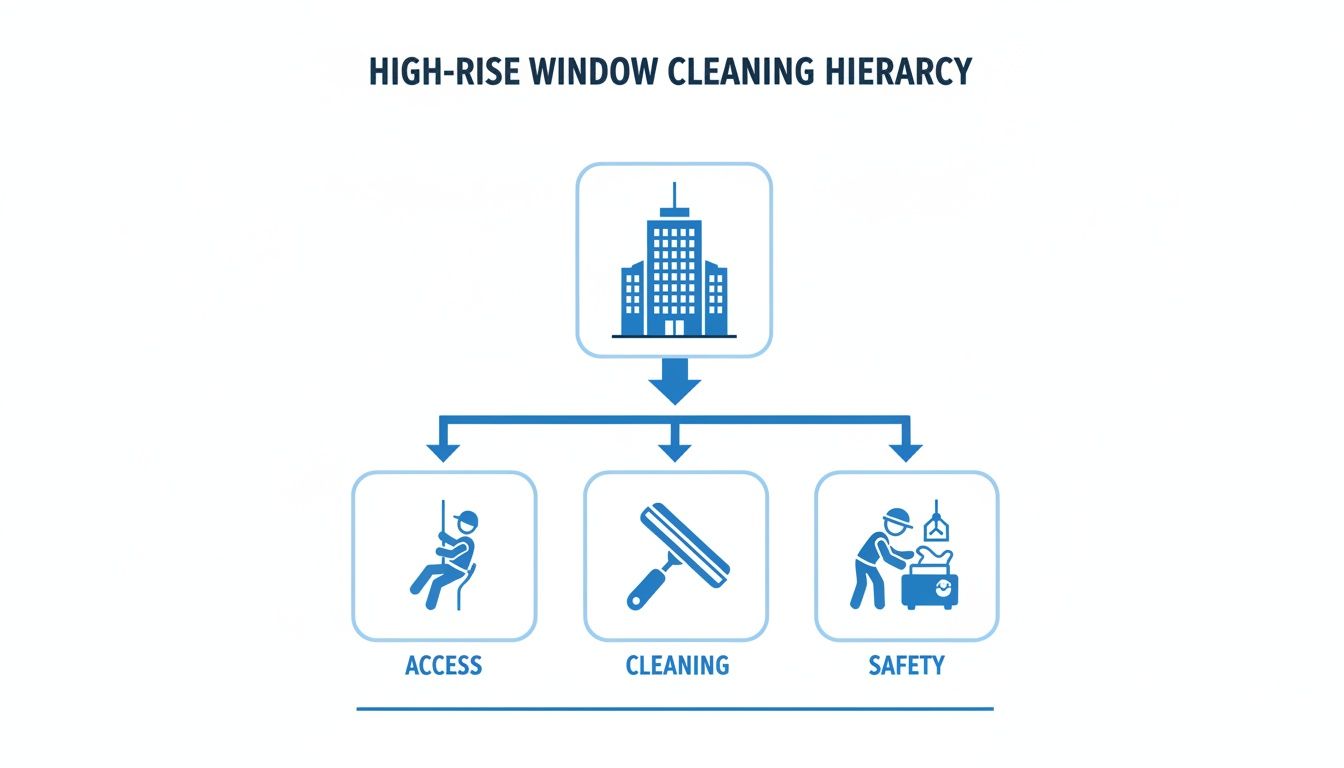
As you can see, you can't have one without the other. Let's look at how these methods work in the real world.
You've probably seen this one before. Often called a swing stage, suspended scaffolding is what most people picture when they think of high-rise window washing. It’s a mobile platform hung by strong cables from a rigging system on the roof, allowing a team of two or more technicians to move smoothly up and down the face of the building.
Swing stages are the gold standard for modern buildings with straight, uninterrupted vertical surfaces. They give workers a stable, spacious platform to carry all their gear, whether using the squeegee method or a pure-water system. For cleaning massive glass surfaces quickly and consistently, this method is incredibly efficient.
A suspended platform gives you a massive advantage in stability. It allows technicians to cover huge areas methodically, making it the perfect solution for modern, glass-sheathed towers where speed and consistency are everything.
The technology behind this work is constantly getting better. The market for high-rise window cleaning systems was already valued at around USD 1,200 million in 2019 and is expected to skyrocket to USD 3,500 million by 2028. That kind of growth shows just how much the industry is investing in safer, more innovative access technology.
What about buildings with trickier designs? Think setbacks, balconies, or unconventional shapes where a rigid swing stage just won't fit. This is where rope access shines. Technicians use industrial climbing techniques—a lot like what you’d see in mountaineering, but far more specialized—to descend the building’s facade with pinpoint precision.
This method offers agility you just can't get anywhere else. A certified rope access technician can navigate around obstacles and get into nooks and crannies that would be totally impossible for a platform. It demands serious training and certification from organizations like IRATA or SPRAT, ensuring every descent is meticulously planned with multiple safety backups in place. You can learn more about the specific gear involved by checking out our guide on high-rise window washing equipment.
Choosing the right access method is crucial for a safe and efficient job. This table breaks down the most common options to help you see which might be the best fit for your building at a glance.
Each method has its place, and often, a comprehensive cleaning plan for a large building will involve a combination of these techniques to ensure every window is perfect.
Not all high-rise window cleaning happens hundreds of feet in the air. The lower floors and podium levels need just as much attention, and for those, other methods come into play.
By choosing the right blend of these methods, a professional crew can guarantee that every window, from the lobby entrance to the penthouse suite, gets the same expert attention. The result is a flawlessly clean building that makes a stunning impression.
In the world of high-rise window cleaning, safety isn't just a priority—it's the absolute bedrock of the entire profession. For property managers, getting a handle on these standards is non-negotiable. It directly impacts your liability, your tenants' safety, and the well-being of the technicians scaling your facade. This isn't just about following rules; it's about building a culture where there is zero tolerance for risk.
At the top of the food chain is the Occupational Safety and Health Administration (OSHA), which sets the federal standards for workplace safety. For high-rise work, these regulations are incredibly stringent, covering everything from fall protection systems and equipment integrity to proper training and emergency procedures. A reputable contractor doesn't just meet these standards—they live by them.
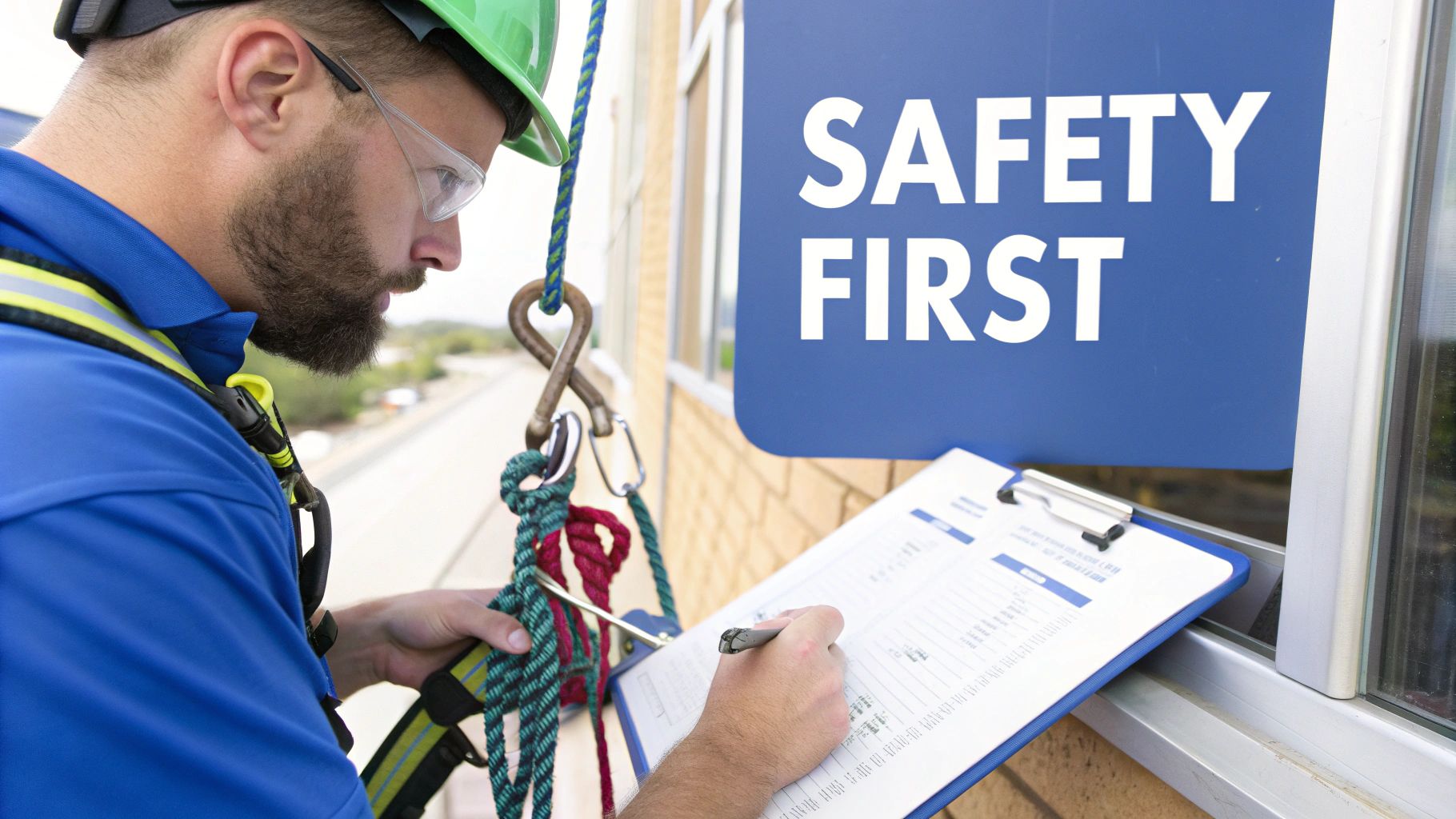
The stakes are incredibly high. With revenues for window cleaning services projected to hit USD 2.9 billion in 2024, the industry supports over 35,344 businesses nationwide. But the numbers also tell a sobering story: high-rise work accounts for a disproportionate 25% of industry fatalities. It's a stark reminder of why rigorous safety protocols are so critical.
When a job calls for the agility of rope access, general safety knowledge just doesn’t cut it. Technicians need active certifications from globally recognized organizations that prove they've mastered this specialized field. Think of these certifications as a pilot's license for working on the side of a building.
You should be looking for two primary governing bodies:
If a contractor can't show you current IRATA or SPRAT certifications for their entire rope access team, that’s an immediate red flag. There is simply no substitute for this level of verified training when technicians are working hundreds of feet in the air.
And these certifications aren't a one-and-done deal. Technicians must recertify on a regular basis to keep their skills sharp and stay current with the latest safety advancements.
While OSHA writes the rulebook, every building is unique. That's why a generic safety manual is never enough. A true professional will develop a comprehensive, site-specific safety plan before a single rope is dropped over the side of your property.
This plan is a detailed blueprint for a safe operation, customized to your building’s architecture, anchor points, and potential hazards. It should clearly outline:
Ultimately, ensuring non-negotiable safety often involves careful attention to building code compliance. A thorough site plan shows that a contractor is committed to proactive risk management, turning abstract safety rules into a practical, on-the-ground strategy for your property. This level of preparation is what separates the amateurs from the true professionals.
When you get a quote for high-rise window cleaning, it’s easy to focus on the final number. But that figure is much more than just a price for labor; it’s a carefully calculated sum reflecting the project's complexity, the inherent risks involved, and the specialized equipment needed to get the job done right.
Understanding what drives these costs is the key to seeing the true value in the investment. Just like every skyscraper has a unique blueprint, every window cleaning job has its own pricing structure tailored to the building’s specific needs.
The most obvious factor is, of course, the building's height. It’s simple: the taller the building, the more time, equipment, and risk are involved. A 50-story tower is a completely different beast than a 15-story one, demanding far more resources and safety oversight, which naturally drives up the cost.
But height is only part of the story. Architectural complexity is often an even bigger cost driver. A sleek, flat-faced glass curtain wall is relatively straightforward to clean. Contrast that with a building covered in balconies, setbacks, and decorative ledges, and the job suddenly becomes a lot more complicated.
Think about these two scenarios:
Even though Building A is taller, the job on Building B would almost certainly be more expensive. The complex rigging and slower, more detailed work demand a higher level of skill and more time on the job.
Beyond the building’s structure, the sheer volume of glass is a major cost component. Professionals will measure the total square footage of glass to be cleaned—from small accent windows to massive lobby panes—to make sure the quote accurately reflects the workload.
The level of grime also makes a huge difference. A building that gets regular quarterly cleanings will just have light dust and dirt. On the other hand, a property that hasn't been touched in over a year might be caked with heavy mineral deposits, post-construction debris, or stubborn stains. That kind of buildup requires more intensive cleaning and specialized solutions, adding to the cost.
The quote you receive is a direct reflection of risk, skill, and logistics. A lower price might seem appealing, but it could indicate shortcuts in safety, insurance, or training—costs that could be far greater in the long run.
The access method chosen—whether it’s a swing stage, rope access, or an aerial lift—directly impacts the budget, too. Each technique involves different equipment costs, crew sizes, and setup times. For a more detailed look at pricing, our guide on commercial window cleaning prices offers additional insights.
Knowing these variables helps you analyze proposals with confidence, ensuring you're investing in a service that is safe, thorough, and professional from top to bottom.
Let’s be real: where your building is located completely changes the game for window cleaning. The strategy that works for a skyscraper in a humid, coastal city would be a disaster in a dry, desert climate. Environmental factors play a massive role in keeping high-rise windows clean.
This isn’t just about how often you schedule a cleaning; it’s about tackling the specific challenges your local weather throws at your building. Ignoring these details is a recipe for stubborn stains, permanent glass damage, and bigger bills down the road. A truly professional approach has to adapt to the city it’s in.
In arid climates, the biggest enemies of clean glass are intense sun, relentless dust, and hard water. The sun here isn't just bright; it bakes dust and mineral-heavy water spots right onto the glass. Once they're cooked on, getting them off requires more than just a simple squeegee.
For high-rises in these cities, a pure-water system is often the most effective tool in the arsenal. It strips out the high mineral content from local water sources, guaranteeing a spot-free result that the squeegee method often struggles to match.
A city like Denver is a different beast entirely. The challenges change dramatically with the seasons, so a one-size-fits-all approach is doomed to fail. You can't use the same technique for spring pollen as you would for winter road grime.
A skilled Denver crew has to be ready for anything:
The real mark of an expert team is versatility. They need to know when to use a squeegee for tough, caked-on grime and when to switch to a pure-water system for fine dust and pollen. It's about using the right tool for the job, every single time.
This constant change means scheduling is everything. We dive deeper into this in our guide on the best time of year to clean windows. Ultimately, tailoring both the method and the frequency to your city's climate is the secret to keeping a building looking its absolute best, no matter what the weather brings.
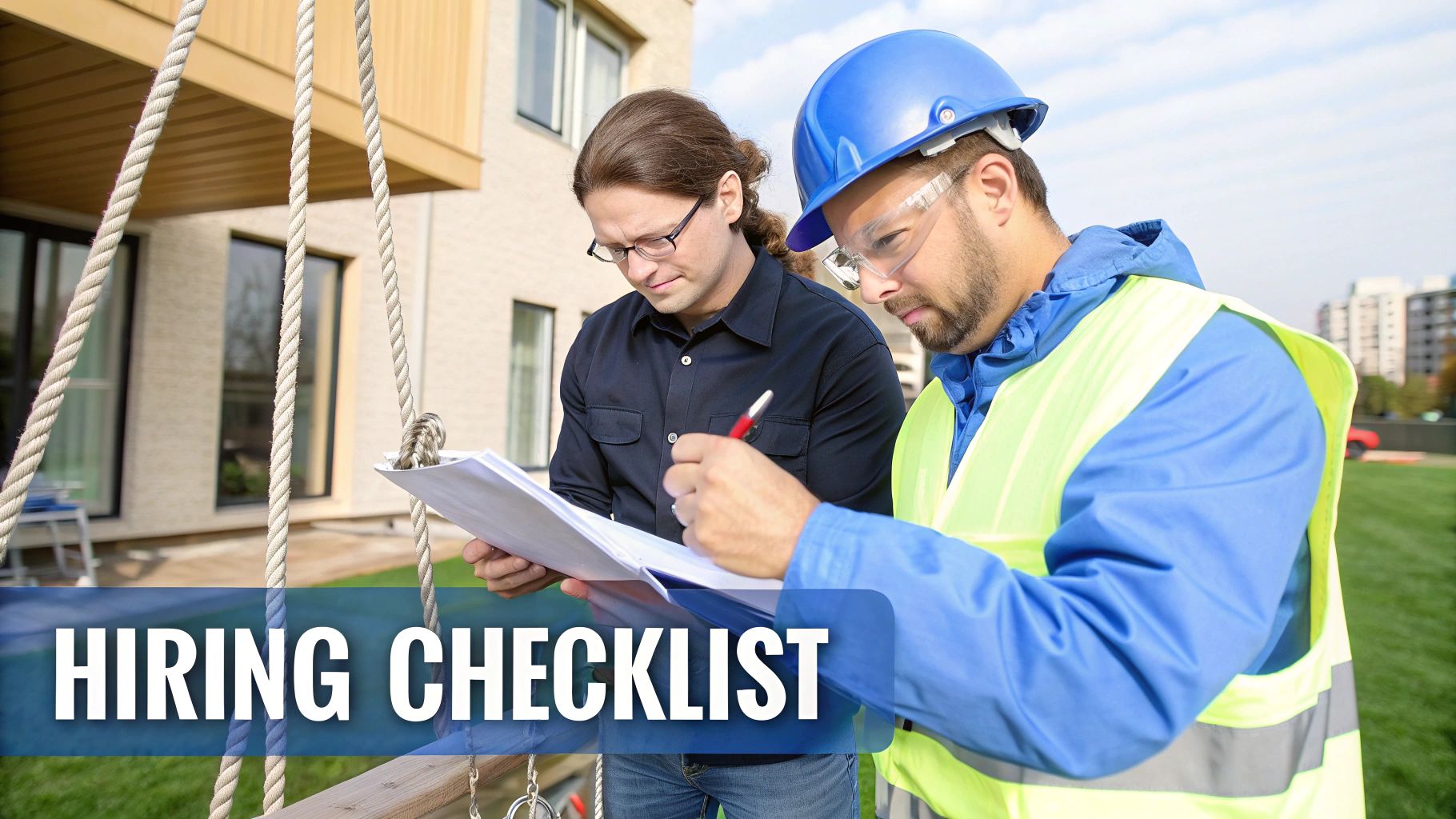
Choosing the right partner for window cleaning high rise buildings is probably the single most important decision you'll make in this process. The company you hire is responsible for everything—the safety of their crew, your tenants, and the public walking below.
Think of it like hiring an engineer for a critical structural project; the stakes are just as high. A thorough review of a company’s credentials isn’t just good practice—it's your primary defense against liability and the only way to guarantee a high-quality outcome for your property.
This actionable checklist will walk you through the vetting process, ensuring you pick a contractor who is safe, professional, and reliable.
This is the first gate, and it's non-negotiable. Any legitimate high-rise window cleaning company will carry substantial insurance. Anything less is a massive red flag that exposes your property to serious financial risk.
Your first request should include:
Here's a pro tip: Always request a Certificate of Insurance (COI) be sent directly from their insurance provider to you. This confirms the policy is active and hasn't been doctored, giving you a crucial layer of protection.
Certifications are one thing, but a top-tier company lives and breathes safety. They should have a robust, well-documented safety culture that goes beyond a generic manual.
Ask to see their general safety plan, but more importantly, ask about their process for creating a site-specific safety plan for your building. This plan should prove they've analyzed your property's unique features—anchor points, ground-level hazards, architectural challenges, and pedestrian traffic patterns. It shows they aren't using a one-size-fits-all approach and are actively managing risk. A company that's serious about safety will be eager to share this with you.
A professional proposal is more than a price tag; it's a detailed scope of work. It needs to clearly outline the specific services to be performed and the exact cleaning methods they plan to use, whether it’s a squeegee or a pure-water system. Transparency here is key and prevents headaches later on.
Finally, always check references—and be specific. Don't just ask for a list. Ask for contact information for property managers of buildings similar to yours in height and style. A confident, experienced company will have a portfolio of happy clients ready to vouch for their professionalism, communication, and the quality of their work. This is where you get the real-world insight that a proposal can't give you.
To make this process foolproof, we've put together a quick-reference table. Use this checklist as you speak with potential contractors to ensure you've covered all your bases.
Taking the time to run through these steps is the best investment you can make in protecting your building, your tenants, and your reputation. It separates the true professionals from the rest.
When it comes to the specialized world of high-rise window cleaning, property managers often find themselves asking the same critical questions. Getting clear, straightforward answers is the first step toward making a smart decision for your building’s maintenance, safety, and overall appearance.
We've heard just about every question in the book. Here are the answers to the ones that come up most often.
There’s no "one-size-fits-all" answer here. The right schedule really depends on your building's location, the local climate, and the image you want to project.
For commercial properties in dusty, arid cities like Phoenix or Las Vegas, we typically recommend quarterly cleanings. This proactive approach stops heavy grime from building up and keeps the property looking sharp year-round. For most residential high-rises in more moderate climates, a semi-annual cleaning (twice a year) is a great baseline. Just remember, high-traffic ground-level glass might need a touch-up every month.
While there are many ways to get to a window, professionals only use two primary methods to actually clean the glass once they're there.
This is non-negotiable. Any reputable company you consider must carry robust insurance. At an absolute minimum, you need to verify they have two key policies: General Liability insurance to cover any potential property damage, and Worker's Compensation to protect their team in case of an accident.
Because this is high-risk work, these policies need to have high coverage limits. Don't just take their word for it—always request a current Certificate of Insurance (COI) be sent to you directly from their insurance provider. It's the only way to know for sure that their coverage is active and sufficient for your property.
Clear communication makes all the difference. Your chosen contractor should give you a detailed schedule well in advance, outlining which side of the building they’ll be working on and when.
Your job is to pass that information along to your tenants. Ask them to take a few simple steps:
It’s also crucial to coordinate with the cleaning crew to secure the ground-level areas directly below the work zone. This usually involves setting up safety signs, cones, and barriers to keep pedestrians and property safe from any falling tools or water.
At Professional Window Cleaning, we get the unique challenges that come with maintaining high-rise properties. Our commitment to safety, communication, and quality ensures your building will look its best. To talk about a customized cleaning plan for your property, visit us at https://www.professionalwindowcleaning.com.
Read our blog posts regularly and keep learning.