
Care and Maintenance
Window Cleaning Scraper: Types, Safe Use, and Buying Guide
Learn what a window cleaning scraper is, the different types available, safe usage techniques, and how to pick the right one for home or pro jobs.


You wash the glass. A day later, the windows already look dusty again. Then the afternoon sun hits them just right and every streak, sprinkler spot, and screen line shows up at once. That's the Arizona version of “clean enough,” and it usually isn't.
Window cleaning in Arizona is different from window cleaning in milder climates. The heat changes how fast solution dries. Dust settles on glass, frames, and screens. Irrigation leaves mineral deposits behind. Summer storms can turn a clean pane into a spotted one in a hurry. For homeowners and property managers, that means the job isn't just about appearance. It's also about protecting the glass and keeping buildup from getting harder to remove over time.
That's why experienced pros approach Arizona glass with a different mindset. Professional Window Cleaning has been doing this work for over 26 years, and that kind of longevity matters in a state where sun, dust, and hard water punish every shortcut. Whether you're maintaining a home in Phoenix, Scottsdale, Las Vegas, or Denver, the same rule applies. The method, timing, and scope of the service all need to match the environment.
Arizona light is unforgiving. It doesn't hide residue. It highlights it.
A pane that looks acceptable in the shade can look cloudy by midafternoon, especially if dust has settled into a thin film or hard-water spots are starting to form. That's why clean windows make such a visible difference here. The improvement isn't subtle. Rooms feel brighter, views sharpen up, and the whole exterior looks better maintained.
Window cleaning is frequently requested because of a desire to avoid looking through dirty glass. That's reasonable. But in Arizona, appearance is only part of the story.
Mineral deposits from irrigation overspray and storm runoff can sit on the glass long enough to become a much bigger problem. Dust also collects in screens, tracks, and frames, where it adds friction and wear. If you only wipe the glass and ignore everything around it, the window may look better for the moment, but the system as a whole is still dirty.
Practical rule: In Arizona, a “window cleaning” that skips screens, tracks, and frames is usually incomplete.
That matters for homes and for businesses. Storefront glass shapes first impressions. Office glass affects how a property presents itself to clients and tenants. Residential glass affects daylight, views, and how clean the house feels overall. In strong desert sun, dirty glass announces itself fast.
A lot of frustration comes from treating Arizona windows like windows anywhere else. A rag, a bottle of household cleaner, and a quick pass may work for a touch-up. It won't solve baked-on dust, spotting, or residue left behind by fast drying.
What works is methodical cleaning with the right tools, the right timing, and a plan for contaminants on the property. That means looking at the glass, yes, but also at the screens, sills, and the water source around the home. If a yard irrigation head is spraying near a bank of windows, that affects the maintenance strategy. If a property sits near heavy road dust or active construction, that changes it too.
Good window cleaning in Arizona isn't vanity maintenance. It's part of caring for the building envelope people see and use every day.
Not every property needs the same approach. A one-story home with standard panes is a different job than a medical office with constant public visibility, and both are different from a mid-rise or high-rise building with access restrictions and heat exposure concerns.

For homeowners, the focus is usually a mix of visibility, upkeep, and prevention. Desert dust settles on the glass, but it also loads up the screens and tracks. If those parts aren't cleaned, the windows never really look finished.
Residential service often includes:
For many homes, the biggest mistake is waiting until the problem becomes obvious from the street. By that point, the buildup is usually heavier than the owner realized.
Commercial work is less about occasional cleanup and more about consistency. Dealerships, medical offices, professional buildings, and retail properties all have a public-facing standard to maintain. Arizona makes that harder because dust settles fast and glass gets intense sun exposure.
The practical issues are operational. Crews have to work around customer traffic, business hours, parking access, and building policies. If you're comparing providers, it helps to read a service perspective that's specific to local conditions, such as this guide to Phoenix window cleaning.
According to Arizona-focused commercial guidance on high-rise cleaning logistics, property managers in Phoenix should ask how heat exposure changes work windows for crews, how monsoon season affects rope-access planning, and whether bundled exterior services can reduce repeat visits for dusty sites.
Those questions matter because high-rise and specialty access work involves more than clean glass. It involves scheduling, safety, staging, equipment selection, and coordination with the building. On some properties, bundled exterior maintenance makes sense because screens, ledges, and adjacent surfaces collect enough debris that a glass-only visit doesn't hold up well.
Property managers usually get better results when they ask operational questions first and price questions second.
That's especially true in Arizona, where weather and access can control the quality of the result as much as the cleaning itself.
There are only two methods professionals use to clean windows properly. The squeegee method and the pure-water system. Everything else is a variation, a touch-up, or a DIY shortcut.
This is the traditional professional technique, and in skilled hands it's still one of the best ways to clean glass. The process is simple in concept and demanding in practice. The glass is scrubbed to loosen dirt and residue, then the technician uses a squeegee to pull the solution off the pane cleanly and evenly.
A good squeegee job depends on details:
Arizona complicates that last point. In desert heat, the solution can dry too fast.
As noted in Arizona-specific guidance on streak-free window cleaning in hot conditions, evaporative drying causes streaking when solution flash-dries before the squeegee pass is finished. Professionals handle that by working in the early morning or late afternoon and using heavy-duty squeegees with rubber blades suited to hotter climates.
The glass doesn't care how hard you worked. If the solution dried too fast, the streaks stay.
That's why the squeegee method isn't just a tool choice. It's a timing choice and a technique choice.
Pure-water cleaning uses purified water fed through a pole and brush system. The brush agitates dirt on the exterior glass, and the purified water rinses the surface so it can dry without leaving mineral residue behind.
This method shines on exterior work where reach, safety, and efficiency matter. It's especially useful on taller homes, hard-to-access glass, and larger exterior elevations where repeated ladder moves would slow the job down. It also helps crews work more safely from the ground in many situations.
If you want a deeper look at when this approach makes sense, this overview of pure-water window washing is a useful reference.
Neither method is “better” in every situation. The right choice depends on the glass, the height, the amount of buildup, and whether the work is interior or exterior.
A practical way to think about it:
Experienced crews often use both on the same property. That's normal. Arizona windows don't reward one-size-fits-all cleaning.
Most homeowners ask the price before they ask the method, and that makes sense. You want to know what a service call is likely to cost and why one quote differs from another.
In Phoenix, a typical residential window-cleaning job commonly falls between $100 and $400+, with many homeowners paying around $165 to $180 for an average home. Pricing is often quoted at $5 to $15 per window or $6 to $10 per pane for inside-and-out service, and minimum service fees often range from about $100 to $250. Screens, tracks, and hard-water spotting can add to the total, according to this breakdown of window cleaning costs in Phoenix.
The final price usually comes down to labor, difficulty, and how much restoration the glass needs.
Here's a practical breakdown.
| Cost Factor | Description |
|---|---|
| Window count | More windows usually means more labor, more detailing, and more setup time. |
| Pane configuration | Multi-pane layouts and divided glass take longer than broad, simple panes. |
| Interior and exterior scope | Inside-and-out service requires more time than exterior-only work. |
| Access difficulty | High glass, tight side yards, stair access, and awkward architecture can slow the job. |
| Screen cleaning | Dusty screens need separate handling to avoid leaving the view dull after the glass is cleaned. |
| Track and frame cleaning | Grit in tracks and residue on frames add detail work beyond the pane itself. |
| Hard-water spotting | Mineral buildup often needs extra treatment and more careful labor. |
| Minimum service charge | Small jobs may still need to meet the company's base service minimum. |
The easiest way to make a quote look low is to leave things out. Some services focus only on exposed glass and price everything else separately. That may be fine if you only want a quick exterior touch-up, but it often disappoints homeowners who expected a full clean.
Ask direct questions:
Those questions tell you more than the headline price.
A fair estimate is specific. It should reflect the size and condition of the property, the access involved, and whether the job is routine maintenance or corrective cleaning. Arizona homes vary too much for flat assumptions to work well.
If a quote is much higher, there may be a good reason. If it's much lower, there may also be a reason. What matters is whether the scope matches what you want cleaned.
Arizona windows don't stay clean on a neat calendar. They stay clean based on weather exposure, irrigation patterns, nearby dust sources, and how visible the glass needs to be day to day.
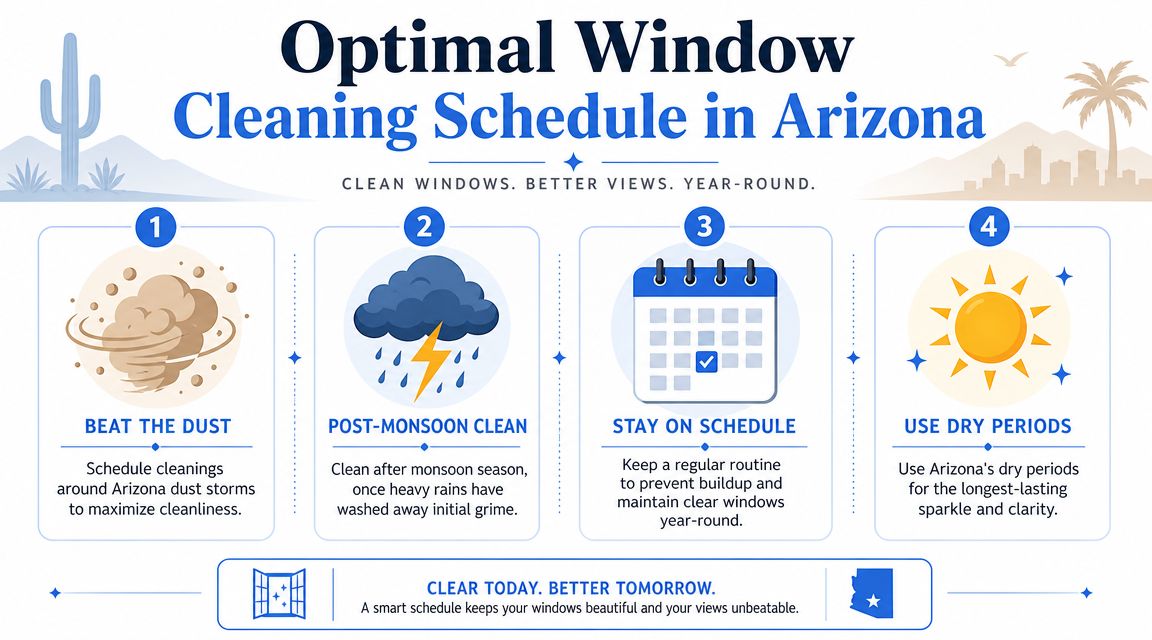
Window cleaning sits inside a broader U.S. industry that reached $2.9 billion in 2024 and is projected to reach $3.2 billion by 2029. In the Phoenix metro, many customers schedule service every three to six months, a cadence tied to Arizona dust and sun exposure, according to this market overview on window cleaning demand and scheduling.
That interval makes sense for a lot of homes because it prevents the glass from slipping too far into restoration territory. Regular maintenance is usually easier, more predictable, and less frustrating than waiting until the buildup is obvious from indoors and out.
Not every property should follow the same pattern. A few conditions push windows toward more frequent service:
If dust inside the home is also part of the problem, it's worth understanding the whole environment, not just the glass. This guide on understanding home dust problems helps connect what settles on windows with the larger dust cycle inside and around the home.
Clean windows last longer when the schedule matches the property, not just the season.
In Arizona, timing the day matters almost as much as timing the month. Crews usually prefer cooler working windows because direct heat makes the job harder and can affect the finish on the glass.
A practical approach looks like this:
That's the real scheduling game in Arizona. You're not just chasing dirt. You're trying to stay ahead of what the climate keeps putting back.
Most companies can say they clean windows. Fewer can explain how they handle Arizona heat, hard-water exposure, screens packed with dust, and difficult access on larger properties. That difference matters more than branding.

A reputable company should be able to answer basic questions clearly and without hedging.
Look for these signs:
If a provider gets vague when you ask how they clean, when they schedule in heat, or what happens with screens and tracks, that's usually a warning.
Good companies don't just hand over a number. They talk through the conditions on your property.
Ask questions like:
Their answers tell you whether they're quoting a commodity job or providing a skilled service.
Window care is part of a wider property-maintenance picture. Homeowners who already think this way tend to make better service decisions across the board. For example, if you're comparing outdoor service providers in the same region, resources like this guide to top pool care in Peoria Arizona show the same themes that matter here. Clear scope, consistency, professionalism, and local knowledge.
The best hire usually isn't the one with the fastest quote. It's the one that understands your property before the work starts.
A seasoned company should make you feel that they've seen your kind of problem before. Arizona gives windows a specific kind of wear. You want a cleaner who recognizes it immediately.
This is the most important maintenance question, not the most cosmetic one.
Arizona property owners have a real concern about how often windows should be cleaned to avoid permanent etching from hard-water mineral deposits left by irrigation or storms. That risk makes regular professional cleaning a protective investment, not just a visual upgrade, as noted by Arizona Preferred Window Cleaning's guidance on hard-water damage and maintenance timing.
If your home has frequent sprinkler overspray, runoff patterns, or storm exposure, don't wait until the spots look severe. Mineral deposits are easier to remove before they sit too long.
Usually, yes, especially in Arizona.
Smaller homes still deal with the same climate issues as larger ones. Dust loads the screens. Tracks fill with grit. Hard-water spotting doesn't care how many panes you have. The benefit of professional service on a smaller home is often speed and completeness. A good crew can clean the glass properly, address the surrounding components, and save you from repeating a frustrating DIY job that didn't hold up.
Regular cleaning removes normal dirt, dust, and residue. Hard-water stain removal targets mineral deposits that have bonded to the glass more aggressively.
That distinction matters because some spots that look like ordinary dirt aren't. If the marks came from irrigation, hose spray, or storm runoff, they may need more than standard soap-and-squeegee work. The longer they sit, the more cautious the removal process needs to be.
Sometimes yes, often not for long.
Monsoon weather can leave mud specks, runoff marks, and dirty residue in corners and tracks. Even when the glass doesn't look terrible right away, the surrounding parts of the window often collect debris. That's why post-storm service can make sense, especially on exposed sides of the property.
In Arizona, that's usually the smart choice.
Dust and grit don't stop at the pane. If you leave screens loaded with dust or tracks filled with debris, the windows rarely look fully clean, and the surrounding buildup keeps working its way back onto the glass and moving parts. For most properties, complete window care means treating the entire assembly, not just the visible center of the pane.
If your windows are fighting Arizona sun, dust, and hard-water spotting, Professional Window Cleaning can help with residential, commercial, and high-rise service built for desert conditions. With more than 26 years of experience and service across Arizona, Nevada, and Colorado, they know how to clean glass the right way and keep your property looking cared for.
Read our blog posts regularly and keep learning.