Care and Maintenance
How to Restore Window Glass and Frames the Right Way
Learn how to restore window glass, frames, and seals with pro methods, real tools, and honest trade-offs. A practical guide


Window washing high-rise buildings is more than just a cleaning chore; it’s a critical maintenance service that demands elite skill, precision engineering, and unshakable safety standards, often performed hundreds of feet in the air. This highly specialized field is absolutely essential for protecting property value, ensuring tenant satisfaction, and preserving the architectural beauty of modern skyscrapers.
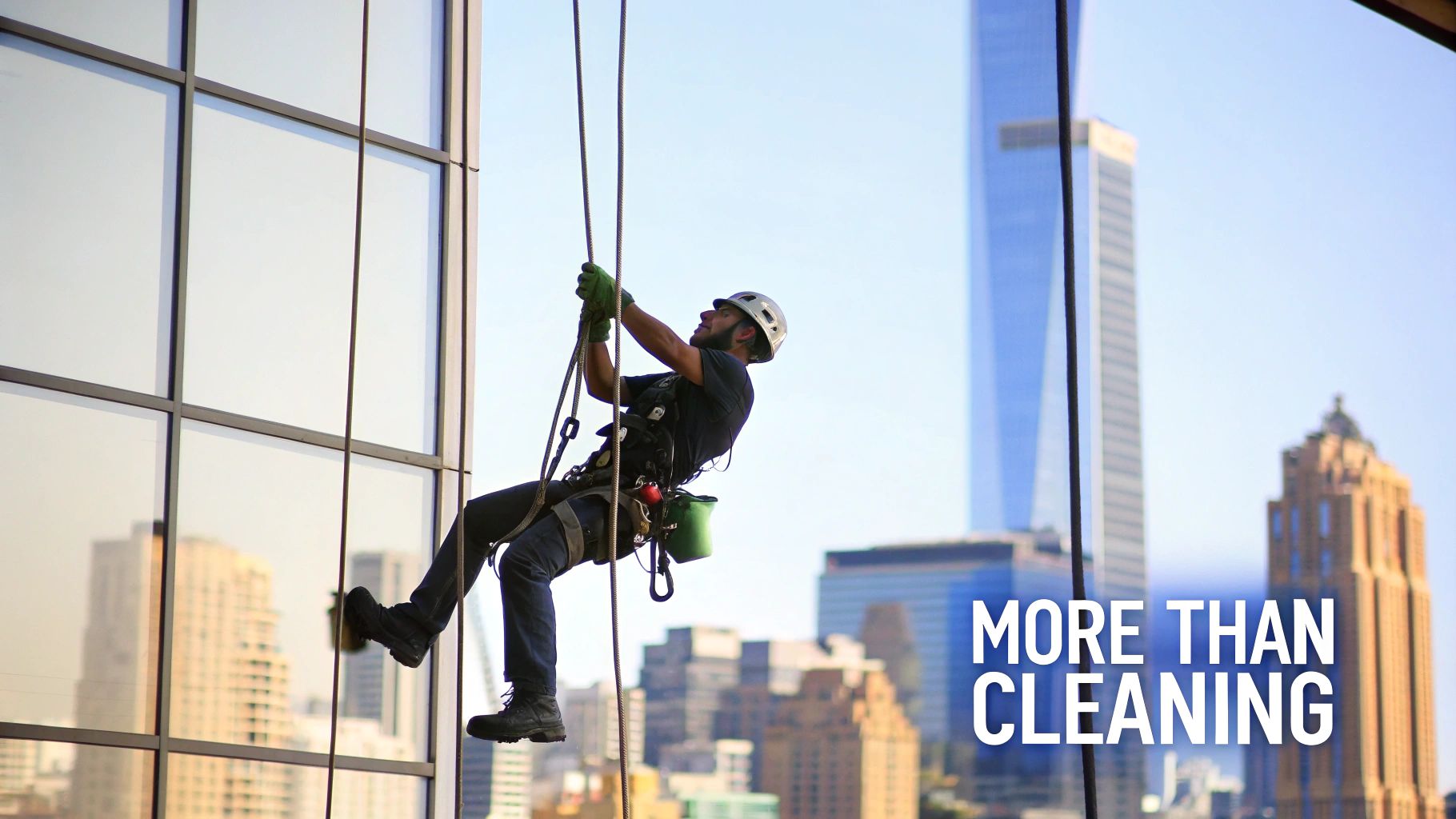
From the street, a skyscraper's gleaming facade is a powerful symbol of urban progress. But keeping that pristine appearance is a complex operation that goes far beyond just looks. Professional high-rise window washing is a vital service that directly impacts a building's health, its market value, and the well-being of everyone inside.
Think of it as preventative maintenance for a building’s most visible and vulnerable asset. Over time, glass surfaces get caked with dirt, pollutants, and hard water stains. If left alone, these corrosive elements can actually etch into the glass, leading to permanent damage and incredibly costly window replacements.
As our cities continue to build upward, the need for specialized building maintenance has skyrocketed right along with them. This trend is easy to see in the window cleaning services market, which is experiencing some serious growth.
Valued globally at USD 141 billion, the market is projected to hit an incredible USD 257.27 billion by 2032. This surge is largely driven by the boom in high-rise construction across North America. You can find more details about this growth in the Fortune Business Insights market report.
This rapid expansion shows just how much building managers are recognizing the importance of professional care. A clean, well-maintained building isn't just nice to look at; it's a fundamental part of smart asset management.
Regular, professional service delivers tangible returns that benefit everyone from the building owner down to the tenants inside. The key advantages are clear:
In this guide, we'll walk you through the methods, safety protocols, and key considerations for window washing high rise buildings, giving you a clear view of what it really takes to maintain these incredible structures.
Ever look up at a freshly cleaned skyscraper and wonder, how on earth did they do that? Seeing professionals working safely on a sheer vertical surface hundreds of feet in the air is pretty amazing. The secret is a combination of specialized access methods and proven cleaning techniques, each chosen to match the building’s unique architecture.
Before a single window gets cleaned, the first puzzle to solve is always the same: how to get the technicians into the perfect position.
The first big decision on any high-rise job is figuring out the access system. This isn't a one-size-fits-all scenario; the building's own design dictates the best and safest approach. Technicians have to be able to reach every single square inch of glass, which means the system must navigate any tricky features like balconies, setbacks, or funky angles.
There are three primary systems that pros rely on:
It's a common misconception that one access method is just flat-out better than the others. The reality is, the best crews are experts in all three. They choose the right tool for the job, always putting safety and efficiency first based on what the building demands.
Each of these systems requires intensive training and sticking to strict safety protocols. It's all about making sure technicians are secure while they're suspended way up high. To get a closer look at the gear involved, check out our detailed guide on high rise window washing equipment.
Once a technician is safely in position, the real work begins. In the professional world, it doesn't matter which access method is used—there are really only two trusted techniques to get that perfect, streak-free shine on a high-rise.
The choice between them often comes down to the building's location, the type of dirt and grime, and even the access method itself. For instance, the intense sun and dust in cities like Phoenix, or Las Vegas, can literally bake grime onto glass, which definitely influences the cleaning approach.
The squeegee is the iconic tool of a window cleaner, and for a very good reason. In the hands of a skilled pro, it delivers an absolutely impeccable, hand-detailed finish.
This method involves applying a special cleaning solution to the glass with an applicator, which breaks down and loosens all the dirt, dust, and grime. The technician then uses a professional-grade squeegee to expertly pull the soapy water and all the trapped dirt right off the glass, leaving behind a perfectly clear, streak-free surface. It takes a ton of skill and practice to master, especially when you're doing it from a rope or platform high above the street.
The second technique brings technology into the mix for incredible efficiency. A pure-water system uses water that has been filtered through deionization or reverse osmosis, a process that strips out every last mineral and impurity.
This purified water is then pumped up a long, lightweight carbon fiber pole that has a brush on the end. The technician scrubs the window with the brush, and the pure water acts like a magnet for dirt, lifting it away. Because the water is 100% pure, it can be left to air-dry without leaving a single spot or streak behind. This method is exceptionally effective and is often used from suspended platforms or for cleaning the lower levels of a building right from the ground. It's also a fantastic solution for the unique environmental conditions in places like Denver, where hard water mineral deposits can be a real headache.
From the ground, the results of a great window washing job are obvious: sparkling, streak-free glass that transforms a building's appearance. What's completely invisible, though, is the most critical part of the job. Safety isn't just a priority; it's the entire framework that makes this demanding profession possible.
Think of it as the unseen architecture behind every clean window. Every knot tied, every piece of equipment inspected, and every single movement is governed by a strict set of rules and certifications. Without this robust structure of regulations and training, the work simply couldn't happen.
This diagram illustrates the most common ways technicians get into position to do their work.
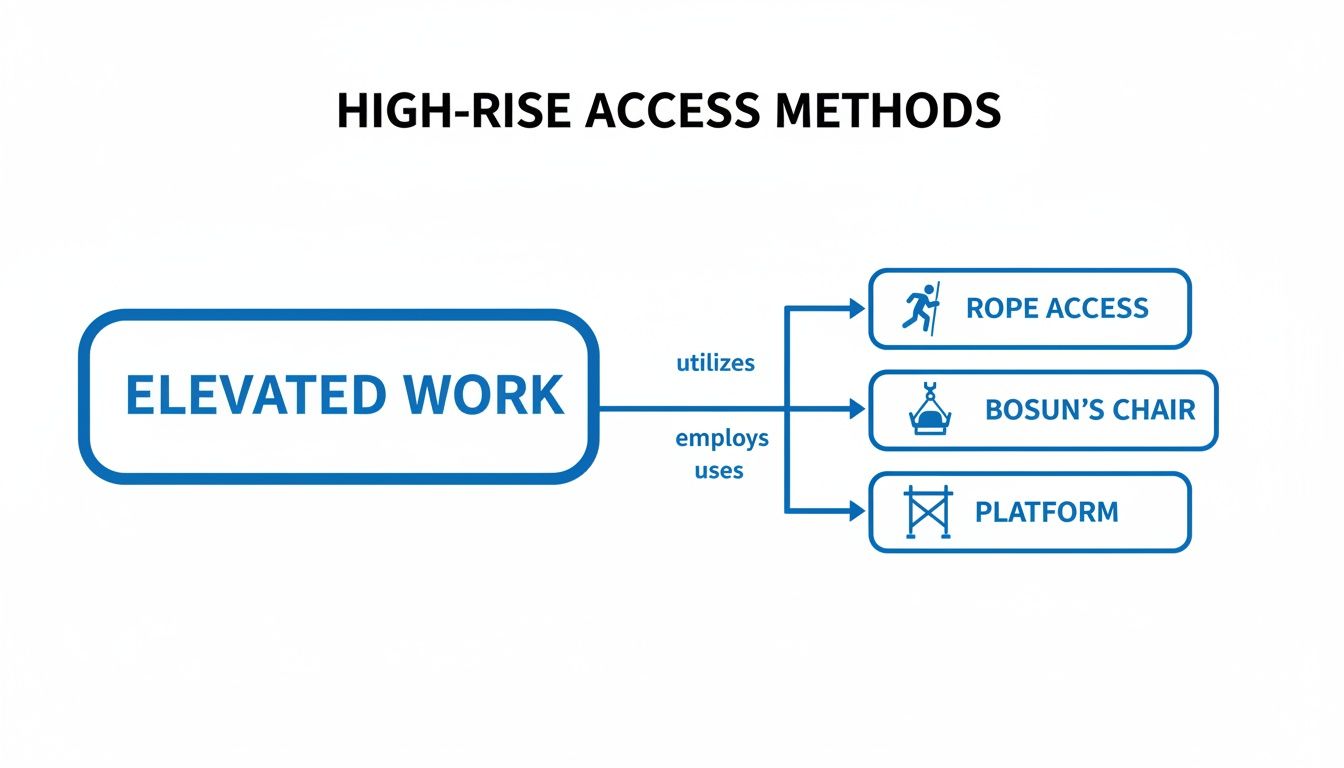
Each of these methods—from rigging ropes to inspecting platform mechanics—demands its own specialized safety protocols. It's a world away from cleaning windows on the ground floor.
A couple of key organizations create and enforce the safety standards that reputable window cleaning companies live by. Their guidelines aren't just suggestions; they are mandatory practices that separate true professionals from risky, unqualified operators.
OSHA (Occupational Safety and Health Administration): This federal agency sets the legal bar for workplace safety in the U.S. For high-rise window washing, OSHA’s rules are extensive, covering everything from fall protection systems and equipment inspections to the engineering requirements for certified anchor points on a building's roof.
IWCA (International Window Cleaning Association): As a leading industry-specific organization, the IWCA provides the education, training, and safety certification programs that bring OSHA's rules to life. If OSHA writes the law, the IWCA teaches technicians how to apply it in real-world scenarios, ensuring they master best practices for working safely at height.
A professional company's commitment to safety is its most important credential. This means not only following OSHA regulations to the letter but also investing in ongoing IWCA training to ensure their team is skilled in the latest techniques and rescue procedures.
Strict protocols, like OSHA standards that mandate harnesses, anchors, and training for any work performed above six feet, have dramatically reduced incidents. As skyscrapers become more common, new technologies are also making the job safer. Pilot programs using robotic drones and AI-driven cleaning systems are even showing the potential to reduce risks by as much as 70%.
Beyond company-wide compliance, individual technicians must earn specialized certifications that prove their personal competence and skill, especially when using rope access methods. These aren't just pieces of paper; they are hard-earned credentials that verify a technician can perform complex maneuvers and, crucially, execute a rescue if needed.
Two of the most respected certifications in the industry are:
When a building manager hires a team with these certifications, they’re getting more than just window washers—they’re getting proven experts in vertical mobility and safety.
Verifying these credentials is a critical step in the hiring process. Here’s a quick rundown of the essential certifications to look for.
Looking for these certifications gives you confidence that the contractor you choose values safety as much as you do.
Of course, training and protocols are only half the battle—the right equipment is paramount. You can explore essential personal protective gear in a complete guide to safety supplies. This knowledge is essential for distinguishing between truly professional operators and those who might cut corners. To go even deeper, check out our detailed article on safe practices for window cleaning high rise buildings. This invisible framework of rules and training is what provides ultimate peace of mind.
So, what does it actually cost to get a skyscraper's windows professionally washed? Unlike a simple car wash, there's no flat-rate price tag for window washing high rise buildings. The final quote is always a detailed calculation based on the unique variables of each and every building.
Think of it like commissioning a custom piece of art. The final price depends on the size of the canvas, the complexity of the design, and the materials needed. In the same way, a high-rise window washing proposal is completely tailored to the specific challenges and requirements of your property.
The biggest driver of the cost is, unsurprisingly, the sheer scale of the job. This isn't just about the building's height, but the total number of individual windows that need attention. A 40-story building with thousands of small, separate panes presents a completely different challenge than a 60-story tower with large, continuous glass curtain walls.
Architectural complexity is another huge factor. A flat, uniform facade is the most straightforward and, therefore, the most cost-effective to clean. But the very features that give a building its character also tend to add to the cleaning budget.
The current condition of the windows plays a huge role in the pricing. A building that gets regular cleanings will be far less expensive to service than one that has years of accumulated dirt, mineral deposits, and pollutants baked right onto the glass. A first-time deep clean always requires more time, muscle, and resources.
The access method required is also a massive part of the budget. Setting up a full suspended platform is a lot more involved than a simple rope access descent, and that choice depends entirely on what’s safest and most efficient for the building’s design. To dig deeper into commercial pricing, you can learn more from our guide on commercial window cleaning prices.
The most significant variable in any high-rise window washing budget is labor. The skill, training, and risk involved in this profession mean that companies must invest heavily in their technicians, which is reflected in the final cost.
The dangerous nature of the work means that high-rise window cleaners command premium salaries. In the US, these specialists can earn between $60,000 and $100,000 annually, which is far more than the average for general window cleaners.
Beyond the cleaning itself, logistical challenges can add to the final invoice. These are the kinds of details that are easy to overlook but are absolutely essential for a safe and legal operation.
For instance, if the work requires closing a sidewalk to pedestrians, the company may need to secure municipal permits, which come with their own fees and administrative time. Similarly, if a job needs specialized equipment like an articulated boom lift to reach a tricky section of the building, the rental and operation costs for that machinery will be baked into the quote.
Ultimately, a transparent and detailed proposal will break down all these elements for you. Understanding these components helps you analyze bids intelligently and appreciate the value behind the price. Beyond just the initial service fee, understanding factors like equipment longevity and ongoing maintenance is key for reducing the total cost of ownership when it comes to building maintenance services.

Choosing the right partner for window washing high rise buildings is one of the most important decisions a property manager can make. The stakes are sky-high, literally. You're dealing with worker safety, the protection of your property, and the public walking below.
A qualified contractor operates with precision and professionalism. An unqualified one? They introduce a level of risk you simply can’t afford.
This isn’t about finding the lowest bid. It's about finding a partner with a proven track record, ironclad safety protocols, and the credentials to back it all up. You need to vet their ability to handle the unique architecture and challenges of your specific building safely and effectively.
Before you even think about signing a contract, you need to conduct a thorough interview. The answers you get will quickly separate the true professionals from the rest. A reputable company will be totally transparent and should have no problem providing documentation for everything you ask.
Your vetting checklist should include these non-negotiables:
Talk is cheap. Proof is everything. Any professional contractor worth their salt will have a list of verifiable references from other property managers in your area. Don’t just glance at the list—actually pick up the phone and call them.
Ask past clients about their experience. How was the communication? The professionalism? The quality of the work? Did they disrupt tenants? Did they stick to the schedule and safety plan? This kind of firsthand feedback is priceless.
The most reliable indicator of a contractor's quality isn't their sales pitch; it's the consistent satisfaction of their past and current clients. A long list of happy customers is the best certification of all.
When you get a proposal, it’s time to read between the lines. A professional bid is more than just a number; it’s a detailed plan of action. It should give you total confidence that they know exactly what they’re doing.
A thorough proposal must include:
By following this structured approach, you can confidently pick a trustworthy and highly qualified contractor. You'll get that brilliant shine for your building without ever compromising on safety.
High-rise window washing isn't a one-size-fits-all job. What works perfectly on a skyscraper in one city could be completely inefficient—or even dangerous—in another. The local climate is a powerful, unseen force that dictates everything from the type of cleaning solution used to the hours a crew can safely hang from the side of a building.
Think about it: tackling salty sea spray on a coastal tower is a world away from handling the fine, persistent dust of an inland desert city. Top-tier professionals know this and adapt their entire strategy to overcome regional challenges, ensuring a flawless finish no matter the weather.
In the intensely arid climates of cities like Phoenix, and Las Vegas, the sun and heat are formidable opponents. The biggest problem is rapid evaporation. On a hot pane of glass, a standard cleaning solution can dry in mere seconds, leaving behind ugly streaks and mineral residue.
To get around this, crews have to be strategic. They often work during the cooler parts of the day, like the early morning, and use specialized cleaning solutions formulated with slower evaporation rates.
Desert cities also have to deal with a constant barrage of dust and sand. This airborne grit doesn't just make windows dirty; it's abrasive.
Now, let's head over to a city like Denver, which presents an entirely different playbook of environmental hurdles. Here, the weather is famously unpredictable. A calm, sunny morning can turn into a blustery, stormy afternoon in the blink of an eye.
High winds are the number one enemy of high-rise window washing. For safety, most operations must shut down when wind speeds climb above 20-25 mph. At that point, suspended platforms and rope access systems can become dangerously unstable.
This constant variability demands extreme flexibility and a safety-first mindset. Crews are glued to weather forecasts and must be ready to halt operations at a moment's notice. Sudden temperature drops can also mess with the effectiveness of cleaning solutions and introduce new risks for the team.
This means that scheduling is often tentative, and ironclad safety protocols are completely non-negotiable. Experienced contractors in these regions build buffer days into their project timelines to account for weather delays. It’s the only way to get the job done right without cutting corners. In climates like these, the success of window washing high rise buildings depends entirely on a team's ability to adapt.
Even after getting the full picture, most building owners and property managers still have a few specific questions that come to mind. Let's tackle some of the most common ones we hear.
As a rule of thumb, most commercial high-rise buildings get a professional cleaning two to four times a year. This schedule is usually enough to maintain a sharp appearance and, just as importantly, prevent corrosive pollutants from building up and damaging the glass over time.
Of course, this is just a starting point. Your building’s specific environment is the real deciding factor. A skyscraper in a dusty, dry climate like Phoenix, AZ, or one right next to a busy highway, will naturally need more frequent attention to stay looking its best.
When it's done by certified professionals, high-rise window washing is an incredibly safe and highly regulated industry. Reputable companies don't just follow the rules—they live by them, operating under strict safety protocols laid out by organizations like OSHA and the IWCA. Their technicians are pros, with extensive training in fall protection, equipment rigging, and emergency rescue.
The danger isn't in the job itself, but in who you hire to do it. The real risk comes from untrained or uninsured operators who might be tempted to cut corners on safety. That’s why it is absolutely essential for building managers to verify a contractor's credentials, insurance, and safety record before a single rope is dropped.
One isn't "better" than the other—they're just different tools for different jobs. The right choice really comes down to the building itself, the access method being used, and the type of grime we’re dealing with.
A technician up close with a squeegee can deliver a flawless, hand-detailed finish that’s perfect for tackling stubborn spots. On the other hand, a pure-water system is a powerhouse of efficiency for cleaning huge sections of glass from a platform or from the ground, since the deionized water dries perfectly spot-free without a single wipe.
Safety always, always comes first. That means if the weather turns, work stops. The biggest showstopper is high winds, typically anything gusting over 20-25 mph. Strong winds can turn suspended platforms and rope access systems into dangerous, unstable pendulums.
While crews might be able to work through a light drizzle, other conditions will shut down a job immediately. Heavy rain, thunderstorms, and freezing temperatures don't just compromise the quality of the clean; they put the technicians’ safety at risk.
For a partner with a proven track record of safety and excellence in high-rise window care, trust the experts at Professional Window Cleaning. Find out how we can make your property shine by visiting us at https://www.professionalwindowcleaning.com.
Read our blog posts regularly and keep learning.