Care and Maintenance
How to Clean Tinted Window Film Safely
Learn how to clean tinted window film without scratching or peeling. Discover safe tools, approved cleaners, and pro techniques for spotless results.


Sunlight tells the truth fast. A window can look acceptable in the morning, then the afternoon light hits it and suddenly every streak, dust line, screen mark, and water spot stands out. Homeowners notice it from the couch. Property managers notice it from the parking lot. Retail tenants notice it when the front glass stops looking sharp.
That's usually when people start searching for real window washing services instead of another weekend DIY attempt. After more than 26 years in this trade, one thing stays the same. Clean glass changes how a place feels. It brightens interiors, sharpens views, and makes a building look maintained instead of neglected.
You see the difference the moment a room catches full daylight. Kitchen counters look brighter. Floor colors read correctly. The yard, mountains, pool, or city view stops looking flat behind a film of dust and hard-water spotting.
A lot of homeowners call us because something feels off inside the house and they cannot put a finger on it. Then the glass gets cleaned and the whole space opens up again. After 26 years in this trade, I can say that result is consistent across homes, storefronts, medical offices, and multi-tenant properties.
For businesses, clean glass affects perception fast. Entry doors, sidelights, conference room glass, and front-facing windows tell people whether a property is actively maintained. Property managers already know this. Tenants notice it too, especially in retail and professional office settings where appearance ties directly to customer confidence.
The market has grown with the amount of glass being built into modern properties. Analysts at Grand View Research's global window cleaning market outlook report continued growth in professional window cleaning services, which tracks with what crews see in the field every week.
Homes now have larger panes, taller entries, more backyard glass, and more second-story windows. Commercial properties have wider storefront systems, more lobby glass, and stricter appearance standards. As that glass footprint grows, so does the gap between a quick wipe-down and a professional result.
In Arizona, mineral-heavy water and intense sun expose spotting fast. In Nevada, dust buildup and heat work against clean exterior glass. In Colorado, wind, pollen, spring debris, and snowmelt residue create a different set of problems. The conditions change by city and season, but the expectation stays the same. Glass should look clear, not almost clean.
That is one reason more clients ask about pure water window washing for exterior glass. They want a method that fits the building, the access conditions, and the type of debris on the glass.
The value is not limited to appearance.
Clean windows also help people enjoy the property they are already paying for. If you invested in mountain views in Colorado, desert views in Arizona, or strip and skyline views in Nevada, dirty glass cuts into that experience every day.
That is the core value. Clean windows improve how a property looks from the curb and how it feels from inside.
Professionals use only two methods to clean windows. That surprises a lot of people, because the outside world makes it sound like there are dozens of systems. There aren't. The professional trade comes down to the traditional mop-and-squeegee method and the pure-water system, as explained in this breakdown of squeegee vs. pure-water window cleaning methods.
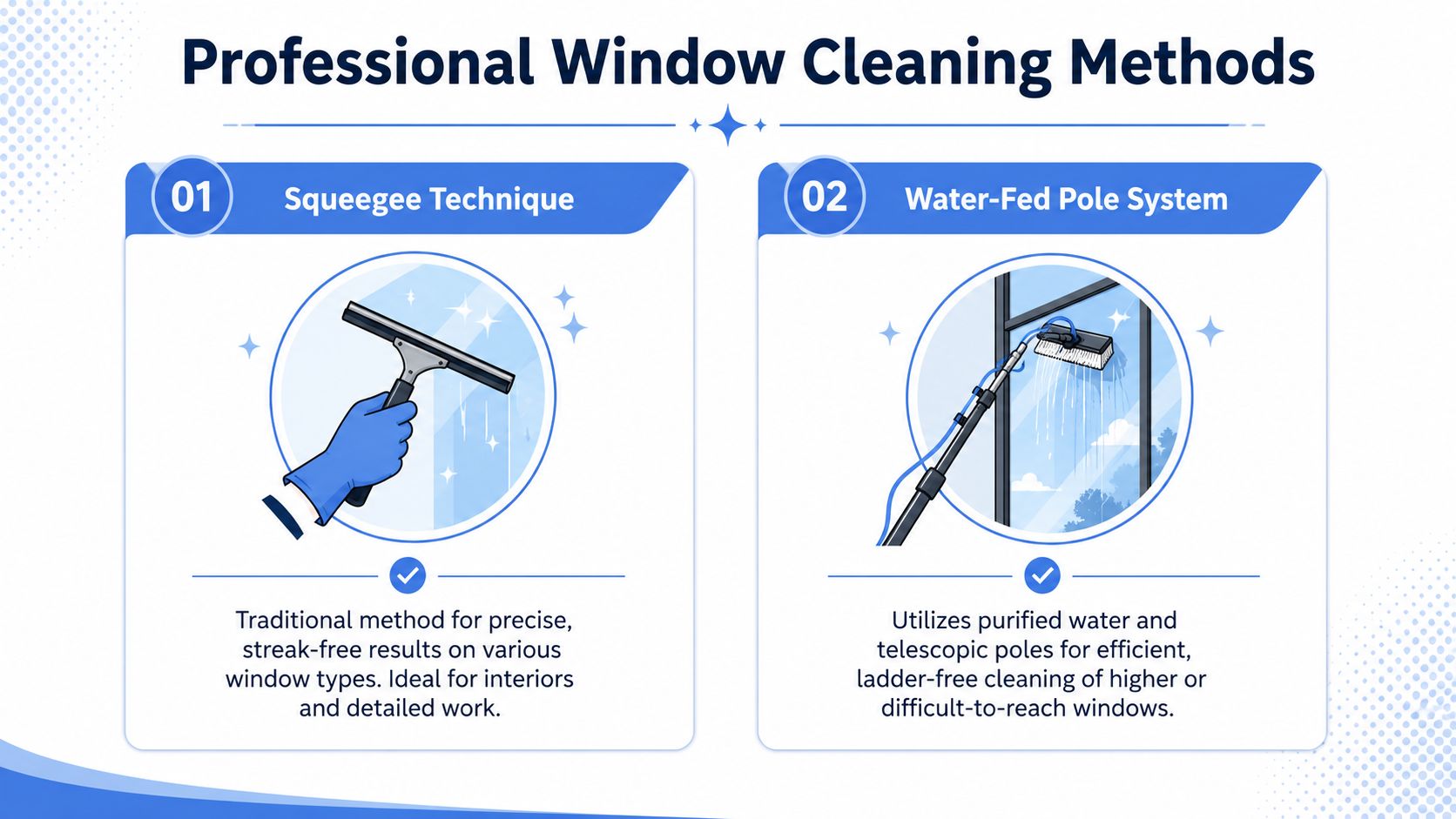
Each method has strengths. Good technicians know when to use one, when to use the other, and when a property needs both.
This is the classic professional system. A washer applies cleaning solution with a mop or strip washer, loosens soil from the glass, then removes the water with a squeegee blade. Done correctly, it leaves the glass crisp and streak-free.
It's the best choice for interior glass, detail-heavy jobs, French panes, and windows where edge work matters. It also gives the technician direct control over corners, tight frames, and final finishing.
What works:
What doesn't work well is rushing it. If the rubber edge is worn, if the mop leaves too much solution, or if the technician doesn't control the angle, the result is drag lines and misses.
A lot of homeowners have tried this themselves and learned the hard way. The tool looks simple. The technique isn't.
The second method is the pure-water system. It uses ordinary tap water that has been filtered to remove natural minerals. That matters because minerals are what leave spots behind when water dries. Purified water dries clean without soap residue or hard-water spotting from the rinse itself. This overview of pure-water cleaning fundamentals explains the difference well.
For many exterior jobs, especially higher glass, this is the most efficient modern approach. Technicians scrub with a water-fed pole brush, rinse thoroughly, and let the glass dry clear.
Practical rule: Pure water is excellent for exterior maintenance cleaning. It is not a shortcut for poor technique.
There's also a real equipment trade-off. A complete pure-water setup requires a meaningful startup investment, typically about $2,500 to $3,000 for a filtration package, based on this industry discussion of pure-water startup equipment costs. That's one reason experienced companies treat the system like a production tool, not a gimmick.
For readers who want a deeper look at how that process works in the field, this guide to pure water window washing is useful.
A simple best practice separates good pure-water work from bad pure-water work. Technicians should clean from the top down, which helps prevent dirty water from re-contaminating cleaned glass, as noted in Unger's guidance on common pure-water cleaning mistakes.
Here's a quick visual overview before we move on:
A homeowner usually wants spotless glass, clean screens, and a crew that respects the house. A property manager wants the work done on schedule, with no tenant complaints and no surprises. A high-rise manager wants documentation, access planning, and a crew that understands height work before the first rope or lift comes out.
Those are three different service categories. After 26 years in this trade, I can tell you the companies that treat them as the same job usually disappoint someone.
The business side reflects that split. Analysts at IBISWorld's industry snapshot note that commercial work drives a large share of industry value, while residential demand tends to rise and fall with the season. That matches what experienced crews see in the field.
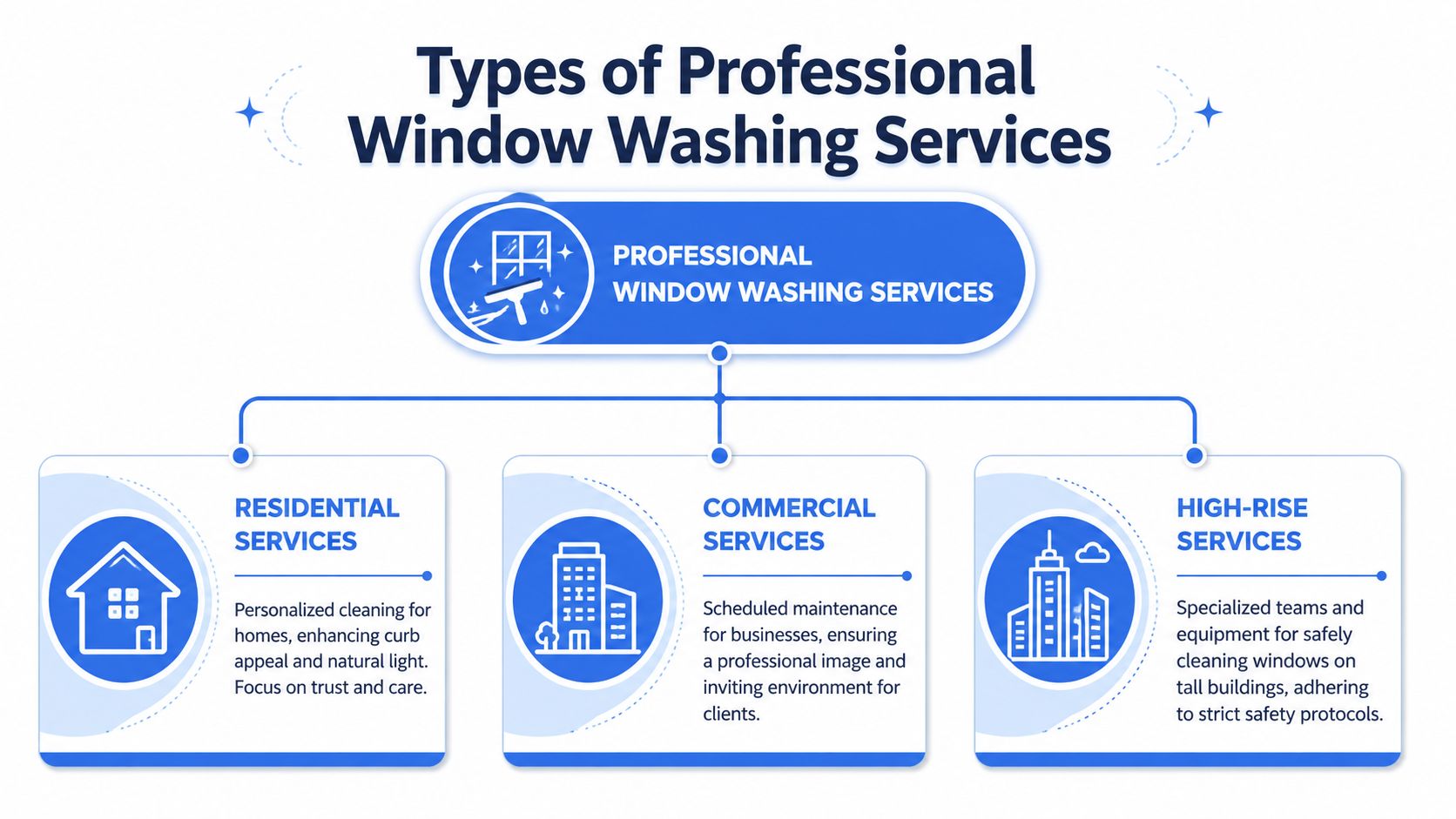
Residential window cleaning is personal. The client sees the glass from the couch, the kitchen sink, and the back patio door every day. Small misses stand out fast. A little drip on the sill, a bug mark in the corner, or a screen put back crooked can outweigh a lot of good work.
Method choice matters here. We often use squeegee work inside because it gives tight edge control and a finished look on detail-heavy panes. Pure water can be excellent on exterior residential glass, especially for taller windows and routine maintenance, but it still has to be matched to the layout, the soil level, and the client's expectations.
Good residential crews pay attention to the home, not just the pane:
Commercial clients usually care most about reliability. Storefronts, office buildings, medical suites, restaurants, and managed properties need a crew that shows up as scheduled and works without slowing down the site.
That changes how the service is built. Route density matters. Access timing matters. Communication matters. A retail route may need early morning touch-ups before customers arrive, while an office complex may need a recurring exterior plan that combines pure water production on upper glass with traditional squeegee work at entrances and lobby glass where close-up appearance counts.
In Arizona, Nevada, and Colorado, local conditions also affect the maintenance cycle. Desert dust in the Phoenix and Las Vegas markets builds up fast on exposed exterior glass. In Colorado, wind, spring pollen, and winter residue can change what the glass needs from one visit to the next. The best commercial programs account for those differences instead of forcing every property into the same frequency.
For property managers, proof matters too. Service photos, issue tracking, and timestamped records help confirm what was done, especially across larger portfolios. Many teams now use top visual proof software to keep that documentation organized.
High-rise cleaning is specialized access work with window cleaning attached to it. The glass may be the visible result, but the actual work starts with the plan. Access points, anchor systems, drop zones, weather calls, tenant coordination, and rescue procedures all have to be clear before work begins.
The cleaning method also changes with the building. Some elevations are best handled with rope descent. Others make more sense with lifts, swing stages, or a mix of access methods. Pure water has a place on certain mid-rise and accessible exterior sections. Traditional tools still matter on detailed glass, lower levels, interior corridors, and problem areas that need hand work.
Inexperience shows quickly. If a company talks in general terms about height work, cannot explain its access approach, or treats safety paperwork like a formality, keep looking. On towers, condominiums, hotels, arenas, and dealership glass packages, vague answers usually lead to expensive problems.
The biggest misunderstanding in this industry is that clients think they're paying only for “glass cleaning.” A complete job includes the surrounding details that make the glass look finished.
If the pane is clean but the sill is dusty, the screen is dirty, and the track is full of debris, the window still looks neglected. Good window washing services handle the whole opening, not just the center of the glass.
A complete service usually includes several layers of work, depending on the property and scope:
Amateurs often fall short. They focus on visible glass and ignore the framing details that homeowners notice once the crew leaves.
A sharp example is the vinyl trim area between the glass and frame. In a 2024 discussion among professional window cleaners, 68% of customer complaints were said to stem from failures to clean details like the vinyl trim between the glass and frame, according to this Reddit discussion among window cleaning professionals.
That rings true in real-world work. If residue sits in that trim line, it telegraphs poor workmanship even when the pane itself is mostly clean.
What separates a professional finish from a quick wash is usually this kind of detail work:
| Area | What good crews do | What rushed crews miss |
|---|---|---|
| Glass edges | Check corners and borders closely | Leave faint dirty lines |
| Screens | Clean both screen and frame contact area | Reinstall dusty screens |
| Sills | Wipe runoff and loosened grime | Leave drips and sludge |
| Trim details | Clean tight vinyl edges carefully | Leave buildup that catches light |
Property managers who want consistency across crews often benefit from visual documentation standards. If you're comparing field workflows, this guide to top visual proof software is a practical resource for understanding how service teams verify completed work.
Dirty windows are annoying. Unsafe window cleaning is catastrophic. That's why safety isn't a side topic in this trade. It's the first filter for whether a company should be on your property at all.
This applies to a two-story home, a retail center, or a tower in Phoenix. The height changes. The principle doesn't. If a crew can't explain its safety process clearly, don't hire it.
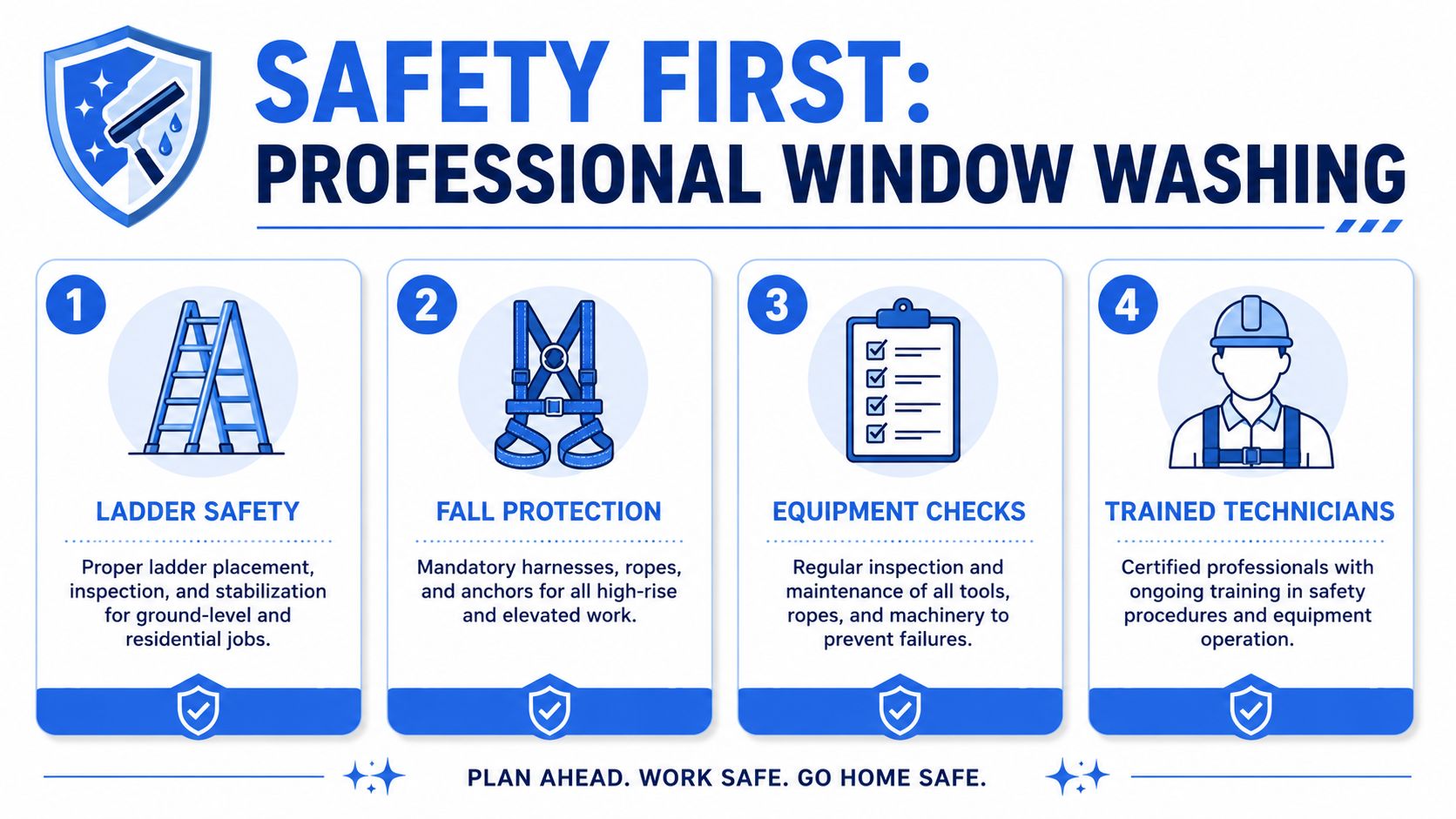
For high-rise work, OSHA regulation 29 CFR 1910.66 mandates annual inspections of powered platforms and requires anchor points to have a documented load capacity of at least 5,000 lbs per worker for fall arrest systems, as summarized in this article on high-rise window washing safety standards.
That's not paperwork for paperwork's sake. It means the access system must be documented, current, and fit for use. If anchor certifications are outdated or missing, the work shouldn't proceed.
A competent contractor should be able to discuss:
For some specialty work, crews use Rope Descent Systems. Those systems aren't casual gear. OSHA 1910.27 places firm limits on how they're used, and industry guidance summarized by the National Window Cleaning Authority's safety standards overview notes requirements such as separate fall arrest attachment, component load capacity, and stopping work when wind speed exceeds 25 mph.
That last point matters more than many clients realize. Wind can turn a manageable descent into an unstable one fast. A professional crew knows when not to work.
If weather, anchors, or equipment checks don't line up, the right decision is to postpone the job.
Homeowners often think the significant risk starts on skyscrapers. It doesn't. Ladders cause serious problems on ordinary residential jobs. A separate consumer safety gap exists here as well. Cornell's Environment, Health and Safety guidance says windows shouldn't be cleaned where the interior surface is more than 35 feet above the nearest interior floor, and a consumer safety summary notes that 70% of window cleaning accidents involve ladder falls or falls from height, based on this Cornell-related window washing safety reference.
That's why “I'll just do the upper windows myself” is often the most expensive cheap decision a property owner can make.
You call three window cleaning companies. All three say they do great work, all three say they're insured, and all three promise a fair price. The difference usually shows up five minutes into the conversation, once you ask how they clean, what they include, and how they handle your specific property.
After more than 26 years in this trade, I can tell you that good providers answer direct questions with direct answers. They do not hide behind vague phrases like “full service” or “standard cleaning.” They tell you whether your home or building needs traditional squeegee work, pure water cleaning, or a mix of both. They explain why.
Use these questions when you compare window washing services:
Which method are you using on my property, squeegee or pure water, and why?
A solid answer connects the method to your glass, access, and finish expectations. Storefront glass and interior panes often call for squeegee work. Exterior glass on taller buildings or hard-to-reach elevations may be a better fit for pure water.
What is included besides the glass?
Ask about screens, tracks, sills, frame wipe-downs, and whether hard water spotting or construction debris is part of the quote or billed separately.
How will you access the difficult windows?
The right company should describe the plan clearly. Water-fed poles, ladders, roof access, lift work, and interior atrium access all come with different labor and setup requirements.
Are your workers covered properly, and what insurance do you carry?
Those answers should be clear and specific. If you want a plain-English breakdown, this guide on bonded vs insured cleaning companies explains what each protection means for the property owner.
A professional should also be comfortable talking through trade-offs. Pure water can be the right choice for many exterior jobs, but it is not the answer for every pane. Squeegee work delivers tighter detailing in some situations, especially on interior glass or lower-level windows where hand work makes the difference. Providers who only push one method usually build every estimate around their equipment, not around your property.
Regional conditions change how windows get dirty and how often they need attention. A provider who works regularly in Arizona, Nevada, and Colorado should already understand that.
In Las Vegas, mineral spotting, desert dust, and relentless sun exposure change the conversation. In Scottsdale and the greater Phoenix area, stucco runoff, pollen, screen buildup, and fine dust are common service issues on residential homes. Colorado properties deal with wind, seasonal grime, snow residue, and temperature swings that affect timing and access. That local experience helps a crew choose the right method, set realistic expectations, and recommend a maintenance schedule that fits the property instead of forcing a generic plan.
Property managers should listen for another detail. A company with real local experience asks questions before quoting. They ask about irrigation overspray, exterior finish type, shade exposure, screen style, access gates, and whether the building has glass that stays cleaner on one elevation than another. Those are field questions, not call-center questions.
A provider's office habits usually show up in the field. If scheduling is sloppy, confirmations are late, and nobody can answer basic scope questions, the job often runs the same way on site.
That is one reason many established companies invest in better phone coverage and booking systems. For owners comparing contractor response standards, this overview of cleaning service answering solutions gives useful context.
Fast replies do not clean windows. Clear communication does save time, prevent scope disputes, and make recurring service much easier to manage.
Longevity helps too. Crews with years in the trade have already seen oxidized frames, divided-light glass, ladder-only access, low-E coatings, post-construction debris, and buildings that need both squeegee and pure water service on the same job. Experience does not excuse poor standards. It does help a company spot problems early and solve them without trial and error.
Most final questions come down to price, timing, and whether the work is safe for the property. Those are fair questions, and the right answers are usually practical rather than complicated.
Pricing depends on scope, not guesswork. Window count matters, but so do pane size, accessibility, screen removal, track condition, interior access, and how dirty the glass is. A first-time cleaning after long neglect takes more labor than routine maintenance.
High or awkward windows also affect the bid because access planning changes the work. That's true for residential homes, retail storefronts, and larger buildings alike.
There isn't one perfect schedule for everyone. Residential owners usually choose service based on dust, weather, landscaping, and how visible the glass is from main living areas. Commercial properties often need a recurring schedule because entrances and public-facing glass lose their appearance faster.
If your building deals with moisture, staining, or related maintenance concerns beyond the glass itself, broader property research can help. This 2026 mold company hiring guide is a useful example of how to vet service providers when health, maintenance, and documentation all matter.
Yes, when the company uses professional methods properly. Traditional squeegee work uses standard cleaning solution in controlled amounts. Pure-water cleaning uses filtered water without mineral content, which is one reason it's so effective on exterior glass. The bigger safety issue is usually technique, not chemistry.
A little prep helps. Move fragile items away from interior windows, ensure gates are open if exterior access is needed, and secure pets. For commercial sites, let staff know when work is scheduled so technicians can move through the property without delays.
Clean windows look simple at the end. Getting them there takes method, detail work, and judgment.
If you want experienced help from a team that's been doing this since 1999, contact Professional Window Cleaning. They provide residential, commercial, and high-rise window washing services across Arizona, Colorado, and Nevada, and they bring the same goal to every property: make the glass look brand new.
Read our blog posts regularly and keep learning.