Care and Maintenance
8 Home Window Cleaning Tips for a Clearer View
Use these home window cleaning tips for better tools, timing, seasonal care, DIY methods, and knowing when professional help makes sense.


Ammonia window cleaner gets you that fast, streak-free shine because of two key properties: its powerful grease-cutting alkalinity and its ability to evaporate in a flash. For decades, it’s been the top choice for dissolving the tough grime, fingerprints, and oily films that other cleaners just seem to smear around. It’s a specialized solution for a truly brilliant finish.
For generations, that distinct scent of ammonia window cleaner meant one thing: sparkling clean glass. This isn't just a marketing fluke; it's rooted in the chemical's unique and powerful properties that make it exceptionally good at cutting through the toughest films on windows. It stands out as a go-to for everything from household chores to commercial cleaning.
The real strength of an ammonia-based formula comes from its one-two punch.
First, it’s a potent alkaline substance. This gives it incredible power to dissolve grease, oil, and grime. Think of it as a specialized key that unlocks and breaks down stubborn, oily residues left by fingerprints, cooking vapors, or outdoor pollution.
Second, ammonia is highly volatile. In simple terms, this means it evaporates almost instantly after you wipe it on a surface. As it vanishes, it takes the dissolved dirt and grime with it, leaving almost no residue behind. This rapid drying is the secret to preventing the streaks and spots that so often ruin window cleaning efforts, especially on a sunny day.
This combo of grease-cutting and fast evaporation makes ammonia a top performer in challenging situations. It’s exactly why it has remained a cornerstone of the glass cleaning industry for so long.
The graphic below sums up the core benefits that make ammonia so effective.
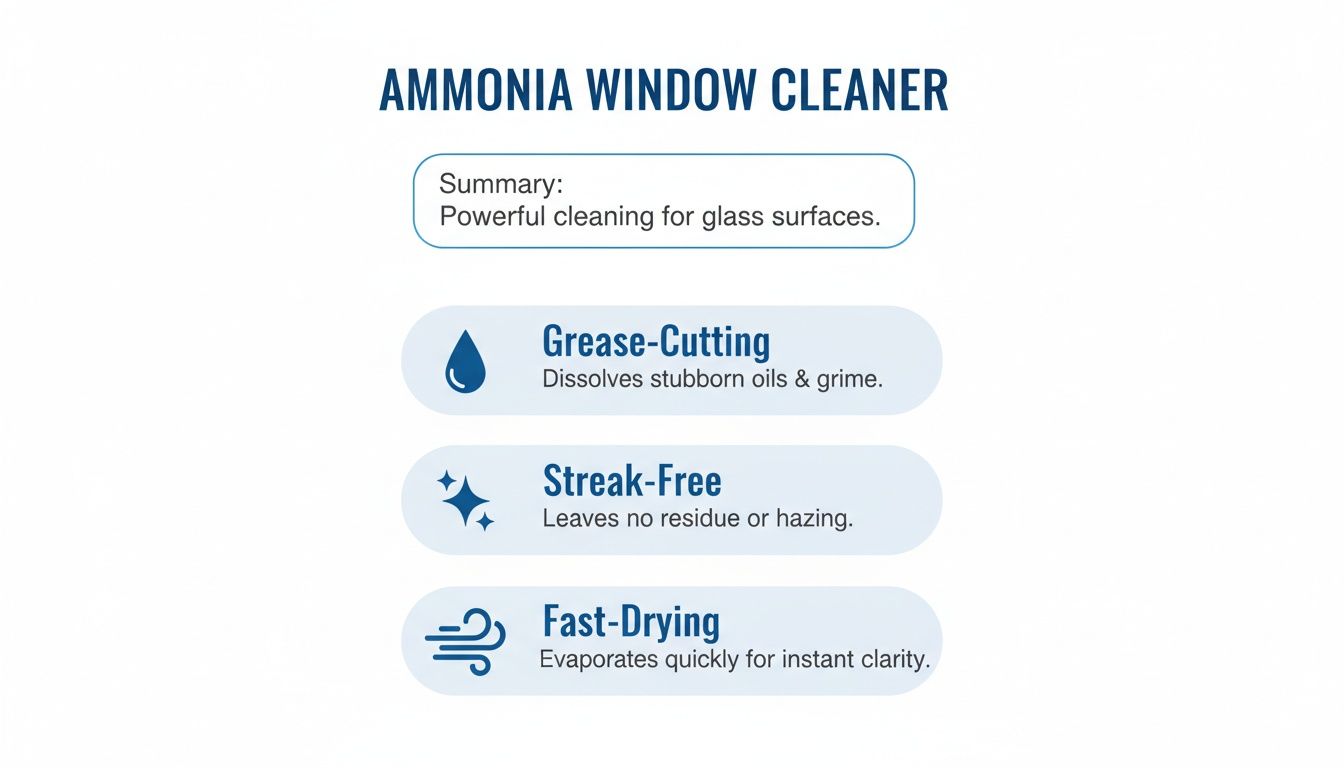
As you can see, the trifecta of grease-cutting power, a streak-free finish, and fast-drying properties makes it clear why ammonia-based cleaners have been trusted for so long.
This isn’t just anecdotal; the numbers back it up. The global glass cleaner market was valued at USD 2.45 billion in 2023, and ammonia-based products still hold a huge share of that. Formulations with ammonia can dissolve oily films 30-50% faster than many alternatives, making them ideal for everything from residential windows to the glass on commercial buildings in busy cities like Phoenix, AZ. You can explore additional data about the glass cleaner market to see how different formulas stack up.
While ammonia is a powerful tool, it’s not the only one in the shed. Different cleaning agents have their own strengths and are better suited for different jobs. Here’s a quick comparison to help you understand where each one shines.
Each of these—ammonia, vinegar, and alcohol—tackles a different kind of dirt. Knowing which one to grab is key to getting the best results without causing unintended damage.
At Professional Window Cleaning, we understand that different jobs require different tools. It's important to know there are ONLY 2 methods of window cleaning professionals use: a squeegee or a pure-water system. The history and effectiveness of ammonia-based cleaners demonstrate why specific chemical properties are so important for tackling tough grime.
Ever wonder how ammonia-based window cleaners manage to leave glass so perfectly clear and streak-free? It’s not magic. It’s a simple but powerful two-step chemical process that knocks out grime with impressive efficiency.
First, ammonia brings its high alkalinity to the fight. Picture greasy fingerprints and oily films as stubborn messes stuck to your window. Ammonia’s alkaline nature acts like a key, effortlessly unlocking and dissolving these tough, greasy molecules on contact.
This gives it a huge advantage over pH-neutral cleaners, which just can't break down heavy, oily residues. Ammonia's chemical makeup is built to snap the bonds holding grime to the glass, lifting it away. That's the first half of the battle won.
But the real genius of ammonia cleaners is their volatility. In simple terms, this is how fast a liquid evaporates. Ammonia is one of the most volatile cleaning agents out there, and that’s its superpower.
Ammonia’s rapid evaporation is its defining feature. It disappears almost instantly after being wiped, taking the dissolved dirt and grime with it before water minerals can settle and cause streaks.
This fast-drying action is the key to that flawless, streak-free shine. Other cleaners tend to linger on the glass, giving the water in their formula time to leave behind mineral deposits. Those deposits are what create those frustrating streaks and spots. For a deeper dive, you can learn more about the different elements in a great cleaning solution for outside windows in our detailed guide.
This one-two punch—dissolving grime and then vanishing with it—is why ammonia has been a go-to for so long. For homeowners in places like Las Vegas, NV, where the combination of dust and intense sun makes window cleaning a constant chore, a product that works this fast is a lifesaver.
It’s worth noting, however, that the pros at Professional Window Cleaning get even better results using just two methods: a traditional squeegee or a cutting-edge pure-water system. These techniques rely on physical precision and ultra-purified water, skipping the chemicals entirely for a guaranteed perfect finish. But understanding the science of ammonia shows you exactly what it takes to beat dirt at the molecular level.
While ammonia delivers a seriously powerful clean, its chemical properties demand respect. Before you even think about spraying, it’s crucial to understand the real-world risks. The same chemical volatility that makes it dry so quickly also means it releases fumes that can be pretty harsh if you’re not careful.
The most immediate thing you'll notice is potential respiratory irritation. If you're cleaning in a small, poorly ventilated space—like a bathroom with no open window—those fumes can build up fast. This can lead to coughing, a sore throat, or that stinging feeling in your eyes and nose.
On top of that, direct contact with concentrated ammonia is a no-go. Most commercial cleaners are already diluted, but if you're working with a concentrate or mix your own solution improperly, it can cause chemical burns on your skin. This is why gloves and proper handling aren't just suggestions; they're essential.
There's one rule that is absolutely non-negotiable: never, ever mix ammonia with bleach.
When these two get together, they create a highly toxic substance called chloramine gas. Even a small amount can cause severe respiratory damage, chest pain, and nausea.
It’s a common misconception that mixing cleaners will boost their power. In reality, combining ammonia with bleach or other chlorine-based products triggers a dangerous chemical reaction. Always read your labels and never play chemist with your cleaning supplies.
This single point drives home just how important it is to treat cleaning chemicals with caution and to understand what they can—and can't—be mixed with.
To use an ammonia-based cleaner without worry, you need to create a controlled environment. The goal is simple: minimize your exposure and prevent any accidental damage to your home.
Here are a few straightforward, actionable steps to follow every time:
Old-school formulas loaded with ammonia and volatile organic compounds (VOCs) carry risks like respiratory issues from long-term exposure. Professionals get around this with top-notch ventilation, which can cut their exposure by up to 40%. Thanks to regulations like California's VOC limits (in place since 2007), the ammonia content in some products has dropped by 15%, leading to safer sprays. Still, about 25% of pros in cities like Scottsdale, AZ still swear by them for that perfect, streak-free finish. It just goes to show how the industry blends traditional power with modern safety awareness. You can explore more industry insights on glass cleaner formulations to get a deeper dive into these trends.
While an ammonia window cleaner is a beast when it comes to cutting grease, many homeowners are looking for effective options without the harsh fumes and safety worries. The good news? Modern alternatives deliver fantastic results, from simple DIY recipes to the advanced techniques the pros use.
Lots of people start with homemade solutions. The most popular recipe is a simple mix of white vinegar and water—it’s eco-friendly, cheap, and surprisingly good at cutting through everyday grime and hard water spots.
But a vinegar-based cleaner isn’t always the perfect tool for the job. Its acidic nature struggles with heavy, oily films where ammonia’s alkalinity shines. And let’s be honest, not everyone enjoys the lingering smell of vinegar in their home. Adding a bit of cornstarch can help reduce streaks, but these homemade mixes often can't match the cleaning power of a formula built for the task.
For those who want convenience without the chemicals, the market is full of plant-based, ammonia-free window cleaners. These products use naturally derived surfactants to break down dirt and oils, giving you a great clean with a much gentler touch.
But when you need a truly flawless, professional finish, the conversation moves beyond chemical cleaners altogether. Professional Window Cleaning has been cleaning windows for over 26 years! We rely exclusively on the only two methods professionals use:
This ultra-purified water is a powerhouse cleaner. Because it's free of any dissolved solids, it almost acts like a magnet, aggressively pulling dirt and grime from surfaces. You can learn more about how this technology delivers such incredible results in our guide to pure water window cleaning.
The professional pure-water method leaves nothing behind on the glass to cause spots or streaks. The windows air-dry to a perfectly clear, flawless finish without a single drop of chemicals, making it the safest and most effective choice for homes and businesses in cities like Denver, CO.
By using these professional methods, we deliver a superior, longer-lasting clean that is completely safe for your family, pets, and landscaping. It’s the ultimate modern alternative, moving beyond the question of which chemical to use and focusing only on the best possible result.
While DIY methods and store-bought solutions like an ammonia window cleaner can certainly handle everyday smudges, some jobs are just too big, too complex, or too dangerous to tackle on your own. Knowing when to put down the spray bottle and call in an expert is the real secret to a perfect, lasting clean—and to keeping yourself safe.
There are certain scenarios that just scream for professional help. If you're dealing with those stubborn, chalky hard water stains, a simple cleaner won't even make a dent. Professionals use specific techniques and compounds to safely break down those mineral deposits without etching or scratching the glass.
Post-construction cleanup is another classic example. Trying to remove silicone, paint overspray, and construction adhesive requires a delicate touch and the right tools. One wrong move could permanently damage brand-new windows.
Honestly, the most important reason to call a professional often comes down to one thing: safety. Teetering on a wobbly ladder to clean second-story or hard-to-reach windows is a massive risk that just isn't worth taking. Our technicians at Professional Window Cleaning come equipped with industry-grade safety gear and follow strict protocols to handle those challenges without a second thought.
For larger homes and commercial properties, the choice becomes even clearer.
Hiring a service for high-rise buildings in cities like Denver, CO, or sprawling homes in Scottsdale, AZ, isn't a luxury—it's the safest and most effective way to get a guaranteed perfect finish, saving you time and risk.
Professional Window Cleaning has been cleaning windows for over 26 years! We've perfected our craft and rely on the only two superior methods professionals use: the classic squeegee for that hand-finished sparkle and advanced pure-water systems that dry completely spot-free. We never use harsh chemicals, ensuring a flawless result that's safe for your family, pets, and property.
The demand for expert window cleaning, especially in urban areas, is undeniable. The North American glass cleaner market highlights this trend, claiming a massive 34% revenue share in 2023. A lot of that is driven by the sheer amount of glass used in modern skyscrapers and office buildings.
As U.S. urbanization rates climb toward 82%, the need for frequent, efficient commercial cleaning is only growing, making professional services essential. You can find more insights on these window cleaner market trends.
Getting truly flawless windows often involves more than just a good scrub. For instance, a perfectly prepped surface is critical if you want to know how to install window privacy film without bubbles. A pro brings a level of skill and efficiency that DIY methods just can't match, making sure every part of your glass care is handled correctly from start to finish.
Navigating the world of cleaning products can bring up a lot of questions, especially when you're dealing with a powerful solution like ammonia. To clear up any confusion, we’ve put together answers to some of the most common queries we hear.
Think of this as your quick-reference guide to making confident, safe decisions about your window cleaning routine.
Yes, but with some serious caveats. Ammonia can be a beast at cutting through tough road grime, bugs, and other nasty buildup on the exterior of your car's windows. However, when it comes to the interior, it's a completely different story.
You must NEVER use an ammonia-based cleaner on tinted windows. The chemicals in ammonia will attack the delicate tinting film, causing it to bubble, peel, and discolor over time. That kind of damage is permanent.
For interior glass—especially if you have defroster lines or embedded sensors—your safest bet is always a dedicated, ammonia-free automotive glass cleaner. These products are formulated specifically for all the sensitive surfaces inside a vehicle. When in doubt, check your car’s owner’s manual.
For a standard DIY solution, a 1-to-10 ratio is the sweet spot. A good rule of thumb is about 1/2 cup of clear, non-sudsing ammonia per gallon of cool water.
Don't be tempted to create a stronger mix; it won't clean better and will dramatically increase the risk from the fumes. Most importantly, and this is a big one, never mix ammonia with bleach or any other cleaner containing chlorine. The combination creates chloramine, a toxic gas that is extremely dangerous.
Always mix and use your ammonia solution in a well-ventilated space to keep fresh air flowing. It’s also a smart move to test your mix on a small, out-of-the-way spot first, just to be safe.
For the vast majority of day-to-day cleaning, the answer is a resounding yes. Modern ammonia-free formulas have come a long way. They use advanced surfactants that slice right through grime and oils without the harsh fumes or safety worries that come with ammonia. Many homeowners find they work just as well for routine upkeep.
But if you’re looking for a truly superior, professional-grade result that is also 100% chemical-free, nothing beats the methods used by seasoned experts. Professional Window Cleaning has been cleaning windows for over 26 years, and we rely exclusively on the only two techniques professionals use:
Streaks are one of the most frustrating parts of window cleaning, but the cleaner itself is rarely the real culprit. If you’re still seeing streaks after using an ammonia solution, the problem is almost always in your technique or your environment.
Here are the most common reasons for streaks:
For the best results, always wash your windows on a cool, overcast day. Use two separate, high-quality microfiber cloths—one for washing, one for drying—and just a light mist of your cleaner. For homeowners in sunny spots like Phoenix, AZ, avoiding that intense midday sun is the secret to a streak-free shine.
For a guaranteed streak-free shine without the risks or the hassle, trust the experts at Professional Window Cleaning. With over 26 years of experience, we use advanced, chemical-free methods to make your windows look brand new. Get your free estimate today!
Read our blog posts regularly and keep learning.