
Care and Maintenance
How to Clean Cement the Right Way Without Damage
Learn how to clean cement on driveways, patios, and sidewalks with safe, effective methods. Step-by-step guide to stains, pressure washing, and prevention.


Bay window cost in 2026 ranges from $1,000 to $7,900, with most homeowners paying around $3,600 for a full installation. That’s a wide spread, and it tells you something important right away. The question usually isn’t just “How much does a bay window cost?” but “Why does one bay window land near the low end while another climbs fast?”
A bay window changes more than the look of a wall. It affects the room inside, the exterior profile of the house, the amount of glass you’ll maintain, and the level of labor an installer needs to do the job correctly. For homeowners in Arizona, Colorado, and Nevada, that also means thinking about heat, sun exposure, elevation, dust, and ongoing cleaning access.
A smart buyer looks at the full lifecycle cost. The purchase matters. The installation matters. The long-term upkeep matters too.
A bay window is one of those upgrades that feels simple from the sidewalk but gets more technical the moment you price it. It projects outward from the home, adds dimension, and often becomes the visual center of a room. That architectural impact is exactly why bay window cost can surprise people.
In broad terms, a bay window sits in the same conversation as bigger remodeling decisions because it affects structure, finishes, and long-term property appearance. If you're also weighing larger renovation plans, this guide to the cost of a home addition helps put window projects in perspective against other major home investments.
For homeowners in Phoenix, AZ and Denver, CO, the difference between a smart purchase and an expensive headache usually comes down to understanding what you’re buying before you sign a proposal. Frame material, glass package, size, access, and climate all shape the final bill.
Practical rule: If two bids for the same bay window look far apart, one of them is usually missing something important.
The good news is that bay window pricing becomes much easier to understand once you break it into parts. When you know what drives the cost, quotes stop looking random.
About $3,600 is the national midpoint many homeowners see for a bay window project, but the full range is much wider: roughly $1,000 to $7,900 installed. Analysts at This Old House also break bay window pricing down by size, style, material, and square foot, which helps explain why one quote can look modest and another can feel like a small remodel (This Old House bay window cost guide).
For homeowners in Arizona, Colorado, and Nevada, that spread makes sense. A bay window is not just a pane of glass swapped into a hole in the wall. It works more like a small structural bump-out with glazing, trim, insulation, exterior finishing, and later upkeep. The purchase price gets the project started. The lifetime cost keeps the project honest.
A lower-cost job usually means a smaller unit, a simpler design, and an easier installation. Box bay windows tend to sit at the value end because their 90-degree layout is simpler to build and set in place. Smaller units also cost less to buy and less to support, so a straightforward replacement in an existing opening often lands near the bottom of the range.
The middle of the market is where many families end up after balancing looks, energy performance, and budget. This is often the point where the conversation shifts from "What does the window cost?" to "What will this window cost me over time?" Vinyl usually starts lower, while wood, composite, and fiberglass often cost more up front but may make sense for homeowners who care about appearance, durability, or lower repainting demands.
That tradeoff is easier to understand if you compare bay windows to other operable window upgrades. A casement window replacement cost guide can help you see how bay pricing rises once a project adds projection, support, and finish carpentry instead of a simpler in-wall replacement.
At the high end, size and complexity do most of the work. A wider bay needs more framing and more support below the unit. A curved bow-style design usually costs more than a basic box bay because it uses more glass and more complicated geometry. Hard access can raise the total too, especially on upper floors or homes with tight exterior clearance.
Another useful way to read estimates is by square foot. National pricing can fall around $180 to $520 per square foot, with separate line items for materials, labor, supplies, and equipment in some proposals. That format is helpful because it shows whether a bid is paying for better glass, more installation time, or added setup rather than appearing "high."
For Southwest homeowners, the smartest way to read the average price is this: expect the initial quote to be only part of the story. Sun exposure in Phoenix, freeze-thaw cycles in Denver, and dust and heat in Nevada can all affect glass cleaning frequency, seal life, finish wear, and long-term maintenance costs. A bay window can be a strong investment, but the total cost to budget for is purchase price plus care over the years.
A bay window quote is closer to a small remodel quote than a basic window replacement. You are paying for glass, frame material, structural support, interior and exterior finish work, and the labor to tie all of it into the house correctly.
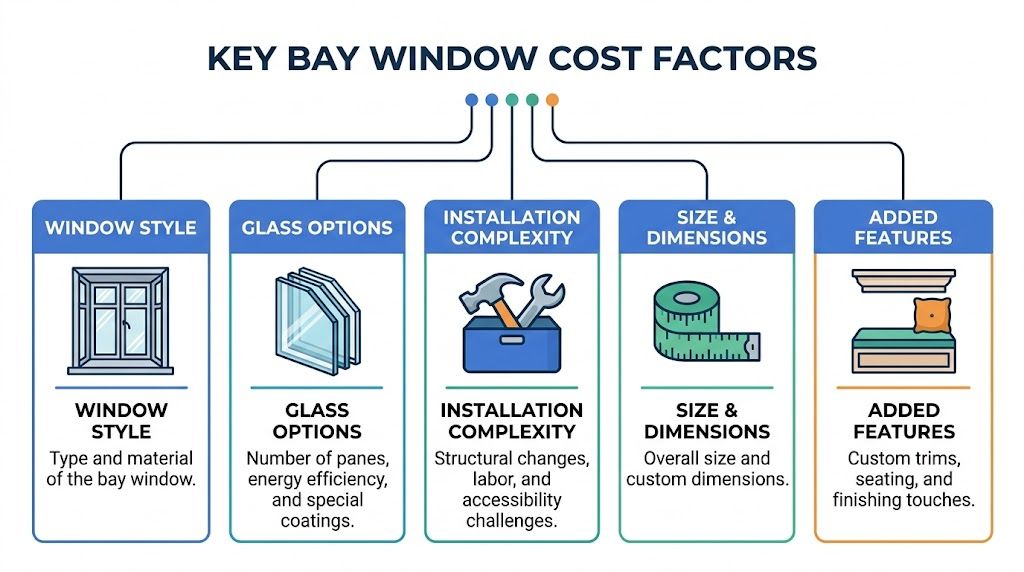
That layered cost is why two bay windows that look similar in a photo can carry very different price tags in reality.
Homeowners often start by asking, “How much is the window itself?” That is reasonable, but bay windows are installation-heavy. The crew may need to open the wall, adjust framing, add support under the projection, flash the unit carefully, and rebuild trim inside and out.
National pricing research cited earlier in the article found that labor commonly makes up a large share of the total, often around 40 to 60 percent, with installation charges frequently landing in the four-figure range per window. That helps explain why access and difficulty matter so much. A first-floor replacement with easy setup is one kind of job. A second-story installation over concrete, shrubs, or a narrow side yard is another.
For Arizona, Colorado, and Nevada homeowners, this becomes practical fast. A stucco exterior in Phoenix, a snow-sensitive scheduling window in Denver, or tight access at a Las Vegas property can all add labor time even when the bay unit itself stays the same.
Glass upgrades can feel abstract until you live with the window every day. In simple terms, better glass can reduce heat gain, improve indoor comfort, and lower some strain on the room around the window.
Single-pane, double-pane, and triple-pane options rise in cost as performance improves, as noted earlier from the national source already cited in this article. For many Southwest homeowners, the right question is not “What is the cheapest glass?” It is “What will this room feel like in July, and what will I spend over time if I regret going too basic?”
That long-view mindset matters in this region. In Arizona and Nevada, stronger sun exposure can make upgraded glass easier to justify. In Colorado, winter comfort and condensation control may carry more weight. A lower upfront price can still turn into a more expensive ownership experience if the room becomes harder to cool, harder to heat, or less pleasant to use.
Clean glass does not change insulation levels, but it does protect the clarity and daylight value you paid for.
Frame material is a major factor here. It affects the quote on day one, then keeps affecting your budget through repainting, sealing, cleaning effort, and long-term wear.
Here’s a simple way to look at it.
| Material | Average Cost (Installed) | Pros | Cons |
|---|---|---|---|
| Vinyl | $2,500 | Lower average cost, low maintenance, practical for many replacement projects | Less traditional look than real wood |
| Wood or composite | $2,800 | Classic appearance, strong fit for character homes | Higher maintenance expectations, pricing pressure from wood costs |
| Fiberglass | $3,200 | Durable, premium feel, good for demanding climates | Higher upfront cost |
Vinyl usually works well for homeowners who want predictable upkeep. Wood gives a warmer, more traditional look, but it often asks for more attention over time, especially in high-sun or dry conditions that can wear finishes faster. Fiberglass costs more upfront, yet many homeowners like it because it tends to hold up well under demanding weather conditions.
If you are comparing bay windows with flatter replacement styles, this guide to casement window replacement cost helps show why bay projects usually cost more. The extra projection changes the framing, support, finish carpentry, and cleaning needs.
Style changes cost because style changes construction. A straightforward bay replacement that fits an existing opening is a different project from a custom design with upgraded interior trim, specialty roofing above the seat, or a larger projection that needs more support.
Homeowners can get confused by online averages. One article may show a modest starting price, while another highlights premium custom work above $10,000. Both can be true. They are just describing different levels of scope.
A useful way to read your estimate is to separate the project into parts: the window unit, the labor, the finish work, and the future care. That last piece gets overlooked. More glass means more cleaning. More joints and trim mean more surfaces to inspect and maintain. A beautiful wood interior seat can look great for years, but it may also need more routine care than a simpler low-maintenance package.
Larger bay windows usually cost more because they use more material and often need more support. Still, size by itself does not tell you enough to judge a quote.
A large, plain vinyl bay installed at ground level can come in below a smaller custom wood unit with upgraded glass, difficult access, and detailed finish work. Homeowners in the Southwest see this all the time. The visible size is only one part of the budget. The hidden work behind the wall and under the projection often explains the rest.
That is the mindset that helps with a big purchase like this. Do not ask only, “How big is the bay window?” Ask, “How complex is the install, what will it cost me to own, and how well does this setup fit my climate?”
A bay window that looks similar on paper can cost meaningfully different amounts once your ZIP code, climate, labor market, and future upkeep enter the picture. For homeowners in Arizona, Colorado, and Nevada, location affects more than the install day price. It also shapes energy performance, cleaning frequency, and how much attention the window will need over the years.
A good way to view location is to treat it like the jobsite conditions for the whole life of the window. The same bay unit can behave very differently in dry Arizona sun, Colorado freeze-thaw cycles, or Nevada heat with windblown dust. That changes what materials make sense up front and what maintenance costs are likely to follow.
Arizona homeowners usually notice glass performance quickly because strong sun turns comfort problems into daily problems. A low initial quote can rise once you choose glass packages that help control heat and glare, and many buyers decide that extra upfront cost is easier to live with than a room that runs hot every afternoon.
The same climate affects ownership costs after installation. Dust, hard water spotting, and heavy sunlight make projecting glass show buildup faster than a standard flat window. A bay window has more angles and exposed surfaces, so cleaning can become a regular line item instead of an occasional chore.
For many homes in Phoenix, Scottsdale, Tempe, Chandler, and Gilbert, the practical questions sound like this: Will this window help with comfort in July, and how hard will it be to keep looking clean by year three?
Colorado shifts the cost conversation. Homeowners often focus on frame stability, sealing, and careful installation because temperature swings can stress weaker materials and sloppy finish work over time.
That makes labor quality more than a budget item. It is part of the product. A lower bid may leave out details that protect the window over the long run, such as better flashing work, more careful insulation around the opening, or stronger support for the projection. With bay windows, those hidden parts matter the way a foundation matters to a patio cover. You may not admire them every day, but you feel the result if they are done poorly.
This is also where lifecycle cost becomes useful. Paying more for a well-installed unit can reduce the chance of seal issues, interior trim problems, and comfort complaints later.
Nevada homeowners, especially in dense metro areas, often run into a two-part cost equation. Climate pushes buyers toward better glass and durable finishes. Access conditions can raise labor if the home has limited work space, hardscape below the window, upper-story placement, or building rules that slow installation.
Las Vegas is a good example of how a straightforward window order can turn into a more involved project once access and exterior exposure are considered. The window itself may not be unusually expensive. The work to install it safely and maintain it over time can be.
That matters for owners who also think in property-management terms. A bay window in a rental or multi-unit property should be judged by purchase price, cleaning needs, repair risk, and tenant-facing appearance, much like the broader budgeting approach outlined in Mastering Rental Property Maintenance Costs.
| Region | Common cost pressure | What tends to affect lifetime cost |
|---|---|---|
| Arizona | Intense sun, heat, dust | Upgraded glass, more visible buildup, more frequent exterior cleaning |
| Colorado | Temperature swings, weather exposure | Better installation detail, stronger sealing, material stability over time |
| Nevada | Heat, glare, access constraints | Labor logistics, exterior cleaning difficulty, finish wear in exposed conditions |
The takeaway is simple. A bay window is not just a product you buy. It is a small system attached to your home, and location decides how hard that system has to work. Homeowners who match the window package to local conditions usually make better decisions on both the day-one price and the years that follow.
The purchase price is only the start of the story. A bay window has more glass, more edges, and more surfaces that catch dirt, water spots, and debris than a standard flat window. If you ignore upkeep, the window that looked like a premium upgrade on day one can start looking tired much sooner than expected.
A lot of homeowners underestimate this part because they think of cleaning as cosmetic. It isn’t only cosmetic. Bay windows are visual focal points. When the glass is hazy or the angles collect grime, the whole upgrade feels less valuable.
Flat windows are easier to reach and easier to wipe down. Bay windows project outward, which means more corners, more exterior exposure, and trickier access. That’s one reason maintenance should be part of the buying decision from the beginning.
The two professional methods used in window cleaning are straightforward:
Those are the only two methods window cleaning professionals use. Which one fits best depends on the location, access, and the condition of the glass.
Routine maintenance helps homeowners protect the things they already paid for:
For rental owners who are budgeting beyond one window project, this guide to Mastering Rental Property Maintenance Costs is a useful companion because it frames window upkeep as part of broader property planning.
Bay windows ask for more attention than standard windows because their beauty comes from exposed angles and glass area.
You don’t need a complicated system. You need consistency.
Inspect the glass, the frame edges, and the finish details. New windows should look clean and sharp, and that first inspection sets your baseline.
Exterior glass can lose its appearance quickly, especially in Arizona and Nevada. A projecting bay window tends to show that buildup sooner than a recessed window.
Professional service becomes less about convenience and more about safety and finish quality. That’s especially true for second-story homes, condos, and commercial properties.
Professional Window Cleaning has been cleaning windows for over 26 years, and that kind of longevity matters because bay windows reward careful technique. Poor cleaning can leave streaks, residue, or missed corners that stand out immediately on angled glass.
A bay window project can start in the low thousands and climb well past five figures once size, materials, finish work, and upkeep are all part of the picture. That wide spread is why homeowners in Arizona, Colorado, and Nevada benefit from looking at bay window cost the way they would look at a vehicle purchase. The sticker price matters, but so do fuel, tires, and service over time.
Real examples make that easier to judge.
A homeowner in Chandler has an aging bay window in an existing opening. The goal is straightforward. Improve the look, reduce upkeep, and keep the project in a predictable price range.
As noted earlier, a basic vinyl replacement often falls between $1,200 and $2,500. That usually fits a project with no major framing changes, standard sizing, and a simpler finish package.
This buyer often chooses:
The long-term cost picture stays relatively manageable here. In Arizona and Nevada, dust and sun exposure still mean regular cleaning and periodic seal checks, but vinyl generally asks for less upkeep than painted wood. For a homeowner who wants a fresh look without turning one window into a full remodel, this is often the practical starting point.
A homeowner in Denver wants the bay window to do more than replace an older unit. The room needs better comfort in winter, the exterior should look sharper, and the finished product should feel appropriate for the house instead of looking like a budget swap.
The window itself often centers around the earlier benchmark of $2,800 for a wood or composite option, with installation and finish work added on top. This is the range where buyers start weighing daily comfort against future upkeep. Wood offers warmth and character, but it usually asks for more repainting or refinishing over time. Composite can reduce that maintenance burden while still giving a more substantial look than vinyl.
Project choices in this middle tier often include:
Homeowners also start comparing shapes at this stage because design affects both cost and cleaning. A projecting window with more angles and glass lines can look beautiful, but it also creates more surfaces to maintain. If you are comparing styles, this guide on a bay window versus bow window design explains how the shapes differ.
A homeowner in Scottsdale wants the bay window to act as a focal point. The project may involve a larger footprint, custom dimensions, upgraded roof detailing, higher-end finishes, or a design that better matches a luxury home.
Earlier pricing in the article already established that custom bay window projects can exceed $10,000. That range becomes more realistic when the job includes structural changes, premium materials, specialty glass, or detailed finish carpentry.
The higher purchase price is only part of the commitment. Premium projects can also bring higher lifetime costs:
That does not make a premium bay window a poor investment. It means the buyer should budget for ownership, not just installation.
| Buyer type | Likely project direction | Cost reference from earlier pricing | Long-term cost pattern |
|---|---|---|---|
| Budget-minded | Vinyl replacement in existing opening | $1,200 to $2,500 | Lower upkeep, simpler cleaning, fewer finish repairs |
| Mid-range | Standard full install with upgraded materials | Often centers around the broader national average range | Moderate upkeep, depends heavily on frame choice |
| Premium | Large or custom project with upscale finishes | Can exceed $10,000 | Higher cleaning, repair, and finish maintenance costs |
A good bay window choice fits more than your purchase budget. It should also fit your climate, your cleaning routine, and how much maintenance you want to handle over the next ten to twenty years.
Saving money on a bay window doesn’t mean cutting corners. It means knowing where cost is flexible and where it isn’t. A low quote only helps if the finished window performs well and looks right years later.
Some savings strategies are simple and practical.
If a contractor proposes a premium option in every category, ask them to separate must-haves from nice-to-haves. Bay window projects become easier to manage when each upgrade stands on its own.
A good quote should explain the window, the labor, and the conditions around the job. It should also show whether the contractor is pricing a straightforward replacement or something more involved.
Bring these questions to every estimate:
A detailed quote protects you twice. It helps you compare bids fairly, and it reduces the chance of costly misunderstandings after work begins.
The place to be cautious is installation quality. Bay windows project outward, which means mistakes tend to become obvious. Poor fit, weak sealing, or sloppy finishing can turn a major upgrade into an ongoing frustration.
The cheapest bid can become the most expensive one if the installation team gets the structure or weather sealing wrong.
Homeowners usually do best when they trim unnecessary upgrades, not necessary workmanship. That distinction saves money without sacrificing the long-term result.
They often do, especially when the window fits the house well and the installation is done correctly.
A bay window changes both the exterior and the way a room feels inside. Homeowners usually notice the benefit in three places: more natural light, a wider view, and a room that feels larger without adding square footage. In markets across Arizona, Colorado, and Nevada, that added livability can matter just as much as resale value.
The return is rarely about the window alone. Buyers also notice whether the frame, glass, trim, and finish work still look solid years later. A bay window with draft issues, peeling interior wood, or hard water staining can weaken the payoff, which is why lifecycle cost matters as much as the purchase price.
For nearly all homeowners, this is a professional job.
A bay window works more like a small exterior projection than a basic replacement window. It is heavier, it pushes outward from the wall, and it needs proper support, flashing, insulation, and sealing. If any part of that system is off, the result can be water intrusion, air leaks, sticking windows, or interior finish damage.
The repair bill after a poor installation can erase any labor savings quickly. That is especially true in the Southwest, where strong sun, wind, and seasonal temperature swings put extra stress on seals and materials.
Bay windows usually cost more to maintain than flat windows because they have more glass, more edges, and more surfaces that collect dust and water spots.
For a homeowner, it helps to break upkeep into three buckets. Cleaning is the regular task. Seal and caulk checks are the preventive task. Paint, stain, or finish repair comes up over time, depending on the material you chose. Wood interiors often need more attention than vinyl or fiberglass, especially in sunny rooms where UV exposure is constant.
Access also affects ongoing cost. A first-floor bay window that opens onto a patio is much easier and less expensive to clean than a second-story bay window above landscaping or a sloped lot. That is one reason the lifetime cost of ownership can differ from one house to the next, even when the original window price was similar.
If you have invested in a bay window, regular professional cleaning can help you protect the look you paid for and spot minor issues before they become expensive ones.
They are related, but they are not the same.
A bay window usually has three sections. A larger center unit sits in the middle, with angled side windows connecting back to the house. A bow window uses more panels to create a softer arc. The shape changes the look, the amount of glass, and often the labor required for installation and cleaning.
That difference can affect long-term cost too. More panels can mean more joints, more hardware, and more glass to maintain over the years.
Professional Window Cleaning has served homeowners and commercial properties since 1999, using two professional methods that deliver clear results: squeegee cleaning and pure-water cleaning. If you want your bay windows to stay bright, sharp, and streak-free in Arizona, Colorado, or Nevada, their team can help.
Read our blog posts regularly and keep learning.