Care and Maintenance
Water Fed Pole Window Cleaning Brush: A Complete Guide
Learn how a water fed pole window cleaning brush works, the best brush types, pole compatibility, and pro tips for streak-free, ground-level window cleaning.


The best hard water stain remover for windows may be no cleaner at all. If the haze looks the same when the glass is wet and dry, the problem may be permanent etching, not a deposit waiting for a stronger acid. That diagnosis can save you wasted money, scratched glass, and the unfortunate discovery that “more scrubbing” is often just a faster way to make things worse.
A homeowner in Las Vegas notices the problem after the sprinklers run through a warm, dry spell. The windows looked clear after their last cleaning. Now they show white rings, gray haze, and chalky streaks that a normal spray cleaner won't touch. The same scene plays out in Phoenix, Denver, and Scottsdale, although the water source and exposure can vary from property to property.
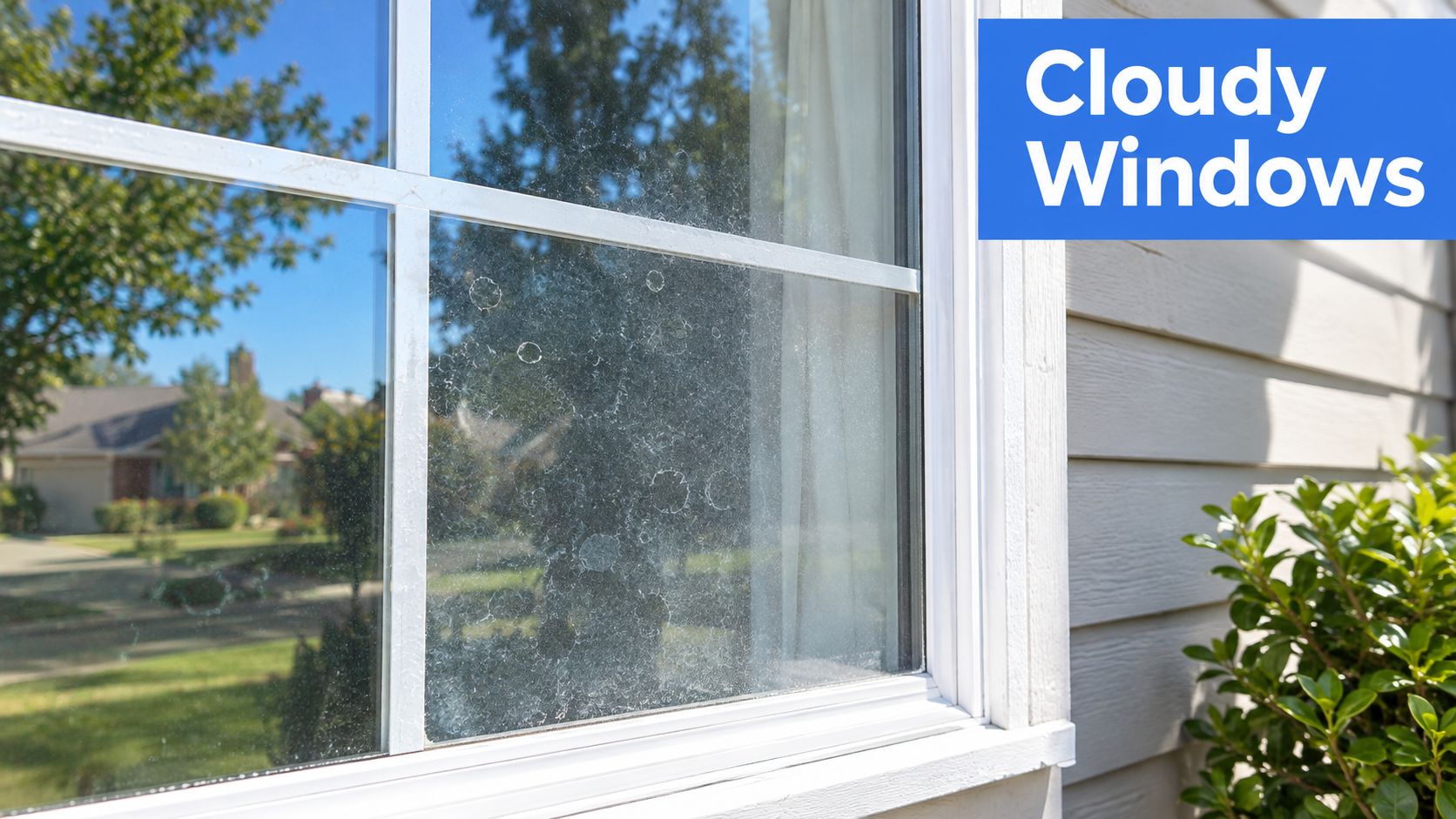
The culprit usually isn't dirt. Hard water stains are mineral deposits left after water evaporates, particularly when irrigation spray lands on glass and dries repeatedly. Calcium and magnesium remain behind as visible residue. A window can be perfectly clean and still look cloudy because the minerals are sitting on, or beginning to react with, the glass surface. Professional Window Cleaning's guide to hard water stains describes why mineral-rich water creates recurring spotting in sprinkler-exposed and high-evaporation environments.
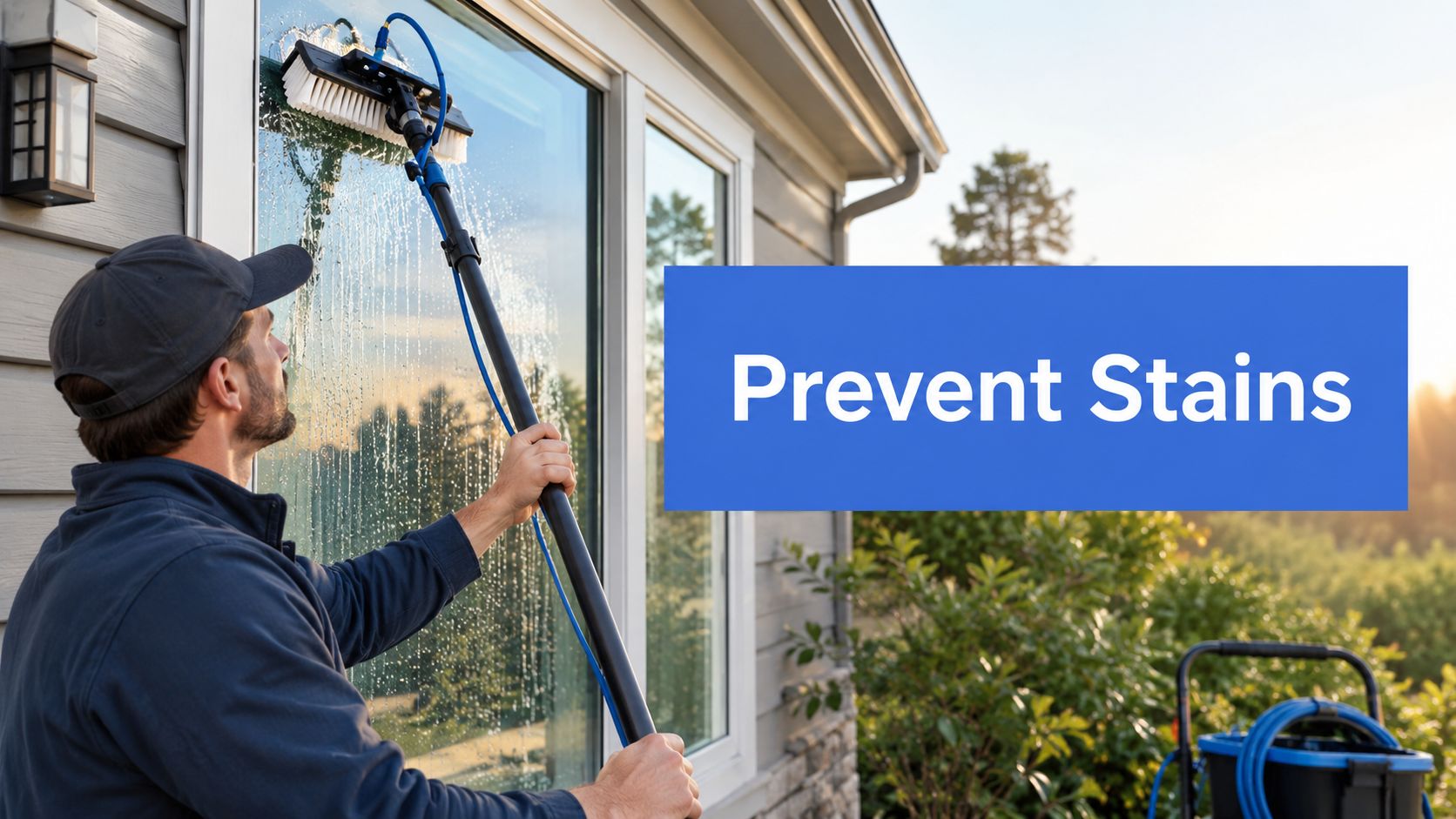
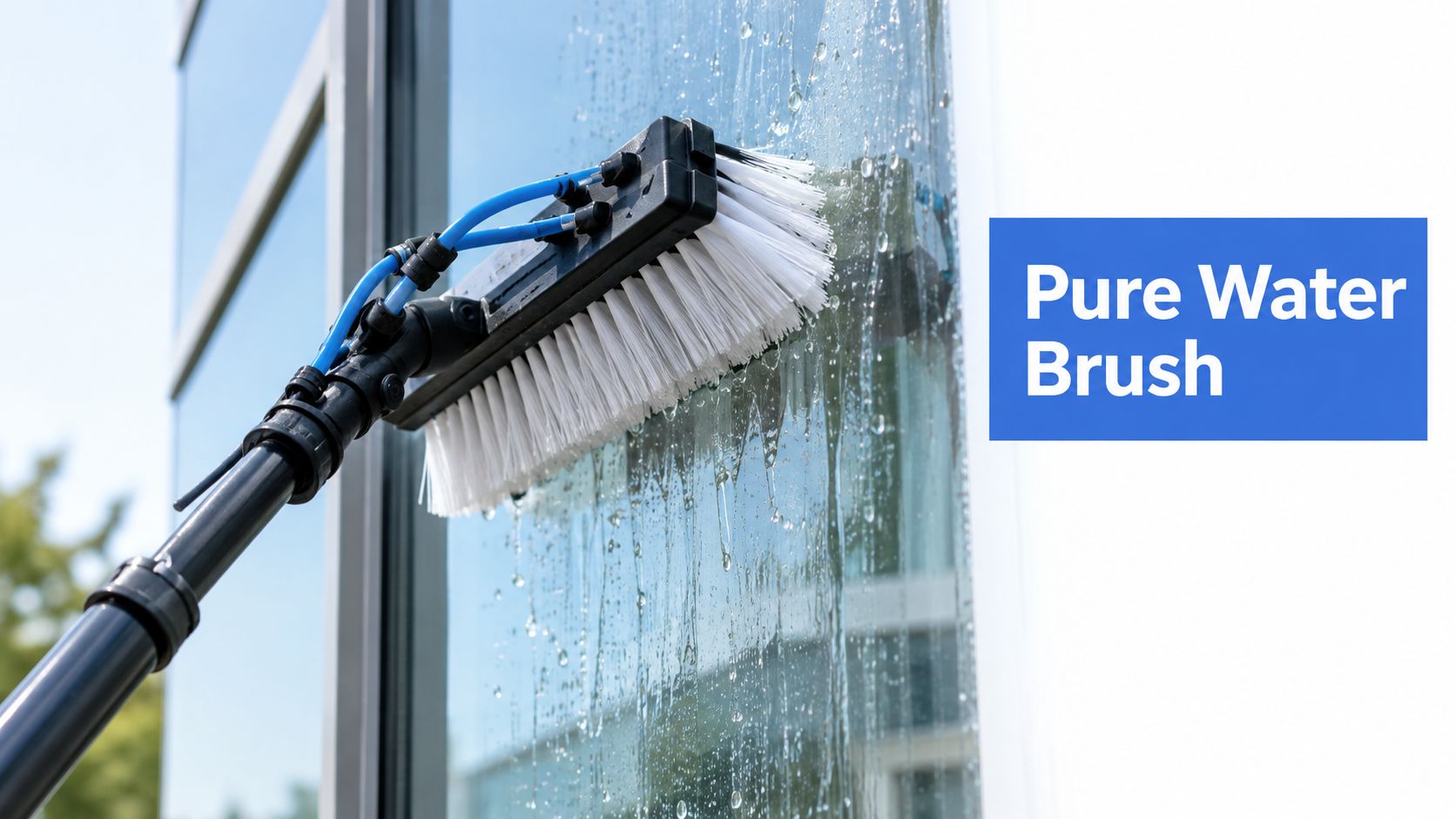
Professional window cleaners rely on two primary cleaning methods. One uses a traditional squeegee, with cleaning solution, a washer or applicator, and controlled agitation. The other uses a pure-water system, commonly paired with a water-fed pole. Pure-water systems filter minerals out of the water, allowing the cleaner to rinse glass without leaving the same mineral residue behind. Trade guidance compares pure-water pole cleaning with traditional squeegee work, and describes pure water as filtered water used without added chemicals. This comparison of pure-water and squeegee cleaning methods outlines that distinction.
Neither method automatically removes etched glass. Routine cleaning removes dirt and loose residue. Mineral restoration requires a separate treatment, and the treatment only makes sense if the deposit is still removable.
Professional Window Cleaning has been in business since 1999, which means it has over 26 years of experience as of September 18, 2026. That kind of operating history matters less as a slogan than as a reminder that diagnosing glass correctly is a trade skill. Acid cleaners can dissolve deposits, but used carelessly they can harm frames, seals, coatings, and nearby finishes. Before buying the strongest bottle on the shelf, find out whether you have a deposit or damaged glass.
Hard water is water carrying dissolved minerals. Major references classify water as hard at 121 to 180 mg/L of calcium carbonate, and very hard above 180 mg/L. Several municipal systems in the West have been measured around 146 mg/L, a level squarely within the hard-water range. Those figures help explain why recurring spotting is common in residential and commercial maintenance, especially where sprinklers repeatedly wet exterior glass. The technical guide on hard water stains and removal provides this classification and regional context.
A droplet landing on a window is carrying more than water. As it evaporates, it leaves calcium and magnesium compounds behind. One isolated droplet may create a small ring. Repeated droplets create overlapping deposits, and repeated wetting and drying can make those deposits bond more tightly to the surface.
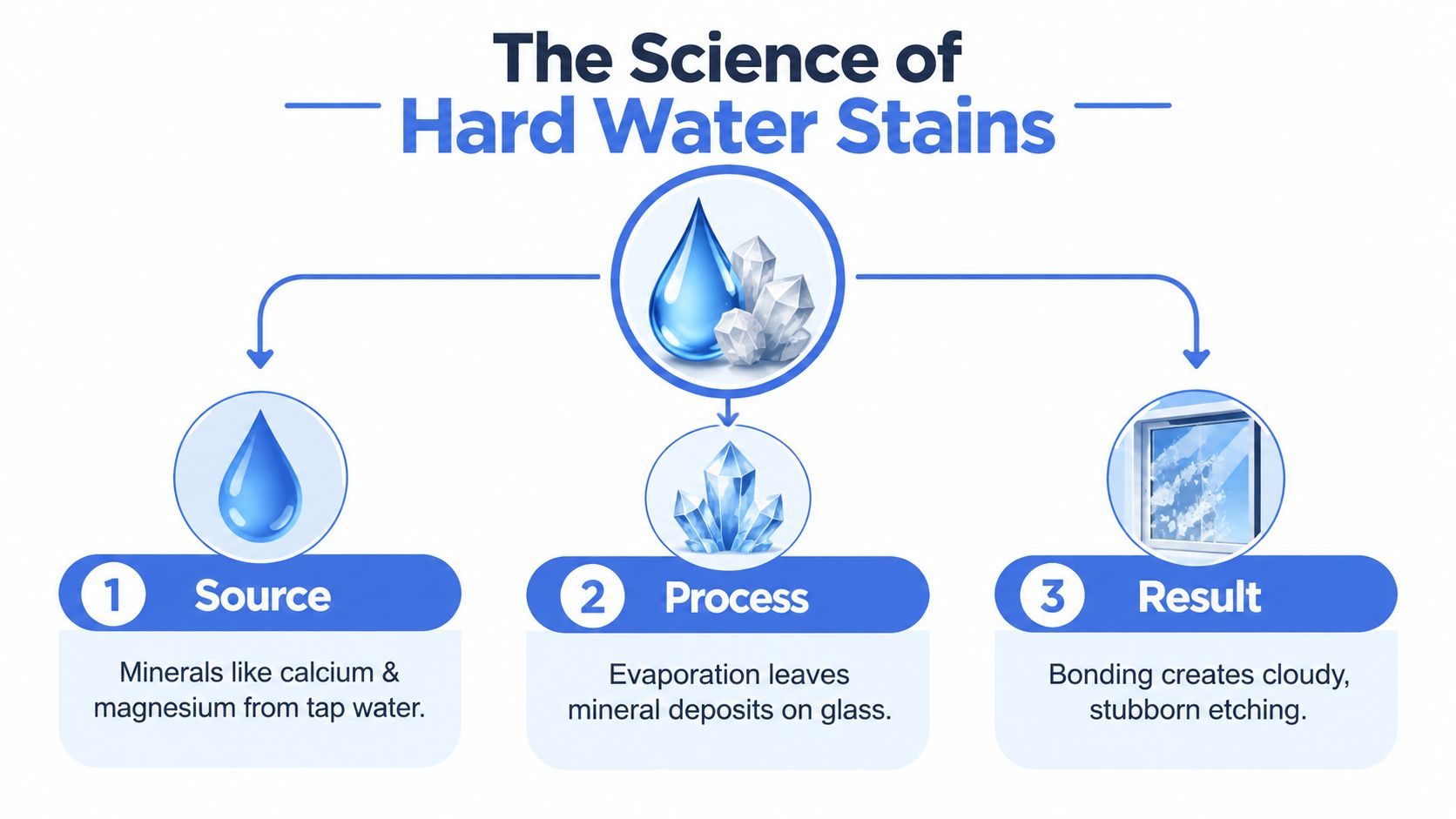
This distinction controls every sensible treatment decision:
Prolonged exposure to moisture is the trigger described in industry technical materials, particularly when alkaline water repeatedly dries on the glass. Once the surface becomes reactive, each new wetting cycle can contribute to further staining and corrosion. That's why prompt removal matters, but it doesn't mean every cloudy pane can be rescued with a more powerful product.
The same mineral chemistry appears around pools and tile. If calcium buildup is part of a wider property problem, owners may also find practical background in resources about pool chemical treatments in Peoria from Pool & Landscaping of Vistancia LLC. The window lesson remains the same: identify the mineral deposit first, then choose a treatment that fits the surface.
Start with water, not chemicals. Choose a small section of the cloudy glass, preferably near an edge or in a less noticeable area, and wet it with clean water. Compare the appearance while wet with the appearance after it dries.
If the haze changes, fades, or looks different when wet, the problem is likely a surface deposit. Water temporarily fills tiny surface irregularities and can make removable residue appear less visible. That result doesn't guarantee an easy cleanup, but it tells you that a treatment may be worthwhile.
If the haze looks the same wet and dry, suspect etching. No vinegar, commercial acid, mineral dissolver, or polishing compound can wash away a structural change in the glass. Guidance on diagnosing hard water stains and glass etching recommends this wet-glass comparison and cautions against escalating indefinitely when treatment attempts fail.
Practical rule: If two sensible escalation steps don't improve a confirmed stain, stop increasing the abrasiveness. A stronger product won't turn etched glass back into new glass.
| Appearance during the wet-glass test | Likely condition | Sensible next move |
|---|---|---|
| Haze changes when wet | Surface mineral deposit | Try the mildest suitable treatment |
| Some areas improve, others remain unchanged | Mixed deposit and etching | Treat cautiously, then reassess |
| Haze looks unchanged wet or dry | Likely etched glass | Stop DIY chemicals and request an assessment |
| Glass has a coating or specialty finish | Unknown surface compatibility | Check manufacturer guidance or call a professional |
This test also prevents a common mistake. Homeowners often remove loose mineral residue and then assume the remaining haze is cleaner failure. In reality, they may have exposed etching that was underneath the deposit all along. Continuing to scrub can add fine scratches to an already compromised surface.
Routine maintenance still has a place after diagnosis. Traditional squeegee cleaning gives the operator direct control over solution, agitation, and drying. Pure-water cleaning reduces mineral residue during exterior rinsing because the water has been filtered. Neither replaces diagnosis, but both help prevent ordinary dirt and fresh water spotting from disguising the condition of the glass.
Once the wet-glass test indicates a surface deposit, choose the least aggressive method likely to work. A fresh, light mineral film doesn't need the same chemistry as thick buildup that has survived repeated cleaning. Stronger isn't automatically better. It usually means the margin for damaging frames, coatings, and seals gets smaller.
For light to moderate staining, a 50/50 mixture of white vinegar and distilled water is a reasonable first step. Vinegar is mildly acidic and can help dissolve calcium and magnesium carbonate deposits. Apply it to the glass, allow it to sit for about five to ten minutes, work gently with a non-scratch pad, rinse thoroughly, and dry with a squeegee. This practical vinegar treatment guidance supports that sequence.
| Method | How It Works | Best For | Key Risks |
|---|---|---|---|
| White vinegar and distilled water | Mild acidity helps dissolve mineral carbonate deposits | Light to moderate surface spotting | Can affect frames or finishes if left in place |
| Commercial acidic remover | Uses stronger acid chemistry to break down mineral buildup | Persistent deposits confirmed as removable | Chemical damage, frame exposure, coating incompatibility |
| Chelating treatment | Binds with mineral ions so residue can be rinsed away | Situations needing a less acid-forward approach | Product compatibility still needs checking |
| Abrasive paste or powder | Physically loosens deposits through friction | Limited use on suitable, uncoated glass | Scratches, haze, and damage to protective surfaces |
| Professional mineral polish | Combines mineral-dissolving chemistry with controlled agitation | Stubborn buildup requiring measured restoration | Improper pressure or product choice can worsen damage |
Acidic products work by reacting with mineral deposits. That makes them useful for surface buildup, but they don't distinguish perfectly between a stain and nearby materials. Protect vinyl, aluminum, painted surfaces, stone, and seal areas before application. Never assume a product is safe for tinted, coated, low-E, or first-surface glass without checking its instructions.
Chelating agents can offer a gentler path because they bind with minerals rather than relying entirely on aggressive acidity. They still need a spot test. “Gentler” doesn't mean universally safe, and a coated pane may have requirements that differ from ordinary glass.
Abrasives deserve the most skepticism. A paste may remove residue from appropriate glass, but pressure and grit are difficult to control in a home setting. Avoid treating steel wool, razor blades, scouring powders, or rough pads as default solutions. If you want background on one professional acid option, this guide to phosphoric acid cleaner explains why product selection and handling matter.
Treat the job like glass restoration, not ordinary window washing. Confirm that the wet-glass test points to a removable deposit, work in a shaded area, and keep the treatment controlled from start to finish.
Prepare the work area. Wear gloves and eye protection. Protect tracks, sills, landscaping, and adjacent finishes from runoff. Keep clean water available for immediate rinsing, and test the chosen solution on a small area.
Apply the mildest treatment first. For light or moderate deposits, use the 50/50 vinegar and distilled water solution. For heavier buildup, follow the label for a purpose-made mineral remover. Don't improvise concentration, and don't combine cleaning chemicals.
Control dwell time. Let the solution work for the recommended period. The documented vinegar approach uses about five to ten minutes. Avoid letting an acidic product dry on the glass or run down a frame.
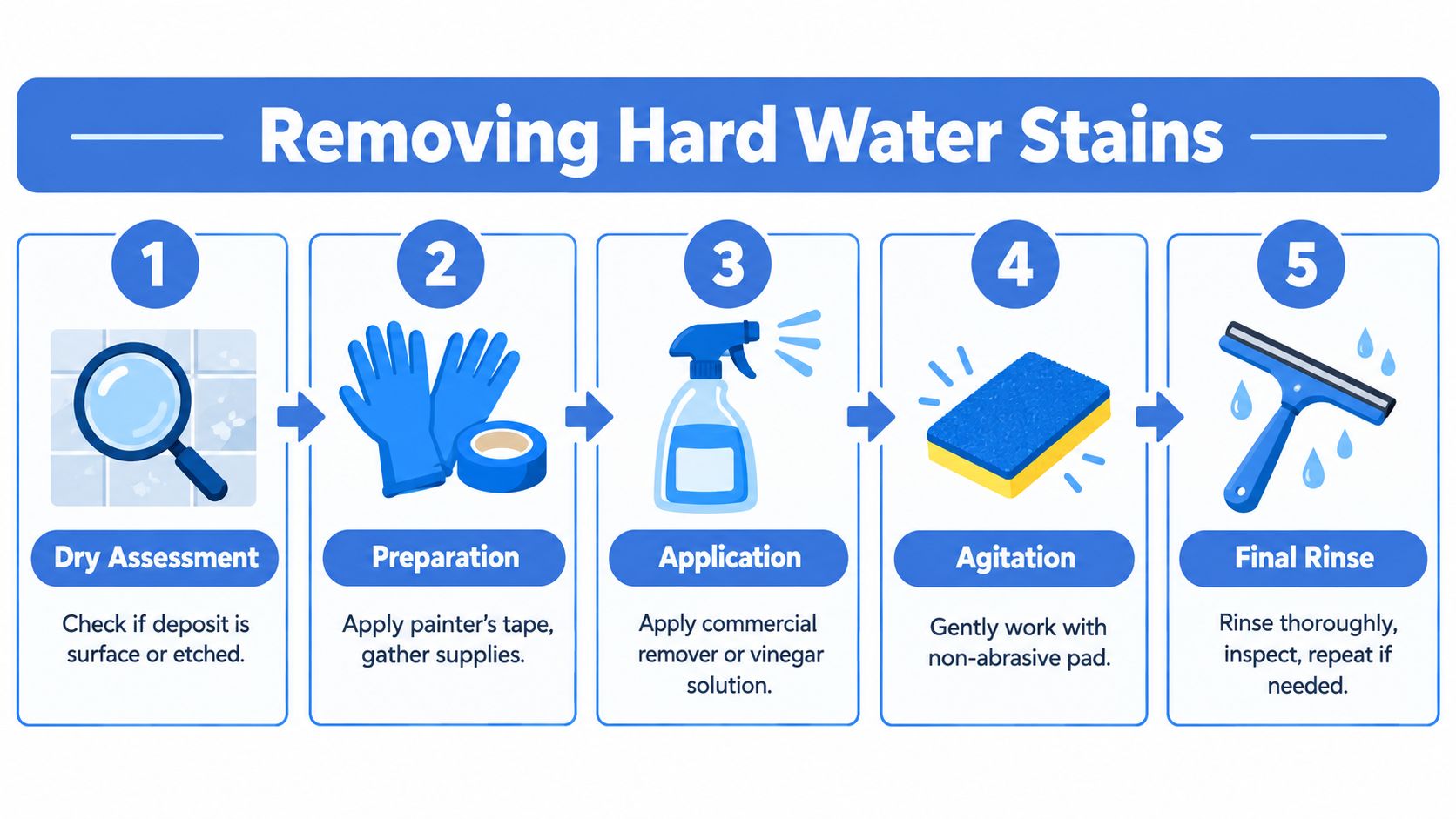
Agitate gently. Use a clean, non-scratch pad with light pressure. Let the chemistry do the work. If the pad catches, the surface feels gritty, or the glass begins to look more hazy, stop and rinse.
Rinse and dry completely. Flush away the dissolved minerals and cleaner residue. Use a squeegee for the final drying pass, wiping the blade between strokes. Inspect the pane only after it has dried, because wet glass can temporarily hide remaining haze.
Glass-care rule: Never use heat and urgency as a cleaning strategy. Hot, sunlit glass dries solutions faster and leaves less time for controlled work.
If the first pass improves the surface, a second careful pass may be reasonable. If two escalation steps fail, further scrubbing is a poor bargain. At that point, the remaining condition may be etching, and professional restoration or replacement decisions should be considered rather than more abrasive experiments.
Prevention is the stronger long-term strategy. Adjust sprinklers away from windows, rinse fresh overspray promptly, and dry glass rather than letting mineral-rich water evaporate on it. Removing a deposit once is useful. Removing the water source that keeps rebuilding it is better.
Call a professional when the wet-glass test suggests etching, when large areas are affected, or when windows are high, multi-story, coated, or difficult to access. Repeated DIY attempts also justify a service call, especially if the glass now has scratches or a worsening haze.
Professional Window Cleaning has served residential and commercial clients across Arizona, Colorado, and Nevada since 1999. The company works in Las Vegas, Phoenix, Denver, Scottsdale, Tempe, Chandler, Gilbert, and Flagstaff, where irrigation overspray and mineral-rich water can create recurring maintenance problems.

Hydrophobic coatings can make treated glass more resistant to water spots, but they aren't magic shields. They may delay repeat spotting, while the underlying sprinkler exposure or water source continues to create deposits. Guidance on hydrophobic architectural glass coatings also highlights the need for care around coated and first-surface glass. Property managers should treat coating as one part of a prevention plan, not a substitute for rinsing, drying, and sensible cleaning.
For a broader example of evaluating local service options, property owners can also find window cleaners in Ventura County through Ventura County Roof Cleaners. The decision framework stays simple: diagnose first, choose the mildest effective treatment, protect the water source, and stop before aggressive work damages the pane. Professional guidance on preventing hard water stains can help turn a one-time removal into a manageable maintenance routine.
Professional Window Cleaning provides residential, commercial, high-rise, and specialty window cleaning, including careful assessment of hard water deposits and possible etching. Visit Professional Window Cleaning to request service and get a practical recommendation for restoring and protecting your glass.
Read our blog posts regularly and keep learning.