Care and Maintenance
Concentrate Window Cleaner: Professional Guide
Learn how to dilute and apply concentrate window cleaner like pros. Master ratios, safety, and streak-free results for residential and commercial glass.


Magic Eraser can be used on plain, uncoated glass when damp and with light pressure, but it risks scratching or dulling coated, tinted, low-e, or tempered glass surfaces. The safest answer is conditional: test first, avoid unknown finishes, and stop if the glass develops haze or visible wear.
You're looking at hard-water marks, paint splatter, or a stubborn fingerprint on a window, and the Magic Eraser in the cleaning cabinet seems like the obvious shortcut. It may remove the mark, but glass isn't always just glass. A coating, tint, treatment, or grain of trapped grit can turn a mildly abrasive sponge into a repair problem.
Yes, a Magic Eraser can work on plain, uncoated glass, particularly for a small spot that resists ordinary washing. The pad should be damp, excess water should be squeezed out, and the strokes should be controlled rather than forceful. Guidance for glass cleaning also recommends testing a hidden area first and finishing with a rinse or microfiber wipe to remove residue, as outlined in this Magic Eraser safety guide from SwiftJet.
The important qualification is the surface beneath the mark. Standard glass is generally resilient to damp melamine foam, but water-repellent, anti-glare, low-e, tinted, and other specialty finishes can be more vulnerable. The sponge may remove or dull the surface treatment even when the underlying glass remains intact. That damage can appear as haze, uneven sheen, or glare that becomes obvious only when sunlight reaches the pane.
The question isn't whether the sponge can touch glass. The questions are what finish is present, what is sitting on the surface, and how much pressure will be used. A homeowner cleaning a small plain mirror has a different risk profile from a building owner cleaning coated architectural glass.
Magic Eraser is made from melamine foam, and its cleaning action is mechanical rather than solvent-based. The foam's open-cell structure behaves like a very fine abrasive. Instead of chemically dissolving a stain, it physically wears away or lifts material from the surface.
Think of the difference between sanding wood and applying a solvent. Sandpaper removes material through friction. A solvent changes or breaks down the substance so it can be wiped away. Melamine foam is closer to the first method, although its abrasive structure is much finer than ordinary sandpaper.
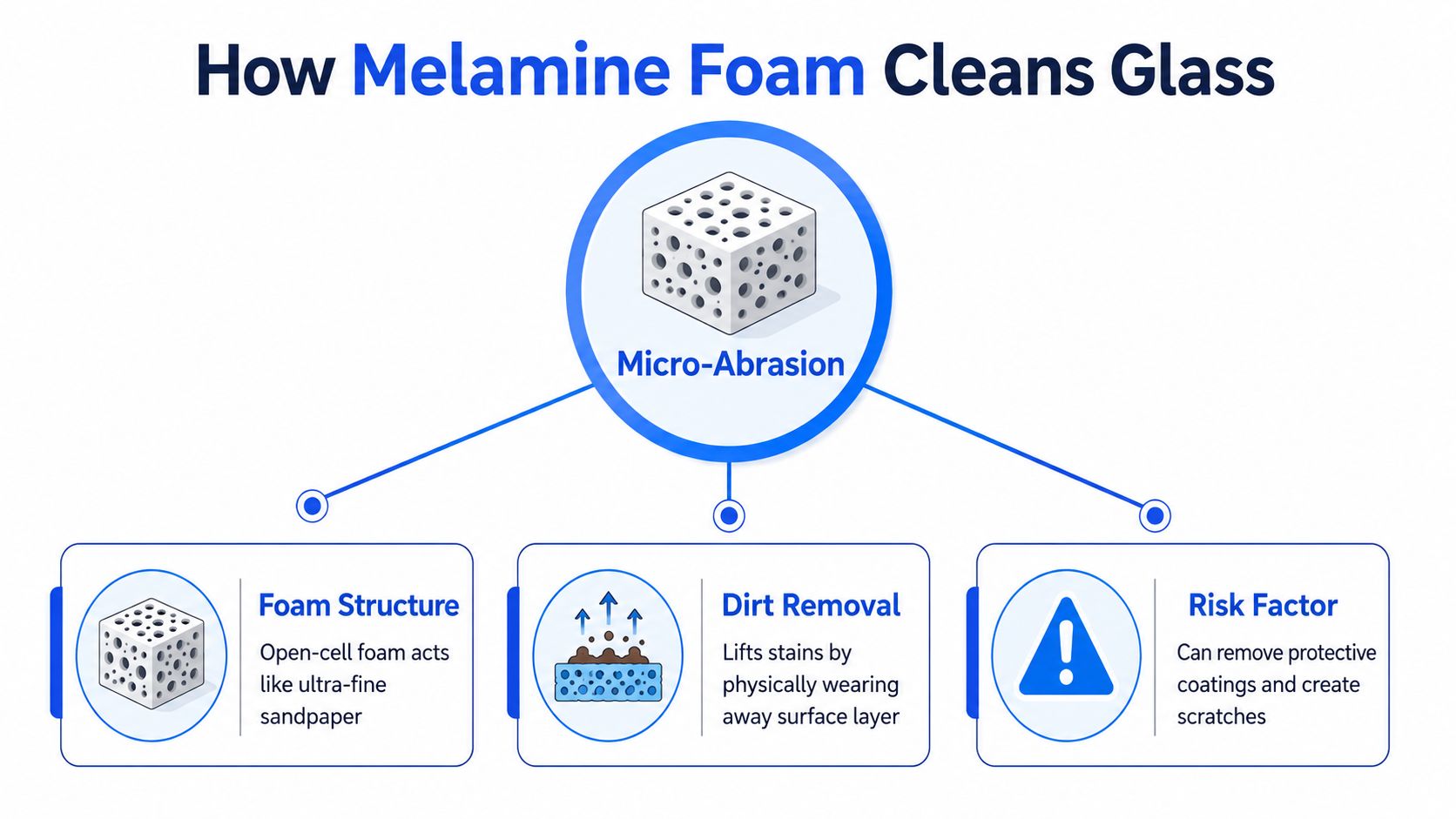
That mechanism explains both the appeal and the limitation. The pad can remove marks that a normal cloth leaves behind, but the same friction can affect a coating or create fine surface damage. Heavy pressure, repeated passes, a dry sponge, or grit caught in the foam all increase the chance of visible wear, according to cleaning guidance on melamine foam's mildly abrasive action (Wowsoclean explains the scratching risk).
Standard glass-related guidance emphasizes dampening the sponge, squeezing out excess water, and using firm but controlled strokes. Water helps the foam conform to the surface and reduces the harshness of dry friction. It also helps loosen residue so the pad doesn't have to do all the work mechanically.
Damp doesn't mean dripping. Excess water can run into frames, seals, or hardware, while a soaked sponge may lose control during spot cleaning. The useful balance is a moist pad that remains easy to guide.
The standard version is generally considered safer for plain glass than an extra-durable variant. The latter is more abrasive because it includes added micro-scrubbers. On a delicate or treated pane, that difference matters.
Practical rule: If a mark can be removed with water, a soft microfiber cloth, and ordinary glass-cleaning technique, don't escalate to an abrasive pad.
Glass type determines the advice more than the product label does. A shower door may tolerate a cautious spot treatment, while a vehicle window with tint or a low-e architectural pane may not.
| Glass Type | Safety Verdict | Primary Risk |
|---|---|---|
| Plain residential window glass | Conditionally safe | Micro-scratches or haze from pressure and grit |
| Bathroom mirror | Conditionally safe | Damage near edges, backing, or treated surfaces |
| Glass shower door | Conditionally safe | Wear to water-repellent treatment and surface dulling |
| Automotive windshield or side window | Avoid unless confirmed plain | Tint, films, treatments, and optical distortion |
| Low-e coated glass | Avoid | Wear to the functional coating |
| Tinted glass | Avoid | Uneven finish, film damage, or visible optical change |
| Frosted glass | Avoid | Altered texture, patchiness, or haze |
| Tempered glass | Caution | The glass may be strong, but its finish or contamination can still suffer damage |
Plain, uncoated glass is the most suitable candidate. Even here, the eraser is best for a localized residue, not routine cleaning across the entire pane. Use a fresh, damp sponge and minimal pressure after removing loose dirt.
A bathroom mirror may be conditionally suitable if its reflective backing and edges are protected. Keep water away from exposed edges and don't assume every decorative or treated mirror has the same surface.
Mr. Clean's shower-glass instructions show Magic Eraser being used on glass shower doors, which supports cautious spot use. Shower glass can also carry water-repellent treatments, however, and repeated friction may wear the top layer and reduce clarity, as discussed in this shower-glass abrasion guidance.
Windshields and side windows deserve extra caution. They may have tint, films, hydrophobic treatments, or other features that alter how the surface handles abrasion. A mark that looks harmless can become an optical distraction once the glass catches headlights or low-angle sunlight.
Treat these as poor candidates. Low-e coatings, tinted layers, water-repellent treatments, anti-glare finishes, and frosted textures can all change the result. The foam may create uneven clarity or remove a finish in one area, leaving a visible patch that ordinary cleaning won't restore.
Tempered glass is stronger against impact, but that doesn't make every surface treatment abrasion-proof. Tempering protects the glass structure. It doesn't guarantee that a coating, tint, or contaminated surface will tolerate scrubbing.
Start by identifying the surface. If you can't confirm that the glass is plain and uncoated, treat it as potentially delicate. Remove loose dust and grit with water first, because rubbing debris across the pane can create a harsher contact than the sponge alone.
The test must be more than a quick glance. Move your viewing angle and use daylight or a strong reflected light. Some damage is difficult to see straight on and becomes obvious only when glare crosses the pane.
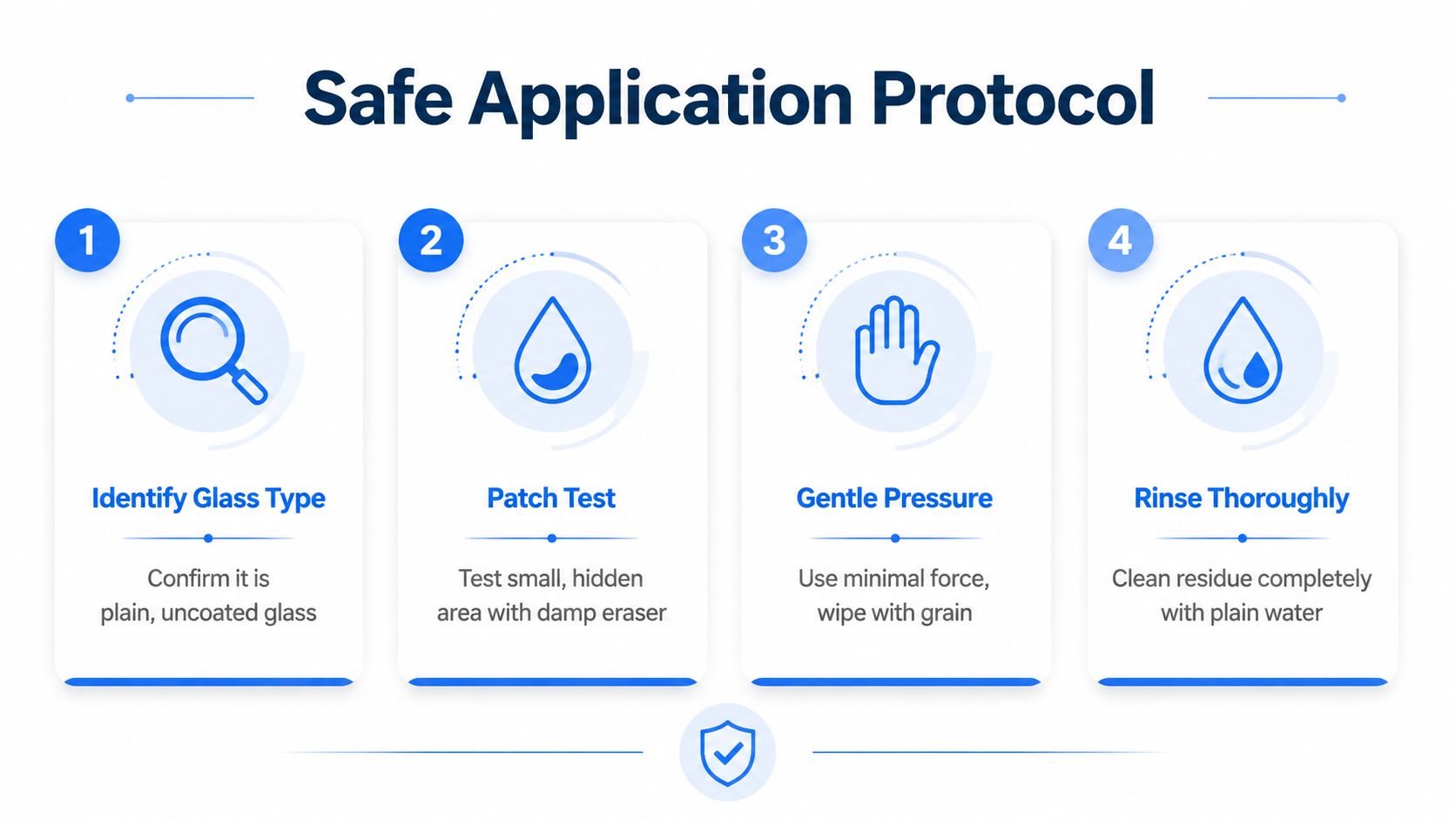
Use the pad only where the residue remains. Don't scrub in circles, bear down on the sponge, or keep working after the mark has lifted. A fresh sponge is preferable because an old pad may carry particles from other surfaces.
Rinse the area with plain water, then wipe it with a clean microfiber cloth. This removes loosened residue and foam particles that could otherwise remain on the glass. For harder deposits, compare the method with guidance on using a razor blade for cleaning glass, but only where the glass and surface condition make that approach appropriate.
The costly mistake is treating Magic Eraser as a universal cleaner. The glass itself may tolerate limited use, while its coatings, tint, or surface contamination do not. A mild abrasive becomes a poor choice when pressure, repeated passes, or trapped grit are involved.
Water-repellent, anti-glare, low-e, and tinted surfaces need separate caution. Their functional layers sit at or near the surface, so an uneven change may affect water behavior, appearance, or energy performance. Cleaning harder will not restore a worn layer. It may require specialist assessment, recoating where possible, or replacement of the affected panel.
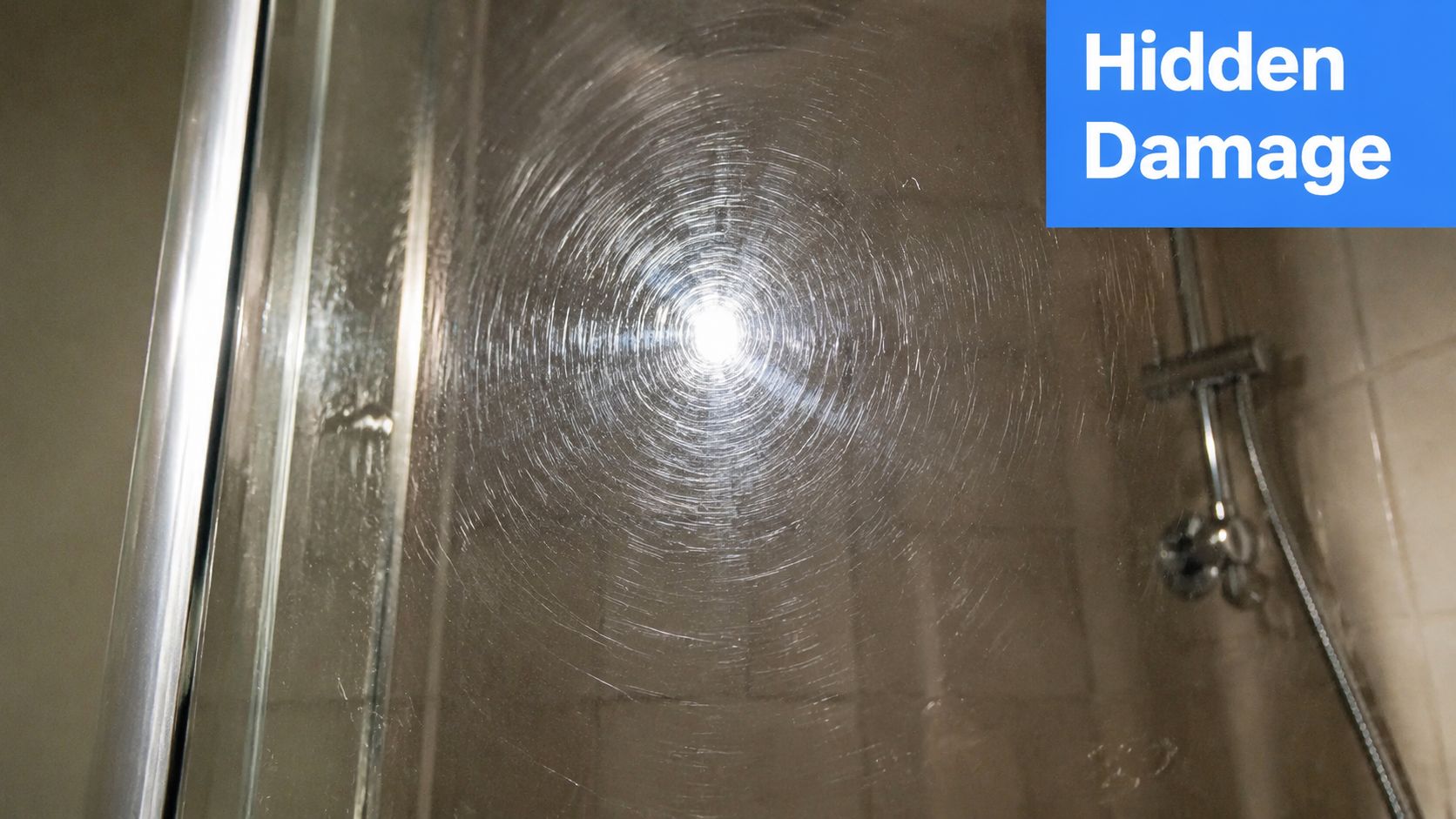
Loose sand, mineral fragments, and construction dust should be removed before any targeted agitation. If they remain on the pane or inside a used sponge, they can create a harsher contact surface and spread marks beyond the original residue.
A fresh pad still does not make the method suitable for every pane. The extra-durable variant increases abrasion, so it offers little advantage where preserving a coating matters. Stop if clarity changes, and do not try to polish the affected area with more scrubbing. Document the patch, rinse away remaining particles, and ask a window-cleaning professional to assess whether the issue is residue, coating wear, or permanent surface damage. That decision can prevent a small cleaning task from becoming an expensive glass repair.
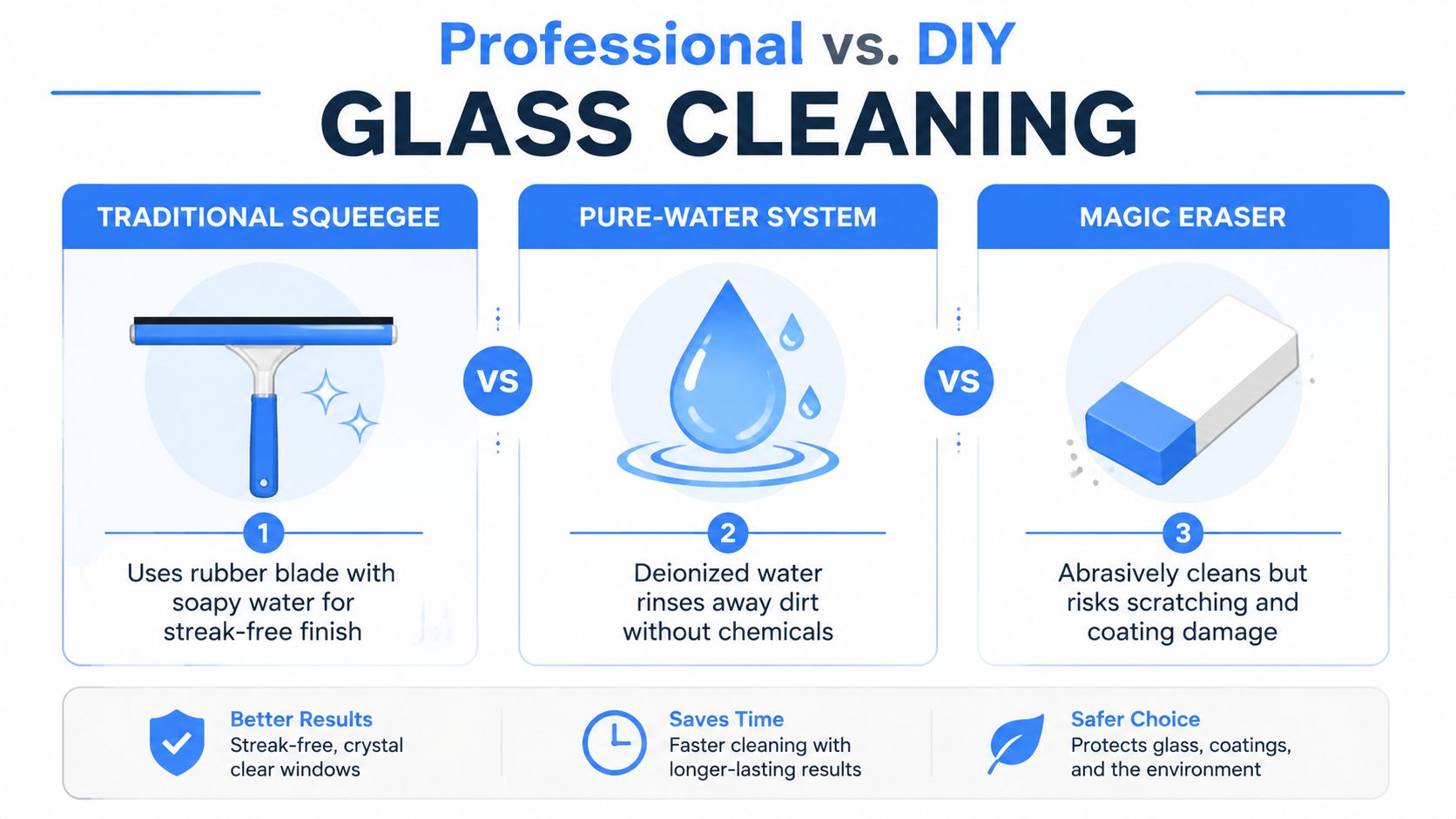
Professional window cleaning relies on only two methods, the use of a squeegee or the use of a pure-water system. Neither method depends on wearing away the glass surface.
The traditional squeegee method uses a cleaning solution to loosen soil, followed by a skilled rubber-blade stroke that removes the liquid and suspended dirt. The cleaner controls the washer, blade angle, pressure, and overlap. Done correctly, the method cleans without introducing the micro-abrasion associated with melamine foam.
A pure-water system takes a different route. Filtration stages remove sediment, chlorine, dissolved solids, and minerals before the water reaches the glass, as described in this professional window washing system guide. The purified water can loosen and carry away contaminants without relying on chemical detergent, and industry guidance describes pure-water cleaning as using 100% pure water with no chemicals for a streak-free finish (this pure-water cleaning explanation).
A practical overview of service considerations is available in this glass cleaning services guide from Aloha Window Bros. For a broader explanation of the best cleaning process, see this guide to the best way to clean glass.
Use a Magic Eraser only when the pane is confirmed plain, the mark is small, and the surface can be tested safely. Stop if the glass is coated, tinted, frosted, treated, difficult to reach, or already showing haze.
Professional help makes more sense for:
Professional Window Cleaning has been cleaning windows for over 26 years, and the company has been in business since 1999. It serves residential, commercial, and high-rise clients across Arizona, Colorado, and Nevada, including Flagstaff, Tempe, Chandler, and Gilbert.
Professional Window Cleaning can assess plain, coated, tinted, and hard-to-reach glass, then use the appropriate squeegee or pure-water method instead of risking abrasive damage. Visit Professional Window Cleaning to request service for your home, commercial property, or high-rise building.
Read our blog posts regularly and keep learning.