
Care and Maintenance
High Rise Windows Explained for Building Owners
Learn what high rise windows are, how they work, and how to hire pros to clean and maintain high rise windows safely and efficiently.


It’s a question we get all the time, especially when a rainy forecast throws a wrench in weekend project plans: can you power wash in the rain?
The short answer is you can, but you absolutely shouldn't. Trying to power wash a wet surface is a classic case of working harder, not smarter. Rain creates a perfect storm of problems, from diluted cleaning solutions and serious safety hazards to a finished product that just looks… sad. It's a recipe for frustration.
Any seasoned pro will tell you that they plan their jobs around the weather, and for good reason. Attempting to wash a surface that's already saturated with rainwater is setting yourself up for failure and a whole lot of unnecessary risk.
Here’s a breakdown of what you're up against:
This simple guide says it all. When it comes to power washing, rain is a definite stop sign.
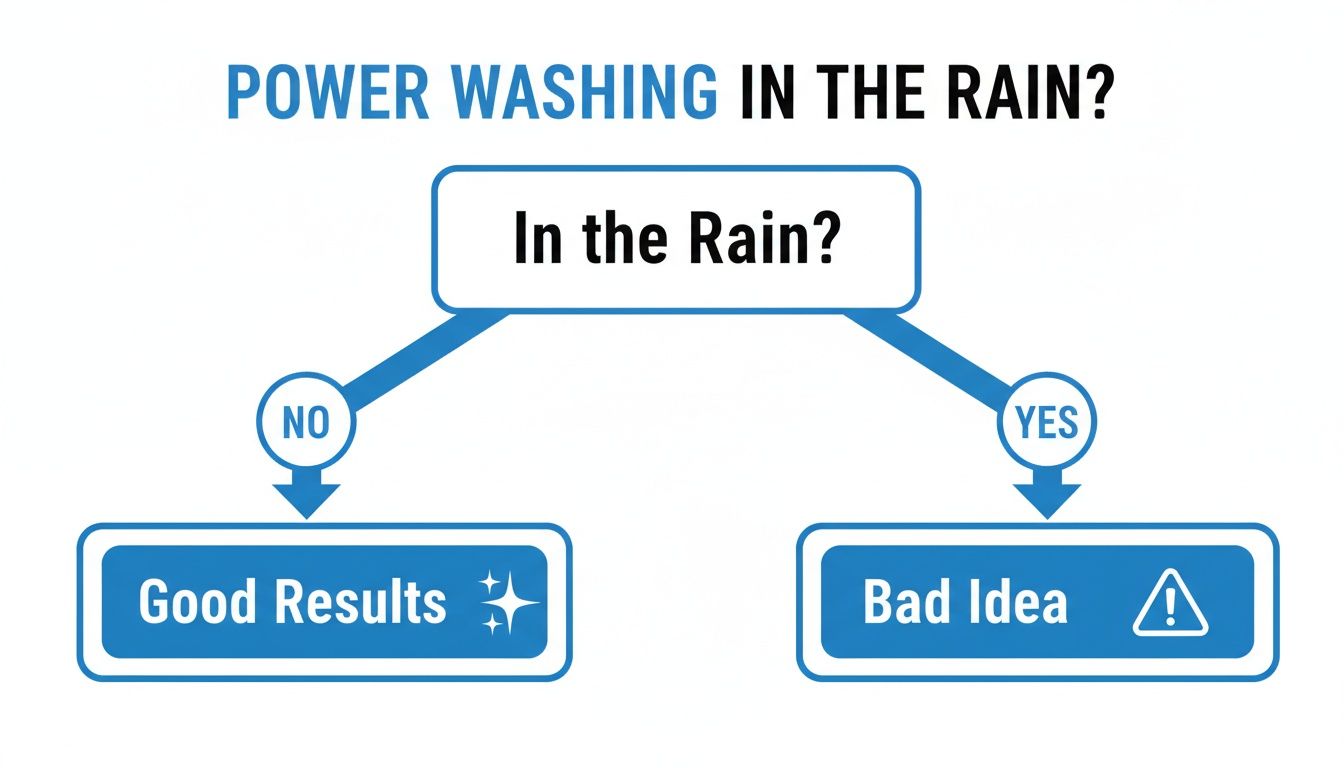
To make it even clearer, let's compare the two scenarios side-by-side.
This table quickly sums up why patience is a virtue when it comes to exterior cleaning.
| Factor | Power Washing in Rain | Power Washing in Dry Weather |
|---|---|---|
| Cleaning Effectiveness | Poor. Rain dilutes detergents, preventing them from lifting dirt and organic growth. | Excellent. Cleaners work at full strength on a dry surface for maximum impact. |
| Safety | High risk. Increased danger of electrical shock and slips or falls on slick surfaces. | Low risk. Stable footing and dry conditions create a much safer work environment. |
| Risk of Damage | High. Water can be forced into vulnerable gaps, causing mold, rot, or structural issues. | Low. The surface absorbs only the necessary water and solution, which dries properly. |
| Visibility | Poor. It's difficult to see what's clean and what's not, leading to missed spots. | Excellent. You can clearly track your progress and ensure a uniform, clean finish. |
| Overall Outcome | A streaky, uneven finish that needs to be redone. Wasted time and resources. | A thorough, professional-looking clean that lasts. A job well done. |
The takeaway is crystal clear. For a successful and safe project, waiting for dry conditions is the only real choice.
It can be tempting to push through a project on a drizzly day, but the cons just don't add up. From the intense dry heat of Phoenix to the unpredictable seasons in Denver, pros know that the secret to a job done right is working with the weather, not against it.
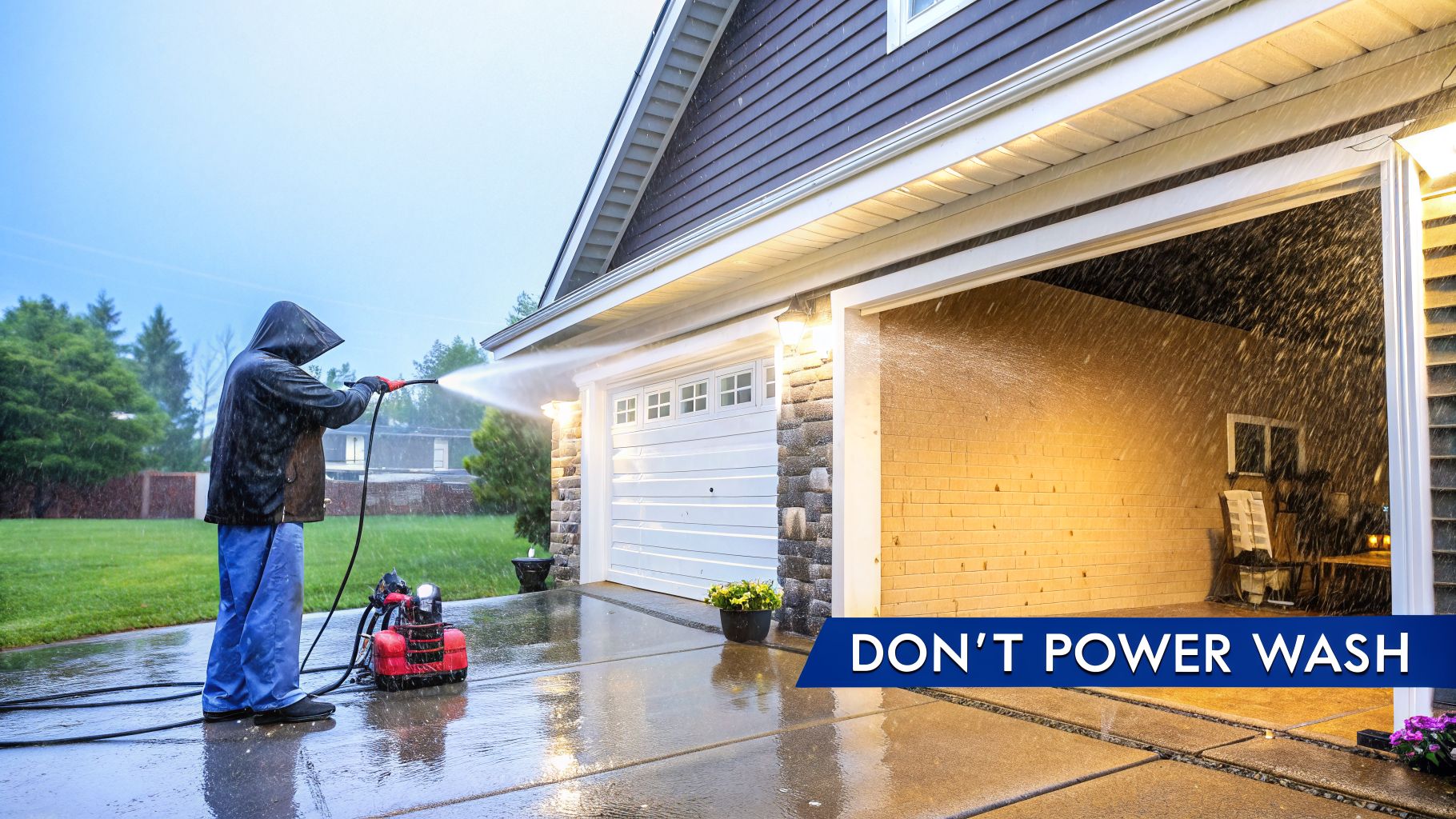
Power washing in the rain might seem efficient—after all, the surface is already wet. But in reality, it’s a lot like trying to wash a greasy pan that’s already full of water. Your soap just can't do its job. Rain actively works against you by weakening the very detergents designed to break down stubborn dirt, mold, and algae.
The second your cleaning solution hits that rain-soaked surface, it starts to dilute. This drastically cuts its concentration and, with it, its power to dissolve grime. Instead of clinging to the siding or concrete and getting to work, your cleaner gets washed away before it has a chance. The result? A streaky, inconsistent finish and a job you’ll probably have to do all over again.
The problem runs deeper than just dilution. Rainwater itself can turn against you, especially if you live in an area with hard water. As rain falls, it picks up minerals and contaminants from the atmosphere and whatever it touches on the way down. You’re essentially introducing a new layer of gunk at the exact moment you’re trying to get rid of the old stuff.
In fact, power washing effectiveness can plummet during wet conditions. Some research shows a success rate as low as 40% during rainy seasons because of how unpredictable the weather is. Since hard water affects over 85% of the country, this is a widespread issue. The soap molecules in your cleaner react with calcium ions in the rainwater, forming a chalky scum instead of a proper lather. This forces you to use way more product just to get the same result. You can discover more insights about how rain affects pressure washing on green-tree-services.com.
It’s a frustrating cycle. You blast away the old dirt only to have the rainwater deposit new mineral stains, leaving behind a dull, chalky residue once everything dries.
Another huge problem is just being able to see what you’re doing. When a surface is already drenched and it’s still raining, telling the difference between a clean spot and a dirty one becomes nearly impossible.
Power washing is a process of revealing—stripping away layers of grime to expose the clean surface underneath. Rain acts like a curtain, obscuring your progress and making it impossible to ensure a uniform, professional finish.
You simply can’t track where you’ve been or what areas still need attention. This leads to missed spots, uneven cleaning, and a splotchy mess once the surface finally dries. In the end, you’ve wasted time, water, and expensive cleaning solution for a subpar result that just won’t cut it. For homeowners in cities like Las Vegas and Scottsdale, waiting for a clear day isn’t just a preference—it’s a non-negotiable part of getting the job done right.
Thinking about tackling that power washing project despite a little rain? It might seem tempting to just get the job done, but mixing high-powered equipment with wet weather is a serious safety gamble. When we get asked, "can you power wash in the rain," our answer always goes beyond just whether it works—it's about the critical, often overlooked risks.
The most immediate danger is shockingly simple: electricity and water don't mix. If you’re using an electric power washer, even a light drizzle dramatically increases the risk of electrocution. Water has a nasty habit of getting into cords, connections, and the machine itself, creating a life-threatening hazard with a single wrong move.
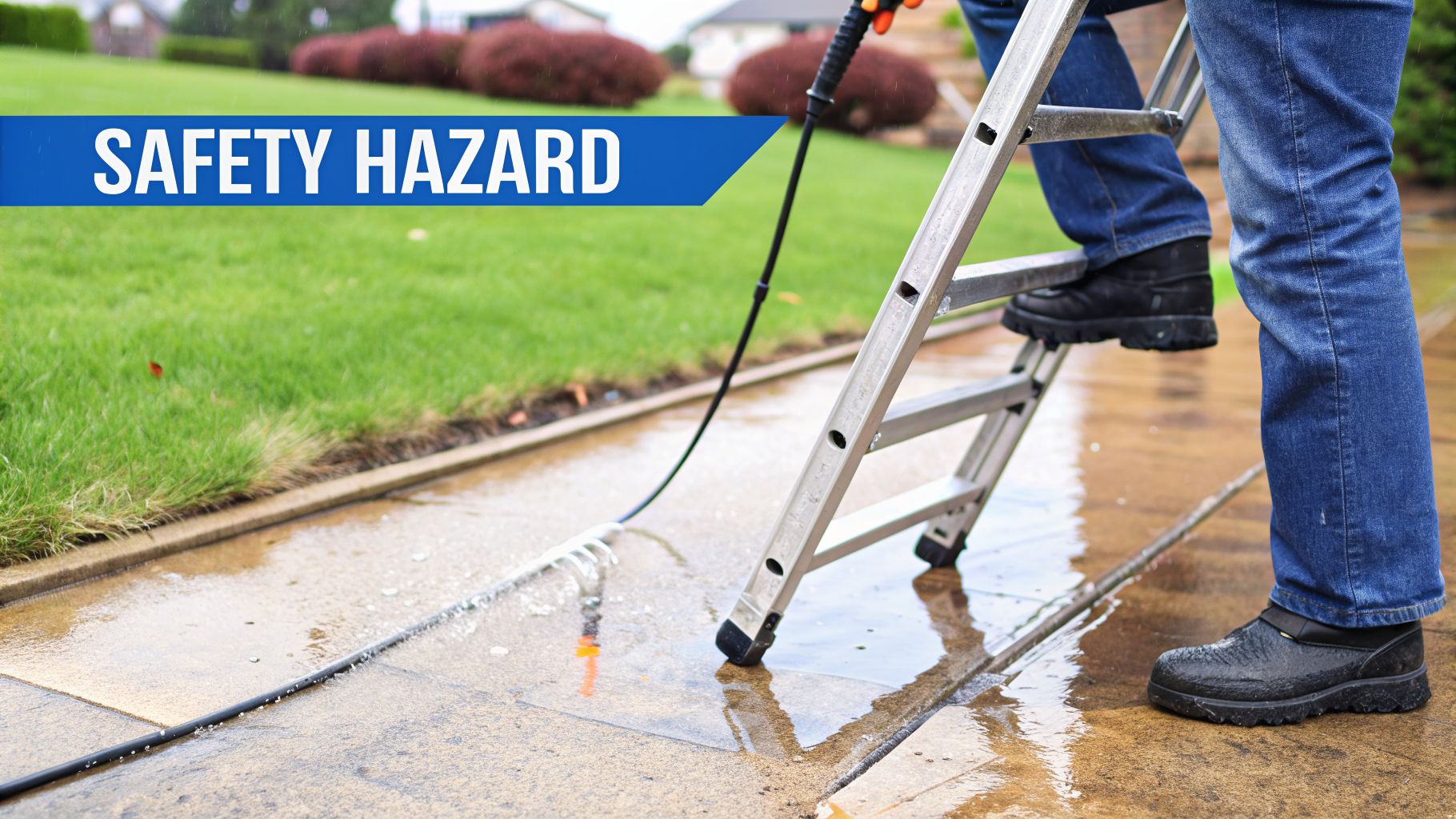
Even if you’re using a gas-powered unit, the situation is still precarious. Wet surfaces are notoriously slippery, and the force from a power washer’s spray only makes things worse. Trying to keep your footing on a slick driveway is bad enough; now imagine attempting that on a ladder.
The ground you’re standing on becomes a liability, too. A ladder’s feet can sink into saturated soil, creating an unstable base right when you need it most. It's exactly why professional crews—whether they're working in the dry heat of Scottsdale or the unpredictable weather of Denver—have ironclad safety rules against working in these conditions. Protecting our team and your property always comes first.
These aren't just company policies; they're fundamental to industry-wide safety and compliance best practices.
This isn't just about feeling unsteady; the numbers tell a frightening story. General reports show residential falls can spike by as much as 40% in wet conditions. But when you add a power washer to the mix, the slip hazard on a wet roof can jump by an incredible 300%. For pros who often work at heights, those statistics are impossible to ignore. You can read more about the dangers of pressure washing on nedstevens.com.
The combination of rain, reduced visibility, and unstable ground creates a perfect storm for accidents. A task meant to improve your home's appearance should never come at the expense of personal safety.
It's also crucial to understand that power washing and window cleaning are two completely different services. Our professional window cleaning teams, with over 26 years of experience, use one of only two methods: a traditional squeegee or a modern pure-water system. This allows them to sometimes work in light rain. Power washing, however, is a different beast. We explain this in more detail in our guide on cleaning windows with a pressure washer—a method we strongly advise against. The high pressure and ground-level hazards make it a job strictly for dry weather.
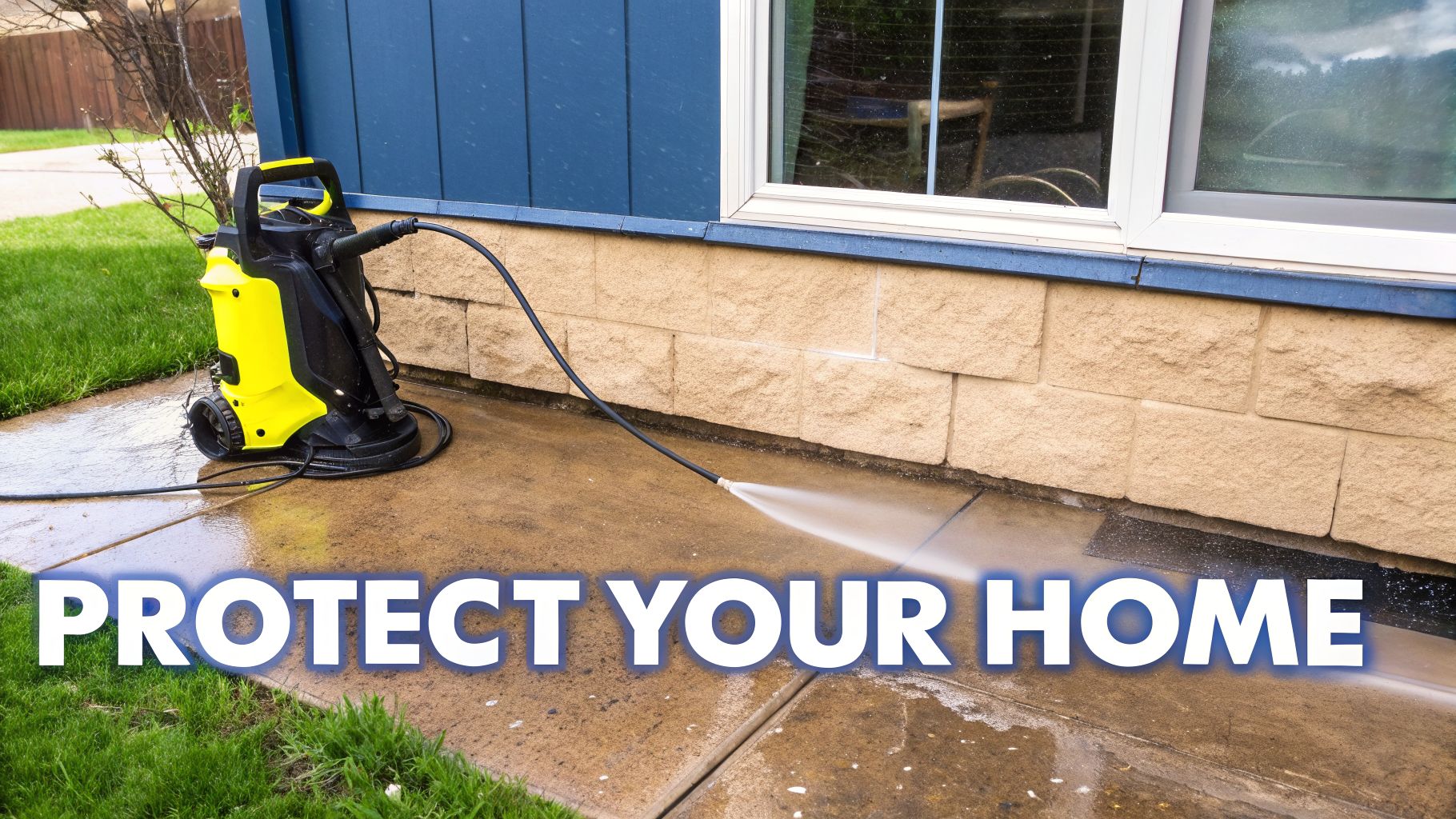
Beyond the subpar results and obvious safety hazards, there's another huge reason to rethink power washing in the rain: the very real risk of expensive damage. When you combine high-pressure water with an already soaked surface, you’re essentially forcing moisture into every nook and cranny of your home's exterior.
This isn’t just a minor issue. It can compromise the long-term health of your property and even shorten the lifespan of your power washing equipment. Think of your home’s siding, window seals, and trim as a protective shell. Power washing in the rain can blast right through those defenses.
That intense spray can drive rainwater into places it was never meant to go, kicking off problems you won't see until it’s too late. Once that moisture is trapped behind the scenes, it becomes a breeding ground for all sorts of trouble.
This is exactly why our professional teams—with over 26 years of experience—are so careful about scheduling jobs only during dry weather. It's a non-negotiable part of doing the job right for our clients in Phoenix and Las Vegas.
Here's something else to consider: rainwater isn't pure. It's full of minerals and airborne pollutants it picks up on its way down. This is an even bigger deal in areas with hard water, a problem for 85% of the country.
When you power wash in the rain, you're not just rinsing—you're spraying a new layer of dirt, dust, and pollen right back onto the surface. On porous materials like brick or concrete, this can leave behind ugly, chalky white stains known as efflorescence.
The very act of cleaning in the rain can introduce new stains and cause internal damage to your equipment, turning a simple project into a multi-faceted problem.
It gets worse. Those same minerals can do a number on the inside of your power washer. As they flow through the machine, they create scale buildup in the pump and motor. This chokes the water flow, reduces pressure, and wears down the internal components, drastically shortening the life of your equipment.
Ultimately, protecting your investments—both your home and your tools—means having the patience to wait for a clear, dry day.
So, what’s the secret weapon pros use to get those consistently spotless results? It’s not a special nozzle or a magic detergent—it's all about strategic timing. Any experienced power washer knows that the question "can you power wash in the rain?" has only one real answer, and they build their entire schedule around it.
This isn't just a matter of preference; it's a core part of delivering high-quality, long-lasting work. We live and die by the weather forecast, because getting the conditions right is a non-negotiable part of the job.
For a power washing job to go off without a hitch, we’re always on the lookout for a specific forecast. Professionals call this the "dry window," and it’s what allows us to do the job right from start to finish.
The ideal window looks something like this:
With over 26 years in this business, we’ve learned that being patient with the weather is the single most important factor for a perfect outcome. It’s a fundamental principle we stick to, whether we're working in the dry heat of Phoenix, AZ, or navigating the shifting seasons in Denver, CO.
It’s important to understand that not all exterior cleaning services are the same. Our professional window cleaners can often work through a light drizzle. The ONLY 2 methods of window cleaning professionals use are a traditional squeegee or an advanced pure-water system, both of which can be effective in damp weather.
Power washing, however, is a different beast entirely. It depends on chemical reactions and dry surfaces for both safety and effectiveness. The risks of electrical shock, slips, and just plain bad results make it a job strictly for clear, dry days.
To keep things running smoothly, many companies use advanced scheduling software for your cleaning business to juggle weather-related changes. This helps ensure every job gets done under the right conditions without causing huge headaches for clients.
So, a rainy forecast has washed out your weekend plans... and your power washing project along with them. While it’s tempting to ask if you can still power wash, the better question is what you should do instead. Forcing it is not just ineffective, it’s unsafe—but that doesn’t mean the day is a total loss.
If you're a determined DIYer, you can still make progress by shifting your focus to smaller tasks that can be done under cover. Think of it as the perfect time to tackle those projects that don’t involve spraying high-pressure water near your home’s main structure.
While ticking off these small tasks is productive, the most reliable path to a spotless exterior is to leave the job to the experts. Once the weather clears up, hiring a professional service is the surest way to get the flawless results you were after in the first place.
When you hire a professional, you're not just paying for a clean surface; you're investing in guaranteed results, safety, and peace of mind. They have the expertise to reschedule and execute the job perfectly when conditions are right.
With over 26 years of experience, companies like Professional Window Cleaning have the right tools, extensive safety training, and the deep expertise to handle the job correctly. We know how to work with the unique climate in areas like Las Vegas, NV and Scottsdale, ensuring the work is always done under ideal conditions for a perfect, long-lasting finish. It’s the smart, risk-free solution for any homeowner who values a job done right.
Even after laying out all the reasons why it's a bad idea, you probably still have a few practical questions. It’s only natural. Let's walk through some common "what if" scenarios to really drive home why patience and a dry forecast are a power washer's best friends.
If the skies open up—even with just a light drizzle—your one and only move is to stop immediately. The moment moisture enters the picture, the risk of electrical shock and slipping skyrockets. A little shower might not seem like a big deal, but it's more than enough to ruin your cleaning solution and create a genuinely hazardous work area.
Unplug everything, get your equipment to a dry, covered spot, and start planning to finish the job another day. Your best bet is to give the surfaces a full 24 to 48 hours to dry out completely before you even think about starting again.
Patience is a virtue, especially when you're aiming for a flawless finish. Pros, including our own teams out in places like Phoenix, will tell you to wait at least 24 to 48 hours after the rain stops. This gives surfaces like concrete, wood, and siding enough time to dry through and through.
Trying to wash a damp surface is a recipe for disappointment. You can easily trap moisture underneath, which is an open invitation for mold and mildew to set up shop. Not only that, but your cleaning results will be subpar. In humid areas, you might even need to give it a little longer for all that moisture to evaporate.
It’s true that a gas-powered washer removes the direct threat of getting zapped by a power cord, but that doesn't magically make the job safe. Every single one of the other dangers is still very much in play.
Using a gas-powered washer in the rain only solves one part of a much larger safety problem. The risks of slipping, poor visibility, and ineffective cleaning are just as high.
You’re still facing a serious slip-and-fall hazard on wet ground, and the rain will destroy your visibility, making it tough to see what you’re doing or what you’ve missed. On top of that, your cleaning agents will be instantly diluted, and the engine itself isn't built to run in a downpour, which can lead to a quick mechanical failure.
When it comes to doing a job safely and getting it done right, there's just no substitute for experience. For over 26 years, Professional Window Cleaning has been delivering incredible results because we know the right way to handle every project, rain or shine. If you're looking for a guaranteed, risk-free clean for your home or business in Denver or Las Vegas, learn more about our services at professionalwindowcleaning.com.
Read our blog posts regularly and keep learning.