Care and Maintenance
Cloth for Window Cleaning Choices That Deliver Results
Choose the best cloth for window cleaning by comparing microfiber, cotton, lint-free, and chamois options, plus care and selection tips.


You're reviewing three bids for the same office building. One is dramatically cheaper, the salesperson promises a fast turnaround, and the proposal says little more than “exterior windows cleaned.” Six weeks later, the glass still shows mineral spots, the crew arrives without a clear access plan, and nobody can produce current insurance documents. The low bid has become a management problem.
Hiring a commercial window washing company isn't just a curb-appeal decision. You're buying controlled access to occupied property, work at height, equipment management, scheduling discipline, and a finish that tenants and visitors will notice. Professional Window Cleaning has been cleaning windows for over 26 years, and the practical lesson is simple: compare the vendor's operating system, not just the price per pane.
A property manager can discover a weak vendor through a routine tenant complaint. Streaks appear on lobby glass, the crew arrives without a workable pedestrian-control plan, and the certificate of insurance is outdated or does not match the workers on site. By then, the low bid has already created a management and compliance problem.
Commercial window washing gives a vendor access to occupied property, high work areas, building equipment, and tenant-facing spaces. The contract must account for more than the visible finish. Safety liability matters when work involves ladders, lifts, rooftops, rope systems, or suspended platforms. Inconsistent quality makes the building look neglected when one side is cleaned while another is skipped. Hidden costs surface when the proposal excludes interior glass, difficult access, water treatment, after-hours work, or return visits for missed areas.
The labor requirements also separate commercial service from casual janitorial work. In the United States, the Bureau of Labor Statistics reported 13,740 employed building cleaning workers in May 2023, with a mean hourly wage of $21.03 and a mean annual wage of $43,740. The same data listed a median hourly wage of $19.18, ranging from $14.14 at the 10th percentile to $29.25 at the 90th percentile. These figures provide useful context: a vendor that staffs difficult-access work, retains trained crews, and carries appropriate coverage cannot price every property like a basic storefront. BLS occupational wage data
The cheapest proposal frequently omits the work that creates the greatest exposure:
Property manager's rule: If the proposal does not explain how the crew will reach the glass safely, it is incomplete.
Demand a property walk-through before accepting a quote. A capable company identifies access restrictions, assigns the appropriate method to each elevation, provides safety documents before mobilization, and names one contact for schedule changes and deficiencies. Professional Window Cleaning has cleaned windows for over 26 years, and that experience reinforces the practical standard: judge the vendor's operating controls, not just the price per pane. This applies to retail plazas, medical offices, car dealerships, stadiums, condominiums, and high-rise towers.
Professional window cleaners use only two methods: the traditional squeegee or a pure-water system. A credible commercial vendor should understand both and choose based on glass location, building height, access restrictions, soil type, interior conditions, and the risk created by equipment around occupants.
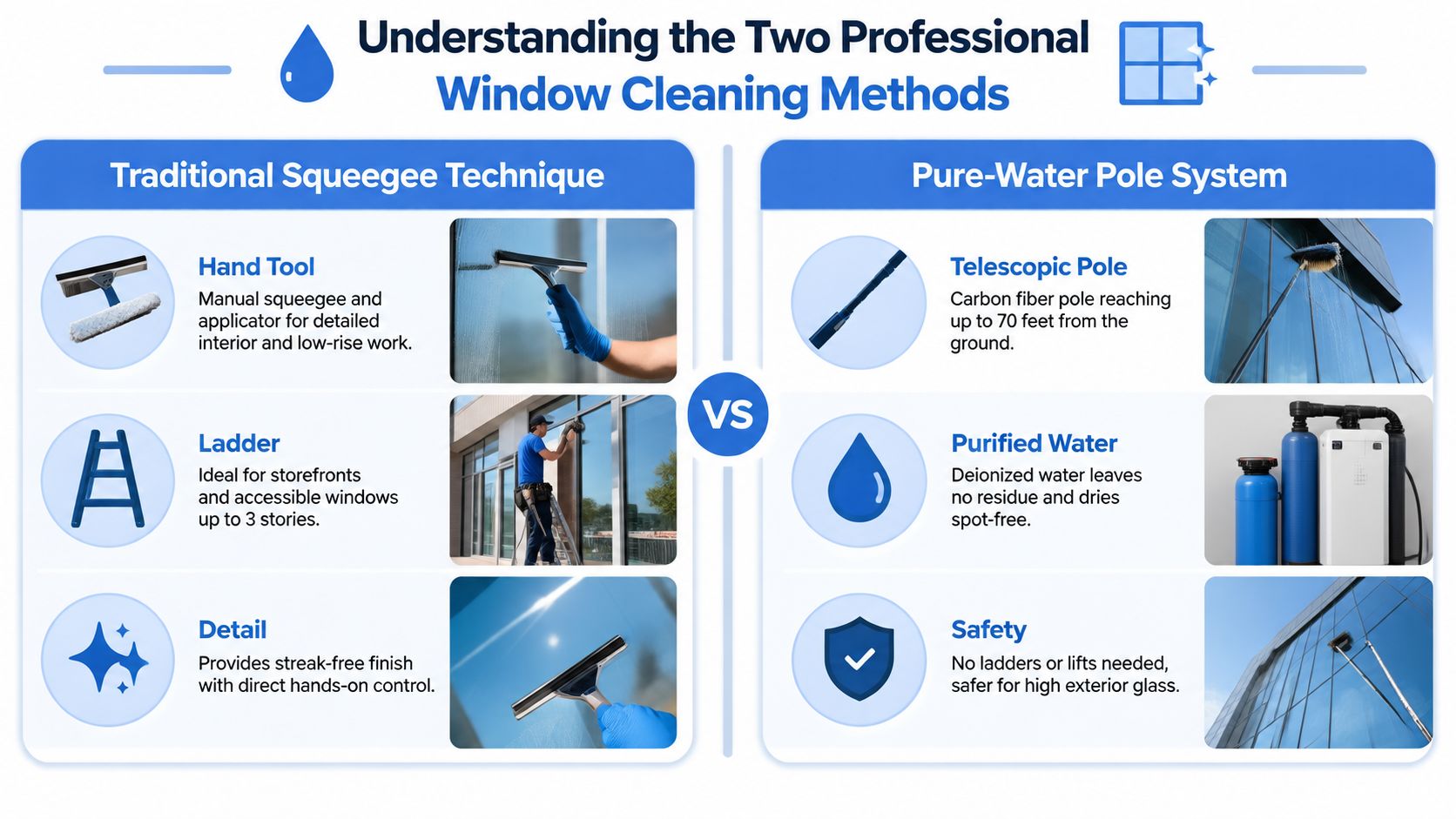
The squeegee method starts with a soap-and-water solution applied by an applicator. The cleaner then pulls a rubber blade across the glass at a slight angle, shaving the water away and controlling the finish directly. A professional may also use scrapers, microfiber pads, extension poles, towels, and detail tools around frames and edges.
This approach is the dependable choice for interior glass, storefronts, doors, accessible windows, and detailed low-rise work. It gives the technician direct control over pressure and edge work, which matters when glass has fingerprints, construction residue, stickers, grease, or concentrated spots. It also works well when the building layout makes water runoff, furniture, flooring, or occupied work areas a concern.
Ask whether the quote includes both sides of the glass. A window can look dirty after an exterior-only service if the interior still has fingerprints, haze, or residue. For a commercial property, “cleaned” should identify the surface, access area, and finish standard, not merely the number of panes.
A pure-water system purifies tap water through deionization or reverse osmosis and deionization filtration. The mineral-free water travels through a telescopic pole to a brush head, which scrubs and rinses the glass. Because the water contains no dissolved minerals, it can dry spot-free without manual squeegeeing when the surface and conditions are suitable. Pure-water and traditional method comparison
Pure-water poles are particularly useful for exterior glass on low- and mid-rise buildings. Industry guidance describes systems reaching about 70 feet from the ground, while other systems use poles in the 20 to 60 foot range. Those figures are from industry sources, and the actual reach depends on the equipment, building geometry, wind, operator control, and safe working position. Pure-water pole reach information
The method can reduce ladder use and ground-level setup, but it isn't a universal replacement for squeegees. A vendor should still explain where poles are appropriate, where lifts or rope access are required, and how the crew will handle interior glass, frames, screens, stubborn deposits, and areas blocked by landscaping or canopies.
For a building owner, the right question isn't “Which method is cheaper?” Ask, “Which method gives this elevation the safest access and the most consistent finish?” Professional Window Cleaning offers commercial building window cleaning alongside other window washing services, making it one vendor option to evaluate against that standard.
Window cleaning has a serious safety history because much of the work happens at height. A 2020 HealthDay summary of OSHA analysis reported 88 window-cleaning accidents over a 15-year period, with 62 fatal, while the Health and Safety Executive reported 35 workers killed by falls from height across all industries in Great Britain in 2024/25. Falls have been the leading cause of workplace death there in almost every year since 2001/02. BLS window-cleaning occupational data
Don't accept “we're careful” as a safety program. Require documents and a site-specific explanation before the crew starts.
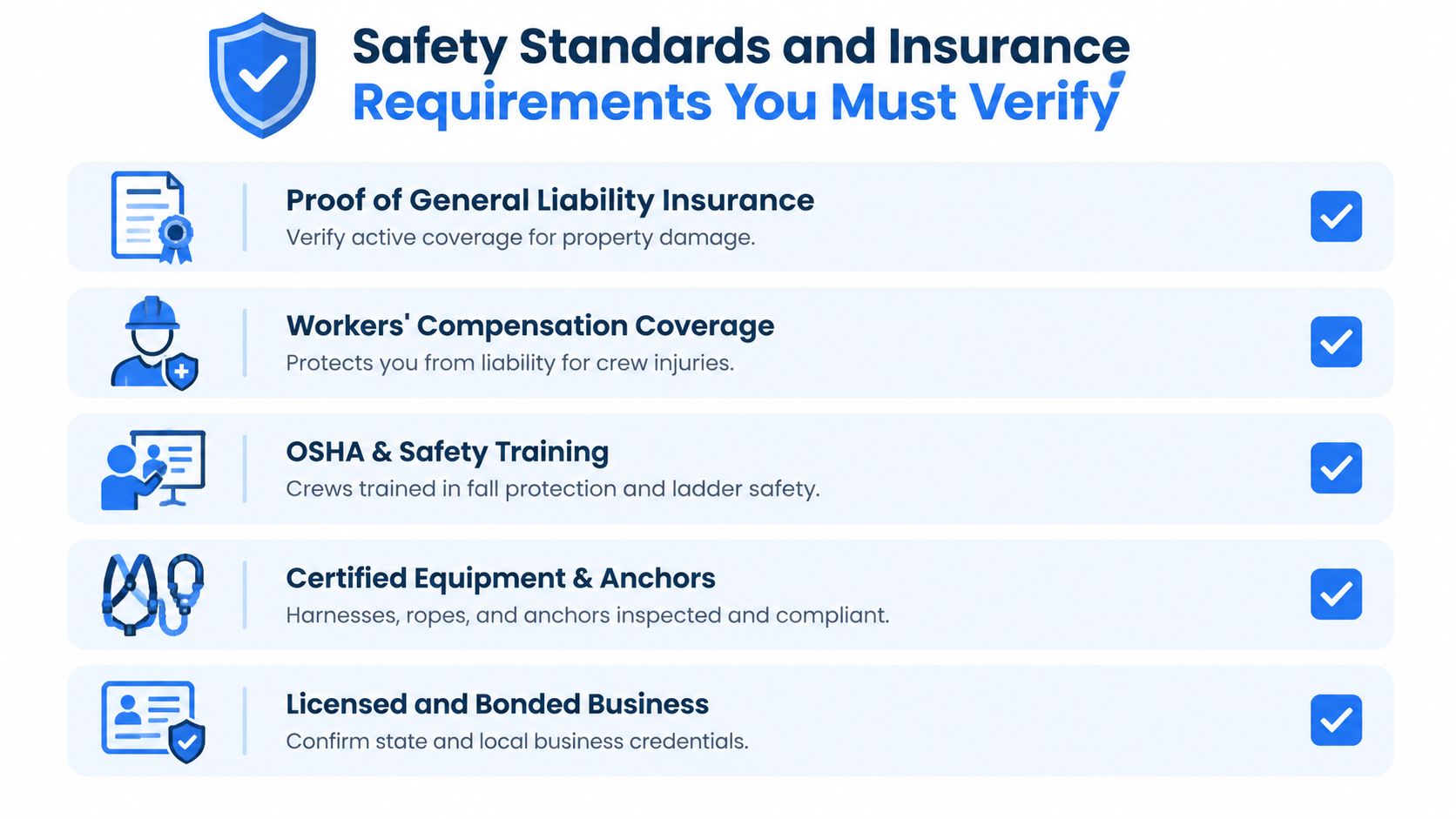
A sound hierarchy of controls prefers collective protection, such as permanently installed barriers or railings, before relying on personal protective equipment. Where barriers aren't feasible, workers should use certified fall-arrest PPE attached to a stable anchorage rated at least 7.5 kN, subject to the governing jurisdiction and system design. Facility-manager safety checklist
For high-rise work, ask the vendor to identify every access method in writing:
Some rulesets require rope-descent anchorages to have written building-owner certification showing that each anchorage has been identified, tested, certified, and maintained to support 5,000 pounds in any direction for each attached worker. That requirement should be confirmed for the specific building and jurisdiction, not copied blindly from a generic proposal.
Request a current certificate of general liability insurance, workers' compensation coverage for every crew member who may enter the site, automobile coverage where vehicles or lifts are involved, and any required bonding or licensing documents. Ask your broker or risk manager to review the certificate, confirm policy dates, and verify additional-insured wording before work begins. For a broader explanation of who needs insurance verification, use a resource that focuses on the verification process rather than just collecting a PDF.
Your contract should also define responsibility for damaged glass, water intrusion, landscaping, flooring, tenant property, and equipment contact. Read bonded versus insured coverage before assuming those terms provide the same protection.
A written safety plan should cover hazard assessment, weather stoppage, rescue procedures, equipment inspection, worker communication, public protection, and incident reporting. This embedded safety resource can help your team understand why those controls matter:
A quote becomes useful only when every bidder prices the same work under the same access assumptions. Building height, glass count, interior and exterior coverage, access difficulty, water treatment, service frequency, crew size, parking, tenant coordination, and weather limits all affect the total. A phone estimate based on a few photographs is a screening figure, not a proposal you can approve.
Labor explains part of the gap between bids. BLS data for building cleaning workers lists a $21.03 mean hourly wage, ranging from $14.14 at the 10th percentile to $29.25 at the 90th percentile. A vendor handling complex commercial work must also cover recruiting, supervision, equipment, training, insurance, travel, setup, and other unpaid time. A low price that ignores those costs often signals an incomplete scope, not efficient service.
Require each bidder to inspect the property and document:
Put competing proposals into one comparison sheet. Use the building type only as a starting point, then require the vendor to identify the actual conditions at your property.
| Building Type | Typical Access Method | Key Cost Drivers |
|---|---|---|
| Storefront or retail plaza | Squeegee, short extension tools, and pure-water poles where suitable | Frequent touch points, doors, customer traffic, after-hours access, and detailed interior work |
| Low-rise office or medical building | Pure-water poles for reachable exterior glass, squeegee work inside | Glass configuration, landscaping, patient or tenant privacy, furniture protection, and scheduling |
| High-rise office or condominium | Suspended platform, rope descent, lift, or building-integrated access systems | Anchor certification, rescue planning, specialized crews, permits, wind limits, and mobilization |
A suspiciously low bid often leaves out one of these cost centers. Do not ask a qualified vendor to remove safety controls to meet a target price. Change the scope openly instead, such as separating interior detailing from exterior maintenance or setting a recurring schedule that matches actual soil buildup.
For a closer examination of proposal structure and pricing variables, review commercial window cleaning pricing. Then request revised bids against the same written scope. That process produces a fairer comparison and reduces change orders.
The contract should read like an operating plan, not a sales summary. Define the exact elevations, surfaces, methods, access equipment, service frequency, work hours, quality standard, and responsible contacts. “Clean all windows” is not a scope. “Clean interior and exterior glass in the lobby, tenant suites, and designated elevations using approved access methods, with frames and sills included or excluded as listed” is closer to one.
Include these provisions before signing:
“A service guarantee should describe the correction, the response time, and the person responsible.”
Recurring work needs a schedule that fits the property. Retail entrances and high-traffic glass may need frequent attention, while a quieter office building may use a less frequent exterior cycle with separate lobby service. Medical offices, condominiums, and buildings with sensitive tenants need access windows that protect privacy and avoid disrupting operations.
Coordinate window cleaning with façade inspections, pressure washing, landscaping, sealant work, and tenant move-ins. For multiple properties, use a master service agreement for shared legal and insurance terms, then attach a site-specific schedule for each address. That structure prevents one generic scope from being stretched across a storefront, a downtown tower, and a medical campus.
Local conditions change the cleaning plan, but they don't change the hiring standard. In Las Vegas, desert dust and mineral deposits can make exterior glass look dull quickly, so ask how the vendor treats purified water and handles deposits. Phoenix and Scottsdale properties face intense sun and dust exposure, which makes method selection and scheduling important. Denver buildings need scheduling that accounts for altitude, temperature changes, and downtown access conditions. The same site-specific thinking applies in Tempe, Chandler, Gilbert, and Flagstaff.
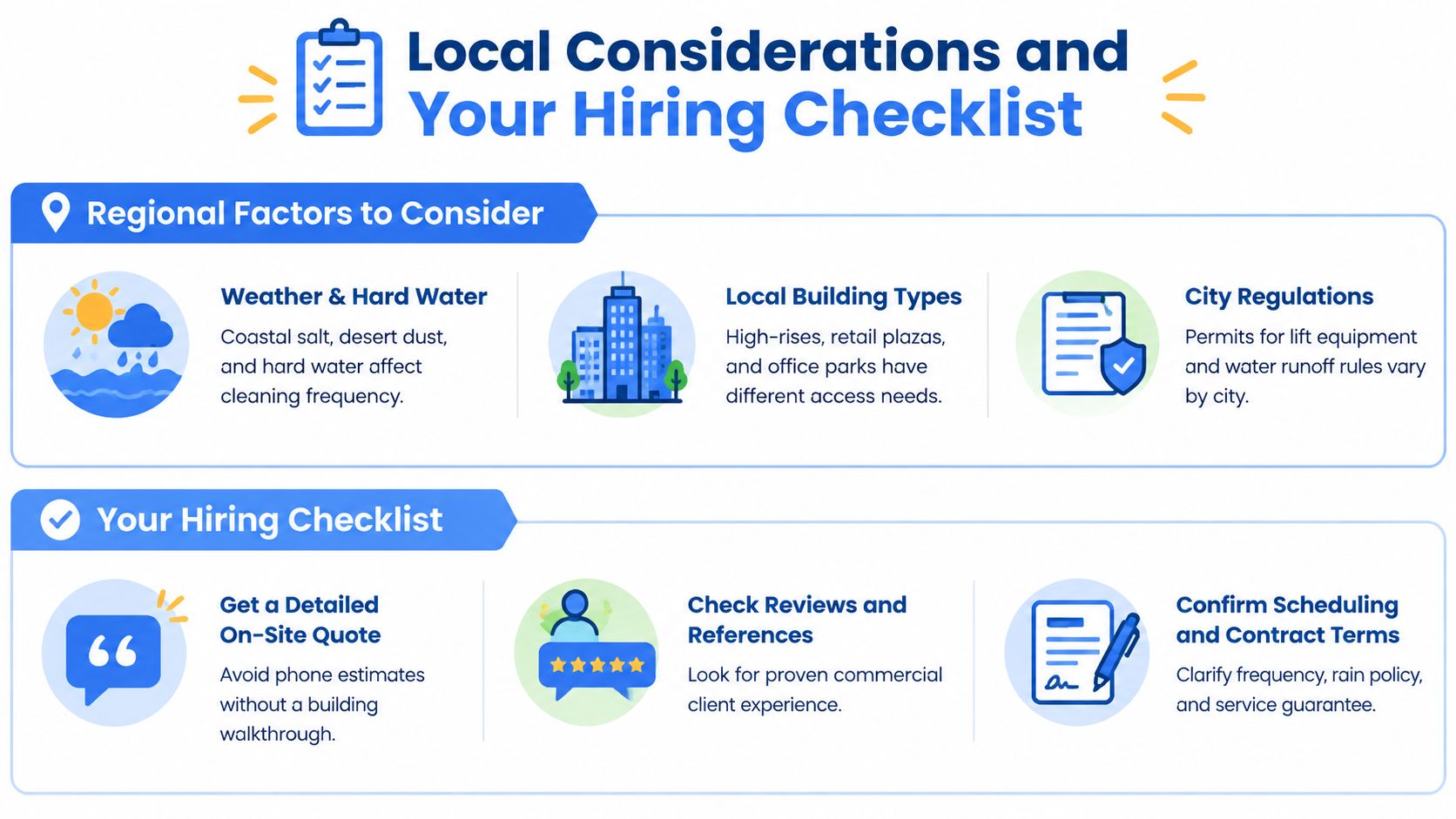
Before you award the contract, confirm every item below:
Professional Window Cleaning provides commercial and high-rise window washing services for properties in the regions listed above. Visit Professional Window Cleaning to request a building-specific evaluation, compare access options, and start with a quote that addresses safety, method, scope, and scheduling before work begins.
Read our blog posts regularly and keep learning.