Care and Maintenance
How to Bid Commercial Window Cleaning Profitably
Learn how to bid commercial window cleaning: measure glass, cost labor and equipment, pick a pricing model, write contract terms, and avoid costly bid mistakes.


You rinse the car, park it, and come back to white rings on the windshield after the sprinklers run or the rain dries. The glass looked clean, but the water left minerals behind. Before reaching for a stronger cleaner, check whether you're seeing removable residue or damage that cleaning can't undo.
Hard water contains dissolved minerals, mainly calcium and magnesium. When a droplet evaporates on glass, those minerals remain, often concentrated at its edges. Repeated exposure to rain, car-wash water, or sprinkler mist adds deposits over time. The U.S. Geological Survey's guide to water hardness classifies water as soft at 0–60 mg/L of calcium carbonate, moderately hard at 61–120 mg/L, hard at 121–180 mg/L, and very hard above 180 mg/L.
That chemistry helps explain why a spot may outlast an ordinary wash. Use the symptom as your first clue, not as proof: a cloudy mark might be residue, etching, or something on the inside of the glass.
| Symptom | Likely cause | DIY fix? | Next step |
|---|---|---|---|
| Light film that wipes off with a damp cloth | Fresh mineral residue or road grime | Yes | Wash with mild detergent, then squeegee dry |
| Chalky white rings that return after rain | Dried calcium and magnesium deposits | Yes | Patch-test, then use diluted vinegar or a mineral remover |
| Rainbow or cloudy haze after cleaning | Mineral film bonded to glass or light etching | Partly | Try gentle cleaning; seek a professional assessment if it persists |
| Pits you can feel with a fingernail | Permanent etching or surface damage | No | Get a specialist assessment; replacement may be needed |
| Greasy film on the inside of the glass | Vapor film from dashboard plastics | Yes | Use an ammonia-free glass cleaner |
For a quick check, pass a damp, clean cloth over a small spot. If it fades, surface residue is more likely; if it stays, don't assume more pressure will help. A rough feel or visible pits are reasons to stop before trying abrasives.
Mineral deposits are a familiar problem in dry markets such as Phoenix and Las Vegas, where mineral-heavy water and fast evaporation can leave spots after a wash or irrigation overspray. If a spot wipes away, follow the cleaning steps below. If it doesn't, compare the risks of your cleaner first. If the glass feels rough, skip DIY correction and get a professional assessment.
Start with the mildest option that suits the mark. A cleaner can loosen mineral residue, but it can't reverse etching, and added scrubbing can scratch glass or damage nearby seals and coatings. Patch-test any product in an inconspicuous corner and keep it wet while it works.
Gather a squeegee, two clean microfiber cloths (one for applying solution and one for drying), a spray bottle, painter's tape, and pH-neutral car-wash soap. A soft brush can help with trim, but don't use it on the glass. Keep the pane rinsed and free of grit before any cloth or applicator touches it.
| Method | Best for | Risk level | Key precaution |
|---|---|---|---|
| White vinegar, diluted 1:1 with water | Light film and fresh spots | Low to moderate | It's acidic; rinse fully and keep it off rubber seals |
| Commercial mineral-deposit remover | Chalky white rings | Moderate | Follow the label, patch-test first, and check coating compatibility |
| Baking soda paste | Light spots on bare glass | Low | It's mildly abrasive, so use only gentle pressure |
| Clay bar with lubricant | Bonded overspray and residue | Low to moderate | Keep the surface lubricated and use a fresh clay face |
| Cerium oxide or fine glass polish | Light etching haze | High | Specialist use only; polishing can distort optics |
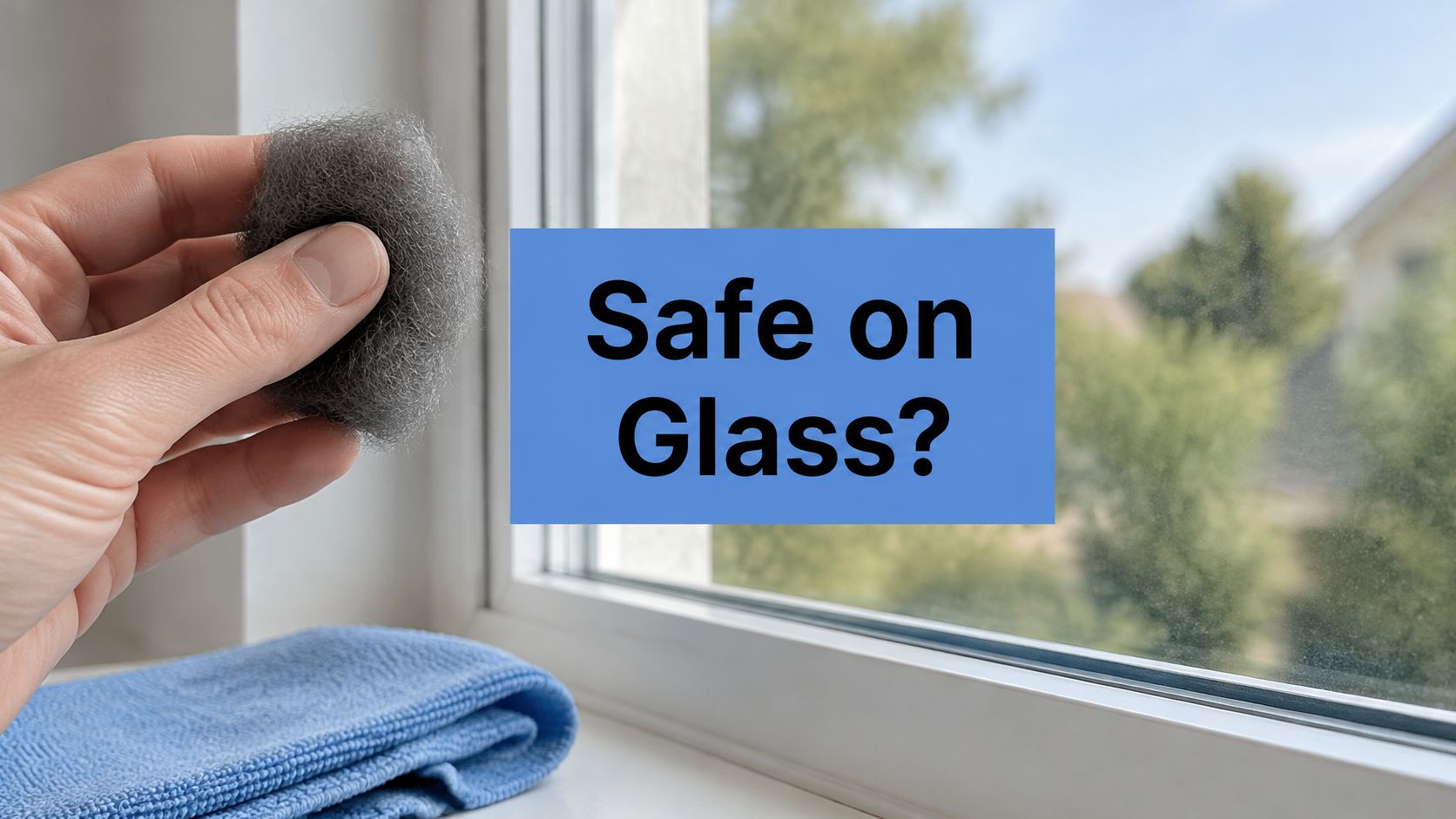
| Steel wool, razor blade, or abrasive pad | Nothing; avoid | Very high | These can scratch glass permanently |
Diluted white vinegar is a reasonable first try for a light film because it's acidic, but it still needs a full rinse and shouldn't dry on rubber. For chalky rings, a labeled mineral-deposit remover gives clearer product-specific directions; check that it's suitable for your glass before use. The glass-care guidance from Vitro advises testing approved removers first and keeping them off seals, paint, trim, and coatings.
Polish is a different category, not just a stronger household cleaner. Removing etching requires controlled work, and uneven polishing can affect the glass's optical clarity. Choose the mildest method that clears a test patch, and never mix cleaners.
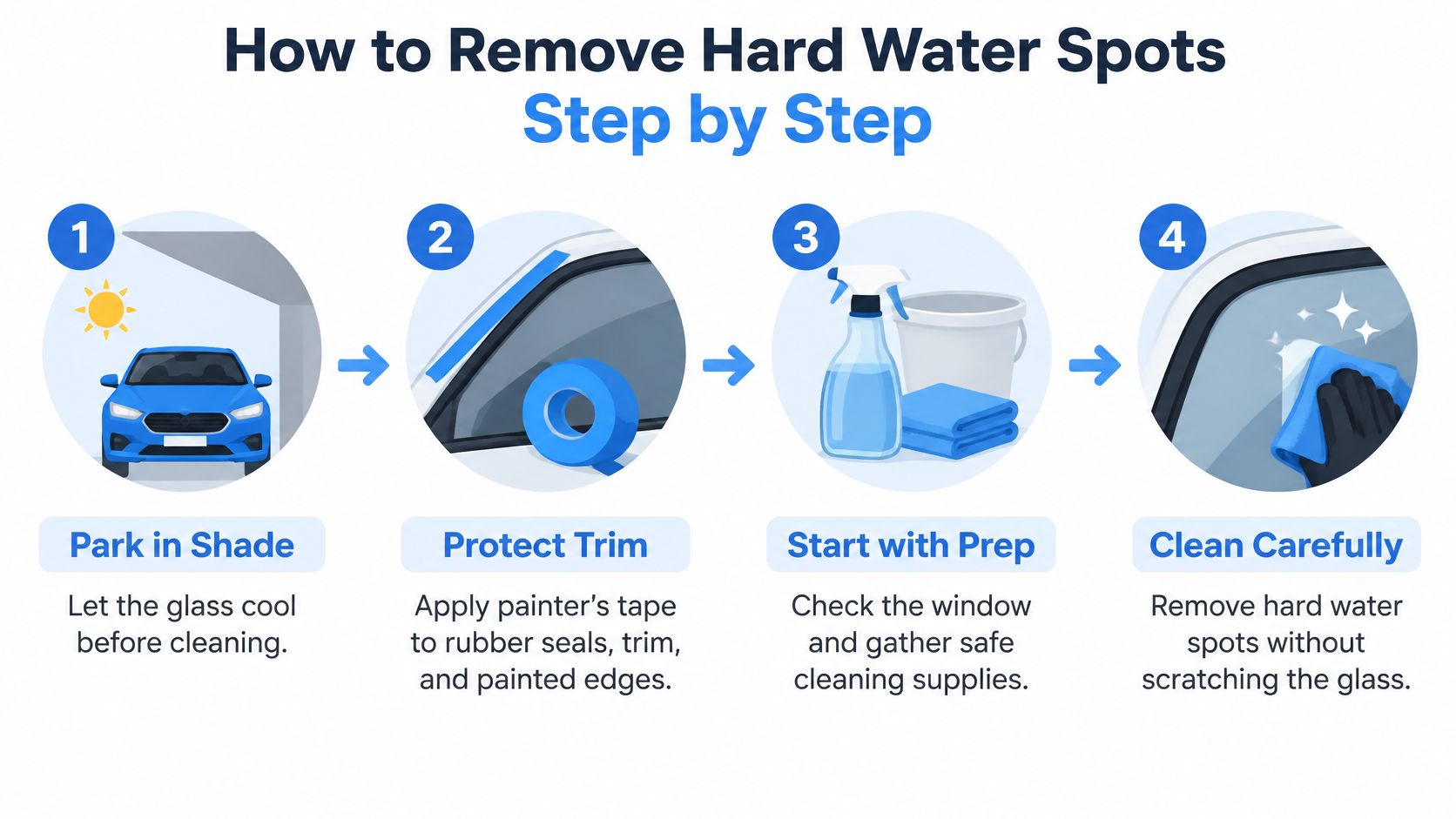
Cool glass in full shade gives you control. Hot glass flashes cleaner dry and bakes minerals tighter. Tape rubber seals, trim, and paint edges, then set out clean water, mild car-wash detergent, and a clean microfiber applicator.
Rinse the pane thoroughly. Flood the glass with clean water first. Grit left on the surface turns into sandpaper under a pad.
Wash off ordinary grime. Wash with mild, non-abrasive car-wash detergent and rinse again. You want mineral residue exposed, not hidden under road film.
Patch-test in a corner. Dab your chosen remover on the lower corner of the glass and wait one minute. Look for any effect on glass, tint film, seals, or trim before you treat the full pane.
Apply to the applicator, not the glass. Put diluted 1:1 white vinegar for light film, or a labeled mineral remover for chalky rings, onto a soft microfiber applicator. Work small, overlapping passes with light, even pressure. Keep the panel wet the entire time.
Respect dwell time. Check the label and remove the product on schedule. Never let solution dry on the surface. This pass is chemical cleaning only. No polish, steel wool, or razor blade here.
Remove and rinse at once. Squeegee or wipe with a lint-free towel, then rinse the whole pane with clean water. Fast removal prevents cleaner haze and carries loosened minerals away instead of resettling them.
Dry fully, then inspect dry. Dry completely and check reflected light from several angles. Clear and uniform means finished. One repeat on a stubborn ring is reasonable. Stop if you see haze that will not rinse away. That signals etching, and repeated acid will only pit the surface deeper. Controlled machine polishing or replacement is the next decision, not stronger chemistry.
Rinse grit, wash mild, apply soft, remove promptly, inspect dry. That order separates removable deposits from permanent damage before anyone reaches for aggressive tools.
Tinted glass needs a milder approach and film-safe products. Audio Jam Inc.’s tint-care advice covers general guidance on cleaning tinted car windows without harming film.
The most damaging mistake is scrubbing a dry spot harder with a dirty cloth. That can grind trapped grit against the glass instead of removing the mineral residue. Pre-rinse, keep the glass wet, and use a clean, soft applicator with light pressure.
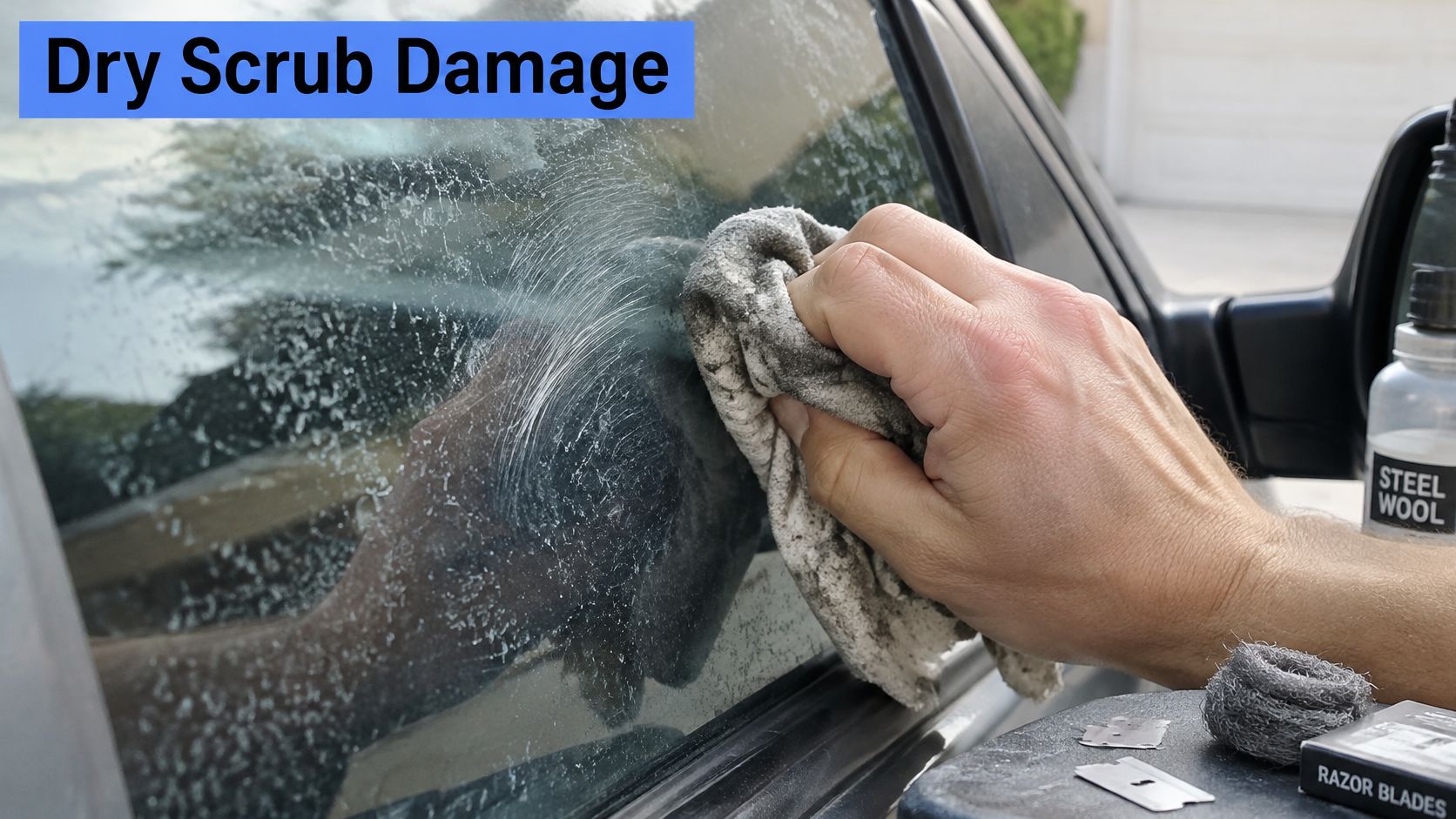
Avoid these common shortcuts:
AGC's glass-cleaning guidance warns against abrasive materials and excessive pressure. It also cautions that polishing etched glass needs tight control: uneven removal can create optical distortion or a visible bullseye.
Coated and laminated glass needs extra care because harsh chemicals and prolonged exposure to acidic or basic cleaners can damage coatings or laminated assemblies. Stop treatment if you notice new haze, distortion, coating changes, seal damage, or paint changes. Have a specialist assess the pane rather than trying a more aggressive method.
Here's a visual demonstration of why keeping the glass wet and avoiding abrasive scrubbing matter:
Water hardness varies, so two cars washed with the same routine can collect different amounts of residue. In a U.S. Geological Survey groundwater investigation, 47 well-water samples ranged from 6 to 310 mg/L as calcium carbonate, with a median of 51 mg/L. Of those samples, 28 (60 percent) were soft, 15 (32 percent) moderately hard, 3 (6 percent) hard, and 1 (2 percent) very hard. The investigation measured groundwater, not car-window staining, but it shows how much mineral exposure can differ between water supplies.
The hardness bands are 0–60 mg/L for soft water, 61–120 for moderately hard, 121–180 for hard, and above 180 for very hard. Water close to 300 mg/L is more than five times the soft-water threshold and falls in the very-hard category. If that water repeatedly dries on your car, preventing evaporation on the glass matters more than relying on a stronger cleaner later.
Dry the glass promptly. After rain, a wash, or sprinkler mist, use a clean microfiber towel or squeegee before droplets dry and leave deposits.
Redirect irrigation. Adjust sprinklers so their spray doesn't hit parked vehicles. Moving the overspray is simpler than repeatedly removing its residue.
Wash in the shade. Let hot glass cool before washing so water and cleaning solution don't dry too quickly.
Finish with a spot-free rinse. Use softened or spot-free rinse water when it's available, then dry the pane rather than leaving it to air-dry.
Set a repeatable wash routine. In mineral-heavy areas, wash every two to three weeks, before chalky rings have time to build up.
Protect the glass. Apply a glass sealant or water-repellent treatment and renew it on the product's schedule. For more ways to limit deposits between washes, see this guide to hard-water-stain prevention.
The simplest habit is also the most direct: dry the glass quickly. Each time a mineral-bearing droplet evaporates, it can leave residue behind.
A driver pulls onto a dark road, and every oncoming headlight blooms into a starburst. In rain, the same film turns wiper strokes into smears that hold light instead of clearing it. That is when mineral residue stops being cosmetic. The Texas A&M Transportation Institute's wet-weather driving research describes how rainfall and speed affect visibility and identifies the uneven film of water on a windshield as a major contributor to reduced visibility.
The decision is whether the spot is surface residue or etched glass. Surface residue can be cleaned. Etching has changed the glass itself, and more scrubbing makes the damage worse.
Call a glass pro when you see:
If a spot clears, stop. If rings or haze persist, book a glass-restoration assessment rather than escalating to abrasive household methods. A restoration assessment tells you whether the glass can be polished or must be replaced. If the pane is pitted or damaged, ask an auto-glass shop about replacement and whether the shop recalibrates driver-assistance cameras afterward. For the professional approach to the same mineral problem, see this guide to window cleaning for stubborn mineral deposits.
Professional Window Cleaning has cleaned windows since 1999 and handles hard-water stains and mineral deposits on home, office, storefront, and high-rise glass through specialized treatments. The team uses professional-grade squeegees and brushes, along with eco-friendly solutions, to remove dirt, grime, streaks, and hard water spots. Window washing comes with a streak-free guarantee and a satisfaction guarantee; any concern you raise is addressed promptly.
Those methods suit building glass. Etched auto glass needs an auto-glass specialist. A squeegee and brush remove surface film; they cannot restore pits or correct the optical distortion that comes with etching. For building glass and restoration, see our glass-restoration services.
If mineral deposits are clouding your home or office windows, Professional Window Cleaning removes hard-water stains with specialized treatments. Visit Professional Window Cleaning to arrange service for your building's glass.
Read our blog posts regularly and keep learning.