Care and Maintenance
Window Squeegee Rubbers: A Complete Reference Guide
Window squeegee rubbers explained — types, sizes, materials, how to measure, replace, and pick the right rubber for clean, streak-free glass every time.


Ever noticed those chalky, milky-white spots on your windows that just won’t scrub off? Those are hard water stains, the stubborn residue left behind by mineral-rich water. They’re made up of minerals like calcium and magnesium that literally bond with the glass as water evaporates, making them a nightmare to remove with regular cleaners. Getting rid of them starts with understanding what you're up against.
If you’ve ever battled those cloudy spots on your glass, you’re not alone. This is an especially common headache for folks in cities like Las Vegas or Phoenix, where hard water is just a fact of life. The science behind these frustrating stains is pretty simple, but it creates a problem that’s tough to solve.
It all starts with the journey of water. Rainwater is naturally soft, but as it flows through the ground, it dissolves and picks up minerals. The main culprits are calcium and magnesium, which are what turn soft water into hard water. When that mineral-loaded water splashes onto your windows—whether from a sprinkler, a hose, or even just rain runoff—the water dries up, but the minerals are left behind.
At first, you’re left with a light, chalky residue you might be able to wipe away. But over time, something more permanent happens. Those minerals start to etch into the microscopic pores of the glass, creating a chemical bond that’s too strong for standard cleaners. That's why scrubbing with soap and water usually just smears the mess around instead of getting rid of it.
Where you live has a massive impact on how bad your hard water stain problem is. For homeowners and businesses in places like Arizona, Nevada, and Colorado, it’s a constant battle. The water hardness in these regions often soars above 10.5 grains per gallon (GPG), which is officially classified as 'very hard' water.
In fact, cities we serve like Phoenix, AZ, Las Vegas, NV, and Denver, CO, consistently rank among the top U.S. cities with the hardest water. Phoenix and Las Vegas are often in the top six nationwide. You can find more details on how hard water affects glass at GlassDoctor.com.
The longer mineral deposits are left on glass, especially in direct sunlight, the more they bake into the surface. The heat actually speeds up the etching process, making the stains exponentially harder to remove and increasing the risk of permanent damage.
These ugly marks don't just appear out of nowhere. A few common culprits are usually to blame, and knowing what they are is the first step toward prevention.
Professional Window Cleaning has been cleaning windows for over 26 years! We've learned that it takes more than elbow grease to fix stubborn hard water stains. You need the right knowledge and professional tools to break down those mineral bonds without scratching or damaging your glass.
Deciding whether to tackle hard water stains yourself or call in the pros can be tricky. This table breaks down the key differences to help you choose the best route for your situation.
While a DIY approach might work for a minor spot or two, stubborn or widespread stains almost always require a professional touch. Pros not only remove the stains but can also apply protective sealants to prevent them from coming back.
When you first spot those chalky white marks of hard water on your glass, it's easy to want to grab the nearest cleaner and scrub away. But taking a minute to choose the right game plan can save you a ton of elbow grease and, more importantly, prevent accidental scratches. For light to medium buildup, a few simple things from your pantry can work wonders, breaking down those stubborn mineral deposits without needing harsh chemicals.
The real secret to any good DIY method is knowing what you're up against. You're not just wiping off dirt; you're trying to dissolve a chemical bond. That means you need a mild acid to neutralize the alkaline minerals like calcium and magnesium. It’s no surprise, then, that the most effective home remedies are the ones that use common, slightly acidic ingredients.
The most trusted weapon in the DIY arsenal against hard water stains is a basic mix of white vinegar and water. The magic here comes from acetic acid, which is brilliant at dissolving the mineral bonds that create those milky spots. It's a gentle but surprisingly powerful way to bring back the sparkle to your windows.
To whip up an effective batch, just follow this recipe:
Once it's had time to soak, grab a clean, non-abrasive microfiber cloth and wipe the area using circular motions. You might need to use a little gentle pressure. To finish, rinse the glass with fresh distilled water and dry it completely with another clean microfiber cloth. This last step is key to preventing new spots from forming as it dries.
This decision guide helps you see when a DIY approach is best versus when it's time to call for backup.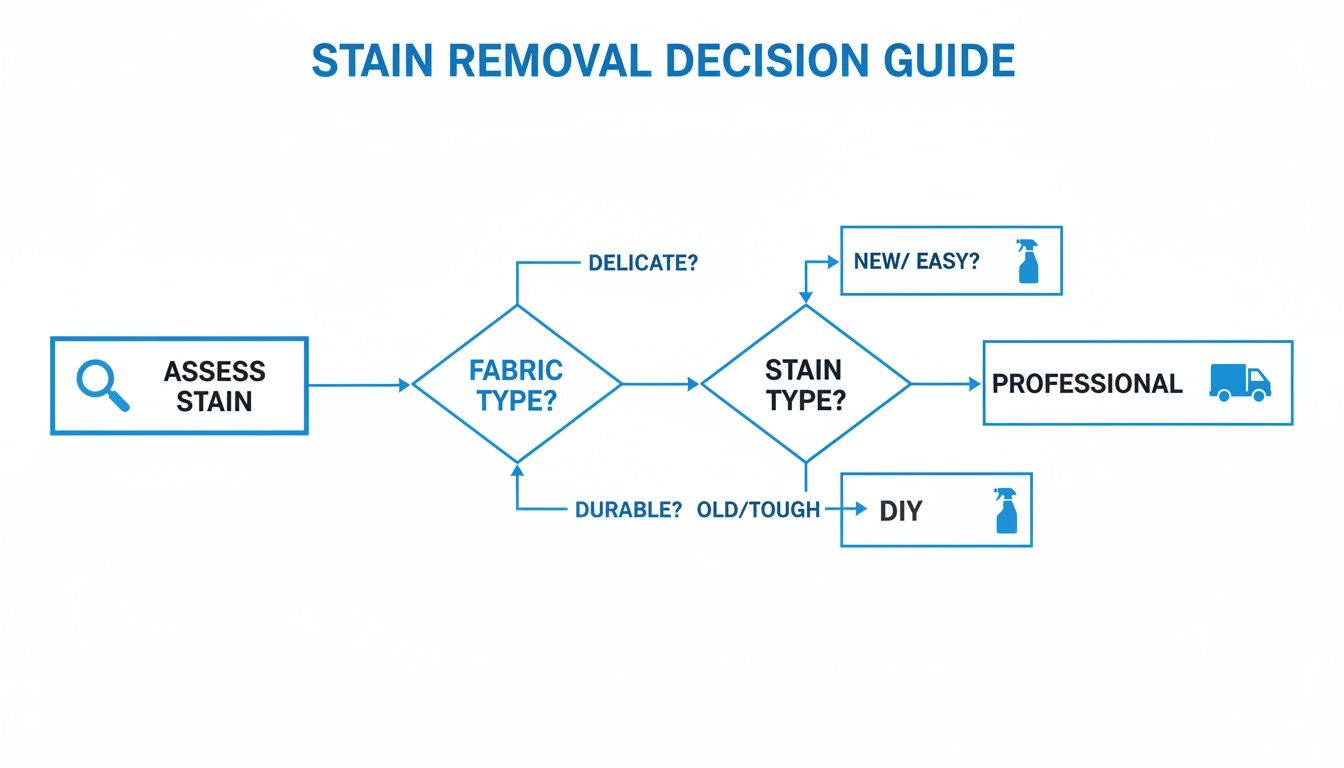
As the flowchart shows, figuring out how bad the stain is comes first. That simple step will point you toward the right DIY fix for light buildup or let you know it's time for professional help to tackle more etched-in damage.
Sometimes, a spray just won't cut it, especially for stains that have been baking in the sun for a while. For these more stubborn spots, you need a little more scrubbing power, and a gentle abrasive paste is the perfect solution. A baking soda paste is ideal because it’s tough enough to lift minerals but soft enough that it won't scratch the glass.
Just mix baking soda with a tiny bit of water until you get a thick, spreadable paste—think toothpaste consistency. Apply it directly to the hard water stains and let it sit for about 15 minutes. Then, with a damp microfiber cloth, gently scrub in a circular motion. The mild abrasion from the baking soda will help lift the minerals that the vinegar soak loosened.
Pro Tip from Our 26 Years of Experience: Whatever you do, never use abrasive scrubbers like steel wool or scouring pads on glass. They will leave behind permanent scratches that are way worse than the hard water stains you started with. Always stick to soft materials like microfiber cloths.
The battle against hard water is especially fierce in certain regions. Since the late 1990s, the demand for professional window cleaning has surged by over 50% in hard water hotspots like Arizona and Nevada. In cities like Phoenix, Scottsdale, and Las Vegas, up to 65% of clients report issues with stubborn white spots due to water hardness levels averaging 15-20 GPG. These deposits can cause up to 10% annual degradation of the glass surface if left untreated. While DIY vinegar soaks can dissolve 80-90% of these deposits, a baking soda paste is often needed to achieve the 98% clarity that professional methods deliver. You can learn more about removing hard water stains from Aquasana.com.
Just remember, these DIY solutions work best on newer, lighter stains. If you’ve soaked and scrubbed and those spots are still hanging on, it probably means the minerals have started to etch into the glass itself. At that point, your best bet is to call in the professionals to avoid causing any permanent damage.
There comes a point where the vinegar spray bottle just doesn't have the muscle for the job. You've soaked, you've scrubbed, and those stubborn hard water stains are still staring back at you. This is a common story, especially for stains that have been baking under the intense Phoenix, AZ sun for months or even years.
When your best DIY efforts fall short, it’s usually a sign the mineral deposits have moved beyond a simple surface-level problem. They’ve begun to etch into the glass itself, creating microscopic pits and damage. At this stage, you need to step up your game from basic dissolving agents to more powerful, targeted techniques.
If home remedies aren’t cutting it, the next logical step is to explore commercial-grade hard water stain removers. These products are specifically formulated with mild acids and fine abrasives designed to break down heavy mineral buildup without harming the glass. But be warned—not all products are created equal.
Choosing the right cleaner is critical. You’ll want to look for a product that is:
Crucial Safety Tip: Always test a new product on a small, inconspicuous area of the glass first. Apply it to a bottom corner and follow the instructions to ensure it doesn't cause hazing, scratching, or discoloration before you tackle the entire window.
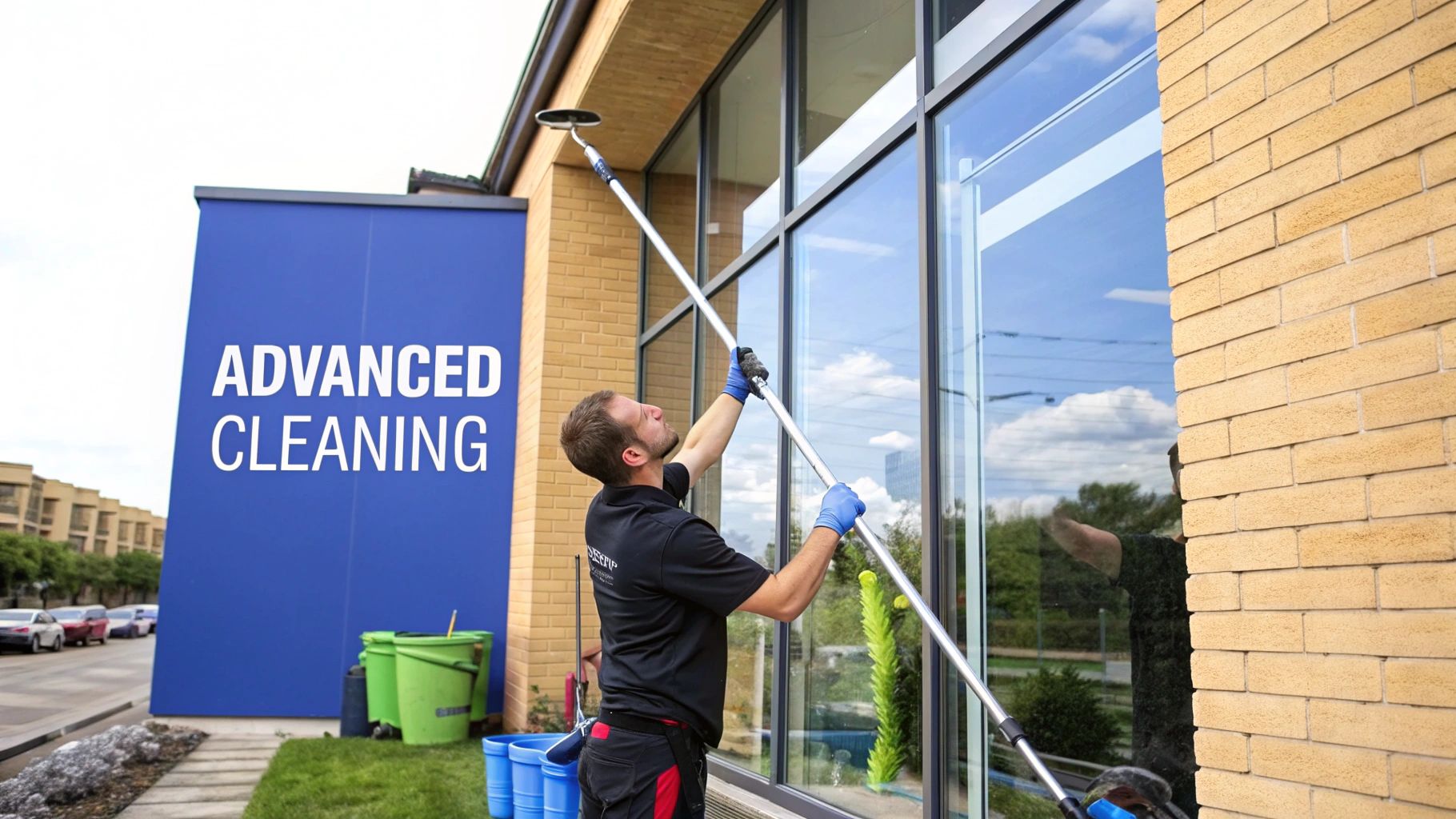
When it comes to professional window cleaning, there are ONLY two methods professionals use: the use of a squeegee, or the use of a pure-water system. At Professional Window Cleaning, we've spent over 26 years perfecting our craft, and we’ve found that these two methods deliver consistently flawless results on even the most challenging hard water stains. They are the cornerstones of professional window care for a reason—they are safe, efficient, and incredibly effective.
Our approach blends classic technique with modern technology. For most situations, the traditional squeegee method is our go-to. This isn't just about wiping water away; it's a skilled technique that, when paired with the right cleaning solution, lifts and removes all dirt and mineral residue in a single, fluid motion. It leaves nothing behind but a perfectly clear, streak-free surface.
For more complex jobs, especially on properties with widespread staining or hard-to-reach windows, we turn to our pure-water system. This technology is a game-changer. The system uses a multi-stage filtration process to remove 100% of dissolved solids from the water, including the very calcium and magnesium that cause the stains in the first place. This deionized water is a powerful cleaning agent all on its own, actively attracting and lifting dirt right off the glass.
Because the water is completely pure, it dries without leaving a single spot or streak. This not only cleans the existing stains but also ensures no new ones are created during the process, making it an ideal solution for maintaining pristine windows in cities like Denver, CO.
Sometimes, the damage from hard water stains is just too severe for even advanced cleaning techniques. If minerals have been left on the glass for an extended period, they can cause permanent etching that makes the glass appear cloudy or hazy, no matter how much you clean it.
In these severe cases, the surface of the glass itself needs to be restored. This is where a specialized service comes into play. For situations involving deep etching or even minor scratches, it's worth exploring professional glass polishing to restore your windows' clarity and integrity. This process carefully resurfaces the glass, removing the etched layer and bringing back its original smoothness and transparency.
When you manage a commercial property, a sprawling car dealership, or a towering high-rise, you know the building's appearance is a direct reflection of your brand. So, when the glass facades are clouded with those chalky, stubborn hard water stains, it sends the wrong message to clients, tenants, and visitors.
These stains aren't just an eyesore. They're a significant challenge that tanks your curb appeal and can even devalue your property over the long haul.
Cleaning massive glass surfaces on commercial buildings comes with its own unique set of obstacles. The scale is huge, the stakes are higher, and the risks are far greater than any residential job. Property managers in busy hubs like Denver are in a constant battle to maintain a pristine look against environmental fallout and mineral-heavy water.
This is where real expertise becomes non-negotiable. It's not just about wiping down glass—it’s about safety, efficiency, and protecting a major investment.
Tackling hard water stains on a multi-story building requires a whole lot more than a ladder and a bucket. The logistics alone are incredibly complex, demanding specialized equipment and a rock-solid understanding of safety protocols.
Just reaching the windows on the third, tenth, or thirtieth floor is a feat. It requires lifts, sophisticated rope access systems, and highly trained technicians who know exactly what they're doing.
On top of that, the sheer volume of glass makes traditional cleaning methods laughably slow and inefficient. Can you imagine trying to use a vinegar solution and a microfiber cloth on hundreds of windows? It's just not practical. This is where professional techniques, honed over decades in the field, truly make a difference.
Professional Window Cleaning has been cleaning windows for over 26 years! We've learned that commercial properties need a solution that is both powerful and systematic. The key isn't just removing the stains you see today, but implementing a strategy that prevents them from coming right back, safeguarding the building's aesthetic integrity.
To meet these commercial challenges head-on, we rely on one of the most effective methods in the industry: the pure-water system. This advanced technology is perfectly designed for cleaning large glass facades safely and efficiently, often from the ground up to several stories high.
The system uses a water-fed pole that can extend to reach high windows, which in many cases eliminates the need for cumbersome ladders or expensive lifts.
Here’s a quick rundown of how it works:
This method doesn't just get rid of the existing hard water stains; it ensures no new mineral deposits are left behind. The result? Your building’s glass stays clearer for much longer.
The impact of hard water is felt far beyond aesthetics. In industrial settings and commercial building maintenance, mineral-rich water can lead to serious operational costs. For instance, hard water with mineral concentrations above 180 mg/L can cause production rejection rates to spike by 20-40% for architectural glass used in stadiums and medical offices in cities like Denver, CO and Las Vegas, NV.
Research from glass manufacturers even shows that unfiltered water can double operational downtime, potentially costing a facility up to $5,000 per day in reprocessing. You can discover more insights about these operational impacts from Filtraglass.
By choosing a professional service that uses a pure-water system, property managers aren't just cleaning their windows. They are actively protecting their investment, preventing the permanent glass etching that devalues a property, and upholding the sharp, professional image that is so crucial for business success.
The best defense against hard water stains on glass is a good offense. Instead of constantly battling mineral buildup, you can adopt a few smart habits and proactive measures to stop those chalky spots from ever forming. This approach not only saves you time and frustration but also protects your glass from long-term etching damage.
Preventing stains is all about controlling how water interacts with your glass surfaces. Whether it's a simple daily habit or a more permanent home improvement, these strategies are key to keeping your view crystal-clear, especially in areas like Phoenix with very hard water.
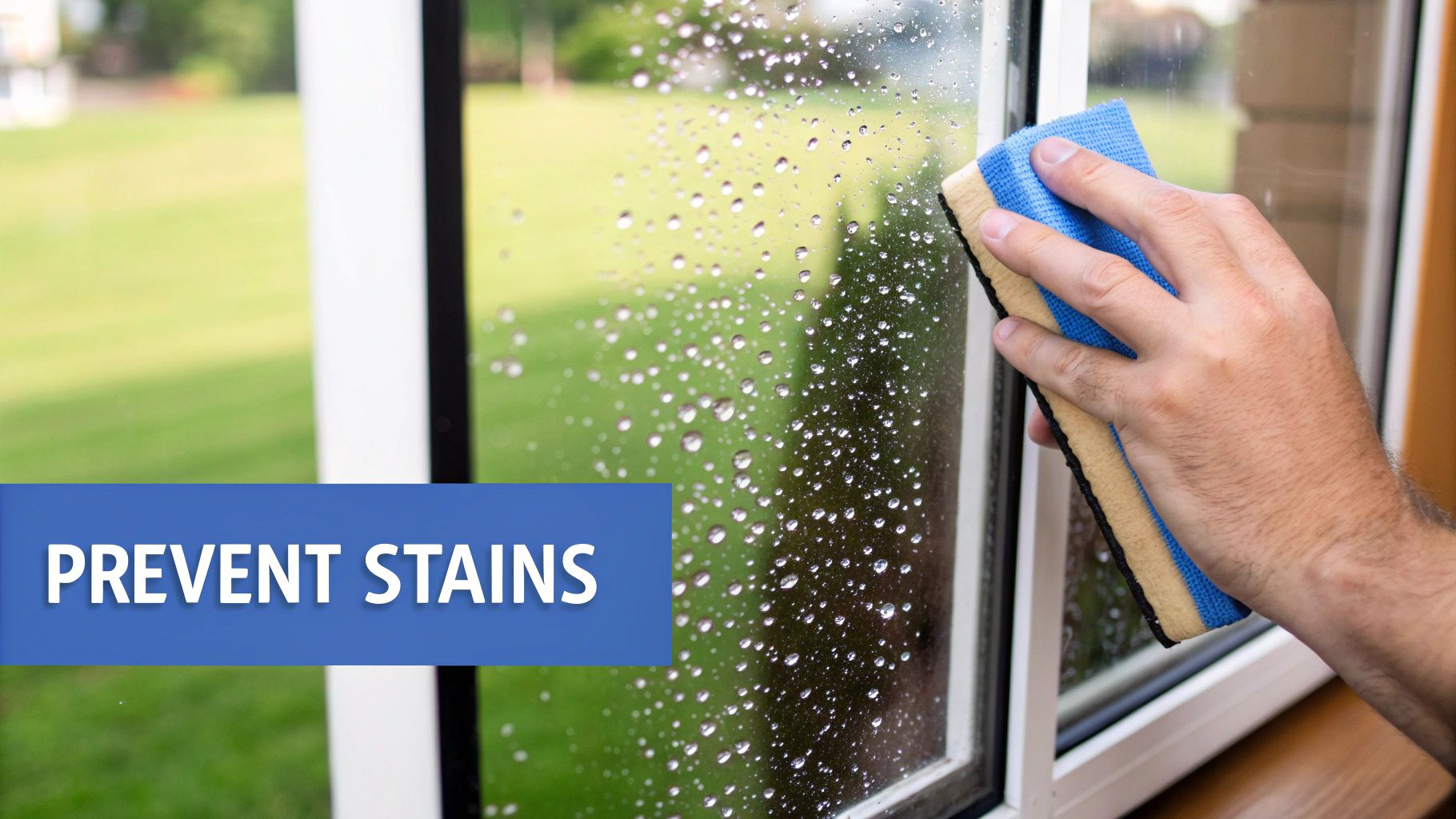
Lasting clarity often starts with small, consistent actions. By weaving a few simple routines into your day, you can dramatically reduce the opportunity for mineral deposits to settle on your glass.
Professional Window Cleaning has been cleaning windows for over 26 years! We've seen countless homes where misdirected sprinklers were the sole cause of severe, etched-in glass damage. A simple adjustment can save you hundreds, if not thousands, of dollars in restoration costs down the road.
While daily habits are great, sometimes you need a more robust solution to keep hard water at bay. These one-time investments can provide lasting protection for your glass by creating a barrier that repels water and the minerals it carries.
One of the most effective long-term strategies is applying a hydrophobic coating to your glass. These sealants create an ultra-smooth, invisible layer that makes it tough for water to cling to the surface. Instead of sitting there and evaporating, water beads up and rolls right off, taking the minerals with it. For areas constantly exposed to water, like shower enclosures, specialized solutions such as a ceramic coating specifically for shower glass can offer incredible long-term protection.
For those living in regions with notoriously hard water, the ultimate fix might be a whole-house water softening system. A water softener works by removing calcium and magnesium before the water ever reaches your faucets or outdoor spigots. This not only prevents spots on glass but also extends the life of your appliances, improves soap lather, and is better for your skin and hair.
Even with the best preventative measures, some exposure to hard water is inevitable. Combining your proactive efforts with a regular professional cleaning schedule is the surest way to guarantee your windows remain flawless year-round. We have the right tools and techniques to remove any minor buildup before it becomes a serious problem.
At Professional Window Cleaning, there are ONLY two methods of window cleaning professionals use: the classic squeegee technique for a streak-free shine and our advanced pure-water system. This system is especially good for prevention, as it uses deionized water that leaves absolutely no mineral residue behind. To understand the science behind this spot-free method, you can learn more about how pure water window cleaning works in our detailed guide. A scheduled service plan ensures your glass is always protected and looking its best.
Even with the best guides, it's natural to have a few more questions. Professional Window Cleaning has been cleaning windows for over 26 years, and we've pretty much heard them all from homeowners and property managers in places like Denver trying to get a handle on hard water stains on glass.
Think of this as your final checklist—straightforward answers to the most common questions we get, reinforcing everything you need to know to keep your glass crystal clear.
Yes, they absolutely can. This is probably the biggest myth we have to bust. People often think hard water spots are just a cosmetic problem you can wipe away whenever you get around to it. But that's not the case.
When left to sit, the minerals in hard water—mostly calcium and magnesium—chemically bond with the glass. This kicks off a process called etching, where the minerals literally eat into the surface. Over time, that etching creates a permanent, cloudy haze that no amount of scrubbing will ever remove. At that point, your only options are professional glass restoration or a full replacement.
Here in sunny, dry climates like Arizona, the problem is even worse. The intense sun basically acts like a kiln, baking those mineral deposits right onto the glass and speeding up the etching process. Waiting isn't just a cleaning issue; it's a damage control problem.
The longer you wait, the greater the risk of permanent etching. Proactive cleaning isn't just for looks—it's essential maintenance to preserve the integrity and value of your windows.
Not always, and this is where a DIY job can go south fast. While you can find plenty of effective hard water removers on the shelf, you have to read the label. Some of these products contain harsh acids or abrasive compounds that are way too aggressive for certain types of glass.
You need to be especially careful with:
The safest move? Always test any new product on a small, inconspicuous spot first. Pick a bottom corner, apply a little, and see what happens before you commit to the whole window.
Honestly, the even better move is to trust a professional. At Professional Window Cleaning, we use only industry-approved, non-damaging solutions. We rely on the only two professional methods: the classic squeegee for that flawless, hand-finished shine, or our modern pure-water system that cleans without any chemicals at all.
The perfect schedule really boils down to your location and situation. For most homes in areas with average water, getting a professional clean once or twice a year is usually enough to keep things looking good and prevent major issues.
But if you live in a hard water hotspot like Las Vegas, NV, or Scottsdale, AZ, you need to be more aggressive. For our residential clients in these areas, we strongly recommend professional cleaning at least twice a year to stay ahead of mineral buildup.
Certain situations call for more frequency. If your windows get hammered by sprinkler overspray or you manage a commercial property where a pristine appearance is non-negotiable, a quarterly service is often the best bet. Think of it less as a cleaning expense and more as a crucial investment in protecting your glass from permanent damage.
Don't let hard water stains ruin your view any longer. For a guaranteed clear, spotless finish, trust the experts at Professional Window Cleaning. With over 26 years of experience, we have the tools and expertise to handle any job, big or small. Schedule your professional service with us today!
Read our blog posts regularly and keep learning.