Care and Maintenance
How to Restore Window Glass and Frames the Right Way
Learn how to restore window glass, frames, and seals with pro methods, real tools, and honest trade-offs. A practical guide


Cleaning high windows isn't just another item on a maintenance checklist; it's a highly specialized trade that keeps a building looking its best and preserves its value. This isn't your average window washing. It's a technical service that requires a unique mix of skill, precision, and guts that goes far beyond standard cleaning.
When you gaze up at a gleaming skyscraper, a pristine hospital, or a luxury condo, the crystal-clear windows are what make the building pop. That sparkle is no accident. It’s the result of professional high window cleaning, a discipline that marries meticulous technique with ironclad safety protocols.
Think of a high-rise window cleaner less like a janitor and more like a specialized technician for the building’s facade. Just as you’d call a certified mechanic for a high-performance engine, property managers trust these experts with one of their most visible—and valuable—assets.
Modern architecture loves glass, and that love has fueled a massive demand for skilled window cleaners. The global market for this work was valued at an eye-popping USD 141.00 billion in 2024, with North America accounting for the largest slice of the pie at 37.75%.
This boom is all about the dense concentration of commercial towers and the ongoing need for maintenance contracts in major cities. You can learn more about this multi-billion dollar industry and its projected climb to over USD 257 billion by 2032. This growth highlights just how crucial these services are in cities like Phoenix, Denver, and Las Vegas, where keeping buildings clean against the elements is a year-round battle.
In the world of professional window cleaning, there are only two methods that deliver those flawless, streak-free results: the traditional squeegee and the modern pure-water system. Every single professional high-window cleaning service relies on one of these, depending on the building's height, accessibility, and the gear needed for the job.
The real art isn't just knowing which method to use, but more importantly, how to get the technician and their tools to the window safely.
These two approaches are the foundation of all professional high-reach work:
Getting these fundamentals down is the first step. The real challenge, which we'll get into next, is how technicians safely get themselves and their tools up to the windows in the first place.
When it comes to cleaning windows on a multi-story building, the biggest question isn't what to use, but how to get there. How do technicians safely tackle glass that's dozens, or even hundreds, of feet in the air? The answer is a specialized toolkit built for different heights and building designs.
But here’s the key: no matter how a technician gets to the window, the actual cleaning almost always boils down to one of two professional methods. It’s either the classic, time-tested squeegee or a modern pure-water system.
The journey often begins right from the ground. For low to mid-rise buildings—think anything up to about six stories—the water-fed pole is the go-to tool. This is where the pure-water system really gets to shine.
Picture a long, lightweight pole that can extend several stories high, with a soft-bristled brush on the end. A technician on the ground pumps purified water—stripped of every last mineral and impurity—all the way up the pole. They scrub the window, frame, and sill to loosen all the dirt and grime, then give it a final rinse with more pure water. Because the water is so clean, it evaporates without leaving a single spot or streak behind.
This flowchart gives you a peek into how professionals decide on the right approach based on the building itself.
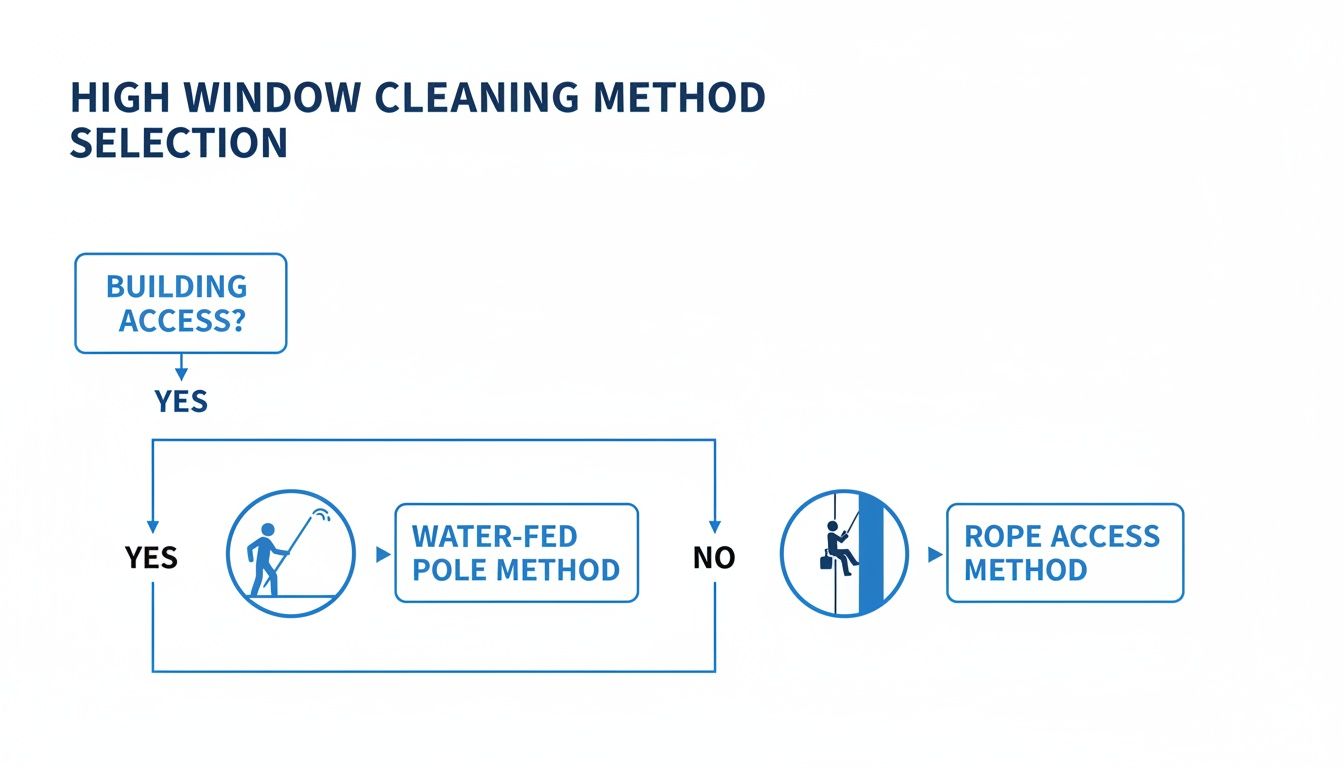
As you can see, ground-based methods like water-fed poles are the first choice before moving on to more complex aerial equipment.
To give you a clearer picture, here’s a quick comparison of the most common high-access methods.
Each of these tools is a specialized solution for a specific challenge, ensuring that no window is ever truly out of reach.
When poles can't get the job done, it's time to go airborne. The right piece of aerial equipment depends entirely on the building's height, architecture, and what’s on the ground around it. You can dive deeper into the specifics in our complete guide to high-rise window washing equipment.
For the tallest and most complex skyscrapers, rope access—also known as abseiling—is the undisputed champion. A rope access technician is essentially a highly skilled climber with a squeegee. Using a system of industrial-grade ropes, harnesses, and anchors fixed to the building, they can descend and traverse a facade with absolute control.
Rope access provides unparalleled flexibility, allowing technicians to reach virtually any point on a building's exterior, regardless of its shape or height. It’s the safest and most effective method for cleaning architecturally intricate skyscrapers where other equipment simply can't go.
This technique isn't just for cleaning; it’s the same method used for inspections and repairs on some of the world's most famous structures. The professional toolkit also includes specialized high-reach cleaning equipment to ensure every nook and cranny is spotless.
While this field will always rely on skilled human hands, technology is starting to play a bigger role. The industry is seeing a major shift toward automated and robotic cleaning systems. In fact, some reports predict the market for automatic window cleaning machines will grow by as much as 17% CAGR. This means the future of professional window cleaning will be a blend of traditional expertise and cutting-edge robotics, all aimed at making the job safer and more efficient.
When you're dealing with high-window cleaning, "winging it" is not an option. Safety isn't just another box to check; it's a rigid, systematic framework that separates true professionals from the cowboys. For every technician who steps onto a platform or rappels down a building, there’s an entire ecosystem of procedures and regulations designed for one purpose: to make sure they go home safely at the end of the day.
This commitment to safety is the single biggest indicator of a company’s professionalism. It protects their crew, your property, and ultimately, shields you from massive liability. A truly safe operation is built on layers of preparation, constant training, and a healthy dose of vigilance. Nothing is left to chance.
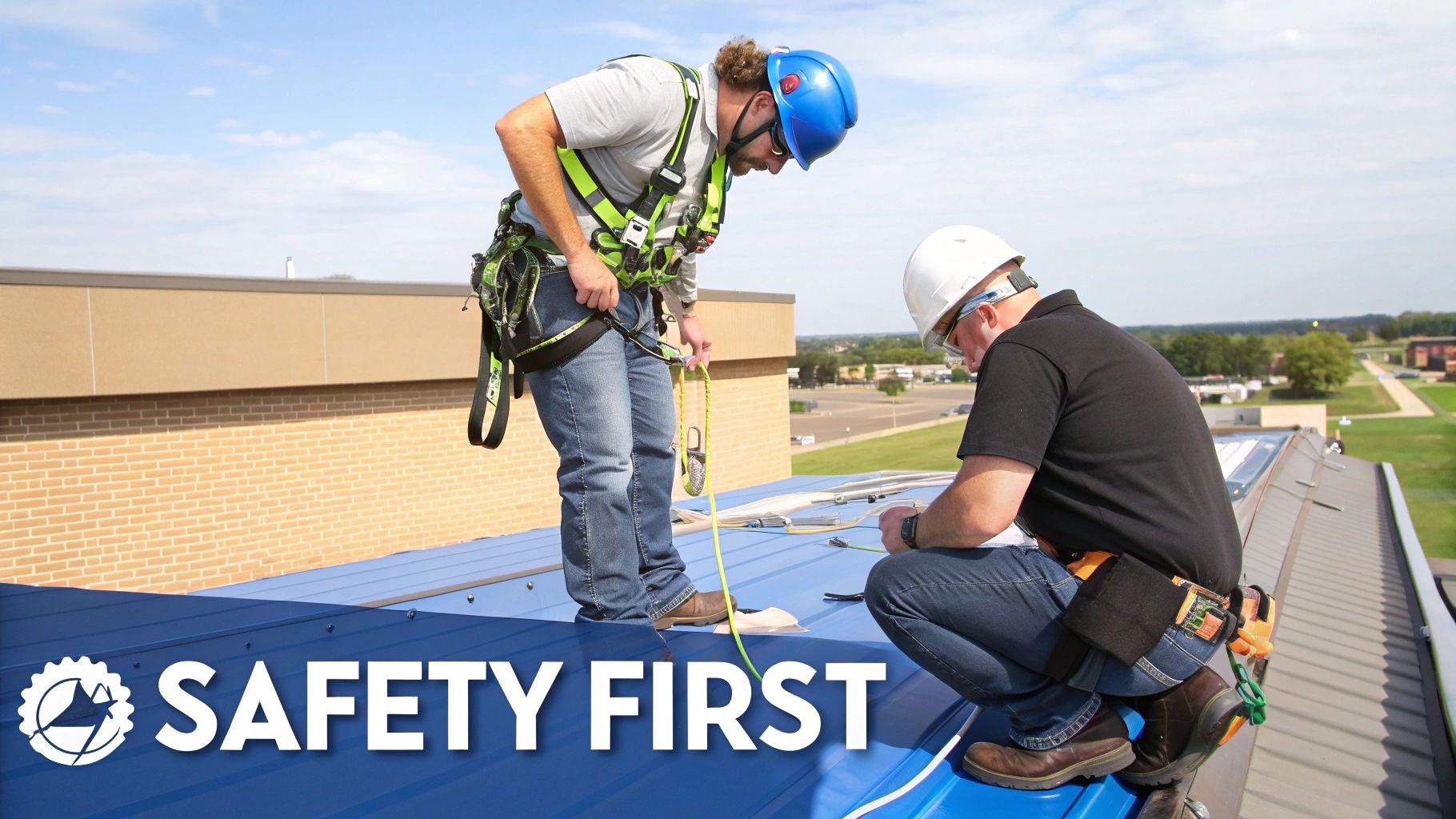
Professional high-window cleaning companies operate under a microscope of strict guidelines set by national and even international bodies. These aren't suggestions—they're mandatory standards that govern every single part of the job, from how equipment is inspected to emergency rescue plans.
The big one here is the Occupational Safety and Health Administration (OSHA). OSHA provides the legal framework for workplace safety across the U.S., and their rules for working at heights are incredibly detailed. Compliance isn't a choice; it's the law.
For the technicians using rope access, the standards get even more specialized. Certifications from organizations like the Industrial Rope Access Trade Association (IRATA) or the Society of Professional Rope Access Technicians (SPRAT) are the gold standard in the industry. Getting certified involves intense, hands-on training and grueling tests to prove a technician knows their stuff.
A safe high-rise job starts long before a single rope is uncoiled. Every reputable company kicks things off with a detailed, site-specific risk assessment. This planning phase is absolutely crucial for spotting potential hazards and mapping out a strategy to deal with them.
This process involves:
A professional's safety mindset is proactive, not reactive. The goal is to identify and eliminate every conceivable risk on the ground so that there are no surprises in the air. This meticulous preparation is what defines a safe and successful high-rise operation.
A good safety plan extends all the way down to the sidewalk. Creating a secure work zone below is just as important as the work happening hundreds of feet up. It protects pedestrians, tenants, and property from falling objects—because even a dropped squeegee can be lethal from that height.
Establishing this ground-level safe zone typically involves:
This ground-level control is a critical piece of the puzzle, ensuring the safety of everyone in and around the building. To see how these procedures fit into the bigger picture, check out our detailed post on the essentials of window cleaning high-rise projects. At the end of the day, a company's unwavering commitment to these protocols is your best guarantee of a job done right and, most importantly, a job done safely.
It’s tempting for property managers to think about handling window cleaning in-house. On the surface, it looks like a simple way to trim the budget. But when you’re dealing with high windows, a DIY approach can quickly spiral into a costly—and dangerous—mistake.
Putting an untrained employee on a tall ladder isn’t just a safety risk; it’s a massive liability waiting to happen. Without the right gear and know-how, the odds of property damage skyrocket—think scratched glass, damaged frames, or worse. It opens the door to serious accidents, legal nightmares, and a damaged reputation that’s hard to fix.
This is where the real value of a professional service shines through. Bringing in an expert team isn't just about paying for clean windows. It's an investment in safety, quality, and your own peace of mind.
A professional high window cleaning crew brings a level of skill that just can't be matched by an in-house team. They’ve mastered the industry’s only two professional techniques for a flawless finish: the classic squeegee method and modern pure-water systems. Their expertise guarantees a perfect, streak-free shine every single time.
More importantly, a pro team lives and breathes safety. They’re fluent in OSHA guidelines and often hold specialized certifications for high-access work. This dedication to safety protects their crew and, critically, takes the liability completely off your plate.
Hiring a professional high window cleaning company transfers the risk. Their comprehensive insurance, including general liability and workers' compensation, means you are fully protected in the unlikely event of an accident or property damage.
Choosing a professional means you're covered from every angle. You can get back to managing your property without the nagging worry of what could go wrong when someone is working at height.
When you put the two options side-by-side, the choice becomes pretty clear. The potential cost of a DIY attempt gone wrong is staggering. A single accident can trigger devastating legal fees, workers' compensation claims, and a public relations crisis. Those costs can easily eclipse what you’d spend on professional services for years.
Let's break down the trade-offs:
At the end of the day, the cost of a professional service is a strategic investment in managing risk. It’s the smartest, safest, and most effective way to maintain your building’s appearance while protecting your property’s value and your bottom line.
Figuring out a budget for professional high window cleaning isn’t like picking an item off a menu. There's no flat-rate price. Instead, the final quote is a careful calculation based on several key variables that spell out the project's complexity, risk, and how long it's going to take. Knowing what goes into that quote helps you read it with confidence and make a smart investment.
The single biggest factor driving the cost is accessibility. It's a simple question with a complex answer: how do we get to the glass? Can the windows be reached from the ground with a water-fed pole, or does the job demand a crew of certified rope access technicians rappelling down the building? The equipment and specialized skills needed just to touch the glass play a massive role in the final price.
Beyond just getting there, a few other elements will shape your high window cleaning estimate. A professional company will walk the site or have a detailed consultation to assess each of these before handing you a proposal.
For a deeper dive into pricing, feel free to check out our guide on the average cost for window cleaning, which breaks down a variety of scenarios.
So, how often should you have the pros come out? There’s no magic number. The ideal schedule really depends on your building's location and what it's used for. A clean facade isn't just about looking good; it's a fundamental part of facility maintenance.
The decision on cleaning frequency is a strategic one. It balances budget with the need to maintain property value, enhance tenant experience, and protect the building’s facade from corrosive pollutants.
Think about your local climate. A high-rise in a dusty, dry place like Phoenix is going to need service far more often than a building in an area with less airborne debris. The goal is to get ahead of the buildup that can permanently damage your glass over time.
For commercial properties, high window cleaning is rarely a one-off call. It’s typically part of a larger, scheduled maintenance plan. This is especially true in major markets where a building's appearance and facade integrity are top priorities for office towers, hotels, and luxury condos.
Market research from sources like façade maintenance reports shows that building owners in cities like Denver and Las Vegas often bundle these services into multi-year contracts. This approach gives them predictable costs and ensures the property is consistently maintained.
Ultimately, getting a handle on the factors that influence cost and frequency allows you to build a smart, proactive maintenance strategy. It shifts window cleaning from being a reactive chore into a planned investment that protects your property and keeps it looking its absolute best.
Picking a company to clean your high windows is a much bigger deal than just getting a few quotes. You're handing over the keys, in a sense—trusting them with the safety of your property, your tenants, and their own team. Getting this right means doing your homework to make sure the company you hire is professional, dependable, and, most importantly, safe.
Think of it less like hiring a cleaning crew and more like bringing on a safety consultant who also makes your building sparkle. A truly professional company won't just tell you they're good; they'll show you, with the paperwork and references to back it up. Here’s a straightforward guide to help you pick a partner who meets that high bar.

Before you even start talking about squeegees or pure-water systems, you need to check the essentials. Any legitimate high-rise window cleaning company will have their qualifications ready to go. Don't just take their word for it—ask to see the documents.
Here's your must-have checklist:
A top-tier partner understands that clear, consistent communication is part of the job. Many use tools like a virtual receptionist for small businesses to make sure you can always get ahold of someone. That same level of professionalism should be obvious in every part of their operation, right down to their paperwork.
Not all high-window jobs are the same. A company’s experience needs to match the unique challenges of your building and even your local climate. When you're talking to potential partners, ask specific questions about the work they’ve done.
Getting references is a make-or-break step. Ask for contacts from buildings that are similar in height and complexity to yours. A crew that has successfully cleaned a 40-story skyscraper is going to be far better prepared for your high-rise than a team that mostly handles two-story office parks.
A provider’s experience in your specific climate is an invaluable asset. Their team will understand the unique challenges presented by local weather patterns, ensuring a better, longer-lasting clean.
This is especially true when it comes to climate. A company that knows the intense sun and dust storms of Las Vegas will use different methods and schedules than a team used to the heavy snow and freeze-thaw cycles in Denver. That local knowledge means a more effective clean and better protection for your glass over the long haul. Follow this checklist, and you can confidently pick a partner who puts safety first and delivers the professional results your building deserves.
When it comes to maintaining a tall building, the details matter. High-window cleaning can feel like a complex topic, and it’s natural for property managers and building owners to have a few questions. Let’s clear things up with some straight answers to the most common queries we hear.
There’s no single answer here—it really depends on your building’s location, the local environment, and its primary use. As a solid rule of thumb, we recommend cleaning commercial building windows twice a year.
However, that can change. If your property is near a busy highway or in a dusty desert climate like Phoenix or Las Vegas, you're dealing with a lot more grime. In those cases, a quarterly cleaning is probably a better bet to keep your building looking sharp. For places where first impressions are everything, like hotels and retail centers, more frequent cleanings are often the standard.
These are the only two methods professionals use, and the choice between them usually comes down to the building’s height and how technicians can access the glass.
Traditional Squeegee: This is the classic art of window cleaning. A technician applies a specialized cleaning solution, then uses a professional-grade squeegee to expertly wipe away every drop of water and dirt. The result is that perfect, streak-free shine you expect.
Pure-Water System: This modern technique is a game-changer. It uses highly filtered, deionized water fed through a long pole with a brush at the end. The technician scrubs the glass and rinses it with this pure water. Because all the minerals are removed, the water dries completely spotless on its own—no squeegee required.
The pure-water system is fantastic for safely and efficiently cleaning buildings up to several stories high right from the ground.
This is probably one of the most important questions you can ask, and the answer highlights why hiring a fully insured professional company is absolutely non-negotiable for any high windows cleaning project. A reputable company will carry extensive insurance to protect everyone.
Before you hire anyone, you must get your hands on their certificates of insurance and verify they are current. Think of it as your first line of defense against liability if an accident happens.
A professional team will always have two critical policies in place:
Confirming this coverage isn’t just a box to check—it’s the single most important step you can take to protect your assets and ensure you’re partnering with a safe, responsible provider.
For a team that puts safety first and delivers pristine results on every job, trust the experts at Professional Window Cleaning. We've been providing exceptional service across Arizona, Colorado, and Nevada since 1999. Visit us at https://www.professionalwindowcleaning.com to get your free estimate today.
Read our blog posts regularly and keep learning.