Care and Maintenance
Window Squeegee Rubbers: A Complete Reference Guide
Window squeegee rubbers explained — types, sizes, materials, how to measure, replace, and pick the right rubber for clean, streak-free glass every time.


Figuring out how often your windows need a good cleaning can feel like trying to hit a moving target. If you’re looking for a quick rule of thumb, most homes benefit from a professional cleaning at least twice a year. For commercial properties, that number often jumps to quarterly service to keep up a sharp, professional appearance. But that simple answer is really just the beginning.
The perfect window cleaning schedule isn't a one-size-fits-all solution. Think of it as a dynamic plan that shifts based on your environment, the type of property you have, and even what goes on inside. It’s a lot like maintaining your car—if you’re driving through dusty construction zones every day, you’ll be washing it more often than the one that sits in a clean garage. Your windows are no different.
Factors like your city's air quality, local weather patterns, and even indoor habits—like cooking or having pets—can dramatically speed up how quickly grime builds up. From a professional standpoint, we always look at location and pollution levels first. A commercial building in a dense urban center might need monthly attention, while a quiet suburban home could be perfectly fine with a cleaning every six months to prevent permanent damage like glass etching or staining.
This simple flowchart is a great way to visualize a starting point based purely on where you are.
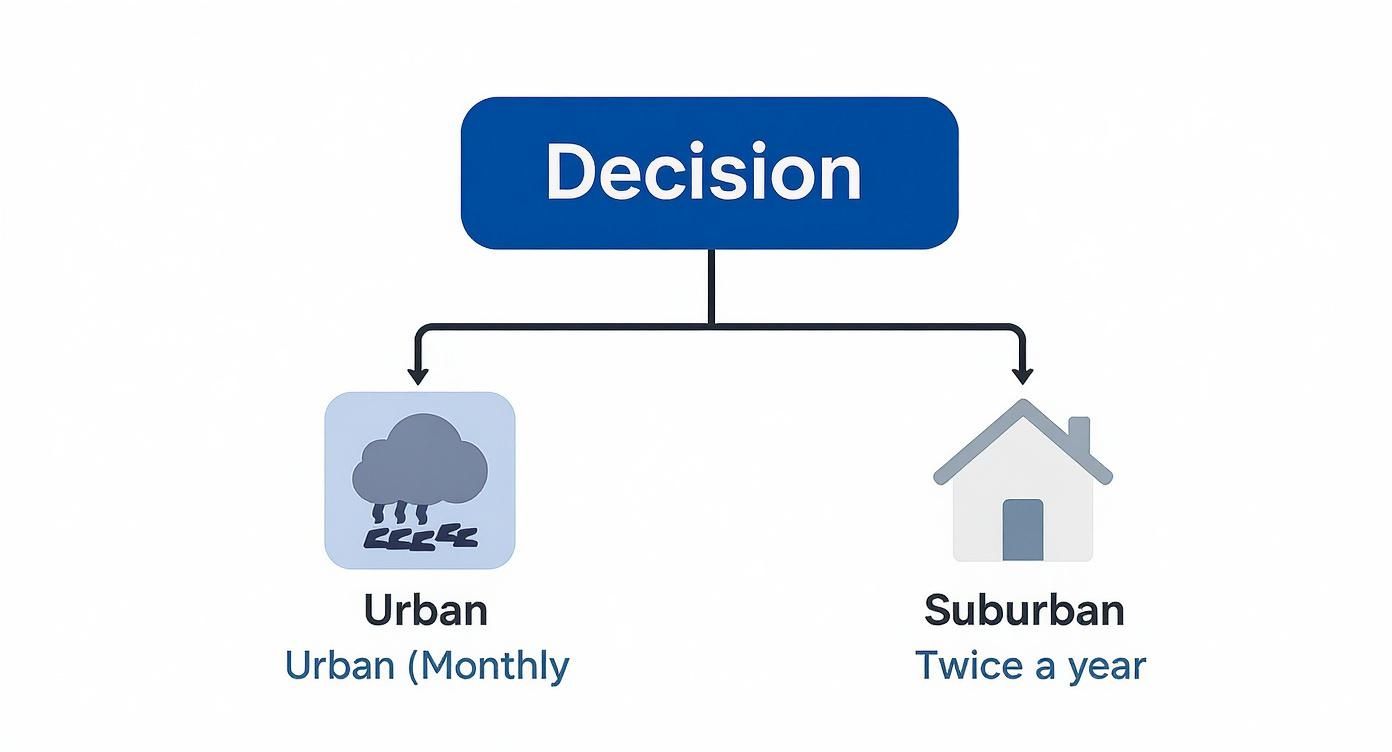
As you can see, an urban environment with all its traffic and pollutants usually demands a much more frequent cleaning schedule than a quieter suburban spot.
The key takeaway is that regular cleaning is a form of preventative maintenance. It protects your glass from long-term damage while ensuring your property always looks its best.
Understanding these factors is the first step toward building a smart, effective cleaning routine. Timing also plays a critical role, and you can learn more about the best time of year to clean windows in our detailed guide. In the sections ahead, we’ll dive deeper into what makes your windows dirty and help you create a custom schedule to keep your view crystal clear.
Ever looked at your neighbor’s windows and wondered how they stay so clean for months, while yours get grimy just a few weeks after a wash? The secret isn’t just about the cleaning method—it’s about understanding what makes them dirty in the first place. Once you know the enemy, you can create a smart cleaning schedule that works for you.
Think of your windows as silent observers, constantly collecting traces of everything happening around them, both inside and out. The unique mix of these elements is what really determines how often they need a professional touch.
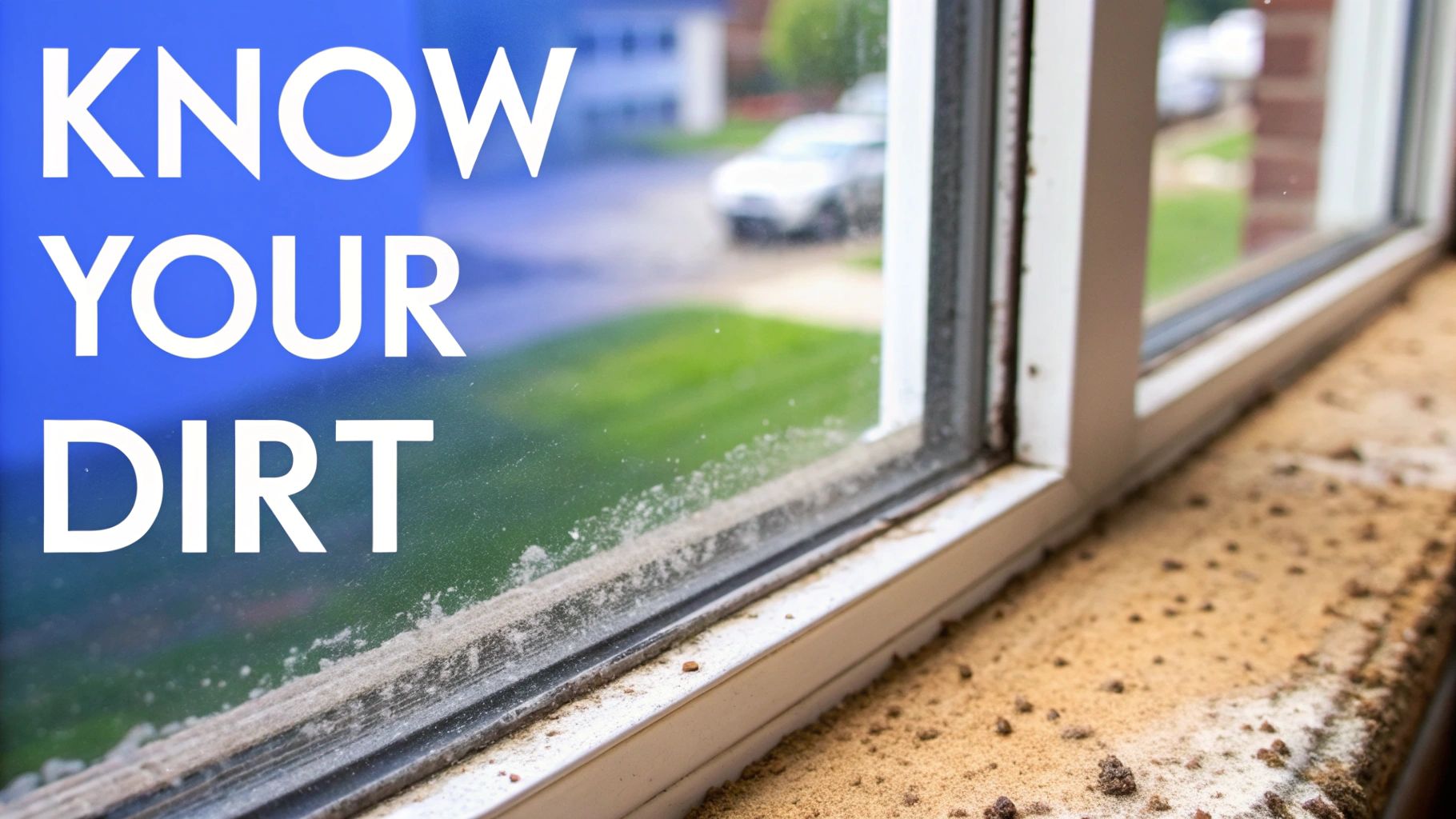
Where your home is located is the single biggest factor in how quickly dirt and grime build up. Every environment throws its own unique curveballs at your glass, dictating the perfect cleaning frequency.
It’s no surprise, then, that the global window cleaning market is booming, valued at roughly USD 151.18 billion in 2025 and set to grow even more. Within this market, quarterly cleaning is becoming the go-to for many property owners, hitting that sweet spot between cost and cleanliness.
Don't forget, the dirt on your windows isn’t just an outside job. Everyday life inside your home contributes its own layer of grime on the interior panes. It might be less obvious, but it's just as important to tackle.
The professional difference lies in recognizing that both sides of the glass face different battles. Experts use a squeegee for pristine interior glass and often a pure-water system to tackle the heavy-duty buildup on the exterior, ensuring a complete, streak-free clean.
Here are a few common sources of that indoor film:
By figuring out which of these factors—inside and out—are the biggest culprits for your property, you can start to see why a generic "twice-a-year" schedule just might not cut it. This knowledge is your power tool for deciding how often your windows should be cleaned based on what’s actually happening in your world.
When it comes to window cleaning, a "one-size-fits-all" schedule just doesn't cut it. The single most important factor dictating how often your windows need attention is the purpose of your building. A busy retail storefront has completely different needs than a quiet suburban home, and your cleaning schedule has to reflect that reality.
Think about it like this: a restaurant kitchen gets a deep clean every single night, while your kitchen at home might get that level of attention once a week. The same logic applies to your windows. High-traffic, public-facing properties need more frequent cleaning to maintain their appearance, while homes can do great with a less intense, but still consistent, schedule.

For most homeowners, a twice-a-year cleaning schedule is the gold standard. This rhythm is just right to prevent the long-term buildup of corrosive stuff like hard water minerals and acid rain, which can permanently etch and damage your glass over time. A professional cleaning in the spring gets rid of all the winter grime, and another service in the fall clears away summer dust, getting your home ready for the colder months.
This isn't just about looks—it's a critical piece of property maintenance. It protects your investment, lets the maximum amount of natural light into your home, and keeps your views crystal clear.
Commercial properties are all about presentation. Let's be honest, dirty windows can sink a business's image fast. The right cleaning frequency here really depends on the type of business and where it's located.
A true pro always considers the building's function. They'll use a traditional squeegee for interior glass that gets a lot of public interaction and switch to a pure-water system to efficiently clean huge exterior surfaces, guaranteeing a flawless finish every time.
At the end of the day, understanding how your property is used is everything. By matching your cleaning schedule to your building's specific purpose, you stop reacting to dirty windows and start proactively protecting your investment and boosting your curb appeal.
Your local climate is one of the most powerful forces at play when deciding how often your windows need a professional touch. A schedule that works perfectly in a mild, temperate region will quickly fall short in a harsh desert or a pollen-heavy mountain town. The key to maintaining clear, protected glass year-round is adapting your plan to these unique environmental pressures.
Trying to stick to a one-size-fits-all schedule is like trying to garden without paying attention to the season—you’re working against nature instead of with it. The elements are relentless, and a proactive schedule is your best defense.
In arid, sun-drenched cities like Phoenix and Las Vegas, the battle is fought on two fronts: dust and hard water. The constant wind kicks up fine sand and dirt, which settles on glass to create a gritty, hazy film. This not only obscures your view but can cause microscopic scratches over time.
On top of that, the notoriously hard water in these areas leaves stubborn mineral deposits from sprinklers and hoses. When that water evaporates under the intense sun, it leaves behind chalky white spots that are a nightmare to remove.
To combat this double-threat, a more frequent cleaning schedule is essential.
Life in mountain regions like Denver brings a completely different set of challenges that shift with the seasons. Spring blankets everything in a thick layer of pollen, which sticks to windows and creates a yellow-green film that blurs the beautiful landscape. Then, in winter, melting snow mixed with road salt and grime splashes onto lower-level windows, leaving a crusty, corrosive residue.
Just as with other home maintenance tasks, window cleaning schedules need to sync up with the weather. You can find some great advice on planning for this in these tips on seasonal maintenance practices.
For mountain climates, timing is everything. A smart strategy is to schedule a professional cleaning right after the main pollen season wraps up and again just before winter truly sets in. This helps you stay on top of the seasonal buildup.
This growing need for tailored cleaning is reflected in the industry’s growth. The U.S. window cleaning market is projected to expand from $2.9 billion in 2024 to $3.2 billion by 2029, partly because so many households now rely on pros for regular upkeep. And remember, rain doesn't actually clean your windows—it just moves the dirt around. Find out why rain can make your windows dirtier in our related guide.
Ever wonder how professional window cleaners get that perfectly clear, streak-free finish every single time? It isn’t magic. It's the result of mastering one of two industry-standard techniques. Forget sprays and paper towels; the pros rely on either the traditional squeegee or a modern pure-water system to get the job done right.
Each method has its specific strengths, and knowing the difference helps you understand the value and expertise a professional brings to your property. Choosing the right tool for the job is essential for both efficiency and a flawless result.
The squeegee is the classic tool of the trade. It's a time-tested method that, in skilled hands, delivers an unbeatable shine. It requires precision, the correct angle, and consistent pressure to pull water and dirt off the glass without leaving a single streak behind. Think of it as a craft where technique is everything.
This hands-on approach makes the squeegee perfect for certain situations:
For taller buildings or large commercial properties, the pure-water system is a game-changer. This technology uses a multi-stage filtration process to remove all minerals and impurities from tap water, creating what is known as deionized or pure water.
This purified water is a natural cleaning agent. Because it's free of dissolved solids, it actively attracts and lifts dirt, grime, and pollen from the glass surface. The technician uses a water-fed pole with a soft-bristle brush to scrub the window before giving it a final rinse with pure water.
The real magic happens during the drying process. Because there are no minerals left behind, the windows dry to a perfect, spot-free finish without any need for a squeegee.
This method is especially valuable for multi-story buildings, as it allows technicians to safely and efficiently clean windows up to several stories high from the ground. You can explore a deeper dive into the science behind this method in our guide to pure water window cleaning.
By understanding these two professional techniques, you can better appreciate the skill involved in maintaining your property’s windows.
Think of regular window cleaning less as a chore and more as essential property maintenance. It’s a lot like changing your car's oil—you don’t wait until you hear a grinding noise to do it. By then, the damage is already done. A consistent schedule is your first line of defense against long-term problems that can sneak up on you.
Over time, your windows face a daily assault from a cocktail of corrosive elements. Things like acid rain, hard water minerals from your sprinklers, and airborne pollutants don't just sit on the surface; they start to bond with the glass. Left alone, this grimy buildup can cause permanent etching and staining, weakening the glass and ruining its clarity for good.

Beyond just protecting the glass, consistently clean windows have a massive impact on your indoor environment. Sparkling, streak-free glass lets the maximum amount of natural sunlight flood into your space. This simple change is proven to boost mood and productivity, and it can even trim your energy bills by cutting down the need for artificial lighting.
Establishing a regular cleaning routine transforms window maintenance from a reactive task into a proactive investment. It’s not just about cleaning dirt; it’s about preserving your property’s health, appearance, and value.
Ultimately, a well-maintained property just stands out. Clean windows dramatically improve curb appeal, making a strong first impression on visitors, clients, or potential buyers. It’s a small detail that says a lot about your overall commitment to caring for your space.
This is where professional techniques really shine. Whether it’s using a traditional squeegee for that flawless interior finish or a pure-water system that dissolves exterior grime without a trace, the pros get the job done right. Sticking to a schedule for how often windows should be cleaned is a smart investment that pays for itself in both the short and long run.
To wrap things up, let's tackle a few of the most common questions property owners have about window cleaning schedules. Getting clear, direct answers can help you finalize your maintenance plan with confidence.
While cleaning your windows annually is certainly better than nothing, it’s often not enough to prevent long-term damage. For most homes, a twice-a-year schedule is the bare minimum we recommend to stop corrosive stuff like hard water minerals and pollutants from permanently etching the glass.
And for any commercial property? A once-a-year cleaning is almost never going to be enough to maintain that professional, inviting look you want for your customers and clients.
It’s a popular myth that a good rainstorm will wash your windows clean. The reality is a bit more complicated. Rainwater itself is relatively pure, but the real problem is the dirt already sitting on your glass.
As rain runs down the panes, it picks up all that dust, pollen, and grime. When the water eventually evaporates, it leaves behind concentrated streaks and dirty spots, often making your windows look even worse than before.
A professional cleaning removes 100% of contaminants from the glass. Whether we're using a meticulous squeegee technique or a pure-water system, the goal is to leave a completely clear surface. That way, when it does rain, there's no dirt for the water to grab onto and move around.
Spring and fall are overwhelmingly the most popular seasons, and for good reason. A spring cleaning clears away all the winter grime and lets that beautiful seasonal light pour in. An autumn cleaning gets rid of the dust and pollen buildup from summer and preps your glass for the colder, wetter months ahead.
That said, the "best" time really depends on your specific climate. If you live somewhere like Denver with heavy spring pollen, you might want to wait until it subsides. In dusty regions like Phoenix or Las Vegas, how often you clean throughout the year is often more important than the specific season you choose.
Ready to create a custom cleaning schedule that protects your investment and keeps your property looking its best? Contact Professional Window Cleaning today for a free, no-obligation quote and discover the difference a truly professional clean can make. Visit us at https://www.professionalwindowcleaning.com to get started.
Read our blog posts regularly and keep learning.