Care and Maintenance
Window Cleaning Scraper: Types, Safe Use, and Buying Guide
Learn what a window cleaning scraper is, the different types available, safe usage techniques, and how to pick the right one for home or pro jobs.


You've just rinsed a sliding glass door after a windy afternoon, and the sprinkler spray has dried into a cloudy constellation of spots. A paper towel makes the glass look worse, not better. That's because the marks aren't ordinary dirt. They're mineral residue left behind as water evaporates, and the right answer depends on what those minerals have done to the glass.
After more than 26 years on the tools, Professional Window Cleaning has learned a simple rule: diagnose first, scrub second. Some calcium-based deposits respond well to a mild acid and controlled dwell time. Silica-rich scale can resist vinegar, while etching is permanent glass damage that no household cleaner can remove. This field-tested guide shows how to clean water stains without confusing a removable deposit with a damaged pane.
A homeowner often notices the problem after a familiar chain of events. The sprinkler hits a patio door, a rainstorm leaves droplets across a windshield, or a hose sprays the lower panes during yard work. The glass dries, and pale rings remain. Wiping them with a dry cloth may shift the pattern, but it rarely removes the cause.
Hard-water spots are mineral deposits left behind when water evaporates. Calcium- and magnesium-based residue accumulates on glass and fixtures because the water disappears while the dissolved material stays behind. Guidance from Simple Green on hard-water and mineral deposits explains why acidic cleaner needs time to work, with recommendations ranging from about 1 to 15 minutes depending on the surface and buildup.
That dwell time matters. A towel can lift loose dust, but it won't dissolve bonded mineral residue. Paper towels can also spread the wet minerals across a larger area, leaving a broad haze that looks like a failed cleaning job. The practical sequence is controlled acid contact, light agitation with a non-metallic tool, thorough rinsing, and immediate drying.
Field rule: If water repeatedly reaches the glass, cleaning the pane without addressing the water source only resets the clock.
The chemistry also explains why the problem became common alongside indoor plumbing and widespread glass surfaces. Independent glass-cleaning guidance identifies calcium carbonate as a primary component of limescale and describes acidic agents such as citric acid as useful for breaking it down in suitable conditions. If hard water is affecting fixtures as well as windows, it may help to compare water filters for hard water before choosing another glass cleaner.
The important distinction is not whether a spot looks ugly. It's whether the mark is sitting on top of the glass or has altered the glass surface. That answer determines whether a bottle of vinegar is sensible, whether a specialist treatment is needed, or whether cleaning alone cannot restore the original clarity.
Start with clean water, good light, and a small test area. Remove loose dust first so you don't mistake surface grime for mineral scale. Then mist the spot and compare its appearance while wet and dry.
If the haze softens, changes shape, or becomes less visible when wet, the deposit is probably on the surface. If it looks the same wet and dry, the glass may be etched. The hard-water stain removal guide from Glide Cleaners recommends this wet-surface test because it separates a removable deposit from damage that cleaning won't reverse.
Run a fingertip beneath a clean microfiber cloth over the area. Don't press hard, and don't start with a razor or abrasive pad. A chalky, slightly powdery feel points toward calcium-based scale. A rough, crusty texture that feels more like tiny beads can indicate a harder deposit, including silica-rich scale. A dull patch that remains unchanged when wet and seems to catch a fingernail is a warning sign for etching.
| Deposit Type | Visual Cue | Finger Test | Correct Response |
|---|---|---|---|
| Calcium-based mineral deposit | White or cloudy film, often around sprinkler impact areas | Chalky or slightly rough under a clean cloth | Try diluted vinegar or citric acid, with controlled dwell time |
| Silica-rich or cation-influenced scale | Crusty, granular, or glass-bead texture | Resistant, rough, and not noticeably softened by mild acid | Stop escalating casually and seek professional assessment |
| Etched glass | Permanent-looking dull patch or pitting | May catch a fingernail, remains unchanged wet or dry | Cleaning won't restore it, consider professional restoration or replacement |
| Ordinary surface grime | Smear, dust, or oily film | Smooth beneath the cloth | Pre-clean with a suitable glass-cleaning method |
The location provides another clue. Sprinkler-facing lower panes often collect calcium deposits, while shower glass can develop concentrated scale from repeated evaporation. Windshield spotting may combine road film with minerals, so pre-cleaning becomes especially important.
Silica deserves caution because weak acids such as vinegar may not dissolve silicate deposits effectively. Research summarized in the Kyushu University glass-cleaning paper highlights why deposit chemistry matters. Ten seconds of diagnosis can save an hour of aggressive scrubbing and prevent you from turning a cleanable stain into visible surface damage.
A sprinkler has left a pale ring on the lower pane, or a shower door has turned cloudy after repeated evaporation. If the deposit is calcium-based and still sits on the surface, a controlled acid treatment can remove it. Vinegar will not repair silica deposits or etched glass, so start with the diagnosis from the previous section before choosing a method.
For a fresh or moderately established calcium deposit, mix one part white vinegar with one part distilled water in a spray bottle. Wet a manageable area and keep it wet for three to five minutes. Do not let the solution dry in direct sun.
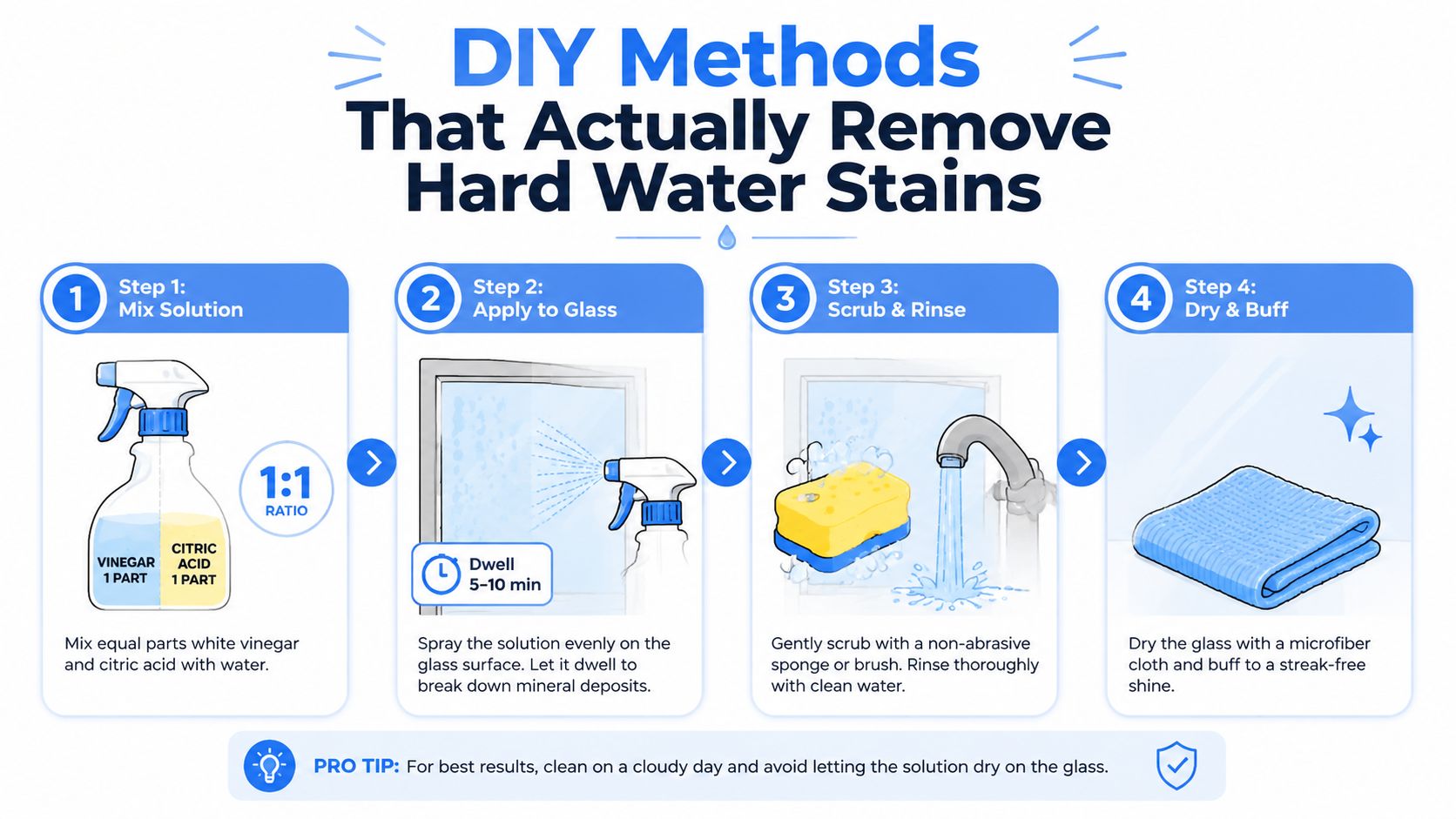
Wipe first with a fresh microfiber cloth. If a thin film remains, use a non-scratch white scrub pad with light pressure. Contact time does the chemical work. Harder scrubbing mainly increases the risk of dragging grit across the pane.
For heavier calcium buildup, dissolve two tablespoons of citric acid powder in a quart of warm water. Apply it in sections and maintain a wet surface throughout the treatment. A controlled dwell is safer than allowing the mixture to bake onto the glass. Product guidance commonly places dwell time in the broader five to fifteen minute range, depending on the deposit and formulation, as described in Expert Glass Repair's guidance on water spots.
A squeegee gives cleaner results than repeatedly wiping with towels because it removes liquid in one controlled pass. Avoid paper towels, magic erasers on coated glass, and undiluted acids. Follow the product label, wear gloves and eye protection, and provide ventilation. Strong chemicals can affect coatings, sealants, frames, and nearby finishes.
Mineral scale on faucets, shower fittings, or plumbing needs a remedy suited to the water source. See this overview of how to protect plumbing from mineral scale. For glass-specific product selection, compare the best cleaner for hard water spots on glass. If mild acid does not soften the deposit, stop increasing its strength. The glass may contain silica scale or permanent etching, both of which need professional assessment rather than more scrubbing.
Professional window cleaners rely on two methods, not a long list of competing systems. They use a squeegee, or they use a pure-water system. Chemical restoration products may be part of stain treatment, but the actual window-cleaning methods are the traditional squeegee technique and the pure-water fed-pole system.
The traditional method uses a bucket, scrubber or T-bar applicator, suitable detergent, and a clean rubber squeegee. The technician wets the glass, loosens soil with the applicator, and removes the water with controlled blade strokes.
This method remains particularly effective for interior windows, detailed residential work, and panes with heavy existing buildup. The cleaner can see every stroke, manage edges, protect interior finishes, and change the rubber blade when it starts leaving lines. It also works well when the water itself isn't suitable for spot-free drying, because the squeegee physically removes the cleaning solution rather than leaving it to evaporate.
A pure-water system filters water until its total dissolved solids reading is at or near 0 ppm. Industry guidance describes final output at 10 ppm or below as acceptable for most windows, with 0 to 5 ppm described as optimal for preventing residual spotting, according to the National Window Cleaning Authority's pure-water guidance.
The water travels through a hose to a brush on a pole. The brush loosens dust and residue, and the operator rinses the pane with mineral-free water. Because the rinse contains very little dissolved material, it can dry without leaving the same mineral residue associated with tap water.

A TDS meter measures dissolved solids through conductivity and reports the result in parts per million. The Solomon TDS meter manual advises running the system for at least 60 seconds before testing, which clears temporary TDS creep from the system.
Pure water is especially useful for exterior maintenance, high windows, and properties exposed to sprinklers, dust, and hard water. It has a learning curve, depends on properly maintained filtration, and doesn't magically remove etched glass. Homeowners dealing with recurring scale may also want to understand whether a Stultz Plumbing water softener service is appropriate for the broader water supply. More detail on the window-cleaning method is available in this guide to pure-water window cleaning.
Vinegar is a useful first test, not a universal answer. If the deposit remains after proper dwell time and gentle agitation, identify the reason before reaching for a stronger chemical. A persistent calcium crust may need a purpose-made descaler, while silica-rich scale may not respond well to weak household acids at all.
For calcium-heavy deposits, some technicians use products such as CLR or Lime-A-Way according to the label, with the glass kept wet for a short, controlled soak. Don't guess at concentration or leave the product to dry. Wear gloves and eye protection, ventilate the area, protect nearby stone and metal, and rinse the pane and surrounding surfaces thoroughly.
Bar Keepers Friend can help with certain mineral films when used cautiously, but it contains an abrasive component. Use only a product appropriate for glass, test an inconspicuous area, and apply minimal pressure with a non-scratch tool. A cerium-oxide polish is a restoration process, not ordinary cleaning. It requires the right compound, pad, technique, and patience, and incorrect polishing can create distortion or visible halos.
Look at the glass from an angle under raking light. Then run a fingernail lightly across the suspect area. If the dull patch remains unchanged when wet, looks pitted, or catches the nail, treat it as possible etching rather than residue.
Etching occurs when mineral deposits or chemical exposure alter the glass surface. There is no cleaner that can dissolve missing or damaged glass and return it to its original finish. A professional may be able to polish limited damage, but widespread pitting can make replacement the more sensible option.
Do not confuse resistance with proof. A stain that survives one cleaning attempt isn't automatically etched, but a wet-surface test that shows no change is a strong reason to stop aggressive DIY work.
Restoration makes sense when the pane is otherwise sound, replacement is disruptive, or the damaged area is limited. Replacement may be more practical when damage covers much of the glass, polishing would create optical distortion, or the pane is part of a sealed insulated unit. A professional assessment should come before abrasive restoration, especially on coated, tinted, laminated, or specialty glass.
Removing a spot is only half the job. If sprinklers, hose water, or roof runoff keep wetting the same pane, the next mineral layer starts forming as soon as the water dries. Prevention works best when the property owner treats the glass, the water, and the surrounding area as one maintenance problem.
The water-stain prevention infographic works well as a printable reminder beside a household maintenance calendar. Mark sprinkler checks, exterior washing, coating inspections, and track cleaning rather than waiting until the glass looks cloudy.
Sliding doors deserve special attention. Clean the tracks and confirm the weep holes are open so rinse water drains instead of pooling at the bottom edge and re-depositing minerals. In coastal or well-water markets, a quick squeegee after heavy rain can also reduce the time mineral-bearing water remains on the surface.
Research on self-cleaning glass points toward surface-engineered approaches that reduce recurring cleaning demands, but coatings still need correct preparation and maintenance. The practical question is whether recurring spots come from water quality, lawn irrigation overspray, or a surface already damaged by etching. Fixing the source usually costs less effort than repeatedly attacking the symptom.
Call a professional when spots keep returning, access becomes unsafe, or the wet-surface test suggests etching. DIY cleaning remains reasonable when the pane is reachable, the deposit changes when wet, and mild acid removes it without aggressive force.
Use these checks before choosing a method:
A pure-water fed-pole service delivers a deionized rinse, controlled exterior access, and spot-free drying when the system output is properly tested. That matters because pure water can lift and rinse away loose mineral residue without leaving new dissolved solids behind. It will not reverse permanent etching, and a squeegee remains the right choice for many interiors and detailed restoration work.
Professional Window Cleaning has served residential, commercial, and high-rise properties since 1999, with coverage including Las Vegas, Phoenix, Denver, Scottsdale, Tempe, Chandler, Gilbert, and Flagstaff. The company operates in Arizona, Colorado, and Nevada.

A professional can identify whether the problem is fresh calcium scale, harder silica residue, or glass already damaged by etching. Request a free quote from Professional Window Cleaning for a maintenance plan matched to the glass, water source, and property.
Read our blog posts regularly and keep learning.