Care and Maintenance
How to Restore Window Glass and Frames the Right Way
Learn how to restore window glass, frames, and seals with pro methods, real tools, and honest trade-offs. A practical guide


If you've ever wondered how to clean windows streak free, you need to know it's all about the right method, not some magic spray. Professionals really only use two techniques: a squeegee with a proper cleaning solution or a pure-water system. It's time to forget the old myths about using newspapers; the real culprits behind those frustrating streaks are leftover soap residue and minerals from your tap water.
Getting that perfectly invisible, streak-free shine on your windows isn’t about scrubbing harder—it's about understanding why streaks happen in the first place. Most streaks are just residue left behind on the glass after the water evaporates. This residue comes from two main sources: either too much soap in your cleaning mix or the natural minerals found in everyday tap water.
This is exactly why professional window cleaners have boiled their methods down to two highly effective approaches that tackle these problems head-on.
Grasping these core principles is the first real step toward turning your windows from grimy to gleaming. Instead of falling for gimmicky products or folklore like using old newspapers, focusing on these two proven methods gives you a clear path to success. The demand for a truly professional, streak-free result is bigger than you might think.
In fact, the global window cleaners market was valued at USD 2.68 billion in 2023 and is projected to hit USD 5.34 billion by 2031. That massive growth, detailed in market research, shows just how much people value crystal-clear glass.
The bottom line is simple: control the residue, and you control the streaks. Whether you're using a squeegee to physically remove the problem or pure water to prevent it from ever forming, you're tackling the root cause of streaky windows.
Choosing between the two really just depends on the job. For most homeowners, learning to master the squeegee is a practical and incredibly satisfying skill. But for those high or tough-to-reach exterior windows, a pure-water system is often the safer and more efficient way to go.
Choosing the right cleaning solution is just as important as the technique you use. What you put on the glass directly impacts how easily you can get a streak-free finish. Let's break down the common homemade options versus what the pros typically use.
Ultimately, for most DIY jobs, a simple solution of water with a tiny drop or two of dish soap gives you the "slip" you need for a squeegee to glide smoothly. The key is less is more. If you're dealing with tougher grime or want that guaranteed flawless finish, investing in a professional-grade concentrate or looking into pure water technology is the next step up.
There's a very good reason pros have sworn by the squeegee for decades—when you know how to use it, nothing is faster or more effective for a perfectly clear, streak-free finish. Getting it right isn't about muscle; it's about precision, control, and a bit of practice. Think of this as your hands-on guide to turning a tedious chore into a genuine skill.
The whole process comes down to a few key things working in harmony: the right tool, the right cleaning solution, and the right movements. A cheap, flimsy squeegee with a hard, unforgiving rubber blade will fight you every single time. Honestly, investing in a professional-grade squeegee with a sharp, replaceable rubber blade is the best thing you can do to up your window cleaning game.
This process really shows how the right method can take a dirty window to a brilliant shine.
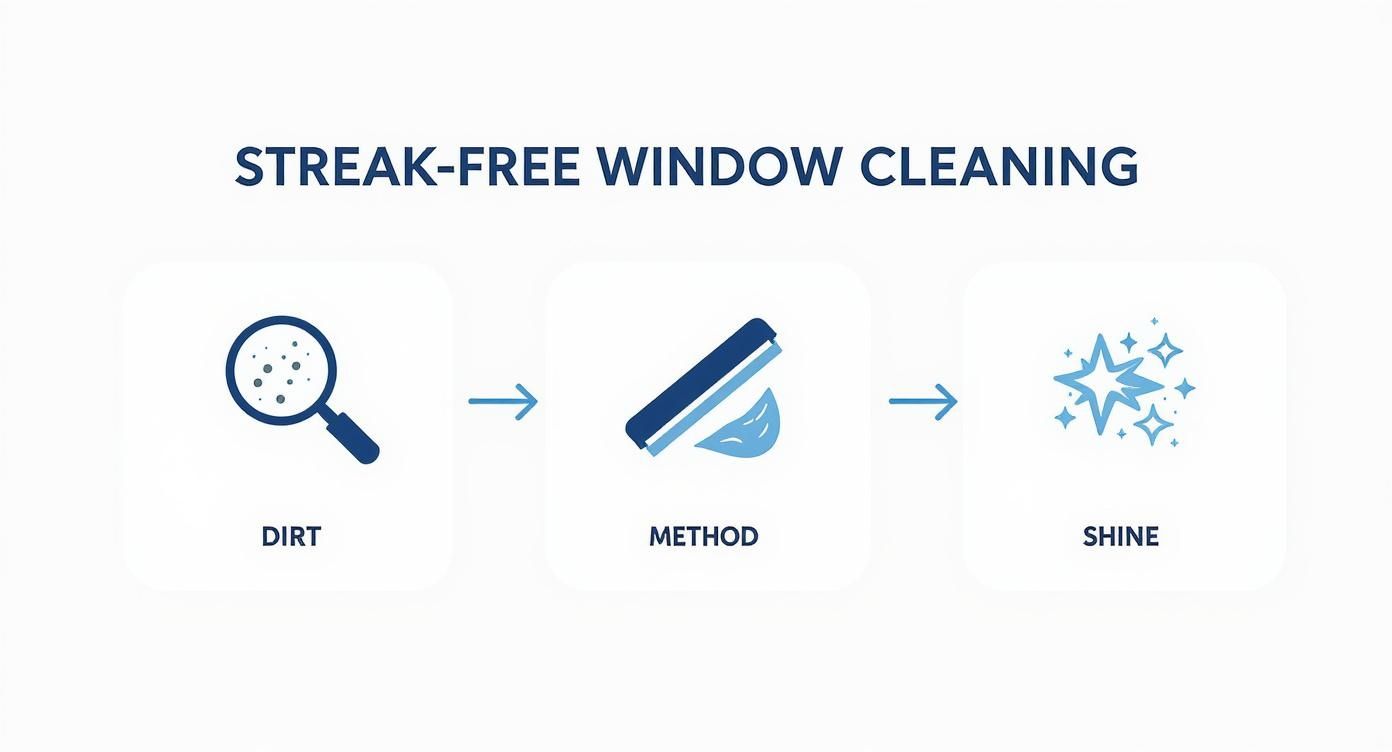
As you can see, the method—in this case, the squeegee—is the critical bridge between a grimy pane and a spotless one.
First things first, your cleaning solution needs to provide enough "slip." This is what lets the squeegee blade glide smoothly across the glass instead of skipping or chattering, which is what causes most streaks. You don't need anything fancy; a simple mix of cool water with just a couple of drops of dish soap is perfect.
Next, let's talk about your grip and angle. Hold the squeegee handle firmly, but don't white-knuckle it. The blade needs to meet the glass at a consistent 30-degree angle. If it's too steep, the blade will chatter. Too shallow, and it will just smear water around instead of removing it.
Here's the most important rule of squeegee work: always lead with a dry blade on a wet window. After each and every stroke, wipe the rubber blade clean with a lint-free microfiber cloth. This simple step stops you from dragging dirty water back across the glass you just cleaned.
The demand for that perfect, streak-free finish is a big reason the window cleaning industry is booming, with revenues in the United States expected to hit $2.9 billion in 2024. This growth highlights just how much people value professional results, which are all built on proven techniques like mastering the squeegee and using high-quality microfiber cloths.
For smaller or narrower panes of glass, the straight pull-down is your go-to move. Start at the very top and pull the squeegee straight down in one smooth, continuous motion. Make sure to overlap your next stroke by about an inch—this prevents those annoying water lines between passes.
For larger windows, the pros use what's called the "S-stroke" or "fanning" method. This is a more advanced technique where you move the squeegee back and forth across the glass in a fluid, top-to-bottom S-pattern, all without lifting the blade. It's incredibly efficient once you get the hang of it. If you want a deep dive into the mechanics, check out our guide on how to properly squeegee windows for a detailed breakdown.
Finally, always finish by "cutting the edge." After you've squeegeed the main pane, you'll notice a small amount of water left along the frame's edges. Just take a dry, clean microfiber cloth and carefully wipe this perimeter. This final touch is what keeps drips from running down and ruining your perfectly cleaned glass.
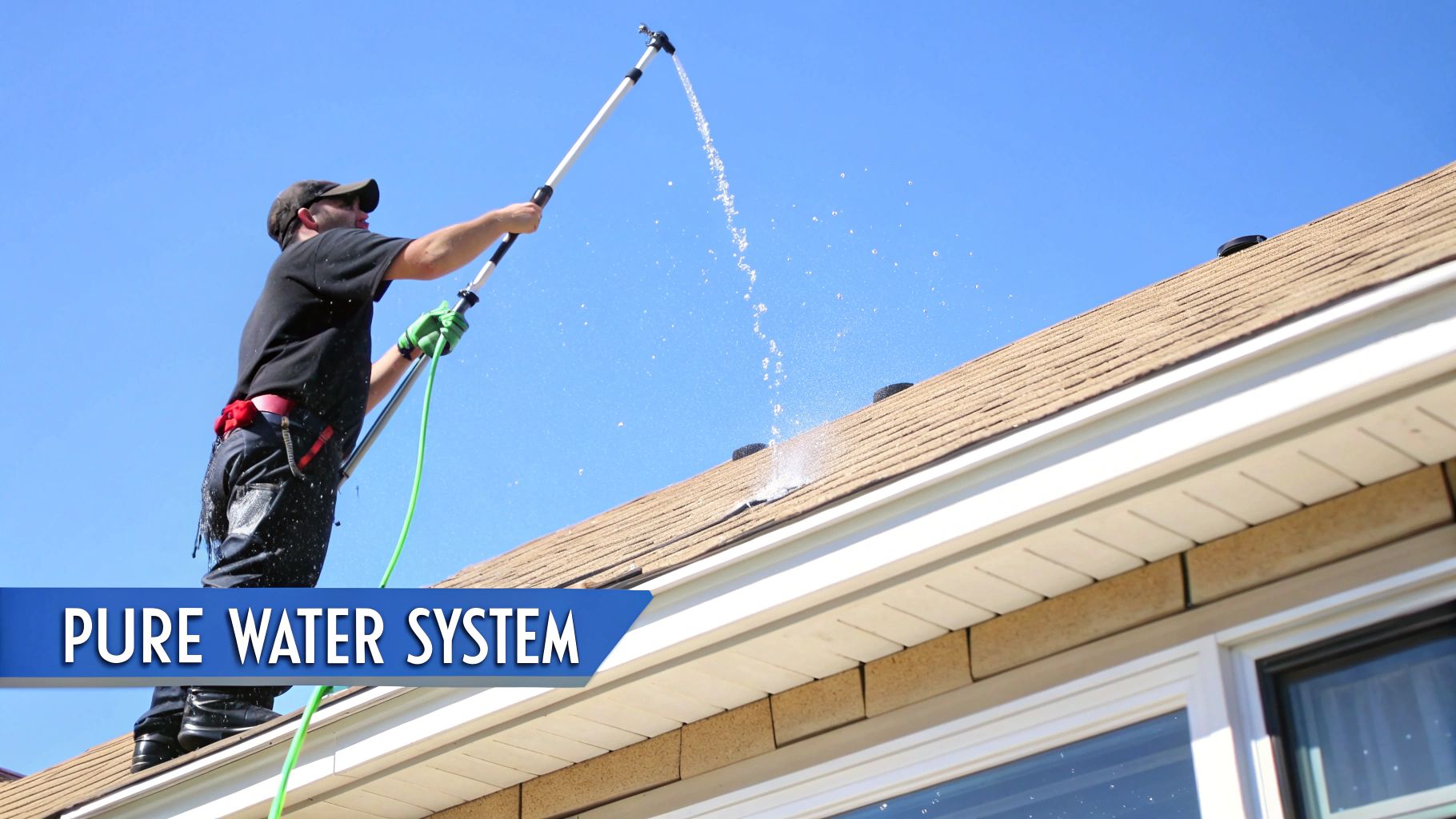
While a squeegee is the master's tool for windows within arm's reach, the pure water system is the undisputed champion for high exterior glass. This incredible technology allows pros to achieve a flawless, spot-free finish without a blade ever touching the pane. It's one of only two methods the professionals truly count on.
The science behind it is surprisingly simple. Your everyday tap water is loaded with dissolved minerals like calcium and magnesium. When that water dries on a surface, those minerals get left behind, creating the frustrating white spots and streaks we all know and hate. A pure water system attacks this problem at the source.
It works by pushing tap water through an intense, multi-stage filtration process—usually deionization or reverse osmosis. This strips the water of 100% of its total dissolved solids (TDS), leaving nothing but pure, clean H₂O.
This purified water isn't just clean; it's aggressively clean. Because it’s completely free of minerals, its molecules are hungry to bond with impurities. When it’s sprayed onto a dirty window, it acts like a magnet, pulling dirt, grime, and pollen right off the glass.
This is the secret behind how to clean windows streak free on multi-story buildings. A professional uses a long, extendable carbon fiber pole—called a water-fed pole—with a soft-bristled brush on the end. The system pumps the pure water up the pole and through the brush.
The entire process boils down to two stages:
Because the water is completely pure, it can be left to air dry. As it evaporates, there is absolutely nothing left behind to create a spot or a streak. The result is a flawless finish, every single time. This method is now a global standard for both efficiency and quality.
The takeaway is simple: pure water doesn't just clean the window; it rinses itself away perfectly. This eliminates the need for ladders for high-reach work, making the job safer and more efficient.
Understanding how pure water systems work is crucial if you're aiming for a truly spotless finish. For anyone looking to dive deeper into their own water quality for cleaning, you might find additional advice on water quality and filtration helpful. This technology is a true game-changer, especially for challenging jobs where safety and perfection are non-negotiable.
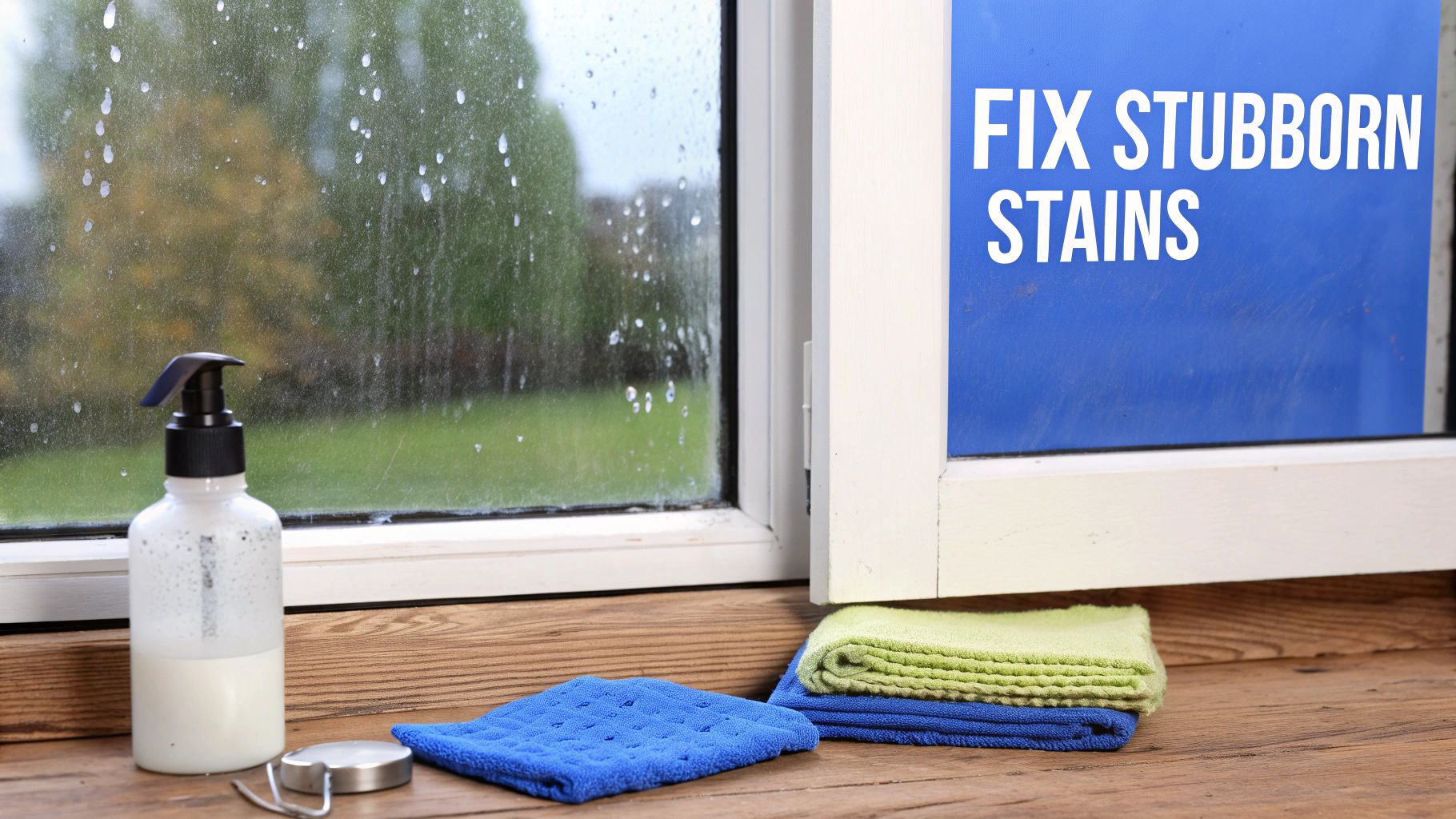
Even with the best tools and a flawless technique, you're bound to hit a few snags. It happens to everyone. Learning to troubleshoot the usual suspects is what separates a good window cleaner from a great one. Don’t get frustrated; every common problem has a fix, and knowing what to do will make all the difference.
One of the biggest headaches, especially in arid climates, is dealing with stubborn hard water stains. You’ll recognize them as those chalky, white spots left behind after water evaporates. Regular soap and water won't touch them. This is a frequent issue for property owners in places like Las Vegas or Phoenix, where mineral content in the water is high.
To cut through these mineral deposits, you need a mild acid. A simple mix of equal parts white vinegar and water can often do the trick. For more built-up stains, though, you might need to step up to a specialized hard water stain remover. We’ve put together a full guide on how to get hard water spots off windows if you're facing a particularly tough case.
Ever finish a window, step back to admire your work, and notice a weird, hazy film? It’s a common frustration, particularly on the inside of windows. This film can come from all sorts of things—off-gassing from new carpets, cooking oils in the air, or even residue from old, waxy cleaning products.
The solution is making sure your cleaning mix has enough bite to cut through the grease. Often, just adding a splash of white vinegar to your soap solution is enough. If the haze is really stubborn, try wiping the glass with a cloth lightly dampened with isopropyl alcohol before you start cleaning. This pre-treatment will break down the film, making the rest of the job much easier.
The most overlooked step in professional window cleaning is detailing the edges. After every squeegee pass, a tiny bead of water remains along the window frame. Wiping this perimeter with a dry microfiber cloth prevents drips from running down and ruining your work.
Where you're cleaning matters just as much as how you're cleaning. The biggest enemy of a streak-free finish is direct, hot sunlight. It can make your cleaning solution evaporate in seconds, leaving behind a streaky mess of soap and dirt before you even get your squeegee on the glass.
It's always best to work in the shade or on an overcast day, but sometimes that's just not possible, especially for homes in sunny spots like Denver. If you have to work in the sun, you’ll need to adapt:
Here’s a quick-reference table to help you identify and solve these common issues on the fly.
Anticipating these challenges—from hard water and hazy films to tricky sunlight—and having a plan is the key to consistent, professional results. A little preparation goes a long way toward that flawless, streak-free shine you’re after.
Mastering the art of streak-free window cleaning can be deeply satisfying, but let's be honest—some jobs are best left to the experts. Knowing when to put down the squeegee and pick up the phone will save you time, headaches, and a whole lot of frustration. More importantly, it ensures the job gets done safely and correctly, keeping your home looking its best without you taking unnecessary risks.
The biggest factor, hands down, is safety. If your home has second-story windows, tricky skylights, or glass panes overlooking a steep drop-off, the risk of a fall is very real. Professionals show up with the right ladders, harnesses, and extensive training needed to work at heights without incident. Homeowners in cities like Denver, with its many beautiful multi-story homes, often call in the pros for this exact reason. It’s just not worth the danger.
Time is another huge piece of the puzzle. A professional crew can make every window in a large house sparkle in just a few hours. That same job could easily eat up your entire weekend. If your schedule is already packed, hiring a service frees you up to focus on things you'd rather be doing. That speed comes from years of experience and having the perfect tool for every single situation.
And sometimes, the problem goes way beyond a simple wash and wipe. Certain issues demand specialized knowledge and equipment.
The reality is that professionals use only two primary methods for a reason: the squeegee and the pure-water system. They've invested in high-grade tools and dedicated training to make these methods work perfectly, even on the most challenging jobs.
Ultimately, pros are equipped to handle the jobs that are a step above a simple cleaning. They have an entire arsenal of tools and solutions that most of us just don't keep in our garage. If you're curious about their specific gear, you can take a closer look at what professional window cleaners use to get those flawless results.
Calling in an expert isn't giving up; it's making a smart choice to protect your property, your time, and your safety.
Even the best guides can leave a few questions unanswered. Over the years, I've heard them all. Here are the quick, no-nonsense answers to the most common queries I get, designed to help you nail your technique and get that perfect, streak-free shine.
Honestly, the most effective homemade window cleaning solution is also the simplest. All you need is a bucket of cool, distilled water mixed with just a couple of drops of a quality dish soap, like Dawn.
The biggest mistake people make is thinking more soap equals more cleaning power. It doesn't. Using too much soap is the #1 cause of soapy residue and streaks. When it comes to the mix, less is always more.
If you're dealing with a greasy film on kitchen windows or from fingerprints, just add about a half cup of plain white vinegar to your bucket. The acidity cuts right through grease without leaving a film. And here’s a pro tip that makes a huge difference: always use distilled water. It has zero mineral content, which means there’s nothing left behind to cause spots when the water evaporates.
I get this question all the time, and the short answer is: you really shouldn't. It's a battle you're destined to lose.
The heat from direct sun causes your cleaning solution to evaporate almost instantly. This leaves soap scum and dirt stuck to the glass before you even have a chance to squeegee it off, resulting in a mess of streaks. It’s incredibly frustrating.
If you absolutely have to clean on a bright, sunny day, work smart. Start on the shaded side of the building and follow the sun around. If you can't avoid the sun, you have to work in very small, manageable sections and move fast—and I mean fast—to get the solution off the glass before it dries.
Professional window cleaners rely on two methods: the classic squeegee and modern pure-water systems. Both are designed to remove 100% of the water and dissolved dirt from the glass. That’s the fundamental secret to a streak-free finish.
Getting streaks even with a squeegee is a common frustration, but it almost always comes down to one of a few simple issues. If your technique feels right but you're still seeing lines, it's time to check your gear and your mix.
Here are the top three culprits I see out in the field:
Pay close attention to these three details, and I guarantee you’ll eliminate most of your squeegee-related streaks and get that flawless, professional-looking shine.
For jobs that are just too big, too high, or too tough to handle on your own, don't hesitate to call in the experts. Professional Window Cleaning has the right tools and training to make your windows sparkle safely and efficiently. Contact us today for a free estimate!
Read our blog posts regularly and keep learning.