Care and Maintenance
How Much Can a Window Cleaning Business Make in 2026
Wondering how much can a window cleaning business make in 2026? See real revenue, profit margin, and owner income numbers for solo, crew, and high-rise


If you manage a medical office, you’ve probably had this moment. The lobby looks acceptable at first glance, but then you notice fingerprints on the entry glass, a smudge on the check-in window, dust on an air vent, or a restroom dispenser that was “wiped” but not actually cleaned. That’s when the bigger question shows up: if those visible details were missed, what’s happening on the surfaces patients and staff touch all day?
In healthcare, cleanliness isn’t just presentation. It affects infection control, staff safety, patient confidence, and whether your facility can document that work was done correctly. Medical office cleaning services are supposed to support clinical operations, not just empty trash and run a mop through the hall.
A general office cleaner usually works from a simple goal: make the space look neat by the next business day. In a medical setting, that standard breaks down fast.
A waiting room chair isn’t just furniture. A check-in counter isn’t just a flat surface. Glass partitions, exam tables, restroom fixtures, keyboards, door hardware, and privacy barriers all sit inside a chain of contact that can affect patient safety. That’s why healthcare cleaning has become a major specialty. The global healthcare and medical facilities contract cleaning services market generated USD 36.5 billion in 2024, which reflects how central professional cleaning has become in regulated medical environments.
In a normal office, a cleaner may use one broad routine across the whole building. In a clinic, that approach creates risk.
A practice manager can usually tell the difference within one walkthrough. Standard janitorial work tends to focus on appearance. Professional medical office cleaning services focus on risk control.
Practical rule: If a vendor talks mostly about “making the office sparkle” and not about protocols, dwell time, access control, and healthcare-specific training, they’re describing commercial janitorial service, not medical cleaning.
Patients don’t know your disinfectant list. They do notice cloudy interior glass, dust around vents, dirty corners near treatment rooms, and neglected restrooms. Those details shape how safe the office feels.
That’s one reason medical cleaning has to go beyond floors and trash. In healthcare, a streak on a glass partition or grime on a window ledge isn’t only cosmetic. It signals whether the facility runs on disciplined standards or loose habits. The best medical office cleaning services understand that perception and compliance are tied together.
A good medical cleaning plan starts by dividing the office into zones. Each zone has different traffic, different contamination risks, and different cleaning expectations. If a vendor uses the same routine in every room, the scope isn’t specific enough.

Many offices under-clean because the space looks low risk. It isn’t. Chairs, clipboards, counters, payment terminals, pens, door pulls, and glass check-in barriers take repeated contact all day.
High-touch surface protocols in medical offices target over 30 daily contact points per patient and may require disinfection 4 to 12 times daily based on risk tiering. That same guidance notes that inadequate cleaning of items such as privacy curtains can increase airborne pathogen transmission by 3x.
In practical terms, waiting-area cleaning should include:
Restrooms demand more than odor control. They need strict separation from patient-care areas. Mop heads, cloths, gloves, and even cart placement should be controlled so restroom tools never migrate into exam rooms or front-desk zones.
Staff breakrooms and utility rooms also deserve attention. They often become the weak point in an otherwise well-run office because they’re “back of house.” A vendor that skips these rooms usually skips process discipline elsewhere too.
A clean medical office isn’t one shiny lobby. It’s a full building where the least visible room gets the same operational respect as the most visible one.
Cleaning in healthcare settings transcends standard janitorial work, becoming part of clinical support. Exam tables, stools, rolling equipment, sink fixtures, cabinet pulls, light switches, and provider work areas need a methodical sequence. Teams have to clean in a way that avoids recontamination.
The same goes for rooms that aren’t fully procedural but still involve frequent patient turnover. A room can look reset and still have missed edges, under-table frames, or contaminated touchpoints.
For managers reviewing scope, it helps to ask whether the vendor distinguishes between:
Medical offices still include ordinary workspaces, but even those can’t be treated like a generic suite. Keyboards, phones, copier panels, cabinet handles, breakroom tables, and shared office doors need planned attention.
This is also where overlooked surfaces become important. Windows, glass dividers, sidelights, and interior partitions are easy to treat as appearance-only items. In practice, they’re part of the contact environment. A detail-oriented provider accounts for them in the written scope instead of leaving them as “extra.”
That matters in markets with high dust, wind, and heavy sun exposure too. In places like Phoenix and Las Vegas, glass and frames show buildup quickly, especially near entrances and waiting areas. Professional window cleaners generally rely on only two methods to clean glass properly: a squeegee system or a pure-water system. In medical settings, that kind of disciplined, method-based thinking is exactly what you want across the broader cleaning program as well.
For a closer look at what a healthcare-specific scope can include, this overview of healthcare facility cleaning services is a useful reference point.
The difference between “clean” and “safe” comes down to process. In healthcare, the product choice, contact time, tool control, and verification method matter as much as the labor itself.
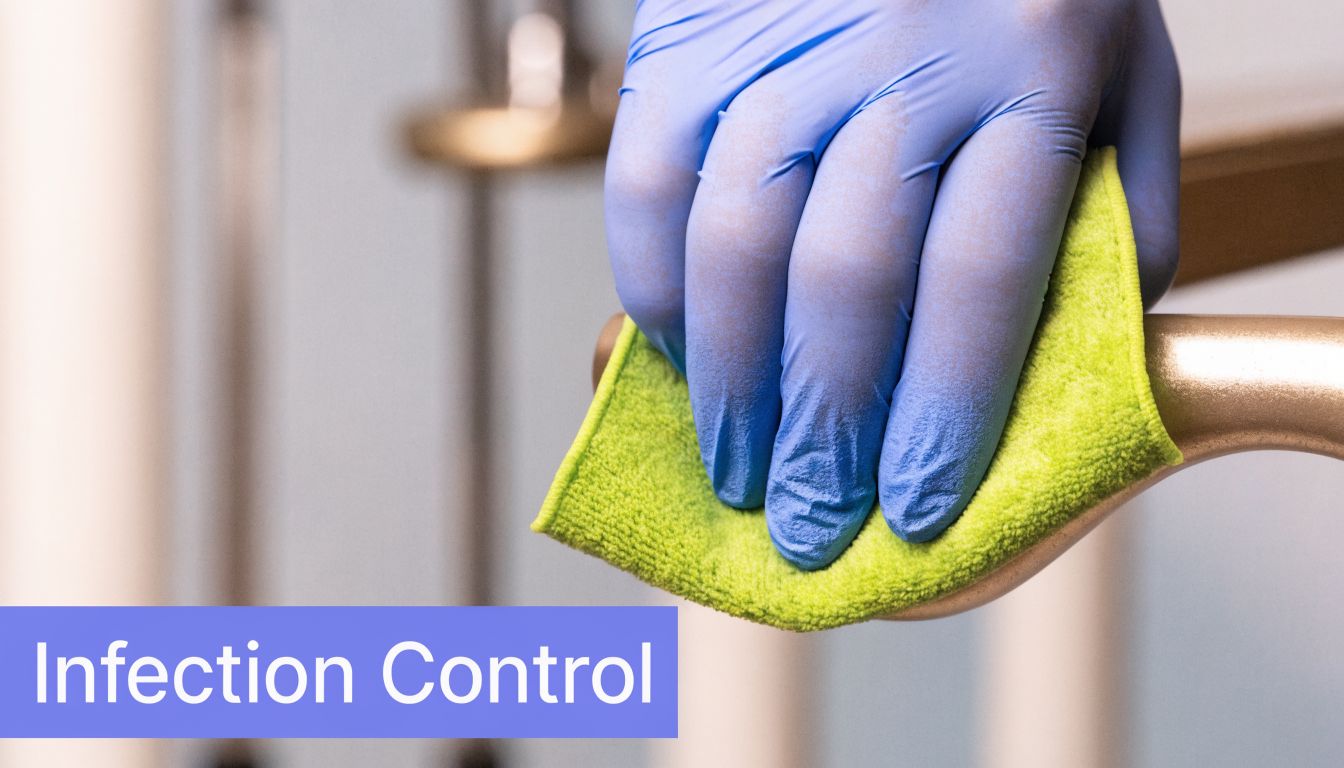
A disinfectant label isn’t decoration. If the product requires the surface to stay wet for a certain period, that time has to be honored. According to medical office cleaning guidance from Coverall, healthcare cleaning requires EPA-registered hospital-grade disinfectants with a dwell time of 1 to 10 minutes, and failing to observe proper dwell time can reduce efficacy by up to 90%. The same source notes that 1 in 31 hospital patients annually are affected by healthcare-associated infections.
That’s why “spray and immediately wipe” is one of the most common bad habits in commercial cleaning. It’s fast, but it often defeats the disinfectant.
Soil blocks chemistry. If a surface still has residue, oils, dust, or organic matter on it, disinfectant performance drops. The practical sequence is simple: remove visible soil first, then apply the disinfectant correctly.
This sounds obvious, but rushed crews often combine steps in a way that looks efficient and performs poorly. In healthcare spaces, that shortcut isn’t worth taking.
The best crews aren’t the fastest crews. They’re the crews that can explain why a surface was cleaned in that sequence, with that product, for that amount of contact time.
Medical office cleaning also requires staff protection. Crews may encounter bodily fluids, sharps-adjacent waste, chemical exposure, and contaminated surfaces. That means PPE use can’t be informal, and staff need training that aligns with healthcare risk.
Color-coded microfiber systems are one of the simplest ways to reduce cross-contamination. If one color is assigned to restrooms and another to general or clinical surfaces, supervisors can spot mistakes quickly. Without a visual system, teams tend to rely on memory, and memory breaks down during busy shifts.
Managers should also expect written procedures for:
For a plain-language companion on how facilities can prevent Healthcare Associated Infections, that resource is worth reviewing alongside your own cleaning SOPs.
Plenty of vendors say they “follow healthcare standards.” Fewer can show how they verify execution. That’s where inspection systems matter.
ATP testing is one practical example because it gives managers something more objective than a visual pass. Even if you don’t use it on every visit, it tells staff that surfaces won’t be judged only by appearance. Checklists matter too, but only if supervisors review them and correct misses.
A short training video can also help align internal staff and outsourced crews on the basics of surface disinfection and handling expectations:
Facilities sometimes think of compliance as paperwork kept in a binder for inspections. In practice, compliance shows up in daily habits. Are labels legible? Are dwell times realistic for the products chosen? Are carts organized to separate clean from dirty tools? Can the supervisor explain the protocol for an exam room versus a restroom?
Those answers tell you whether the cleaning program is built for healthcare or just dressed up with healthcare language.
Most cleaning failures happen because the schedule is vague. “Clean lobby nightly” sounds fine until nobody owns the glass partition, the vent cover, the base under the exam table, or the interior side of the front door. A written checklist closes those gaps.
One area that deserves special attention is glass. A 2023 CDC-related report summarized here notes that environmental surfaces, including overlooked glass areas like windows, contribute to 20 to 30 percent of healthcare-associated infections when cleaning is inadequate, and that glass surfaces in waiting areas can retain viruses like norovirus for up to 7 days without proper disinfection. In other words, windows and interior glass shouldn’t sit outside the infection-control conversation.
A useful schedule separates tasks by both area and frequency. It should also distinguish routine cleaning from deeper end-of-day resets.
| Area/Item | Task | Frequency | Notes |
|---|---|---|---|
| Waiting room seating | Wipe and disinfect armrests, backs, and side tables | Daily and as needed during operating hours | Include all patient-facing chairs |
| Entry glass and interior partitions | Clean visible soil and disinfect touch areas | Daily | Don’t skip push areas and edges |
| Reception counter and payment devices | Disinfect high-contact surfaces | Multiple times during business hours | Coordinate with front-desk workflow |
| Restrooms | Clean and disinfect fixtures, partitions, dispensers, and touchpoints | Daily, with checks during business hours | Use restroom-dedicated tools only |
| Exam rooms | Reset and disinfect patient-contact surfaces | Between patient use and end of day | Follow room sequence consistently |
| Staff offices | Wipe shared touchpoints such as phones, keyboards, and door hardware | Daily | Avoid disrupting protected paperwork |
| Vents, grilles, and high dust points | Remove buildup and detail clean adjacent surfaces | Weekly | Include ledges and tops of frames |
| Privacy curtains or similar barriers | Clean or launder per facility protocol | Weekly or per risk level | Don’t leave these out of scope |
| Window frames and sills | Detail clean dust and residue | Weekly | Important in dusty climates |
| Full glass review | Inspect and clean overlooked interior glass surfaces | Monthly minimum | Add spot cleaning as needed |
Daily cleaning keeps the office functioning. End-of-day work should restore the facility to a reliable baseline for the next clinical session.
That usually means the closing shift handles what day staff and between-patient turnover can’t fully address:
If a checklist doesn’t name the overlooked surfaces, those surfaces usually don’t get cleaned.
Facilities that want a stronger maintenance framework can compare their process against these facility management best practices. It helps when you’re tightening a vendor scope or rebuilding an in-house checklist.
The best checklist is short enough to complete and specific enough to audit. If it turns into a binder nobody reads, it stops helping.
A strong version includes initials, date, time, and a place for exceptions. If a room was occupied, if a spill required escalation, or if a touch-up was completed midday, the record should show it.
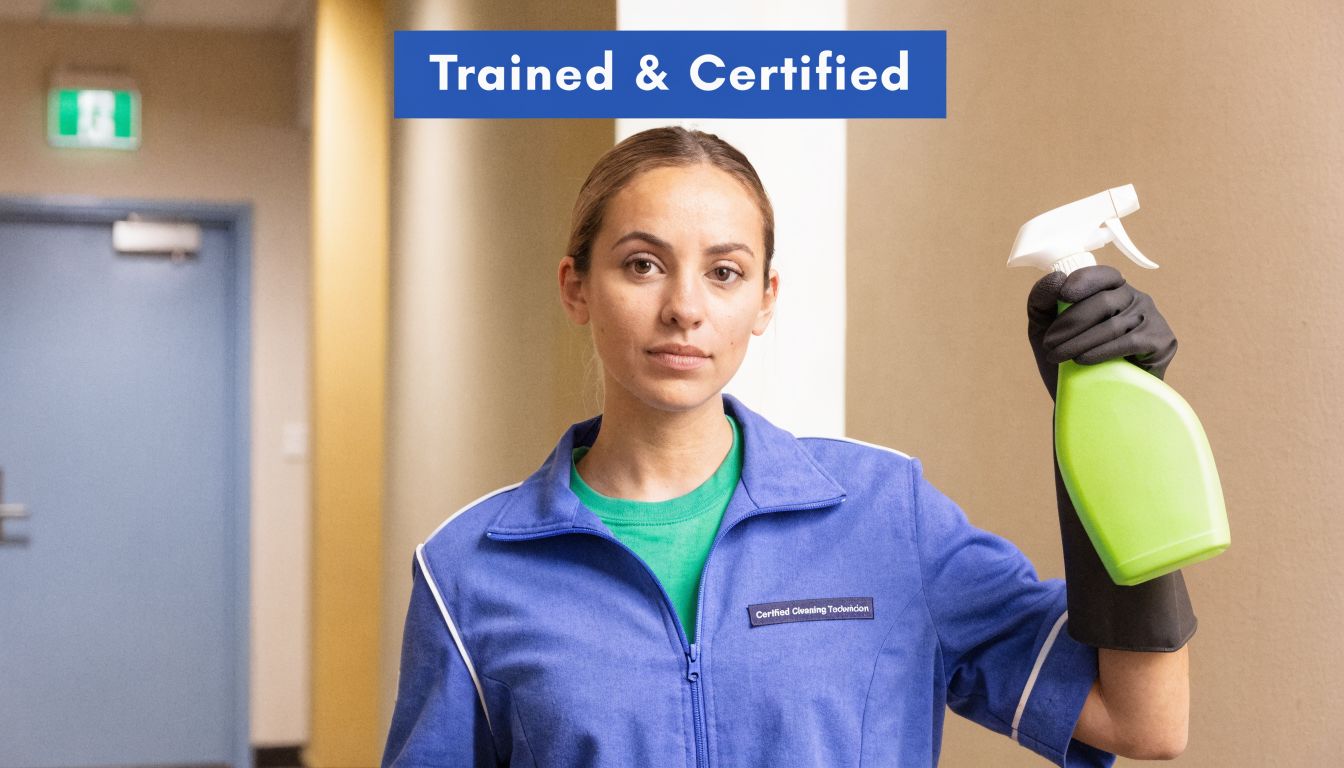
A medical cleaning program is only as good as the people carrying it out. Fancy scope documents don’t matter if the crew entering your office after hours is rushed, untrained, poorly supervised, or casually given access to sensitive areas.
That risk isn’t theoretical. One healthcare cleaning market source reports that while 85% of cleaning firms claim general compliance, a 2025 ISSA survey found 42% of healthcare clients experienced privacy breaches from improper waste handling or unsecured access by cleaning crews, and HIPAA violations cost medical practices an average of $1.5M in fines annually. Even if you set aside the marketing language vendors use, the operational point is clear: privacy and cleaning are connected.
When I review healthcare cleaning operations, I pay attention less to the sales presentation and more to crew controls. You want clear answers to basic staffing questions.
A vendor that can’t answer those questions quickly probably hasn’t built the program carefully.
General cleaning training isn’t enough for healthcare. Staff need role-specific instruction for medical settings, especially around bloodborne pathogens, chemical use, restricted areas, and patient privacy.
Look for evidence of training in:
HIPAA-aware conduct includes small things that many crews overlook. Don’t leave charts visible while cleaning around a workstation. Don’t move printed paperwork casually. Don’t prop doors open. Don’t leave window coverings in a position that exposes treatment areas or records from outside.
The wrong cleaner can create two incidents in one visit. An infection-control problem on the inside and a privacy problem on the way out.
Industry certifications can be a useful signal. So can a long business history. But neither replaces daily execution.
If a vendor says their staff are trained, ask how that shows up on site. Do they use written room-specific protocols? Do they know what belongs on a restroom cart versus a clinical cart? Can they describe what happens if they encounter exposed patient information or bodily fluid contamination?
A trustworthy provider treats staffing as part of risk management, not just labor scheduling. That’s especially important in healthcare offices that clean after hours, where crews may be in the building with limited oversight. In those conditions, reliability matters as much as technical skill.
Pricing for medical office cleaning services varies because the work varies. A dermatology clinic, urgent care site, dental practice, and specialist office may occupy similar square footage but require very different protocols. The cost driver is scope, not just size.
That’s part of why outsourcing decisions are still uneven. In North America, only 8 percent of facility managers currently outsource all cleaning and maintenance services, while 35 percent now rank cross-contamination prevention as a top priority, up from 10 percent in 2019. Managers are paying more attention to infection-control value, but many are still sorting out what belongs in-house and what should go to a specialist.
A serious proposal should reflect the realities of your facility. If two bids look similar on the surface, the difference is often hidden in what one company excluded.
Common pricing factors include:
Cheap bids often leave out detail work, verification, and supervision. That’s why “What’s included?” matters more than the bottom line alone.
Use direct questions. Don’t ask whether a vendor provides “high-quality service.” Ask what they do.
If you manage a facility in a dry or dusty market, ask how the vendor handles vents, tracks, frames, and glass. If your office has a visible storefront or patient-facing windows, ask whether that work is built into the recurring program or treated as separate specialty service.
This is especially useful when comparing providers in markets such as Scottsdale and the Denver metro area. Regional conditions change the workload. A generic bid template won’t capture that.
Be careful with proposals that rely on phrases like “sanitize all areas as needed” or “detail clean throughout facility.” Those statements sound complete, but they often avoid specifics.
A better proposal names:
If it’s not written down, don’t assume it’s included.
A medical office doesn’t need a cleaning company that merely makes things look polished. It needs a partner that understands how cleaning affects infection control, staff protection, privacy, and the patient experience.
That standard changes how you evaluate the work. You’re not only asking whether the floor was mopped. You’re asking whether touchpoints were disinfected correctly, whether tools were kept separated, whether after-hours staff respected privacy boundaries, and whether overlooked surfaces such as windows and glass partitions were treated as part of the environment, not decoration.
Safety communication plays a role too. If your team is reviewing room access, hazard labeling, or public-facing visual cues, this explanation of the purpose of safety signs is a useful companion resource. Cleaning works better when the facility itself clearly signals where risk controls begin and who should enter which spaces.
The best medical office cleaning services operate with discipline. They use the right chemistry, follow the right sequence, train the right people, and document the work in a way a manager can trust. That’s what protects patient confidence.
For facilities in Arizona, Colorado, and Nevada, details matter even more because dust, traffic, and highly visible glass can quickly undermine the impression of control. And when glass is part of the job, professionals still rely on only two proven methods: the squeegee and the pure-water system. That same respect for method is what separates a healthcare-ready cleaning program from ordinary janitorial service.
If your medical office needs a partner that understands both meticulous glass care and the higher standards healthcare environments demand, Professional Window Cleaning is worth a closer look. With more than 26 years in business, they bring disciplined surface care to facilities across Arizona, Colorado, and Nevada, including medical offices that need a clean appearance patients notice and detailed work managers can rely on.
Read our blog posts regularly and keep learning.