Care and Maintenance
Hard Water Stain Remover Shower: What Actually Works
Find the right hard water stain remover shower fix for glass, tile, grout, and chrome. Safe DIY recipes, product picks, and prevention tips that work.


Dirty second-story windows create a familiar problem. From the ground, the job looks simple enough. Then you start thinking about ladder length, roofline height, slope, reach, and what happens if the ladder is even slightly wrong.
That's where most homeowners get tripped up. The question isn't just what size ladder for a 2 story house. It's what size ladder fits your house, your task, and the way the ladder works once it's set at a safe angle.
A homeowner usually starts with the same assumption. The windows are on the second floor, so any tall ladder should do. That's how people end up with a ladder that feels almost right, but forces them to lean, stretch, or stand too high.
For second-story work, “almost right” is the problem.
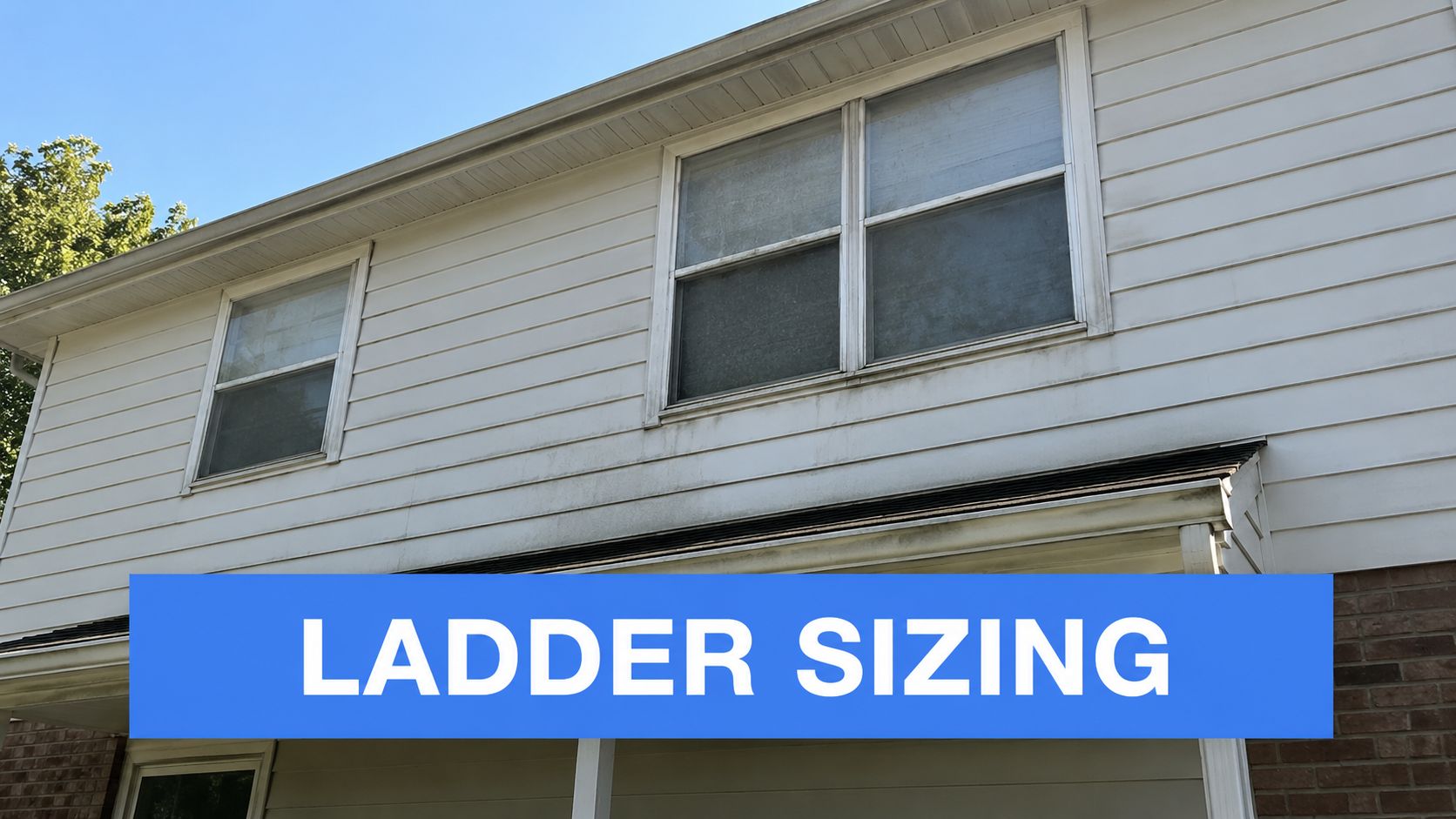
When someone asks what size ladder for a 2 story house, they usually mean one of three things:
Those aren't the same job. A ladder that feels fine for a single second-story window may be the wrong choice for getting near a roof edge.
Practical rule: Buy or use a ladder for the highest support point and the safest setup, not for the shortest possible reach.
Manufacturers advertise ladder length. Homeowners care about working height. Those are not the same thing.
That's why a lot of experienced tradespeople look beyond the number on the sticker and think about extension, overlap, angle, and standing position first. If you've been comparing product lines from brands and commercial suppliers, resources like Cotterman Ladders Company can help you understand how ladder categories differ before you ever pick one up.
If your property has uneven grade, a leveling setup matters too. A guide on using a Little Giant leveler ladder is worth reading before you assume any straight extension ladder will behave well on sloped ground.
A ladder's listed size is its raw length, not a guarantee of usable working height. That gap is where homeowners get into trouble on two-story work.
From the ground, a second-story window can look close enough that a shorter ladder seems fine. Once the ladder is set at the proper angle, the sections are overlapped, and you stay off the top rungs, the actual working height is lower than the sticker suggests. I see this mistake all the time with homeowners who buy for what they want to touch instead of where they can safely stand.

Angle comes first. An extension ladder has to lean out from the wall, which shortens the vertical height you get from its full length. The U.S. Consumer Product Safety Commission ladder guidance explains the standard setup rule: place the base about 1 foot away from the wall for every 4 feet of ladder height.
Overlap is built into the ladder's design. On an extension ladder, part of the fly section must overlap the base section so the ladder keeps its strength. That portion counts toward total ladder length, but it does not give you extra standing room.
Standing limit cuts the working height again. Safe ladder use means staying below the top rungs, keeping your hips between the rails, and accounting for your body weight plus the tools you carry. On real jobs, that matters more than the number printed on the side rail.
A second-story window cleaning job is a good example. Reaching the glass with your fingertips is one thing. Washing the whole pane, detailing the edges, and doing it without twisting sideways is something else.
That difference decides whether the job is reasonable for a homeowner or starts drifting into pro-only territory.
If the ground is uneven, the window sits above a sloped driveway, or you need to work near a roof edge or over landscaping, ladder size alone does not solve the problem. Those are the jobs where risk climbs fast, even with the "right" ladder on paper.
A safe ladder setup usually feels a little longer and a lot less dramatic than homeowners expect.
If you want a practical answer, start with the support point, not the roof peak and not a guess from the sidewalk.
You need the height from the ground to the place where the ladder will rest. That might be:
For a typical 2-story house, major ladder guides recommend an extension ladder 7 to 10 feet longer than the highest point it rests against. That's why a 24-foot extension ladder is commonly cited as a practical choice, because it provides about 23 feet of workable reach in some manufacturer charts and fits the usual range for a two-story home. The same guidance says the ladder should extend 3 feet above the roofline and be set at a 1:4 angle, or about 1 foot out for every 4 feet of height, according to Werner's ladder height guide.
Once you know the highest support point, add the extra ladder length required for safe setup.
A simple way to think about it:
If your support point is near the lower end of typical second-story work, a shorter extension ladder may technically touch the house. That doesn't mean it's the right tool. You still need room for angle, overlap, and safe standing position.
For many homes, the practical shopping decision comes down to this table:
| House situation | Likely result |
|---|---|
| Basic second-story window work | A 24-foot extension ladder is often the safe baseline |
| Taller eaves or awkward roofline | You may need to size up |
| Short ladder that only barely reaches | Usually the wrong choice |
If the ladder only works when you stand high, lean sideways, or set the base in a sketchy position, the ladder doesn't fit the job.
That's the part people miss. The right answer to what size ladder for a 2 story house is often less about the story count and more about where the rails will sit once the ladder is placed correctly.
Most homeowners deciding on second-story work are comparing 20-foot, 24-foot, and 28-foot extension ladders. That's a useful comparison because these are the sizes that usually come up for residential exterior work.
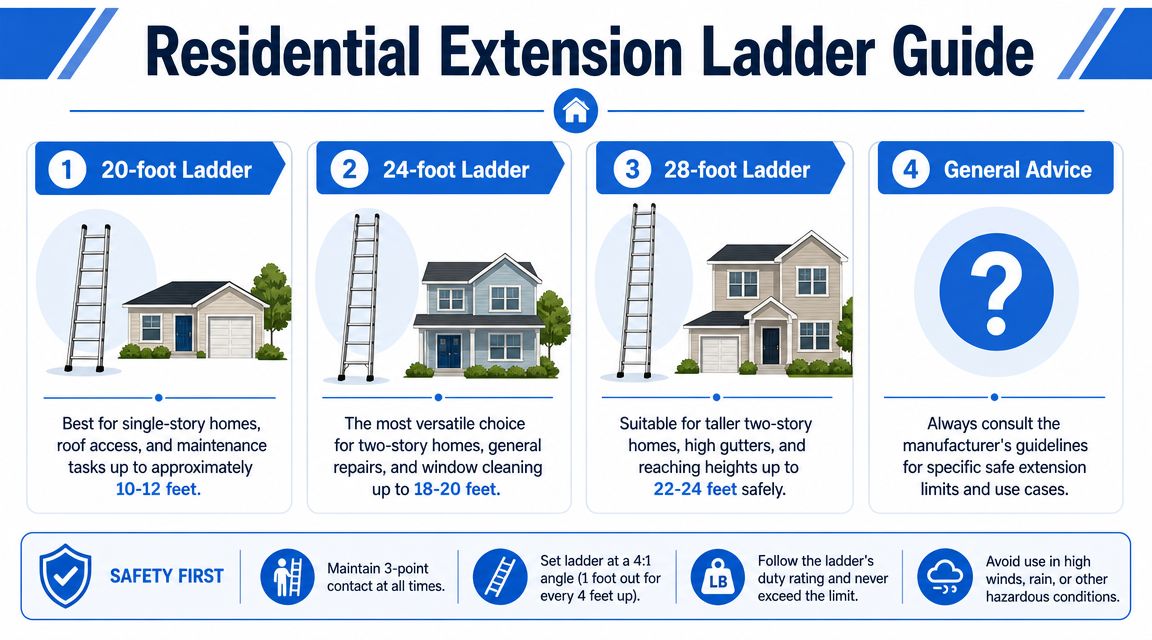
Manufacturer charts and buying guides consistently show that ladder length doesn't equal usable height. A 24-foot extension ladder is typically mapped to about 23 to 24 feet of reach, a 28-foot ladder reaches about 27 feet, and a 20-foot ladder is often treated as roughly 19 to 24 feet of reach depending on ladder type and user assumptions, based on the sizing discussion in the Window Cleaning Resource community guide.
Here's the practical read on that:
20-foot ladder
Fine for some lower access points, but often short for full second-story exterior work. This is the ladder many homeowners try first, then discover they're working too close to the top.
24-foot ladder
The workhorse for many two-story homes. It usually gives enough reach and enough setup flexibility to do upper windows without forcing bad body position.
28-foot ladder
Useful when the home is taller, the grade falls away, or you need more height at gutters and roofline areas.
The same chart references common ladder duty ratings by load:
| Duty rating | Load |
|---|---|
| Type I | 250 pounds |
| Type IA | 300 pounds |
| Type IAA | 375 pounds |
That matters because the ladder doesn't care whether the weight comes from your body, a bucket, a tool belt, or a water-fed accessory. It all counts.
For homeowners in Las Vegas and Denver, the same rule applies. House style changes, roof design changes, ground conditions change. The ladder still has to fit the task, not just the address.
The right size ladder won't save a bad setup. Most ladder accidents start before anyone leaves the ground.

A more technical way to size for a two-story house is to start with the eave or roofline height and then add the required extension above that point. Ladder guidance commonly calls for at least 3 feet above the top support point, while UK roof-work guidance recommends 1 metre above the eaves for a secure handhold and safer transition. That's one reason homes in the upper part of the normal two-story range often need a ladder in the 20-to-24-foot class rather than a short stepladder, according to BPS Depot's ladder sizing guide.
Before you climb, check these points:
Ground condition
Set the feet on firm, non-slippery ground. Wet soil, decorative rock, mulch, and slick concrete all change how the ladder behaves.
Base distance
Use the 4-to-1 rule. If the ladder rises four feet, the base should sit about one foot out.
Top contact
Rest the ladder against a solid surface, not a weak gutter edge or unstable trim.
A deeper guide on the correct angle for a ladder can help if you're not used to checking setup by eye.
Here's a helpful visual reference on setup and climbing practice:
Never level a ladder with loose objects. Never assume “close enough” is safe on uneven grade. And never set up in a spot where a door can swing into the ladder or where the rails sit near electrical hazards.
A safe ladder setup feels boring. If the position feels clever, improvised, or barely workable, stop and reset it.
You drag the ladder into place, look up at the second-story glass, and realize the window itself is only part of the job. The main question is whether you can reach it, work it, and climb down without forcing a setup that feels sketchy.
That is the point where a homeowner should stop treating ladder length as the only decision. A job can be technically reachable and still be a poor DIY choice. I see that all the time with upper windows that sit over sloped ground, stacked rock beds, AC units, deep flower beds, or low roof sections that block a clean ladder position.
Call a pro if any of these apply:
Those conditions change the job from basic ladder work to controlled access work. That matters because cleaning is never done from a frozen pose. You have to carry tools, shift your body, detail edges, and manage water on the glass without overreaching. If the setup only works when everything goes perfectly, it is not a good setup.
Professional window cleaners usually handle second-story exterior glass one of two ways. They use a squeegee from a ladder when the access is clean and stable, or they use a pure-water system when the safer choice is to stay on the ground. The method depends on access, frame condition, and whether the window can be cleaned thoroughly without putting a person in a bad position.
For homeowners in Phoenix and Scottsdale, sun-baked debris and hard water residue often make second-story windows slower to clean than people expect. Homeowners stay up there longer, scrub harder, and start stretching for corners instead of climbing down and resetting. That is usually where the risk starts to climb.
A good rule is simple. If the job requires improvising, balancing around obstacles, or accepting a setup that feels barely workable, hire it out. Paying for professional cleaning costs less than a fall, a crushed gutter, or a broken window.
Not for exterior second-story window cleaning in the usual residential setup. A stepladder or A-frame ladder isn't meant to be leaned against the house, and it usually won't give you the height or the working position needed for upper-story glass.
For most two-story exterior access, you're looking at an extension ladder, not a household stepladder.
That's where ladder work gets risky fast. Uneven grade changes the ladder angle, shifts weight unpredictably, and can make one foot carry more load than the other.
Don't prop one side up with bricks, scraps, or patio blocks. If the area is sloped or awkward, the smart move is often to stop and use someone with proper leveling equipment and experience.
Both have a place. Aluminum is usually lighter to move around. Fiberglass is the better choice when electrical exposure is a concern because it's non-conductive.
The decision isn't solely material. It's whether you can handle the ladder safely once it's extended, carried, and repositioned around the house.
Because the label only tells you overall length. Real-world setup takes away some of that length through angle, overlap, and standing restrictions.
If the ladder technically reaches but doesn't let you work without climbing too high or leaning out, then it's functionally too short for the job.
Treat access as the main job. Cleaning the glass is the easy part once you're in a stable position.
If you're forcing the setup, fighting the terrain, or guessing on the angle, stop there.
If your second-story windows need attention and you'd rather skip the ladder gamble, Professional Window Cleaning can handle the job safely and correctly. The company has been cleaning windows for over 26 years and uses the two key professional methods in the field: traditional squeegee work and pure-water cleaning systems. If you want clean glass without the risk of choosing, hauling, and setting up the wrong ladder, they're a solid place to start.
Read our blog posts regularly and keep learning.