Care and Maintenance
How to Clean Double Glass Windows Safely
Learn how to clean double glass windows without damaging seals. Two professional methods, step-by-step instructions, and seal care tips included.


You're halfway through a window cleaning job when the glass looks clear, but the tracks still hold black grit, the frame has stuck-on residue, and the screen is carrying a film of dust. A soft brush glides over the problem without moving it, while a stiff brush can leave marks on delicate finishes. The practical answer is often a medium bristle brush, used as a controlled tool for the surfaces around the glass.
Professional Window Cleaning has been cleaning windows for over 26 years. In that time, the most reliable results have come from matching the brush to the substrate, the debris, and the cleaning method, rather than treating one brush as suitable for every task.
A window cleaner can finish the glass and still leave the job looking incomplete. Window tracks collect compacted dirt, frames hold oily deposits, and screens trap fine dust that a squeegee blade never touches. These areas need agitation, but they also need control.
That's where a medium bristle brush earns its place. It sits between soft and stiff designs, giving the operator enough resistance to loosen heavier grime without the aggressive feel of a hard scrub brush. Industrial brush guidance identifies medium bristles as a practical choice for semi-smooth surfaces and for moving larger debris in wet or dry work. On windows, that makes them useful for frames, sills, tracks, and screens where a soft brush may lack force and a stiff brush may be unnecessarily harsh. Industrial guidance on medium scrub brushes supports that middle-ground application.
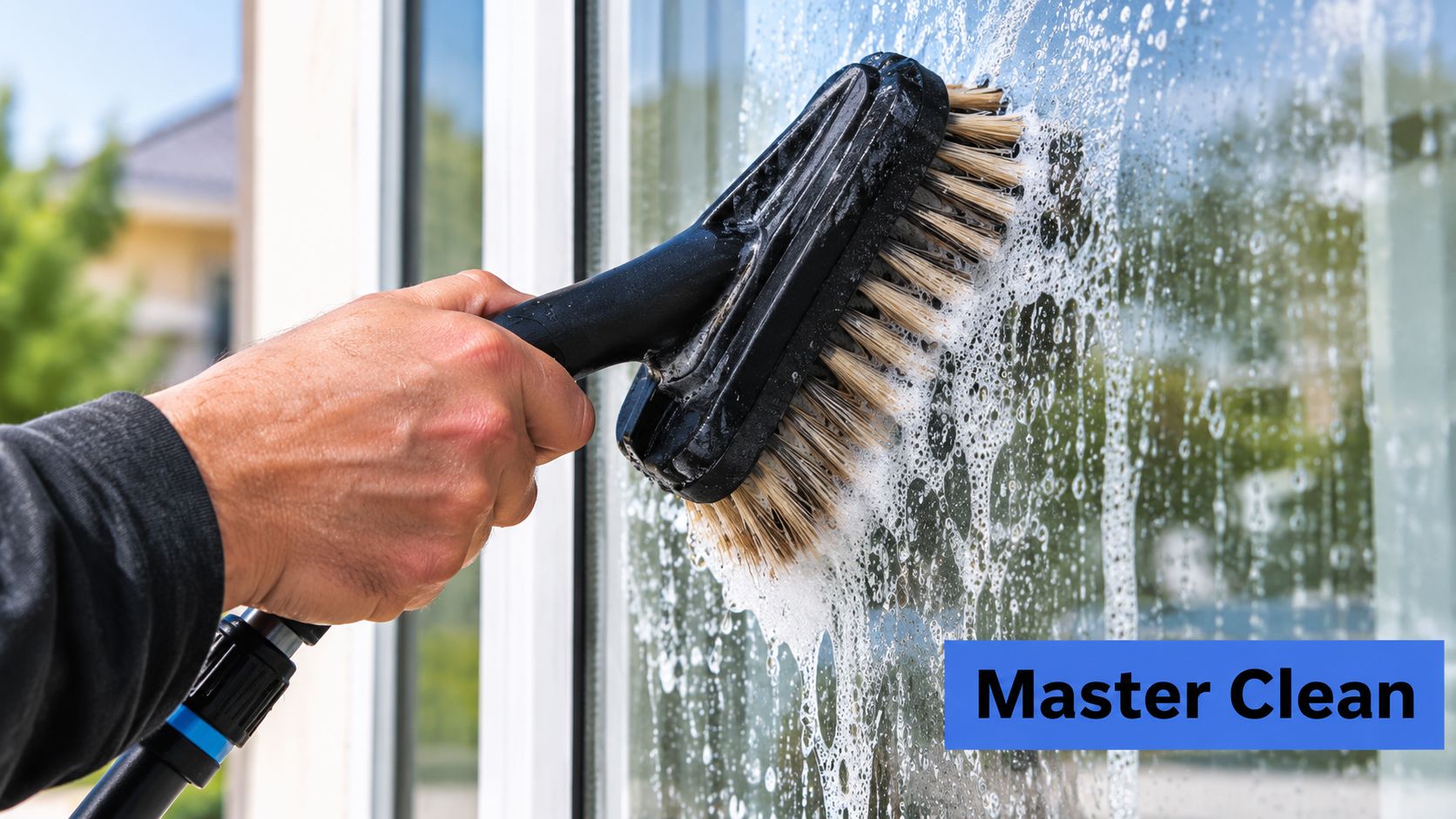
A brush isn't just a smaller version of a washer. It reaches narrow channels, works debris out of corners, and lets the cleaner regulate pressure by changing the angle and number of passes. That control matters around painted frames, coated metal, vinyl, and finishes that can show damage long after the dirt has been removed.
The medium bristle brush also functions as a bridge between cleaning stages. A cleaner may use it to loosen contamination, flush the area with water, and then remove the remaining liquid with a separate method. The brush does the agitation. It doesn't replace the squeegee or the pure-water rinse.
Field rule: Use the least aggressive brush that removes the contamination efficiently. More force isn't automatically better cleaning.
A properly selected medium brush can also reduce the temptation to press too hard. The bristles provide mechanical action while the operator keeps contact controlled. That combination is especially useful on older residential windows, commercial storefronts, and properties where the frame and track need as much attention as the pane.
A medium bristle brush earns its label through construction, not through the feel of a product description. Classifications commonly place medium bristles between soft and hard. One published classification lists approximately 56 to 65 durometer, while another describes medium filaments at about 0.20 to 0.25 millimeters in diameter. This technical classification of bristle stiffness also defines stiffness by resistance to deflection.
For window cleaning, those properties affect how the brush behaves on frames, tracks, sills, and screens. A filament that bends immediately can move loose dust but may collapse against compacted track residue. A filament that resists bending transfers more force into the substrate, so pressure and material compatibility require closer control.
Durometer describes material hardness. Filament diameter affects how much the bristle flexes under load. Medium construction balances both characteristics, allowing the filaments to follow shallow contours while recovering their shape during repeated agitation. That balance helps the brush work along a frame edge or screen channel without acting like a rigid scraper.
Pure-water work makes this construction especially relevant. The brush must provide enough mechanical action to loosen residue before the rinse carries it away, while avoiding unnecessary force against painted frames, coated metal, vinyl, or mesh. Bristle recovery also matters over a full workday, because permanently bent filaments lose consistent contact and make the operator compensate with pressure.
ISO 22254 is a toothbrush stiffness standard. It uses a 5 N pre-load and repeated passes at 600 millimeters per minute to quantify brush stiffness in N/cm². The same measurement logic can describe filament behavior in window-cleaning brushes, but the standard should not be presented as a window-cleaning specification. It provides engineering context for the terms medium, soft, and stiff.
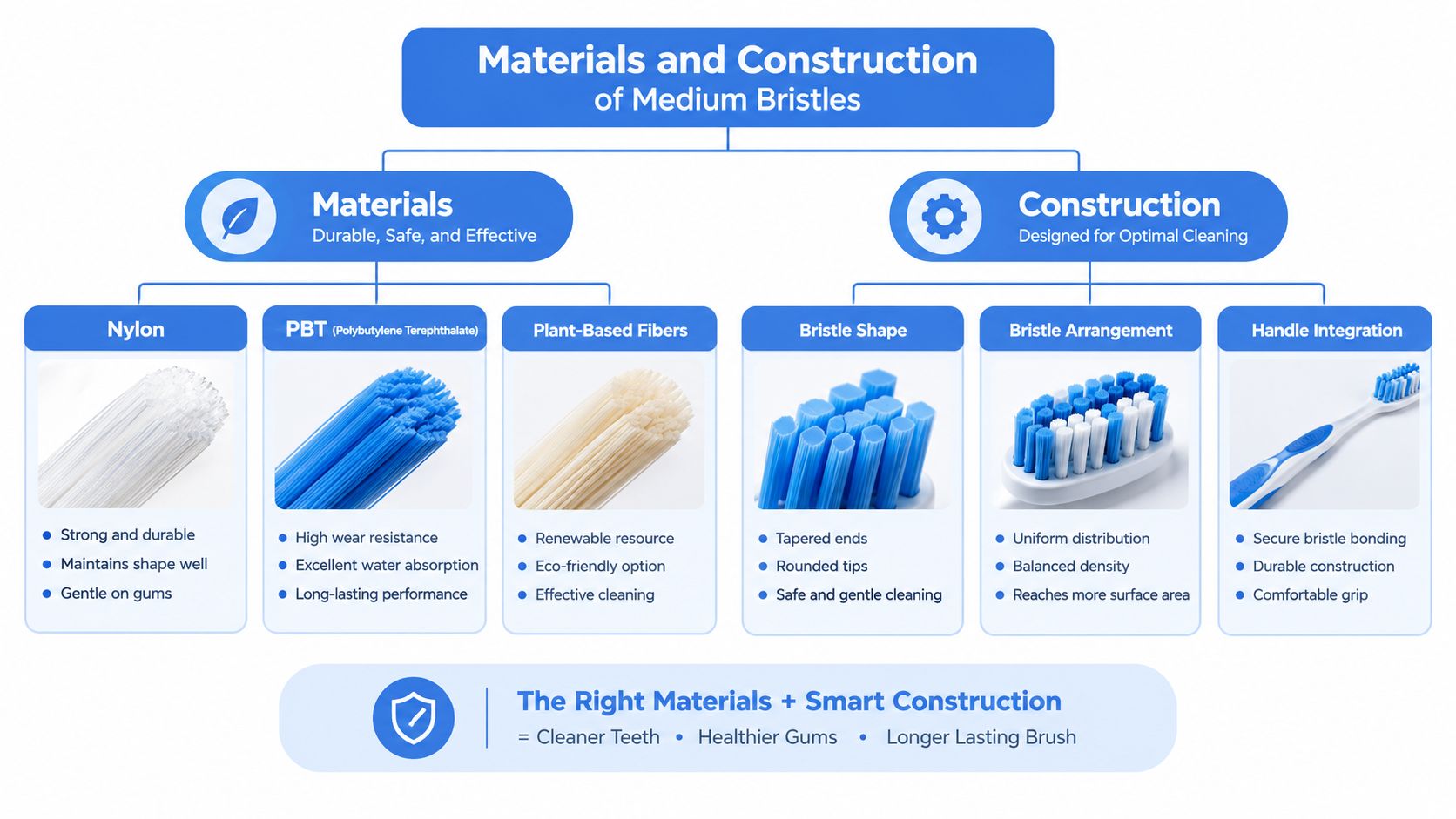
Nylon remains common in professional brush construction because it provides consistent stiffness, moisture resistance, and predictable performance during repeated wet use. Those qualities make it easier to judge how much pressure the filaments can accept before they collapse, drag, or lose their working shape.
Material selection still depends on the job and the maintenance routine. Synthetic filaments suit environments with frequent water exposure, cleaning chemicals, and rinsing. Plant-based fibers and recycled materials appear in more brush products, but the medium label does not identify a brush's environmental footprint, service life, or disposal options. This overview of bristle materials and sustainability considerations discusses plant-based fibers, recycled plastics, and the continued use of nylon for durability and moisture resistance.
For a comparison outside window cleaning, how Evo Dyne Products restores shine shows how filament material, contact pressure, and surface sensitivity work together. The substrate changes, but the construction principles remain useful when selecting a brush for precision cleaning.
The right bristle isn't determined by the dirt alone. The substrate underneath the dirt matters just as much. A hard brush may remove a stubborn deposit quickly, but that speed isn't useful if it scratches a frame or damages a coating. A soft brush may be safe on a delicate screen, but it can fold over when faced with compacted debris.
Bristle diameter is one of the main performance drivers. Industrial brush guidance notes that larger-diameter bristles support heavier cleaning but can be more prone to breakage, while smaller-diameter bristles are more flexible and tend to last longer. A medium-bristle brush occupies the middle of that trade-off, which is why it often works well as a general-purpose choice around glass. This industrial comparison of bristle diameter and performance explains the relationship in more detail.
| Bristle Type | Scrubbing Force | Surface Safety | Ideal Use Case |
|---|---|---|---|
| Soft | Light and flexible | Highest tolerance for delicate contact, provided grit is rinsed away | Dusty screens, light surface film, delicate glass-adjacent finishes |
| Medium | Controlled force with useful flex | Balanced protection when pressure and material are appropriate | Frames, tracks, sills, screens, and routine grime |
| Stiff | Strong removal of compacted debris | Greater risk of marking or scratching delicate surfaces | Durable masonry, heavily soiled utility areas, and carefully controlled spot work |
Soft bristles work best when the contamination is loose or the surface requires a gentle touch. They're also useful when the cleaning solution and rinse water are doing most of the work. The limitation is simple: if the bristles bend before they can agitate the deposit, the operator may compensate by pressing harder.
Stiff bristles have the opposite problem. They can cut through heavier buildup, but they give the cleaner less margin for error. The wrong material, excessive pressure, trapped grit, or an unsuitable chemical can turn effective agitation into surface damage. Chemical resistance also varies by filament material, so firmness alone doesn't tell you whether a brush is suitable for repeated exposure to a cleaning solution.
Medium bristles are not automatically safe for every surface. They're a compromise tool, and compromises work only when the operator checks the substrate first. Test an inconspicuous area, keep abrasive particles rinsed out of the brush, and let the water or cleaning solution carry part of the load.
Professional window cleaners use only two methods for cleaning windows: the squeegee method or a pure-water system. The brush has a supporting role in the first method and a central role in the second.
With the traditional approach, the cleaner applies solution with a washer or cloth, agitates the surface where needed, and removes the dirty liquid with a rubber blade. The blade should be wide enough to clear the glass in about two pulls, with overlapping strokes to reduce the chance of leaving lines. This squeegee workflow guide describes the importance of deliberate pulls and overlap.
A medium bristle brush is most valuable here around the glass. Use it on the track, corners, frame recesses, and screen before wiping or rinsing the area. Don't drag loosened grit across a clean pane, and don't assume that a strong scrubbing motion is better than several controlled passes.
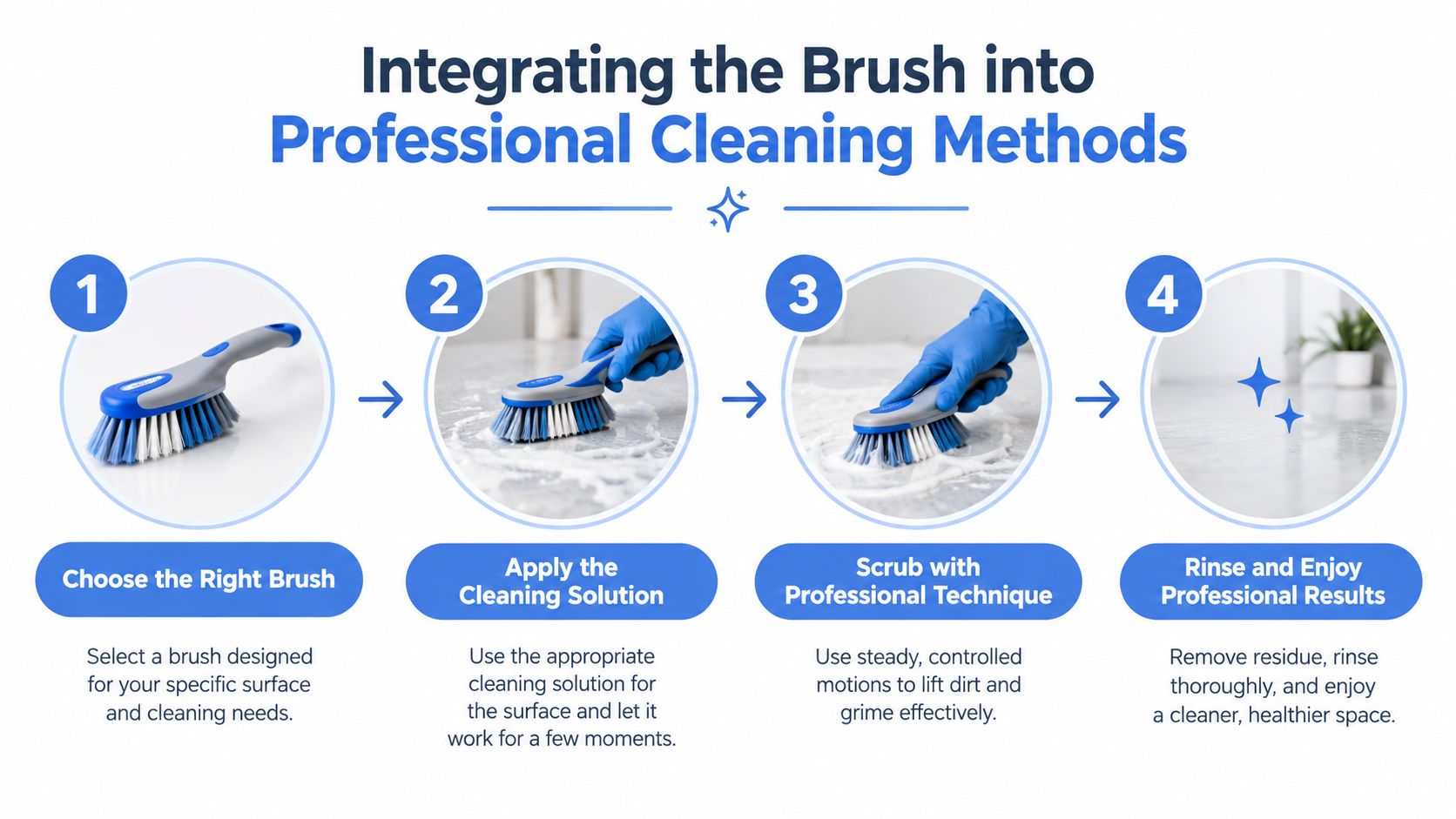
The sequence is straightforward:
A pure-water system changes the brush from a supporting tool into the main agitation tool. Filtered or deionized water travels through a hose inside the pole and reaches the brush head. The cleaner agitates the glass and surrounding surfaces, then uses the water flow to rinse away loosened contamination. The glass dries without mineral spots or residue when the water is sufficiently purified. This professional explanation of water-fed pole cleaning describes that process.
The brush must make contact without being forced into the surface. Work methodically across the pane, pay attention to edges and frames, and use the rinse flow to carry dirt downward and away. A medium bristle option can be useful where the work includes more than light dust, but the final choice still depends on the glass, frame material, and contamination.
For a closer look at brush selection within this workflow, see water-fed pole window cleaning brush guidance. The brush doesn't create pure water, and it doesn't guarantee a spotless result by itself. It provides the mechanical contact that allows the rinse to remove what the bristles have loosened.
A medium bristle brush proves its value when one property presents several cleaning problems. Dust may sit on a screen, compacted soil may fill a track, and residue may collect along a commercial entrance frame. The brush must loosen that material while protecting the substrate, especially when it is used with a pure-water system.
At residential properties in Tempe, Chandler, and Gilbert, common applications include screens, sills, and sliding-door tracks. Dust and pollen settle into these narrow spaces, where a cloth has limited reach. Medium bristles provide controlled agitation without encouraging the excessive pressure that a stiff brush can invite. Use lighter contact on painted or weathered finishes, and inspect the surface before working across the full area.
Flagstaff properties can require the same attention to frames, screens, and tracks, but local conditions do not determine the brush setting by themselves. Check the finish, debris, and condition of the window first. Cold-weather wear, aged coatings, or damaged frames can make a normally suitable brush inappropriate for that particular task.
Commercial work adds repetition, larger surfaces, and more varied substrates. A car dealership may combine broad glass areas with frames needing regular maintenance. A medical office may require careful work around finished surfaces and busy entrances. High-rise condominiums and professional stadiums can pair expansive glass with difficult-to-reach frames, screens, ledges, and other narrow surfaces.
In Denver and Las Vegas, exterior glass and surrounding frames may carry urban grime or mineral residue. Do not attack those deposits automatically with a stiff brush. First determine whether the material is loose soil, a bonded deposit, or a defect in the surface. Then select the least aggressive process likely to remove it, increasing pressure only when the substrate can tolerate it.
For frames, tracks, and screens, medium bristles can offer a useful balance between reach and cleaning force. They provide more agitation than soft bristles while reducing the gouging risk associated with stiff alternatives. This industrial brush guidance for semi-smooth surfaces supports evaluating the surface and debris before choosing the brush.
Scottsdale properties may include both residential and commercial work, so the same brush can suit one task and fail on another. Finish, debris size, access, and pressure control matter more than the property category. In practice, the brush is a precision tool for the surrounding substrate, not merely a scrubber for the glass.
Choosing a medium bristle brush starts with the surface, not the product name. Check whether you're cleaning bare glass, coated glass, vinyl, painted metal, aluminum, mesh, tile, or masonry. Then consider the size of the debris and whether the brush will contact a chemical solution repeatedly.
Use this order before putting the brush into service:
Industrial references describe medium bristles as a balance between cleaning strength and surface protection, but they also make clear that the best choice depends on surface type, chemistry, and debris size. Stiff bristles can still scratch delicate materials when the operator uses the wrong pressure or material. This industrial discussion of brush selection and surface protection is useful when a general-purpose label doesn't provide enough information.
Rinse the brush thoroughly after each job. Flush out grit, cleaning solution, and loose debris rather than allowing them to dry into the bristle bed. Shake or drain away excess water, then store the brush where air can circulate and the filaments can dry.
Inspect it before the next job. Replace or repair the brush when the bristles stay flattened, the bed loosens, the block cracks, or embedded debris won't rinse out. A worn brush changes contact pressure and can make the operator work harder, while a contaminated brush can transfer soil back onto a clean surface.
For a wider equipment checklist covering poles, brush heads, squeegees, and related tools, review professional window cleaning equipment recommendations. A brush that lasts longer isn't automatically the right brush, but a brush that is cleaned, dried, and inspected will give you more consistent control and create less avoidable waste.
Professional Window Cleaning provides residential, commercial, high-rise, and water-fed pole window cleaning, with brush selection matched to frames, tracks, screens, and glass rather than treated as an afterthought. Visit Professional Window Cleaning to request service and have your windows, surrounding frames, and difficult-to-reach areas cleaned with the appropriate method.
Read our blog posts regularly and keep learning.