Care and Maintenance
Window Squeegee Rubbers: A Complete Reference Guide
Window squeegee rubbers explained — types, sizes, materials, how to measure, replace, and pick the right rubber for clean, streak-free glass every time.


Professionals primarily use two window-cleaning methods, the squeegee and the pure-water system. Window cleaning became a recognizable modern trade in the 19th century, and today the right method still depends on the glass, access, contaminants, weather, and safety requirements.
The popular advice often makes window cleaning sound like a choice between vinegar, paper towels, and a sunny afternoon. That misses the practical issue. A clean result depends less on a favorite household mixture than on matching the method to the surface and the working conditions.
The squeegee method gives direct control over solution, agitation, and edge detailing. The pure-water system uses filtered water, a hose, and a water-fed pole to clean exterior glass, particularly where ladder-free access is safer and more efficient. Both methods can produce excellent results when used correctly.
These window cleaning tips apply differently to homeowners, commercial property managers, and high-rise teams. Accessible interior panes may suit careful squeegee work, while upper exterior glass may call for pure water and specialized access planning. Professional Window Cleaning has served residential, commercial, and high-rise properties since 1999 in Las Vegas, Phoenix, Denver, and Scottsdale.
The squeegee method remains the control-focused choice for window cleaning. Apply solution to the glass, loosen soil with a washer or cloth, then remove the liquid with a rubber blade in deliberate strokes. The sequence is straightforward. Consistent results depend on pressure, blade angle, rubber condition, and overlap.
Keep the blade in steady contact with the glass. Hold it at roughly a 45-degree angle, use controlled downward or side-to-side strokes, and overlap each pass enough to avoid narrow strips of solution. Finish with a dry detailing cloth around frames, corners, and remaining moisture.
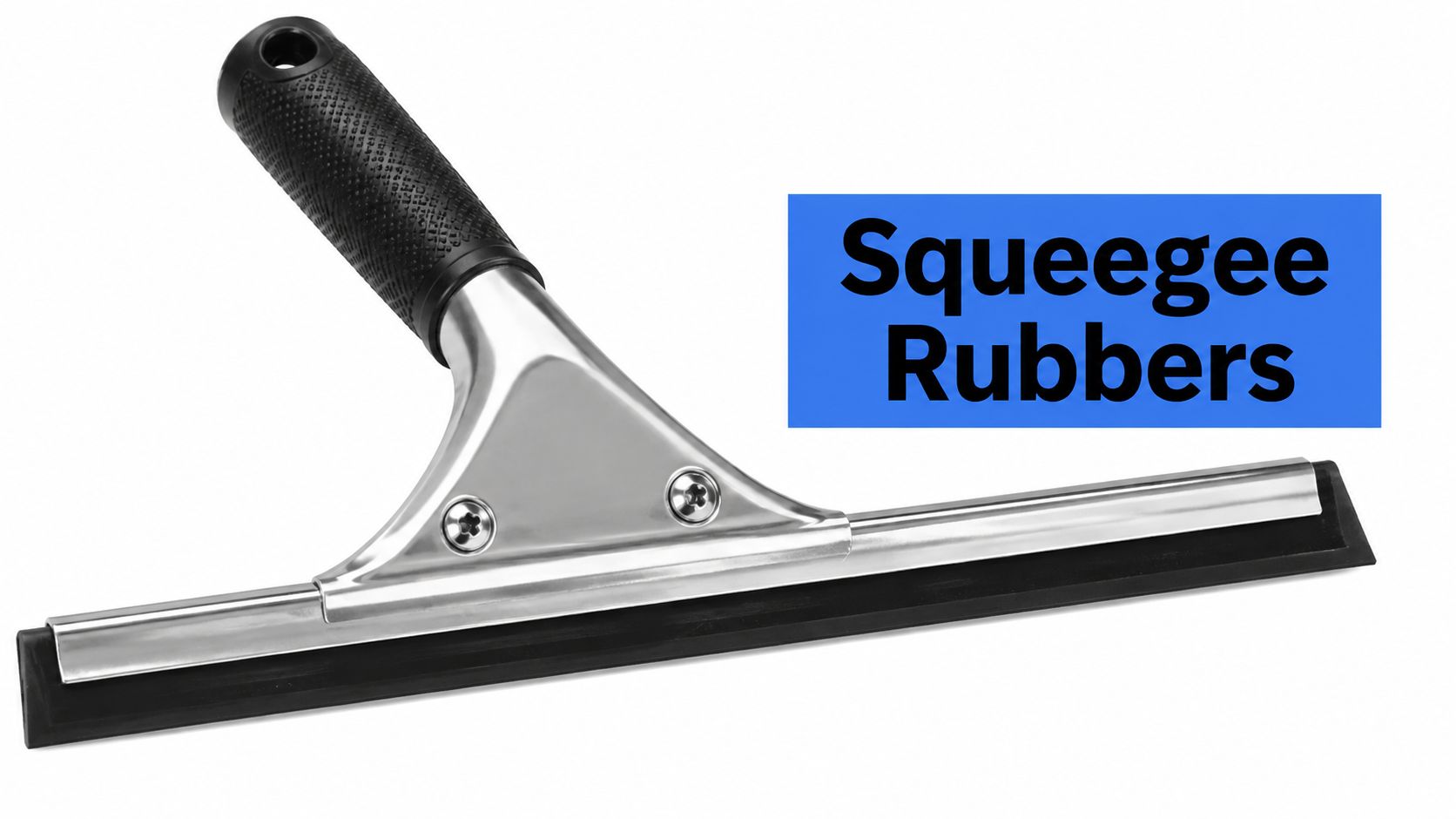
Practical rule: A worn or nicked rubber blade can create streaks despite sound technique. Replace it when it leaves skips, lines, or uneven channels. Extra pressure rarely solves the problem.
Squeegee work fits interior panes, accessible residential windows, detailed commercial glass, and surfaces with stubborn localized soil. It also provides immediate visual feedback, allowing the cleaner to address fingerprints, oily marks, paint residue, and heavily soiled edges while the solution is still present.
Use a professional-grade solution that rinses cleanly. Keep the channel and rubber free of grit, wipe the blade between strokes, and prevent dirty water from collecting along the sill. In hot, dry areas such as Las Vegas, Phoenix, and Scottsdale, clean manageable sections so the solution does not dry before the blade reaches it.
For accessible storefronts and interior panes, this method trades reach for precision. The cleaner controls agitation, water removal, and edge detailing at close range. Exterior glass at height can call for a different approach because ladders, lifts, and prolonged handling increase exposure. Review the pure-water window washing guide before choosing equipment for higher exterior work.
A squeegee is not automatically better than a pure-water system. The right choice depends on glass condition, access, weather, and the required finish. Homeowners can use it on reachable panes, commercial crews can apply it to detailed storefront work, and elevated teams should weigh direct control against access and safety requirements.
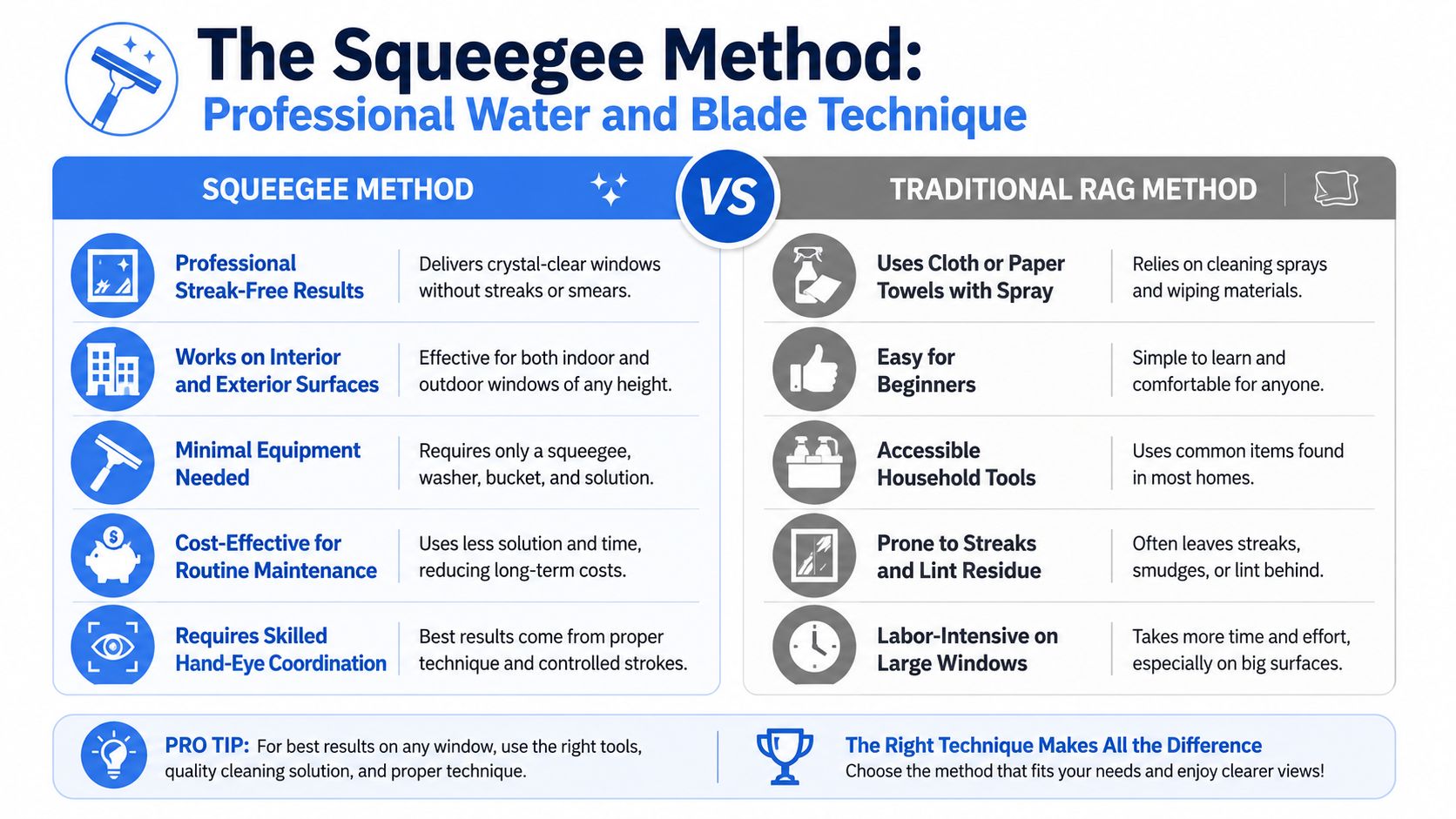
The comparison shows why a rubber blade removes solution more consistently than a loose rag dragged across the pane.
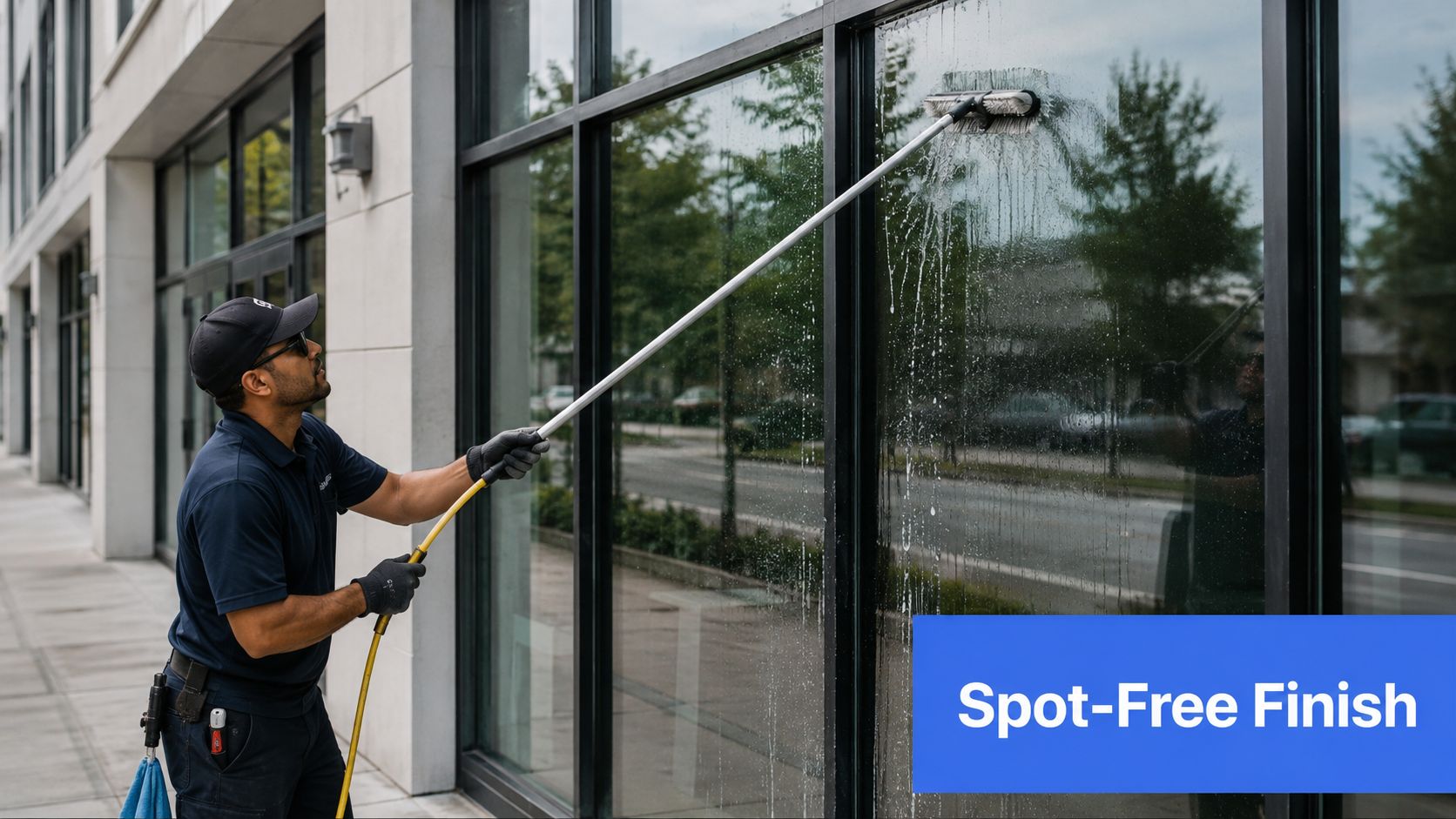
A pure-water system replaces soapy solution and blade removal with mineral-free rinsing. Tap water passes through filtration, travels through a hose and water-fed pole, and reaches a brush at the window. The brush loosens soil, while purified water carries it away and dries without soap residue or mineral spots. Follow this pure-water window cleaning guide when setting up the process.
This method suits exterior glass, upper stories, commercial façades, and properties where ground-based work reduces ladder use. A pole can keep the technician on a safer surface, but it does not remove the need to evaluate wind, reach, footing, nearby power lines, landscaping, and the condition of the glass.
The system depends on clean filtration, suitable water quality, and equipment matched to the window layout. Monitor the filters, keep grit out of the brush, and choose a pole length and brush head that preserve control. Excessive reach can make it harder to work around projections, narrow frames, and recessed panes.
Rinse thoroughly, then let the glass dry naturally. Shade, wind, low humidity, heat, and surface contamination all affect drying. In Phoenix and Las Vegas, direct sun can shorten working time and expose poor rinsing technique. Plan around those conditions rather than treating pure water as a guarantee of a spot-free result.
Commercial storefronts, medical offices, car dealerships, stadium viewing areas, and high-rise condominiums in Denver or Scottsdale may benefit from this system. Each property still needs a defined access route, equipment setup, and drying plan. Reach and speed may favor pure water outdoors, while close-range detailing can still favor a squeegee.
The modern water-fed pole has a documented commercial milestone in 1997, when U.K. window cleaner Craig Mawlam launched a pole combining telescopic reach with water purification, according to this history of window cleaning equipment.
The best cleaners inspect before they wet the glass. A quick walkthrough identifies the window type, access limitations, existing damage, and contamination that ordinary maintenance cleaning won't remove. It also prevents a technician from treating every pane as though it has the same coating, frame, exposure, or risk.
Look for hard-water deposits, mineral buildup, paint splatters, oxidation, construction residue, failed seals, scratches, cracked panes, and damaged screens. A squeegee may be appropriate for routine soil, while a pure-water pole may suit exterior maintenance. Neither method should be treated as a universal fix for etched glass, deteriorated seals, or a coating that requires manufacturer-specific care.
Homeowners should point out fogged insulated units, recently installed windows, tinted film, low-E glass, and panes with unusual reflections or discoloration. Guidance from Marvin recommends checking for special coatings before cleaning and avoiding abrasive materials and direct sunlight, because the wrong approach can damage the surface or encourage streaking. Read the manufacturer guidance for washing windows like a professional before selecting a cleaner or tool.
A useful assessment includes the interior and exterior faces, sill condition, screens, nearby landscaping, and any route the technician must use to reach the work area. Commercial property managers should identify tenant-sensitive spaces, loading areas, security restrictions, and operating hours before the crew arrives.
Ask the service provider what it will inspect and how it records findings. A clear pre-service record can distinguish pre-existing scratches or failed glazing from conditions created during cleaning. That protects the homeowner, the facility manager, and the cleaning team.
For properties in Denver and Scottsdale, seasonal dust, sun exposure, and elevation can create different maintenance needs from one building to the next. A proper walkthrough turns generic window cleaning tips into a method decision grounded in the actual property.
Water use deserves attention, especially in dry service regions. Window cleaning doesn't need to be wasteful, but sustainability claims should be specific. Ask what happens to runoff, whether water is captured, how filtration works, and whether recovered water is suitable for the next task.
A recycling setup can capture and filter runoff for reuse where the equipment and job conditions permit. The practical value extends beyond environmental messaging. Capturing water can help teams control discharge around entrances, green areas, sidewalks, and sensitive commercial sites.
A medical office may want cleaning procedures that support broader sustainability policies. A commercial property pursuing LEED certification may need records of operational practices. A residential community in Denver may prioritize responsible maintenance, while a Scottsdale property manager overseeing several buildings may need a repeatable process across multiple sites.
Ask for a plain explanation rather than accepting a vague claim that a company is “green.” A useful conversation covers:
The method still has to fit the glass. Pure-water exterior work may reduce solution use and support a ground-access workflow, while squeegee cleaning can be more practical for interior detailing and heavily contaminated areas. Sustainability shouldn't override finish quality or safety.
Phoenix properties, including commercial buildings and medical offices, may also have site-specific water restrictions or runoff requirements. Confirm those requirements before scheduling. A responsible provider should adapt the process instead of forcing the same setup onto every property.
Height changes the job completely. A window that looks straightforward from the ground may require a harness, rope system, scaffold, aerial lift, or another controlled access method. OSHA-linked reporting has cited 88 window-cleaning accidents over a 15-year period, with 62 fatalities, and more recent U.S. occupational reporting cited seven window-washer deaths from January 2022 through December 2023, with all but one involving falls from heights. The figures are reported in this window-cleaning safety discussion.
Those figures explain why safety can't be an afterthought. A water-fed pole can reduce ladder exposure in suitable conditions, but it isn't a substitute for an access plan when the pole can't reach safely or the building creates fall hazards.
Property owners and managers should ask about training, insurance, equipment inspection, rescue procedures, and weather limits. Request current insurance certificates before allowing work to start. Building-specific requirements, roof access rules, anchor points, tenant notifications, and restricted areas should be communicated in advance.
A low price doesn't compensate for an uncontrolled fall hazard.
High-rise condominiums in Denver and Las Vegas, commercial office towers, stadiums, and architecturally complex buildings all require different logistics. An aerial lift may suit one façade, while a rope-access system or ground-based pole may suit another. The method decision should account for wind, fall clearance, pedestrian traffic, glass condition, and emergency access.
UK commentary has also noted that about 30 workers suffer serious injuries from high window cleaning every year, reinforcing the need for ladder discipline and fall protection in major markets. The same source discussion covers safer alternatives such as water-fed poles and rope-access systems.
For a practical overview of equipment and planning, review this guide to window-cleaning safety equipment. Professional Window Cleaning has operated since 1999 and serves residential, commercial, and high-rise properties in Las Vegas, Phoenix, Denver, and Scottsdale.

Weather affects both cleaning quality and crew safety. Direct sun can dry solution too quickly, strong wind can move poles and equipment, and rain can interrupt exterior work. The best appointment time depends on the building orientation, local exposure, glass type, and access method.
In hot Arizona locations, early-morning or late-afternoon scheduling can give technicians more workable surface conditions than the hottest part of the day. Tempe, Chandler, Gilbert, Phoenix, and Scottsdale properties may also collect dust quickly, so maintenance timing should reflect nearby construction, traffic, landscaping, and irrigation.
Spring can suit a pre-season refresh for highly visible dealerships and storefronts. Fall cleaning can remove accumulated dust and pollen before a lower-maintenance period. Clear winter conditions may work for some Denver or Flagstaff properties, but cold temperatures, wind, ice, and access conditions must be evaluated before the crew begins.
Avoid booking immediately after a heavy rain or wind event if the building has loose debris, muddy sills, or contaminated runoff. Cleaning in poor conditions can force rework and may expose technicians to unnecessary hazards.
A practical scheduling discussion should cover:
A quarterly plan may suit one home, while a busy storefront or medical office may need more frequent attention. Don't choose frequency from a generic calendar. Ask the cleaner to consider local climate, surrounding activity, glass area, and the appearance standard the property needs to maintain.
A one-time cleaning removes accumulated soil. A maintenance program manages the conditions that bring it back. Residential owners may want periodic interior and exterior service, while commercial operators often need predictable appearance, access coordination, and records that show when work was completed.
The right schedule depends on the property, not a universal promise. A car dealership with large display windows has a different presentation requirement from a private home. A medical office may need consistent professional appearance, while a high-rise condominium association must coordinate access, residents, balconies, common areas, and façade conditions.
Start with an initial deep clean if the glass has heavy buildup. Recurring visits then become more efficient because technicians can address ordinary soil before it turns into a larger restoration problem. Ask for seasonal adjustments when dust, pollen, wind, landscaping, or local construction changes the rate of buildup.
A useful proposal should identify:
Monthly commercial office cleaning, bi-weekly dealership service, weekly medical-office work, and quarterly residential maintenance can all be reasonable examples when they match the property's needs. They shouldn't be presented as automatic requirements.
For property managers in Las Vegas, Phoenix, Denver, and Scottsdale, recurring service also simplifies vendor coordination across multiple sites. A clear scope avoids misunderstandings about what “clean windows” includes. If you're promoting a local cleaning company, this marketing for window cleaners resource offers relevant business context, but the maintenance decision itself should remain based on building conditions and service outcomes.
A window-cleaning job is incomplete until the result is checked at the property. Inspect the glass from both sides, using different angles and available interior lighting. This reveals edge residue, missed panes, remaining marks, disturbed screens, and access areas that were not completed.
The inspection should confirm that the chosen method suited the glass. Squeegee work needs close review around corners, frames, seals, and detailed edges. Pure-water cleaning should be checked after the rinse dries, especially on mineral-contaminated glass or surfaces with unusual coatings. A spotless result depends on both technique and the condition of the water.
Homeowners can join a short walkthrough and identify concerns immediately. Commercial managers should review representative areas, such as entrances, tenant spaces, showrooms, patient-facing rooms, and prominent façades. High-rise associations may also need photographs, access notes, and completion records for owners or residents.
Quality check: View each pane from both sides and several angles. Glass can look clear from one position while a line or spot remains visible from another.
Photo documentation is useful when exterior access is difficult or the commercial scope is large. Store the service date, areas completed, method used, and observations with the property records. These notes help managers compare recurring work, communicate with tenants, and separate cleaning defects from pre-existing glass damage.
Quality assurance also requires a clear response process. State whether the priority is dealership presentation, a professional medical-office environment, or unobstructed views in a Scottsdale home. The provider should record concerns and explain whether a mark calls for another cleaning pass, specialized restoration, or glass repair. Clear documentation supports practical SEO for tradies Melbourne service communication without replacing an on-site assessment.
Professional Window Cleaning has served residential, commercial, and high-rise customers since 1999. Its service areas include surrounding communities in Las Vegas, Phoenix, Denver, and Scottsdale. Method-specific planning still depends on glass condition, access, climate, and the required finish.

| Item | Implementation complexity | Resource requirements | Expected outcomes | Ideal use cases | Key advantages |
|---|---|---|---|---|---|
| The Squeegee Method: Professional Water and Blade Technique | Medium, requires practiced manual technique | Low, squeegee, cleaning solution, regular blade replacement, trained labor | Streak-free results when executed properly; good control for detail work | Residential and commercial routine cleaning; accessible exterior/interior windows | Cost-effective, minimal equipment, proven professional results |
| Pure Water System Technology for Spot-Free Results | Medium–High, system setup and operator training needed | High, deionized water system, poles, filtration equipment, maintenance | Consistently spot-free, chemical-free finish with minimal drying time | High-rise, storefronts, car dealerships, modern glass façades | Reliable spot-free results, eco-friendly, safer for heights |
| Pre-Cleaning Inspection and Surface Assessment | Low–Medium, requires experienced evaluator | Low, time, trained personnel, basic documentation tools | Identifies deposits/damage and selects optimal cleaning method | All jobs, especially older windows or properties with known issues | Prevents damage, enables accurate quotes, improves cleaning effectiveness |
| Proper Water Recycling and Environmental Responsibility | Medium–High, integration and system maintenance required | Medium–High, collection, filtration/purification equipment, monitoring | Reduced freshwater use and lower operational waste | Eco-conscious properties, LEED projects, water-restricted areas | Lowers water consumption and costs; supports sustainability goals |
| Safety Equipment and High-Rise Window Access Protocols | High, strict safety procedures and certifications | High, OSHA-compliant harnesses, rope/scaffold systems, aerial lifts, training | Safe, compliant access for high-elevation cleaning; reduced risk | High-rise condominiums, stadiums, tall commercial buildings | Ensures worker safety, regulatory compliance, enables complex jobs |
| Seasonal Timing and Weather Optimization Strategies | Low, scheduling and weather assessment | Low, planning tools and flexible scheduling | Improved drying, fewer streaks, longer-lasting clean appearance | Regions with variable weather, dealerships, seasonal high-visibility periods | Enhances result quality and operational efficiency through timing |
| Commercial and Residential Maintenance Programs | Medium, program design and logistics management | Medium, recurring staff, scheduling systems, adjustable frequency | Consistent appearance, extended window lifespan, predictable budgeting | Property managers, dealerships, medical offices, homeowners | Predictable service, cost savings with regular plans, priority scheduling |
| Post-Cleaning Quality Assurance and Customer Satisfaction Verification | Low–Medium, inspections and follow-up workflows | Low, trained staff, documentation/photo tools, follow-up processes | Verified quality, documented work, timely correction of issues | Commercial properties needing records, high-value residential clients | Builds trust, ensures issues are corrected, strengthens customer retention |
The best window cleaning tips don't begin with a favorite chemical. They begin with the glass, the access route, and the result the property needs.
For accessible routine work, careful squeegee cleaning offers direct control. It works especially well on interior panes, detailed edges, and glass where the technician needs to manage solution and blade movement closely. Clean tools, a sound rubber blade, proper overlap, and a final detailing pass matter more than a complicated recipe.
For suitable exterior and raised applications, a pure-water system can provide a ladder-free workflow and a spot-free finish when the filtration system, brush, pole, rinse, and drying conditions are properly managed. It isn't appropriate to assume that pure water will remove every defect. Hard-water etching, oxidation, paint, scratches, failed seals, and special coatings require inspection and sometimes a different service.
Safety sets the boundary for do-it-yourself work. Falls remain the dominant hazard in window cleaning, and difficult access should be assigned to trained, insured professionals with a documented plan. A homeowner may safely handle accessible glass, but a high-rise condominium, stadium, office tower, or complex commercial façade needs equipment and procedures suited to the building.
Weather matters in Arizona, Nevada, and Colorado. Schedule around direct heat, wind, rain, cold, and the building's exposure. A morning appointment may be more workable for a hot Phoenix storefront, while a Denver property may need a clear weather window that supports safe access and drying.
The final piece is consistency. Use a pre-cleaning inspection, match the method to each surface, document unusual conditions, complete a post-cleaning walkthrough, and establish recurring service when appearance and access justify it. Property managers should keep scopes, photos, service dates, and notes. Homeowners should record damaged or coated glass before work begins.
Professional Window Cleaning provides residential, commercial, and high-rise window cleaning for properties in Las Vegas, Phoenix, Denver, Scottsdale, and surrounding service areas. A conversation about the glass and access can help determine whether squeegee work, pure water, or a combination of the two is appropriate.
Professional Window Cleaning offers residential window cleaning, commercial maintenance, and high-rise access planning built around the two professional methods, squeegee and pure water. Visit Professional Window Cleaning to discuss your property, inspection needs, scheduling, and quality documentation.
Read our blog posts regularly and keep learning.