Care and Maintenance
Water Fed Pole Window Cleaning Brush: A Complete Guide
Learn how a water fed pole window cleaning brush works, the best brush types, pole compatibility, and pro tips for streak-free, ground-level window cleaning.


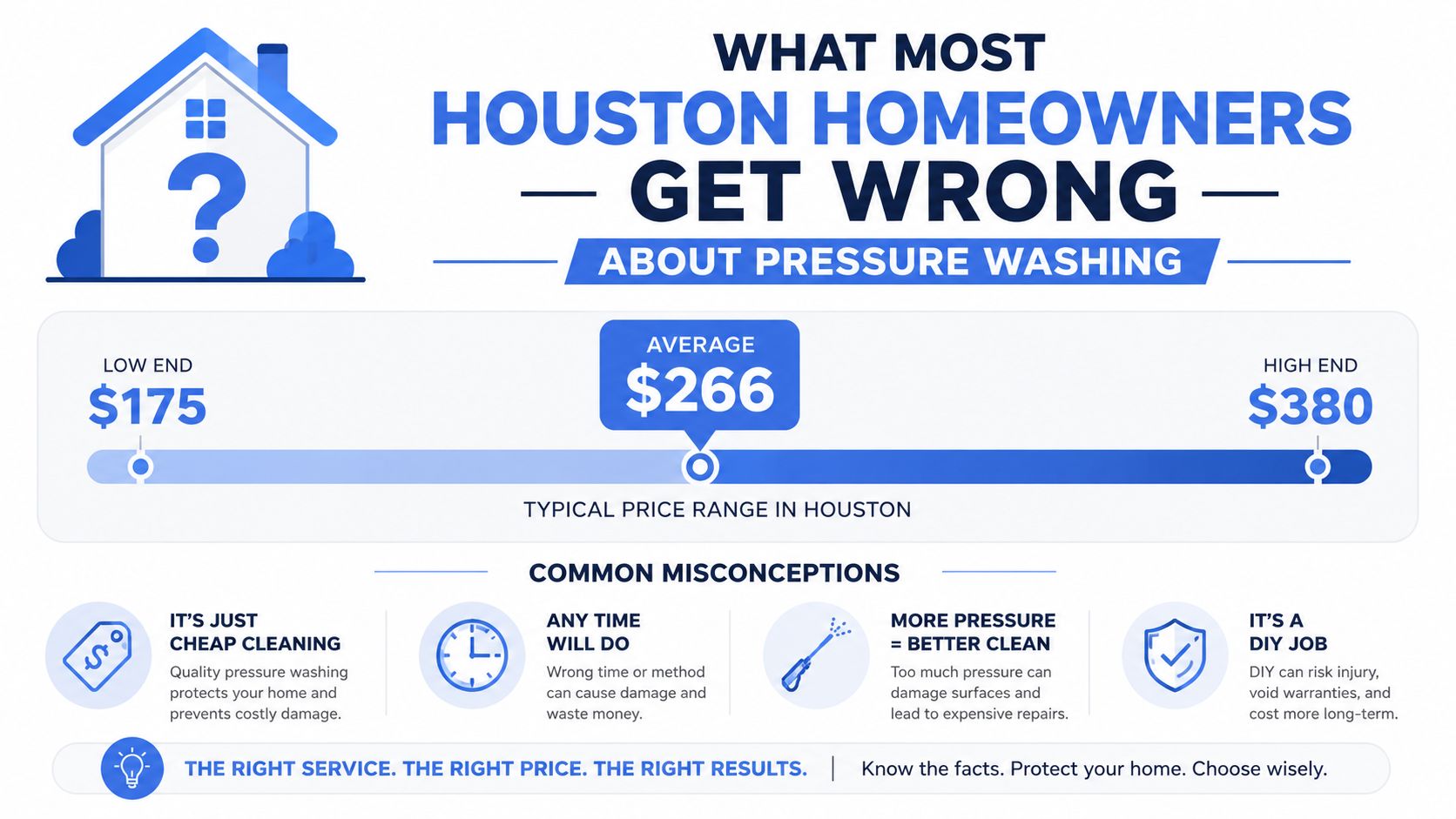
$175 to $380 is the normal Houston house-wash band, and the average job lands at $266. If that sounds close to what you'd pay to get the siding back from the pollen, mildew, and street grime, you're in the right market.
You're probably staring at streaky siding, a driveway that's gone gray, or a roof with black streaks, then comparing pressure washing services Houston quotes that don't seem to match. That's not because the market is confusing by accident. It's because Houston is full of small operators, different machines, different methods, and very different levels of care.
The first mistake is chasing the cheapest quote. In Houston, that is how people end up with water blown under siding, paint lifted off trim, or concrete that looks worse after the job than before it started. The market is crowded, but the skill level is all over the place, and that is why the quote spread looks so messy.
The second mistake is treating every surface like it wants the same treatment. It does not. Concrete, brick, stucco, wood, and asphalt shingles all have different tolerance levels, and the wrong approach can strip, etch, crack, or drive contaminants deeper into the material. Houston's pressure washing market is heavily fragmented and dominated by single-owner operations, so one company may be a real surface-care specialist while another is basically one person with a machine and a Facebook page. The same market scan shows plenty of businesses with websites and plenty without, which means you are sorting through uneven visibility as much as uneven pricing. Houston pressure washing market scan
Practical rule: if a contractor talks about the machine before they talk about your surface, keep shopping.
Price-only hiring is the easiest way to get burned. A low number can hide weak prep, no pretreatment, or a one-size-fits-all method that ignores the material.
Wrong-pressure assumptions are just as bad. A lot of damage in Houston comes from using brute force where chemistry and controlled flow would have done the job cleanly.
Skipping prep creates the last mess. If windows stay open, cars sit in the spray path, or delicate plants are not protected, you may end up paying to clean up the cleanup.

The smart buyer does not ask, “Who is cheapest?” The smart buyer asks, “Who knows how to clean my surface without wrecking it?”
Pressure washing isn't one thing. In Houston, the difference between a good result and a damaged exterior usually comes down to whether the contractor uses soft washing or high pressure. Soft wash relies on low pressure and chemistry, while high-pressure cleaning uses force to strip soil from harder surfaces.
For homeowners, that distinction matters more than branding, equipment photos, or a truck wrap. Soft washing basics and surface safety are worth understanding before you book anything, because the wrong method on the wrong material is where expensive mistakes happen.
Concrete driveways can take more force, and Houston guidance puts them in the 2,000 to 3,000 PSI range. That's appropriate when the goal is to lift embedded grime from a hard slab, not to sandblast it into dust. Brick or stone usually needs a little less aggression, around 1,500 to 2,500 PSI.
Wood, stucco, vinyl, and asphalt-shingle roofs are different. Those surfaces are better served by 500 to 1,000 PSI or soft washing, because higher pressure can strip paint, gouge wood, crack stucco, or damage roof granules. That's not theory. It's the practical reason professionals stop treating pressure like a badge of honor and start treating it like a control setting. Houston contractor-grade equipment can go up to 3,200 PSI at 8 GPM and 240°F when the job really calls for aggressive cleaning of embedded soil, calcium, or grease. Houston surface and equipment guidance
| Surface | Better method | What you want |
|---|---|---|
| Asphalt-shingle roof | Soft wash | Gentle cleaning, no granule loss |
| Stucco or painted siding | Soft wash | Clean finish, no cracking or stripping |
| Brick or stone | Controlled pressure | Soil removal without surface damage |
| Concrete driveway | Higher pressure | Lift stains without etching |
Bottom line: the right method is chosen by the surface, not by whatever machine the contractor happens to own.
Houston Community College's bid spec is a good sanity check for homeowners too. It calls for methods that don't spread existing stains or drive pollutants deeper into concrete, which is exactly the mindset you want on a house wash. If a contractor can't explain how they'll control runoff and protect the substrate, they're not ready for your property. Houston Community College pressure-washing bid spec
Houston pricing makes sense once you stop treating it like a flat-rate commodity. A standard house wash is usually a scoped job, not a menu item, and the final number depends on surface size, material, stains, access, and add-ons. Houston contractors price by the work in front of them, not by a canned number. On the local side, the useful benchmark is still simple. An infographic showing the average costs and price ranges for professional pressure washing services in Houston, Texas.
That range exists because Houston homes are not built alike. One owner might have painted fiber cement and a flat driveway, another has stucco, brick, a screened patio, and a roof that needs soft washing, and each surface changes the labor, chemistry, and risk. In a market full of small, single-owner crews, there is no single price book that fits every property. If a quote looks too neat, it probably skips something important.
The number on the front of the estimate usually covers the main wash. Roofs, driveways, and patios are commonly priced separately in Houston, and so are extra services like stain pretreatment or more careful runoff handling. That is normal. A contractor who spells out those lines before the job starts is giving you a real estimate, not a teaser.
Price also climbs when the job is harder to do without damage. Houston heat, humidity, pollen, mildew, and storm residue all push grime into surfaces, and the wrong approach can scar siding, etch concrete, or leave streaks behind. A contractor who understands local surfaces will talk about pressure control, detergent choice, and rinse method before they ever talk about speed. That is the conversation you want.
If you want a cleaner quote, ask for an itemized scope. Don't ask for “the best price.” Ask what's included, what's excluded, and what surface protection they're planning. Then compare the scope, not just the total. If the contractor dodges those questions, keep moving. For a homeowner already thinking about exterior upkeep, FullScope Pest Control pest control insights is a reminder that Houston property care rewards people who respect risk and ignore shortcuts.
Renting a machine looks cheap until you count the damage risk. Houston homes use soft siding, mixed exterior materials, and drainage setups that punish a first-time mistake. One bad pass can strip paint, etch concrete, or force water behind siding, and the repair bill wipes out any savings fast.
A house or driveway usually takes 30 minutes to 3 hours, plus 15 to 30 minutes for prep and pack-up. That is manageable on paper. In real life, your “quick Saturday job” turns into a half-day once you move patio furniture, cover plants, tape outlets, and keep overspray off windows and trim.
DIY works on small, durable surfaces when you already know what you are cleaning and you are willing to test the pressure in an out-of-sight corner first. A small concrete pad or a simple patio rinse is one thing. A two-story siding wash is not.
If the surface can take a little abuse, the area is small, and the stakes are low, rent the machine and keep the approach simple. Houston contractors see plenty of homeowners make the same mistake, using too much pressure because they want faster results. That is how you turn an easy chore into a surface repair.
Bring in a pro for roofs, stucco, multi-story siding, and large driveways. Those jobs demand control over water intrusion, surface etching, and runoff. A contractor who works Houston every week knows how to match pressure, detergent, and rinse method to the surface instead of guessing.
That matters even more in a city where the market is fragmented and packed with single-owner outfits. Some are careful. Some are winging it. You want the operator who understands local materials, local weather, and where Houston's heat and humidity leave grime sitting on the surface.
For a useful parallel on why DIY often looks easier than it is, the homeowners' notes at FullScope Pest Control pest control insights make the same point. Cheap tools do not matter when the margin for error is thin. The bonded vs insured guide from Professional Window Cleaning is another reminder to ask what protection a contractor has before you let them work around your home.
If you only wash once a year, buying the cheapest rental rarely beats hiring someone who already knows how to protect the surface.
Start with the jobsite prep, because a serious contractor expects the same basics every time. Move cars out of the spray path, close windows, secure pets, and point out delicate plants or fresh paint. If they do not say that before the truck pulls up, they are not thinking about your property.
Then ask direct questions on the phone. Are you insured? What method will you use on stucco or shingles? Do you pretreat oil stains? What hot-water setup do you have? Those are not picky questions. They separate an actual operator from somebody who bought a washer and started advertising last week.
Houston's pressure washing market is full of single-owner outfits, which means you have to sort the careful crews from the ones guessing on the fly. Ask how they handle your surface, your runoff, and your neighborhood's weather wear. Heat, humidity, shaded walls, and irrigated concrete all change the way grime sticks, and the wrong setup can etch siding or leave streaks behind.
A professional crew shows up with eye and hearing protection, the right nozzles, and a runoff plan. They should know where the detergent is going, what happens at the downspouts, and how they will keep discharge out of storm drains. That same disciplined approach shows up in institutional work, and it is the right standard for a homeowner too, even without the formal paperwork behind it.
A good quote should show scope, not just a bottom line. If the contractor will not say whether roofs, driveways, patios, or pretreatment are included, expect surprises later. If they answer clearly, protect the surface, and explain the cleaning chemistry in plain English, you are probably dealing with someone worth hiring.
For a broader trust marker on contractor accountability, the difference between being bonded and insured matters more than most homeowners realize. And if you want an example of a system that depends on proper controls, how cellular gate openers work is a decent reminder that simple-looking service work still depends on the right setup behind the scenes.
Green flags
Red flags

Houston weather is hard on exteriors. Heat and humidity keep algae, mildew, and other organic growth active, and the damage shows up first on north-facing siding, shaded patios, and anything hit by constant irrigation. Houston's market is also fragmented, with a lot of single-owner crews offering similar-sounding services, so the difference is not marketing. It is whether the contractor knows which surface can take pressure and which one needs chemistry and restraint.
Black roof streaks call for soft wash, not a blast from a wand. Oil and tire marks on driveways need pretreatment, and some jobs need hot water to break the stain before rinsing. Gum and grease on storefront concrete are different again, which is why commercial crews use the right chemistry and controlled rinse patterns instead of raw force. Match the method to the mess, or you pay for a cleaning that still leaves the stain behind.
Short version: delicate surfaces need chemistry and control. Hard surfaces with stubborn stains need controlled pressure and the right rinse path.
A Houston-focused cost guide says cleaning frequency is commonly every 12 to 18 months in Texas, and extra services such as roofs, driveways, and patios are usually priced separately from the main wash. Texas cleaning frequency and add-on pricing That matches what homeowners should expect in this city. Let grime sit until it is obvious from the curb, and you usually turn a routine wash into a heavier, pricier job.
Bundle the surfaces that can be handled in one visit, then separate out the work that needs special care. A house wash, driveway, and patio often belong on the same ticket. Roof streaks, fragile stucco, and heavy oil staining should be quoted on their own when needed, because forcing every surface into one method is how corners get cut. Houston heat, storms, and runoff make sloppy work easy to spot later.
If you also want window work handled at the same time, some companies with broader exterior service lines can coordinate that kind of scheduling across markets like Las Vegas, Phoenix, Denver, and Scottsdale. That detail matters less than the method. The crew has to respect the surface before they touch it.

Start with the surfaces, then choose the method that fits each one. Soft wash belongs on roofs and delicate siding, while harder materials can handle controlled pressure. Get at least three written quotes that spell out roofs, siding, driveways, and any pretreatment. In Houston, vague bids are how homeowners get stuck paying for guesswork.
Before you book, check insurance, ask how runoff gets controlled, and make the contractor explain the process without hiding behind jargon. A crew that knows Houston work should talk plainly about stucco, shingles, brick, concrete, and the way our heat and storms change what a surface can tolerate. If they dodge those questions, move on.
Put the next cleaning on the calendar for 12 to 18 months out so grime does not get a head start. Shaded lots, heavy irrigation, and constant storm splash can shorten that window. That is the discipline Houston exteriors need if you want them to stay clean instead of falling behind every season.
Quick answers Houston homeowners usually want
If you want the job handled by a crew that understands exterior cleaning as a system, not just a spray gun, visit Professional Window Cleaning. They have been in business since 1999, and they offer pressure washing services that fit the kind of surface care Houston homes need.
Read our blog posts regularly and keep learning.