Care and Maintenance
How to Restore Window Glass and Frames the Right Way
Learn how to restore window glass, frames, and seals with pro methods, real tools, and honest trade-offs. A practical guide


Before you can get rid of those frustrating water spots for good, it helps to know what you’re up against. Those cloudy marks aren't just dried water; they’re actually mineral deposits, mainly calcium and magnesium, that get left behind after water evaporates. For light spotting, a simple acidic solution like vinegar can sometimes do the trick. But for the really stubborn stuff, you might need to bring in the heavy hitters.
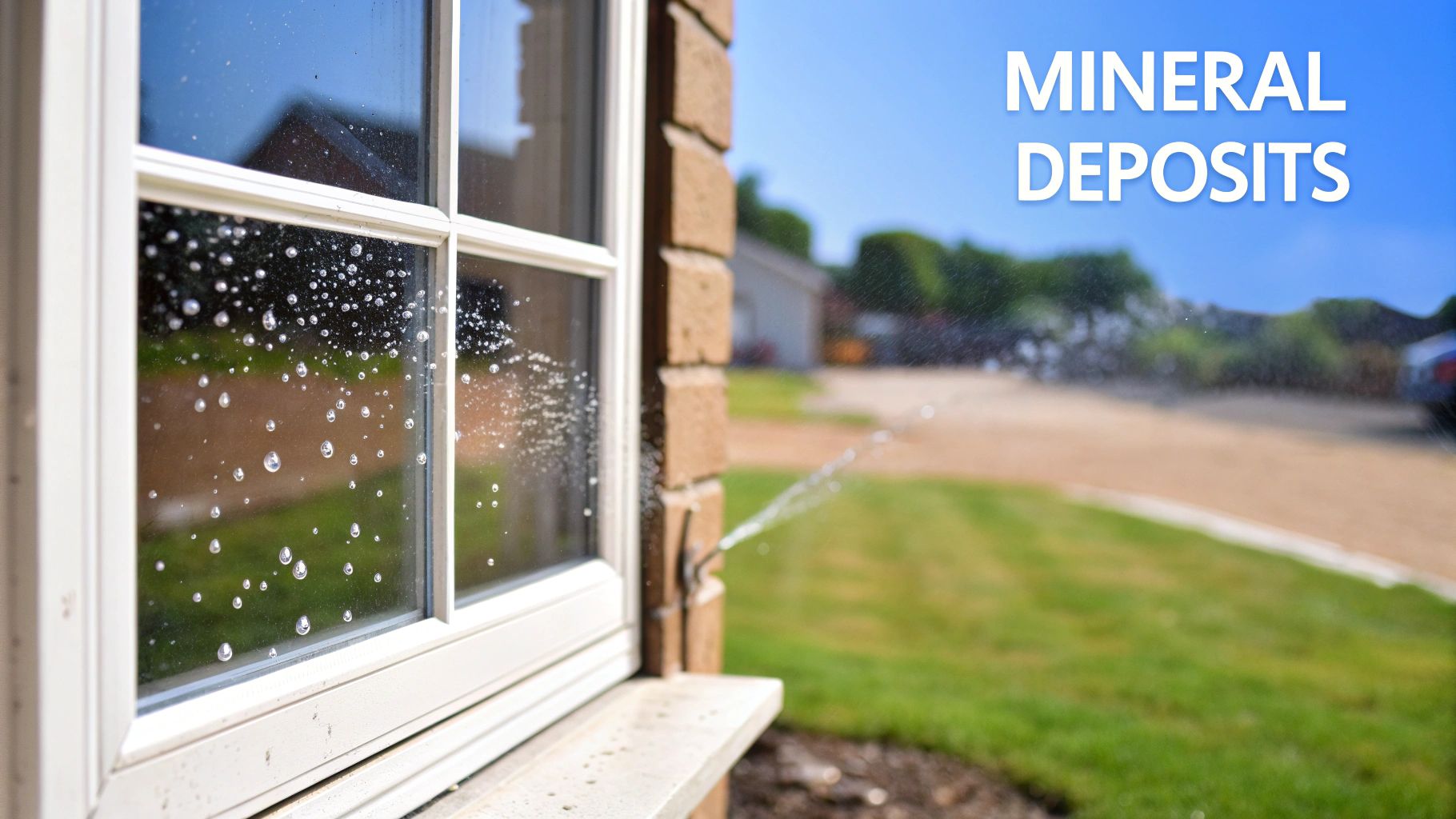
Those annoying white or milky smudges on your glass are the ghosts of evaporated water. This problem is especially common in areas with hard water, which is just water loaded with dissolved minerals.
When water from a sprinkler, a hose, or even a rainstorm hits your window and dries in the sun, the pure water disappears, but the minerals stay behind. They bond to the glass, and over time, they build up into a tough, hazy film that your average Windex just can't cut through.
So where is this mineral-packed water coming from? A few usual suspects are likely to blame. Misaimed sprinklers are probably the number one offender, repeatedly soaking windows with water that then bakes onto the glass day after day. This is a huge issue in dry climates like Las Vegas or Phoenix, where hard water is the norm.
Other common sources include:
It’s really important to know if you're dealing with a simple water spot or something much worse: etching. A water spot sits on the surface of the glass. You can remove it, either with a chemical cleaner or a bit of elbow grease. Etching, on the other hand, is permanent damage to the glass itself.
When those mineral deposits hang around for too long, their alkaline properties start to eat away at the glass. This corrosion process, called etching, creates tiny pits and roughness on the surface that looks cloudy or foggy, and no amount of cleaning will get it off.
If you run your fingernail across the affected area and feel a distinct roughness, you might be seeing the first signs of etching. This is exactly why you need to tackle water spots as soon as you notice them. The demand for effective solutions is massive—the global glass cleaner market was valued at USD 3.29 billion and is projected to keep growing, largely driven by the battle against hard water stains. You can dive deeper into these market trends in the full report on DataIntelo.com.
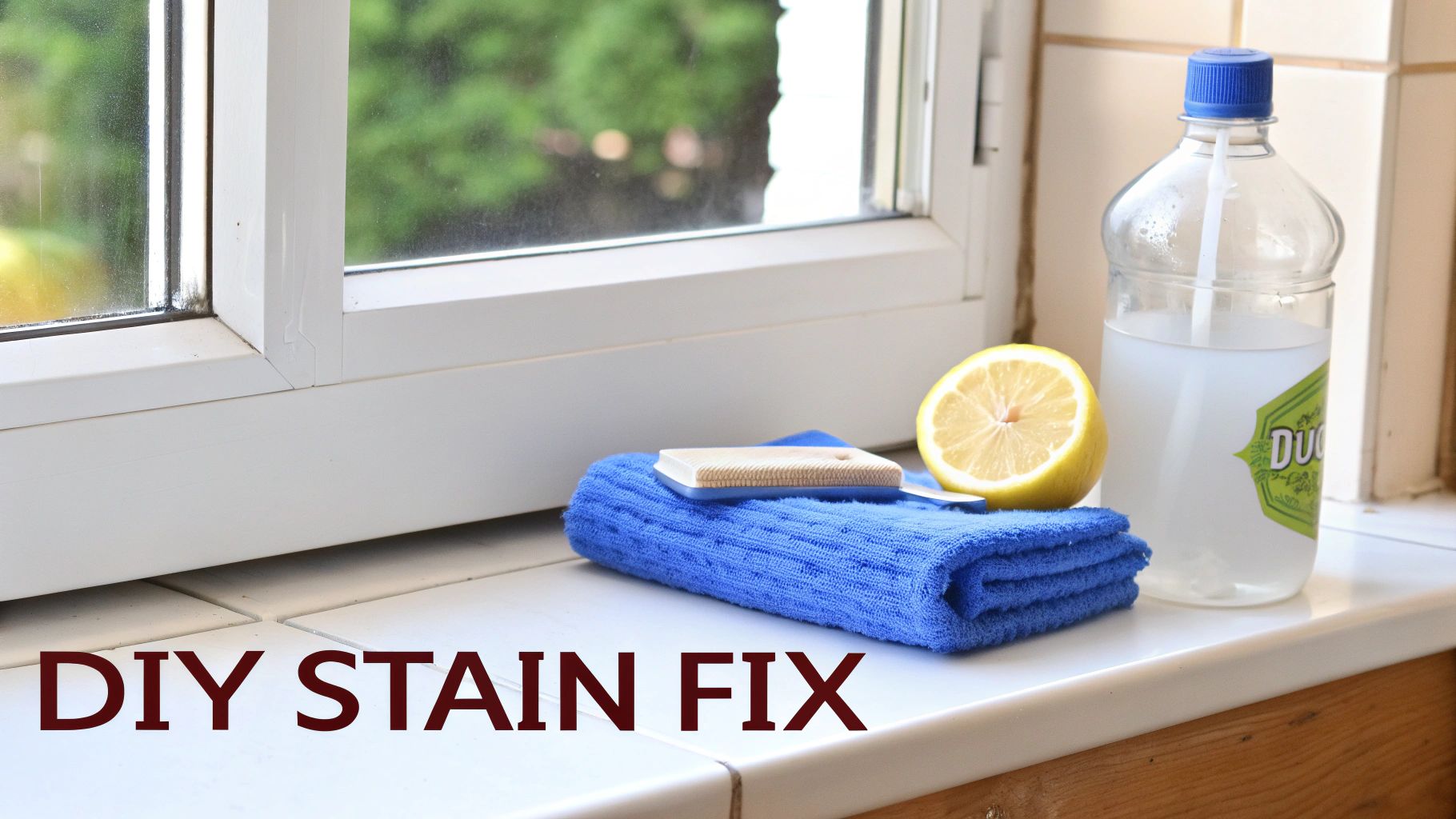
If you’ve caught those pesky water spots early—say, from a sprinkler that went rogue yesterday—you might not need to look any further than your kitchen pantry. For light, fresh stains, common household staples with mild acidity can work wonders. They’re surprisingly good at dissolving the calcium and magnesium deposits that create those cloudy blemishes on your glass.
The secret is the simple chemistry. The acid in things like white vinegar or lemon juice reacts with the alkaline minerals in the water spots, breaking them down so you can just wipe them away. It’s a gentle approach that’s tough on the spots but safe for the glass, making it the perfect first line of defense.
The go-to DIY method, trusted by homeowners for generations, is a straightforward mix of white vinegar and water. The magic ingredient is acetic acid, which does all the heavy lifting.
To get the best results, here’s what you do:
For a really stubborn spot, try this: soak a towel in your vinegar solution, wring it out slightly, and press it directly against the glass for a few minutes. This concentrates the acid right where you need it most.
Once the spots have vanished, give the window a good rinse with plain distilled water and get it completely dry. A high-quality squeegee is the best way to get a flawless, streak-free finish, as it pulls off every last drop of moisture before it can evaporate and leave new marks. For a closer look at this technique, check out our guide on removing water stains from windows.
No vinegar? Can't stand the smell? No problem. A few other common household items can step in to help you get your windows clean.
Before you get started, here is a quick comparison of these common household remedies to help you choose the best one for your situation.
These home remedies are excellent for tackling light, recent stains and are perfect for routine upkeep. For more tips on keeping glass clean, especially hard-to-reach surfaces, you might find a complete guide to cleaning skylights helpful.
However, if you find these solutions aren't making a dent in years of mineral buildup, it’s probably time to bring in the heavy hitters.

Sometimes, the trusty vinegar-and-water mix just doesn't have the muscle to cut through years of baked-on mineral deposits. This is a common reality for windows in areas with notoriously hard water, where the buildup can seem almost fused to the glass.
But don't give up hope. When home remedies fail, it's time to escalate your approach with specialized commercial cleaners and a few mechanical tricks of the trade. With the right products and techniques, you can restore clarity to even the most clouded, stubborn glass.
The market for water spot removers is surprisingly huge, hitting an estimated USD 1.14 billion globally. This growth is driven by high demand from both homeowners and the automotive sector, as everyone hunts for potent solutions to fight mineral stains. It's a big business, and if you want to geek out on the data, you can explore the market trends in this insightful report from GrowthMarketReports.com.
With so many options out there, what should you look for when picking a product for your windows?
A quick pro tip: Always test a new product on a small, out-of-the-way corner of the window first. This simple check ensures it won't cause any unexpected clouding or damage before you commit to the entire pane.
I know what you're thinking—steel wool on glass? It sounds like a recipe for disaster, but when done correctly, it's one of the most effective tricks in a professional's playbook for severe mineral buildup.
The secret is using #0000 grade steel wool, which is the absolute finest grade available. Anything coarser will definitely scratch your windows, so don't even think about it.
The most important rule for this technique is to never use it dry. The glass and the steel wool must be constantly lubricated with a cleaning solution. The liquid acts as a buffer, allowing the fine steel fibers to gently shear off the mineral deposits without ever scratching the glass surface itself.
To use this method safely, start by spraying the window liberally with your commercial cleaner or vinegar solution. Next, take a small pad of the #0000 steel wool, get it wet with the same solution, and gently scrub the spots in a circular motion. You'll literally feel the roughness give way to a smooth, clean surface. The key is to keep the area wet the entire time you're scrubbing.
This technique requires a careful hand, but it’s a game-changer for water spots that have resisted everything else. Of course, if the damage goes beyond surface stains and has actually etched the glass, you might need a more powerful solution. That’s when it’s time to explore professional options like our glass polishing services, which can restore even severely damaged glass.
When you look through a professionally cleaned window, it's so clear it almost feels like the glass has vanished. That flawless, invisible finish isn't an accident, and it certainly isn't achieved with a roll of paper towels and a generic spray bottle.
In the world of professional window cleaning, there are ONLY 2 methods that deliver consistently perfect results: the use of a squeegee or the use of a pure-water system. Understanding what the pros use can give you a major advantage in your own efforts to remove water spots from a window. These techniques aren't just about cleaning; they're about a systematic process that leaves absolutely nothing behind—no streaks, no film, and definitely no mineral deposits.
The choice between these two methods usually comes down to the location of the window and the type of grime we're dealing with.
The squeegee is a classic for a reason—in skilled hands, its effectiveness is unmatched. A professional doesn't just drag a rubber blade across the glass. It’s a mastered technique involving precise pressure, angle, and movement to shear water and dirt from the surface in a single, fluid motion.
A huge part of this method is the cleaning solution itself. We use specialized soaps designed to provide excellent "slip," which lets the squeegee glide smoothly without chattering or leaving those frustrating little streaks. This soap also breaks down dirt and suspends it in the water, allowing it to be completely removed. For interior windows or accessible ground-floor panes, the squeegee is still the gold standard.
A common mistake I see homeowners make is using way too much dish soap. This leaves behind a sticky film that actually attracts more dust. A professional's solution is perfectly balanced to rinse clean and dry streak-free.
For exterior windows, especially those on upper floors, the pure-water system is a complete game-changer. This high-tech approach uses a long, water-fed pole with a brush on the end, allowing us to scrub the glass clean right from the ground. No more risky ladder work.
But the real magic is in the water. The system filters regular tap water through a multi-stage process—either deionization or reverse osmosis—stripping it of all dissolved minerals. Those are the very things that cause stubborn water spots in the first place. Because this water is so pure, it actively attracts and lifts dirt right off the glass.
These two methods are the cornerstones of professional window cleaning. While DIY approaches have their place, understanding what professional window cleaners use shows why their results are in a different league. When you see a pro at work, you're watching the mastery of one of these two time-tested, industry-approved techniques.
While DIY methods are great for tackling minor spots, some jobs just demand a professional touch. Knowing when to put down the squeegee and pick up the phone isn't admitting defeat—it's a smart call that prioritizes safety, efficiency, and far better results. This is especially true when you need to remove water spots from a window that's just out of reach or has stains that won't budge.
The most obvious sign it's time to call for help is window accessibility. If you're looking at second-story windows or panes that require getting on a tall, wobbly ladder, the risk of a fall is very real. Pros come equipped with the right safety gear and training to handle those heights without a second thought.
Another key scenario is dealing with extensive mineral buildup that seems baked onto the glass. If you’ve already tried every cleaner and scrubbing technique you can think of with no luck, the glass itself might be etched. Professionals have access to specialized polishing compounds and equipment that can often restore glass that most people would assume is permanently damaged.
For large homes or any commercial property, the sheer amount of work can be a deal-breaker. A professional crew can knock out a job in a few hours that might take you an entire weekend. They get that perfect, streak-free finish using one of only two industry-standard methods: the use of a squeegee or the use of a pure-water system.
This diagram breaks down the two main approaches the pros use for a flawless clean.

As you can see, whether they're using a classic squeegee inside or a pure-water system for the exterior, professionals rely on proven techniques, not gimmicks.
The decision to hire a pro often boils down to a simple cost-benefit analysis. When you factor in your time, your safety, and the final quality of the work, the cost of a service call is often well worth it.
The demand for these expert services is definitely on the rise. The professional window cleaners market, once valued at USD 2.68 billion, is projected to hit USD 5.34 billion. This growth shows a strong preference for getting the job done right, safely, and effectively. You can discover more insights about the window cleaning market to see the trend for yourself.
For homeowners in notoriously hard-water areas like Las Vegas, Phoenix, or Denver, calling a pro is often the most reliable way to get—and keep—crystal-clear windows.
Even with the best game plan, a few questions always seem to pop up when you're in the middle of a tough window cleaning job. Getting the right answers can be the difference between a frustrating afternoon and that perfectly clear finish you're after.
We've been doing this for a long time, so we've heard just about every question there is. Here are a few of the most common ones that come our way, along with some straight-up advice to help you get the job done right.
This is easily the most common question we get. People grab their trusty bottle of Windex, spray away, and get frustrated when those milky spots don't budge.
Here's the deal: Windex is fantastic for everyday grime like dust and fingerprints. But it's just not built to handle mineral deposits. The ammonia in standard glass cleaners simply doesn't have the chemical muscle to dissolve the stubborn calcium and magnesium that create hard water spots.
To really be effective, you need a solution with a bit of acid. That’s why a DIY vinegar mix works on light stains—the acetic acid starts to break down those alkaline minerals. For tougher jobs, though, a dedicated commercial water spot remover is your best bet because it's specifically formulated for that exact chemical reaction.
It definitely sounds like a bad idea, right? But using #0000 grade steel wool is a go-to technique for pros. It's incredibly effective, but there's one golden rule you can never, ever break: the glass and the steel wool must always be wet.
Lubrication is everything. When the surface is saturated with your cleaning solution, the ultra-fine steel wool glides over the glass and shears off the mineral deposits without ever touching the underlying surface. If you try to use it dry, you will absolutely scratch your windows.
This is a crucial distinction because it tells you whether the damage is fixable or permanent. A water spot is a mineral residue sitting on top of the glass. With the right method, you can completely remove it.
Etching, on the other hand, is physical damage to the glass. It happens when mineral deposits sit on the surface for too long, and their alkalinity actually starts to corrode the glass itself. This creates microscopic pits and a cloudy look that you can't just clean off. Severely etched glass often requires professional polishing to even begin to restore its clarity.
An ounce of prevention is worth a pound of cure, as they say. The best strategy is to cut the problem off at the source.
First, check your sprinklers. Adjust them so they aren’t hitting your windows. After washing your house or car, make sure to immediately dry any overspray on the glass with a squeegee before the sun has a chance to bake those minerals on.
For a more robust, long-term solution, think about applying a quality glass sealant or a water-repellent treatment. These products create a hydrophobic surface that forces water to bead up and roll right off instead of drying in place.
For water spots that are too high, too stubborn, or have caused permanent etching, don't risk your safety or further damage to your glass. The experts at Professional Window Cleaning use industry-leading techniques to restore your windows to a flawless shine. Contact us today for a free estimate.
Read our blog posts regularly and keep learning.