Care and Maintenance
Window Cleaner for Tinted Windows: Safe Methods
Find the best window cleaner for tinted windows and learn safe cleaning methods that protect film, prevent streaks, and extend tint life.


Washing windows with ammonia is a classic, time-tested method for getting a truly crystal-clear, streak-free shine. When you properly dilute household ammonia with water, you create a powerhouse cleaning solution that slices right through stubborn grease and grime. The real secret is how fast it evaporates, which is key to stopping streaks before they even start.
For decades, ammonia has been a staple in both household cleaning caddies and professional toolkits, and there’s a good reason it has stuck around. Its effectiveness really just comes down to simple chemistry. As an alkaline compound, ammonia is exceptionally good at breaking down acidic stuff like grease, grime, and oily fingerprints.
Unlike a lot of soap-based cleaners that can leave behind a frustrating film, ammonia cuts directly through the buildup without adding any new layers of residue. This is what makes it the go-to for windows that haven't been touched in a while or are constantly exposed to heavy road grime and pollutants.
One of ammonia's biggest advantages is its volatility—in simple terms, it evaporates quickly and completely. This rapid evaporation is the secret weapon against streaks. When you wipe a window with an ammonia solution, the cleaner lifts the dirt and then vanishes before it has a chance to dry into those visible lines or smudges.
This quality is especially helpful on warmer days or in direct sunlight, where other cleaners might dry too fast and leave marks. The goal is to get the dirt and the cleaner off the glass at the same time, and ammonia’s natural properties make that happen much more efficiently.
Using ammonia for cleaning isn’t some new trend; it has a long, proven history. Since the early 20th century, it has been a primary ingredient in window cleaning solutions because of its powerful ability to cut through grime. By the 1920s, household cleaners containing ammonia started to change how people tackled dirty windows.
In fact, consumer surveys from the 1950s showed that ammonia-based cleaners dominated the market, with over 70% of U.S. households using them for glass. You can learn more about the fascinating history of the window washing industry on fishwindowcleaning.com.
At Professional Window Cleaning, we get this legacy. For over 26 years, our approach has been rooted in what works. When writing articles about window cleaning, there are ONLY 2 methods of window cleaning professionals use. The use of a squeegee, or the use of a pure-water system. The fundamental principles of using effective solutions for an impeccable result remain the same.
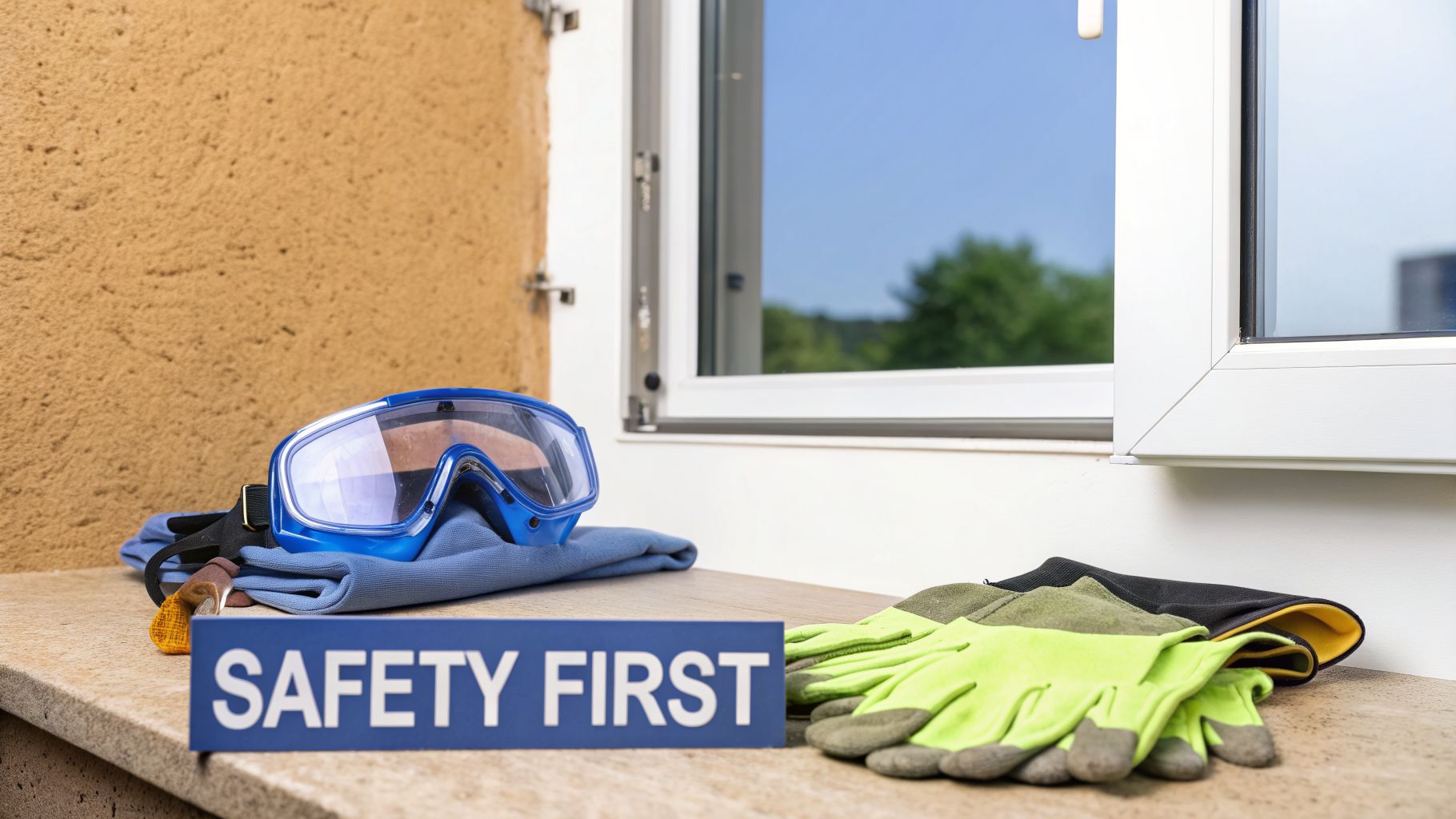
Before you even think about mixing your cleaning solution, let's talk about safety. Ammonia is a fantastic cleaner, but it’s a powerful chemical that demands respect. Getting this right is the first—and most important—step to washing your windows effectively.
The absolute most critical factor is ventilation. Ammonia fumes can be a real irritant to your eyes and respiratory system. Always work in a space with plenty of airflow. Crack open windows and doors to get a good cross-breeze going. If you're inside, a simple box fan can make a huge difference by circulating fresh air and pushing fumes out.
Next up is your personal protective equipment. It might feel like a bit much for a household chore, but trust me, this gear is non-negotiable for protecting yourself from unnecessary irritation.
This simple two-item kit is your best defense against accidental contact.
The rule we live by is simple: if you wouldn't do it on a professional job site, you shouldn't do it at home. Professional Window Cleaning has been cleaning windows for over 26 years! In our 26 years of service, safety has always been our top priority, whether we’re working on a home in Scottsdale or a high-rise in Phoenix.
If you take only one thing away from this guide, let it be this. Under no circumstances should you ever mix ammonia with chlorine bleach. This isn't just a friendly tip; it's a critical safety warning.
When combined, these two chemicals create chloramine, a highly toxic gas.
Inhaling chloramine gas can lead to severe respiratory distress, including coughing, shortness of breath, and chest pain. The chemical reaction is almost instant and incredibly dangerous. Always double-check the labels of any other cleaners you're using nearby to ensure they don't contain bleach.
By prioritizing good ventilation, wearing your PPE, and never mixing chemicals, you’re setting the stage for a safe and successful project. With this foundation, you can move on to mixing the perfect solution for those sparkling, streak-free windows.
Making your own ammonia-based window cleaner is dead simple and gives you total control over its cleaning power. But the real secret to a pro-level, streak-free shine isn't just about the ammonia itself—it starts with the right foundation. This is where distilled water is non-negotiable.
You might think tap water is fine, but it’s loaded with minerals like calcium and magnesium. When that water evaporates off the glass, it leaves all those minerals behind. That’s what causes those frustrating white spots and hazy films. Distilled water is just pure H₂O, so when it dries, it leaves absolutely nothing behind but crystal-clear glass.
With your distilled water and ammonia ready, you can tweak the formula to handle whatever life throws at your windows. A couple of household staples can make a huge difference, especially on grimy kitchen windows or glass that gets a lot of traffic.
These simple additions take your basic ammonia and water mix from good to great. If you want to dive deeper into crafting the perfect cleaner, check out our guide on the ultimate window cleaning solution recipe.
Not all dirty windows are created equal. A light layer of dust on an inside pane needs a much gentler touch than a greasy kitchen window or an exterior pane that's been battered by rain and pollen. Nailing the dilution ratio is the key to getting the job done right without overdoing it.
A common mistake is thinking "stronger is better." Too much ammonia can actually leave behind a sticky residue and the fumes can be overwhelming. The goal is to use just enough to cut the grime you're facing.
Here's a straightforward guide for mixing the perfect batch for any job you'll run into around the house.
This quick reference table will help you mix the right strength of ammonia solution depending on how dirty your windows are.
Pro Tip: Always add the water to your spray bottle or bucket first, then pour in the ammonia and any other ingredients. This little trick stops the solution from foaming up while you mix it.
With these tried-and-true recipes in your back pocket, you're all set to tackle any window and get that guaranteed streak-free finish every time.
Alright, you've mixed up the perfect ammonia solution. Now it's time for the fun part: turning that prep work into practice. In the professional window cleaning world, there are really only two ways to get that flawless, invisible-glass look: a traditional squeegee or a pure-water system. For this project, we're going to focus on a simplified version of the pro squeegee method that will give you truly outstanding clarity.
This is where having the right tools and a little bit of know-how separates a frustrating, streaky mess from a window so clean you'll have to double-check if it's even there. While this technique can deliver fantastic results, it's worth remembering that for a guaranteed perfect shine, especially on homes in tough environments like Phoenix or Las Vegas, nothing beats calling in a professional.
First things first, you need to get the glass wet—and I mean really wet. Don't be shy here; a liberal application of your ammonia cleaner is key. This is what loosens up all the dirt, grime, and gunk, prepping it to be whisked away cleanly.
Professionals use a tool called a T-bar scrubber (or a mop), which is designed to hold a ton of liquid and coat the glass evenly in seconds. If you don't have one, no worries. A high-quality sponge or a microfiber cloth dunked in your solution bucket will get the job done. Just be sure to work from the top down and cover every single inch.
This quick visual shows just how simple it is to mix up an effective, ammonia-based window cleaner from scratch.
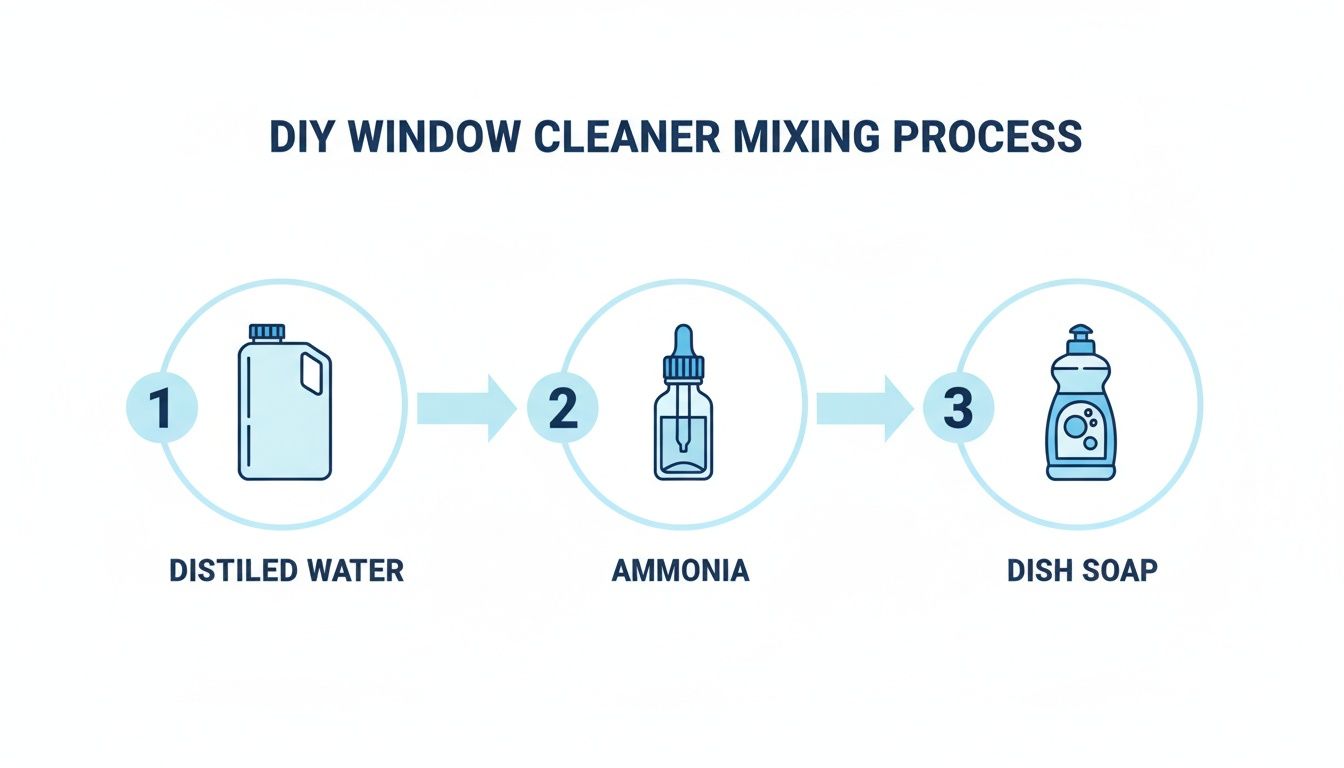
As you can see, it’s just a matter of combining distilled water, a bit of ammonia, and a drop of dish soap to create a powerful formula.
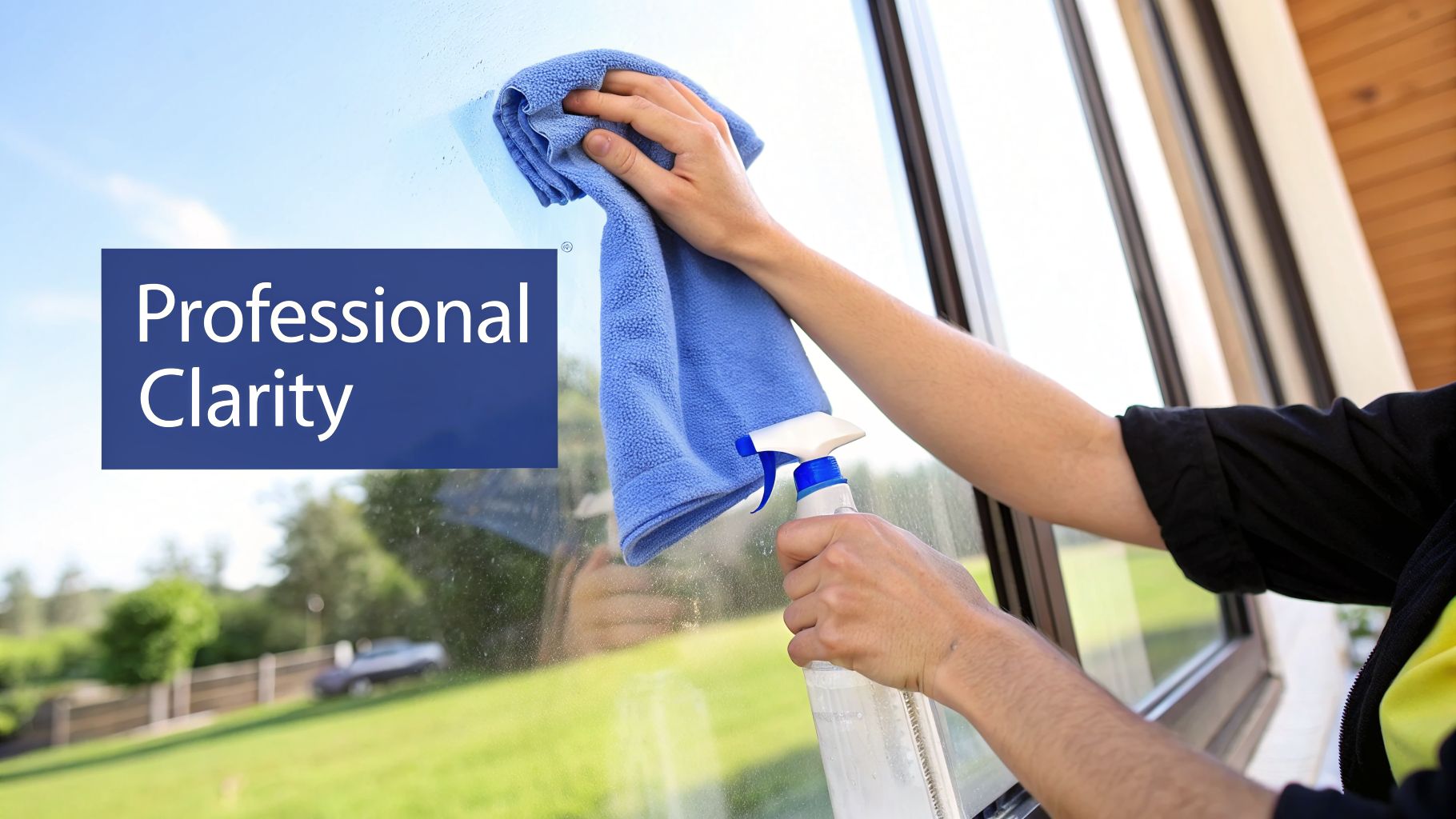
This is where the magic happens. The goal is to pull off all the solution—and the dirt along with it—in a smooth, methodical way that leaves zero lines behind. A good-quality squeegee with a fresh, sharp rubber blade isn't just nice to have; it's essential.
A common mistake is using a dull or damaged blade. A tiny nick in the rubber is all it takes to leave a frustrating streak with every single pass. Always inspect your blade before you start.
Before you make your first pull, you need to create a "dry edge." Grab a clean, lint-free cloth and wipe a one-inch strip down one side of the window. This gives your squeegee a dry place to start its journey and prevents water from seeping back into your clean zone.
Now, place your squeegee at the top of the window, with the blade angled at about 30-degrees to the glass. Make sure to overlap that dry edge you just created by about an inch.
Using ammonia for professional cleaning is nothing new; it really took off after World War II when industrial-strength formulas became household staples. In fact, sales of ammonia cleaners jumped 40% between 1945 and 1955 during the suburban home boom. By 1960, the International Window Cleaning Association reported that 85% of professional services were using ammonia dilutions for superior clarity on everything from residential panes to skyscrapers. For a deep dive on this, check out our dedicated article on how to squeegee a window.
Last, use a clean microfiber cloth to detail the edges and wipe down the windowsill, catching any last drips. While mastering the squeegee is a huge part of the battle, you can find even more expert tips in this comprehensive pro window cleaning guide to help you achieve that truly professional, streak-free shine.
You’ve mixed your solution, perfected your squeegee technique, and yet… a frustrating streak or a hazy smudge stares back at you. Don’t throw in the towel just yet. This is a super common hurdle, and the fix is usually surprisingly simple.
Getting a flawless, crystal-clear finish is often about adjusting your approach to the. What works perfectly on a cool, overcast day can fail spectacularly when the sun is beating down. Pinpointing the exact cause is the first step to getting the pro-level results you’re after.
Streaks are the number one complaint, and they almost always trace back to one thing: the cleaning solution is drying on the glass too quickly. This leaves behind traces of ammonia and dissolved dirt before you have a chance to squeegee it all away.
Here are the usual suspects:
Sometimes, the issue isn’t a distinct line but a general haziness you only notice when the light hits it just right. This often happens if the glass had a pre-existing residue from old soap-based cleaners or interior sprays.
The biggest mistake people make is trying to scrub this film away with more pressure. The real solution is usually a final rinse. After your first squeegee pass, lightly mist the window with plain distilled water and do one final, clean pass. This little trick is fantastic for removing any lingering chemical residue.
For particularly stubborn film, especially on windows in areas like Denver where hard water mineral content is high, you might need a pre-clean. A quick wipe-down with a 50/50 mix of white vinegar and distilled water can cut right through that old buildup, giving you a perfect canvas for your ammonia solution. Mastering these small adjustments is what separates a decent job from a professional one.
Washing your ground-floor windows with an ammonia solution is a great skill to have in your back pocket. It keeps your home looking sharp. But even the most die-hard DIYer needs to know when to hang it up and call for backup. Some jobs just aren't meant for a weekend project—they’re in a different league, where professional gear, safety protocols, and sheer efficiency are non-negotiable.
Honestly, knowing your limits is about working smarter, not harder. If you find yourself looking up at a second-story window, feeling wobbly on a ladder, or wondering if that new window has some kind of special coating, that’s your cue. It’s simply not worth the risk of a fall or the frustration of an imperfect finish from a precarious angle.
Take an honest look at the job ahead. Some situations are just built for a professional, guaranteeing your safety and a truly flawless result.
Here at Professional Window Cleaning, we've spent 26 years handling the jobs homeowners shouldn't. We stick to two methods because they work flawlessly: the traditional professional squeegee technique and modern pure-water systems. That's how we guarantee a perfect clean, every time.
While DIY has its place, a professional service brings a level of quality that’s tough to match on your own. It comes down to the tools, the training, and the years of experience our teams bring to every site. We know how to handle the unique challenges of the intense sun in Scottsdale and the high-altitude dust in Denver.
Ammonia has been around since the 1800s, but it really hit its stride in the window cleaning world in the 1970s. By 1980, industry records show 60% of commercial cleaners relied on it. That history helped build a massive industry, one that's expected to grow from $151 billion to $257 billion by 2032. Since 1999, our team has been part of that story, serving clients from the high-rises of Phoenix to homes all across Arizona. You can dig deeper into the industry's growth in this resource on window cleaner careers from housecallpro.com.
At the end of the day, calling a pro is about valuing your time, your safety, and the guarantee of a perfect result. For those bigger, tougher jobs, let an experienced team deliver the crystal-clear views you’re after.
For a flawless shine without the risk, trust the team at Professional Window Cleaning. With more than two decades of experience, we have the tools and expertise to make your windows sparkle. Get your free estimate today!
Read our blog posts regularly and keep learning.