Care and Maintenance
Medical Office Windows: Complete Care and Cleaning Guide
Learn how to keep medical office windows clean, safe, and code-compliant. Covers protocols, schedules, costs, and what to expect from professionals.


Why do so many property owners book the wrong window service, then wonder why the frames still look tired after the glass has been wiped? The confusion usually starts with the words themselves. In practice, window washing is the lighter, glass-first pass, while window cleaning is the broader service that reaches the full window assembly.
A team with over 26 years in the trade learns quickly that the label on the quote matters less than the scope behind it. If a job only clears the pane, residue can stay on the frames, sills, tracks, and mullions. If a job is specified correctly, the result looks cleaner longer and matches what the property needs.
| Feature | Window Washing | Window Cleaning |
|---|---|---|
| Main focus | Glass surface | Glass plus surrounding window components |
| Typical outcome | Quick visual refresh | More complete restoration of the window area |
| Best use | Light maintenance | Grime, buildup, and detailed upkeep |
| Risk if chosen wrong | Leaves residue behind | Can be more service than needed for a simple refresh |
Window washing is the narrower service. It targets visible dirt on the glass, usually as a fast maintenance pass when the pane is dusty, spotted, or lightly soiled. Window cleaning is broader, because it also includes frames, mullions, sills, tracks, and other parts of the window assembly, which matters when buildup is sitting outside the glass itself. That distinction is the heart of professional window washing.
The terms are used interchangeably, and that's understandable. The problem shows up at the property when the glass shines but the surrounding parts still hold residue, pollen, or mineral film. In commercial settings, that mismatch can make a freshly serviced building still look unfinished.
Practical rule: If the glass is the only thing that looks dirty, washing may be enough. If the window frame area looks tired too, cleaning is the better fit.
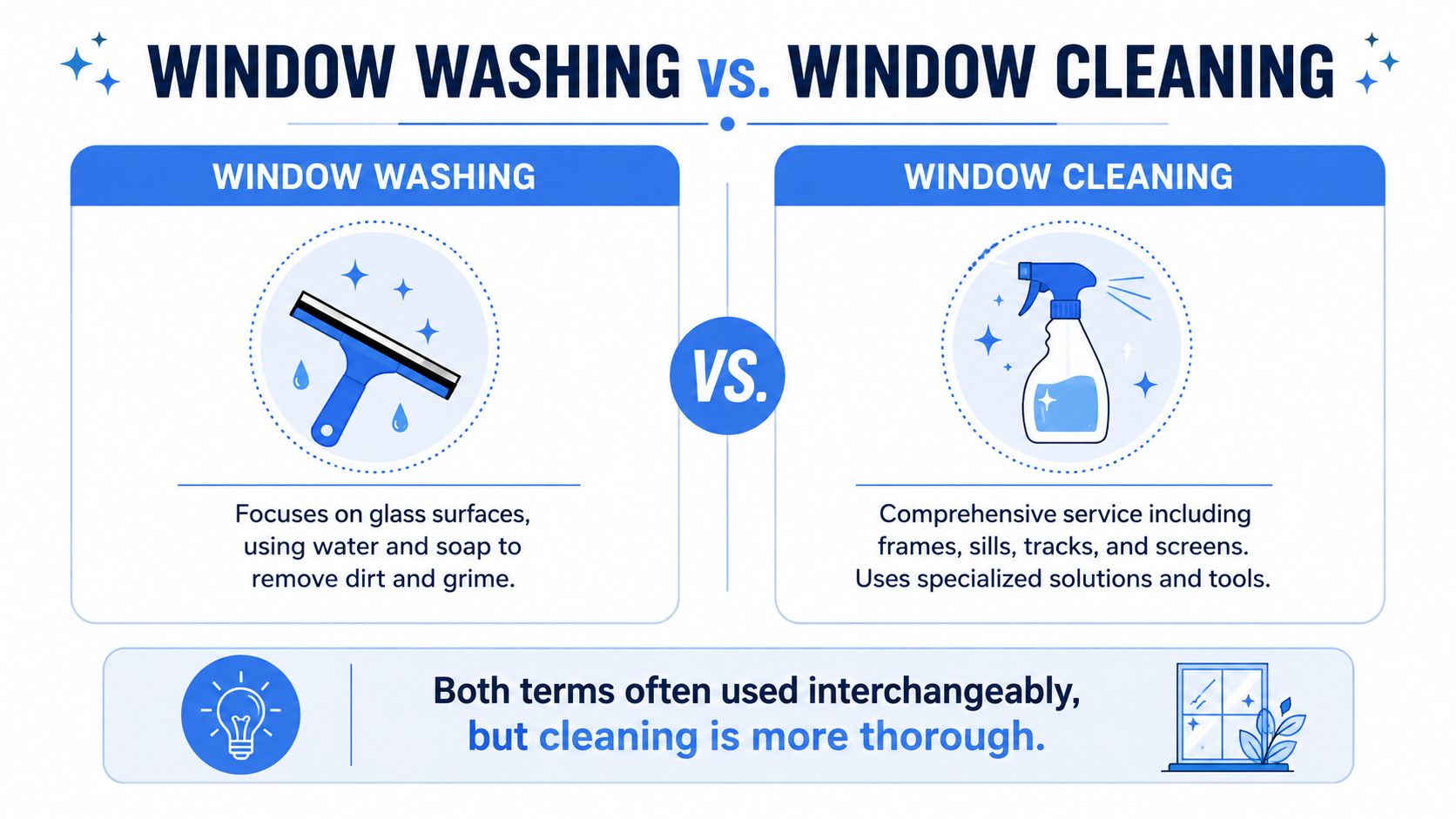
The operational difference matters because a glass-only pass can leave behind the buildup that lives around the edge of the pane. That's where the service tier changes. If the job is priced and scheduled as a wash, the client should expect a surface-level result. If it's specified as a cleaning, the work should address the full assembly instead of stopping at the visible pane.
On a real job, the difference shows up in how much detail the crew touches. A wash is often chosen for routine appearance work. A cleaning is chosen when the goal is to restore the entire window area, not just make the glass look passable.
That is why good quoting starts with a close look at the window condition, not just the number of panes. Property owners who understand the terms usually avoid the most common complaint, which is paying for a service level that didn't match the dirt on site.
The method matters, but the terminology often matters more to the buyer. Professionals generally work with two core methods, the traditional squeegee method and the pure-water system. The right choice depends on access, residue, and the finish the property needs, not on whether someone casually says washing or cleaning.
The squeegee method uses a bucket, scrubber, and rubber blade to loosen dirt and pull dirty water off the glass. It's the classic approach for controlled, hands-on work, especially where detail around the edges matters. The person doing the job can see the result immediately and correct problem areas before moving on.
For interior glass and reachable exterior panes, that direct control is valuable. It's also the method many clients picture when they hear the words “window washing,” even though the same tool set can be used in a more thorough cleaning routine.
The pure-water system takes a different path. Industry guidance describes water being treated, often through deionized or reverse-osmosis filtration, then sent through a telescoping or water-fed pole so the brush can scrub and rinse the glass without wiping. The logic is simple, minerals are removed before the rinse water dries, so it's less likely to leave spots behind.
The trade's modern water-fed pole approach is relatively recent. A history source traces the breakthrough to 1997, when U.K. cleaner Craig Mawlam launched a pole system combining telescopic reach with water purification, which makes today's pure-water work a late-20th-century innovation rather than a century-old standard.
A crew choosing between these methods is really choosing how to solve the same problem. The squeegee gives close control. The pure-water system gives reach and a rinse that can dry clean when the water is properly treated.
One practical note from the field, the label on the service doesn't tell you the finish. The method and the crew's attention to detail do.
A clean result comes from the right method applied well, not from the name on the invoice.
For readers comparing tools in more depth, professional window cleaning equipment explains the gear choices that shape real-world results.

A low-dust neighborhood can often stay on a quarterly window washing schedule. Near a desert highway, where mineral film and dust settle on frames as well as glass, a full window cleaning usually fits better, because the buildup reaches beyond the pane.
Window washing works best as maintenance. Window cleaning makes more sense when dirt has spread into the parts that shape the whole result, not just the glass itself.
Start with the property's exposure. Homes tucked away from traffic, construction, or open soil usually need less frequent service than buildings near busy roads, desert winds, or areas with hard-water spray.
Then look at what is dirty. If the issue is light film on the glass, washing may be enough to keep the property presentable. If the frames, sills, or tracks show dust, spotting, or residue, the job has moved into cleaning territory.
Use the building type as another guide. A house that gets occasional dust can often stay on a lighter schedule, while storefronts, offices, and larger commercial properties usually need a tighter maintenance rhythm because customers and tenants notice the entire window area, not just the pane.
Climate matters too. In places with dry air and airborne grit, like Las Vegas or Phoenix, buildup tends to collect faster on the outer edges, tracks, and frames. In milder climates, owners may be able to stretch the interval if the glass stays clear and the surrounding parts remain in good shape.
Ask three questions before you book:
If the answer is mostly yes to the first question, washing is usually enough. If the answer shifts toward the other two, cleaning is the better fit because it addresses the surfaces that make windows look neglected after the glass is wiped down.
That difference affects more than appearance. A lighter visit keeps the schedule moving. A fuller service resets the window area so the next round of maintenance starts from a cleaner baseline.
A homeowner and a property manager often need different things from the same opening in the wall. In a house, a quick wash can be enough for a seasonal touch-up when the glass just needs to look fresh again. For a spring reset, or after weather has left residue on the frame area, a full clean makes more sense because it deals with the whole window, not just the pane.
Residential clients usually book by need. If the windows are lightly dusty, the simpler service is often enough. If the screens, tracks, or sills are grimy, the broader service saves frustration because it clears the surrounding buildup that a fast pass leaves behind.
That difference is especially useful for repeat service. A homeowner who wants the house to look sharp between deeper visits can stay on a lighter maintenance schedule. A homeowner who wants a more complete result should ask for the fuller scope up front.
Commercial properties have less room for partial results. Office buildings, car dealerships, and retail spaces need glass that looks clean, but they also need the surrounding window area to look intentional. Dirty frames or tracks can undermine the whole presentation, even when the pane itself looks polished.
For high-rise work, safety and reach become part of the service decision. Cities like Denver, Las Vegas, Phoenix, and Scottsdale often require crews to match access methods with building height, exposure, and the schedule of the property. The same is true in Tempe, Chandler, Gilbert, and Flagstaff, where local conditions can push owners toward different maintenance rhythms.
If you manage a property and want the site to keep a professional image, local visibility matters too. A resource like win more home service clients from Netco Design LLC can be useful when you're evaluating how service providers present themselves online and how clearly they explain scope.
Terminology saves time. A commercial buyer who asks for washing when the job needs cleaning can end up with an incomplete result. A buyer who asks the right question gets a service that fits the site, the traffic, and the expectations of tenants or customers.
For professional and high-access work, the distinction isn't just verbal, it's reflected in standards and methods. The Window Cleaning Safety standard applies to inside and outside window-cleaning operations, and glass-cleaning guidance emphasizes non-abrasive solutions and squeegee-based methods for removing marks and dirt from internal and external windows. That makes window cleaning the more specification-driven service, while window washing is often used for faster, lighter maintenance passes. ASTM glass cleaning standard press release
Once crews move to height or difficult access, the job is no longer just about appearance. Equipment, tie-off points, access planning, and method choice all shape the final result. The right crew doesn't just clean glass, it follows a process that keeps the work controlled from the start.

A more detailed service usually takes more time because it touches more surfaces and requires more care. That added scope is part of what clients are paying for, especially on commercial and high-rise projects. A fast surface wipe may look acceptable from a distance, but it won't satisfy the same expectations as a specification-driven cleaning.
That's also why professional buyers should ask about methods before approving the work. The words on the estimate should match the standard of finish they expect on site. If they don't, the crew may do exactly what was ordered, while the property still looks unfinished.
If the building demands access planning, non-abrasive chemistry, and a controlled finish, the job is cleaning, not just washing.
The right choice starts with three questions. What condition are the windows in, what type of property are you managing, and how often do you want service? If the answer points to light dust on the glass, a wash can be cost-effective. If the answer points to residue, dirty frames, or neglected tracks, a fuller clean usually delivers better value over time.
The strongest booking conversations happen when the client describes the condition, not just the word they've heard before. That helps the provider match the scope to the building instead of guessing from a label. It also prevents the most common disappointment, which is paying for a service that didn't reach the problem areas.
At Professional Window Cleaning, the work is built around that same practical distinction, with service options for residential, commercial, and high-rise properties. If you want a quote that matches the actual condition of your windows, visit Professional Window Cleaning and ask for the service level that fits your building.
Read our blog posts regularly and keep learning.